
Mathieu Matégot
1910-2001
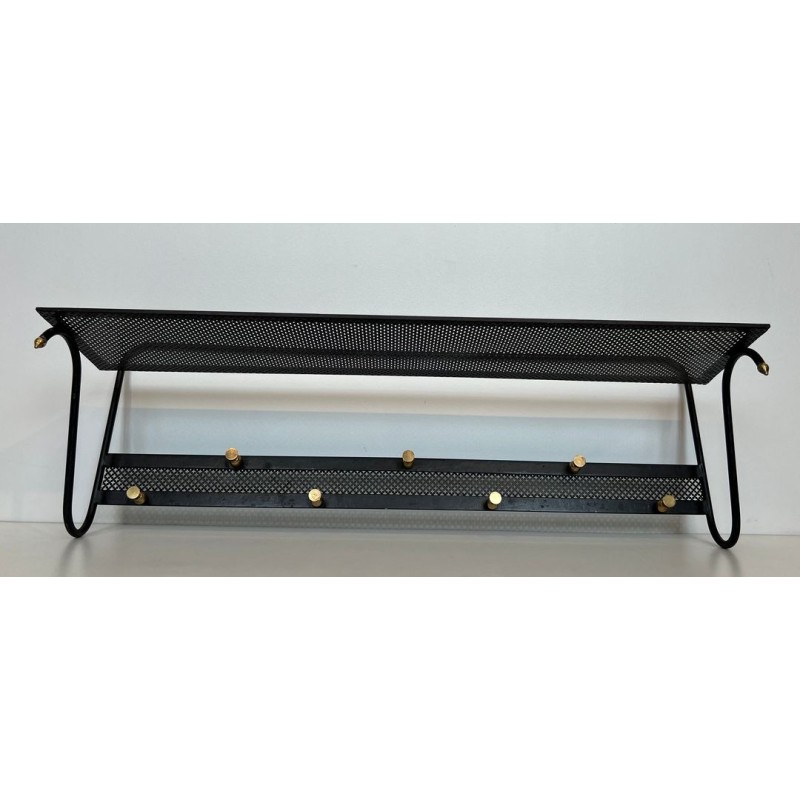
The Inventor of Lace-like Metal
Of Hungarian origin, Mathieu Matégot settled in France and developed in the 1950s the ‘rigitulle’, a process combining steel tube and perforated sheet metal. This technical innovation became his signature: light, airy and colourful furniture, halfway between craft and industry.
The Aesthetic: Graphic Lightness
Matégot plays with the transparency of perforated sheet metal and bright colours to create objects that are both functional and joyful. His supple forms and clean lines foreshadow the design of the decades that followed.
Materials: Perforated sheet steel, metal tube, rattan, coloured lacquer.
Icons: The ‘Nagasaki’ chair, the ‘Copacabana’ armchair, the magazine racks and plant stands.
From Furniture to Tapestry
From the 1960s onwards, Matégot moved away from furniture to devote himself to monumental tapestry, a discipline in which he also made his mark. His early pieces, now rare, are today among the classics of post-war design.