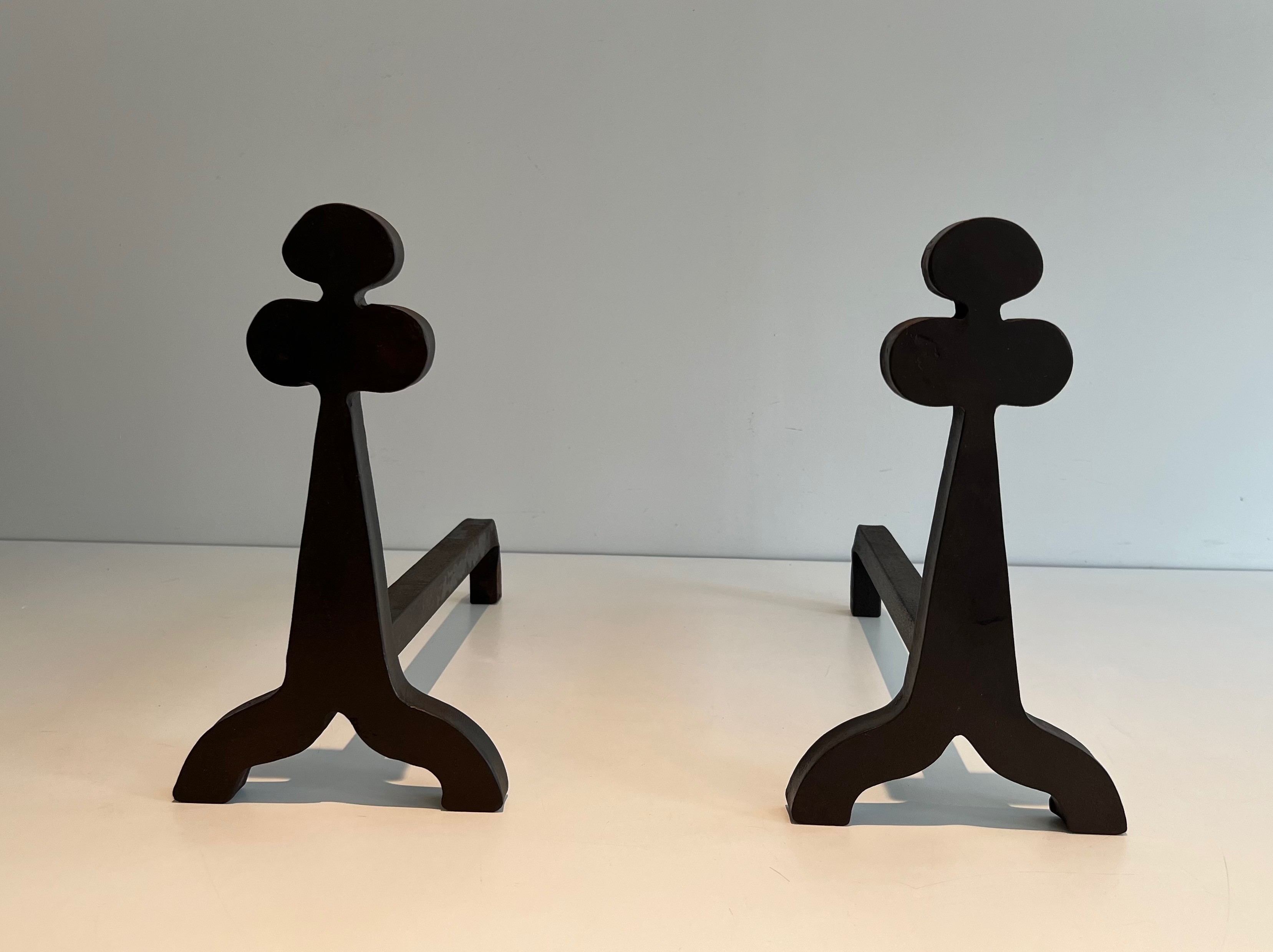
Pair of Steel and Wrought Iron Andirons with Clover Motifs, French Work, circa 1950
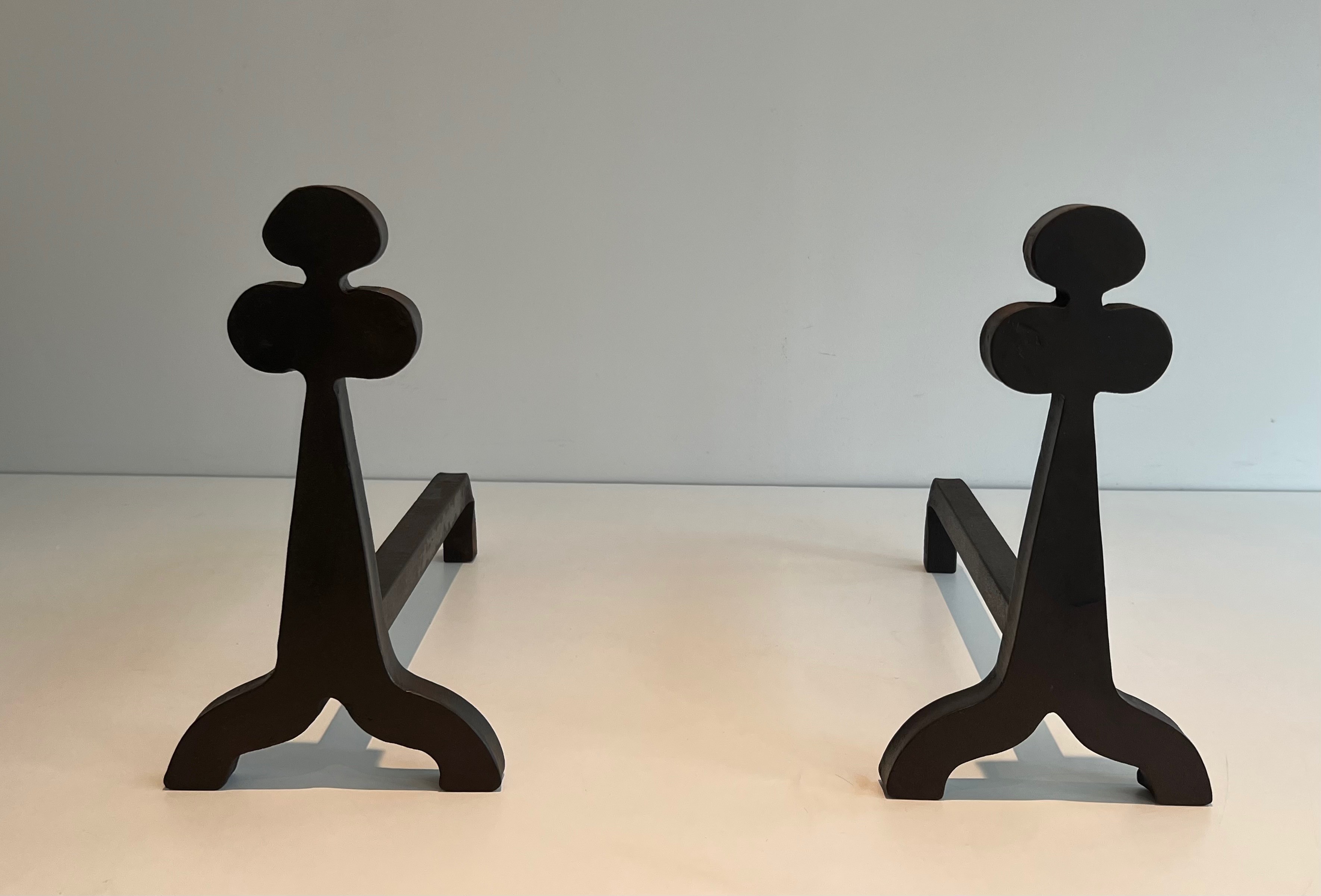
A pair of steel and wrought iron andirons with clover motifs decorating the uprights — a charming botanical programme that enlivens an otherwise sober material palette. French work, circa 1950. Dimensions : 18.5 × 45 × 33.5 cm.
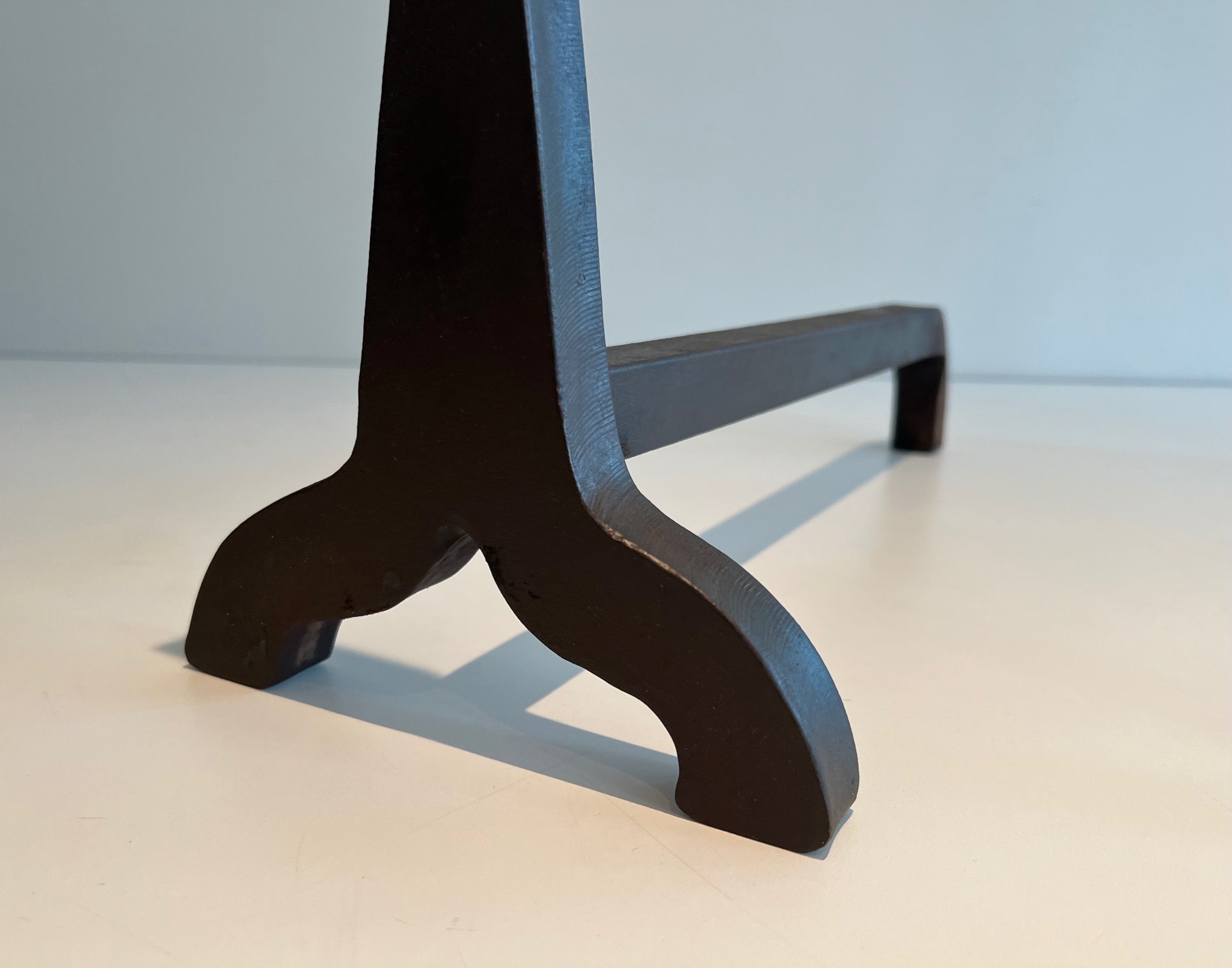
These andirons combine a sober industrial palette — steel and wrought iron — with a decorative motif of genuine charm: the clover, its characteristic three-lobed form worked into the uprights in a naturalistic programme that softens the austerity of the base materials without contradicting it. The uprights rise to 18.5 centimetres with a bar extending 45 centimetres behind, providing a generous working depth for the fireplace. The clover forms are likely worked into the forged iron of the upright structure, the botanical outline traced in metal with the kind of assured simplicity that distinguishes good blacksmith work from mere ornament.
The clover, or trefoil, carries a remarkable range of associations in European culture. As an architectural motif, the trefoil window and trefoil arch are among the defining elements of Gothic design, appearing in the great cathedrals and parish churches from the twelfth century onward and reinvented in the Gothic Revival of the nineteenth. As a botanical symbol, the three-leafed clover is associated with good fortune, the natural world, and the pastoral pleasures of the countryside. As a heraldic device, the trèfle appears in the arms of noble families and civic bodies across France. An andiron decorated with clovers therefore belongs to multiple symbolic registers simultaneously — ecclesiastical, natural, heraldic — a quality that gives the motif a depth of resonance unusual in a purely decorative object.
The mid-1950s in France was a moment of genuine renewal in the craft trades, as post-war reconstruction brought new commissions and a generation of artisans emerged who had been trained in the great pre-war ateliers but who were finding their own visual language. Metalwork of this period often combines the structural directness of the modernist tradition with motifs drawn from nature — botanical, zoological, geological — in a synthesis that owes something to the Art Nouveau interest in the organic world while maintaining the formal discipline of the post-war decades.
In good condition with a naturally darkened surface. These andirons would be well suited to a country house fireplace, a room with Gothic or neo-rustic character, or any interior in which a note of botanical naturalism provides a welcome counterpoint to harder architectural surfaces. Height: 18.5 cm. Bar length: 45 cm. Depth: 33.5 cm.