Pair of French Modernist Cast Iron and Wrought Iron Andirons
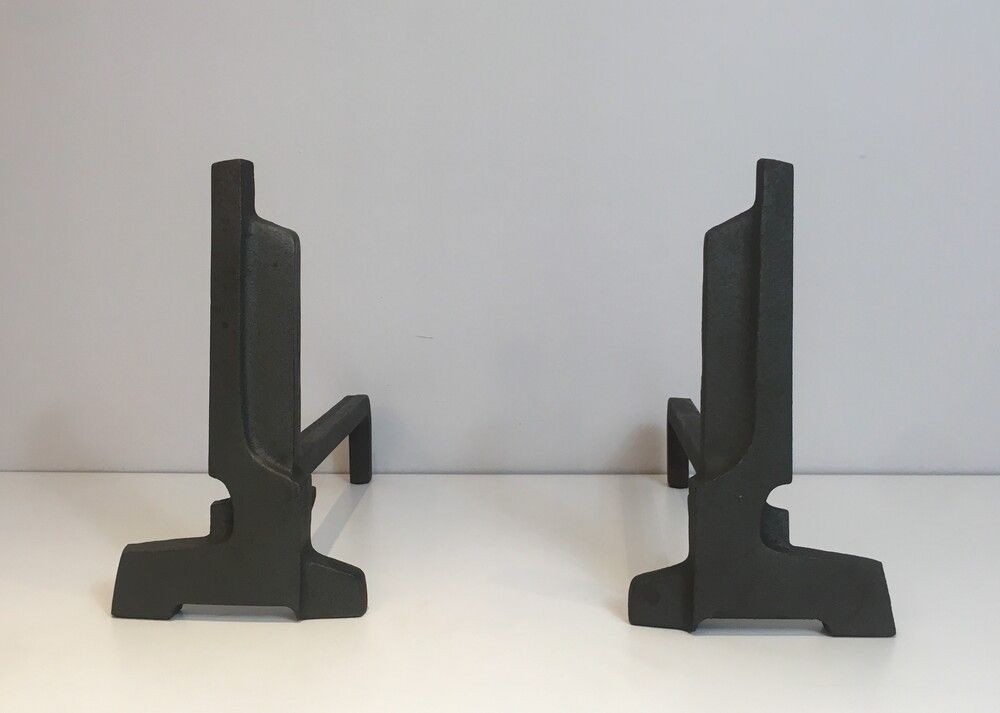
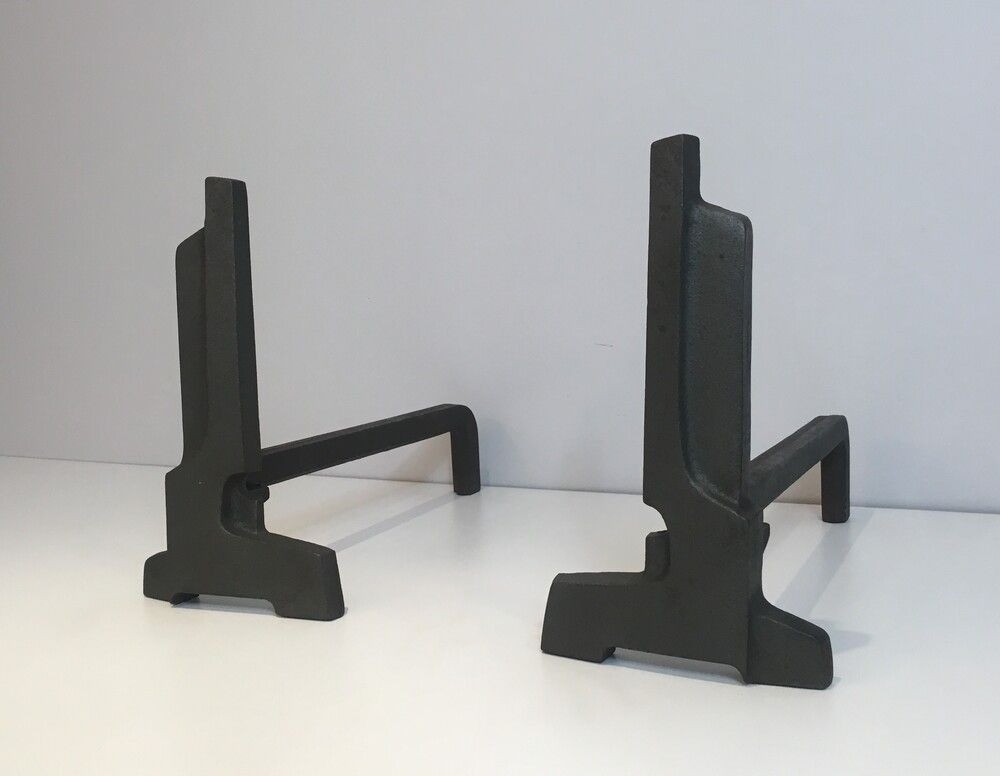
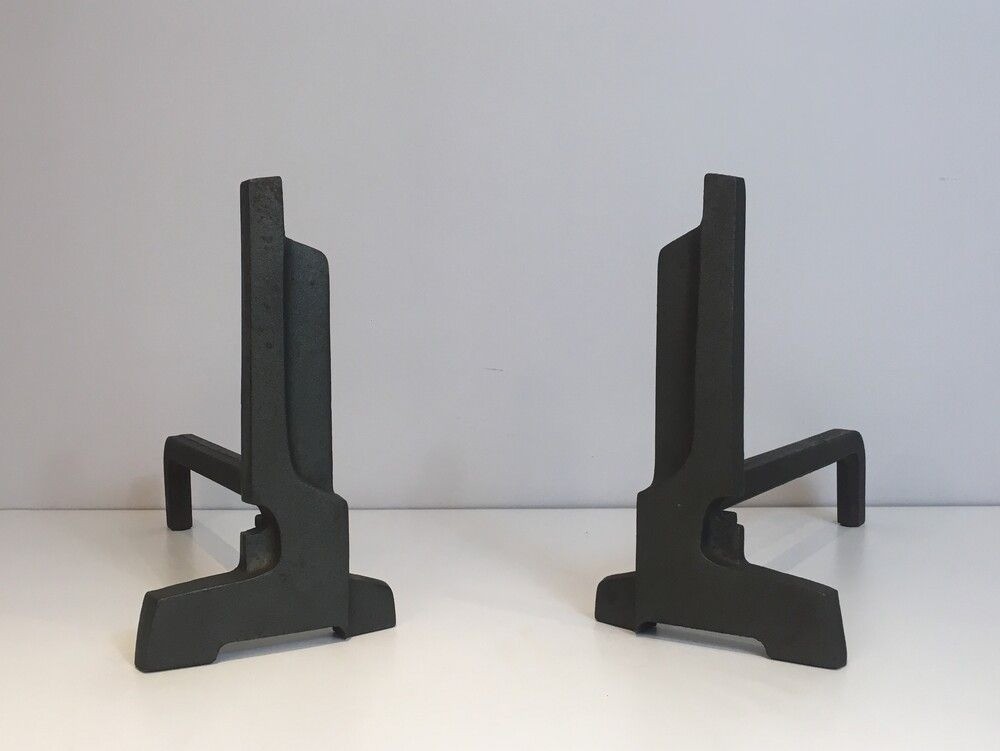
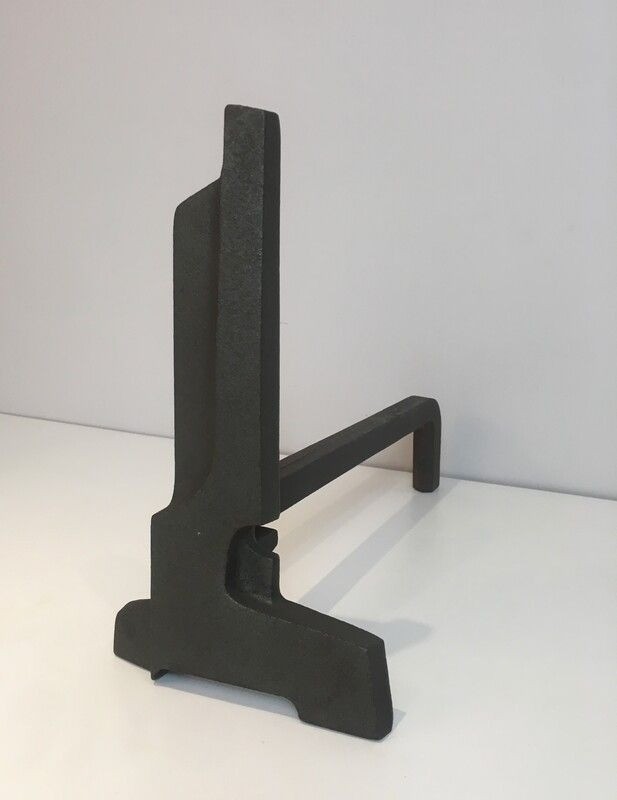
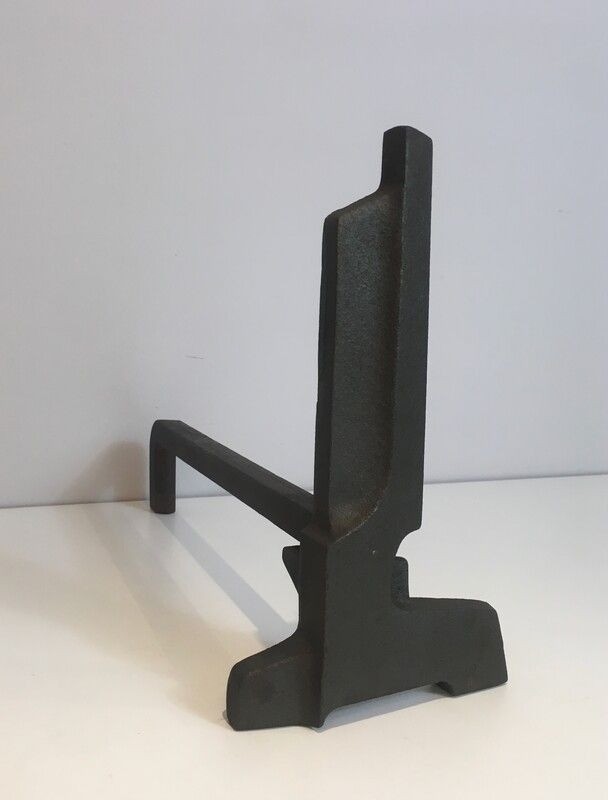
Striking pair of modernist cast iron and wrought iron andirons, a fine example of French post-war decorative ironwork from circa 1950. Their bold, architecturally-minded forms bring modernist rigour to the ancient tradition of the fireplace. 16.5 × 42 × 29.5 cm.
The andiron — chenet in French — has one of the longest histories of any fireplace accessory, its origins stretching back to antiquity. In the hands of French craftsmen, this functional object was repeatedly elevated to a work of art, the fireplace becoming one of the most important stages for the display of decorative ironwork in the home. The mid-twentieth century saw a remarkable renewal of interest in the andiron's formal possibilities, as post-war designers brought modernist vocabulary to bear on this ancient form.
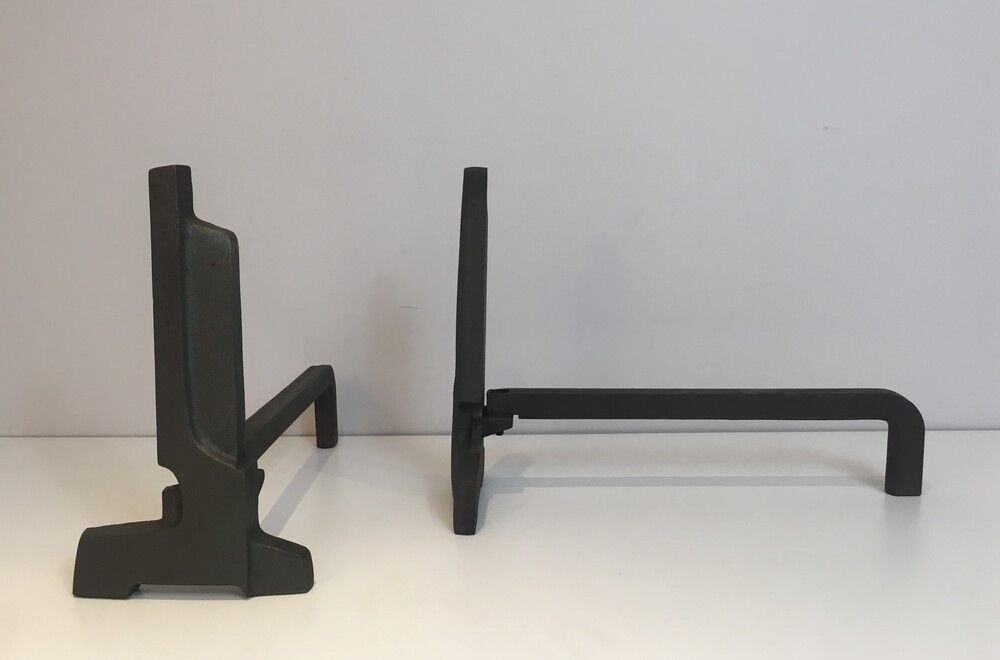
This pair of andirons, produced in France circa 1950, exemplifies the post-war approach to decorative ironwork: bold geometric forms in cast and wrought iron, freed from the historicist ornament of previous centuries and animated by the austere sculptural language of modernism. The combination of cast iron and wrought iron allows for both the solidity of the former and the refined directional quality of the latter, creating a dialogue of materials that enriches the composition.
At 16.5 × 42 × 29.5 cm, the andirons are well scaled for a substantial fireplace, their depth and height providing both practical function and strong visual presence. The iron surfaces, darkened and enriched by their medium, create a quiet authority at the hearth — presences that anchor the fireplace surround without competing with the fire itself.
An outstanding pair of French mid-century modernist andirons, these chenets represent the finest expression of post-war decorative ironwork. Their combination of sculptural modernity, quality materials, and impeccable French craftsmanship makes them a distinguished and increasingly sought-after example of mid-century decorative arts.