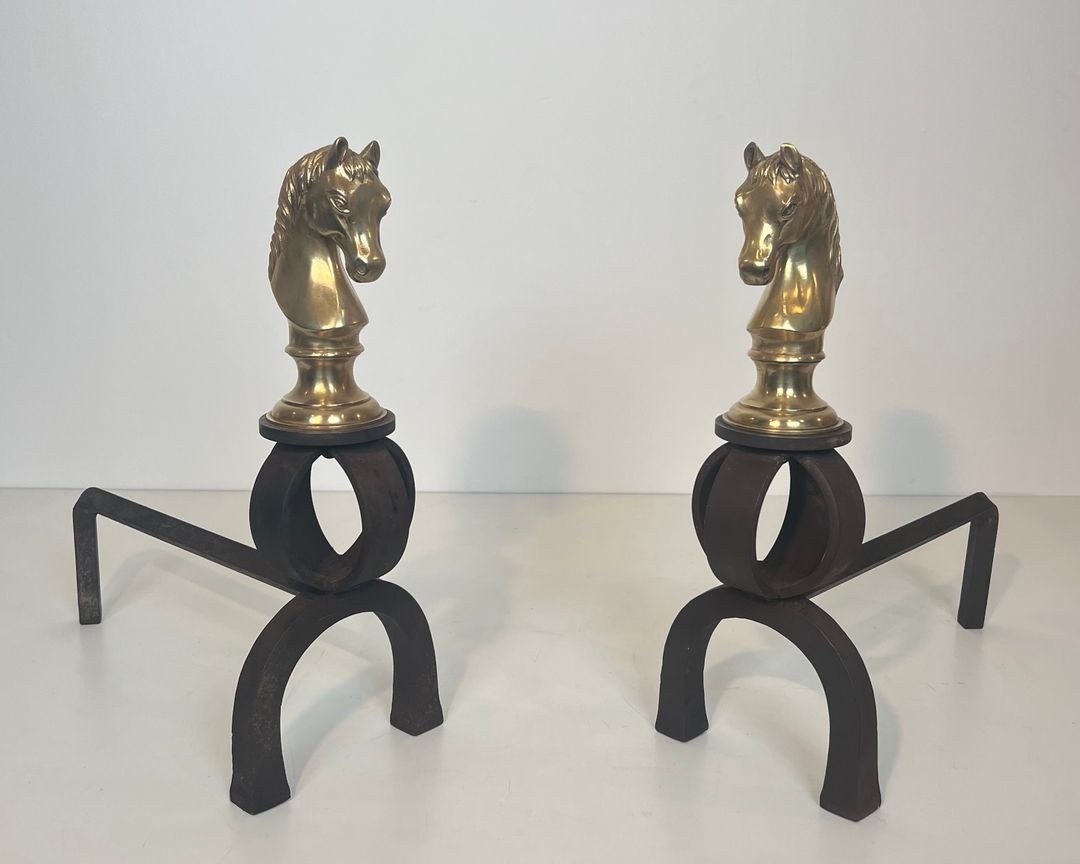
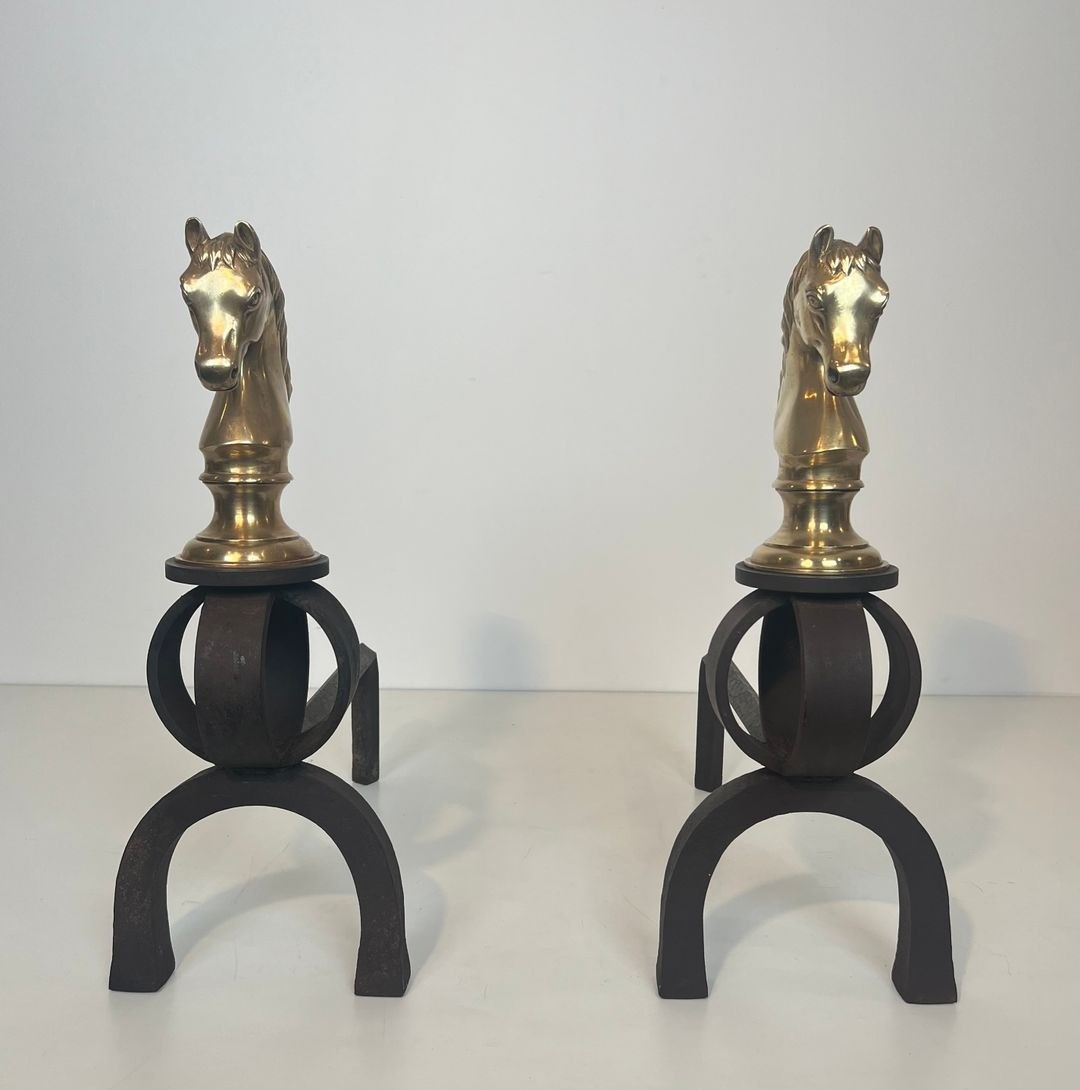
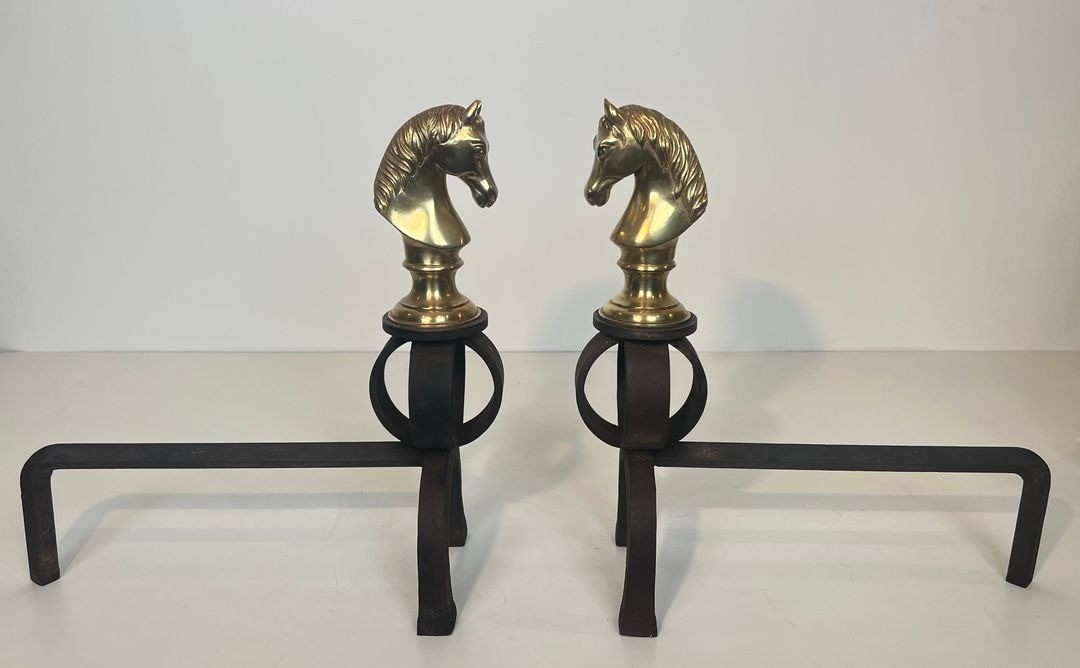
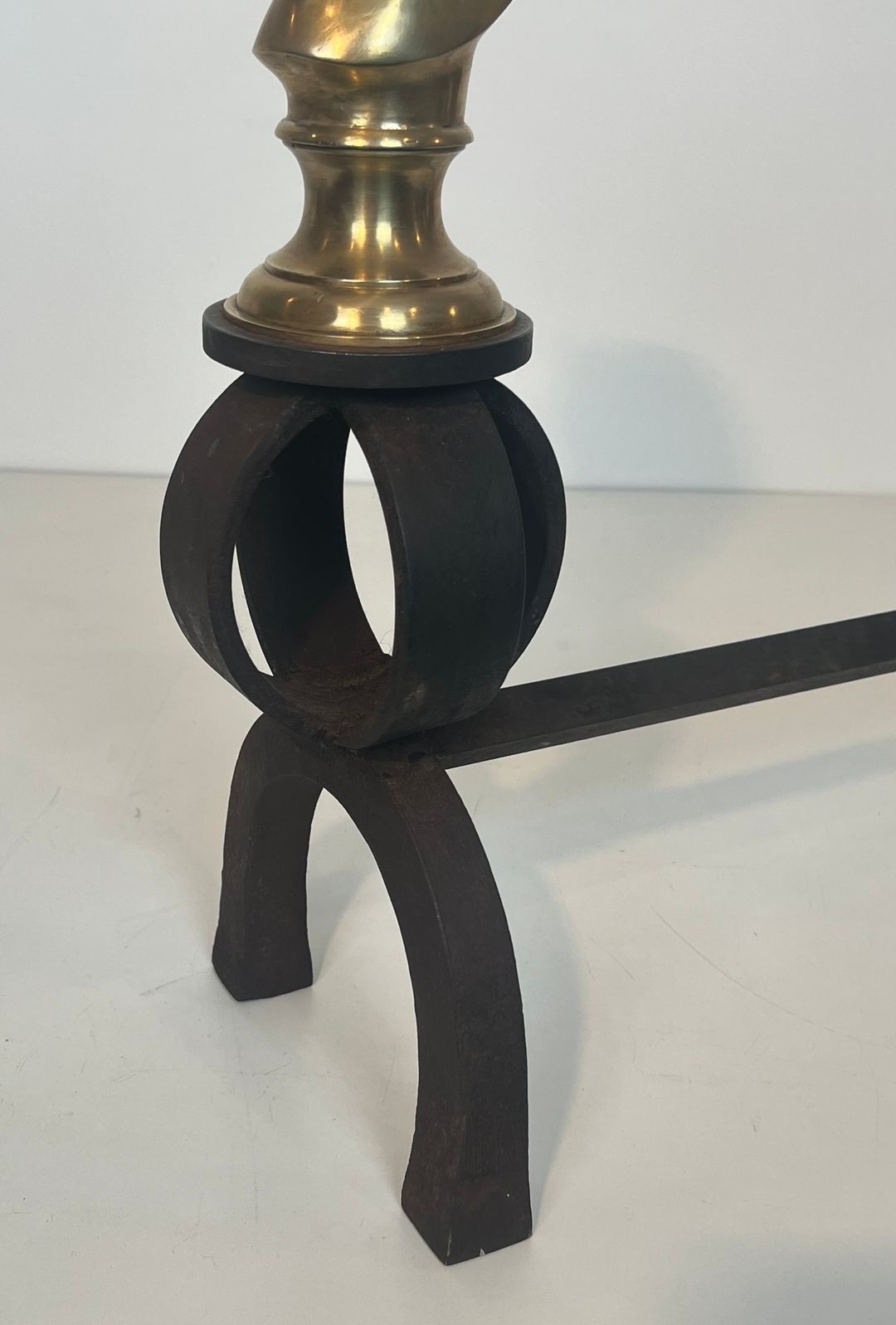
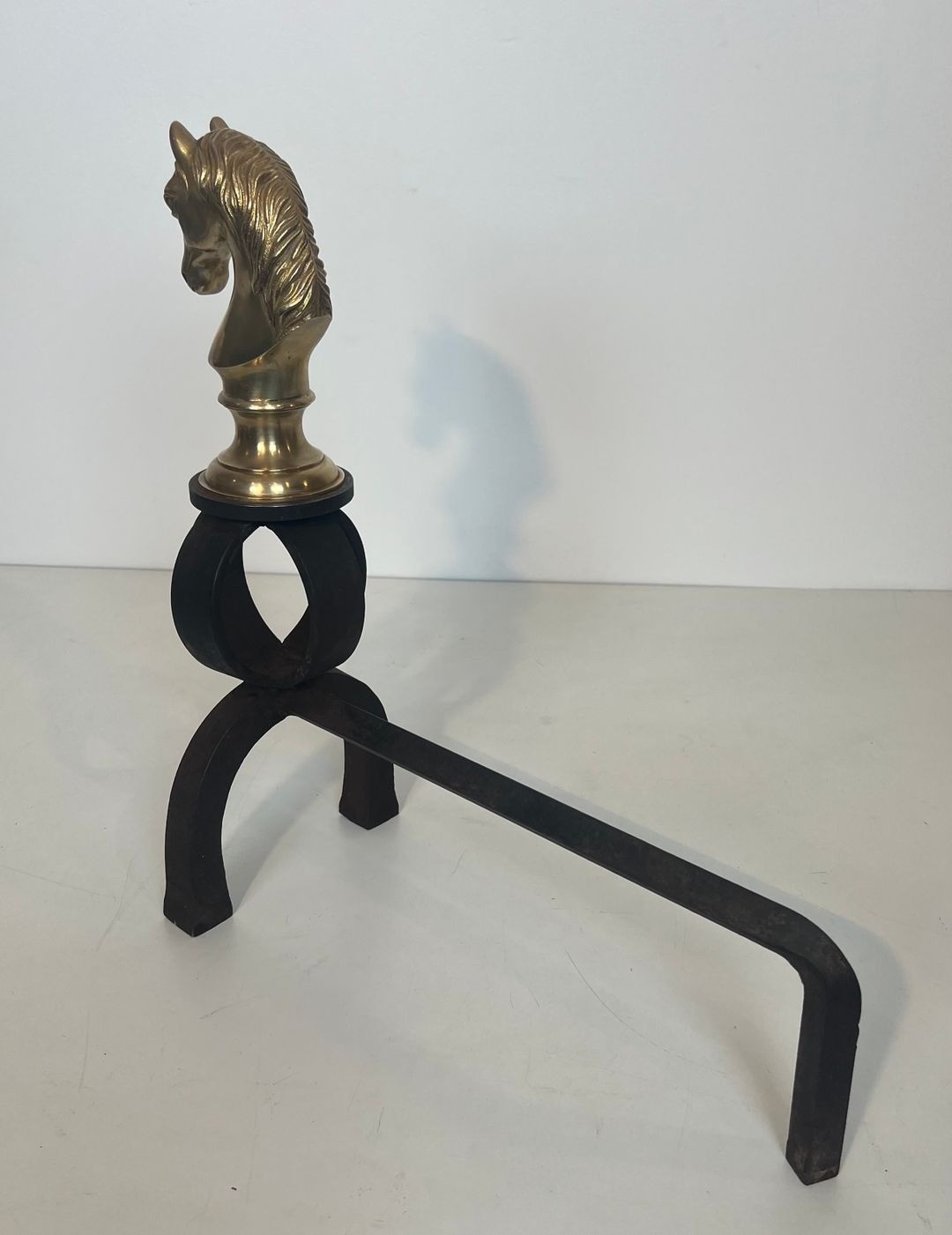
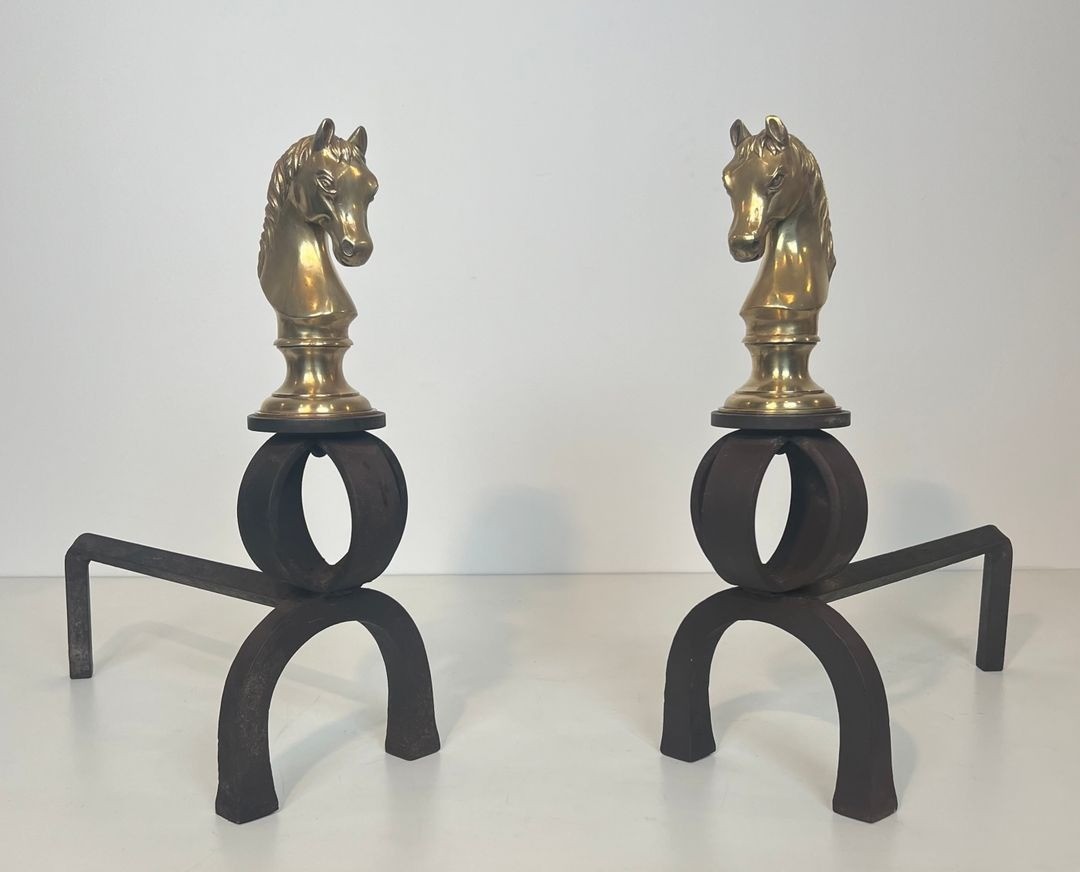
This magnificent pair of andirons presents the horse — supreme emblem of equestrian culture, sporting life, and aristocratic tradition — as gilt bronze finials of remarkable sculptural quality, mounted on circular wrought iron uprights above simple curved bases. Executed in France circa 1900, at a moment when the thoroughbred racing world and the decorative arts were intimately intertwined in the most rarefied circles of Parisian and provincial grand bourgeois life, the pair carries a distinguished equestrian provenance: it is recorded as having belonged to the celebrated horse owner known as Fistok, a noted figure in the equine world of the Belle Époque.
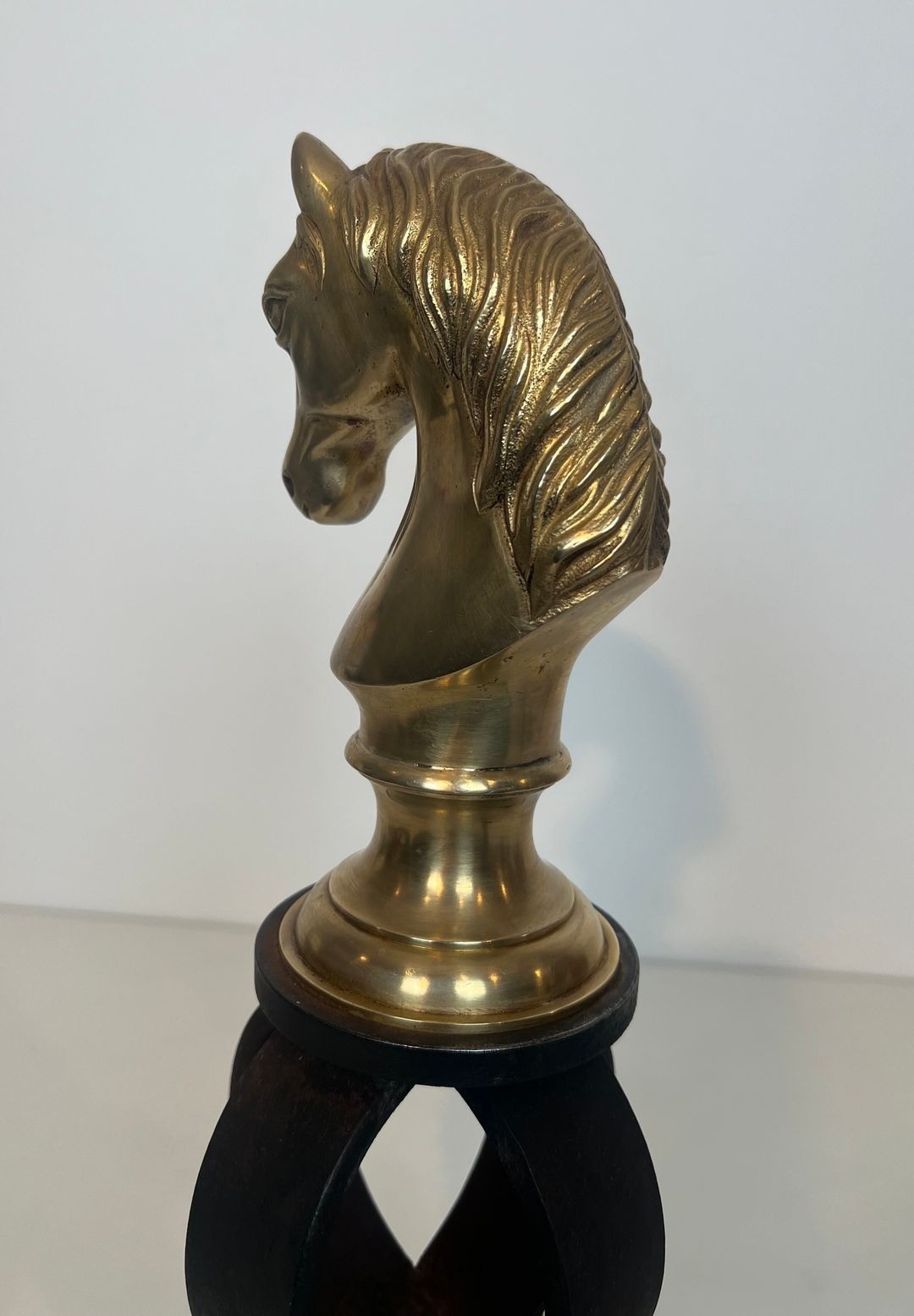
The horse heads are cast in bronze and finished to a warm gilt tone, each depicting a spirited animal with flowing mane and alert expression, set upon a circular ring of wrought iron that forms the upright of each andiron. The contrast between the polished gold of the bronze and the matte black of the forged iron is handled with the confident material authority characteristic of the best Belle Époque decorative production — a contrast that would be further heightened by firelight reflecting off the polished surface of each horse head. The modelling is accomplished, the alert, slightly forward-tilted head suggesting a horse at peak tension, fully alive to its surroundings.
The wrought iron bases are elegantly resolved: curved feet spread to provide stability on the hearthstone, and the log bars project to a depth of 46 centimetres, appropriate for a substantial fireplace. The overall height of 48 centimetres gives the pair a strong vertical presence while remaining well proportioned to a standard fireplace surround.
The combination of distinguished provenance, sculptural quality, and the enduring appeal of equestrian subject matter in French decorative arts makes this an exceptional acquisition. Horse-themed andirons of this period, when they carry documented provenance from a figure of note in racing and breeding circles, are particularly prized by collectors at the intersection of the decorative arts and the equestrian world.