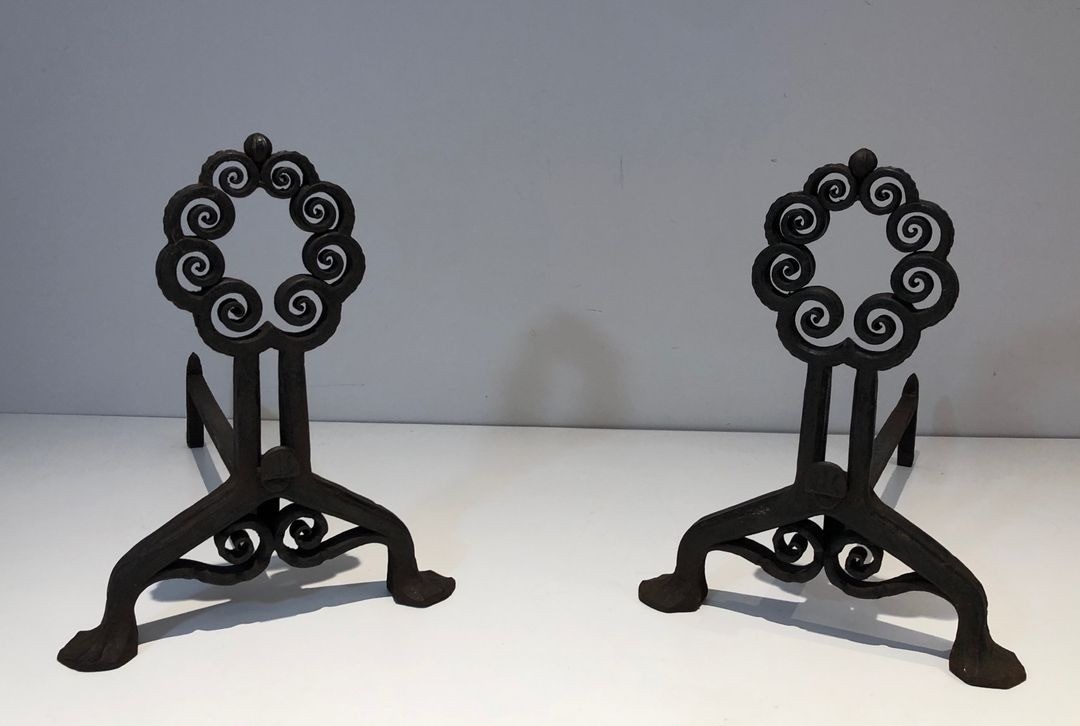
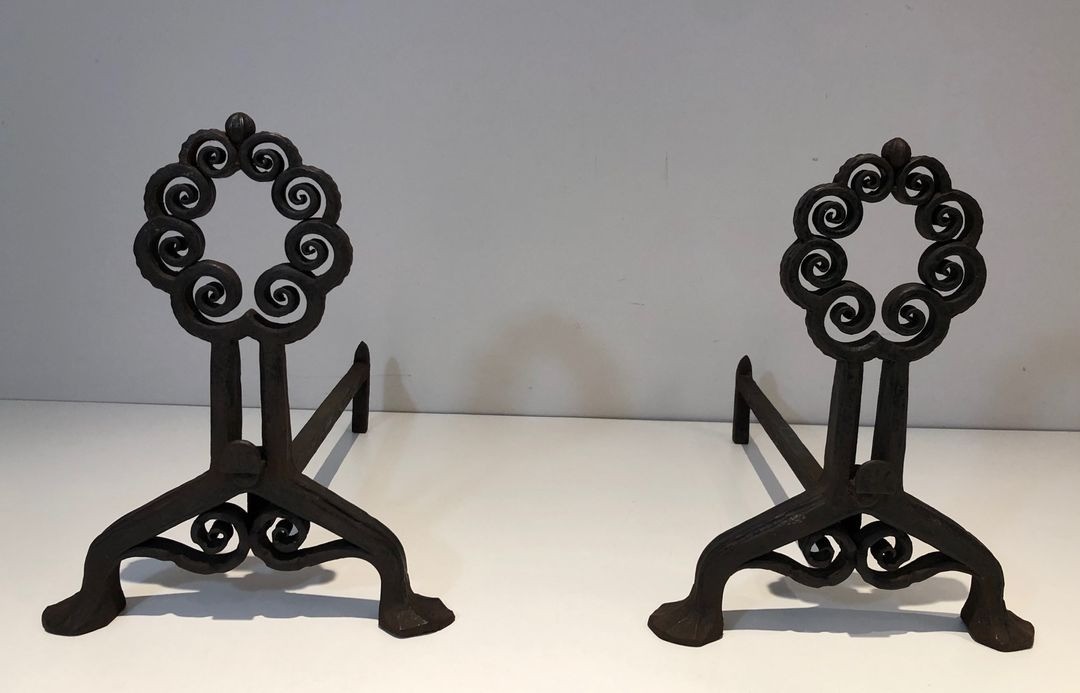
Pair of Art Nouveau Wrought Iron Andirons with Circular Scrollwork, Signed Wanner Geneva
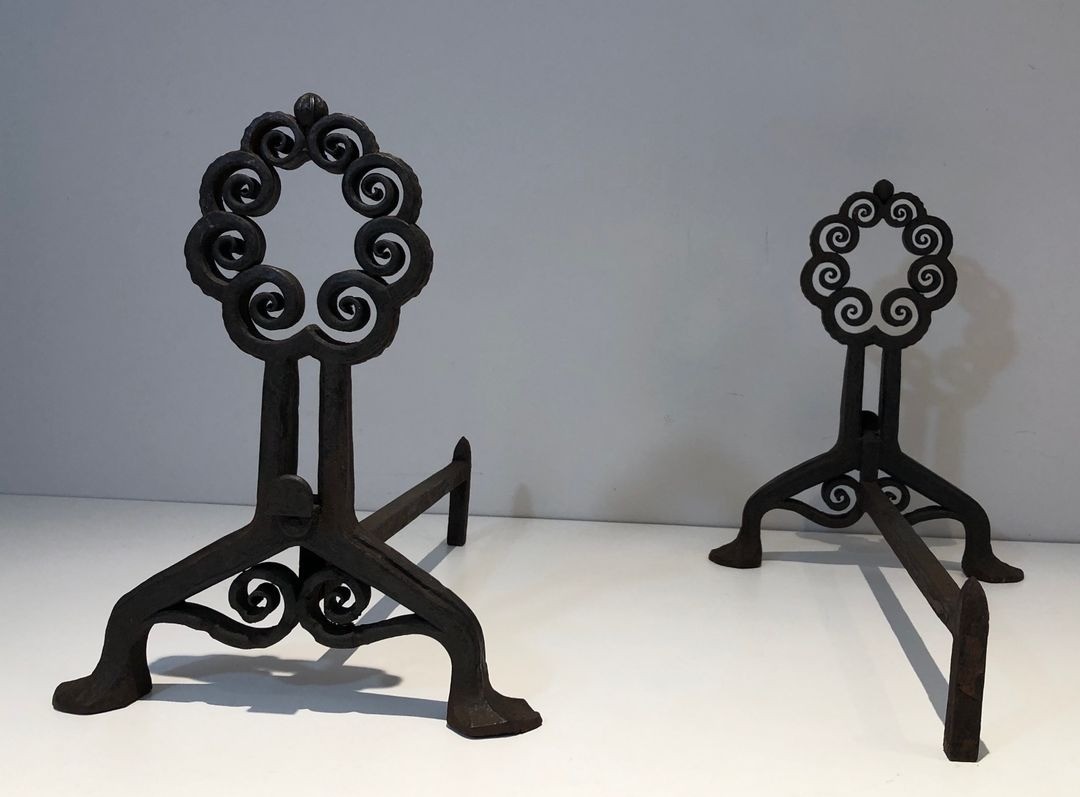
W. 29 × D. 47 × H. 36 cm Swiss work, signed Wanner Geneva, circa 1900. Hammered wrought iron with stacked circular scrollwork uprights in the Art Nouveau manner.
This magnificent pair of andirons stands as a rare and documented example of Swiss Art Nouveau ironwork at the height of its ambition, bearing the signature of Wanner Geneva — one of the foremost metalwork workshops to have operated in Switzerland around the turn of the twentieth century. Executed in wrought and hammered iron, the pair dates to circa 1900 and displays a command of the material that is both technically accomplished and artistically coherent.
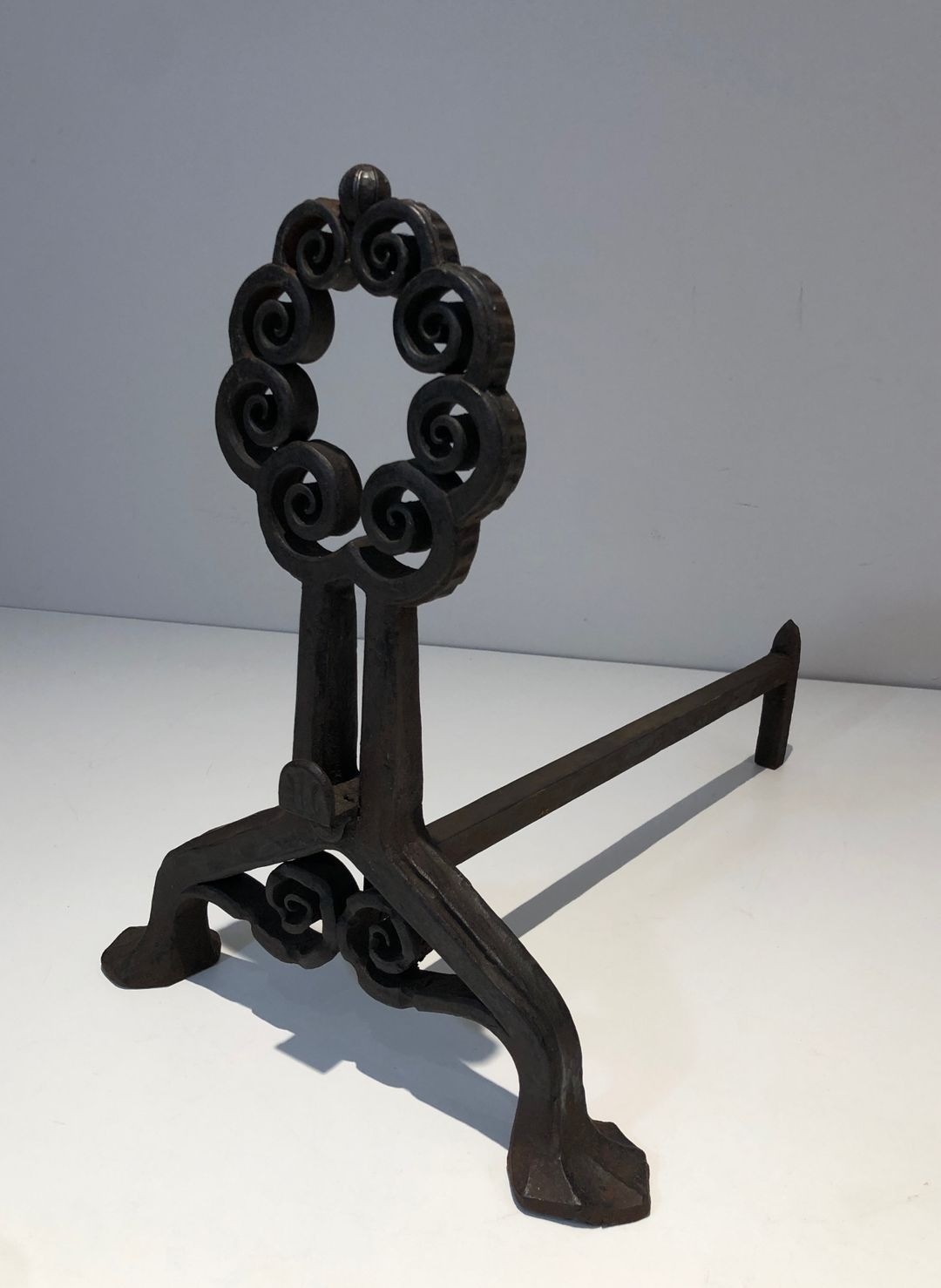
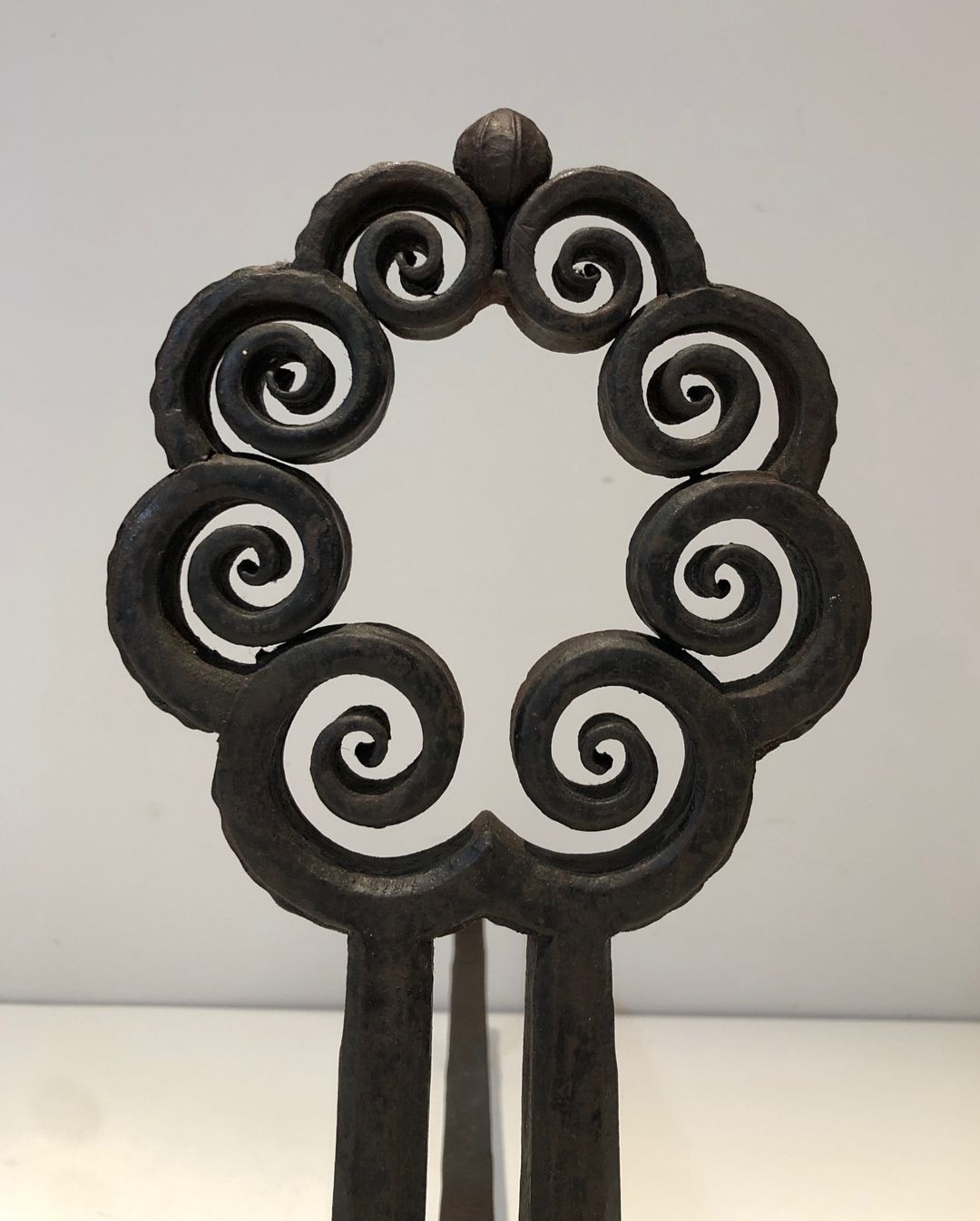
The uprights are the defining feature of the design: composed of multiple interlocked circular rings, each formed from elegantly curved scroll elements and spiral volutes arranged in organic, flowing configurations. This stacked circular vocabulary is quintessentially Art Nouveau in spirit, drawing on natural, curvilinear forms to achieve an effect that is simultaneously architectural and botanical, disciplined yet alive with movement. The hammered surface treatment adds a further dimension of texture, catching the light at every angle and softening the hard metal into something almost vegetal in character.
The base of each andiron is structured with confident practical authority: extended feet providing a stable footprint on the hearth, and substantial horizontal log bars projecting to support the firewood. The proportions are carefully balanced — at 36 centimetres tall, the uprights draw the eye without overpowering the hearth surround, while the 47-centimetre depth ensures ample log support. The pair was clearly conceived as a unified composition, with each piece a mirror image of the other.
Signed pieces from this period in fine ironwork are uncommon; a signed and documented example by a Geneva firm of Wanner’s stature is a genuine rarity. This pair would be at home in any significant collection of Belle Époque or Art Nouveau decorative arts, and constitutes a distinguished contribution to the history of Swiss applied arts.