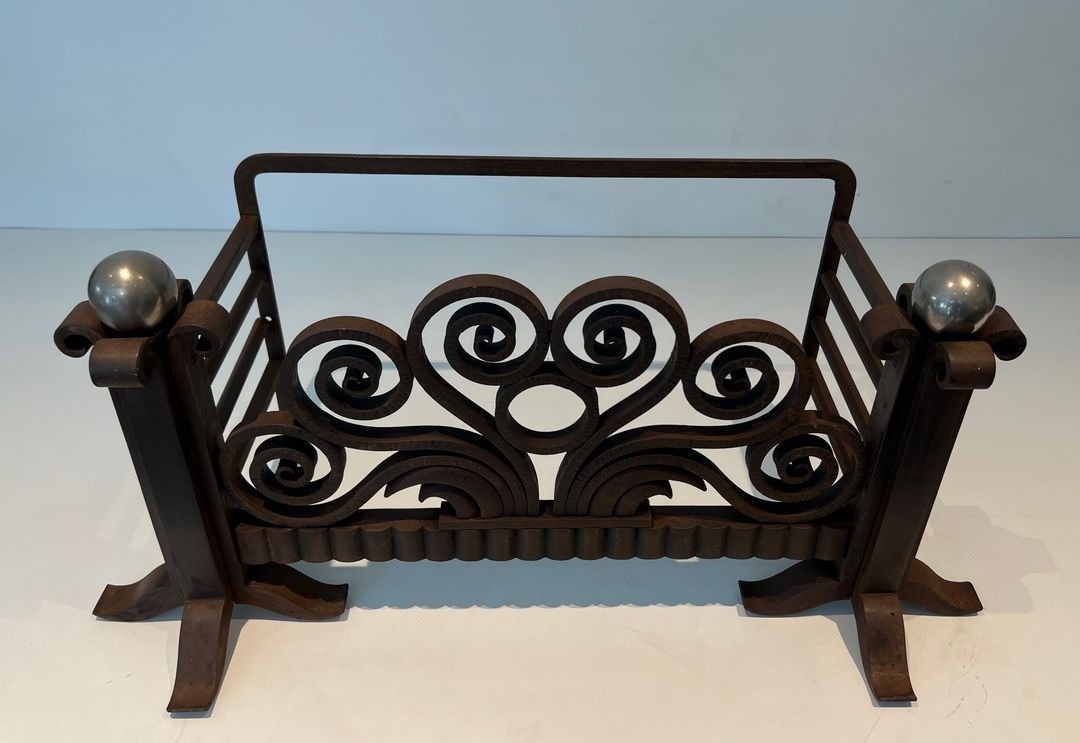
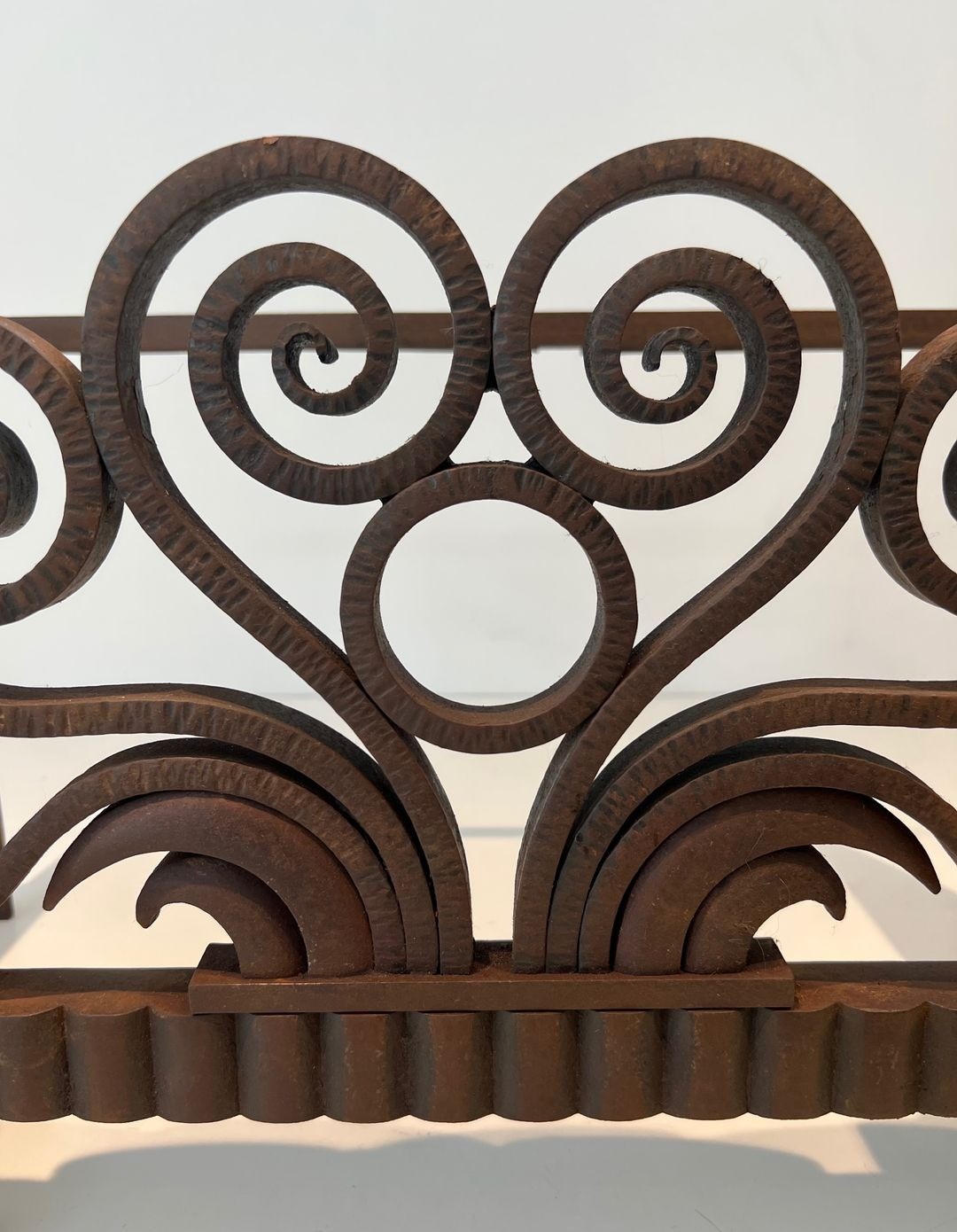
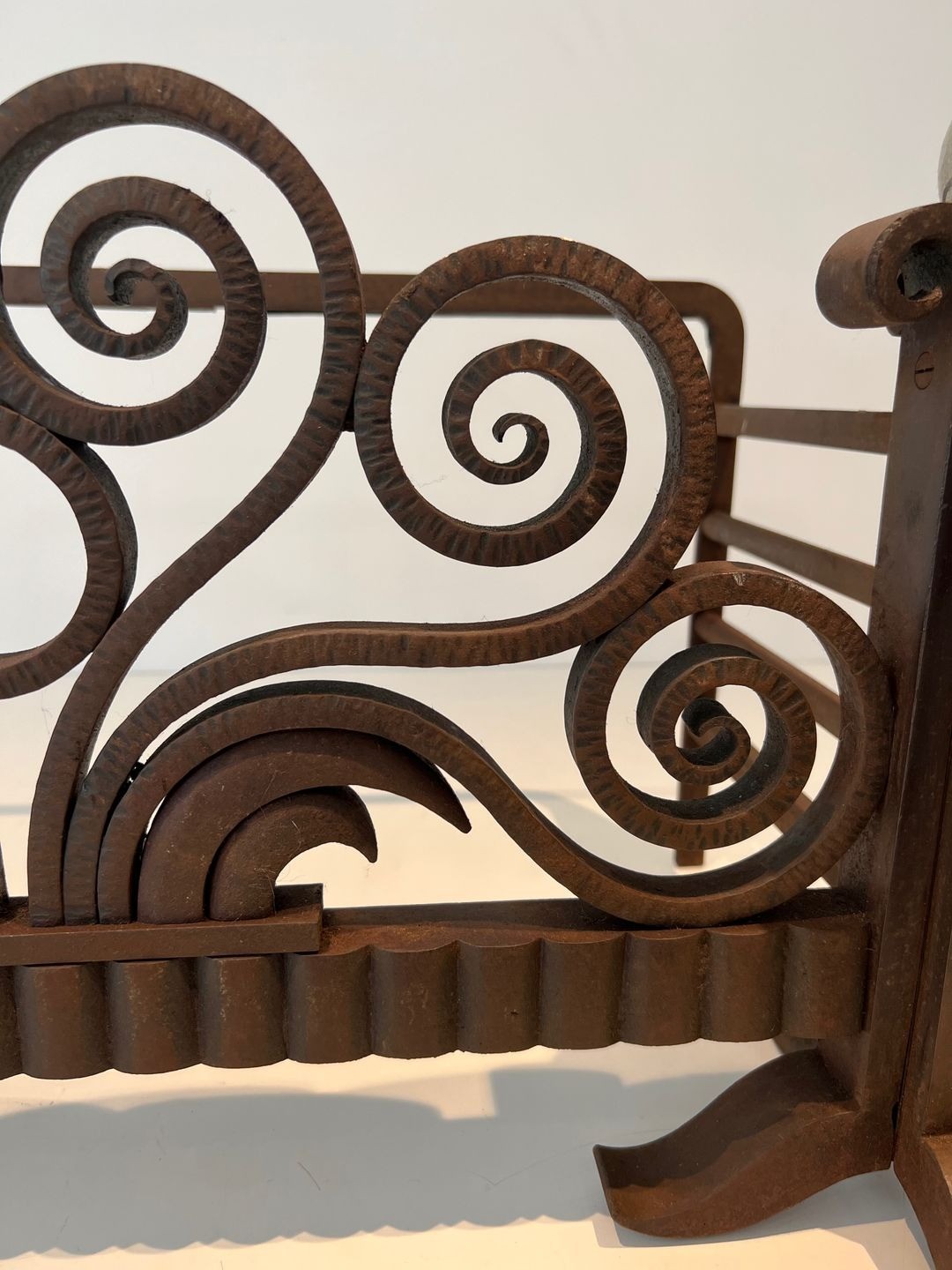
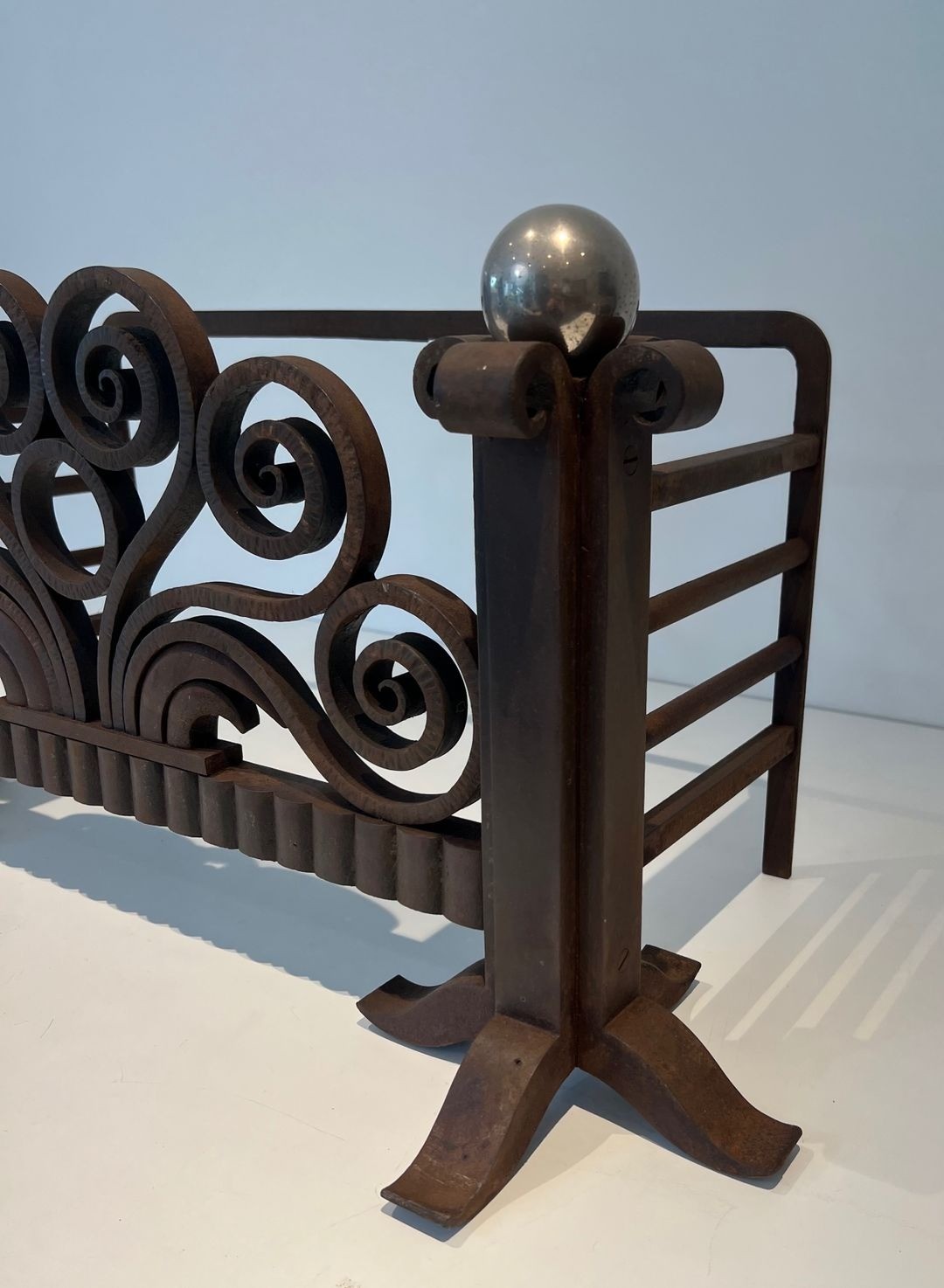
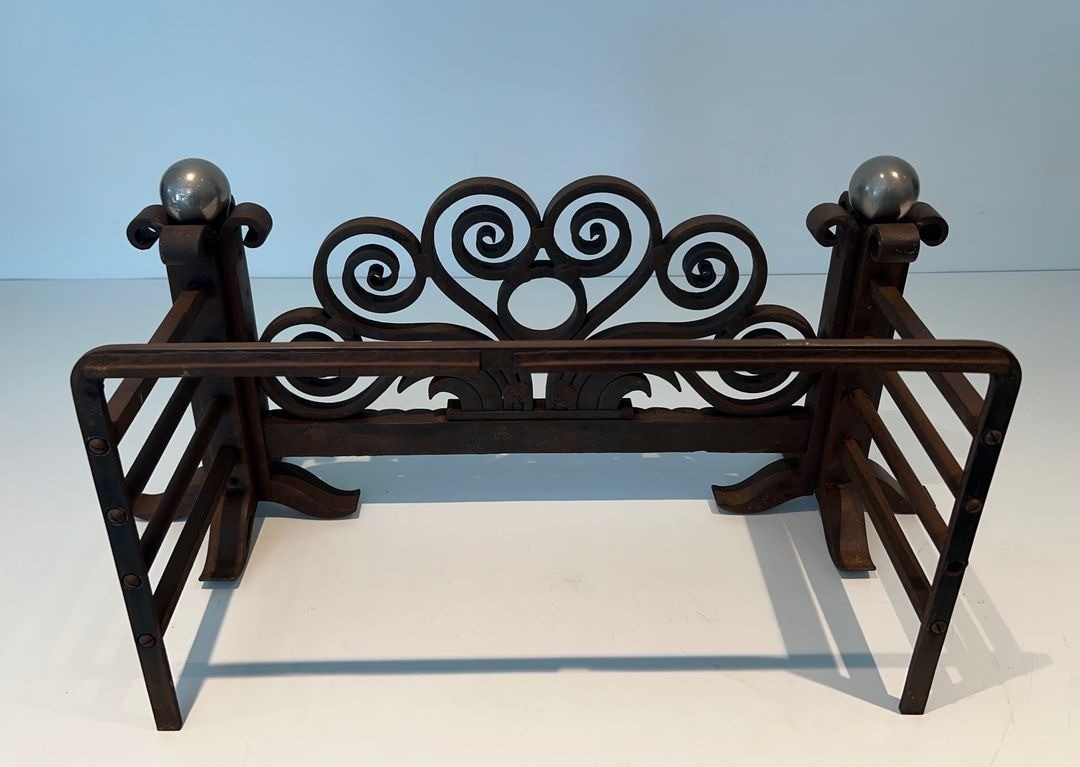
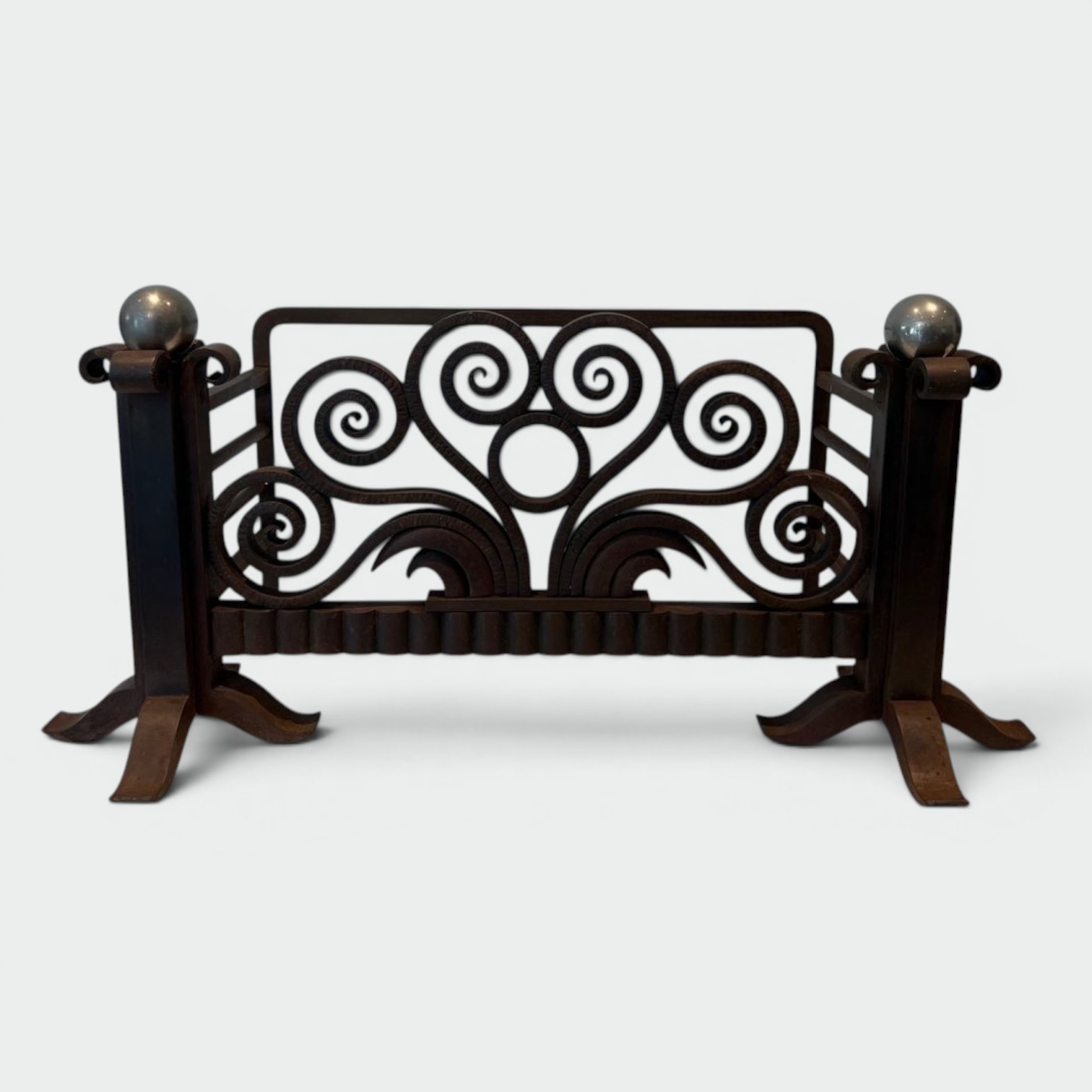
This exceptional log cradle or pair of andirons exemplifies the grandeur of French Art Deco ironwork at its peak, executed in the monumental vocabulary pioneered by Edgar Brandt (1880–1960), the unrivalled master of decorative wrought iron during the interwar period. Measuring 80.5 centimetres in width, the piece commands attention through sheer scale alone, yet it is the density and sophistication of its ornamental programme that truly sets it apart.
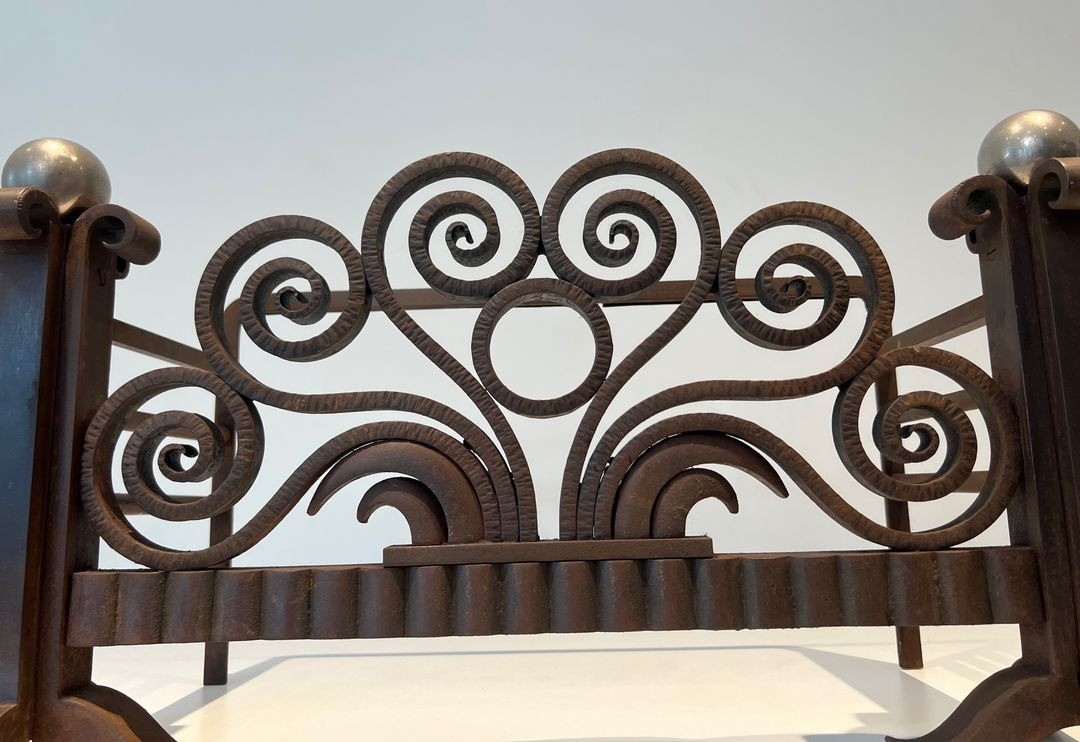
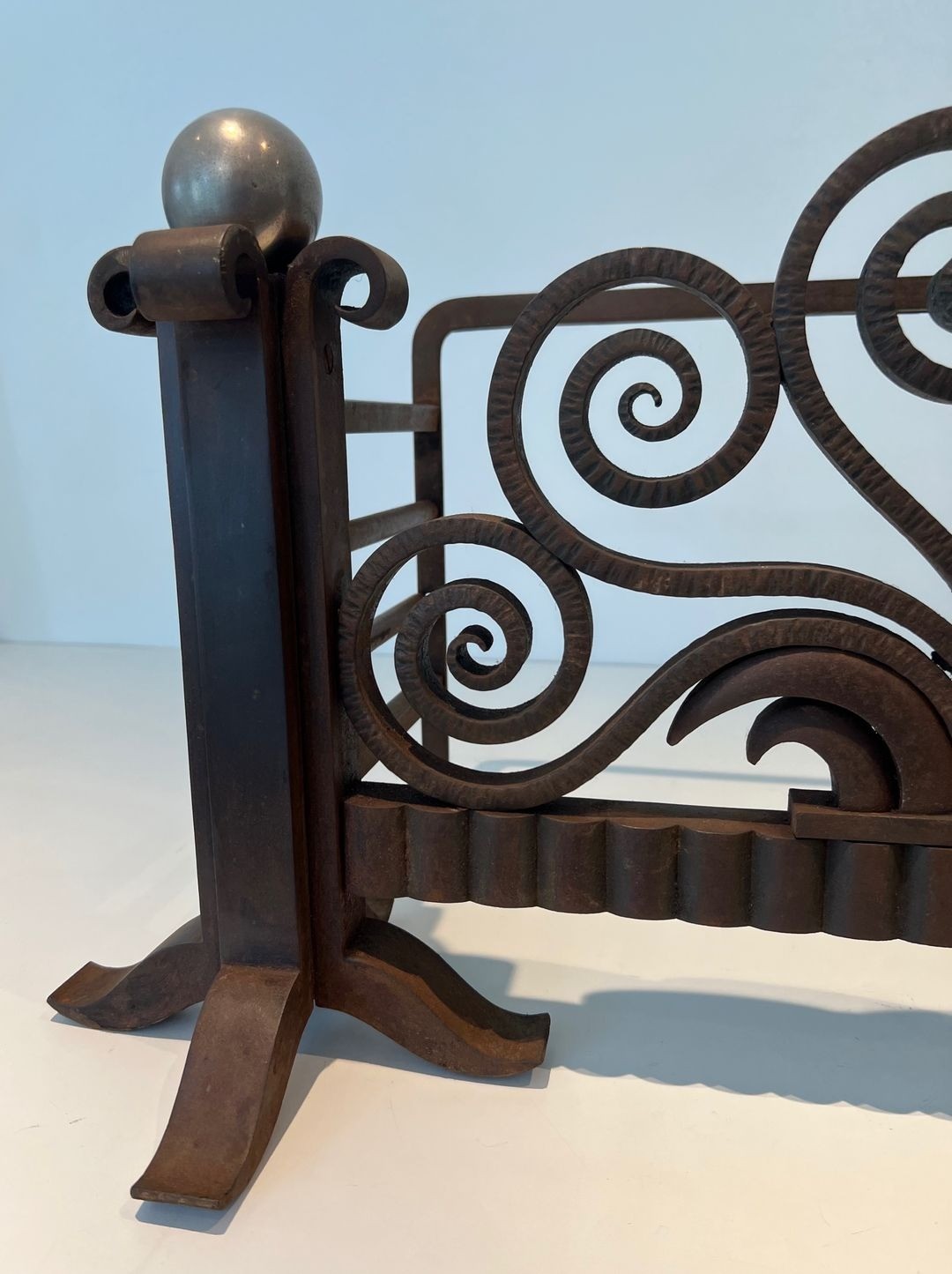
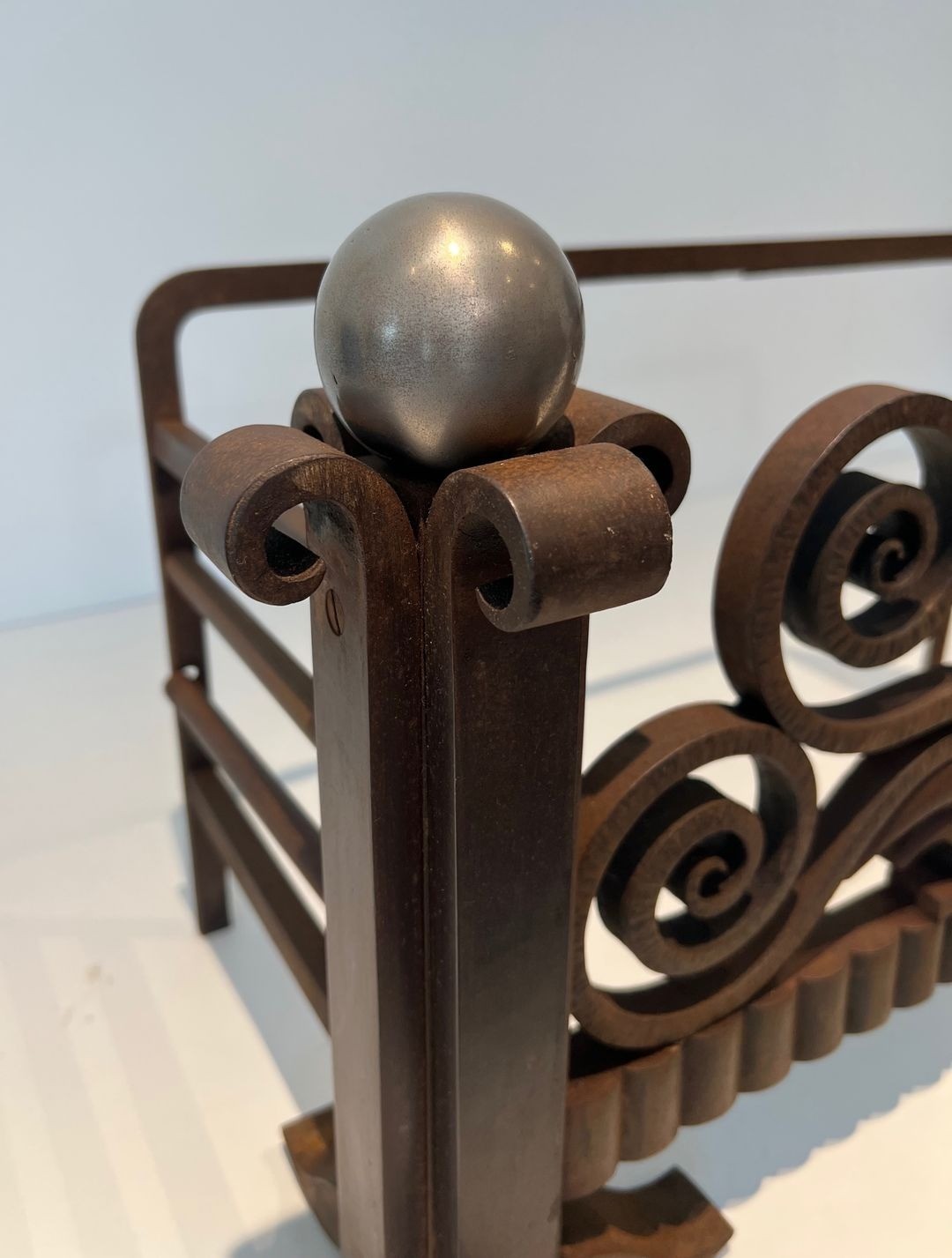
The upper frieze is dominated by a spectacular composition of triple spiral scrollwork interlaced with double-C volutes, an arrangement that recalls Brandt’s most celebrated panels and grilles exhibited at the Salon des Artistes Décorateurs and at the 1925 Exposition Internationale des Arts Décoratifs. Sinuous wave and vegetal motifs flow between the spirals, hammered to a fine relief that catches the light at every angle, revealing the skill of a blacksmith working at the summit of his craft. Chrome-finished horizontal bars punctuate the composition, introducing a contrast of industrial brilliance against the warm, matte texture of the hand-worked iron.
The lower register presents a comb-like horizontal rail that provides structural rigidity while echoing the rhythmic linearity so characteristic of the Moderne aesthetic. Scroll feet anchor the ensemble with elegant authority, ensuring stability on the hearth without sacrificing decorative refinement. Whether configured as a log cradle supporting and displaying a generous pile of firewood, or as a pair of freestanding andirons, the piece functions with equal grace in either role — a testament to the functional ingenuity that Brandt himself championed.
A distinguished addition to any collection of Art Deco decorative arts, this piece evokes the extraordinary flowering of French metalwork in the years between the wars, when the forge once again became a medium of high artistic ambition. It would sit comfortably alongside signed works by Brandt, Poillerat, or Subes, and would bring drama and historical depth to any fireplace in a period interior.