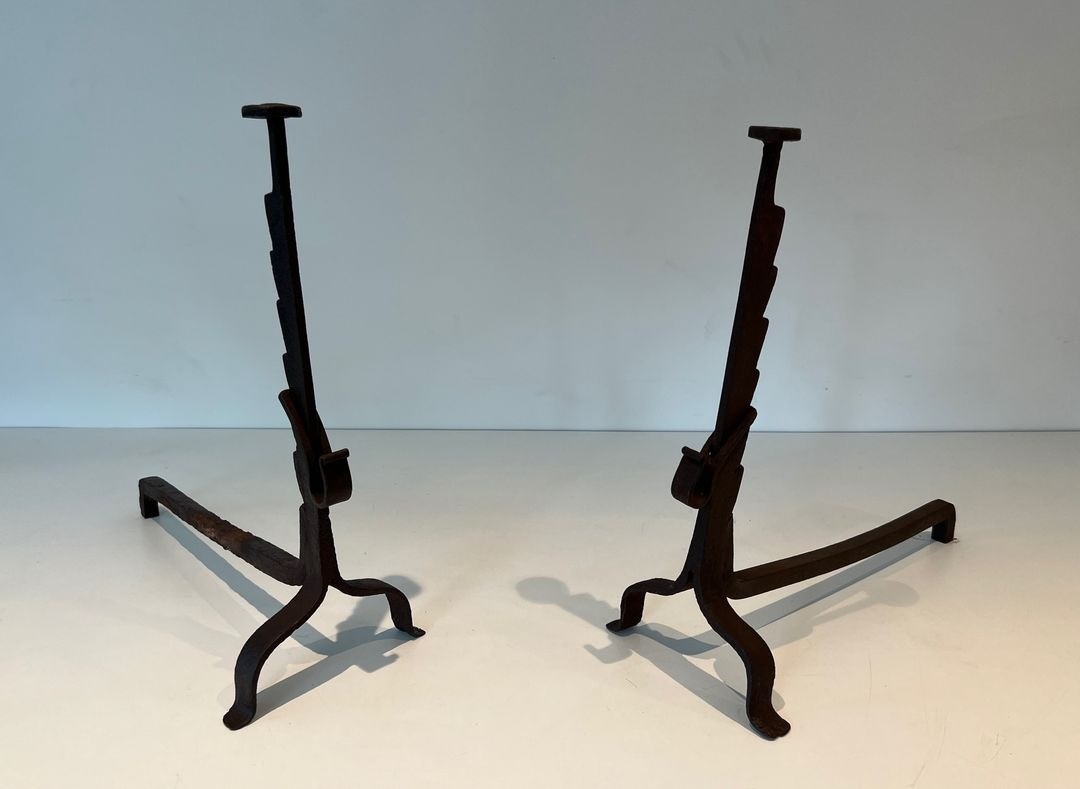
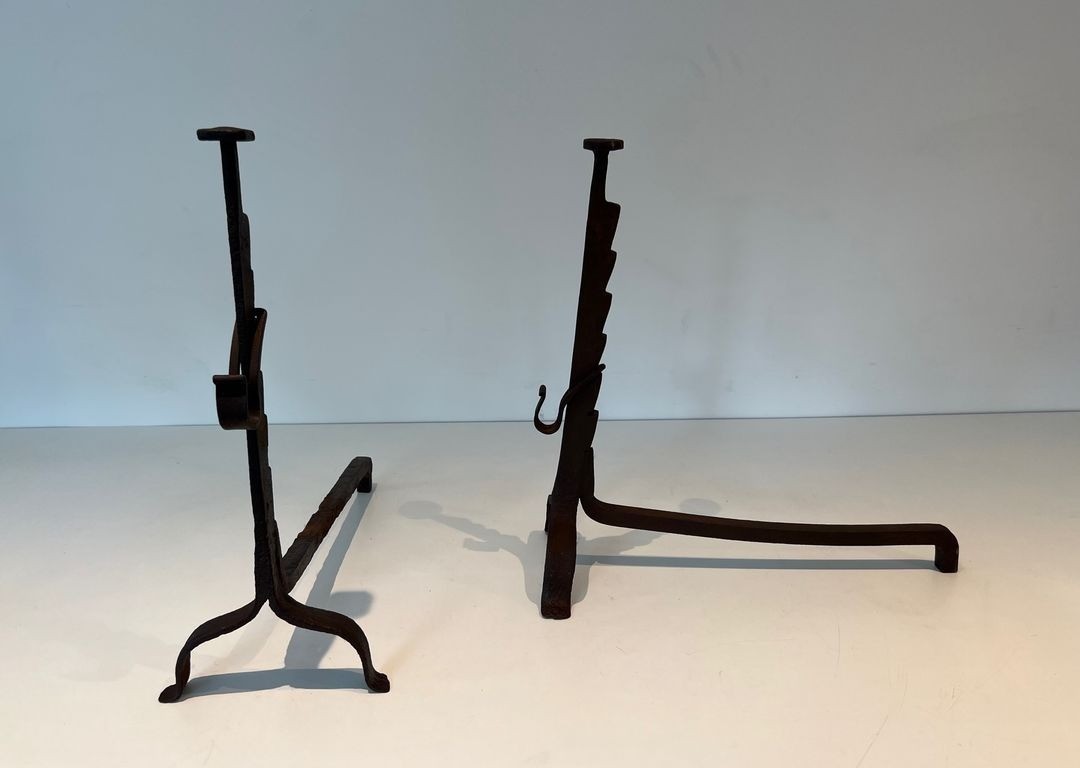
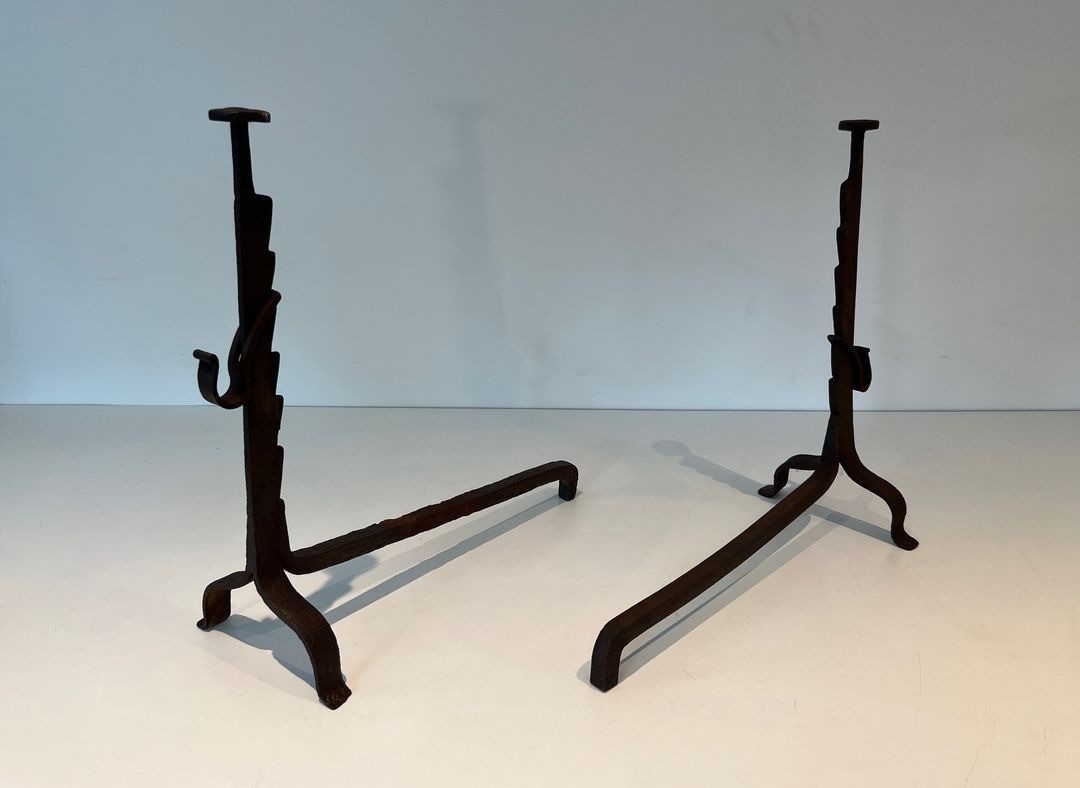
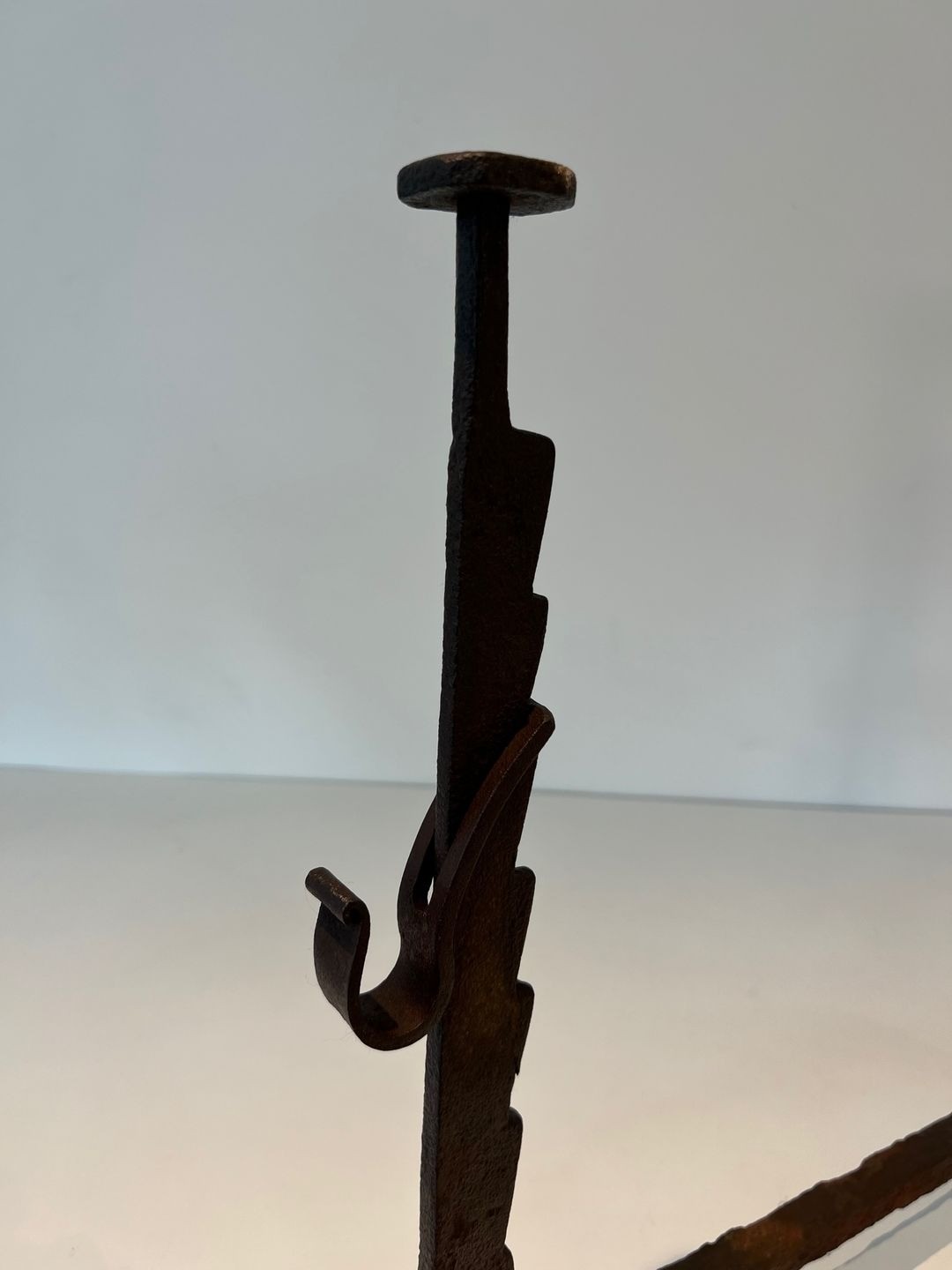
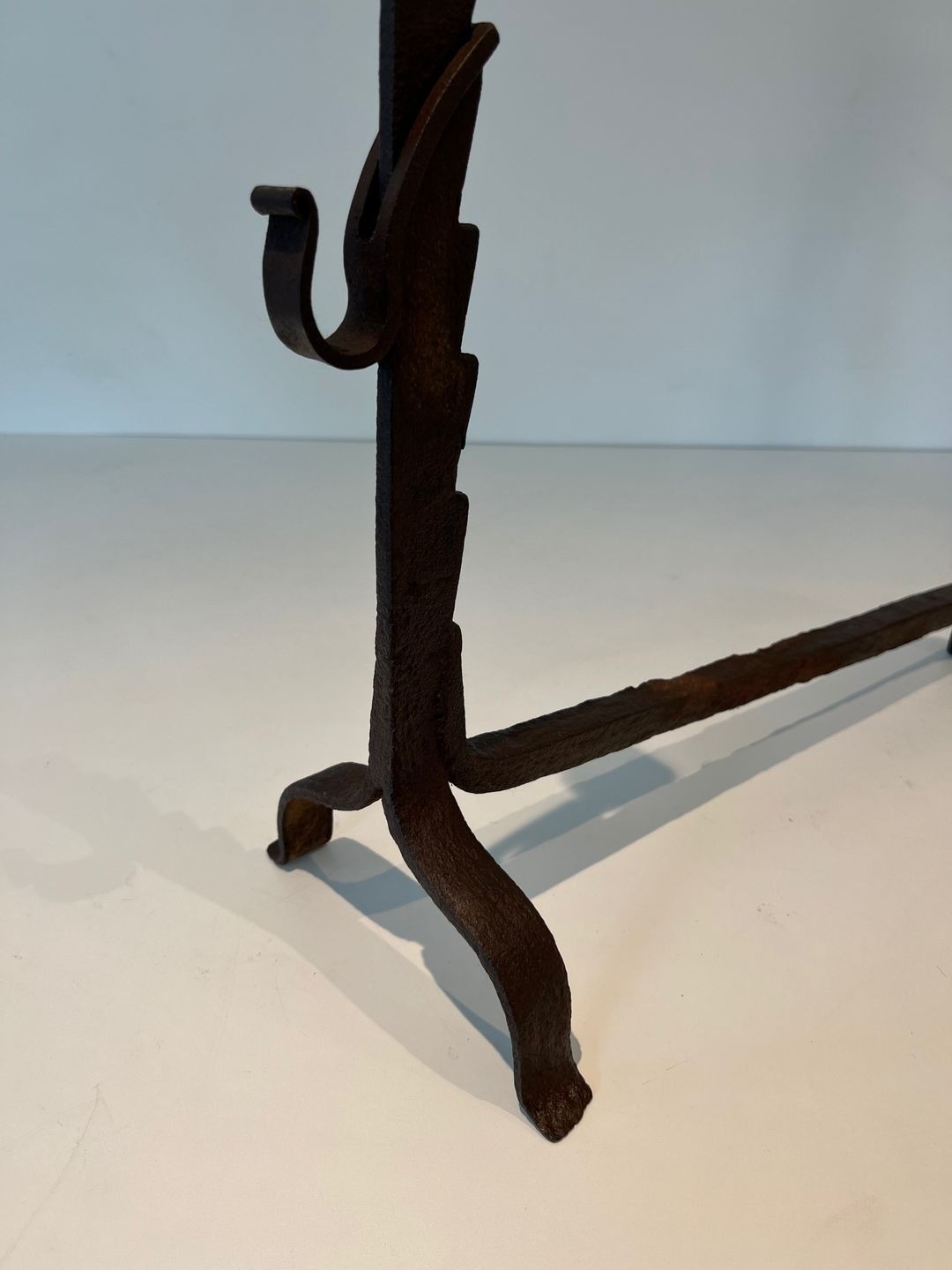
Pair of Wrought Iron Andirons with Ratchet Uprights and Tripod Bases. France. Circa 1900.
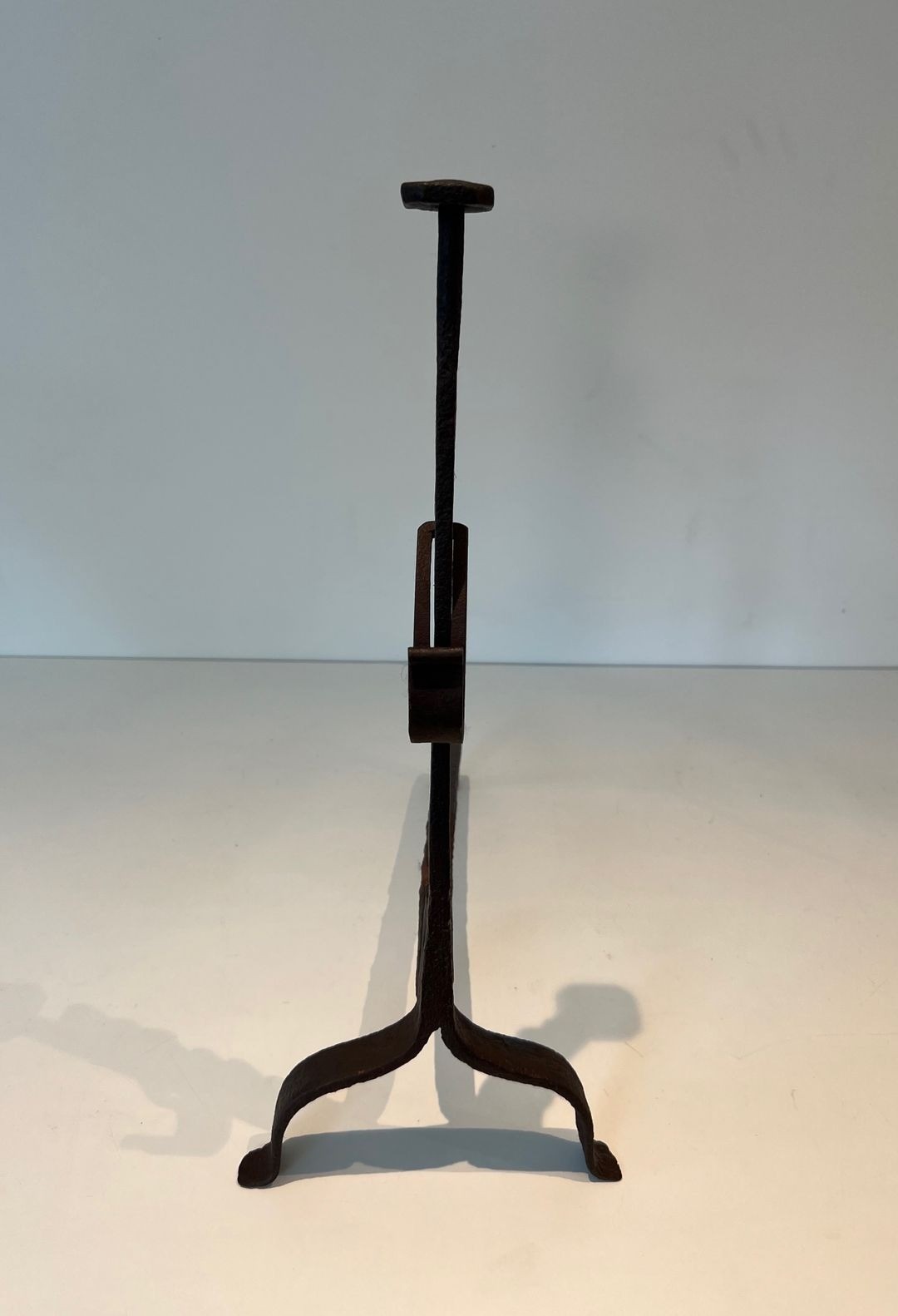
A pair of French wrought iron andirons of traditional form, each upright formed as a tall ratchet-toothed shaft with a flat T-bar cap, enabling height adjustment of a spit or fire basket, raised on a three-legged tripod base. France. Circa 1900. W. 21.5 × D. 52.5 × H. 50 cm.
These andirons belong to the most ancient and utilitarian tradition of French fireplace ironwork, one that predates the decorative elaboration of the form by several centuries. The defining feature is the ratchet or “crémaillère” — a toothed or notched vertical shaft that allowed a spit, a fire grate, or a cooking vessel to be suspended and adjusted at varying heights above the flames. This ingenious mechanism, in use in French domestic interiors from the medieval period onwards, transformed the andiron from a mere log support into a versatile element of the working hearth, equally suited to roasting, boiling, and smoking.
The uprights rise to flat T-bar caps, a characteristic termination of the functional andiron type that provided both a visual stop to the column and a practical surface against which implements could be rested or hooked. The tripod bases, with their three spreading legs, offer exceptional stability on the uneven stone or tile floor of the traditional French foyer, their wide footprint distributing the weight of heavy logs and cooking vessels with admirable security. The sweeping curves of the tripod legs have an innate elegance, achieving a quality of line that elevates the piece above its purely functional origins.
Forged in blackened wrought iron, the patina is deep and consistent, the surface bearing the marks of a century of use by the hearth — the slight unevenness of hand work, the variable density of the blackening, the evidence of heat and smoke. This patina is the authentic testimony of a domestic object made to last and used accordingly, and is far more valuable from a collector’s perspective than any artificial finish.
These andirons would be most appropriate in a period interior with a large traditional fireplace, particularly one equipped for cooking or with stone surrounds of a rural or provincial character. Their working provenance and the ratchet mechanism make them objects of considerable interest to the collector of French domestic ironwork and kitchen antiques as well as to the interior designer seeking authentic period pieces.