Monumental Pair of Wrought Iron Andirons with Snail-Shell Spiral Finials and Spit-Rest Arms. France. Circa 1900.
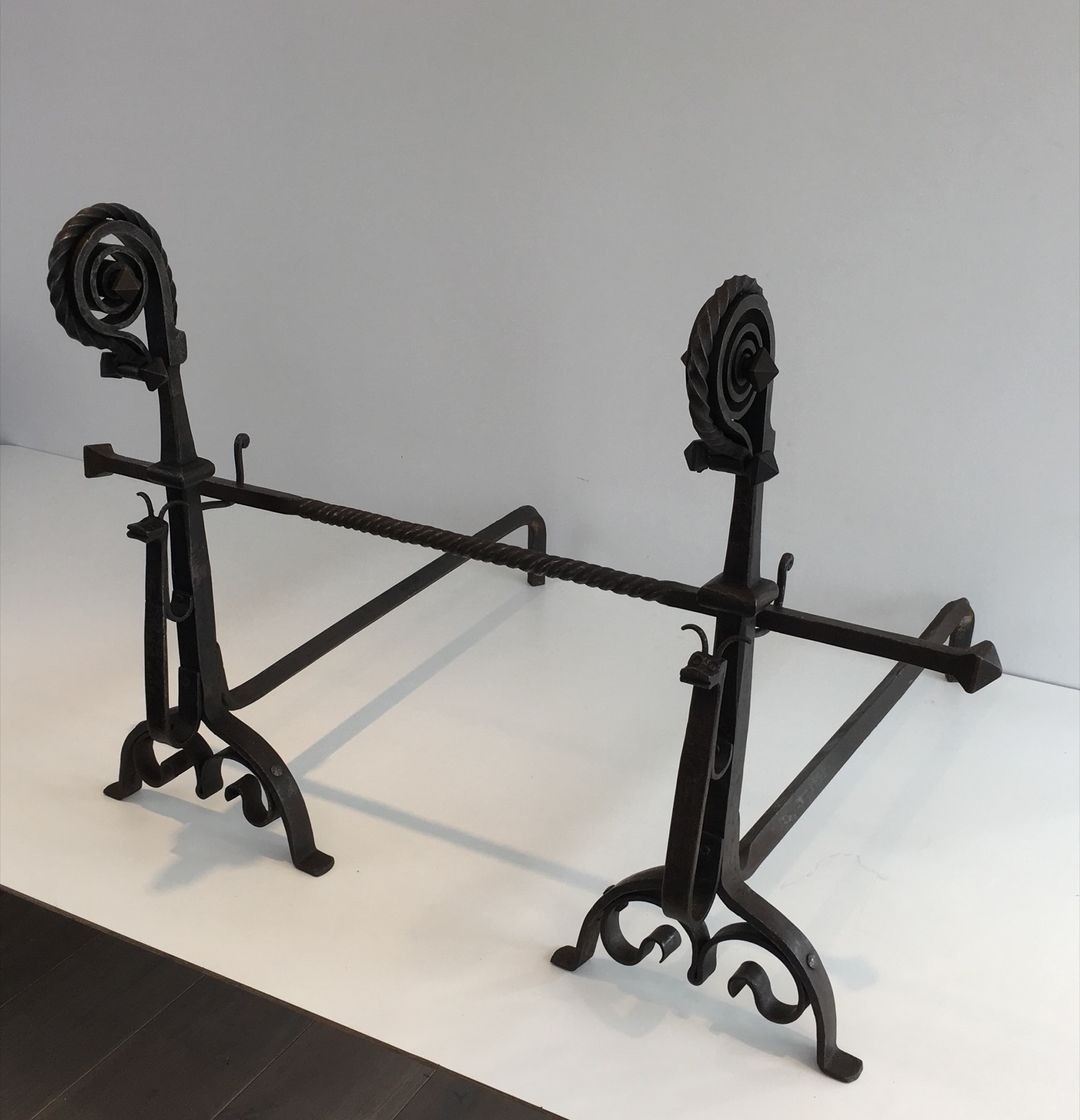
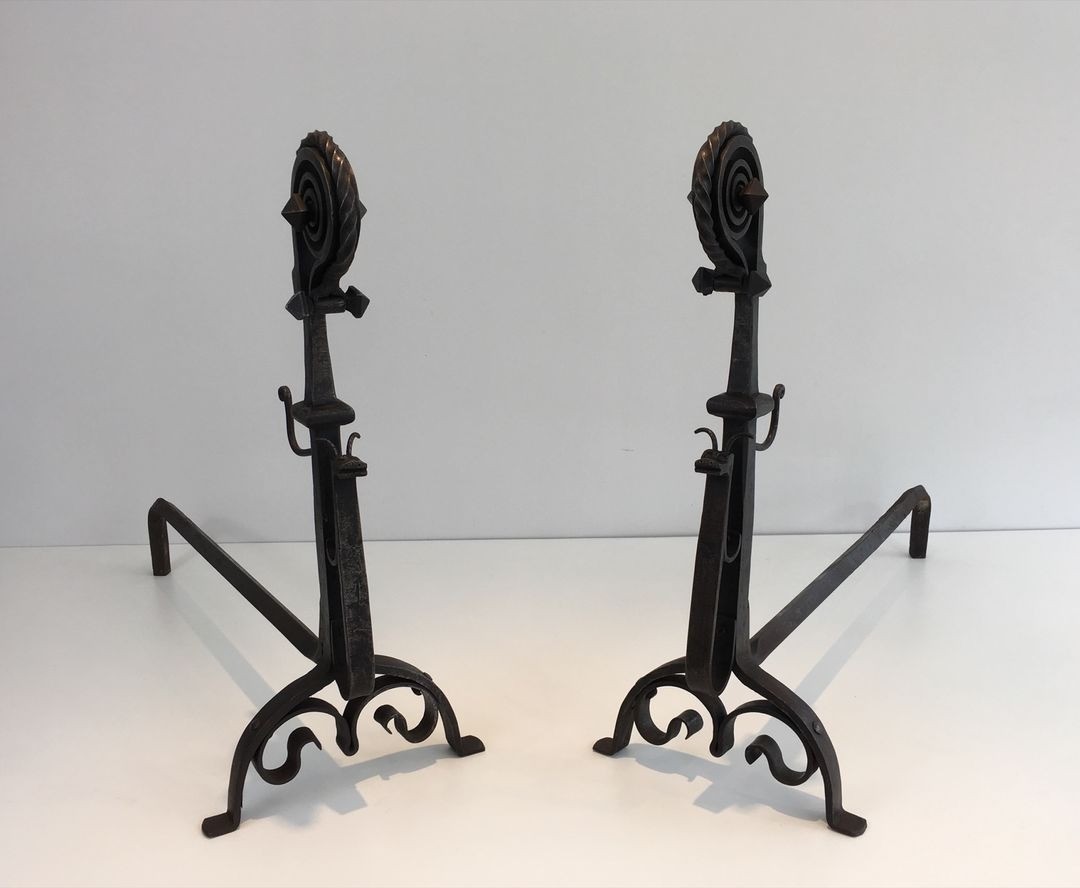
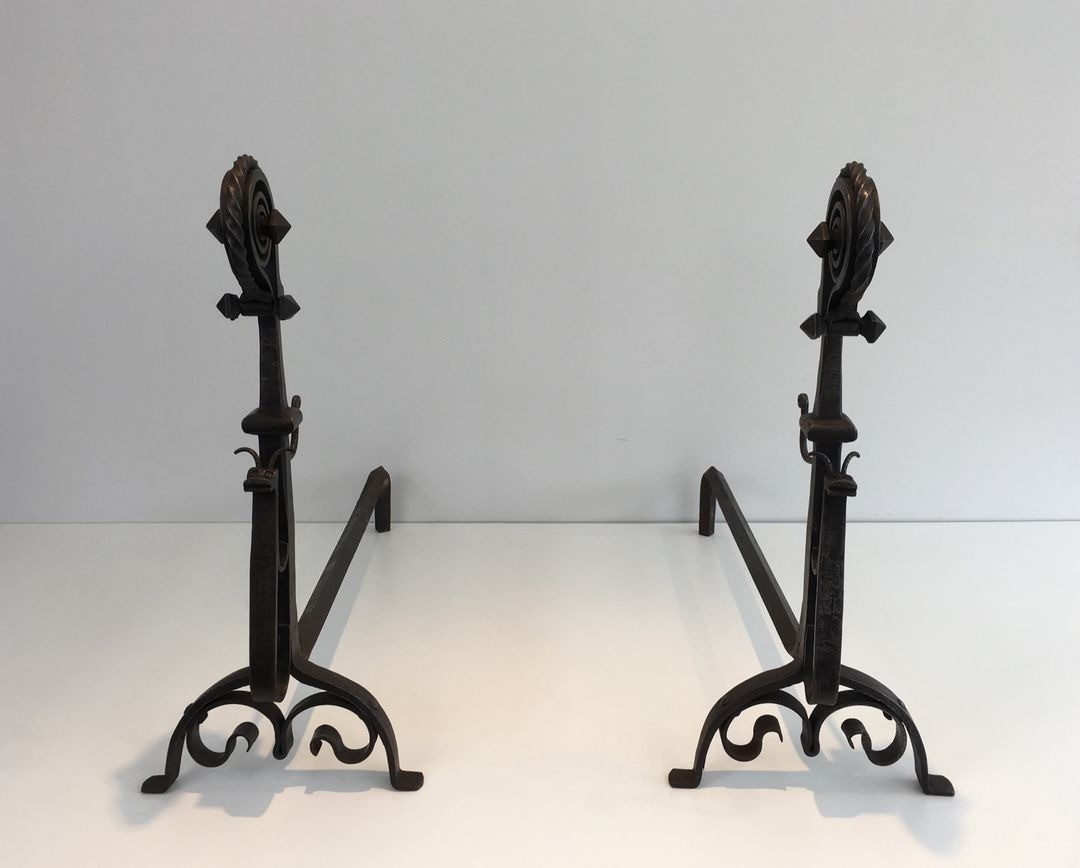
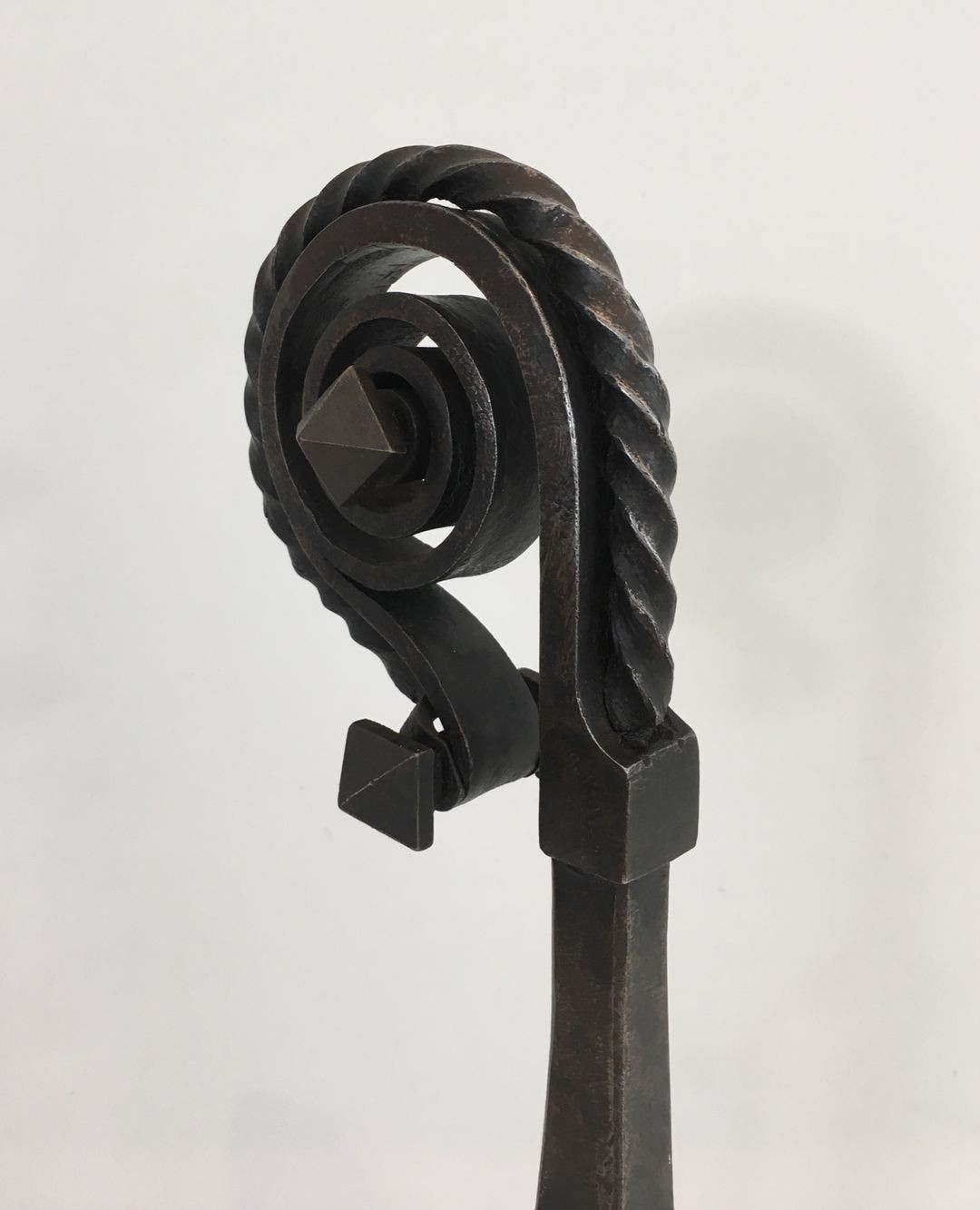
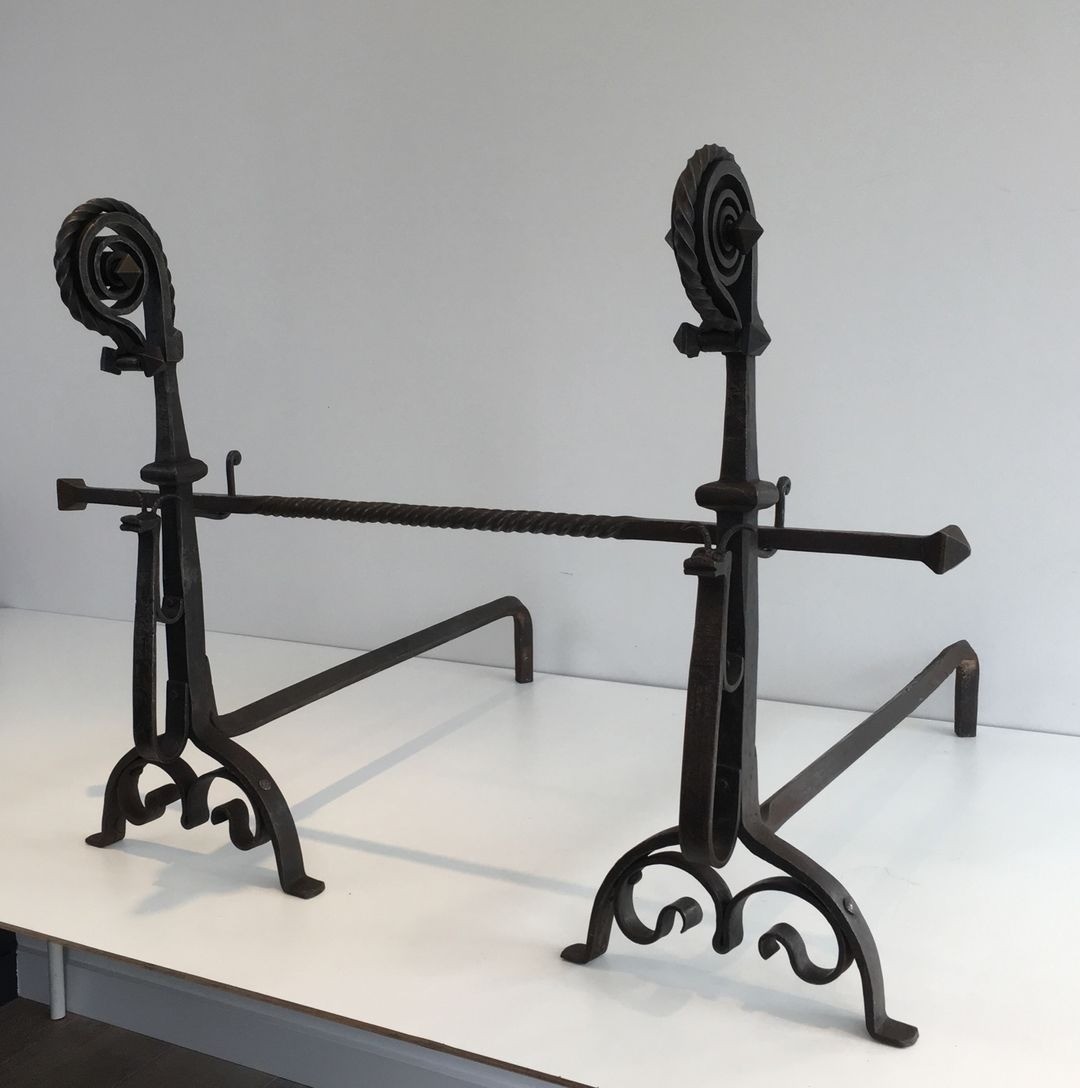
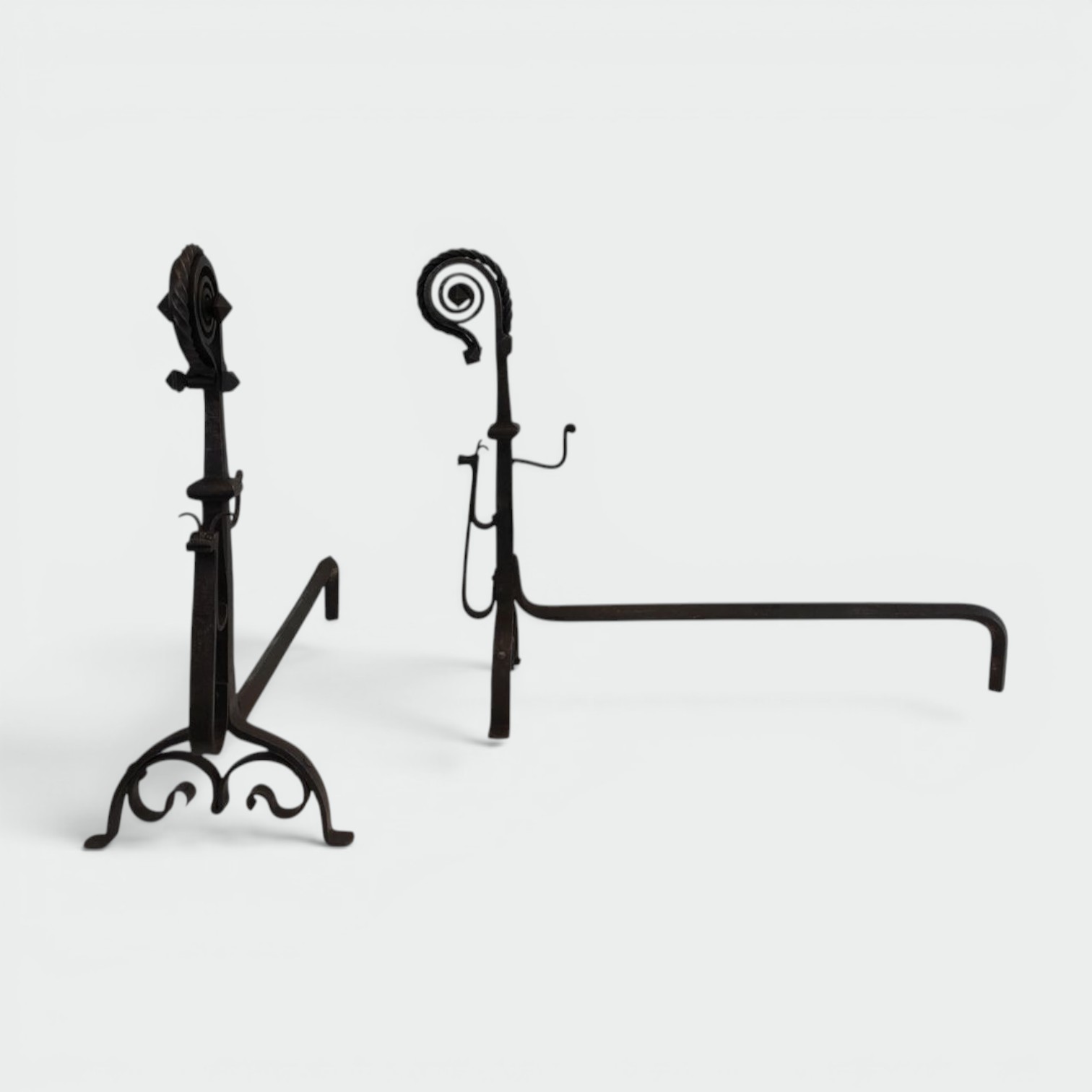
Monumental pair of wrought iron andirons, the tall square-section uprights with spit-rest arms surmounted by coiled snail-shell spiral finials, raised on elaborate scrolled feet with cross-brace log bars. France. Circa 1900. W 11.02 × D 32.68 × H 24.21 in — W 28 × D 83 × H 61.5 cm.
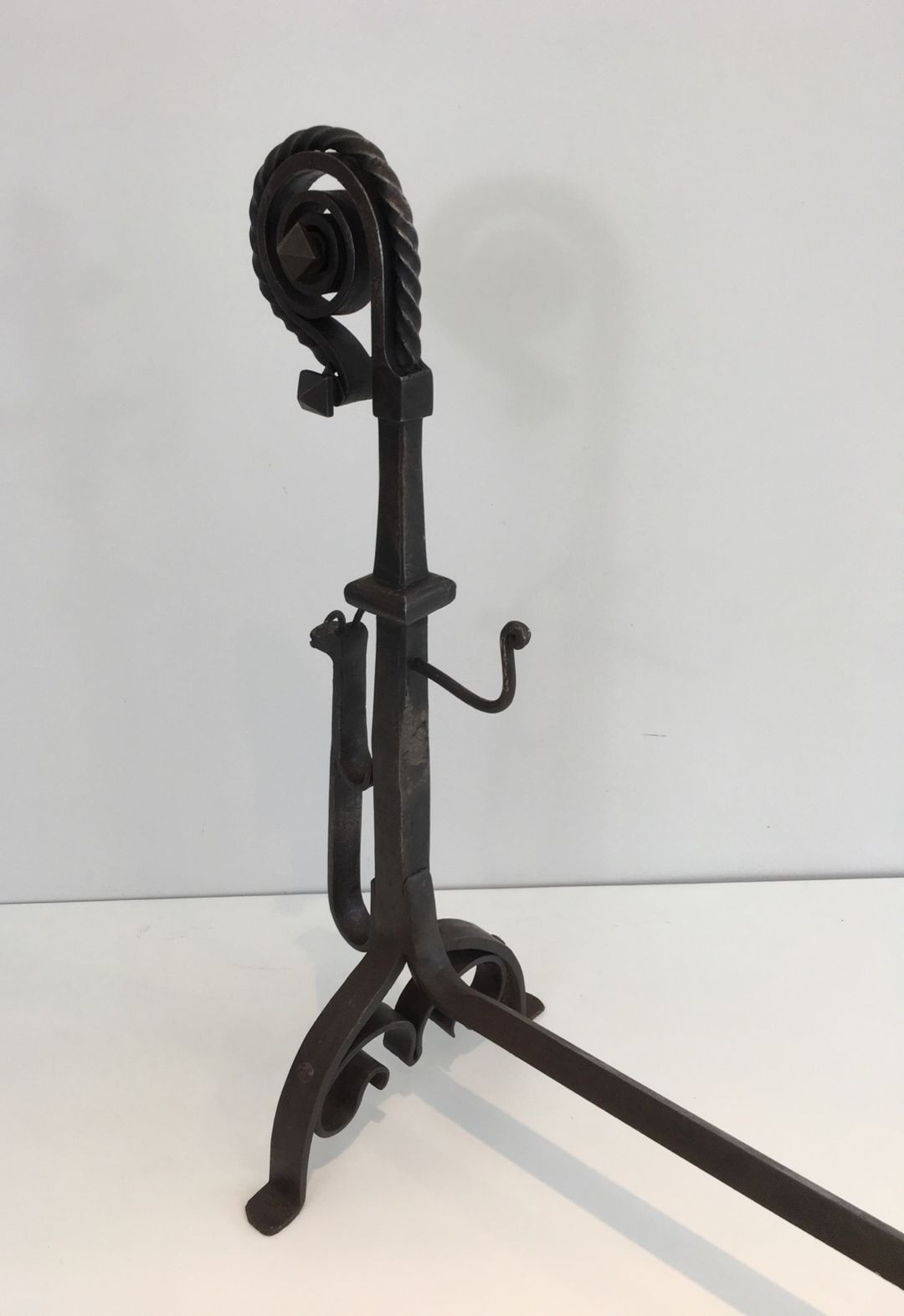
These monumental andirons are among the most impressive examples of French wrought iron craft at the turn of the twentieth century. Each stands nearly two feet high, its square-section shaft surmounted by an extraordinary coiled snail-shell spiral finial — a form of considerable whimsy and technical bravura. Below the finials, the shafts are fitted with projecting spit-rest arms, integral fixtures that identify these as working andirons from the era of open-hearth cooking, designed to support the iron rods of rotisserie spits at varying heights. The bases spread outward on multiple decorative scrolled feet, and the log dogs are anchored by cross-braced support structures of exceptional solidity.
The ironwork throughout is of the highest quality, the hammer-worked surfaces exhibiting the characteristic variety of planes and textures that distinguish hand-forged iron from cast or machine-worked metal. The spiral shell finials require exceptional skill to execute — the continuous tapering coil, drawn from a single rod by repeated heating and forming at the anvil, is a test piece of the blacksmith’s art. The scrolled foot elements are equally accomplished, their double volutes cleanly resolved and structurally sound after more than a century of fireside service.
The pair is in very good overall condition for objects of this age and scale, retaining the original forged iron surface with a rich dark patina consistent with a century of fireside use. The structural integrity is excellent, with no breaks or significant deformations. The spit-rest arms are present and functional. Surface oxidation is consistent with age and adds considerable character.
Andirons of this monumental scale and functional complexity, with integrated spit-rest arms, were produced for grand domestic hearths in French châteaux and bourgeois residences in the late nineteenth and early twentieth centuries. They represent the final flowering of the French blacksmithing tradition before the decline of the open-hearth kitchen. The snail-shell finial — an unusual choice — gives this pair a distinctive identity within the broad corpus of French fireplace ironwork, combining the playful naturalism of the fin-de-siècle with the technical rigour of the grand ferronnerie tradition.