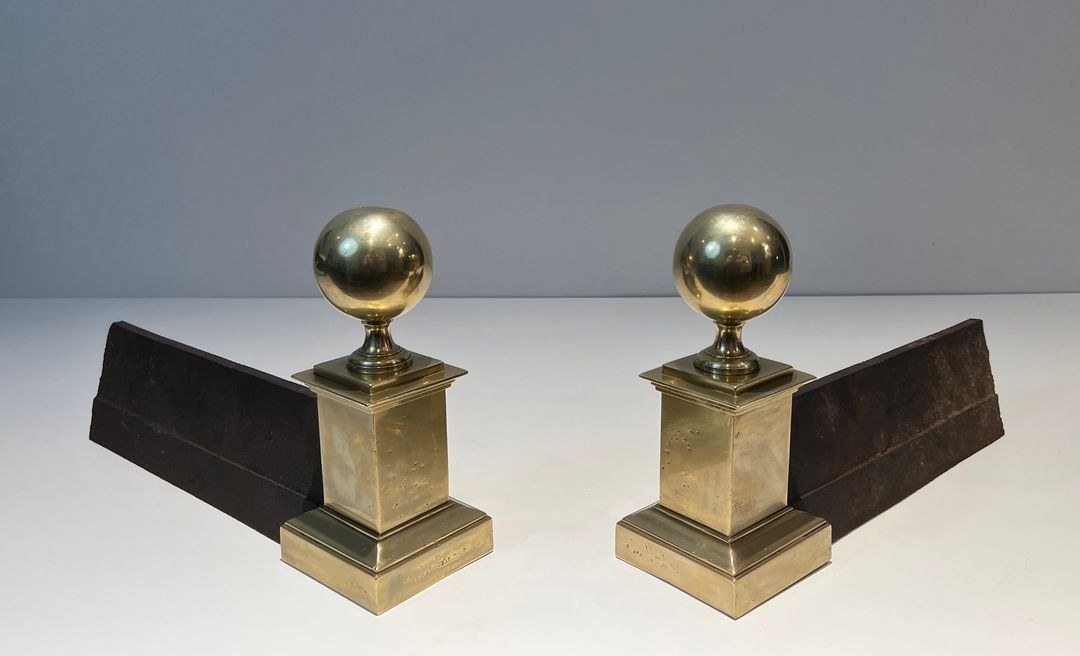
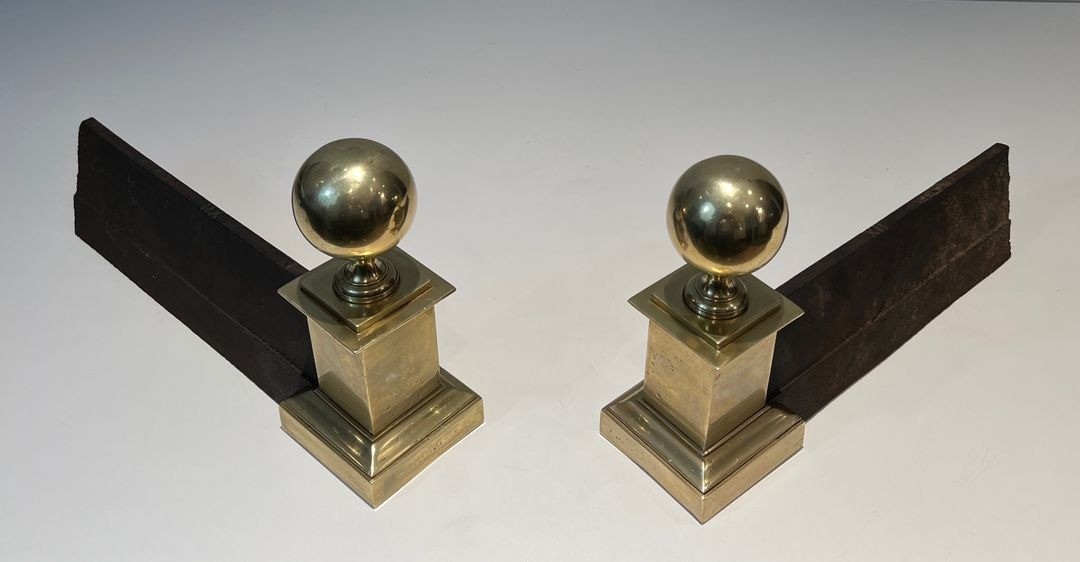
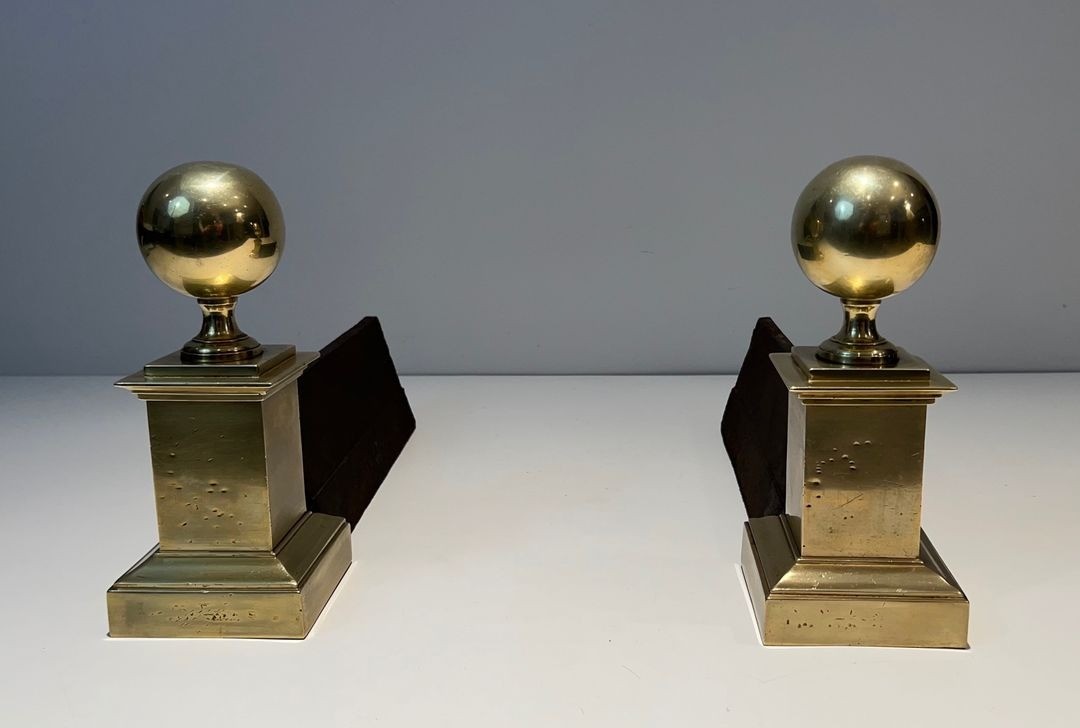
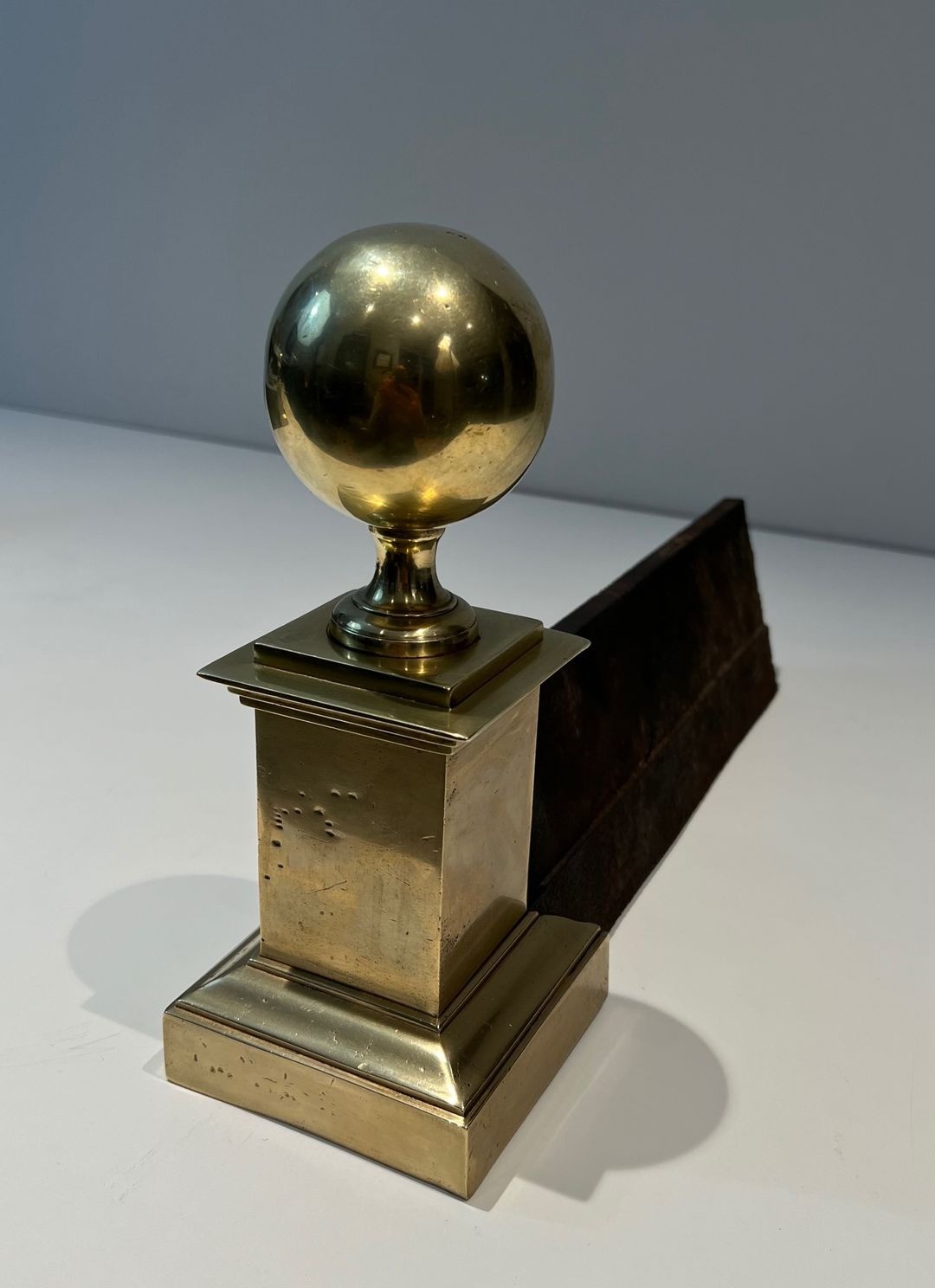
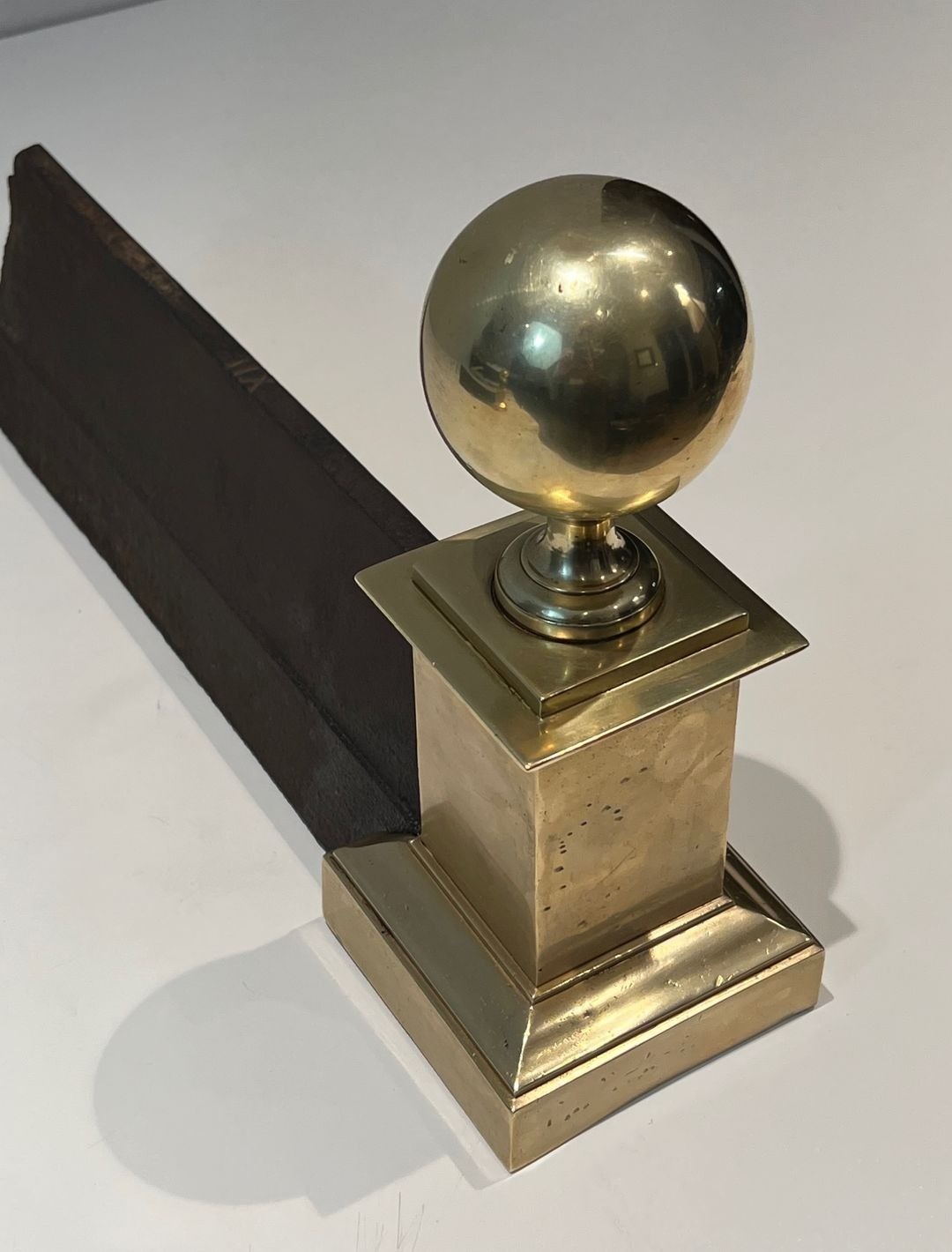
Pair of Large Neoclassical Brass Andirons with Ball Finials and Square Pedestals. France. Circa 1970.
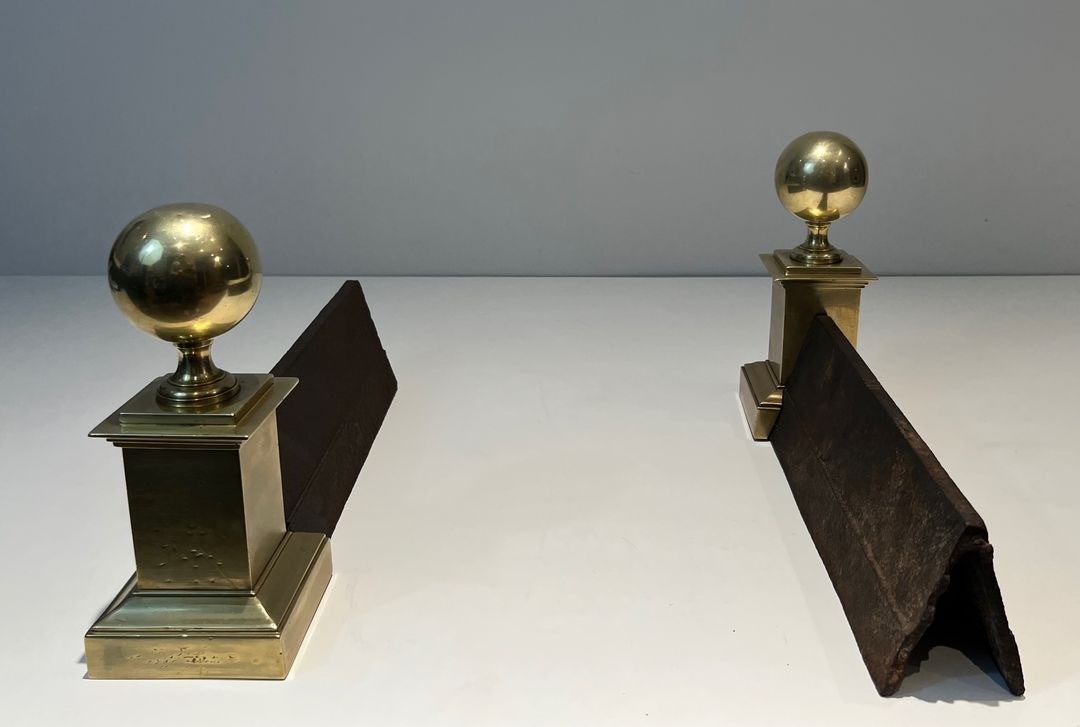
Substantial pair of neoclassical brass andirons, each upright formed as a square stepped pedestal surmounted by a large polished spherical ball finial, with angled log dogs. France. Circa 1970. W 4.33 × D 17.52 × H 10.24 in — W 11 × D 44.5 × H 26 cm.
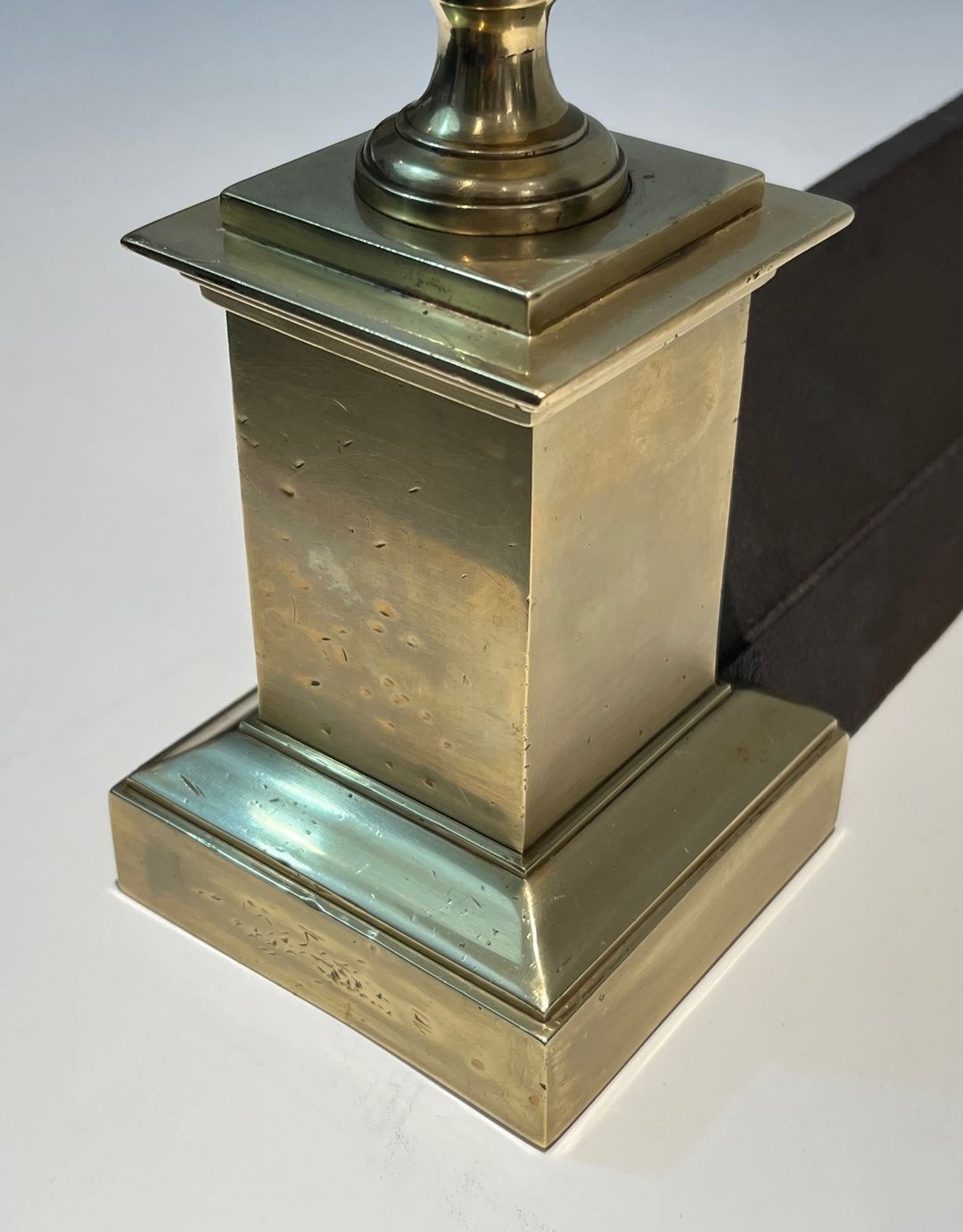
This substantial pair of andirons embodies the neoclassical idiom as interpreted in French decorative arts of the post-war decades. Each upright is composed of a boldly proportioned square pedestal with stepped and moulded base, rising to a rounded neck that supports a large, generously scaled spherical ball finial in polished brass. The angled log dogs extend rearward with measured confidence, their geometry consistent with the rectilinear severity of the uprights. The result is an ensemble of considerable visual authority, suited to a grand fireplace surround of commensurate scale.
Executed entirely in polished brass, the andirons display the warm golden tone characteristic of high-quality cast and turned brasswork from this period. The surfaces have acquired a pleasing patina of age, enriching the reflective quality of the metal while attesting to the pieces’ long history at the fireside. The construction is solid and weighty — as befitting andirons of this size — and the ball finials are precisely formed, with smooth, uninterrupted spherical profiles.
The pair is in very good overall condition, retaining its original brass finish with natural patination consistent with age and use. The log dogs show minor wear from contact with logs, as expected of functional fireplace equipment, while the uprights remain structurally sound. A light polish would restore the finish to a brighter lustre if desired.
Neoclassical ball-finial andirons of this form were a staple of elite French interior decoration from the late eighteenth century through the twentieth, produced by foundries and metalwork ateliers throughout France. The form — square plinth with moulded base and large spherical finial — derives from ancient Roman and Greek prototypes and was popularised during the Empire period, subsequently remaining a perennial choice for formal French interiors. This pair, dating from circa 1970, represents a late but distinguished flowering of a tradition of remarkable longevity and continued prestige.