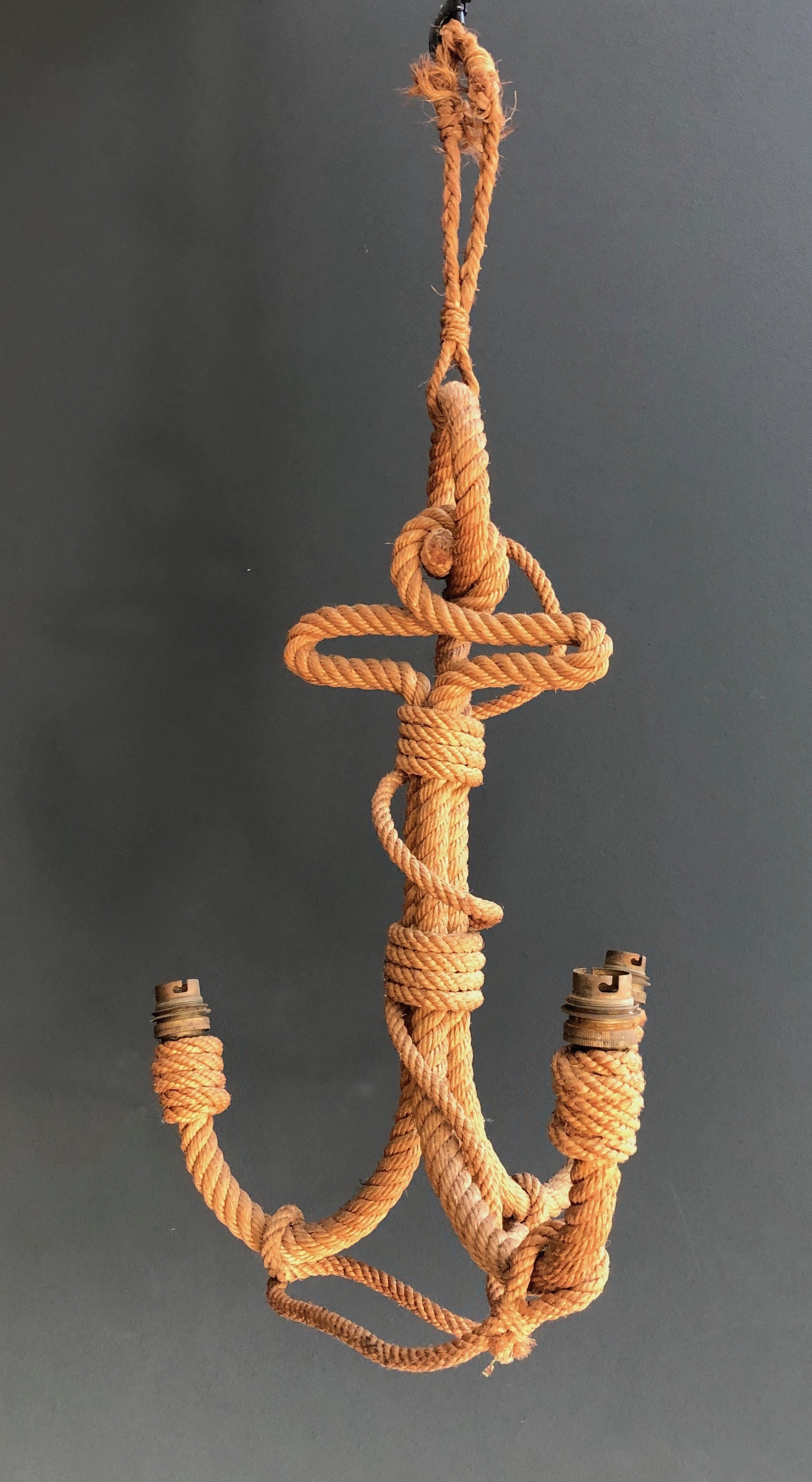
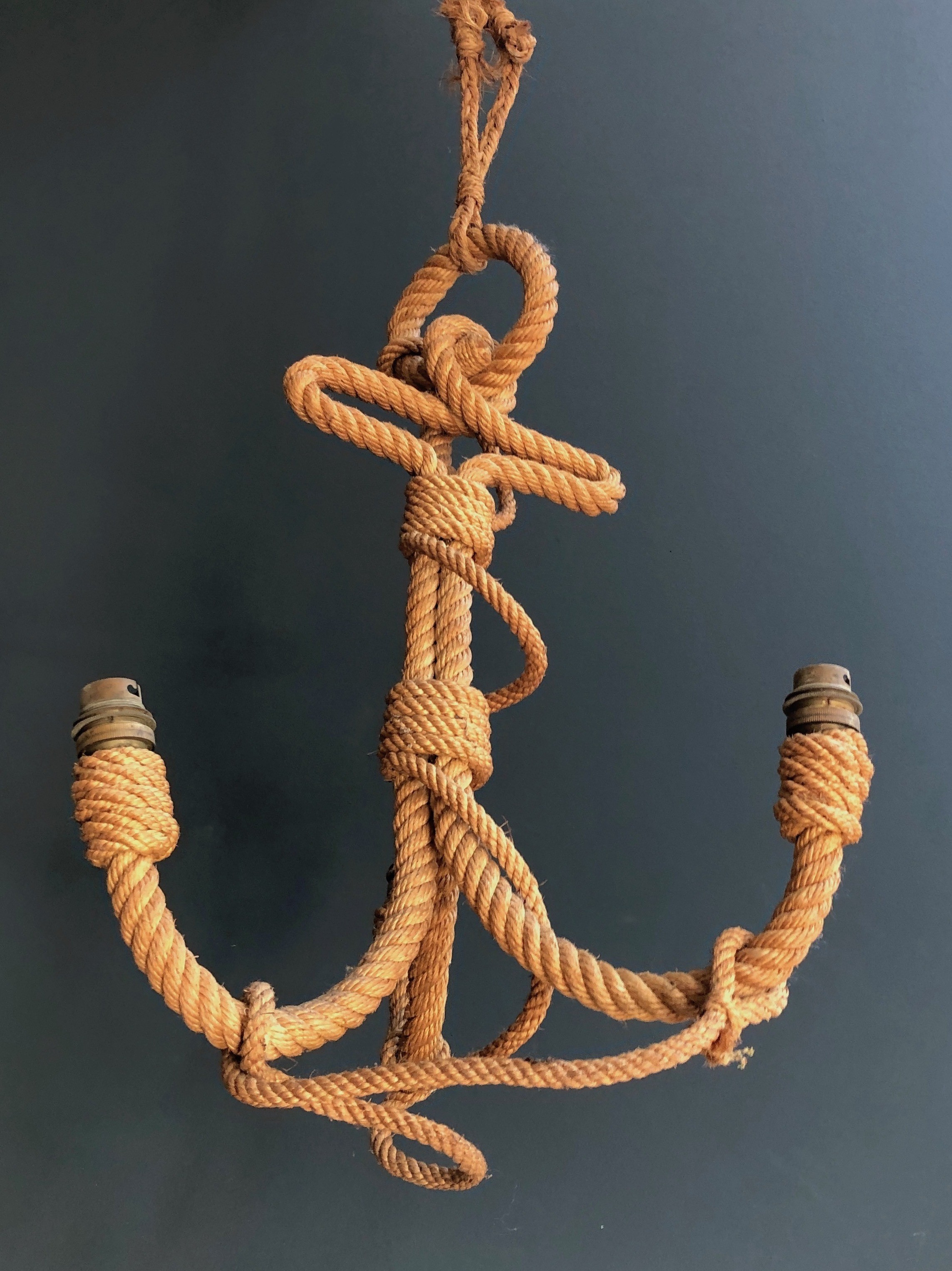
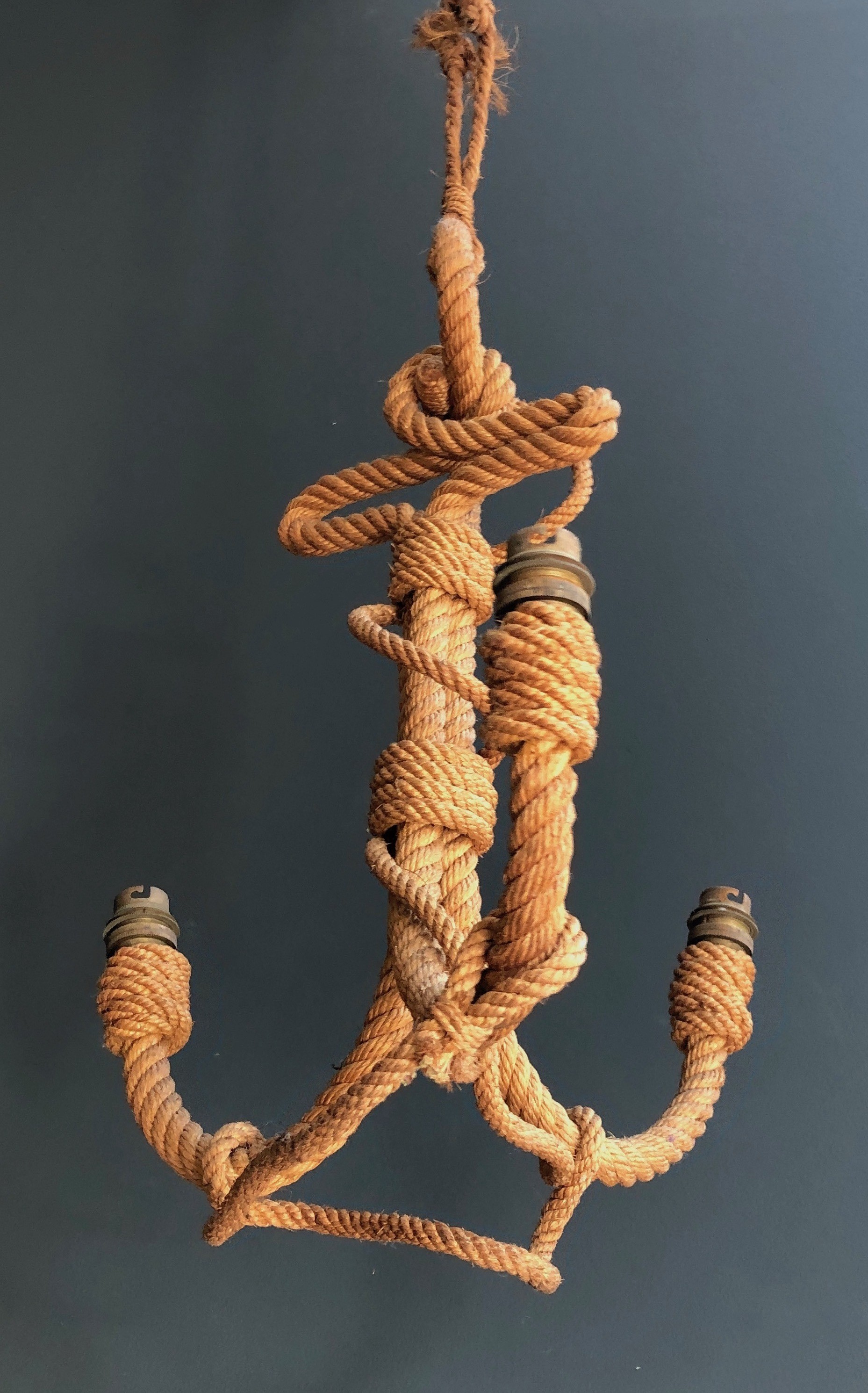
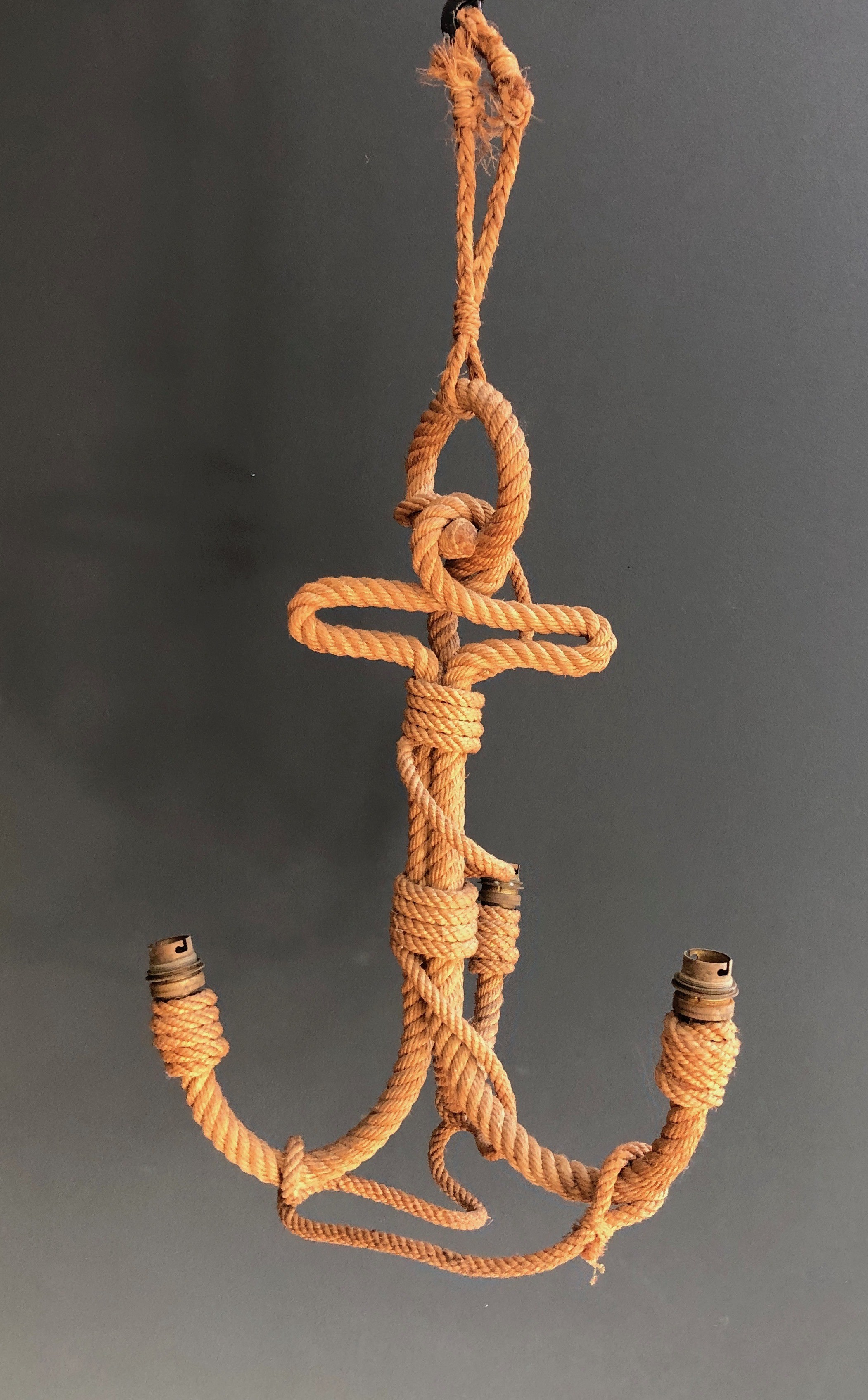
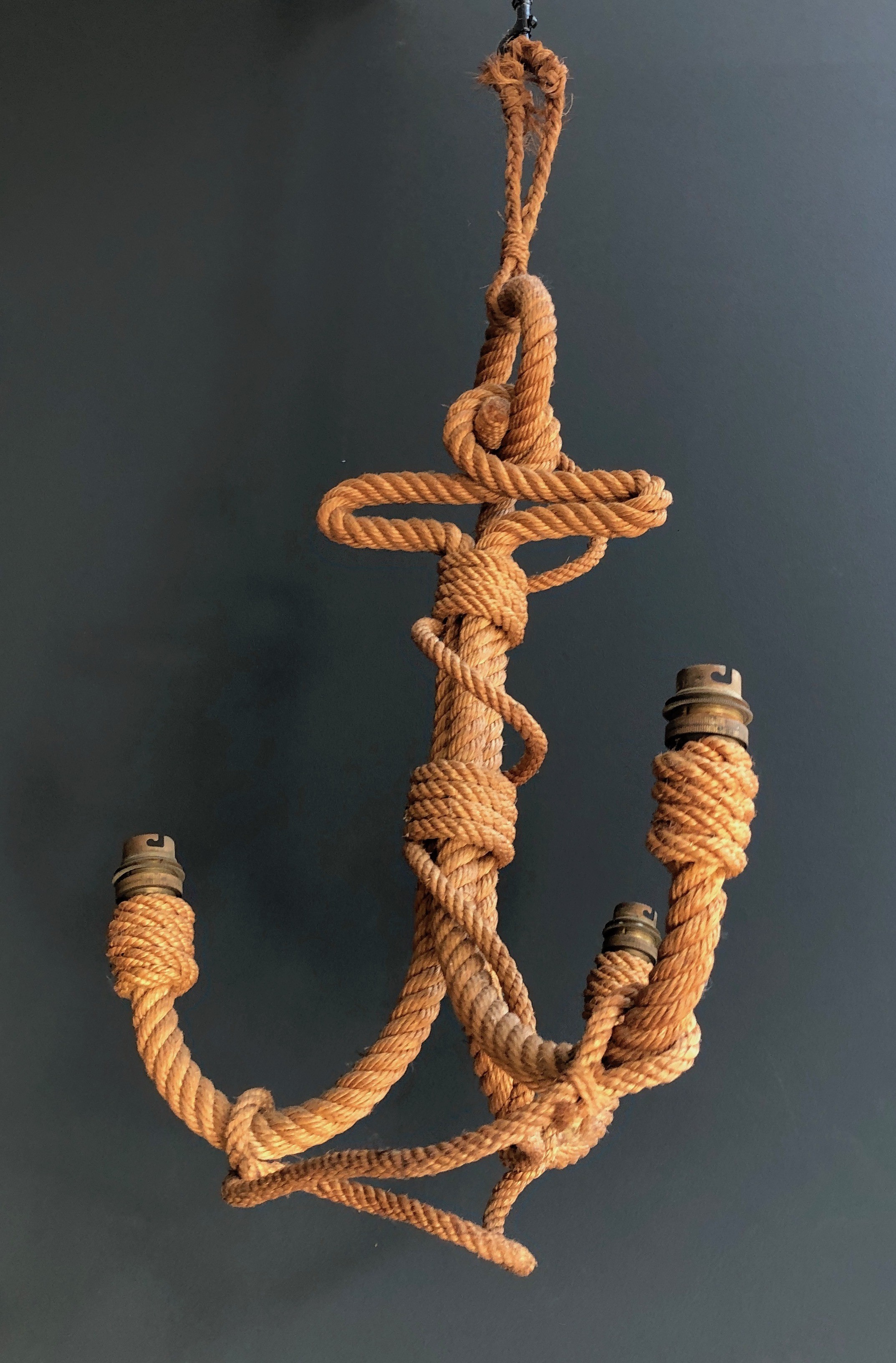
This exceptional chandelier, formed from natural rope twisted and knotted into the form of an anchor, represents one of the most distinctive and poetic objects in the Audoux-Minet repertoire. The anchor — that universal symbol of maritime life, of security and hope — is here rendered in the organic, humble material of the working boat: sisal rope, wound, coiled, and shaped with the patient expertise of craftsmen who understood the sea as intimately as they understood their material. The result is an object of striking formal invention, at once sculptural and functional, earthy and lyrical.
Adrien Audoux (1900–1987) and Frida Minet (1902–1993) founded their design partnership in Toulon in the 1930s, working from a studio on the Mediterranean coast that would shape the entire sensibility of their work. Deeply influenced by the maritime world around them — fishing boats, anchor ropes, nets, rigging — they developed a vocabulary of furniture and lighting rooted in the natural materials of the sea: sisal, rope, canvas, cord. Their chandeliers, which hung in the salons and dining rooms of the most discerning collectors along the Côte d'Azur and in Paris, were celebrated for their warmth, their textural richness, and their ability to transform a room with a single gesture of organic beauty.
This anchor chandelier is among the most iconic and recognisable forms in the Audoux-Minet catalogue, and one of the rarest to appear on the market. Hung in a dining room, a coastal house, or a contemporary interior that values the beauty of natural materials, it commands immediate attention and creates an atmosphere of maritime poetry unlike any other lighting object. A collector's piece of the highest order — an object that embodies the genius of two of the most original creative voices in twentieth-century French decorative arts.