Jean Touret (1916–2009) stands as one of the towering figures of twentieth-century French decorative metalwork. Trained at the École Boulle and later profoundly shaped by the peasant and artisanal traditions of rural France, Touret established his workshop at Marolles-en-Brie in Seine-et-Marne — the Atelier Marolles — which became over subsequent decades one of the most admired studios in French applied arts. Working almost exclusively in wrought iron, Touret forged a wholly personal vision: monumental yet tender, rooted in the natural world and the animal kingdom, with a particular gift for capturing movement and vitality in the unyielding resistance of the metal. His commissions ranged from ecclesiastical fittings to distinguished private residences, and his work appeared in the most celebrated interiors of the postwar period.
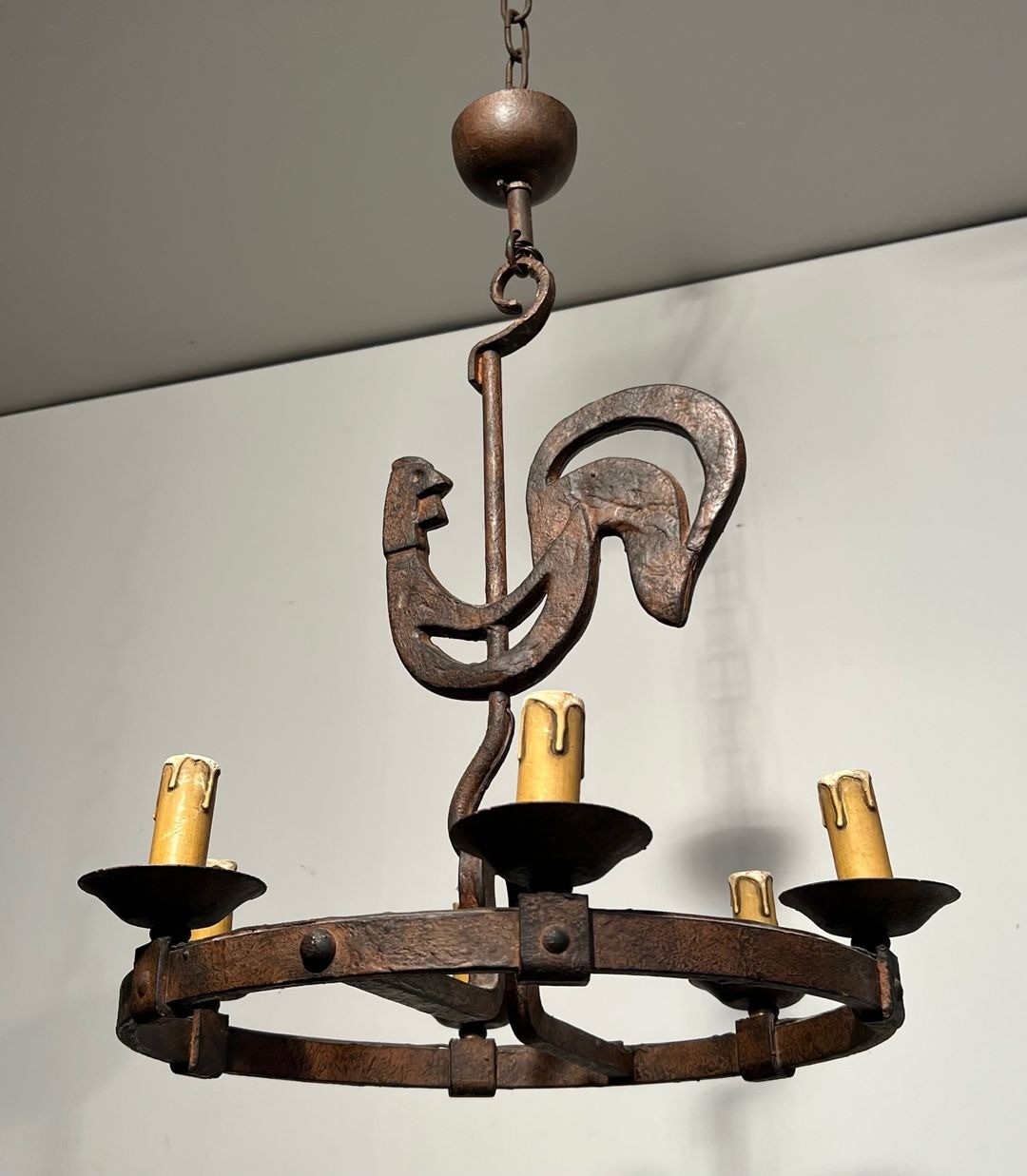
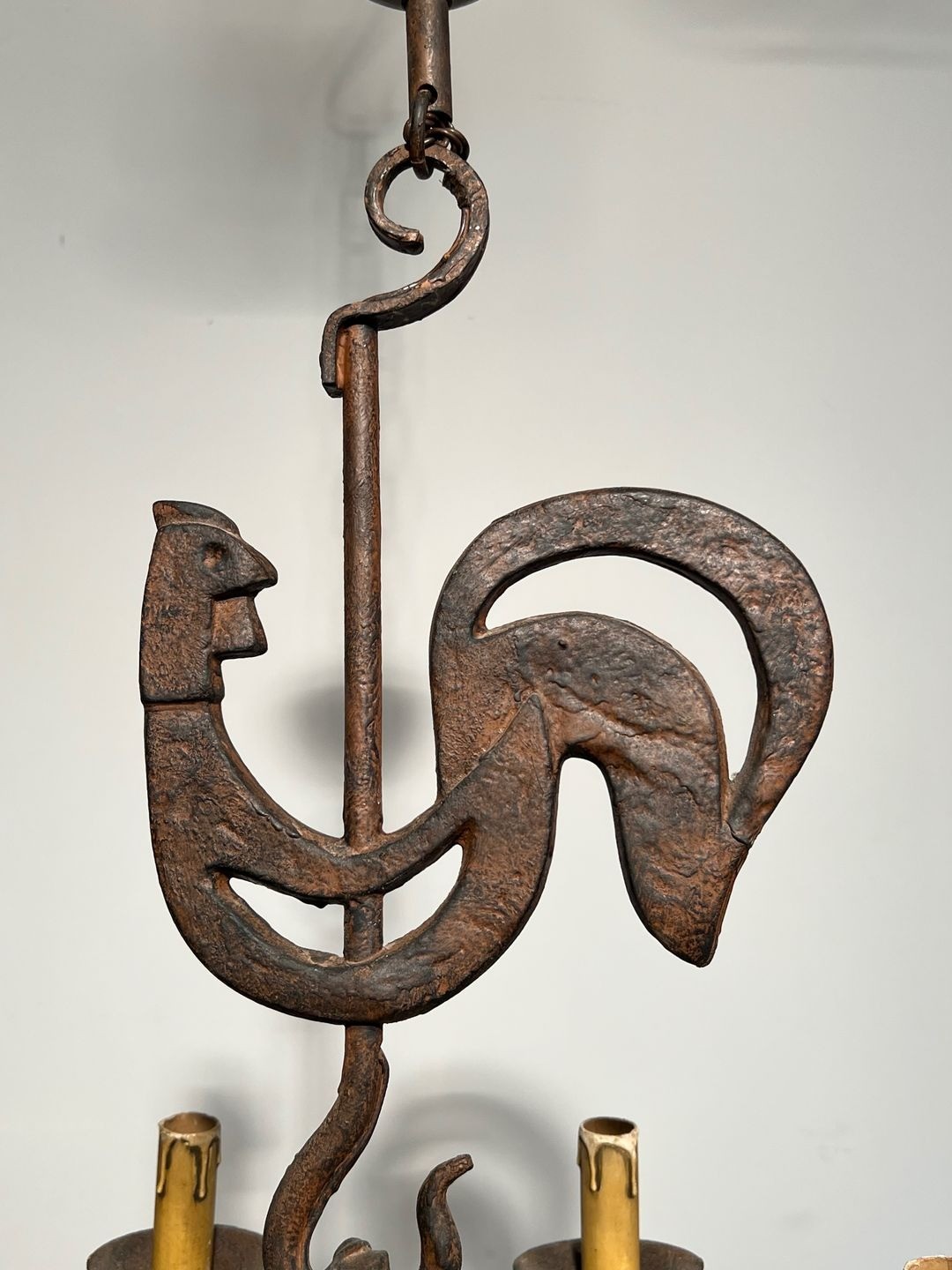
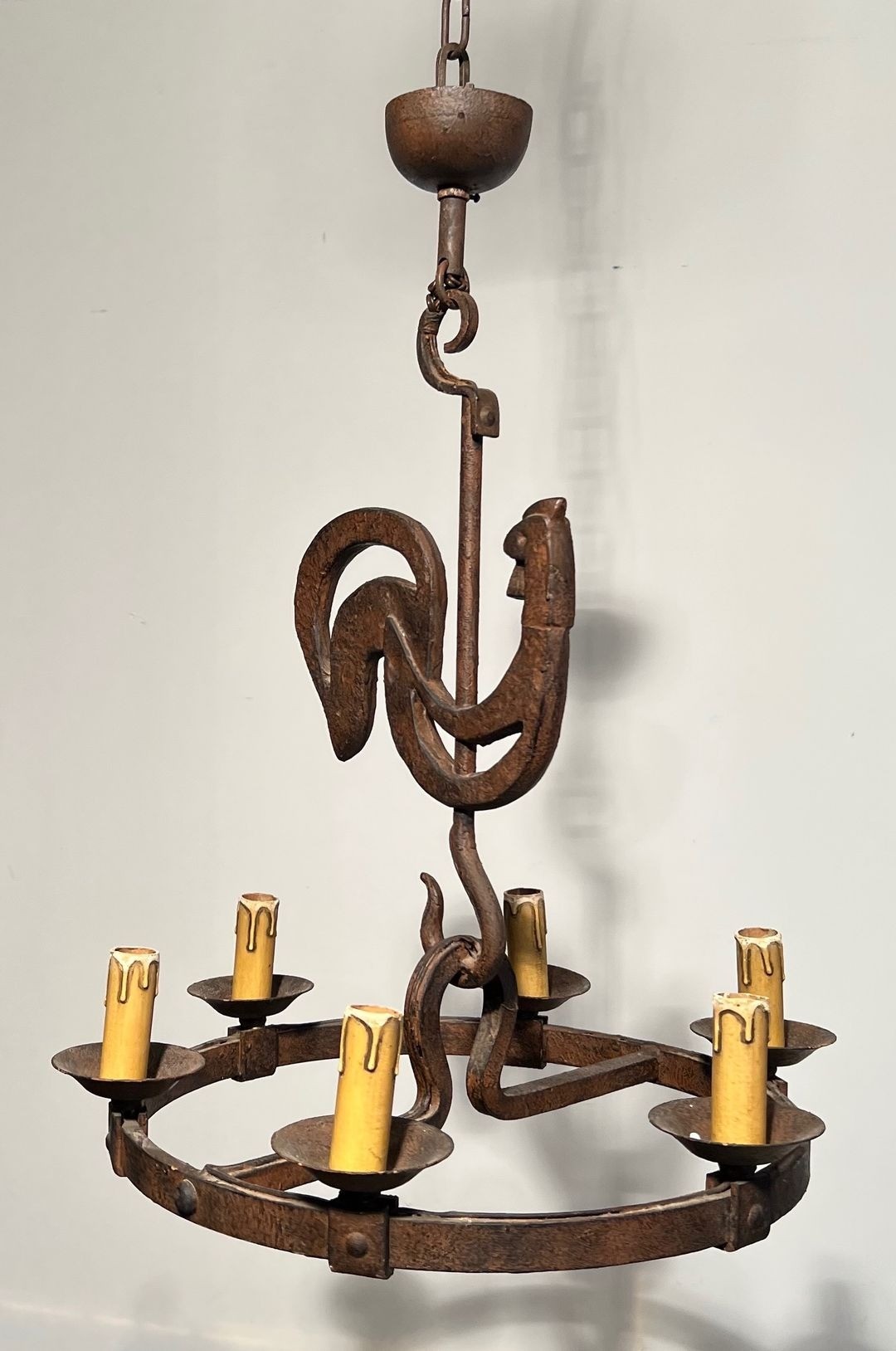
The rooster — le coq gaulois, ancient emblem of France — held a privileged place in Touret’s bestiary. In his hands the bird sheds all folkloric sentimentality and becomes something elemental: a creature of energy, pride, and awakening, rendered with the directness of a line drawn in a single confident stroke. This chandelier presents the rooster in a composition of great formal intelligence — the bird’s comb, tail-feathers, and body translated into a sequence of hammered iron planes and curves that simultaneously evoke the animal’s form and constitute a complete three-dimensional light fitting. The piece measures 51 centimetres square and 62.5 centimetres in height.
Works by Jean Touret for the Atelier Marolles are held in museum collections and have featured in specialist auctions dedicated to French twentieth-century craft. This chandelier, in robust condition and immediately recognisable in its vocabulary, represents the Atelier at its most characteristically expressive — proof that the most refined decorative art is sometimes wrought from the most resistant of materials.