The Meissen Manufaktur, established in 1710 at Meissen in Saxony by Augustus the Strong, Elector of Saxony, was the first European factory to produce true hard-paste porcelain. Its discovery — achieved by the alchemist Johann Friedrich Böttger — transformed European decorative arts, and for the two centuries that followed, Meissen flowers held a position of unrivalled prestige in the luxury interior. Modelled with extraordinary botanical fidelity by specialist sculptors, these hand-painted blooms — roses, tulips, narcissi, and forget-me-nots among them — were applied to chandeliers, centrepieces, and mirror frames in the grandest residences of Europe, from the courts of the German princes to the hôtels particuliers of the Faubourg Saint-Germain. Their presence on a chandelier remains today an unmistakable signal of ambition and quality.
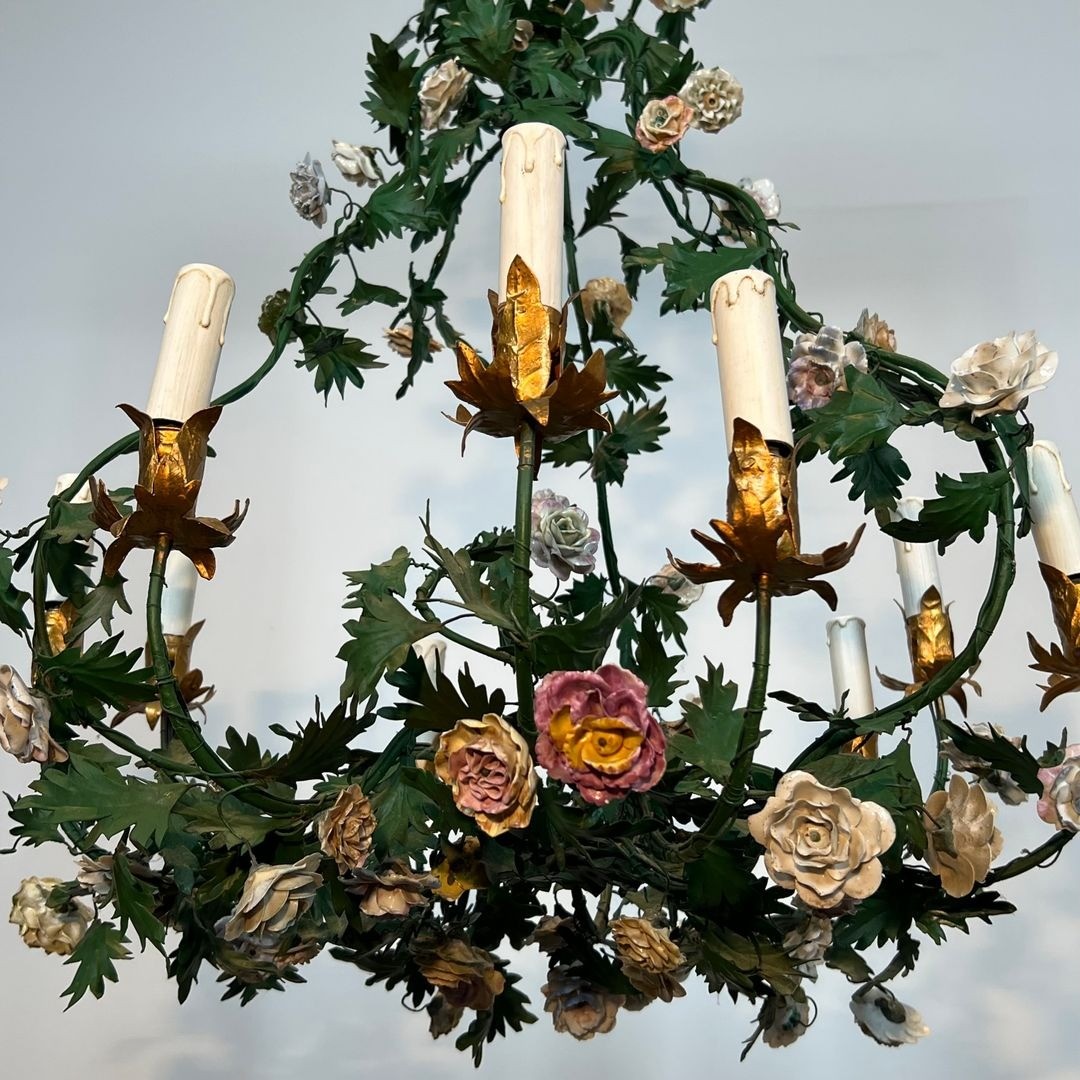
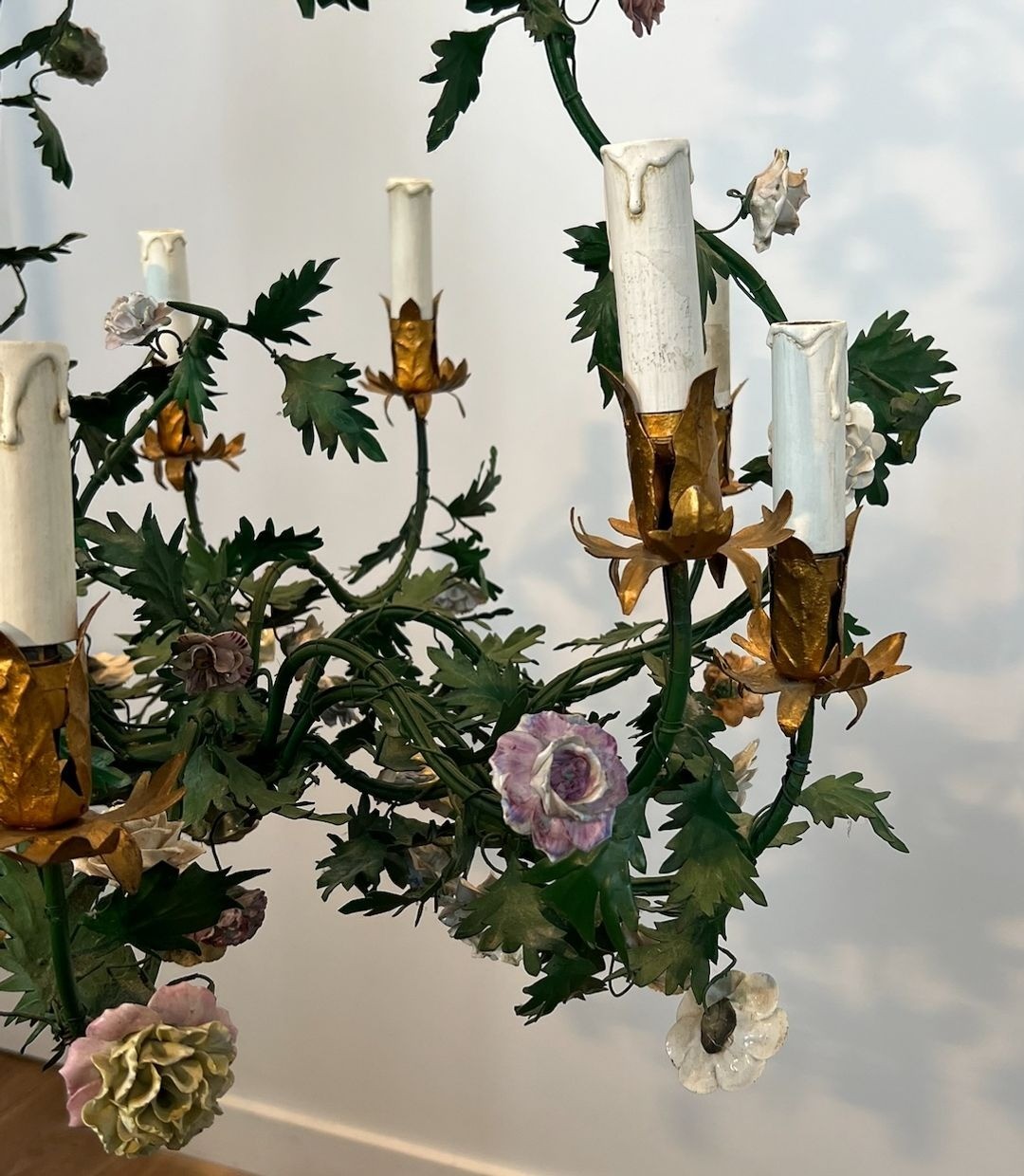
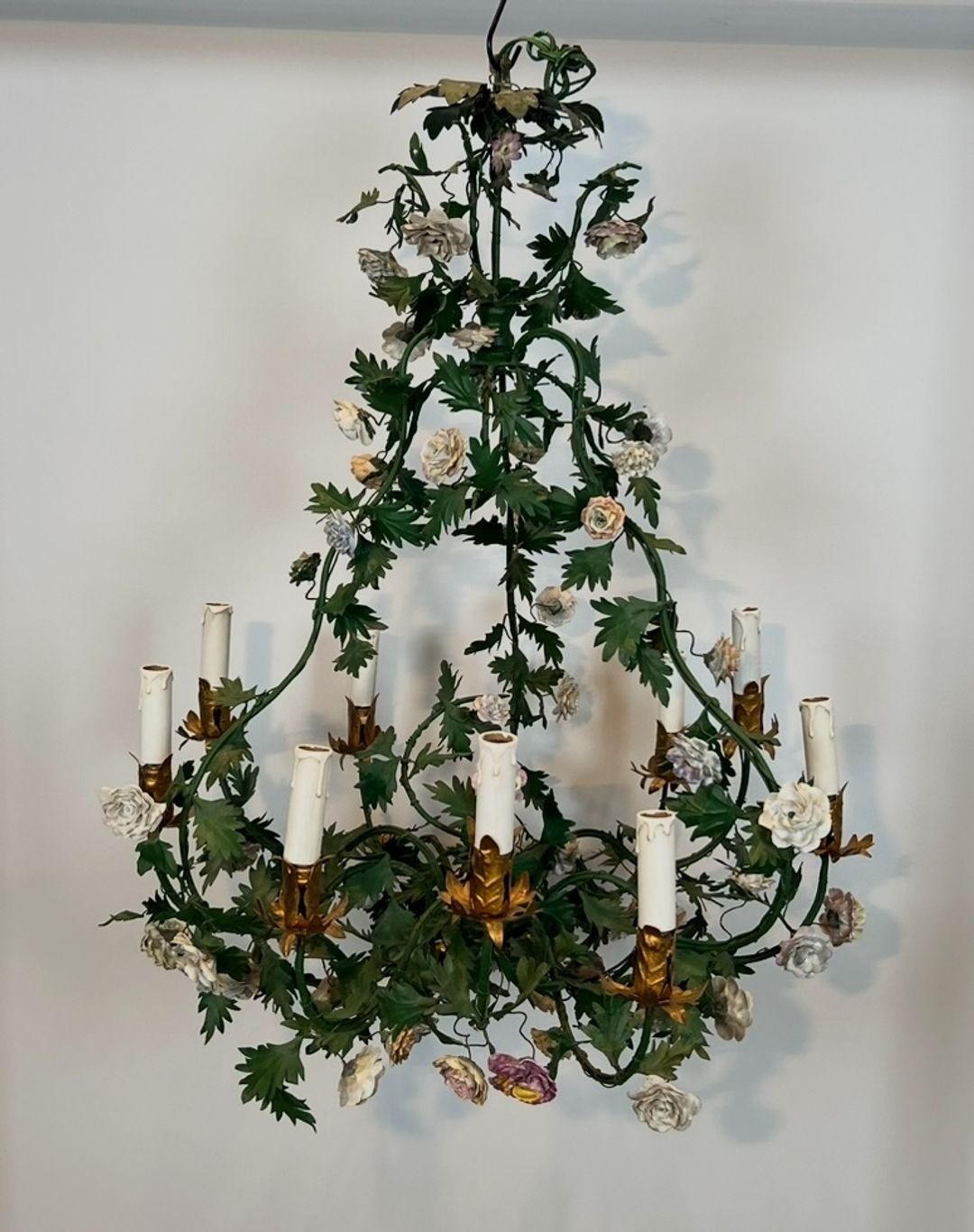
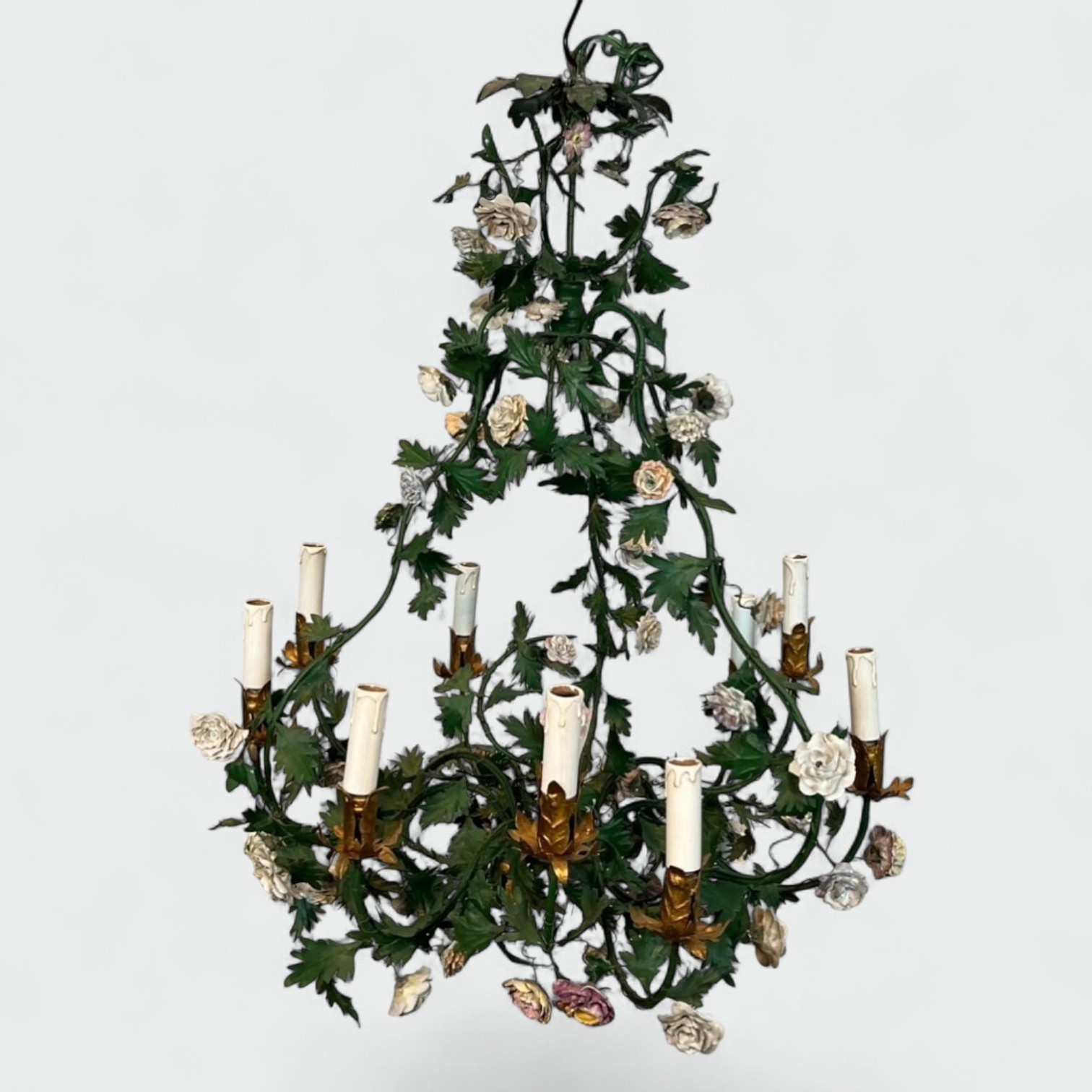
This basket chandelier — lustre corbeille — is a form particular to the Louis XVI period and its revivals: a garland-hung composition inspired by the neoclassical corbeille de fleurs motif, where nature and architecture meet in festive elegance. The armature of the chandelier is enveloped in green-lacquered metal foliage of fine workmanship, against which Meissen porcelain flowers bloom in carefully disposed clusters. At 72 centimetres in diameter and 87 centimetres in height, the piece occupies space with considerable presence, the interplay of glossy lacquered metal and painted porcelain creating a surface of extraordinary richness.
French revivals of the Louis XVI chandelier tradition, produced in the decades around 1900–1920, represent the high-water mark of a craft tradition drawing simultaneously on the finest eighteenth-century precedents and on the exceptional technical resources of the Belle Époque atelier. This piece, with its pairing of Meissen flowers and lacquered foliage, belongs to the most celebrated category within that tradition — objects that combine two of the most exquisite materials in European decorative arts in a single, unified composition of enduring magnificence.