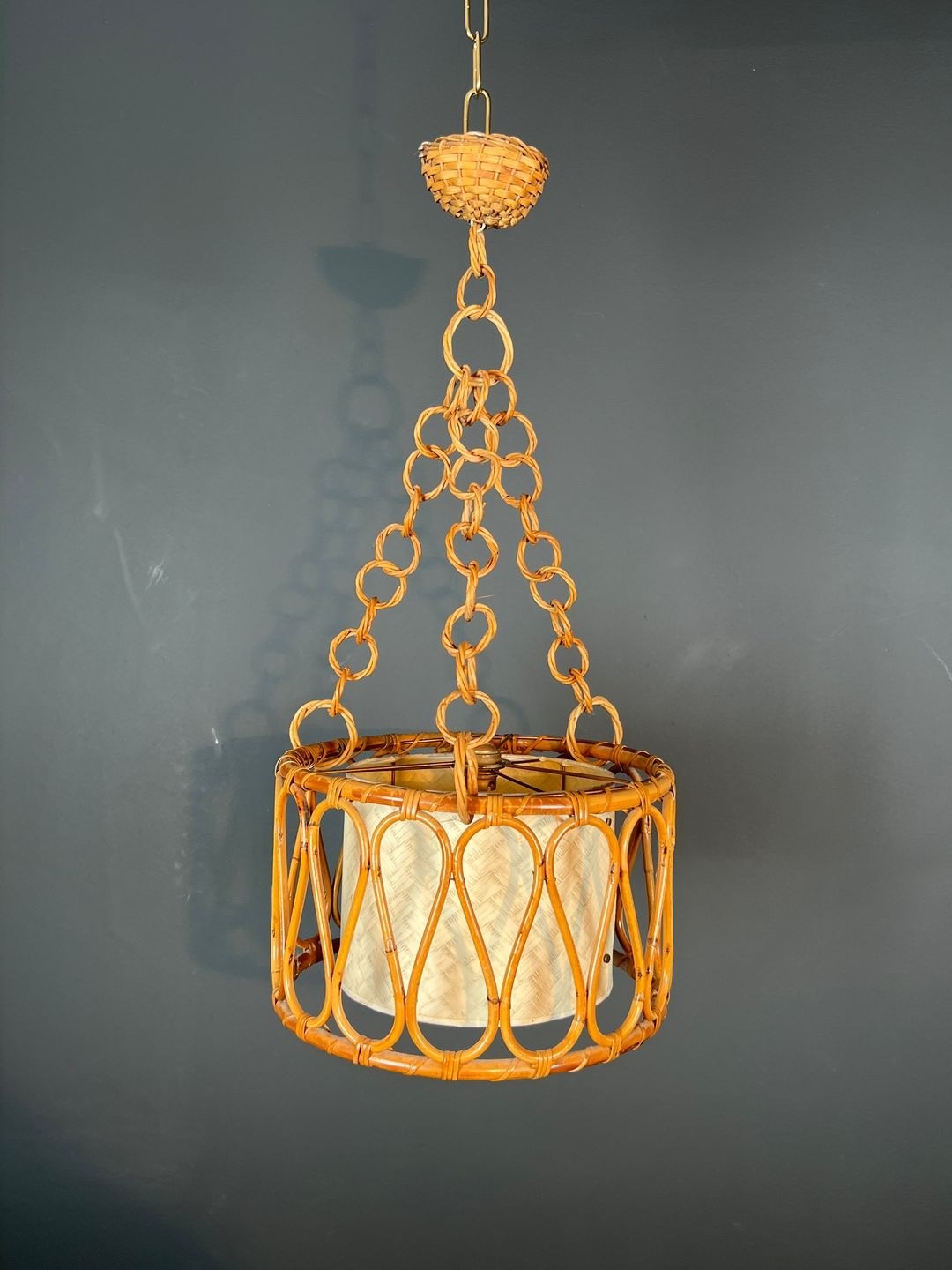
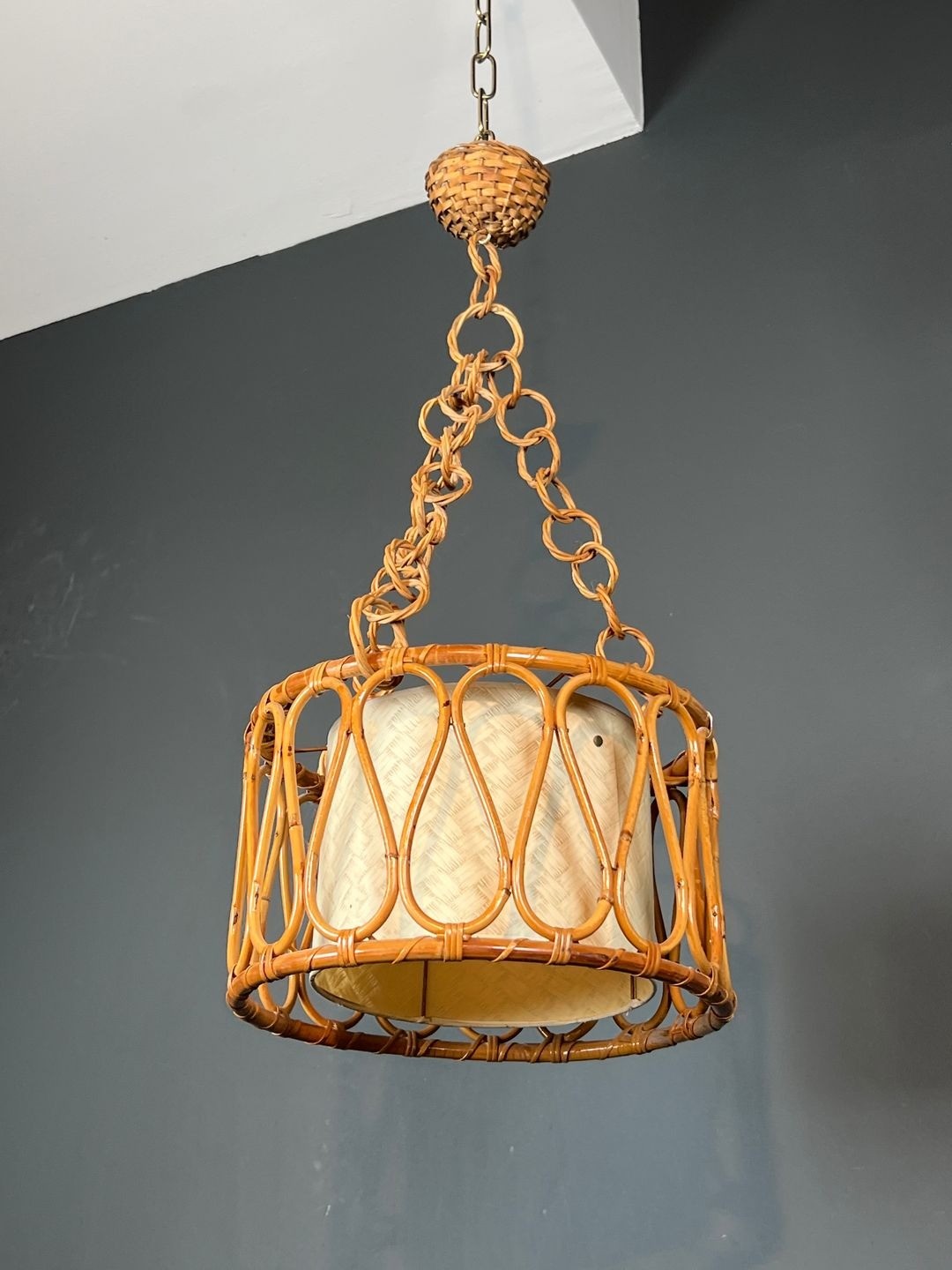
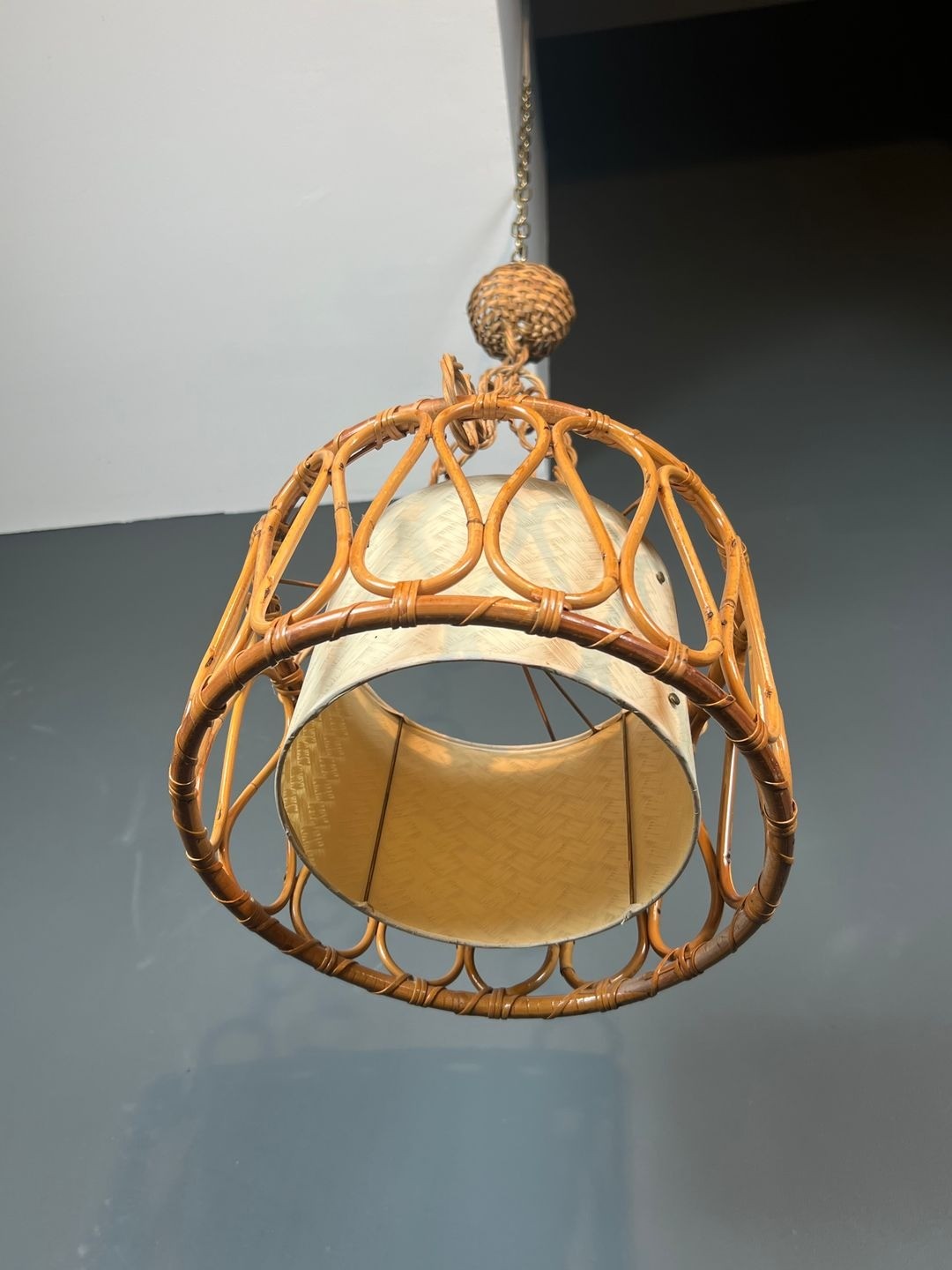
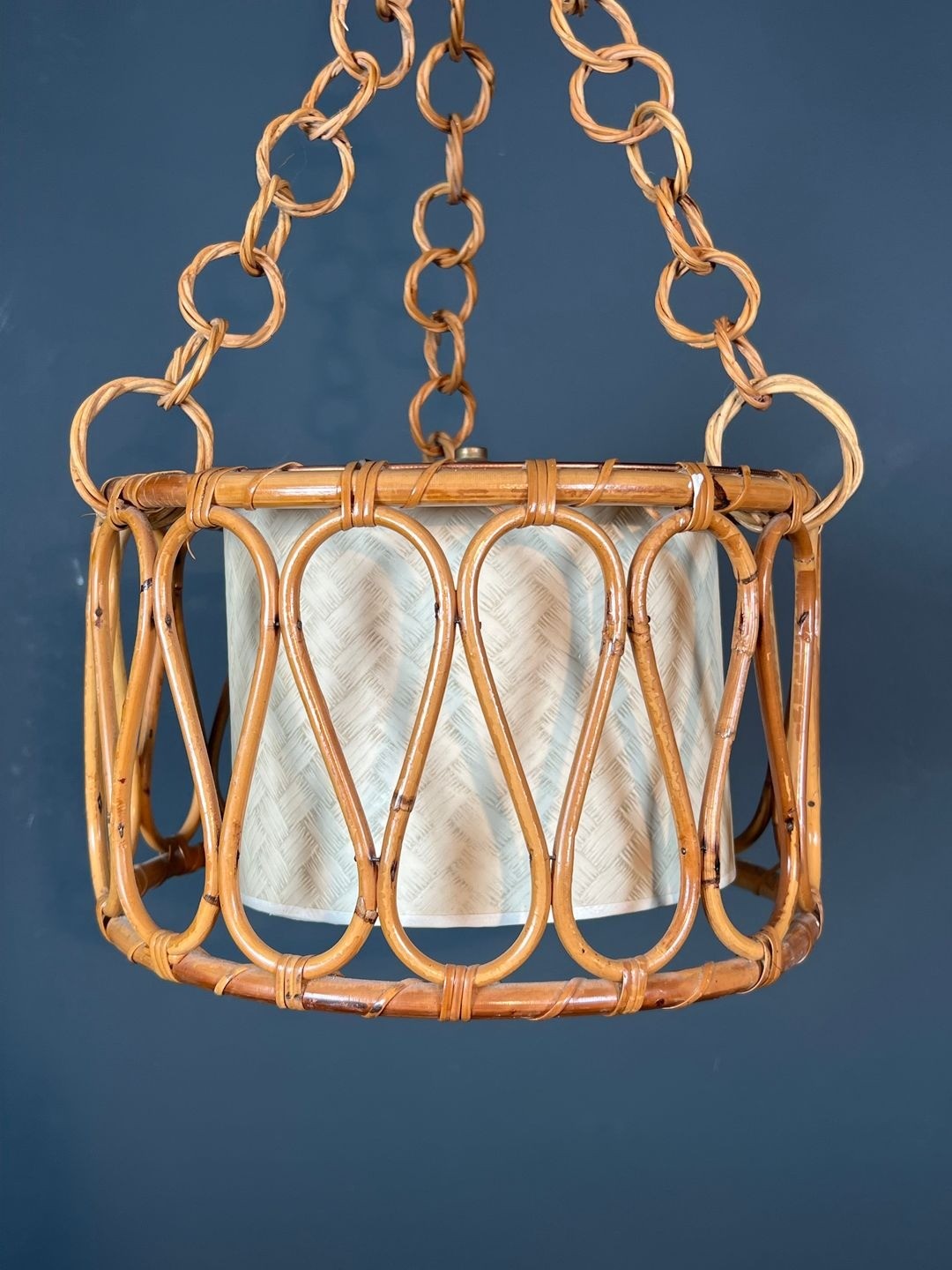
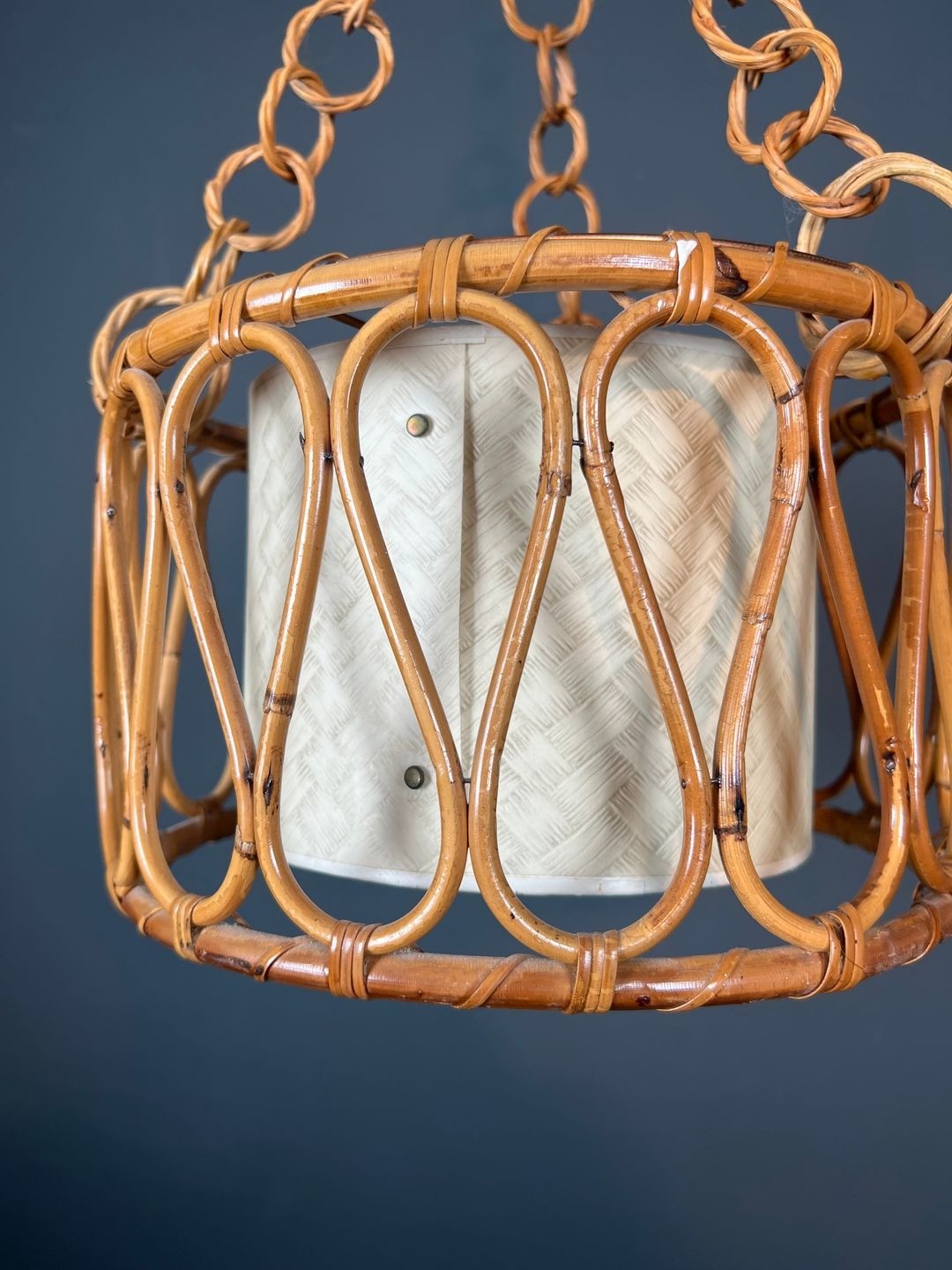
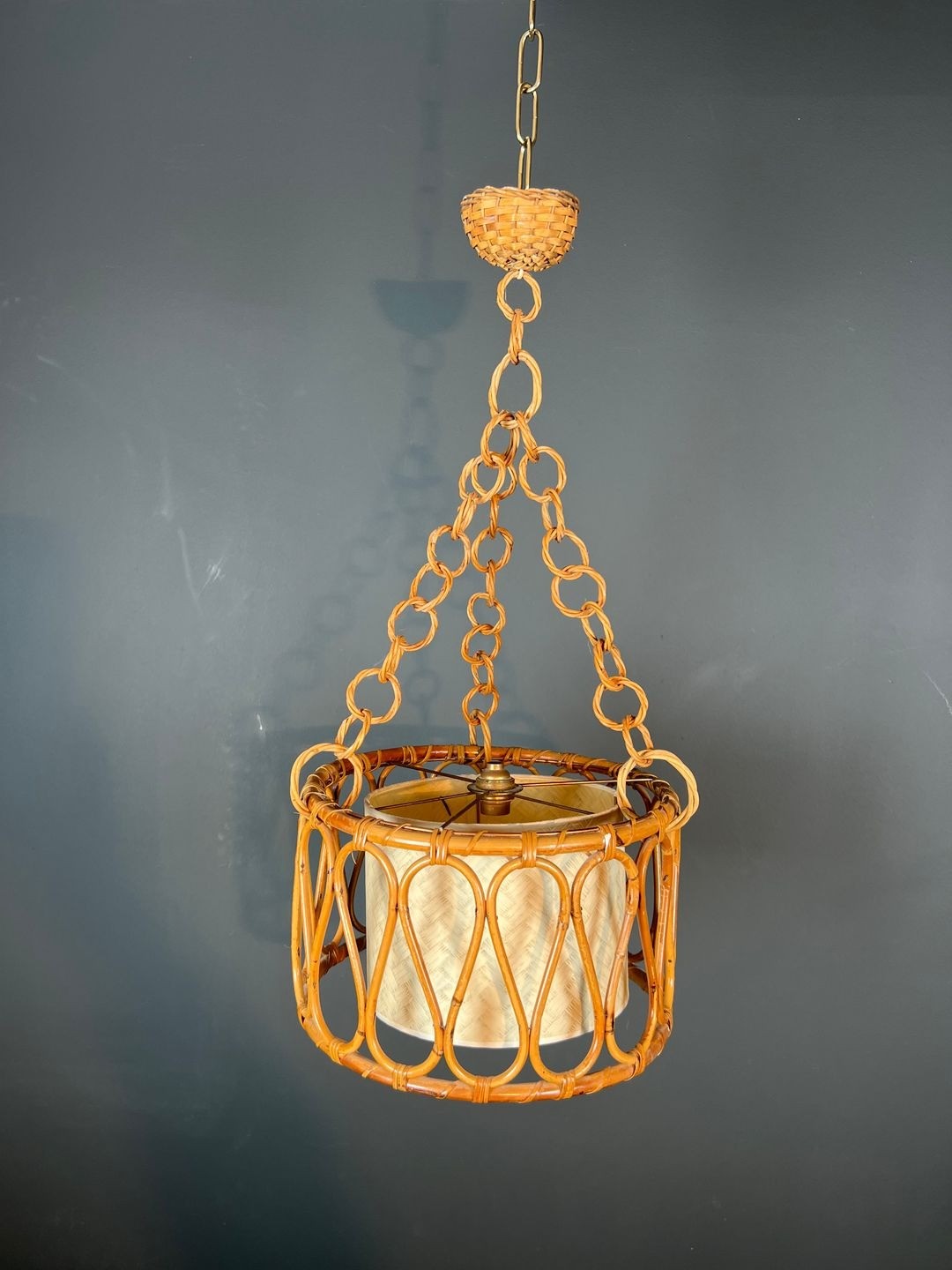
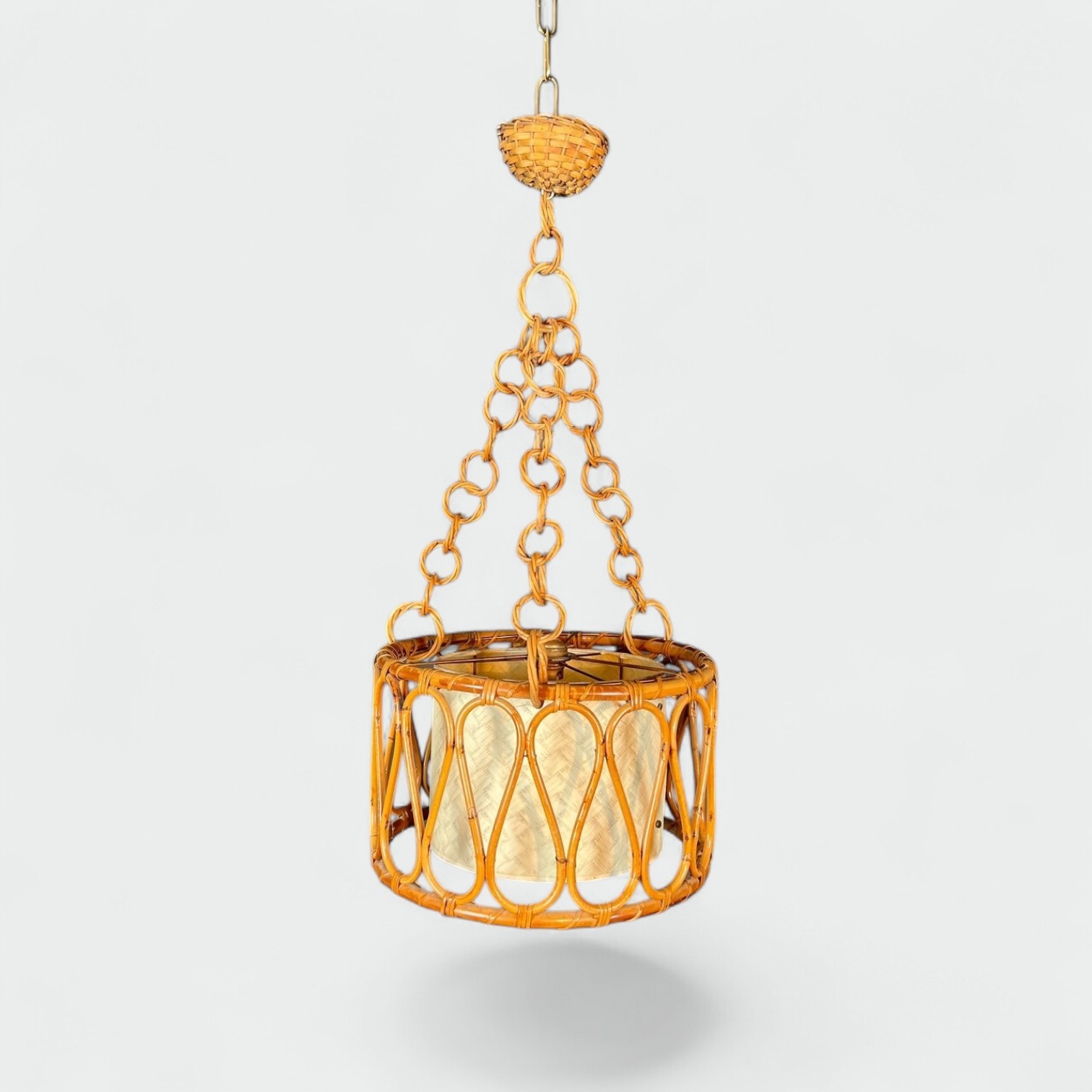
This elongated rattan chandelier — its proportions more lantern than lamp, measuring barely thirty centimetres across yet rising to sixty-four centimetres in height — belongs to a tradition of French natural-fibre lighting that flourished in the decade following the Liberation. The rattan armature, woven and assembled by hand, creates a play of light and shadow that no metal or glass fixture could replicate: the woven interstices filter the bulb’s warmth into a warm dappled glow, casting a pattern of gentle shadows onto the ceiling and walls that shifts subtly as the piece sways. Its intimate scale makes it well-suited to a bedroom, a dressing room, or a small salon where a concentrated point of soft light is desired.
Adrien Audoux (1913–1980) and Frida Minet (1929–2019) formed one of the most distinctive creative partnerships in postwar French decorative arts. Working from their Paris atelier, they developed a design language founded entirely on natural materials — sisal, rope, rattan, seagrass — at a moment when the dominant aesthetic was tending toward metal, plastic, and the industrial. Their approach was not nostalgic but genuinely modern: they applied rigorous formal thinking to humble materials, producing objects of considerable visual authority. Jean Royère, the great decorator, was among their early admirers, and their work entered important collections from the 1950s onward.
Chandeliers in the Audoux-Minet manner are rarer on the market than their table lamps or floor lamps, partly because the practical challenges of working rattan in a suspended format were greater, and partly because fewer were made. This example, with its tight vertical geometry and disciplined woven structure, exemplifies the best qualities of the genre: it is an object in which material and form are in complete agreement, where nothing is superfluous and the beauty lies entirely in the making. A worthy addition to any collection devoted to the organic modernism of mid-twentieth-century France.