Biedermeier — the style that flourished between approximately 1815 and 1848 in the German-speaking lands of central Europe — was born from a specific historical moment: the exhaustion of the Napoleonic era and the emergence of a confident, prosperous, and politically cautious bourgeoisie that sought comfort, order, and beauty in the domestic sphere rather than in public life. Where Empire furniture had proclaimed dynastic ambition in gilded bronze and dark mahogany, Biedermeier offered something quite different: clean lines, practical proportions, and above all the warmth of local light-coloured veneers — cherry, birch, ash, and most coveted of all, the figured maples of the Austrian and Bohemian forests.
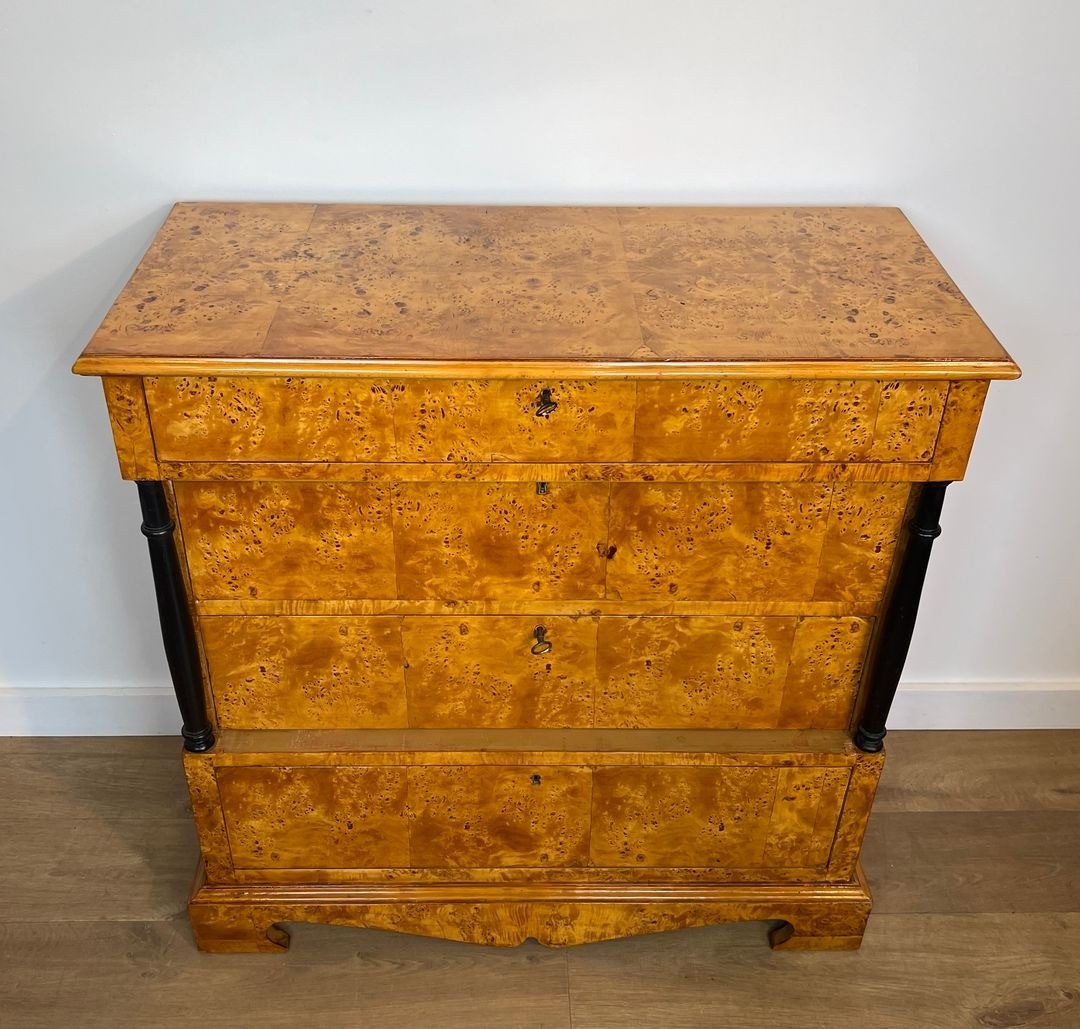
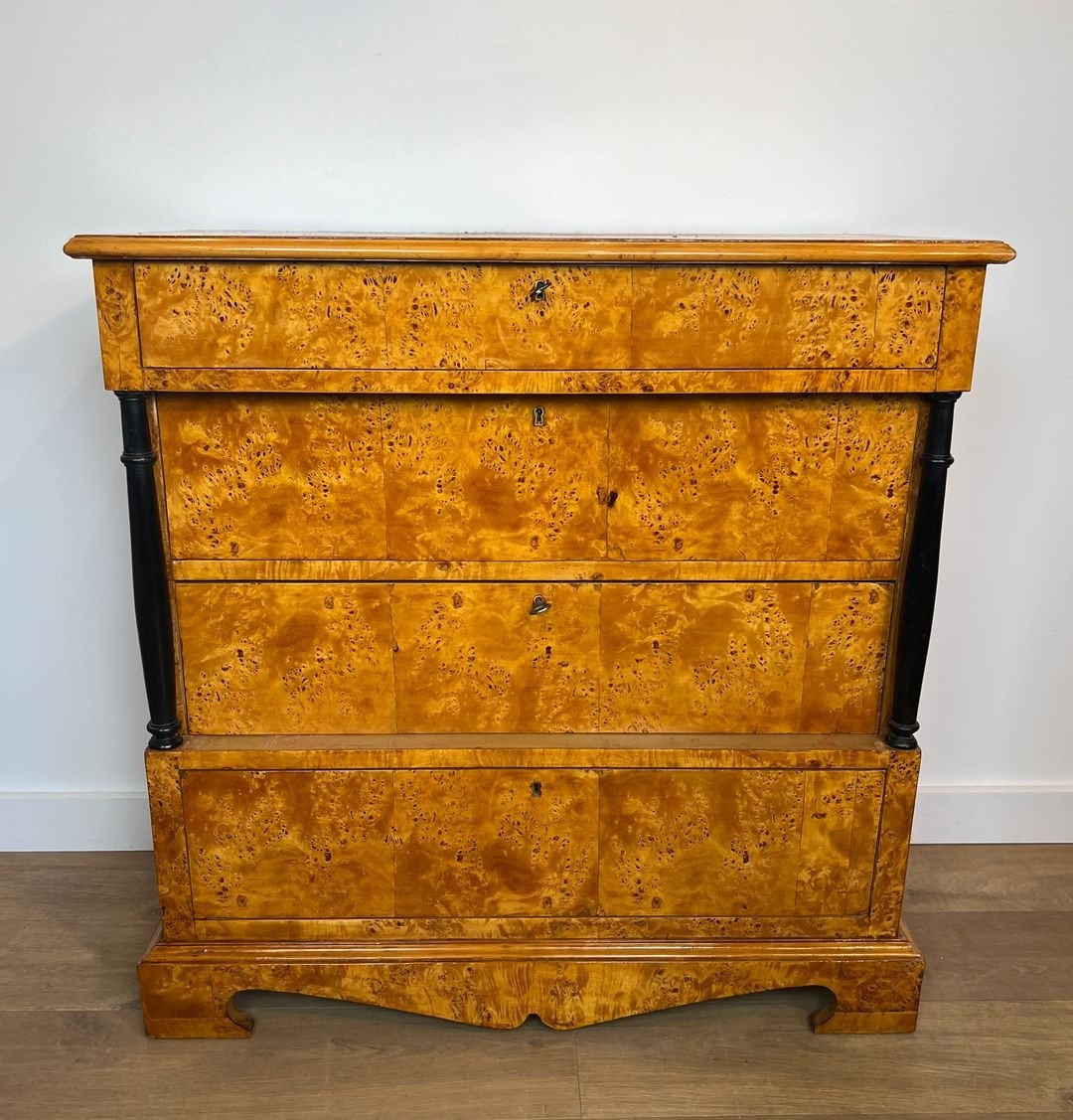
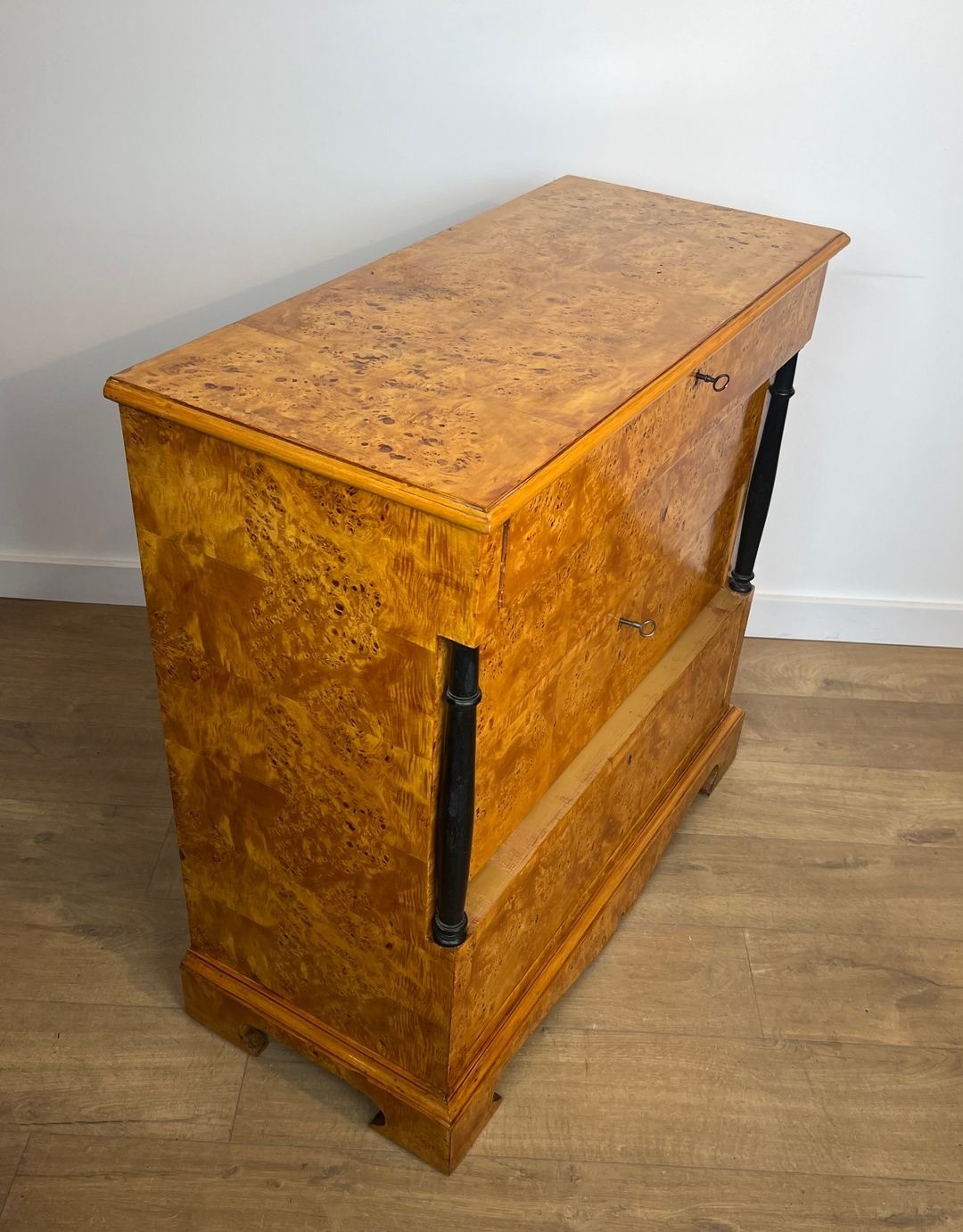
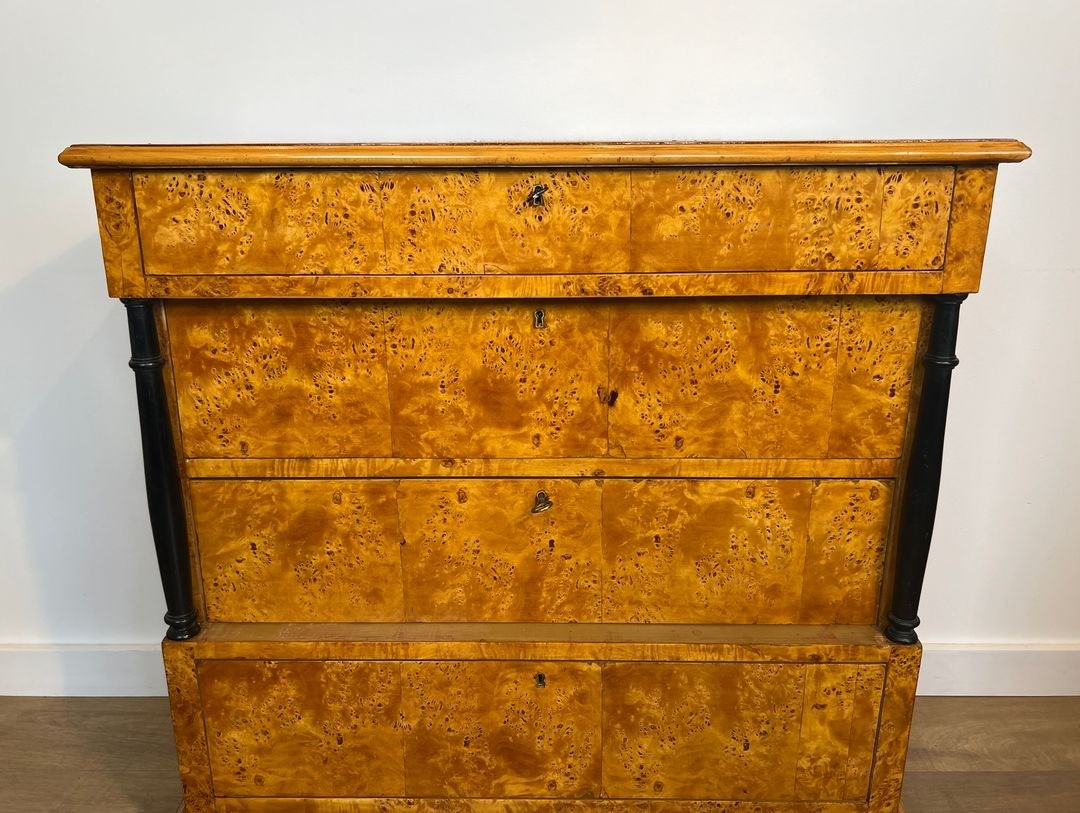
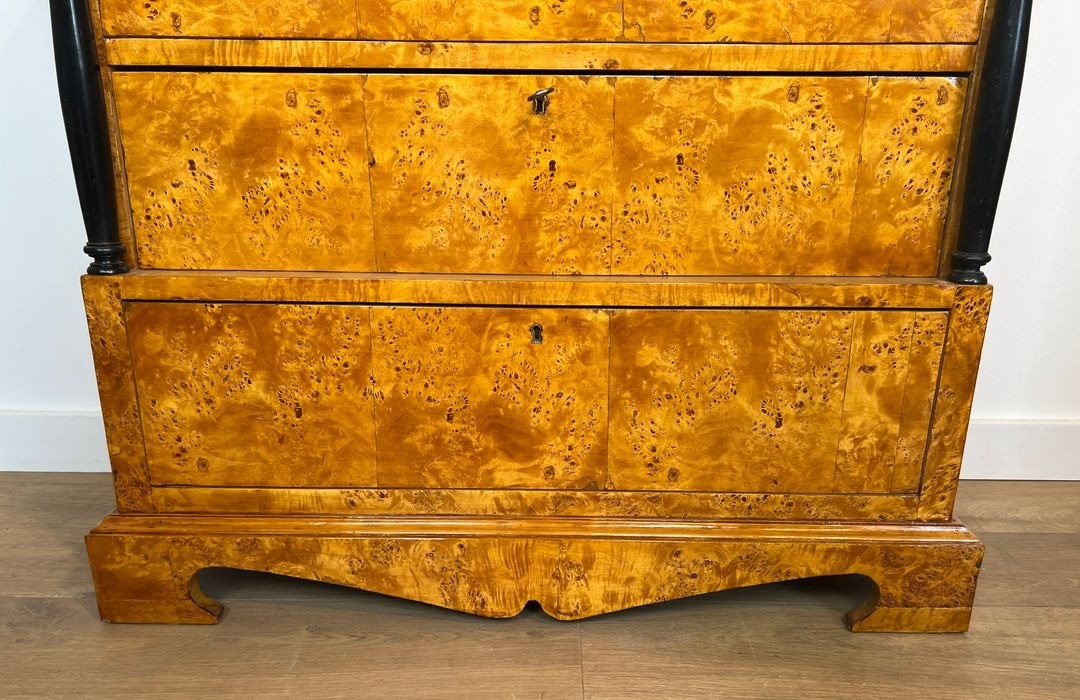
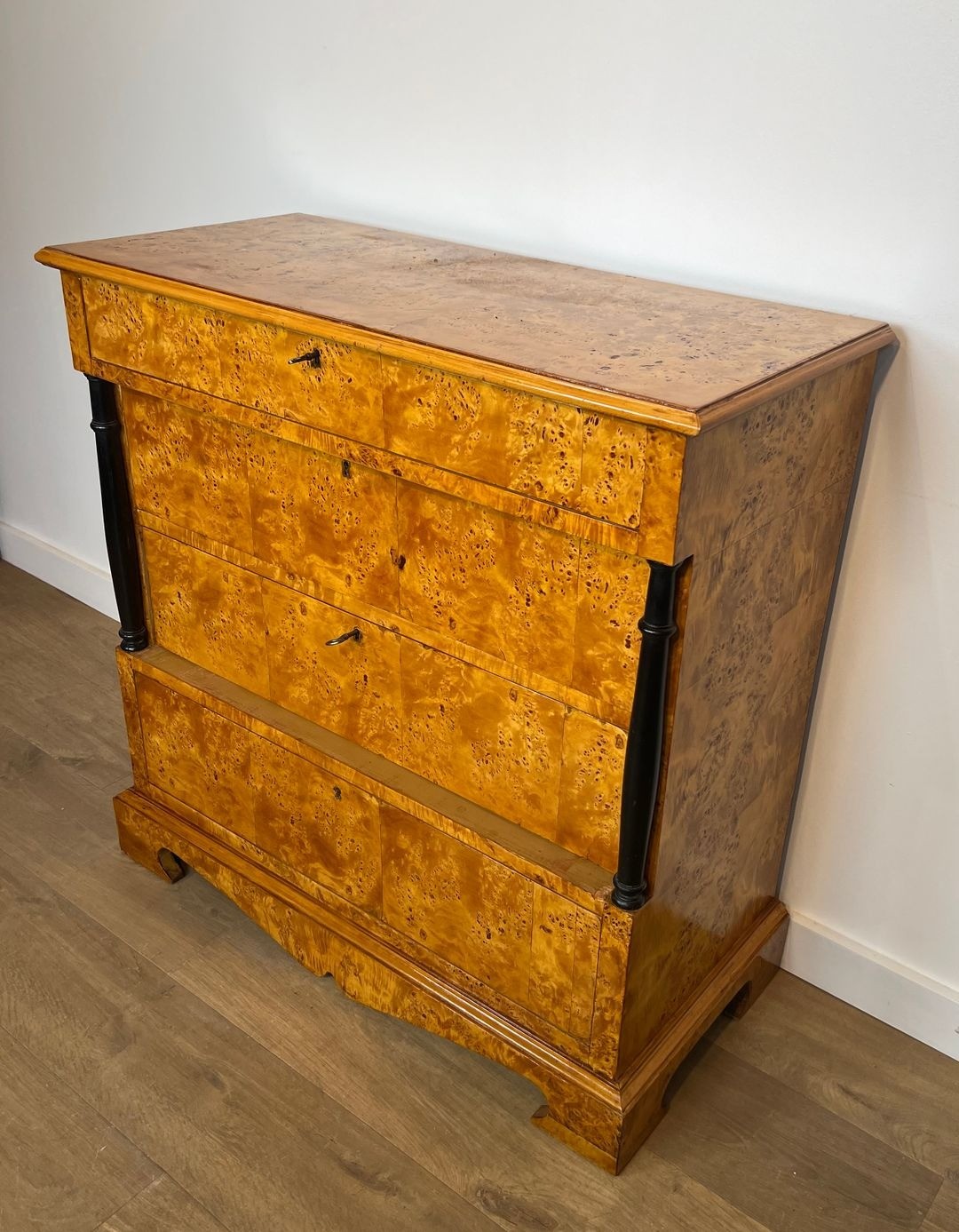
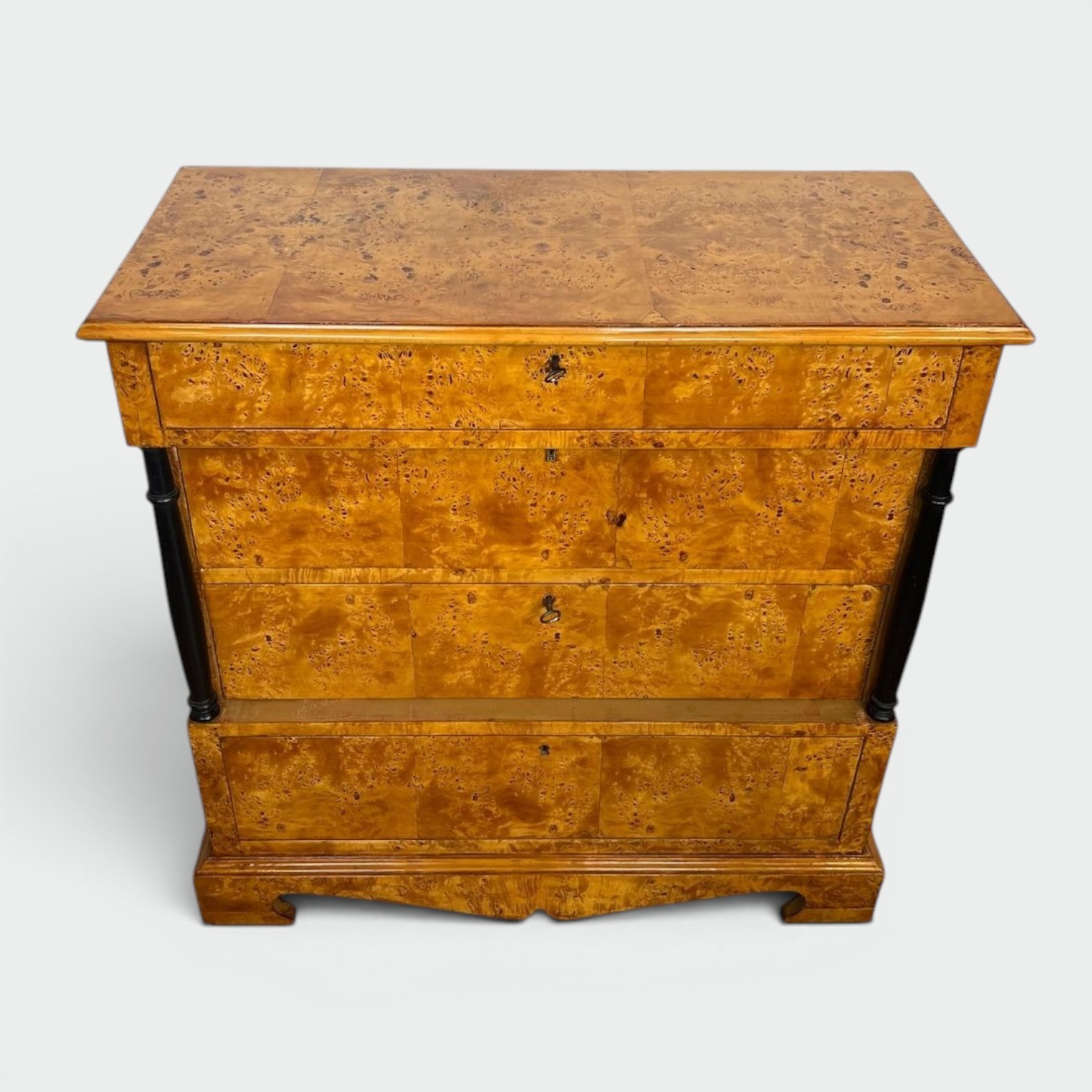
Bird’s-eye maple — the veneer chosen for this four-drawer chest — was among the most prized materials in the Biedermeier cabinetmaker’s repertoire. The small round figuration that gives the wood its name is a natural growth anomaly, occurring in relatively few specimens and requiring careful selection and meticulous cutting to display to full effect. On a chest of drawers, where four drawer fronts offer a continuous field for the veneer to be book-matched and sequenced, the bird’s-eye figure achieves a luminous, almost pictorial quality — the surface rippling with reflected light as the viewer’s angle changes. The composition on this example shows a cabinetmaker’s confidence in the material: the matching is precise, the figure centred, the effect quietly spectacular.
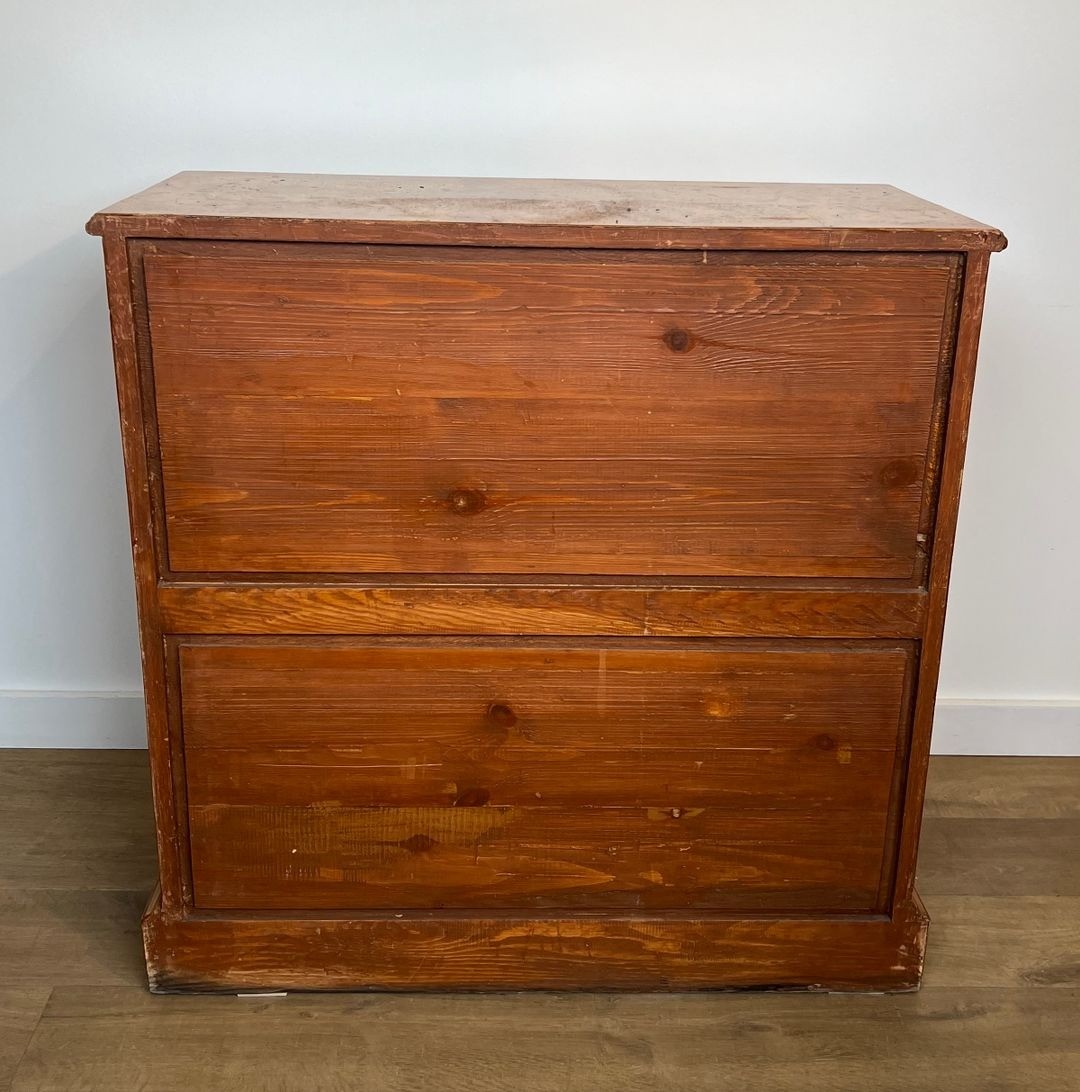
The Biedermeier four-drawer commode occupies an important place in the history of European furniture: it is both the most common format of the style and, when well-executed in quality materials, one of its most successful. This example, at 92.5 cm wide — generous but not overwhelming — retains the formal clarity and surface quality that distinguish the best German workshop production of the period. The appeal of Biedermeier furniture to contemporary collectors lies precisely in this combination of abstract formal beauty, extraordinary craftsmanship, and the warmth of natural figured wood: qualities as effective in a modern interior as in the bourgeois parlours for which these pieces were first conceived.