Large Two-Tier Lucite & Chrome Coffee Table with Glass Shelves and Castors, France circa 1970
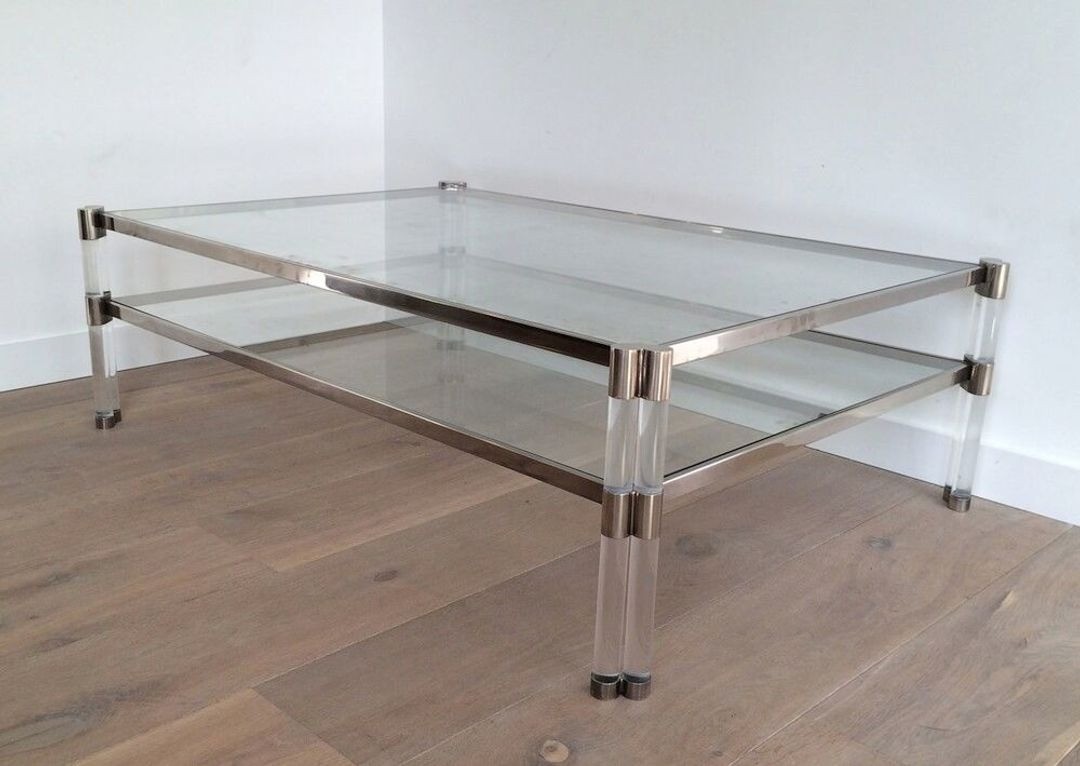
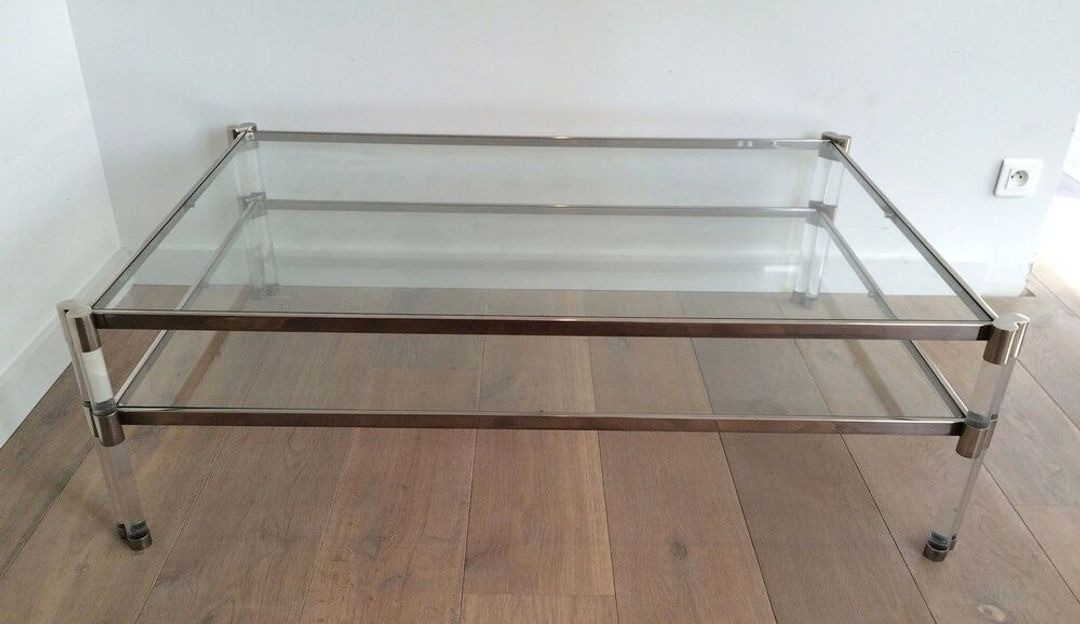
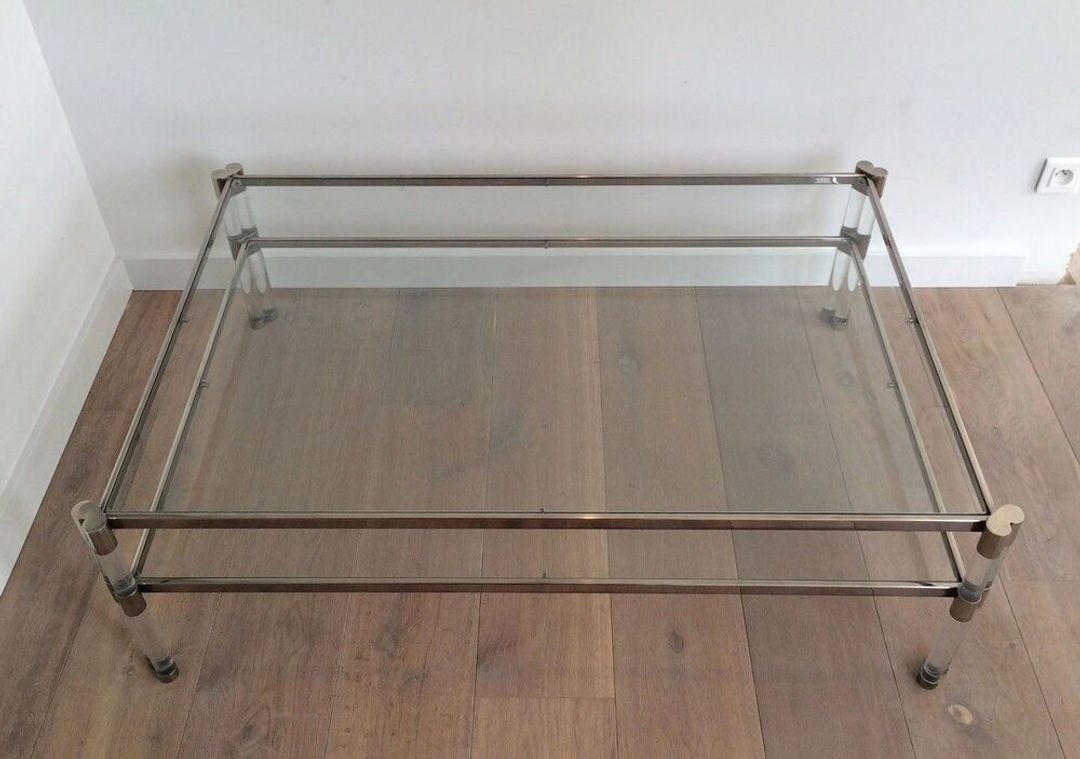
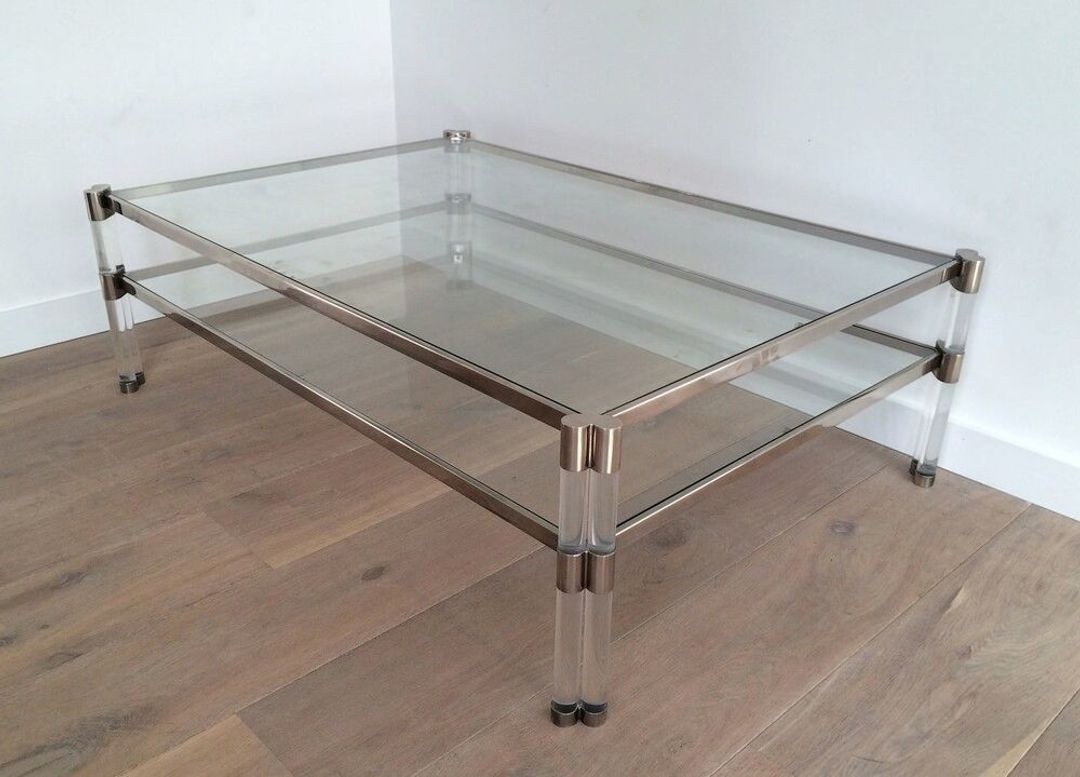
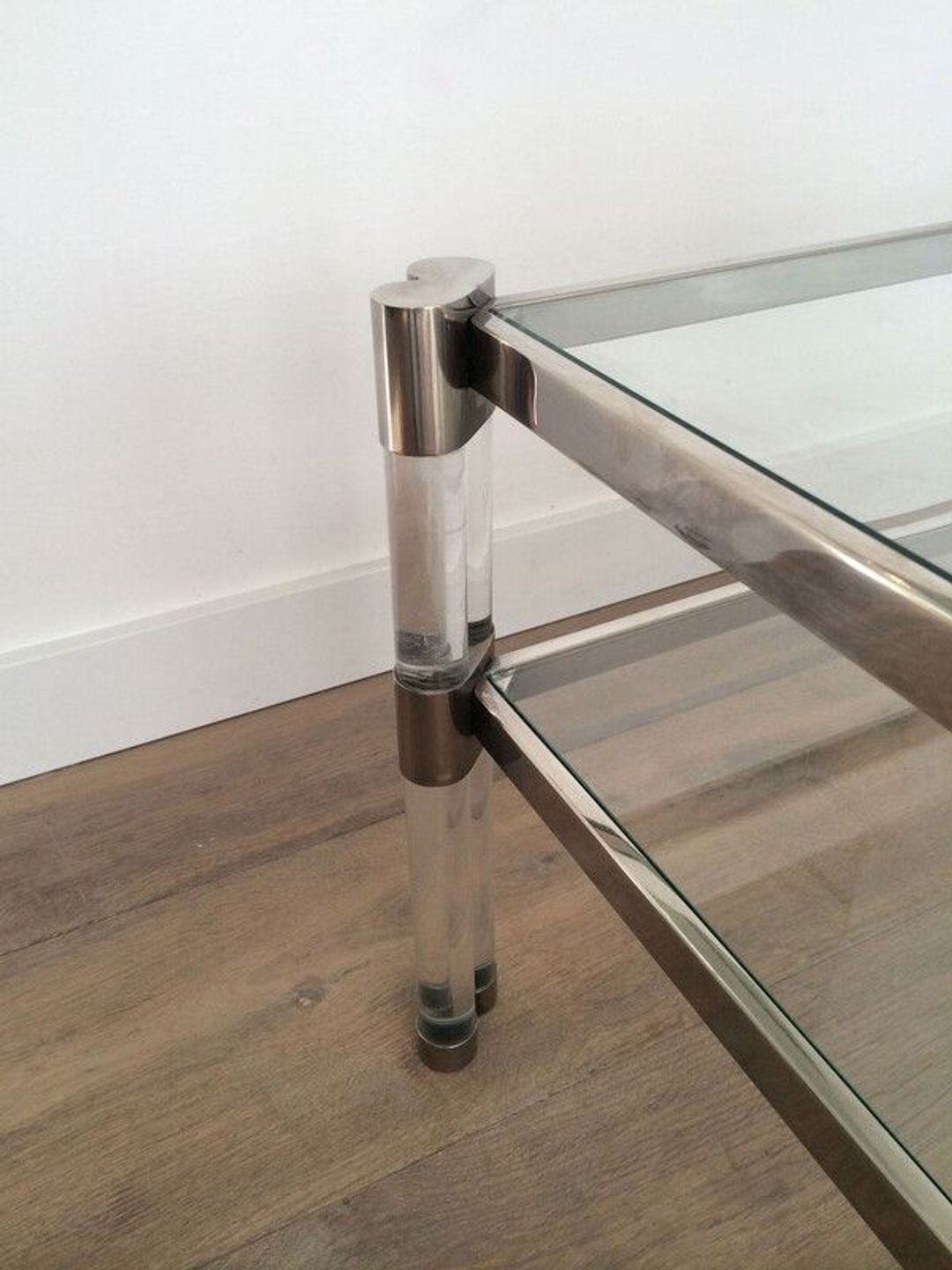
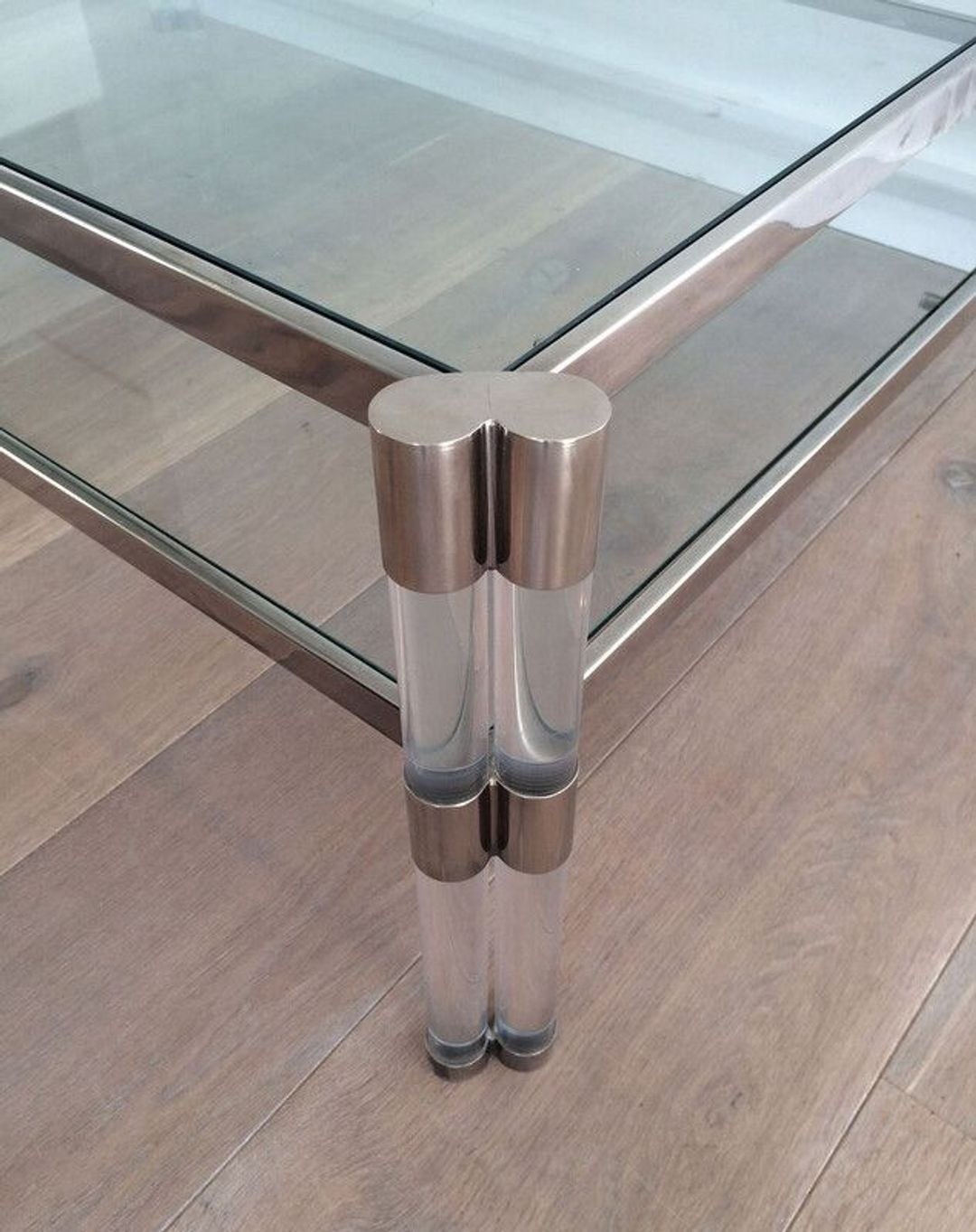
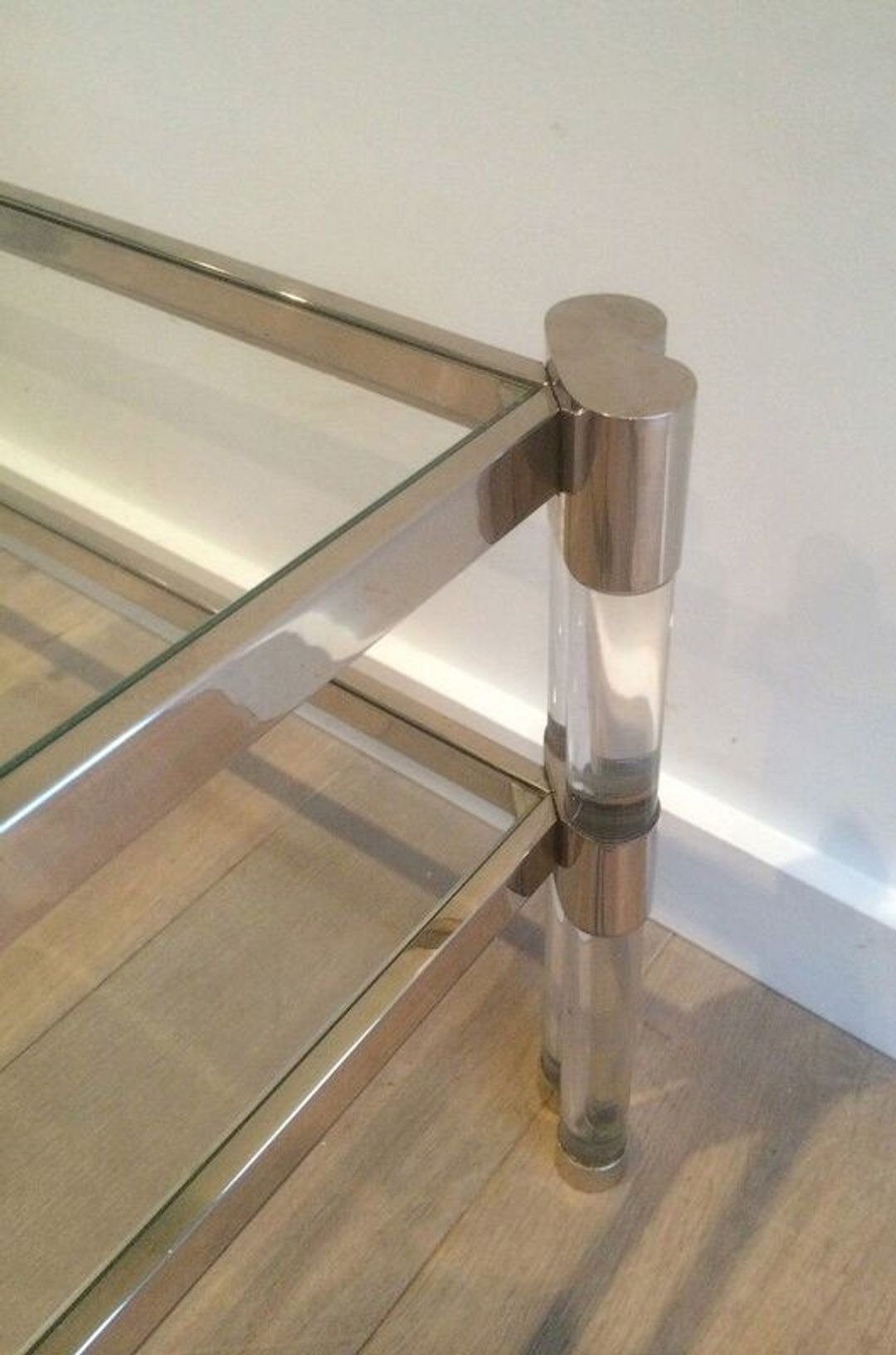
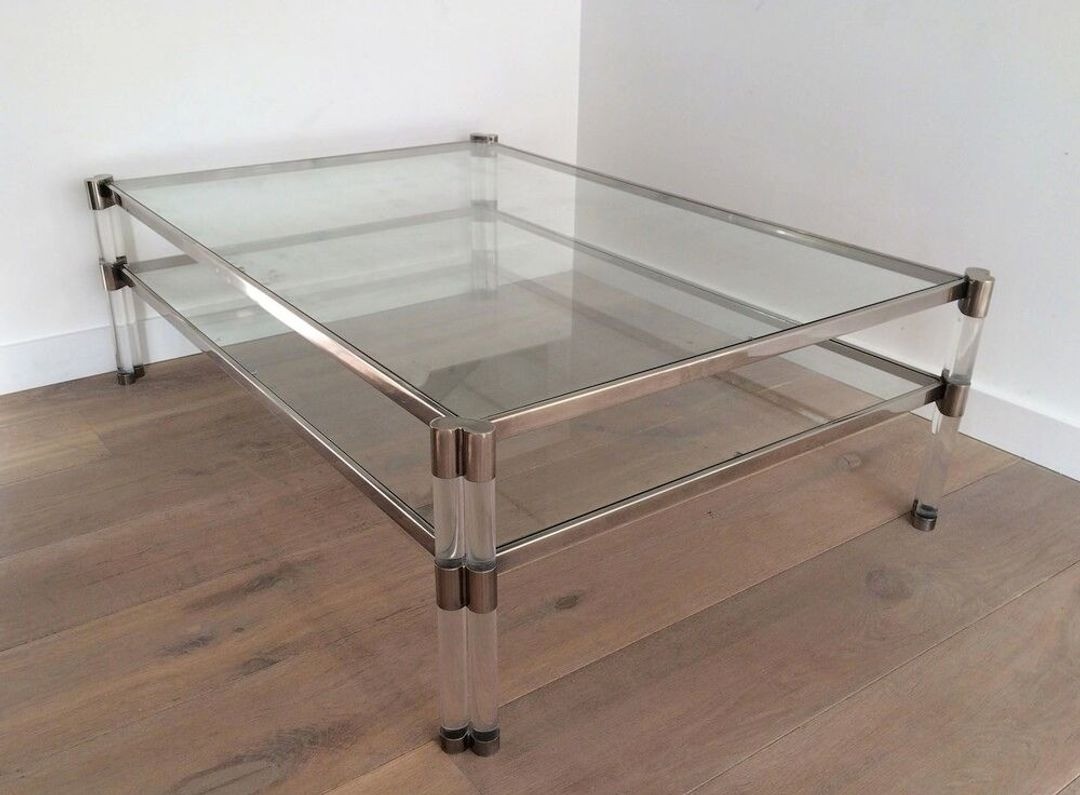
Large two-tier rectangular coffee table with clear Lucite corner uprights, polished chrome frame and brackets, two clear glass shelves, and castors. France, circa 1970. W. 128.5 × D. 88 × H. 38 cm.
This large two-tier coffee table, measuring an impressive 128.5 × 88 × 38 cm, exemplifies the French 1970s enthusiasm for transparency in furniture design. Lucite — the clear acrylic that French designers often called Plexiglas — was by this period being deployed across the full range of furnishings, always for the same reason: its ability to dematerialise structure, allowing objects to appear suspended in space rather than physically occupying it.
The corner uprights are solid Lucite columns, their transparency dissolving what would otherwise be heavy vertical masses and allowing the eye to pass freely through to the space beyond. Polished chrome brackets at each junction connect the Lucite columns to the horizontal rails of the frame, which are themselves in polished chrome tubing. The result is a table of extraordinary visual lightness — a piece that appears to float above the floor rather than simply rest upon it.
Two clear glass shelves occupy the upper and lower tiers, providing generous and practical surface area on both levels. The table rolls on its original castors, adding a further element of domestic flexibility to what is, at heart, a rigorous exercise in the aesthetics of transparency. At 128.5 × 88 cm in plan, it is large enough to anchor a full seating arrangement while remaining visually undemanding.
The condition is excellent throughout: the Lucite columns clear and free of stress cracks, the chrome bright, and the glass intact. This table represents an ideal centrepiece for a living room where the desire for practical surface area must be balanced against an unwillingness to compromise the visual openness of the space.