Rare Maison Jansen Brushed Steel & Brass Neoclassical Coffee Table with Claw Feet, circa 1940
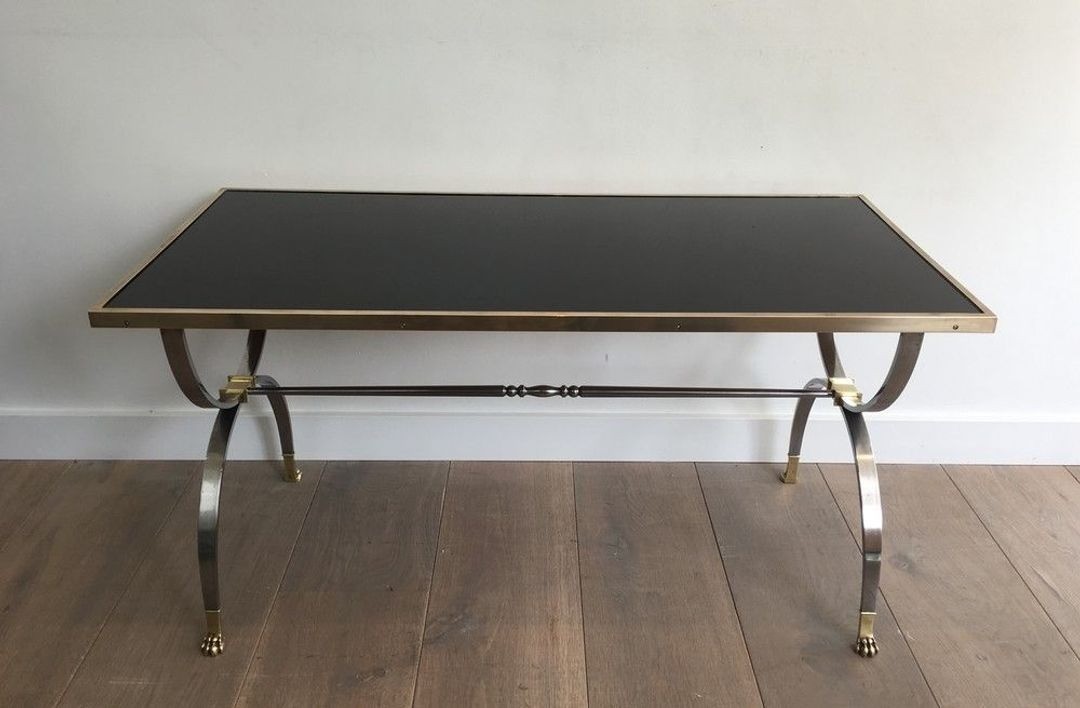
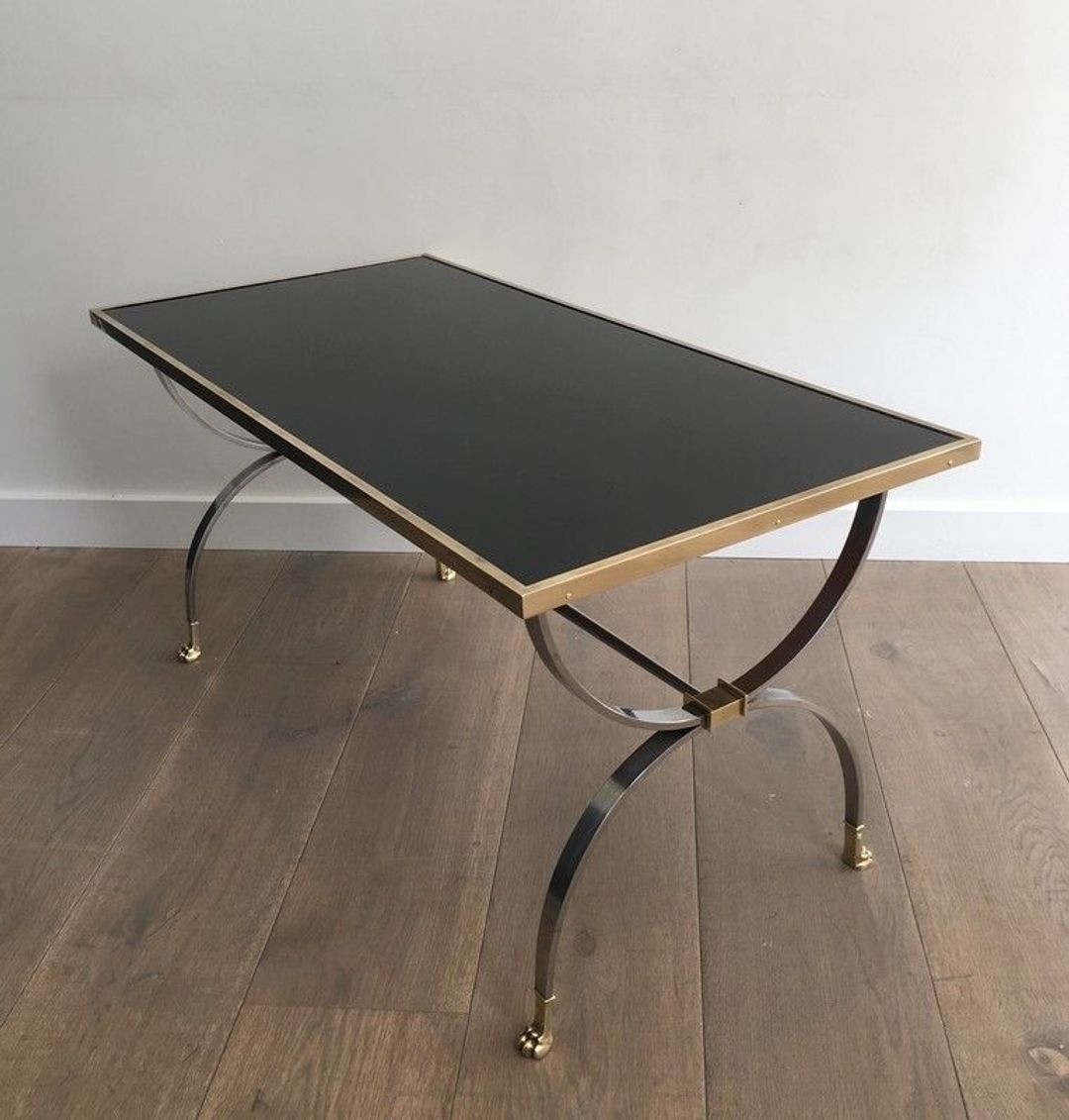
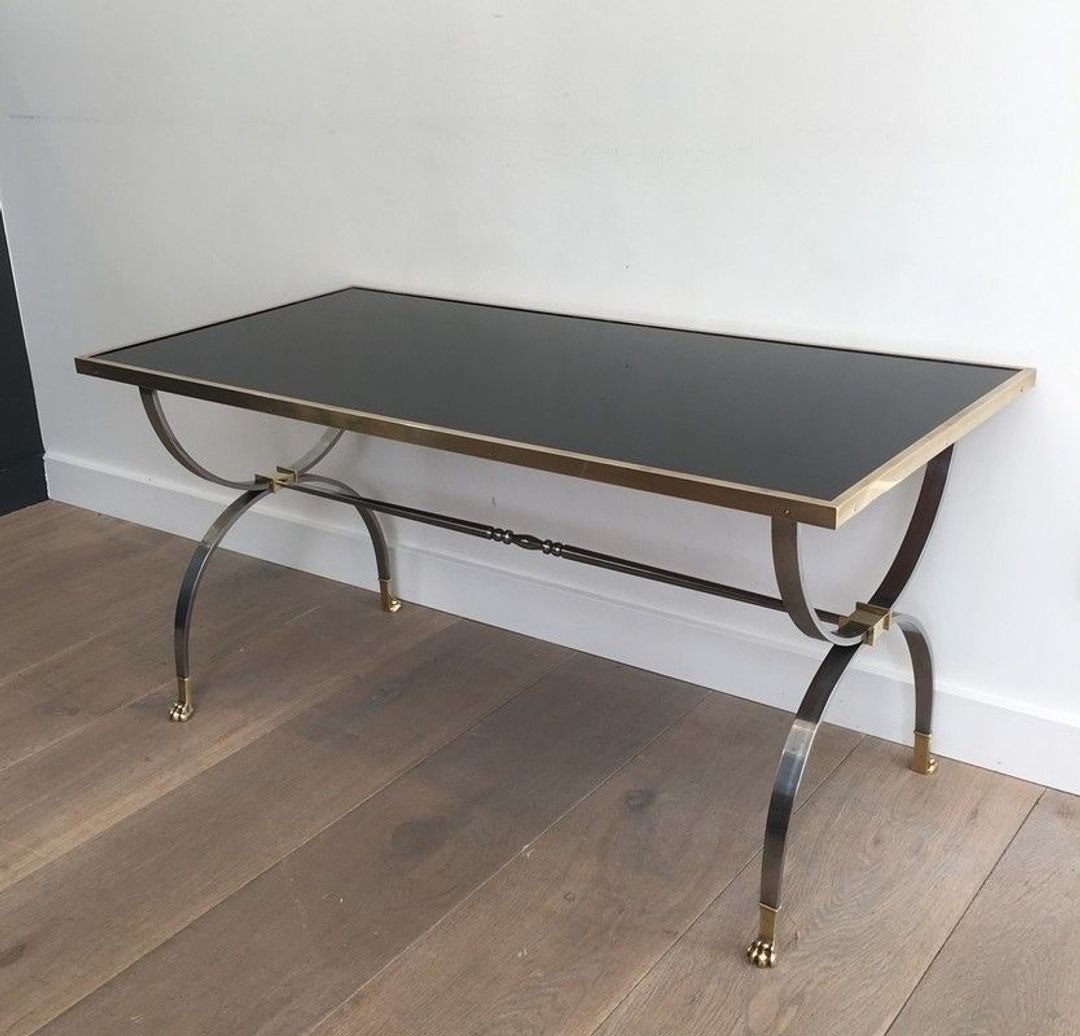
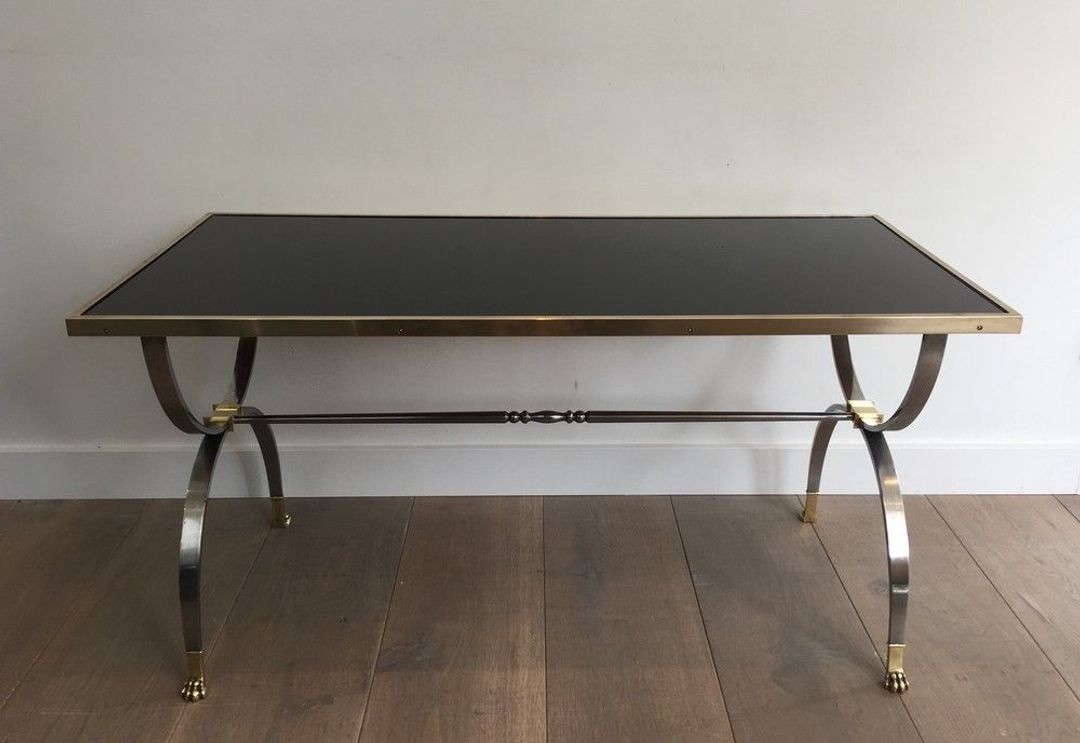
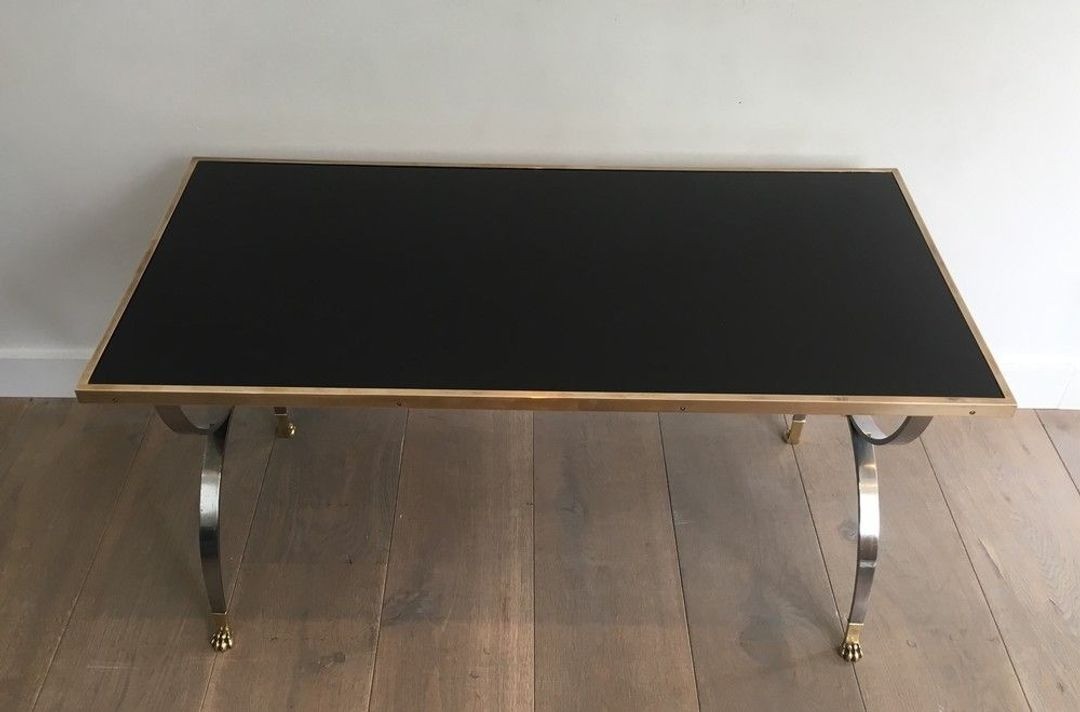
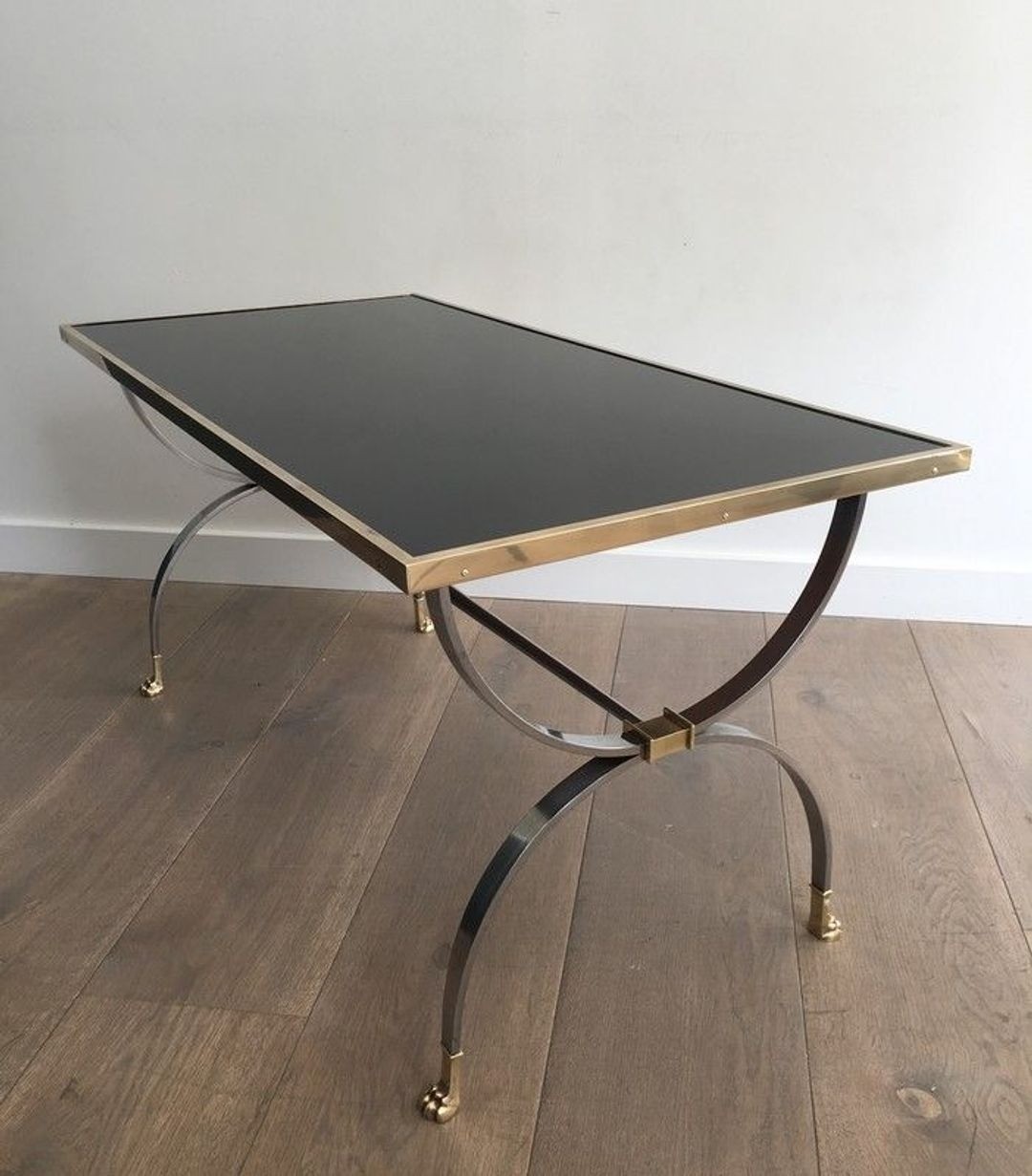
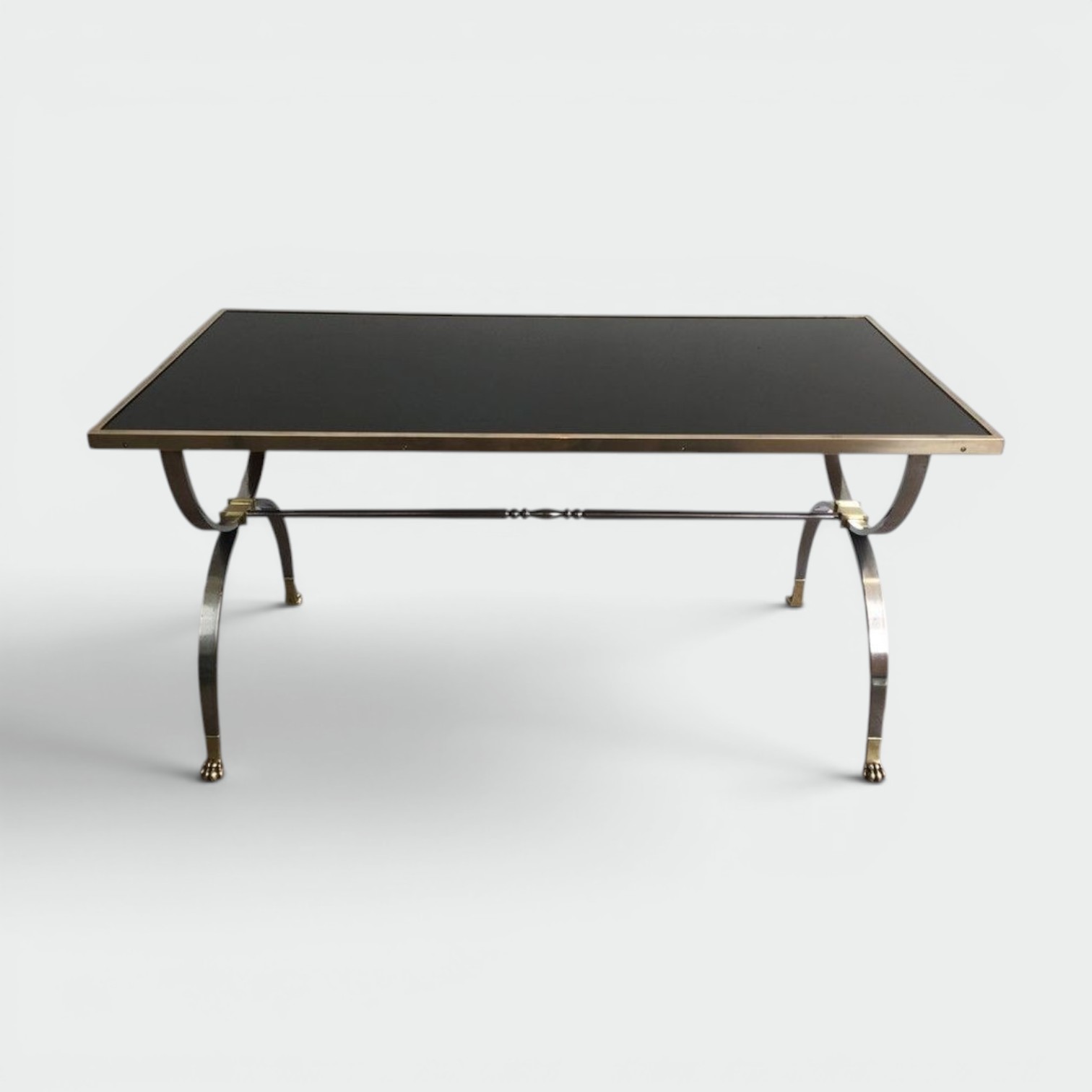
Rectangular coffee table by Maison Jansen with black lacquered glass top, brass gallery edge, brushed steel curule-form legs with brass central ring and claw feet. France, circa 1940. W. 100 × D. 50 × H. 50.5 cm.
Among the most recognisable creations to emerge from the Paris workshops of the early 1940s, neoclassical coffee tables attributed to Maison Jansen unite severe classical form with the material vocabulary of the French Empire — brushed steel, polished brass, and dark lacquer — in compositions of enduring refinement. This rectangular example, dating from around 1940, is a rare survivor in excellent condition.
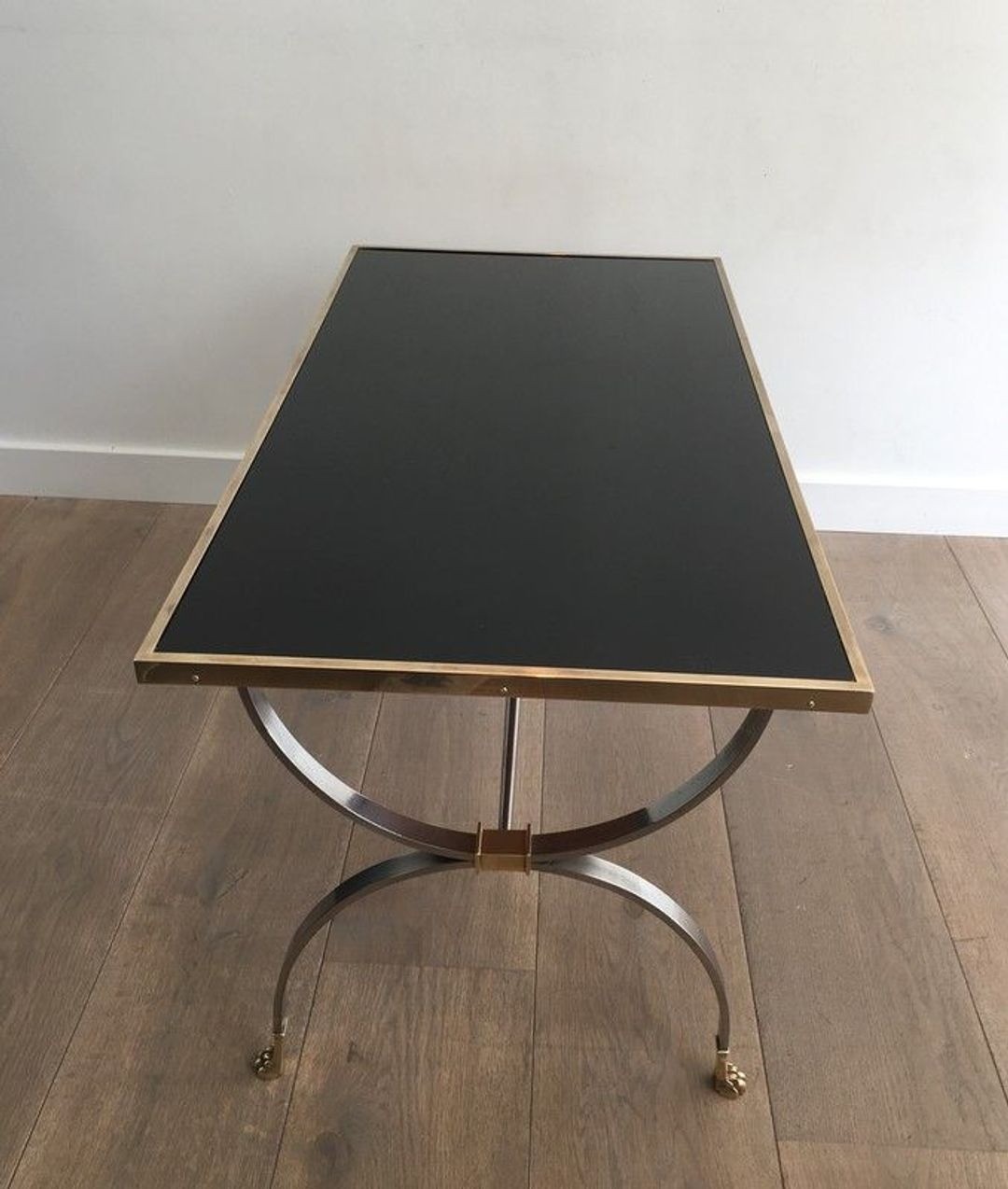
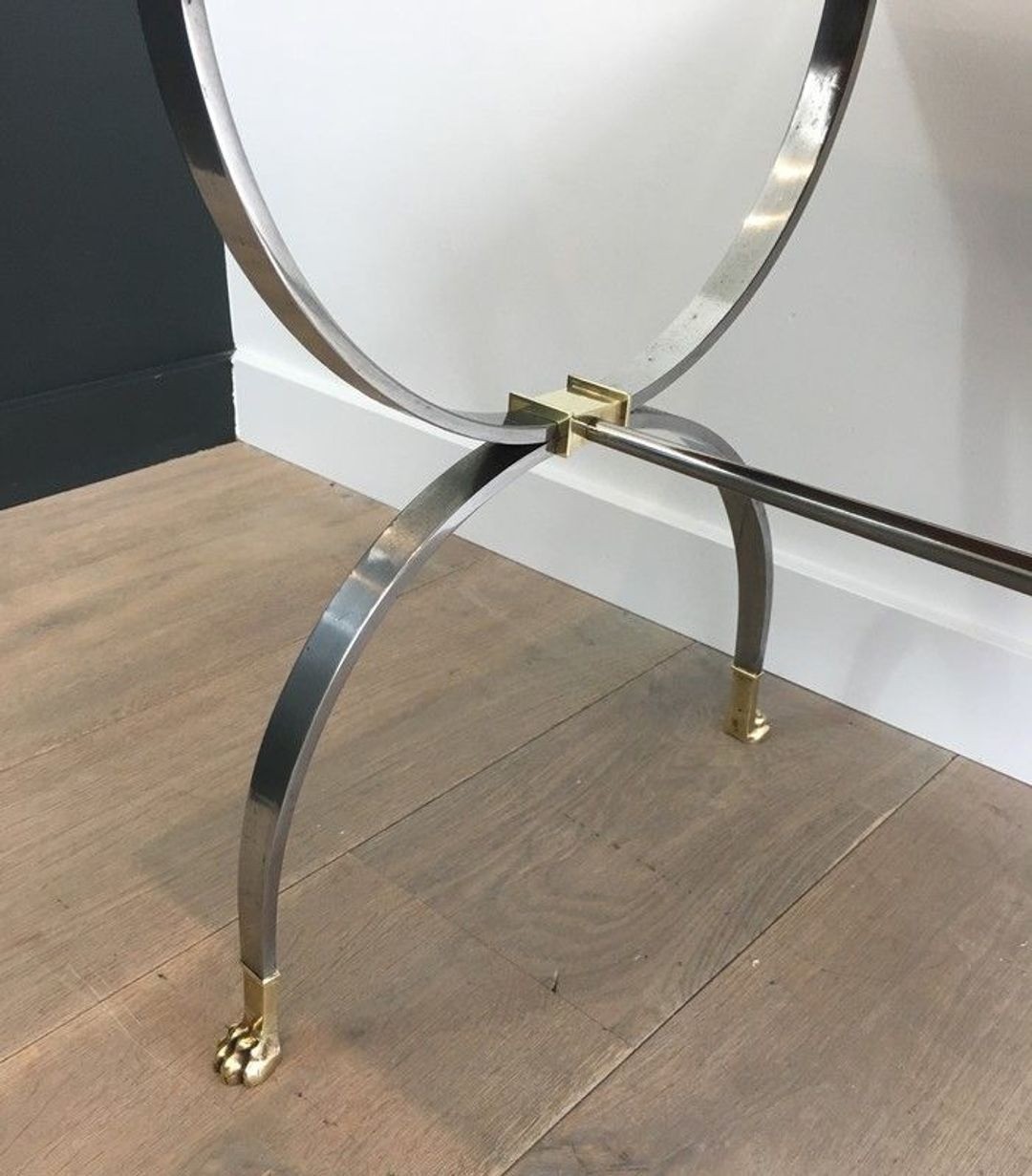
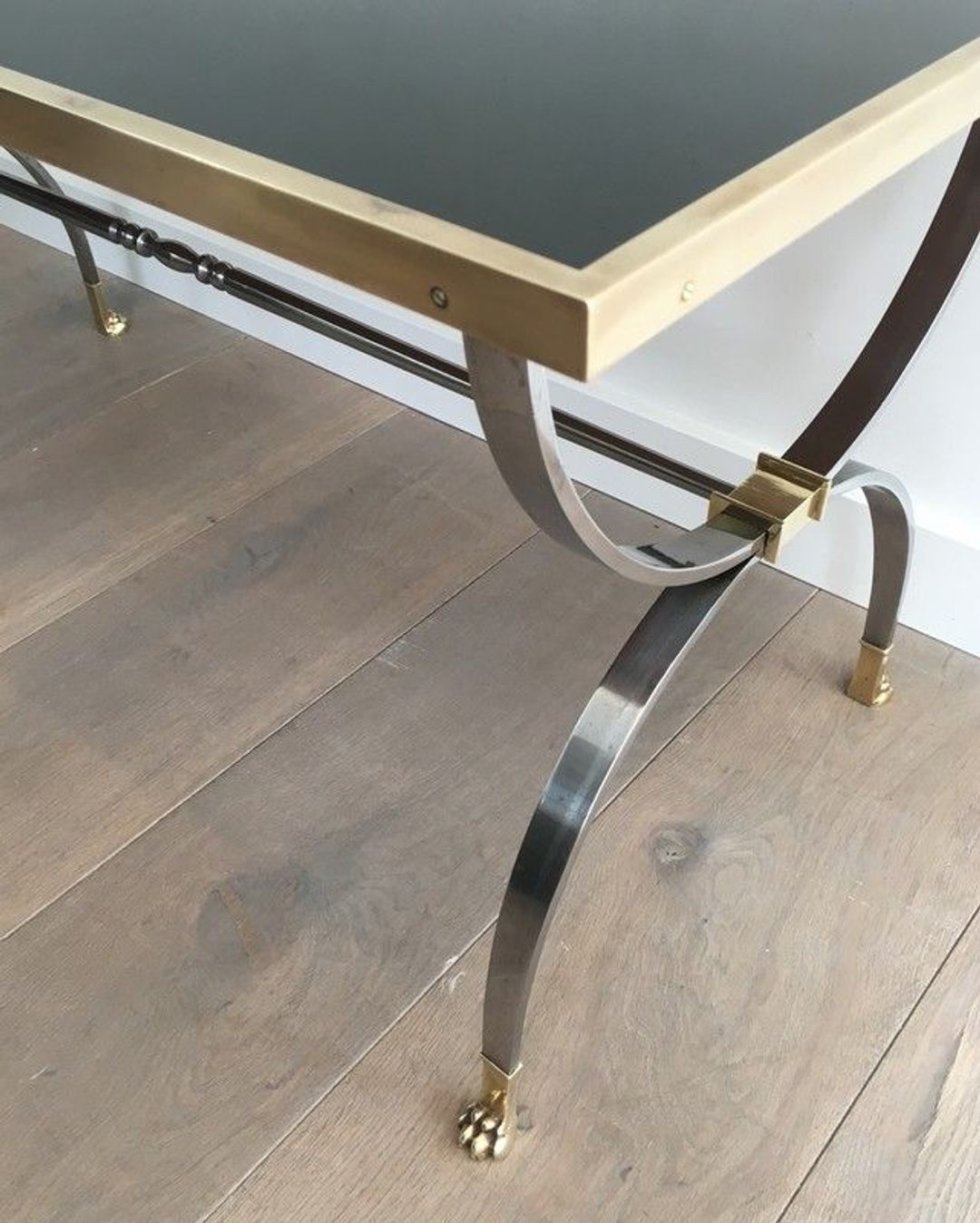
The base is constructed on the curule principle: at each end, a pair of sweeping brushed steel C-curves arc in opposing directions, crossing at the centre where they are united by a polished brass ring — a motif of Roman authority that Jansen elevated into one of the defining gestures of the house’s decorative language. From the crossing, the legs curve outward to terminate in polished brass claw feet of confident naturalistic modelling, their weight grounding the table’s airy silhouette.
The rectangular top is glazed in black-lacquered glass, its deep, light-absorbing surface contrasting dramatically with the gleam of the metalwork below. Around the perimeter runs a continuous brass gallery moulding, punctuating the transition between glass and frame and lending the whole an air of jewelled precision. A horizontal brushed steel stretcher connects the two end assemblies, providing structural rigidity while preserving the open quality of the design. Dimensions are 100 × 50 × 50.5 cm.
Tables of this type, firmly attributed to Maison Jansen, are genuine rarities on the current market: their quality of conception and execution places them well above the general production of the period, and they remain highly desirable to collectors of French Art Deco and neoclassical furniture.