Neoclassical Brass and Wire Mesh Four-Panel Folding Fireplace Screen, Italian circa 1970
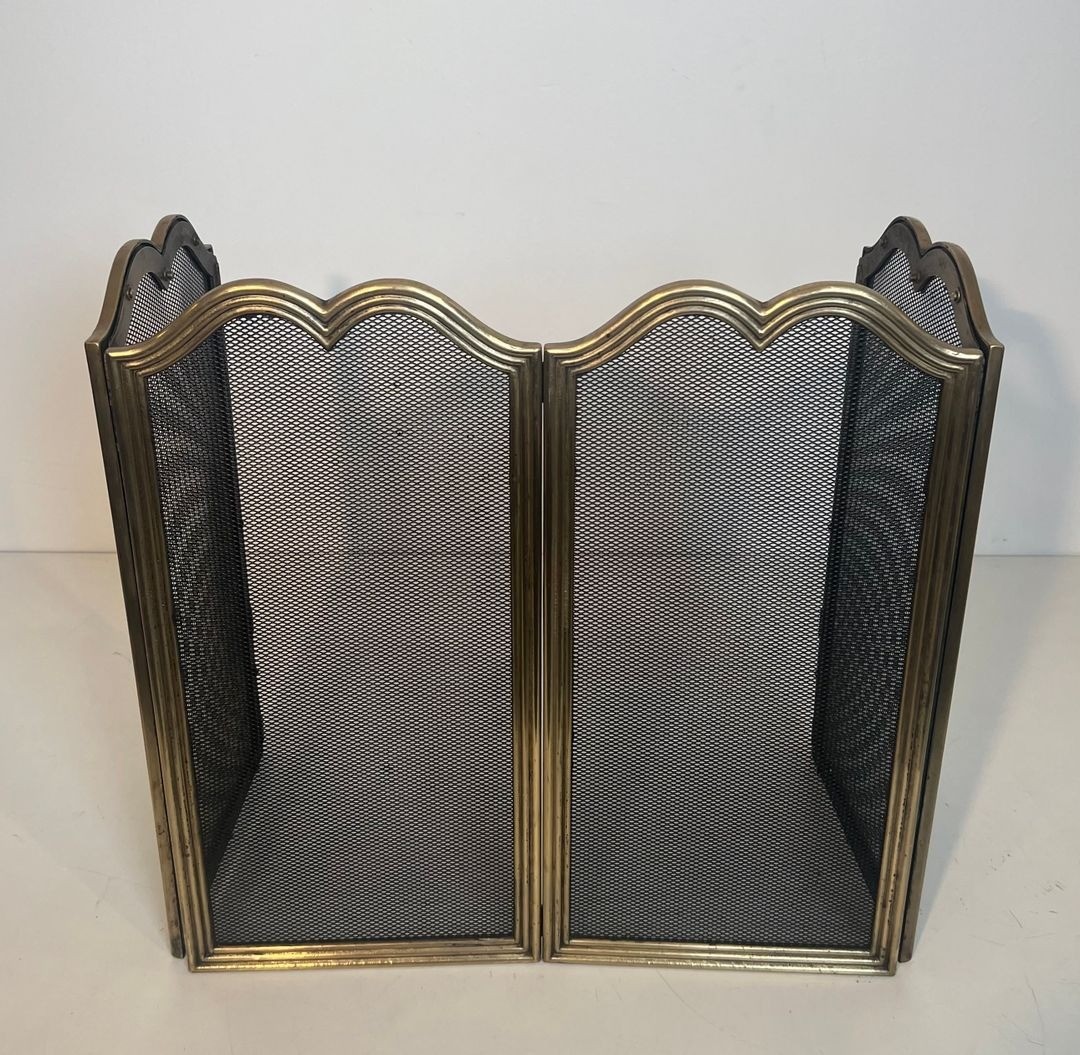
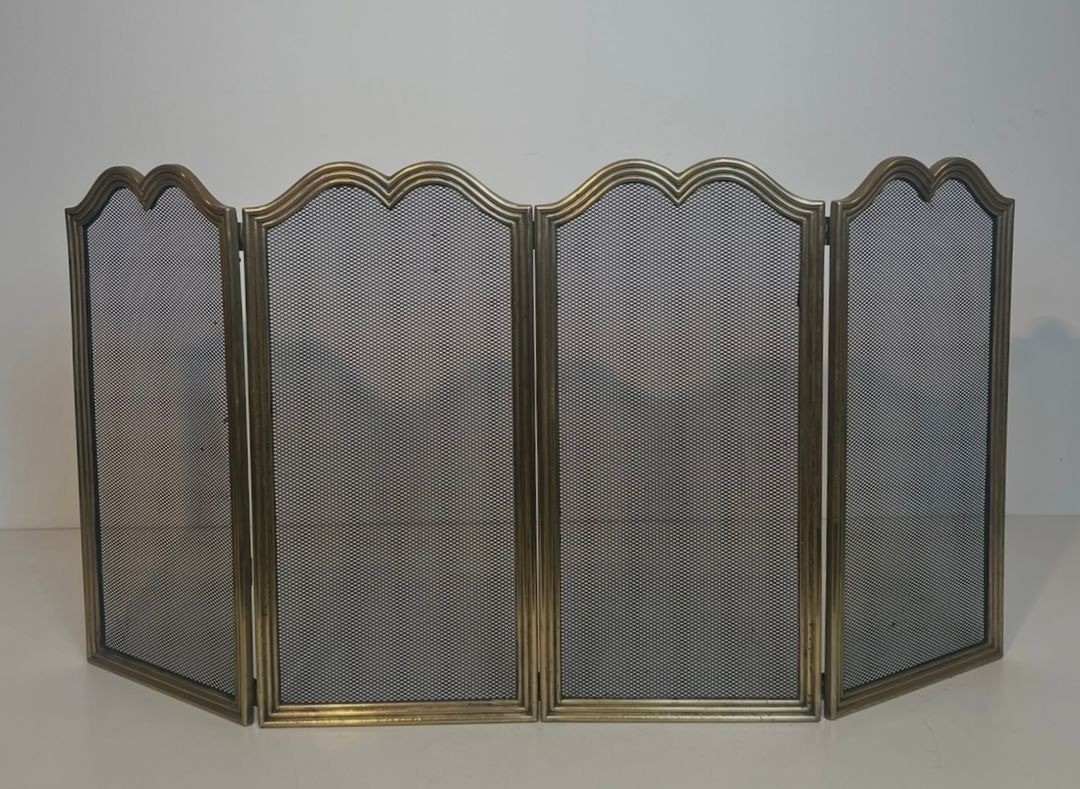
Four-panel folding brass and wire mesh fireplace screen with a scalloped arched profile to the top edge of each panel. The articulated brass frame, polished to a warm gold tone, holds a fine wire mesh worked into an undulating pattern that produces a pronounced optical wave effect. A practical and handsomely decorative screen of neoclassical inspiration. W. 53.5 × D. 26.5 × H. 49.5 cm. Italian, circa 1970.
A four-panel folding brass and wire mesh fireplace screen of considerable decorative character, its articulated frame allowing the panels to be arranged in a gentle curve before the hearth. Each panel is crowned by a scalloped arched profile—a neoclassical flourish that softens the geometry of the rectangular form and lends the screen an architectural quality. The fine wire mesh is worked into an undulating wave pattern that generates a pronounced optical effect as light plays across its surface, recalling the preoccupations of the Op Art movement that animated the decorative arts of this period. The combination of the warm, polished brass frame with the kinetic mesh creates a screen that is as much an object of visual interest as a functional hearth accessory.
The four-panel folding fireplace screen became one of the canonical forms of the mid-to-late twentieth century interior. Its practicality—it could be adjusted to any hearth width and folded flat for storage—made it a staple of both domestic and hotel interiors, while its decorative potential attracted the attention of designers working in the neoclassical and transitional idioms that dominated Italian and French luxury production of the 1960s and 1970s. Italian craftsmen in particular excelled at combining brass framing with mesh infill, often introducing decorative details such as the scalloped tops seen here to elevate a utilitarian form into something genuinely ornamental.
The scalloped arched top profile of each panel is a specifically neoclassical reference, echoing the arched forms found in Louis XVI boiseries, overmantels, and furniture of the late eighteenth century. Its reappearance in a 1970s Italian screen reflects the confident historicism of postwar Italian decorative production, which absorbed and reinterpreted classical French models with characteristic elegance. The wave-patterned mesh, by contrast, introduces a distinctly contemporary note, creating a productive tension between the historicist frame and the modernist surface.
In good condition consistent with age and use. A screen of genuine decorative ambition, equally at home before a period fireplace or as a strong accent piece in a more eclectic or contemporary interior.