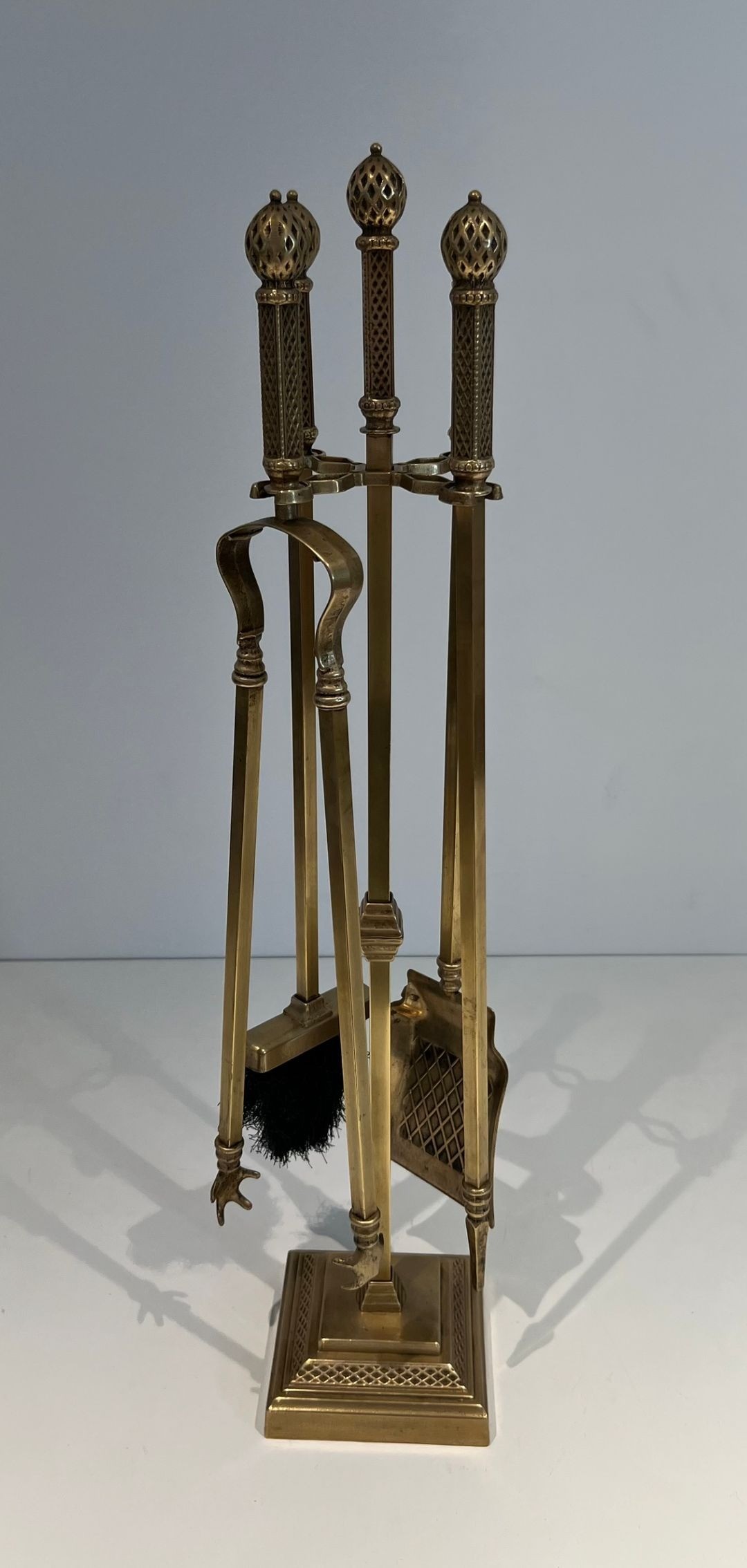
Neoclassical Style Finely Chased Bronze and Brass Fireplace Companion Set with Reticulated Ball Finials. France. Circa 1930.
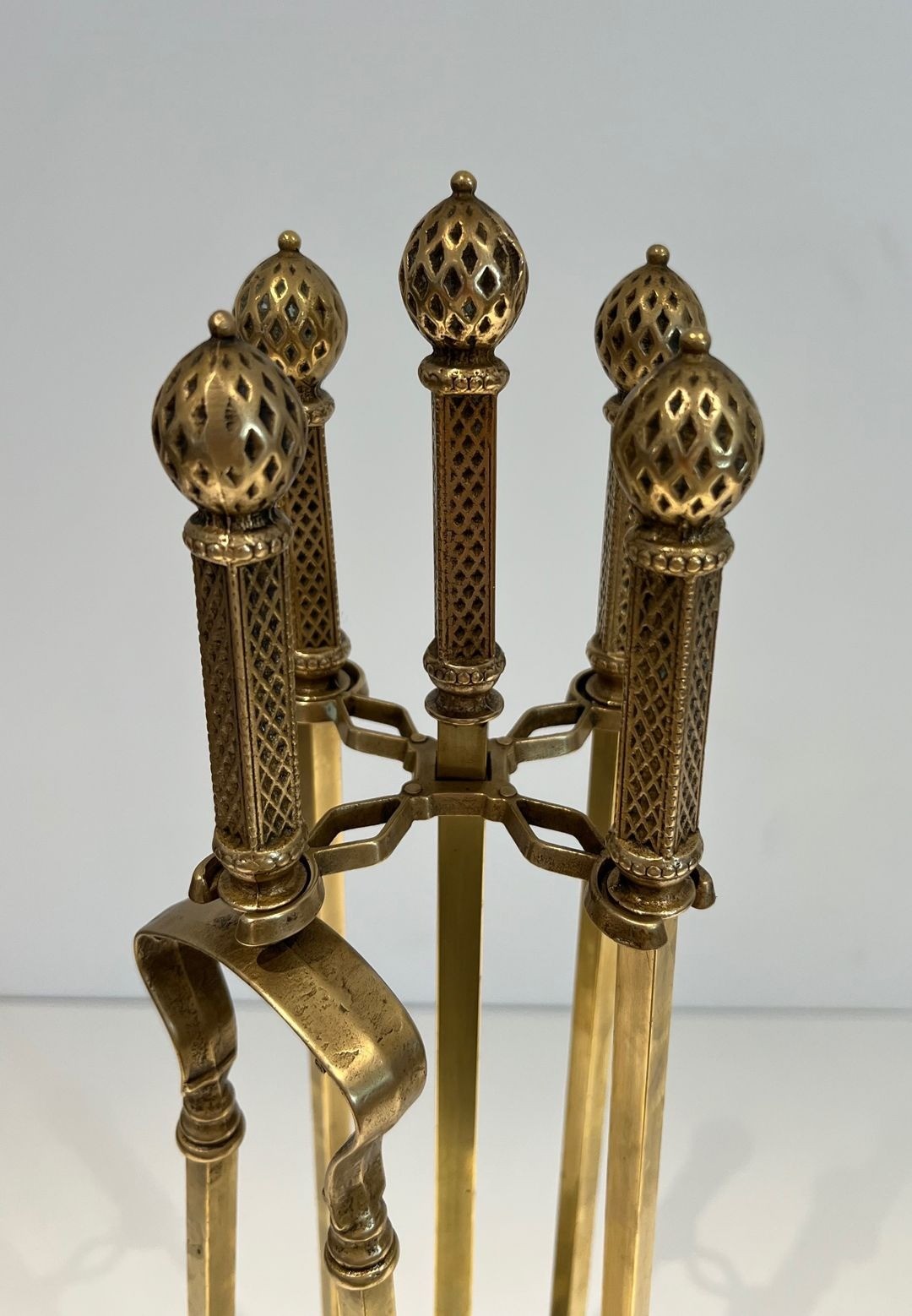
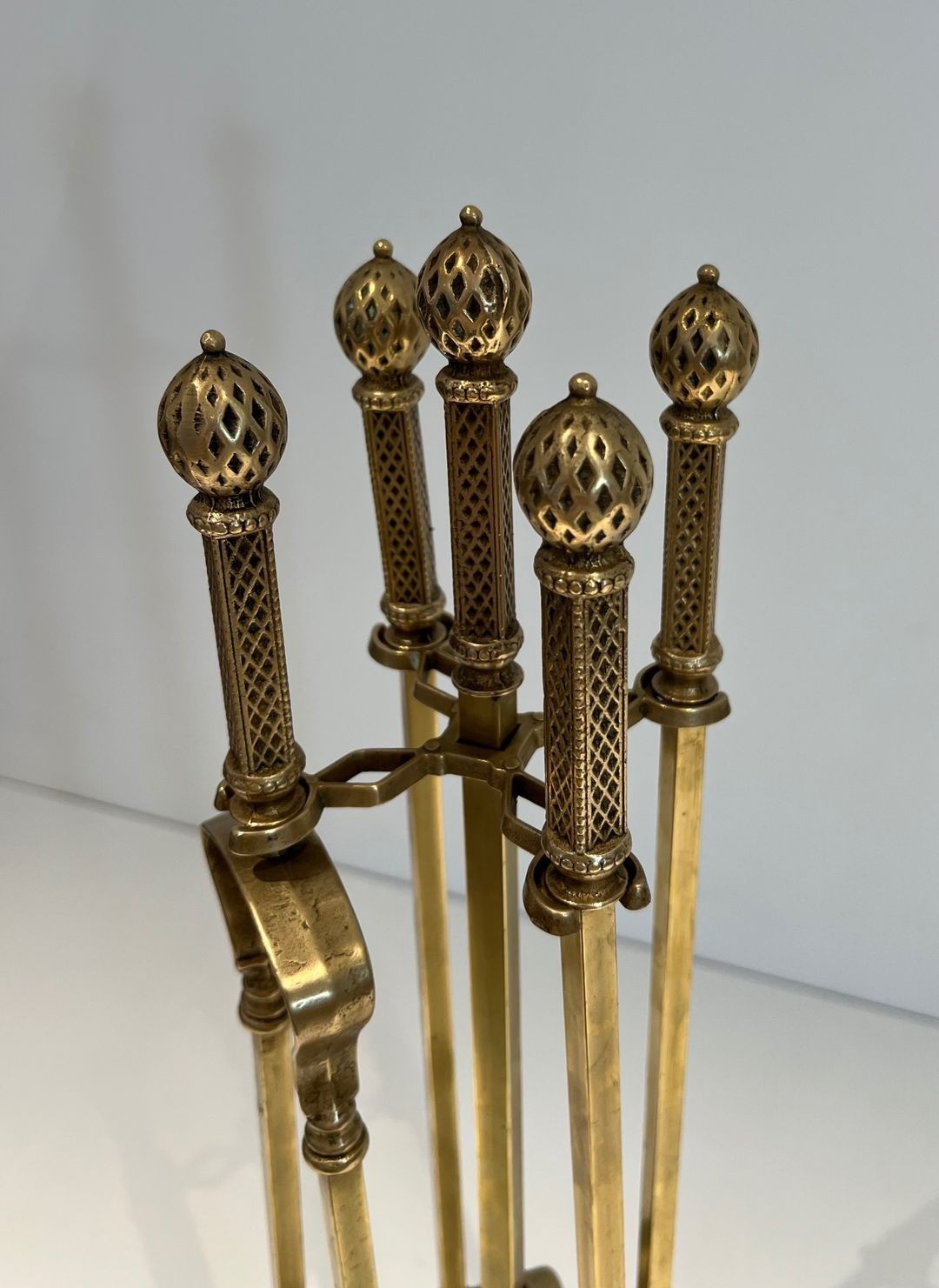
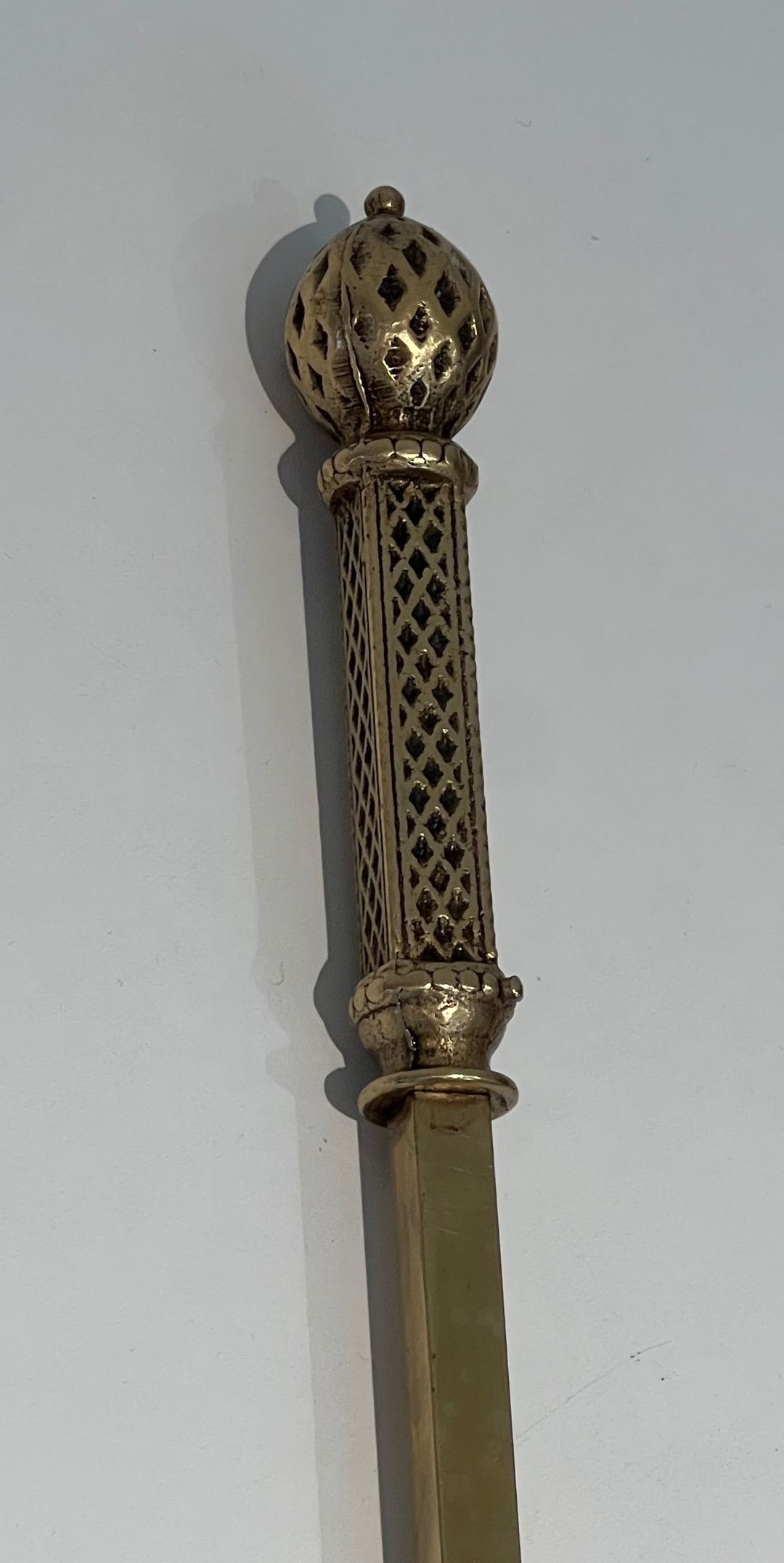
Neoclassical style finely chased bronze and brass fireplace companion set. Each tool handle is surmounted by a reticulated openwork ball finial crowned by a pointed acorn, and the shafts are united at mid-height by a decorative cross-bracket. The stepped square base is worked with chased geometric decoration. Warm gilded bronze and polished brass. France. Circa 1930. W. 13.5 × D. 13.5 × H. 70 cm.
This tall and richly worked neoclassical style bronze and brass fireplace companion set is distinguished by the exceptional quality of its decoration and the elaborateness of its composition. Each of the five tool handles — and the central supporting shaft — is surmounted by a reticulated openwork ball of pierced and chased bronze, crowned by a pointed acorn finial, giving the top of the set a commanding and jewel-like presence. The shafts themselves are worked with finely chased decoration and united at mid-height by a decorative cross-bracket of Gothic inspiration, which acts both as a structural support and as a formal design element binding the composition together.
The set comprises a poker, a flat-blade shovel, a brush and a pair of tongs, all of exceptional length at 70 cm overall and of entirely consistent quality. The base is a stepped square plinth, its surfaces worked with chased geometric motifs that echo the refined decorative vocabulary of the handles above.
The combination of cast bronze and polished brass — two materials of contrasting colour and texture — was a characteristic feature of high-quality French decorative metalwork of the late nineteenth and early twentieth centuries, when craftsmen drew freely on the repertoire of historical styles to produce objects of considerable decorative ambition. Dating to circa 1930, this companion set represents the finest French atelier production, combining technical virtuosity with a confident mastery of historical ornament.