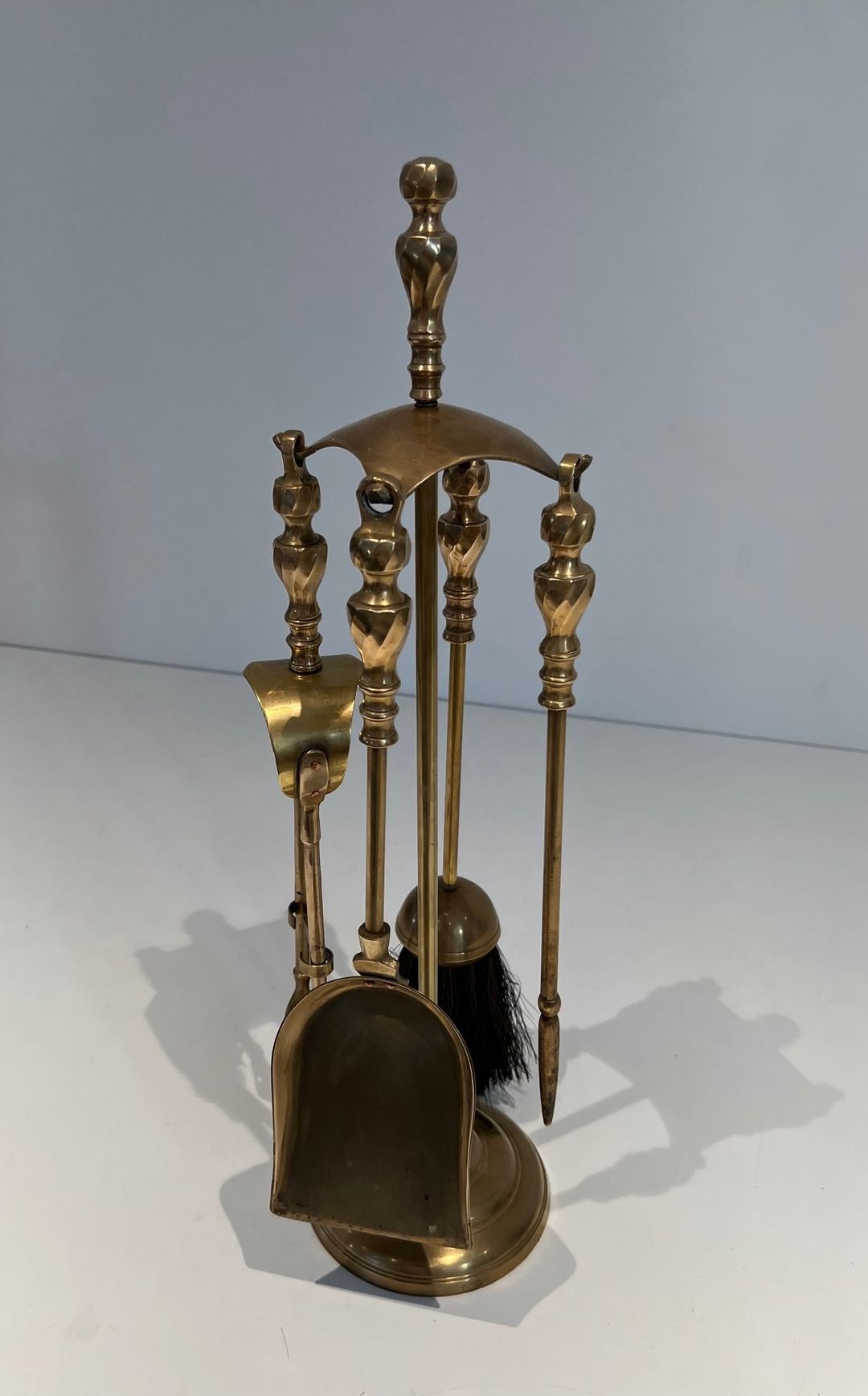
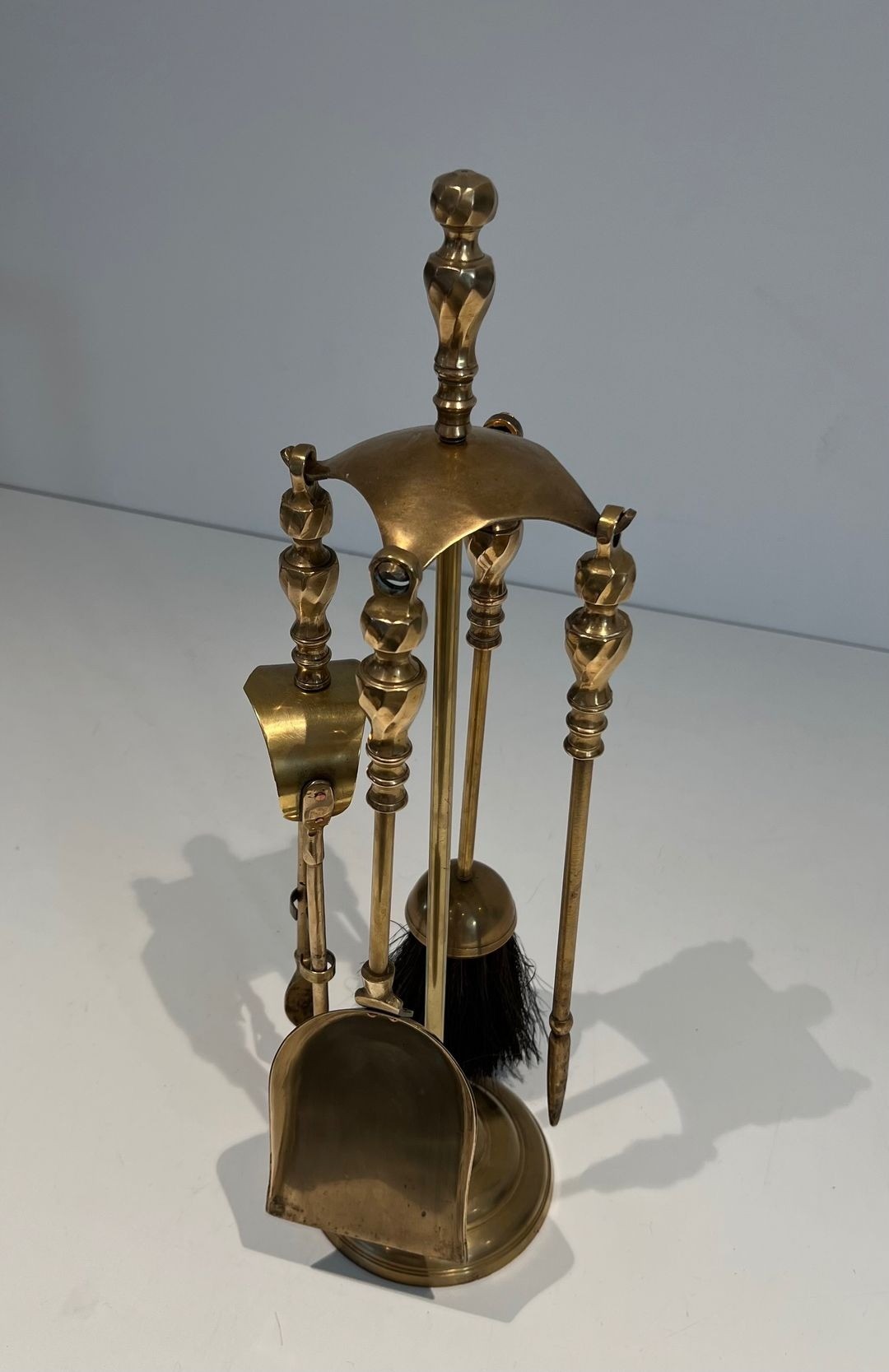
Neoclassical Style Brass Fireplace Companion Set with Arched Ball-Studded Frame. France. Circa 1970.
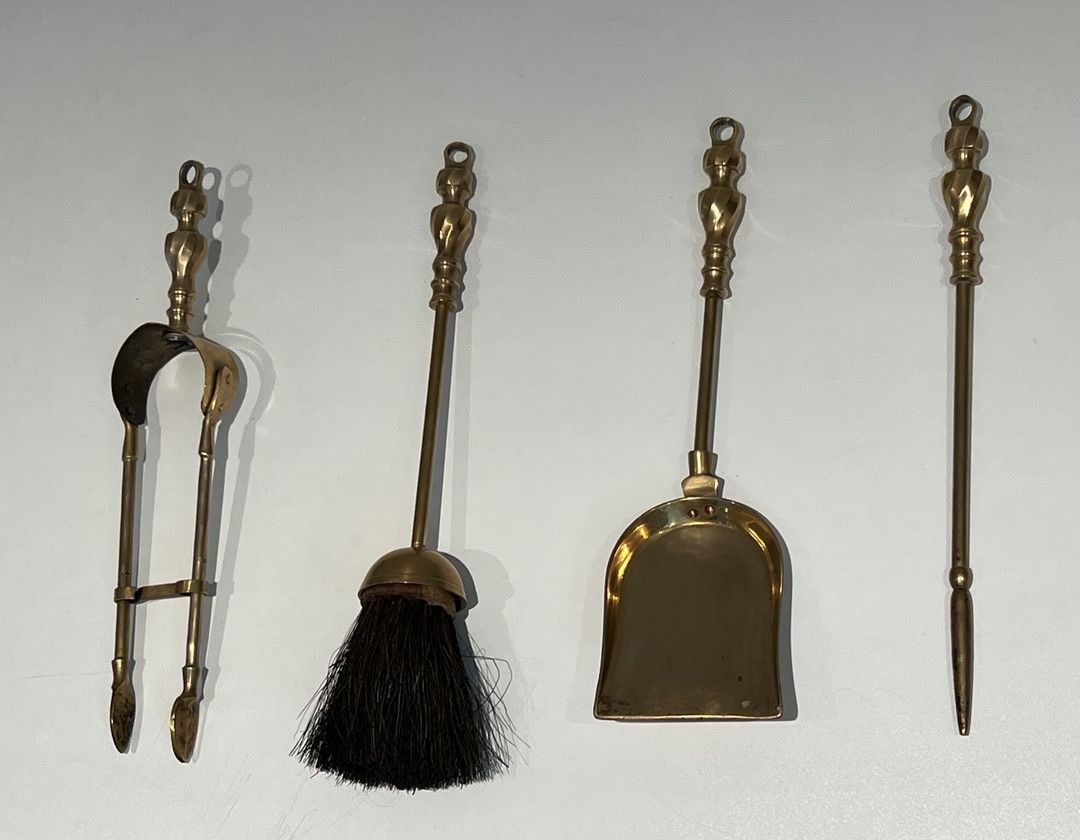
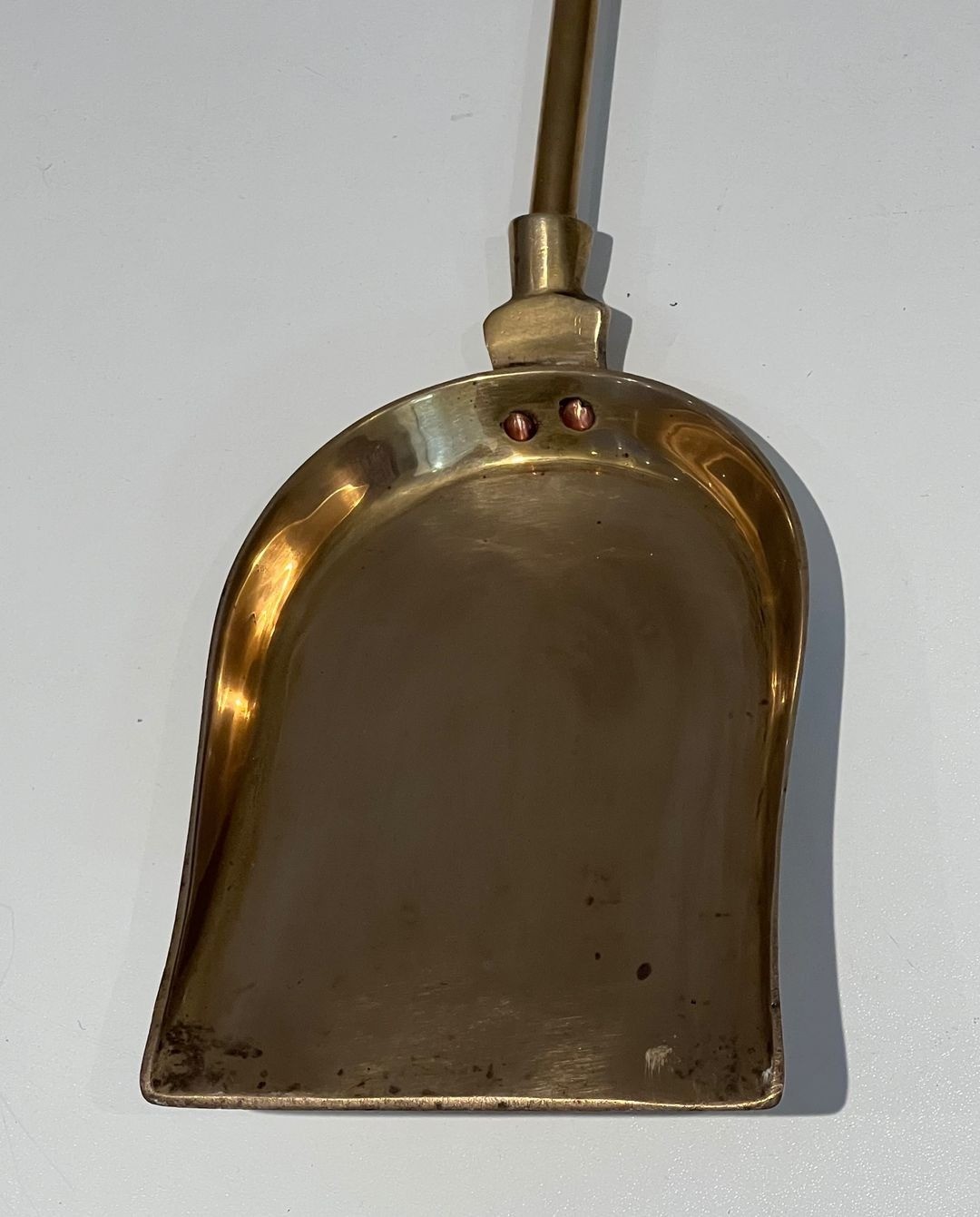
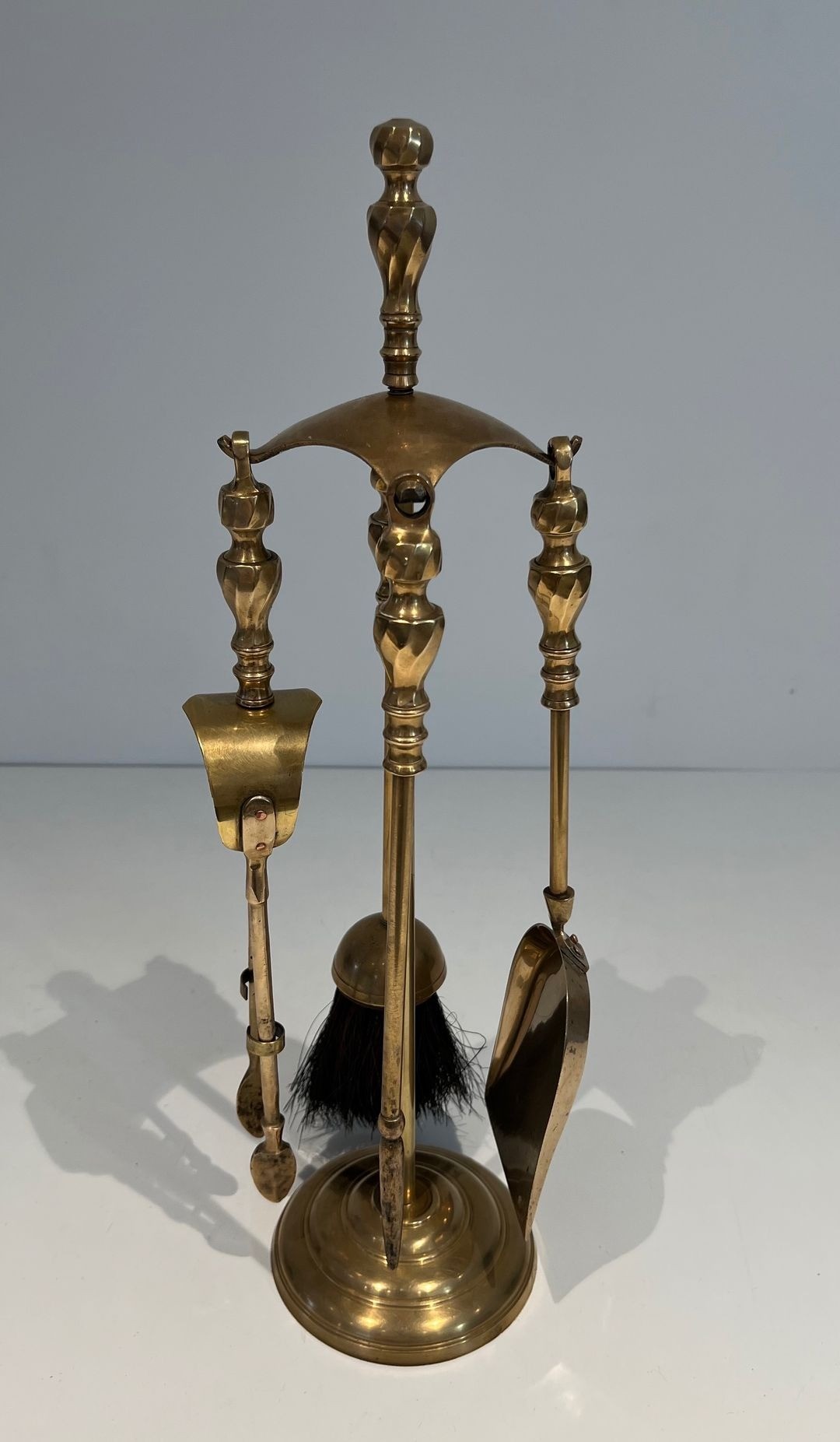
Neoclassical style brass fireplace companion set. The central turned upright post, crowned with a spherical finial, supports a semicircular arched frame studded with a continuous row of brass balls, from which three tools are suspended: a poker, a shovel and a brush. The base rests on four scrolled bracket feet. Polished brass. France. Circa 1970. W. 14.5 × D. 14.5 × H. 52 cm.
This neoclassical style brass fireplace companion set presents an architecturally coherent design drawing its elegance from the vocabulary of classical antiquity. The central upright post, carefully turned and polished, rises from a stable base fitted with four scrolled bracket feet and terminates in a spherical finial. From the upper portion of the shaft springs a graceful semicircular arch, its entire length studded with a continuous row of brass balls that lend the piece both its decorative richness and its unmistakable neoclassical character.
Suspended from the arch by individual rings are three fireplace tools — a poker, a flat-blade shovel and a stiff-bristle brush — each sharing the same turned brass construction and consistent formal language as the stand itself. The tools are perfectly balanced in weight and proportion, ensuring that the set presents with symmetry and visual harmony when at rest.
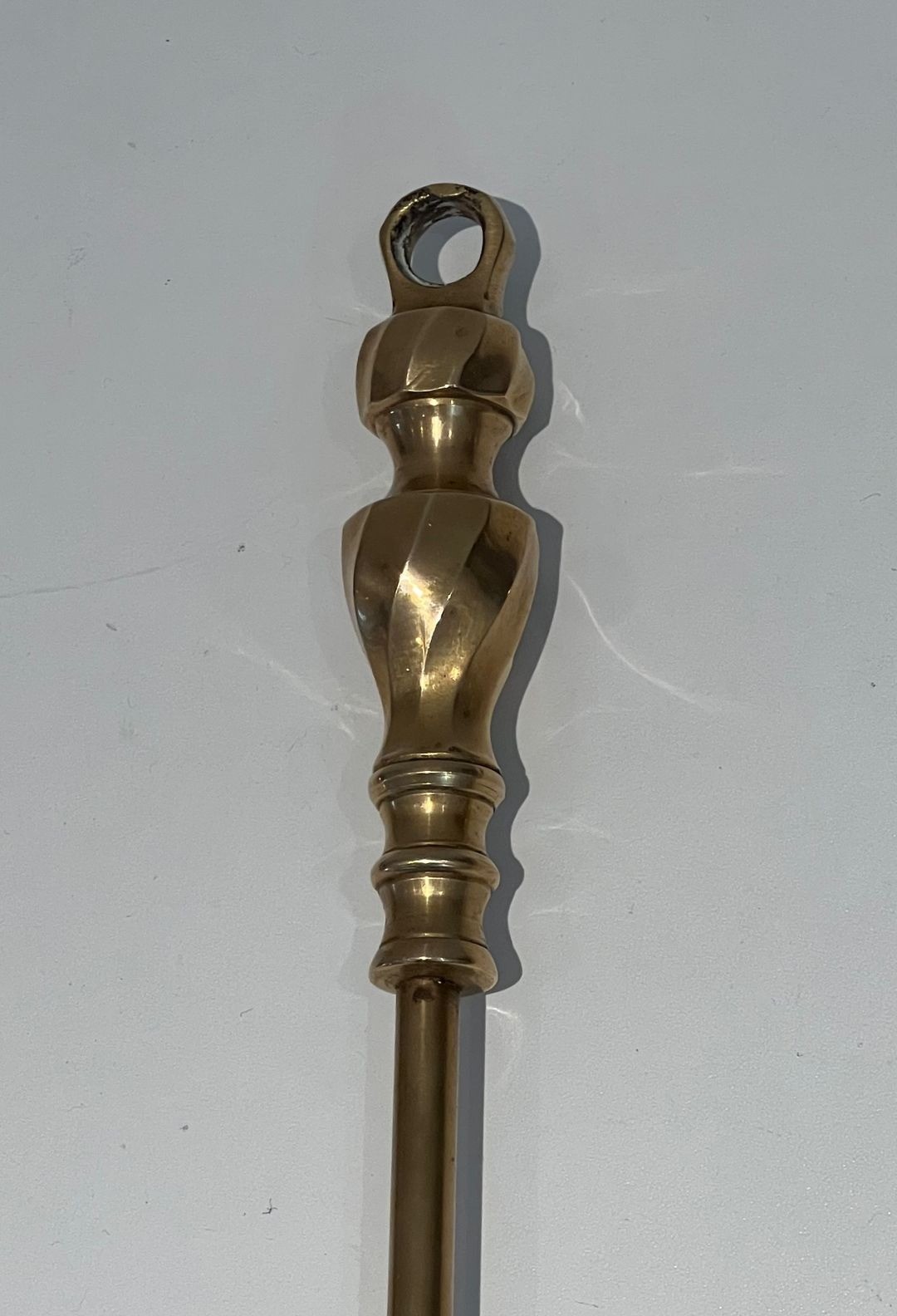
The piece is entirely fabricated in polished brass, a material chosen for its warm golden lustre and its long association with fine French decorative metalwork. The patina is even and consistent throughout, displaying the characteristic amber-gold tone of well-seasoned polished brass.
Attributed to a French workshop and dating to circa 1970, this companion set is representative of the high-quality decorative production that characterised French interior furnishing of that period, when neoclassical forms enjoyed a sustained revival in residential and hôtelier contexts alike.