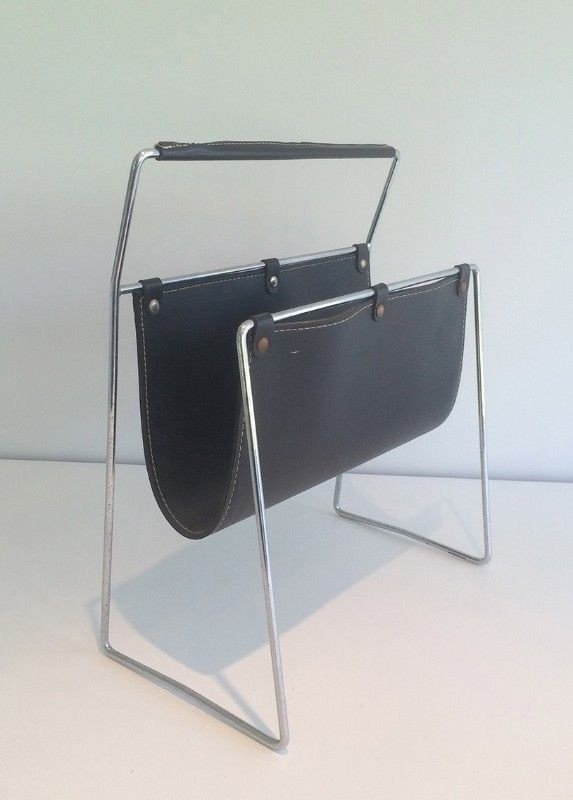
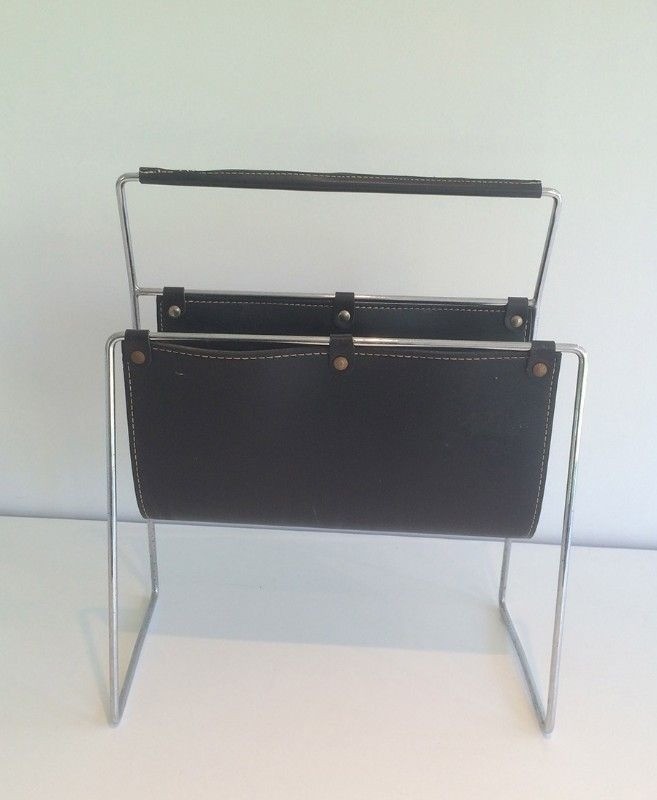
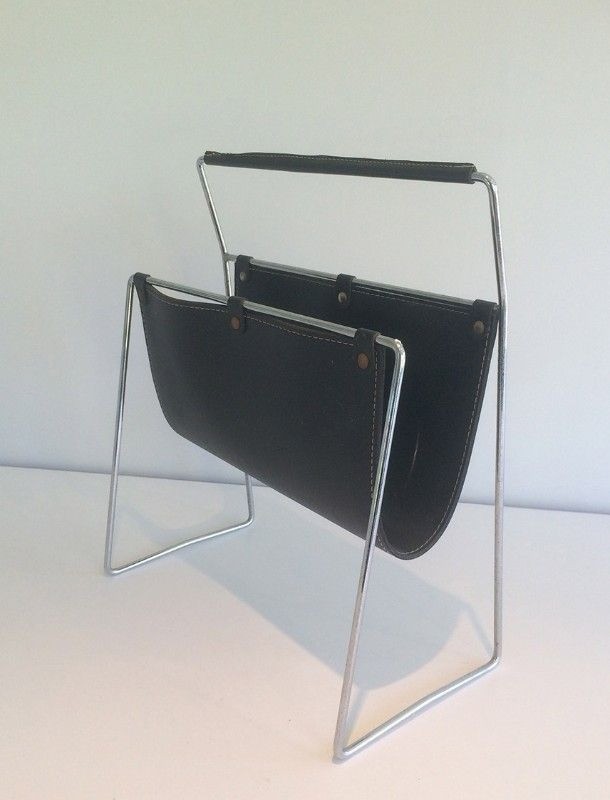
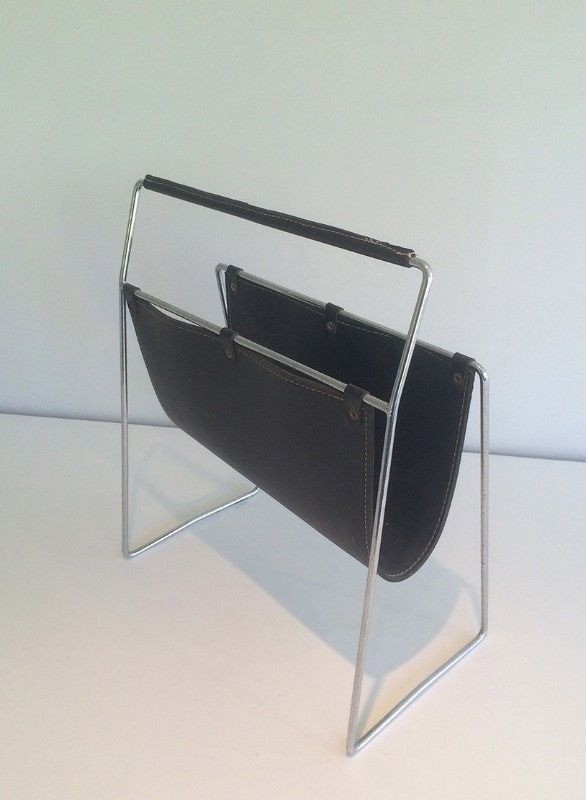
This compact and elegant magazine rack was produced around 1970, at the height of the modernist movement in European decorative design. Measuring 37 cm wide, 21 cm deep and 44 cm tall, it is a piece of refined domestic utility — an object conceived to bring order to the reading matter of a civilised household while contributing to the aesthetic character of its surroundings.
The combination of chromed steel and black leather was among the most celebrated material pairings in the modernist decorative repertoire. Chrome — cool, reflective, unambiguously of the modern age — had been central to the furniture and object design of the Bauhaus and its inheritors since the 1920s; by 1970 it had become the defining material of luxury European interiors, appearing alongside lacquered furniture, deep-pile carpets and supple leather seating in the most admired Parisian apartments. Black leather, for its part, brought warmth, tactility and a restrained opulence that prevented the modernist aesthetic from becoming too clinical.
A magazine rack of this type was a considered purchase in the 1970s — a quiet declaration of domestic confidence. The owner who chose chrome and leather over wood or wicker was affirming an allegiance to modernity, to quality materials and to the clean-lined design sensibility that defined the decade’s most distinguished interiors. This example, well-proportioned and carefully made, speaks to that sensibility with quiet authority.
In excellent condition, this magazine rack retains the full appeal of its period. It would be equally at home beside a leather sofa or armchair, in a study or library, or as a well-chosen accent in a hallway, and would pair naturally with pieces by the great European furniture designers of the era — from Cassina to Knoll, from Ligne Roset to the finest French ateliers of the post-war decades.