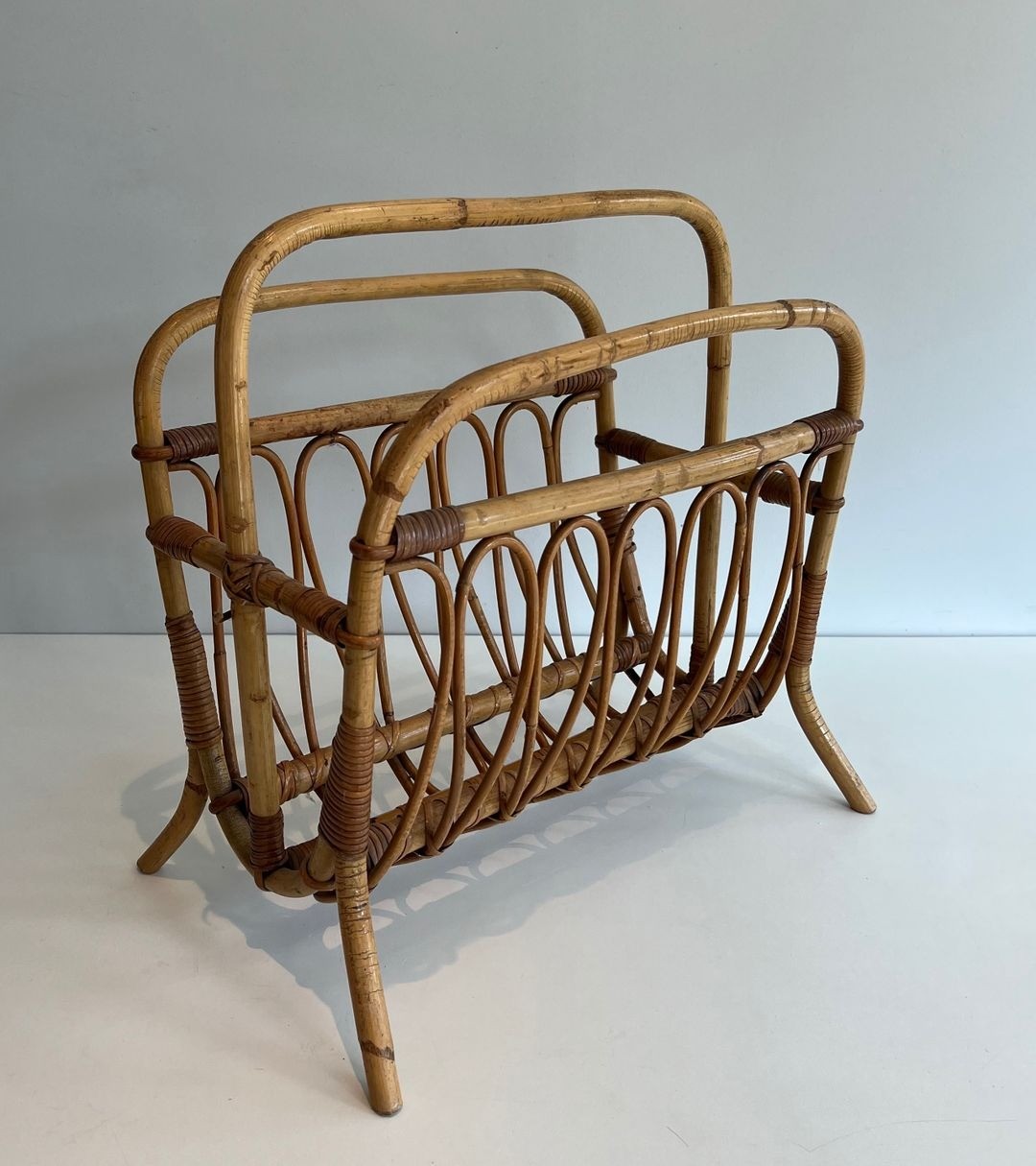
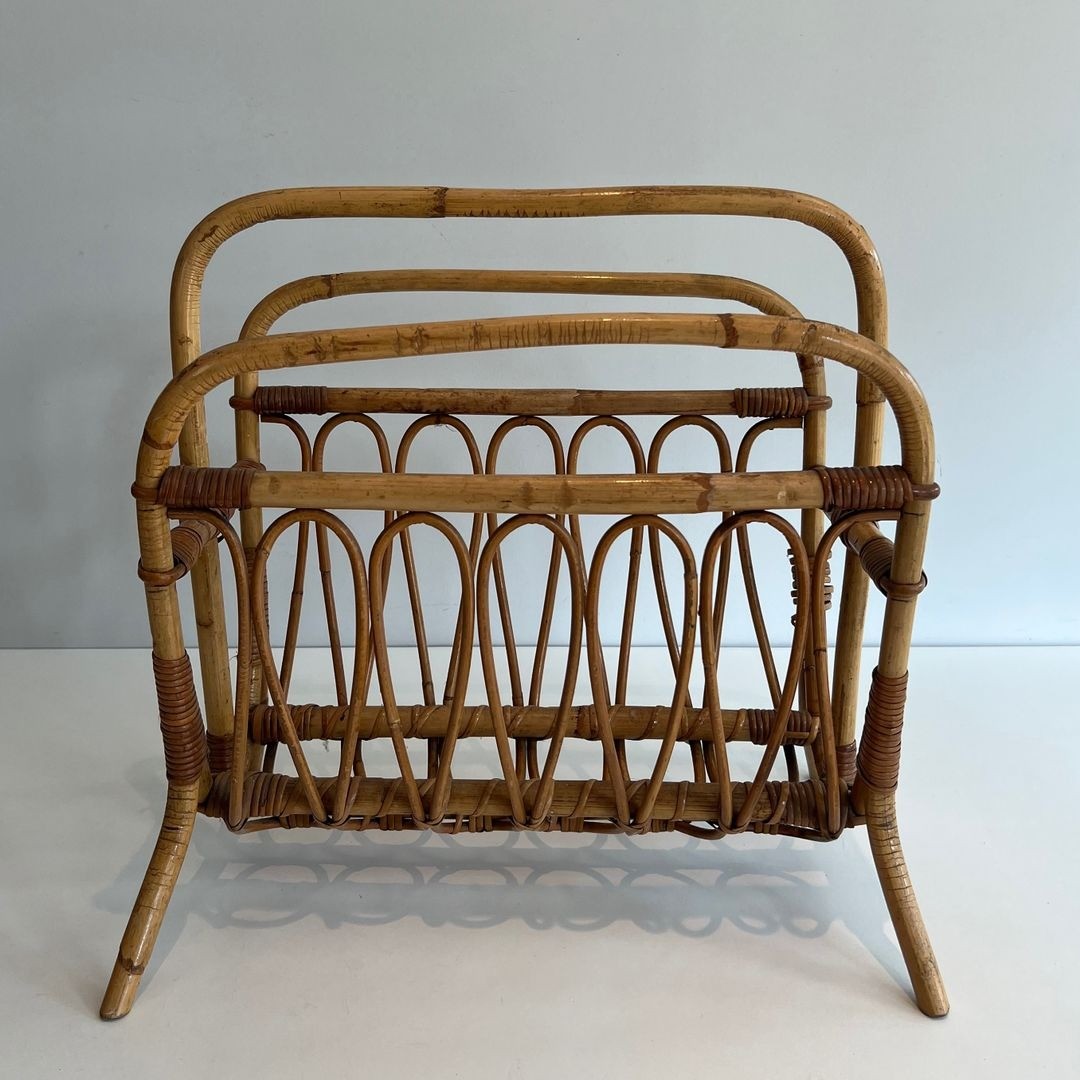
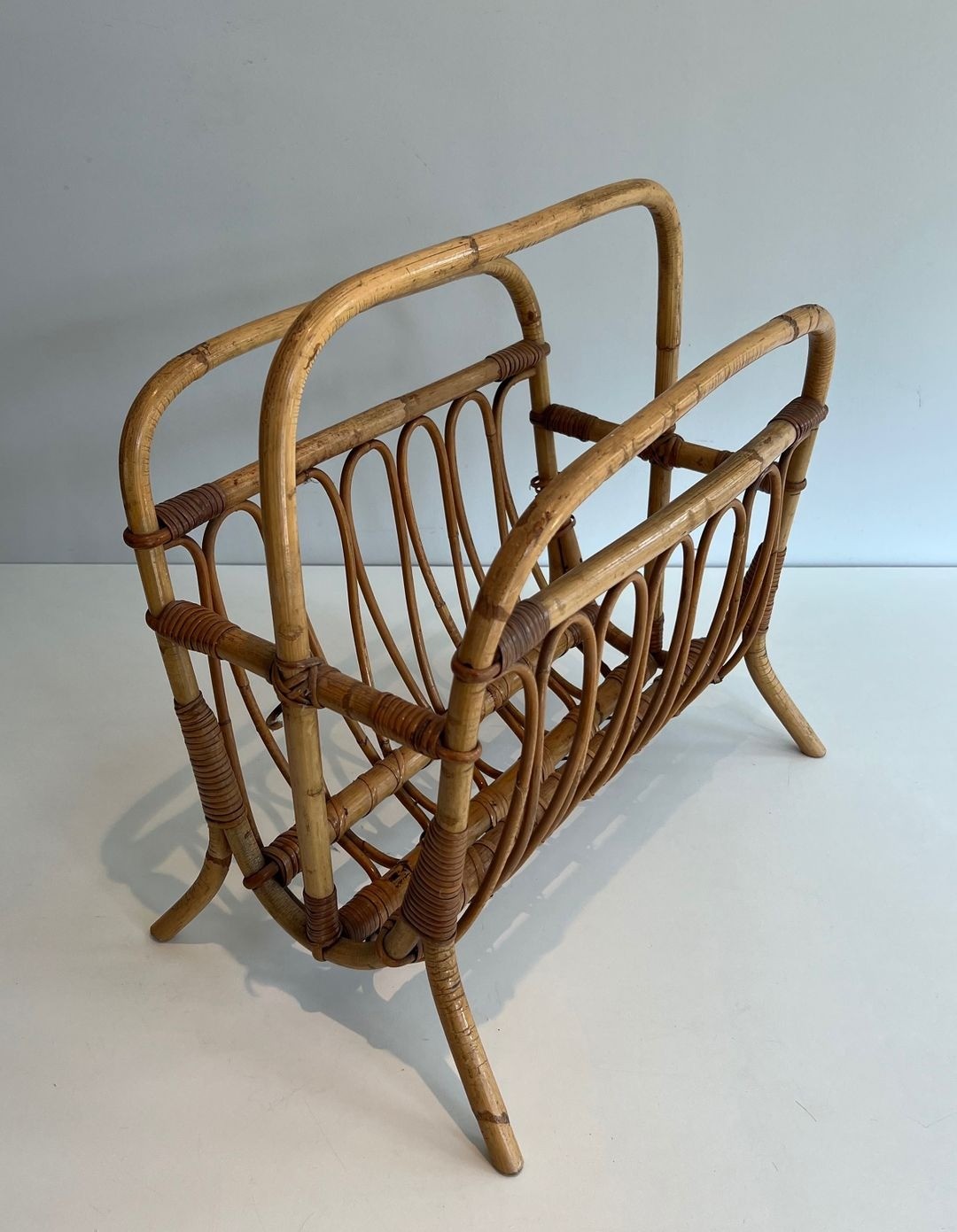
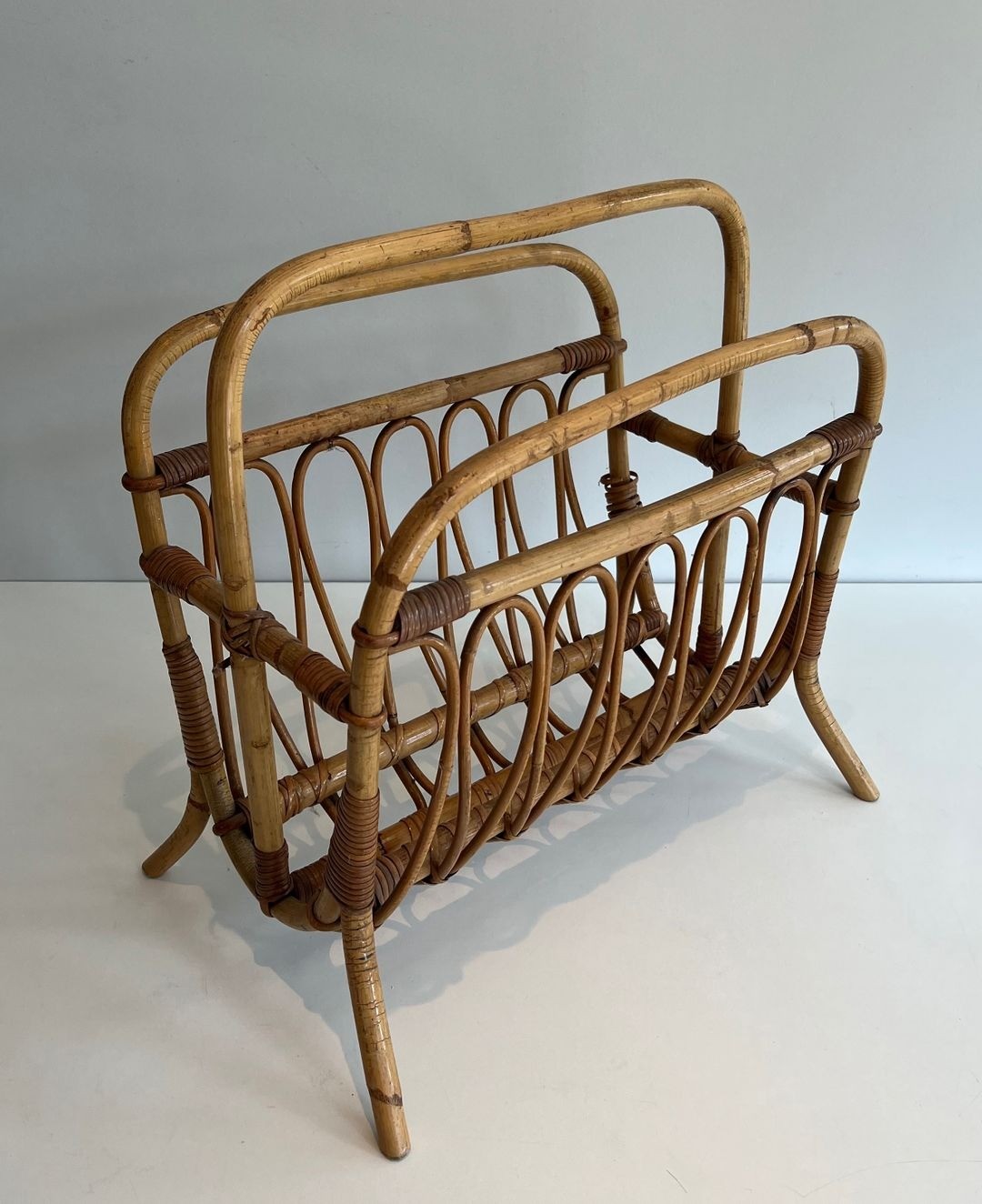
In the decade following the Second World War, the French domestic interior underwent a transformation that touched materials as much as forms. Rattan — lightweight, woven, warm — embodied the new spirit of the postwar home with particular aptness. Where the prewar interior had been weighted with the ceremony of heavy furnishings and the accumulation of bourgeois objects, the modern home of the 1950s aspired to lightness : a quality of air and ease that rattan expressed instinctively. The material carried with it, too, the associations of the resort and the holiday interior — the terrace of the Côte d’Azur hotel, the salon of the colonial villa — associations that the postwar French bourgeoisie found newly appealing as leisure travel became an ambition of the expanding middle class.
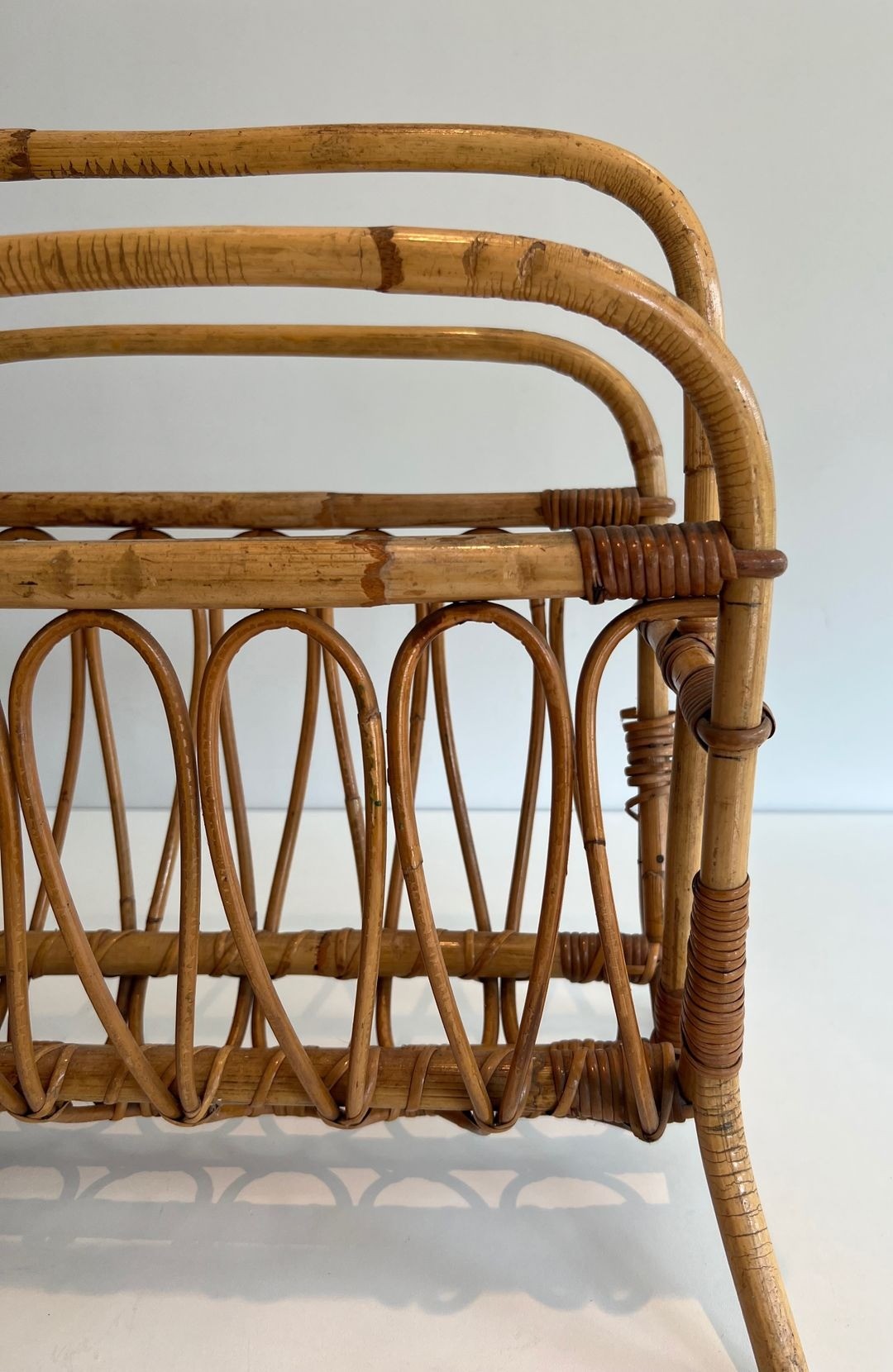
This magazine rack, measuring 49 cm in width, 31 cm in depth, and 46.5 cm in height, achieves the compact, self-contained proportion characteristic of mid-century functional furniture : broad enough to hold a substantial collection of magazines or periodicals, low enough to sit beside a reading chair without imposing on the sightline. The rattan construction creates a surface that softens the sharp geometry of a modern interior without reverting to the nostalgic density of an earlier decorative mode. The proportions are resolved and the construction honest; there is nothing superfluous about the object, and its formal economy is itself a quality characteristic of the best mid-century work.
Mid-century rattan objects of this quality represent a category that has been consistently revalued over recent decades. Unlike the synthetic materials that briefly dominated the postwar domestic market, rattan has an inherent durability — it does not fade, degrade, or lose its structural integrity with age in the way that many of its contemporaries did. A well-made rattan magazine rack from the 1940s or 1950s is, in many respects, a more durable object than a steel or plastic one from the same period. For the collector of mid-century domestic objects, it offers the additional satisfaction of a material that has improved with age, developing the depth of colour and texture that only decades of careful use can produce. A piece of quiet but genuine quality.