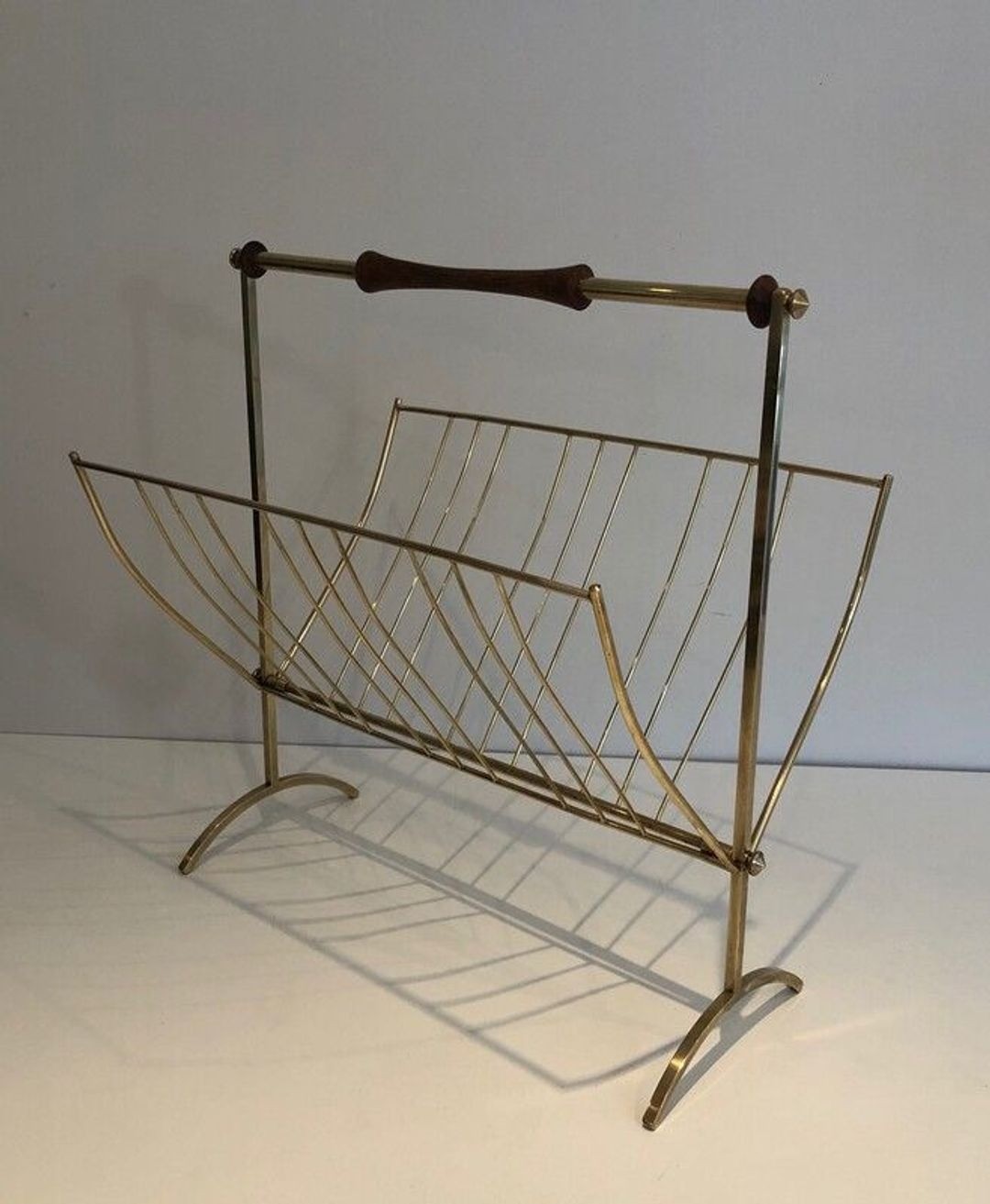
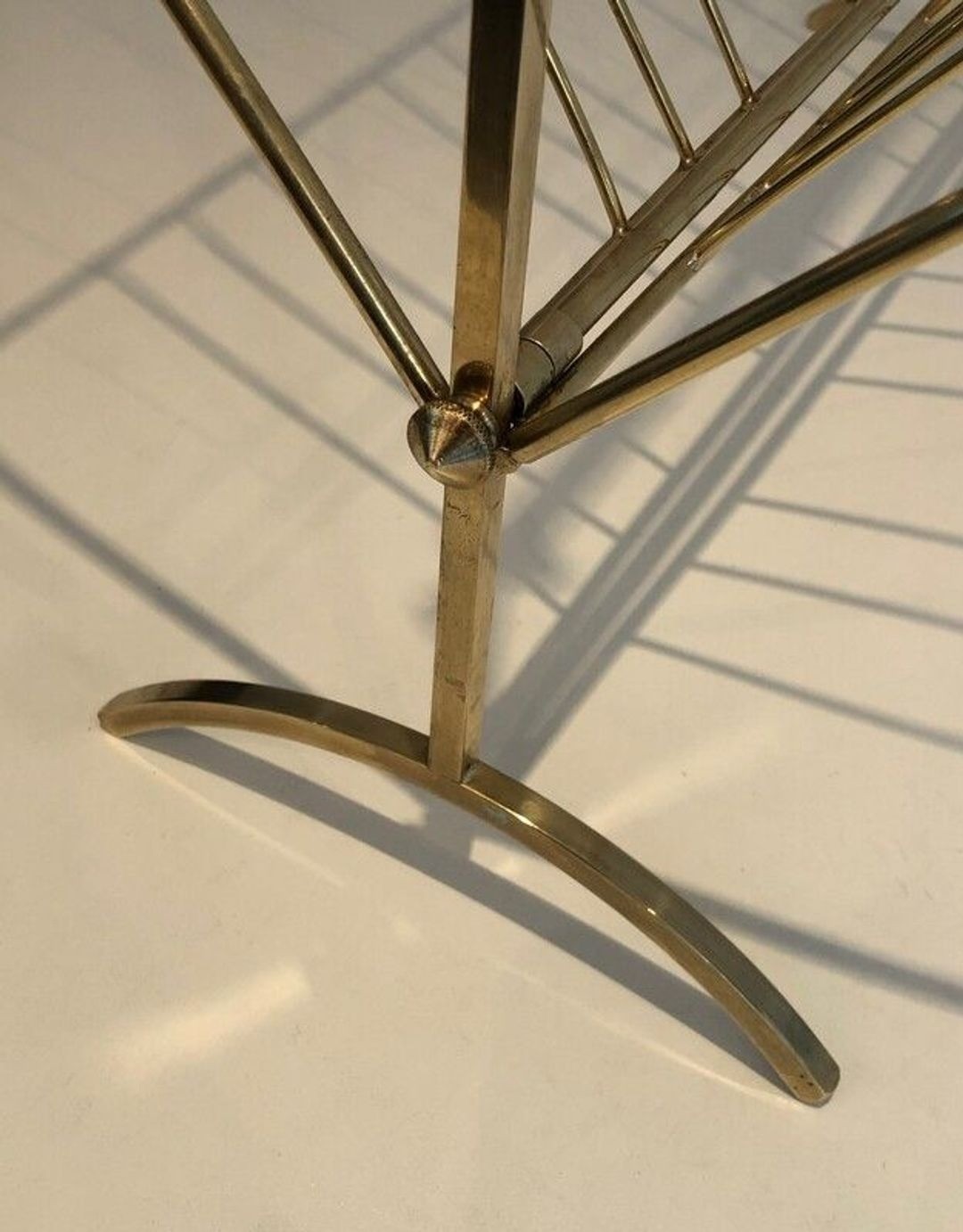
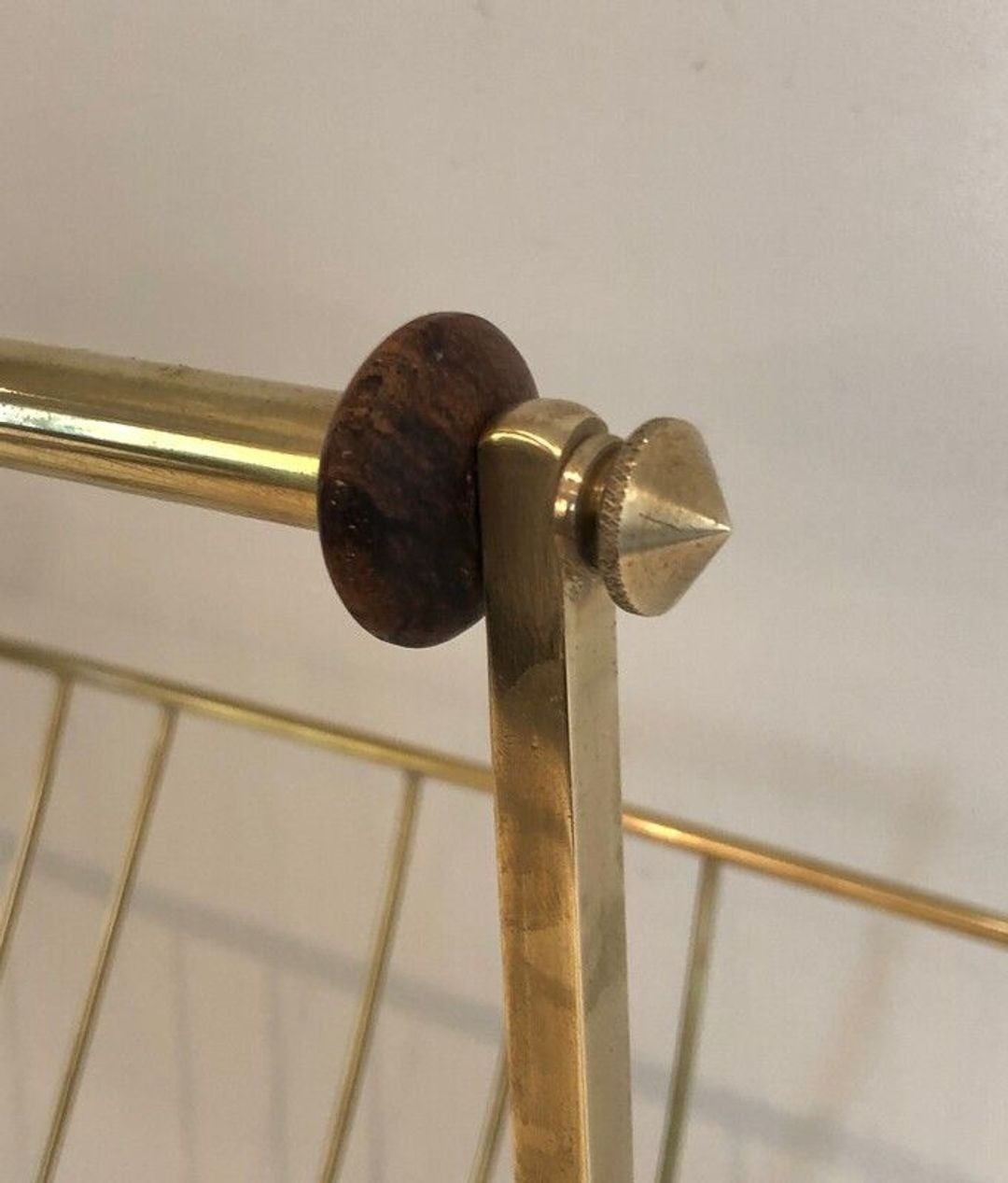
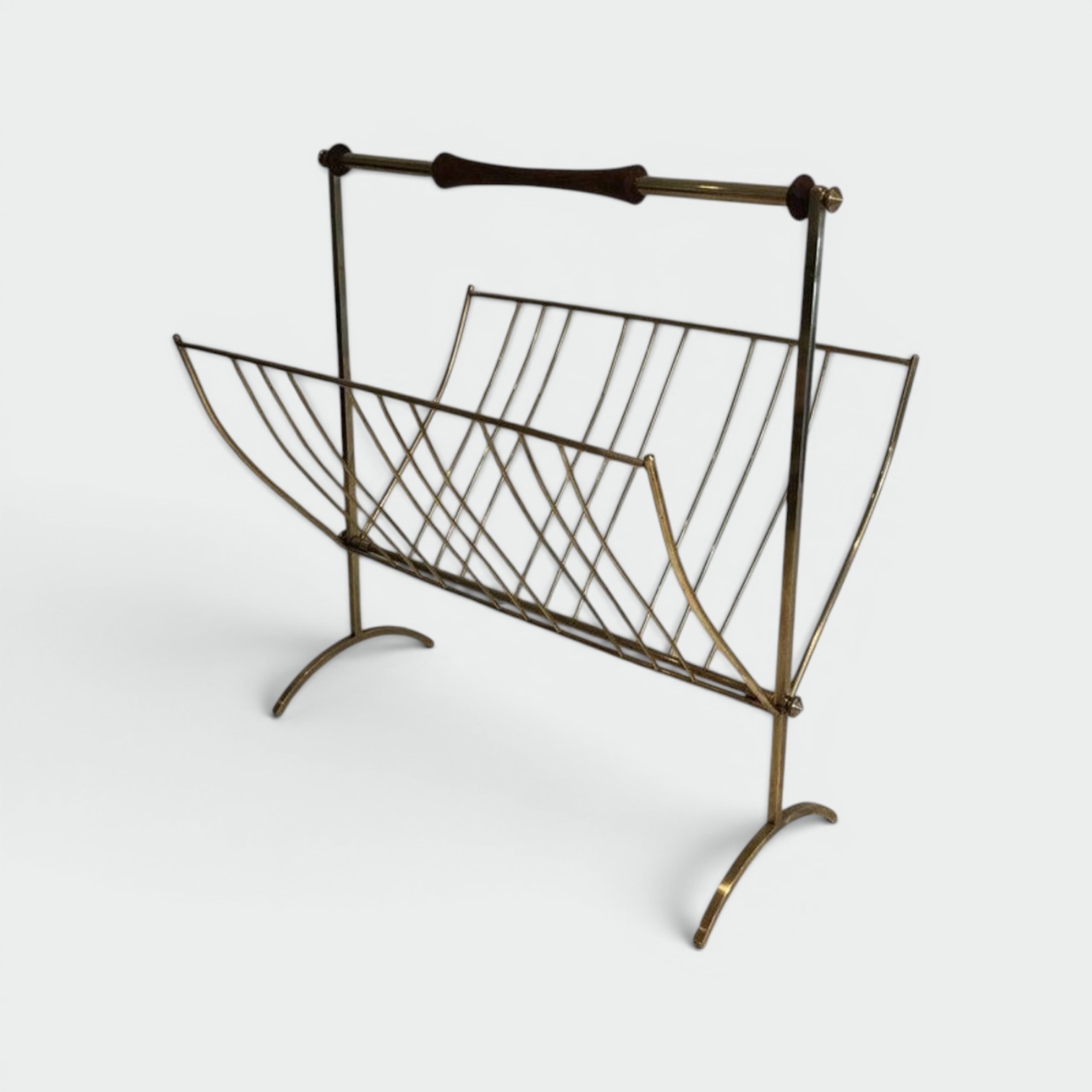
In the vocabulary of Italian Mid-Century Modern, the combination of wood and brass was never merely decorative: it was an architectural proposition. The wood provided warmth, surface and grain; the brass provided the skeleton, the joints, the articulated pivots that determined how the object stood, moved and collapsed. This folding magazine rack, conceived in the manner of Cesare Lacca, makes that proposition with exceptional clarity: its wooden panels are held and connected by brass hardware that serves simultaneously as structure, ornament and mechanism. When the rack is folded flat, the brass reveals its true function — not applied decoration but the hinged armature on which the entire form depends.
Cesare Lacca (1921–2000) was among the most distinguished practitioners of the luxury craft tradition of Northern Italy in the postwar decades. Based in Vicenza, he developed a vocabulary of elegantly jointed furniture — folding tables, expandable trolleys, articulated storage pieces — distinguished by its exceptional quality of execution and its subtle dialogue between natural wood and refined metalwork. His pieces were collected by the Milanese bourgeoisie and the international design cognoscenti, and exhibited at the Milan Triennale. The present rack, with its measured proportions (46.5 × 29.5 × 47.5 cm) and its careful integration of brass and wood, belongs to that current of disciplined Italian craftsmanship.
The folding construction of this magazine rack is itself a significant feature, connecting it to the broader Italian fascination with transformable furniture in the mid-century period — pieces conceived to adapt to the smaller apartments and more mobile domestic lives of the postwar generation. The ability to collapse the rack flat makes it both practical and, in its deployed state, formally satisfying: a geometry of brass and wood that may be read as an essay in proportion. For the collector of Italian Mid-Century Modern, this piece offers the particular pleasure of work in which intelligence of construction and beauty of surface are inseparable.