Flower-Shaped Looped Rattan Wall Mirror — French Work, Circa 1970
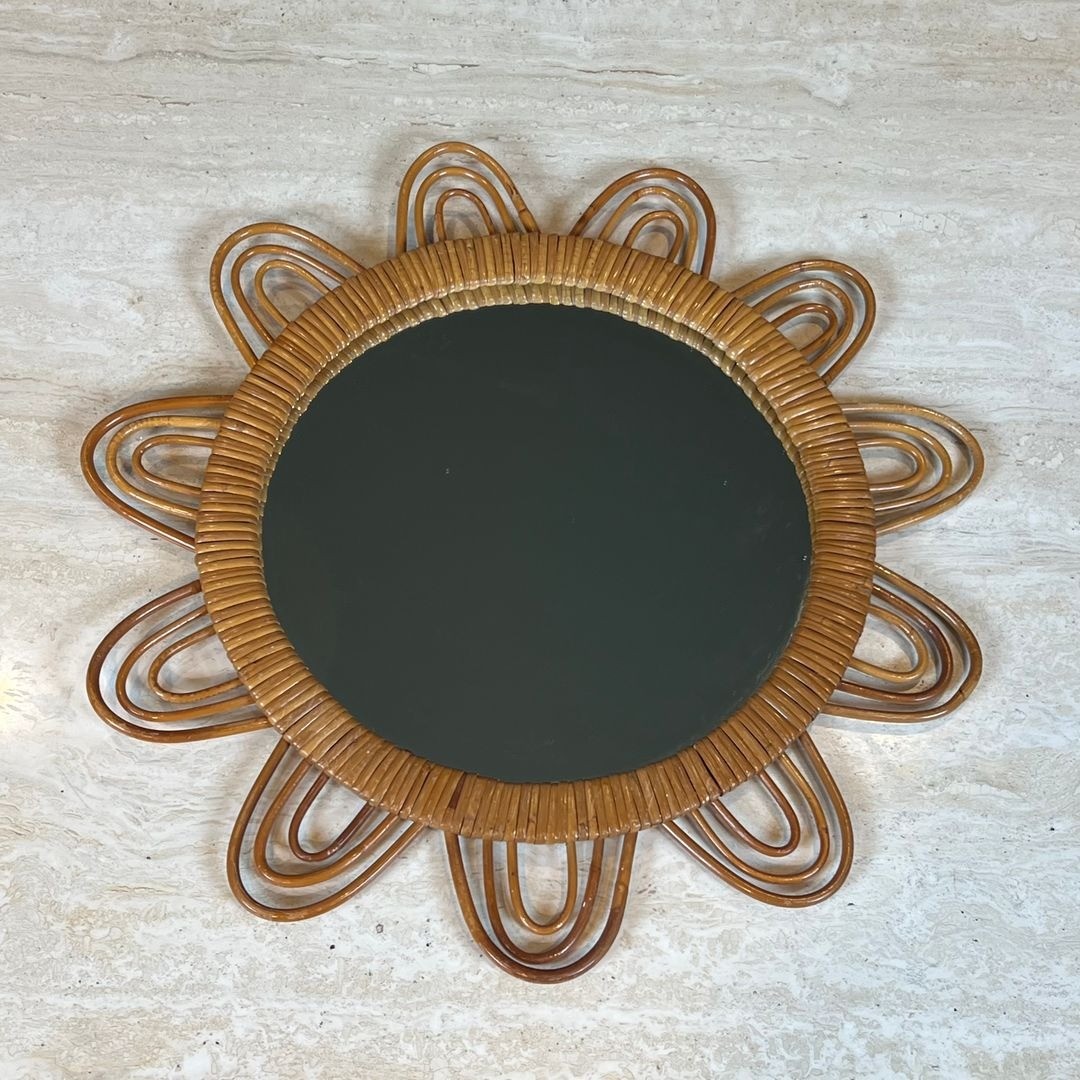
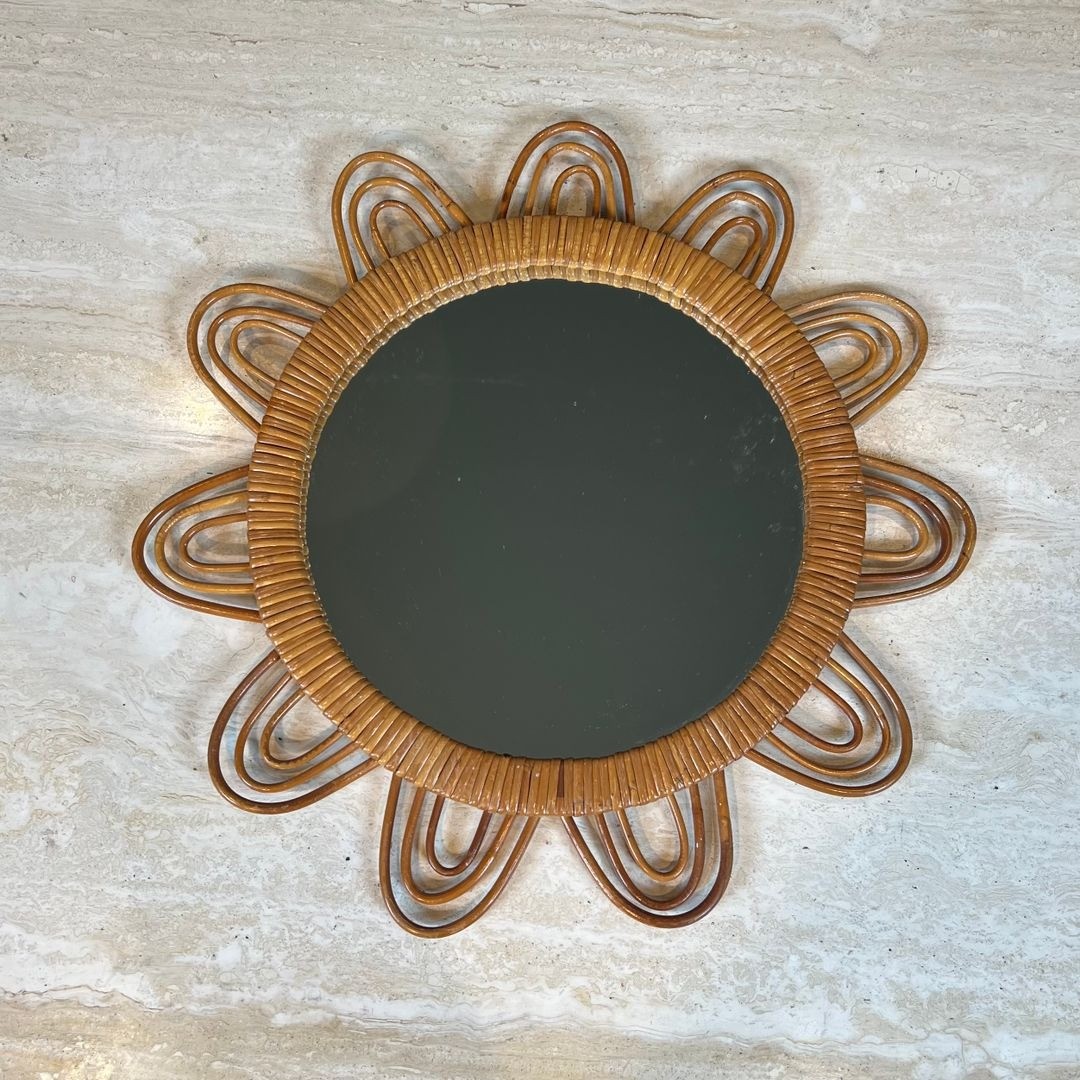
A decorative wall mirror with a circular mirror plate framed by a ring of gracefully looped rattan petals, each formed by interlaced canes curved into rounded, petal-like arches.
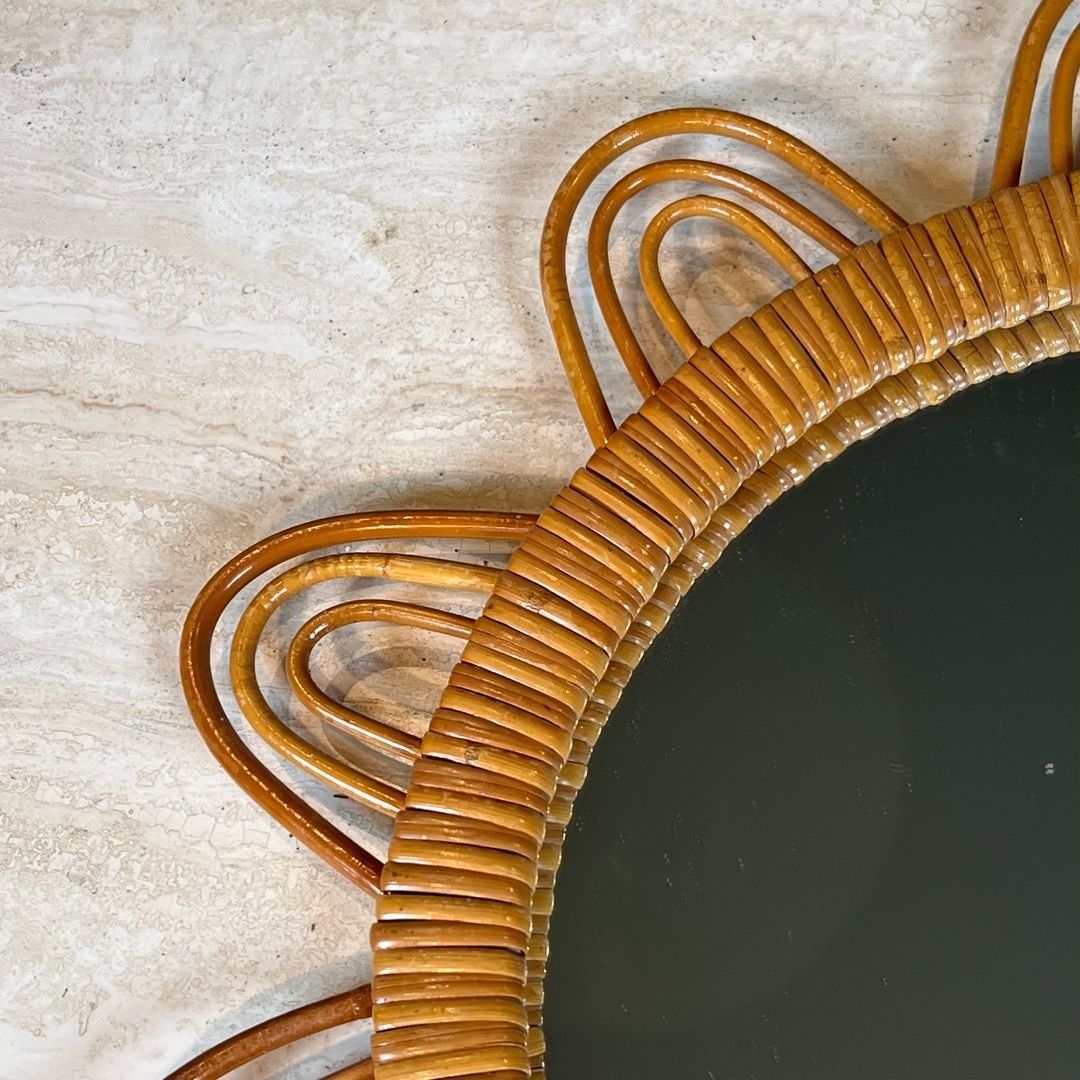
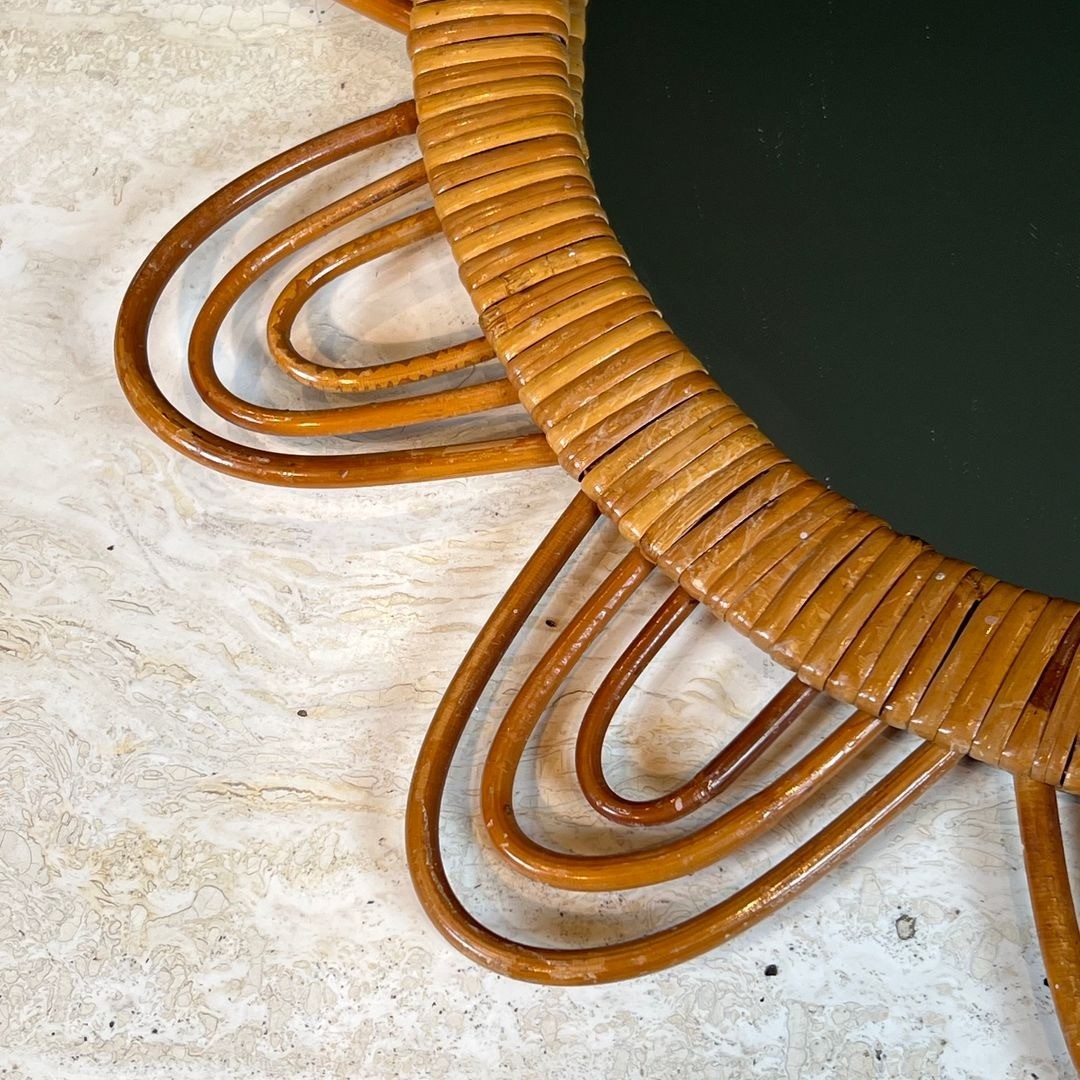
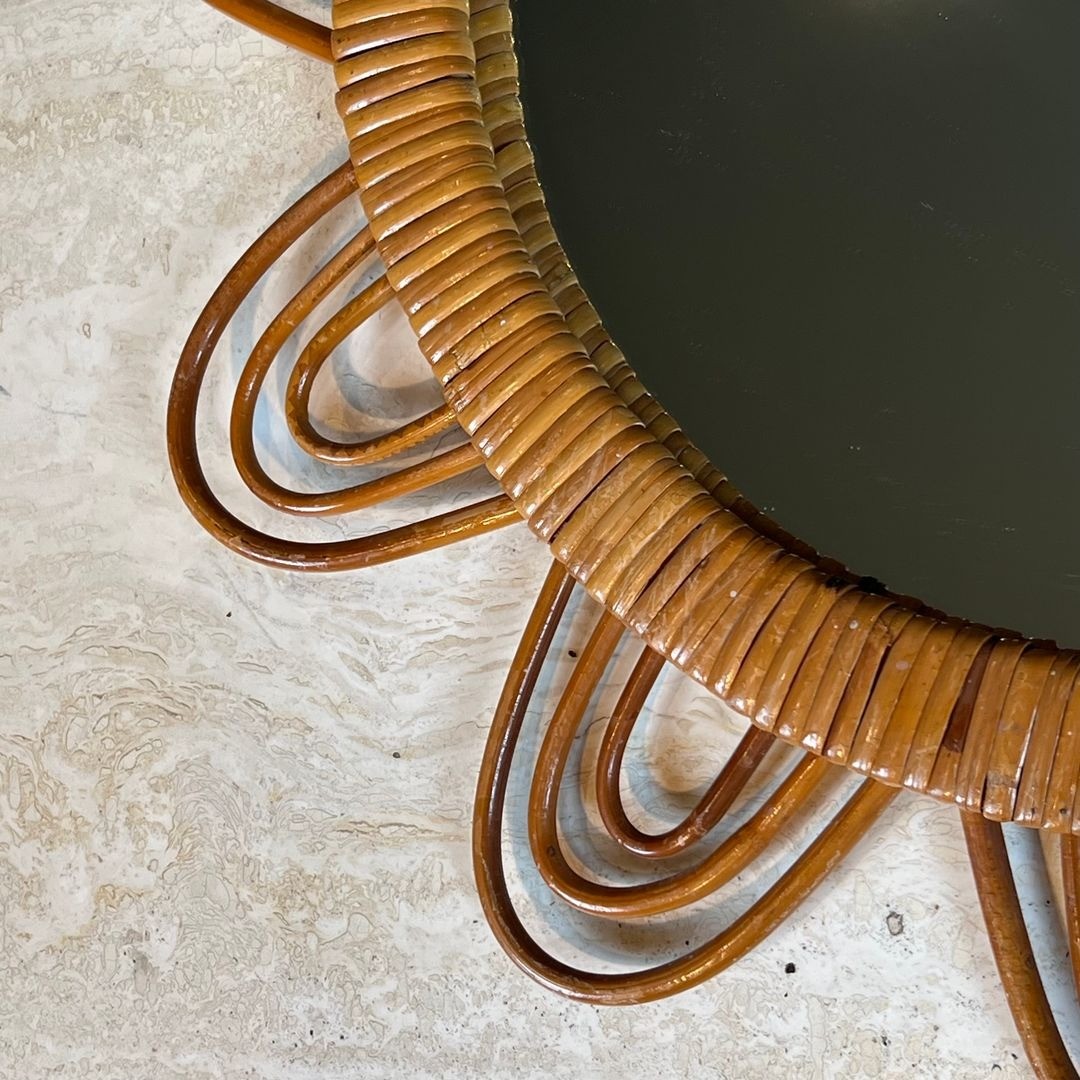
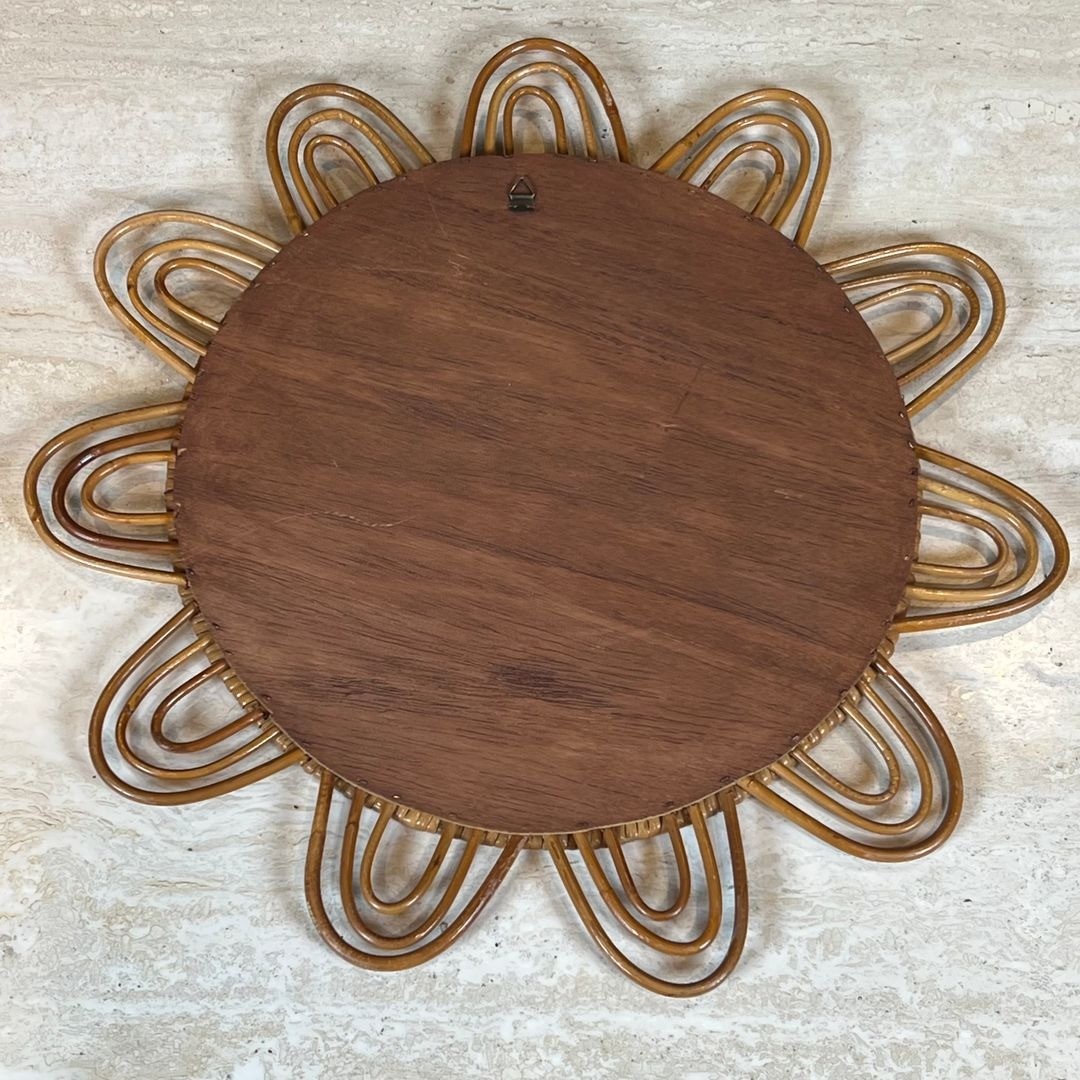
This charming wall mirror is built around a circular mirror plate enclosed within a frame of looped rattan petals, each one formed by bending and interlacing cane lengths into smooth, rounded arches. The resulting silhouette evokes a daisy or a stylised sun, the organic warmth of the natural rattan softened further by the fluid, almost floral quality of the loops. The craftsmanship is notably refined: where many rattan mirrors of the period rely on bundled spokes or simple woven rings, this example achieves its sunburst effect through the careful articulation of individual curved elements.
The piece is a product of the mid-century French revival of natural-material decorative objects, a movement that drew equally on the traditions of the Riviera artisan and the influence of designers such as Franco Albini and Janine Abraham who were exploring rattan's structural and aesthetic possibilities. French workshops interpreted these ideas with their own lightness and wit, producing mirrors whose decorative vocabulary — petals, rays, scrolls — translated the ebullience of the decade into something simultaneously cheerful and refined.
At 54 centimetres in diameter, this perfectly circular mirror is a versatile piece. It reads equally well as a single decorative accent and as part of a composed arrangement of rattan or wicker objects. Its warm honey tones and sculptural frame complement interiors built on natural textures — raw plaster, linen, terracotta, aged wood — and it introduces a note of informal joie de vivre that heavier, more formal mirrors cannot provide.
A well-preserved example of French artisan craft from the early 1970s, this mirror represents the kind of decorative object that designers and collectors have consistently valued for its ability to bring life and warmth to a room without overwhelming it.