Leather and Brass Mirror Attributed to Jacques Adnet — French Work, Circa 1950
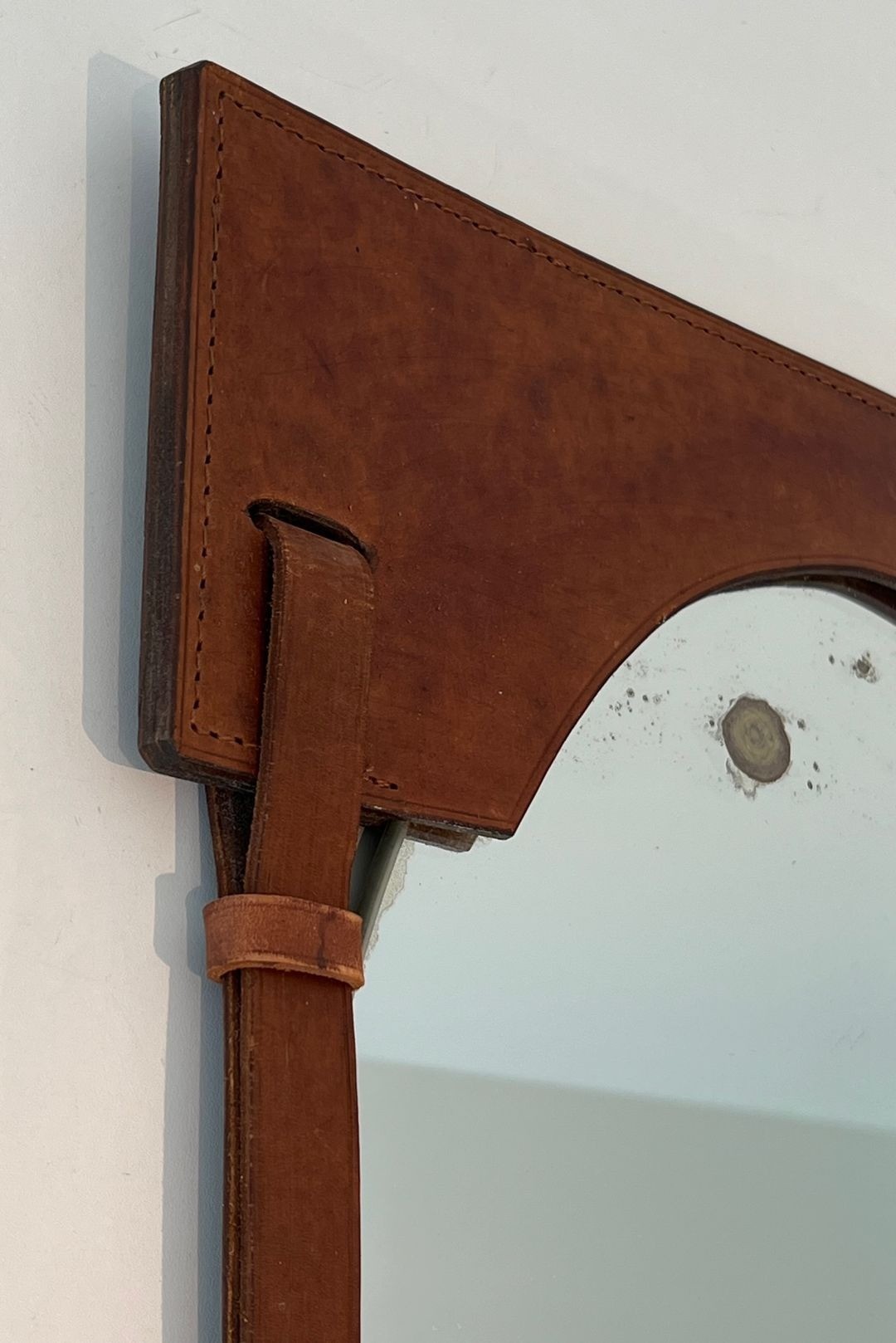
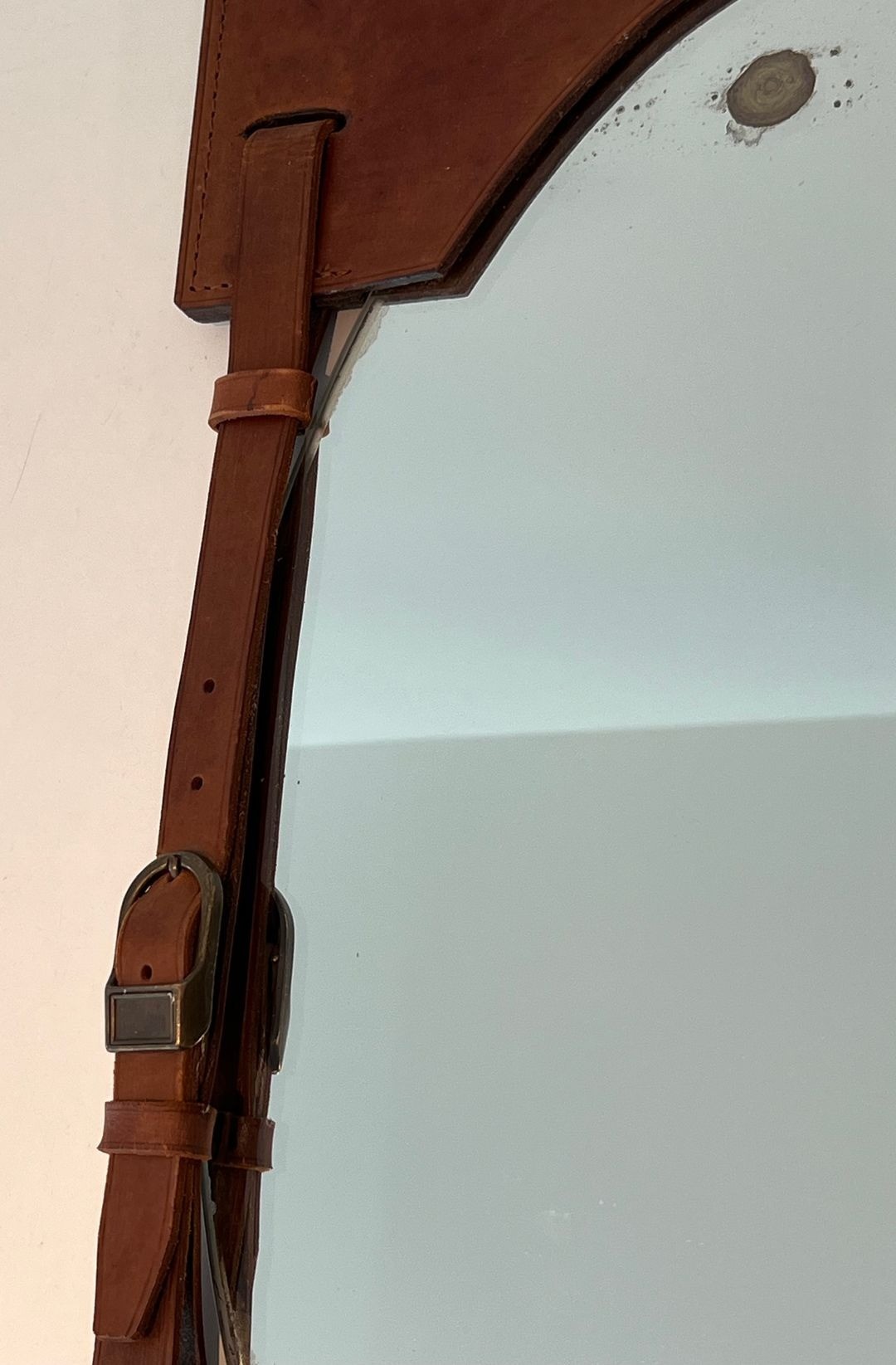
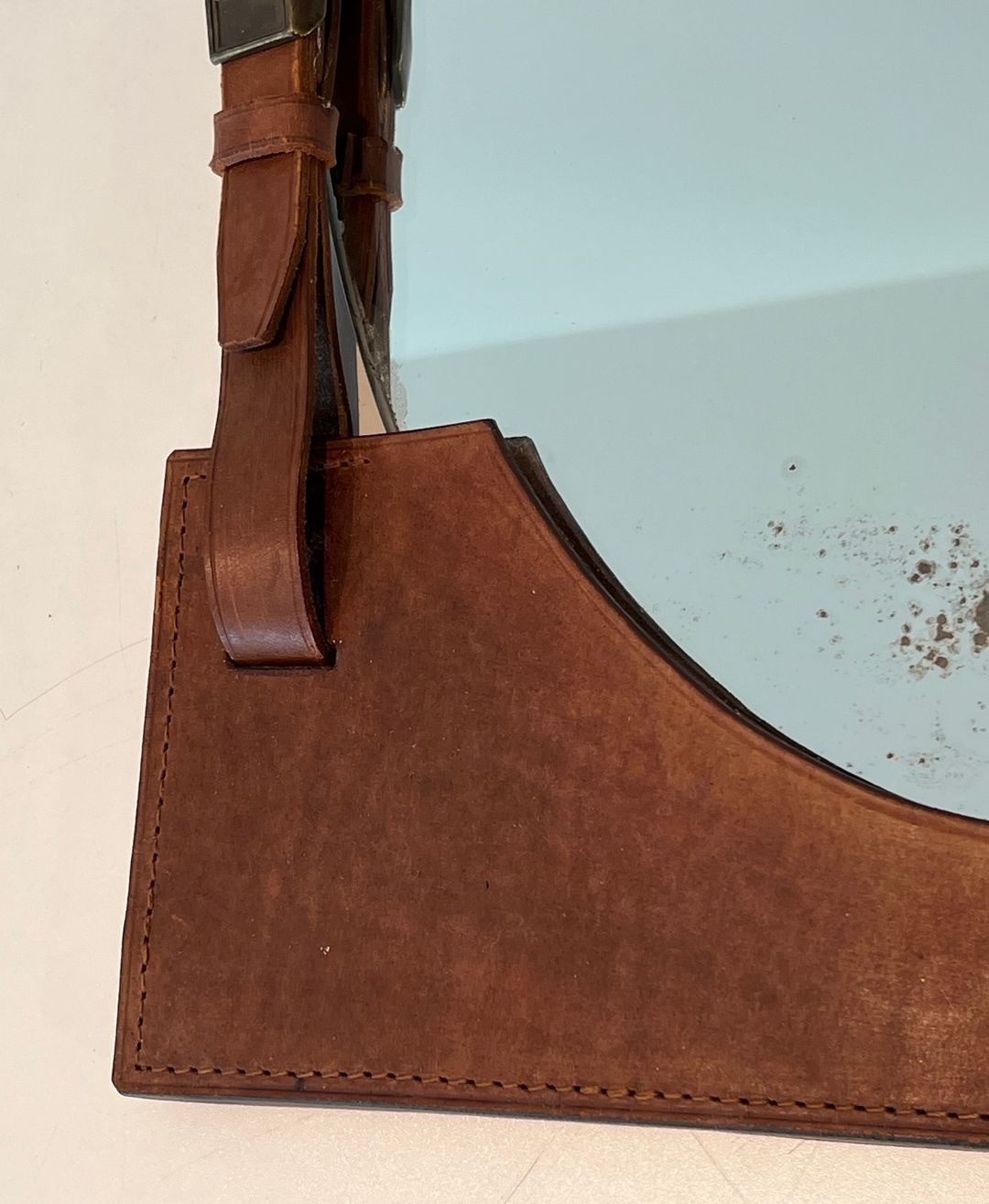
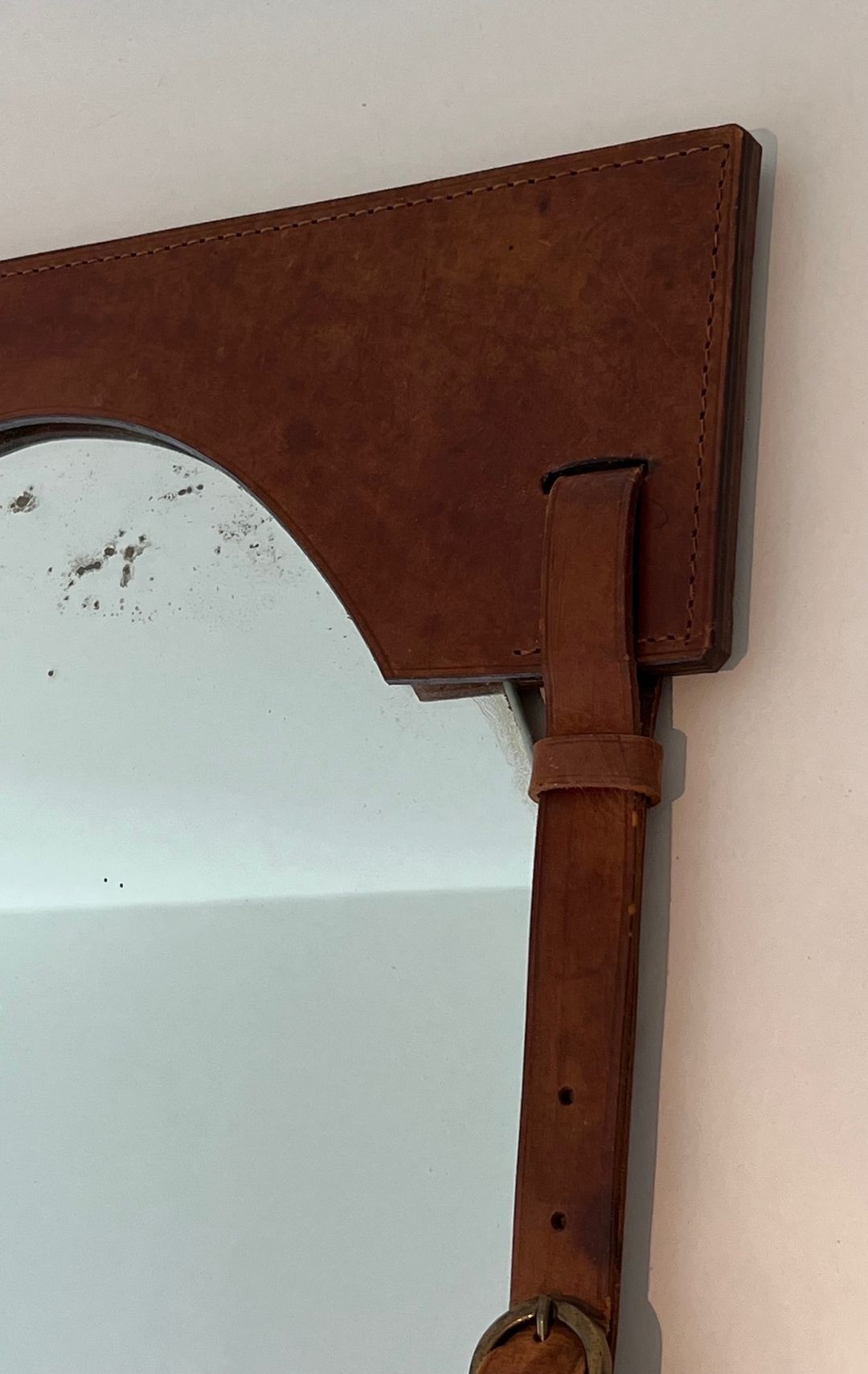
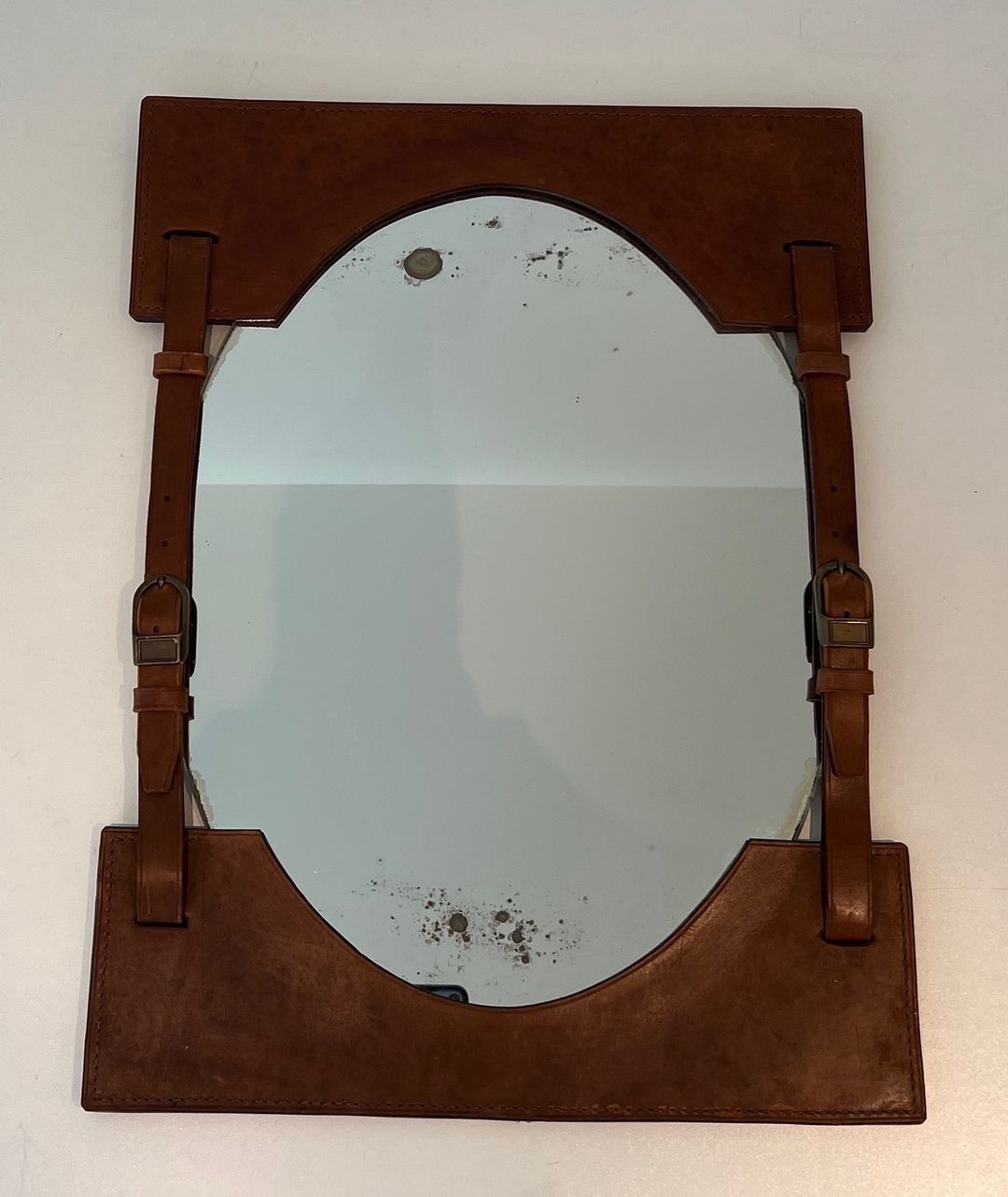
A distinctive mirror with a sculptural frame of dark brown hand-stitched leather straps and brass studs, forming Adnet's characteristic arcade structure. Attributed to Jacques Adnet, French work, circa 1950. 45 × 3 × 60 cm.
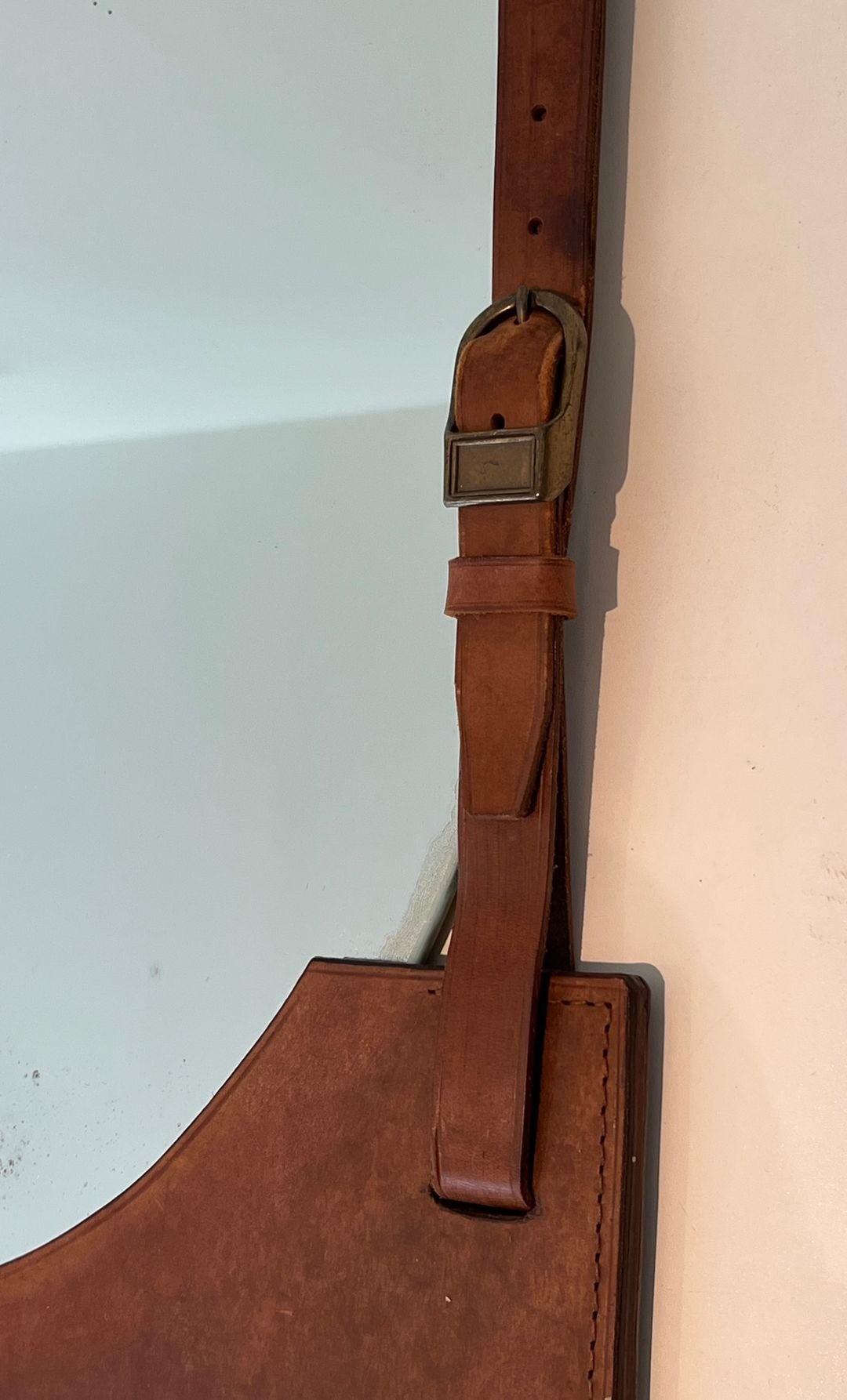
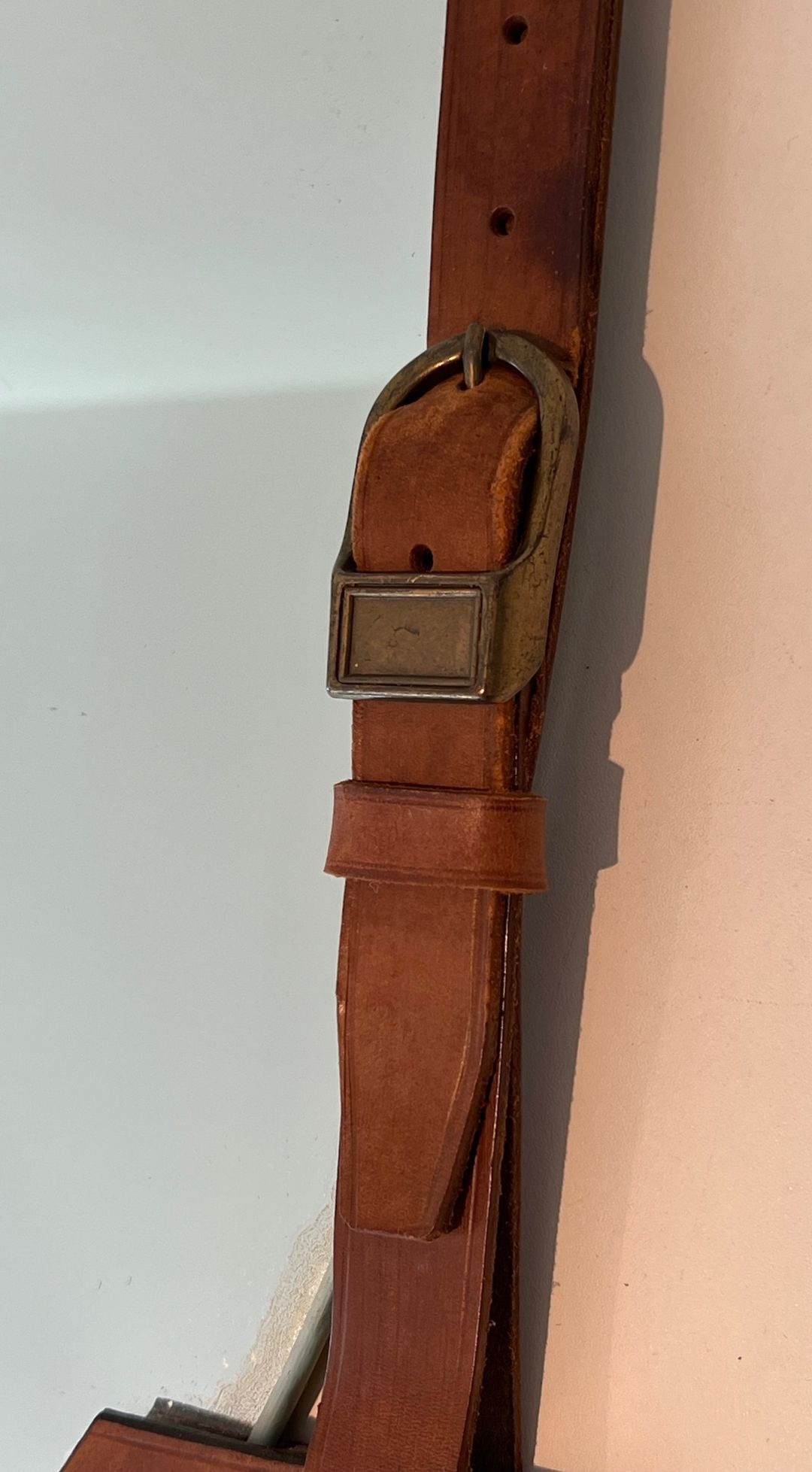
This exceptional mirror is a testament to the singular decorative language of Jacques Adnet, the celebrated French designer whose masterful use of leather and brass defined some of the most enduring objects of mid-century French design. The frame is constructed from broad straps of dark brown hand-stitched leather arranged in a distinctive architectural structure: vertical side straps descend the full height of the piece while a horizontal top element arches over the mirror plate, all joined at their intersections with characteristic brass studs — the hallmark hardware detail of Adnet's atelier.
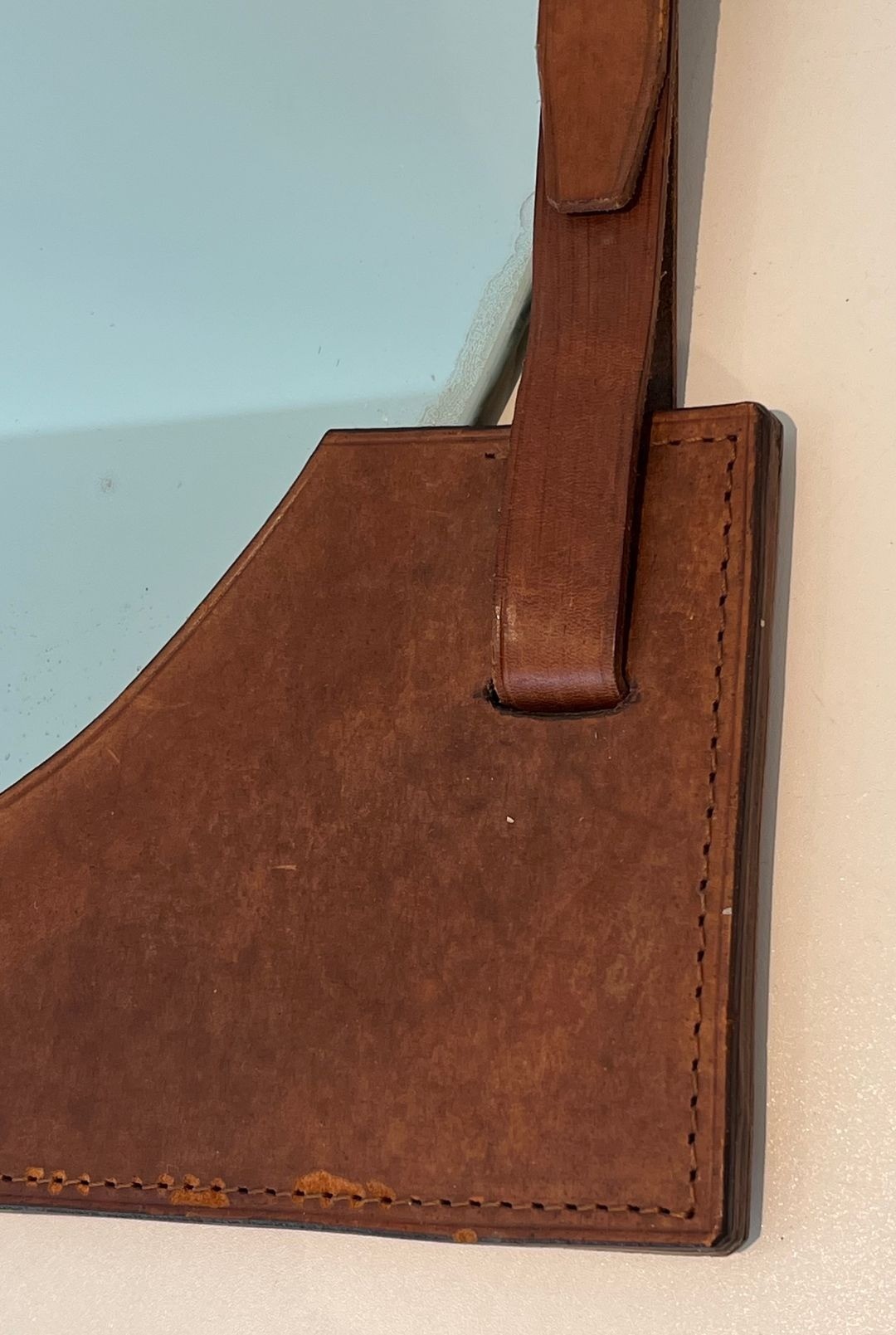
The resulting composition has an almost tectonic quality — the mirror plate, arched at the top and flat at the base, appears to float within a leather armature that functions simultaneously as frame, support, and decorative statement. The hand-stitching running along the edges of each leather element adds a refined artisanal note and underscores the quality of the construction. This structural approach to the frame — in which the support becomes the ornament — was central to Adnet's design philosophy and stands in deliberate contrast to the gilded excesses of earlier decorative traditions.
Jacques Adnet (1900–1984), artistic director of La Maîtrise at the Galeries Lafayette and later of the Compagnie des Arts Français, was among the most influential figures in French decorative arts of the 20th century. His leather-and-brass vocabulary — applied to mirrors, desks, lamps, chairs, and vitrines — was innovative in its material directness and continues to exert a profound influence on contemporary design. Works attributed to or in his manner remain among the most sought-after objects in the market for mid-century French decorative arts.
At 45 centimetres in width and 60 centimetres in height, this mirror is well suited to a variety of settings: above a console in an entrance hall, on a dressing table, or as a focal accent in a study or sitting room. Its combination of artisanal quality, historical significance, and timeless design language makes it one of the most distinctive pieces in the current selection.