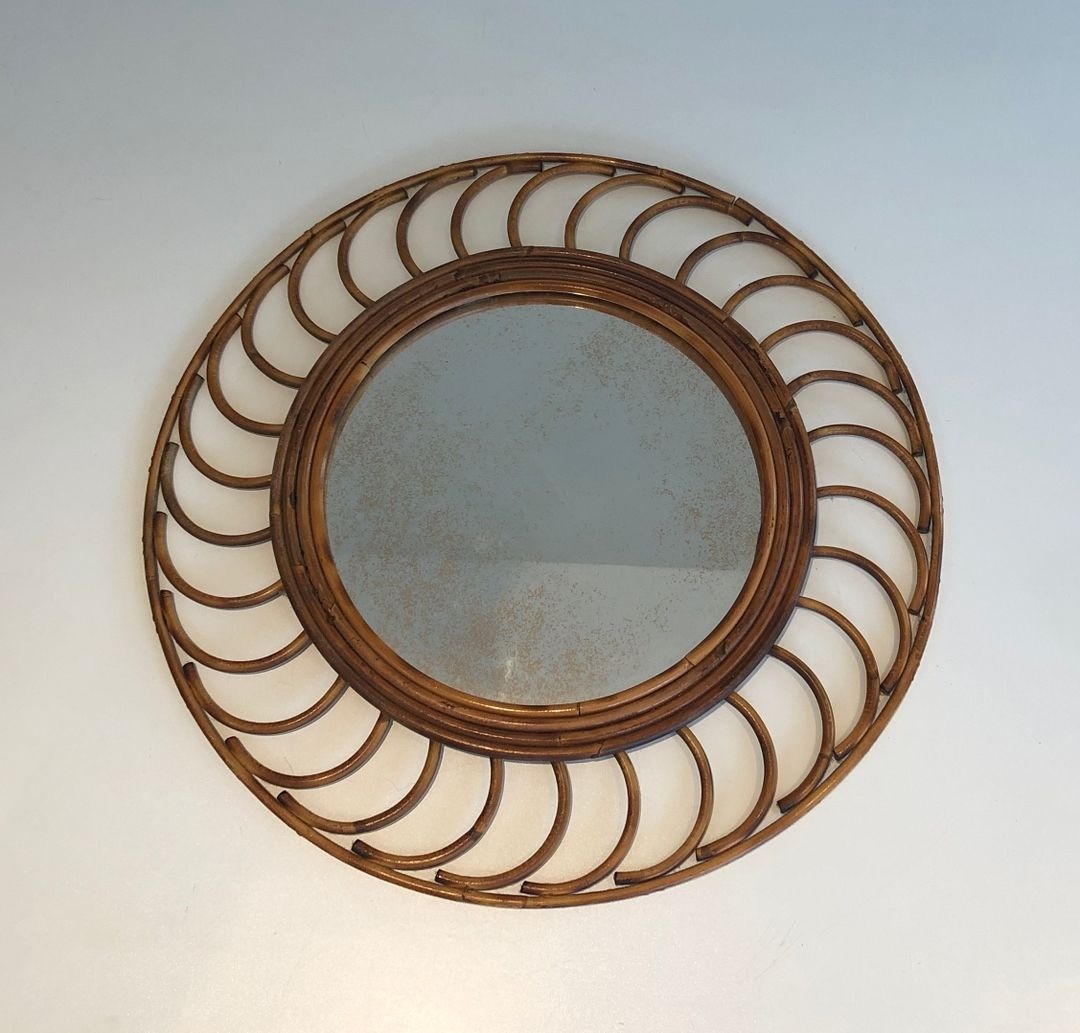
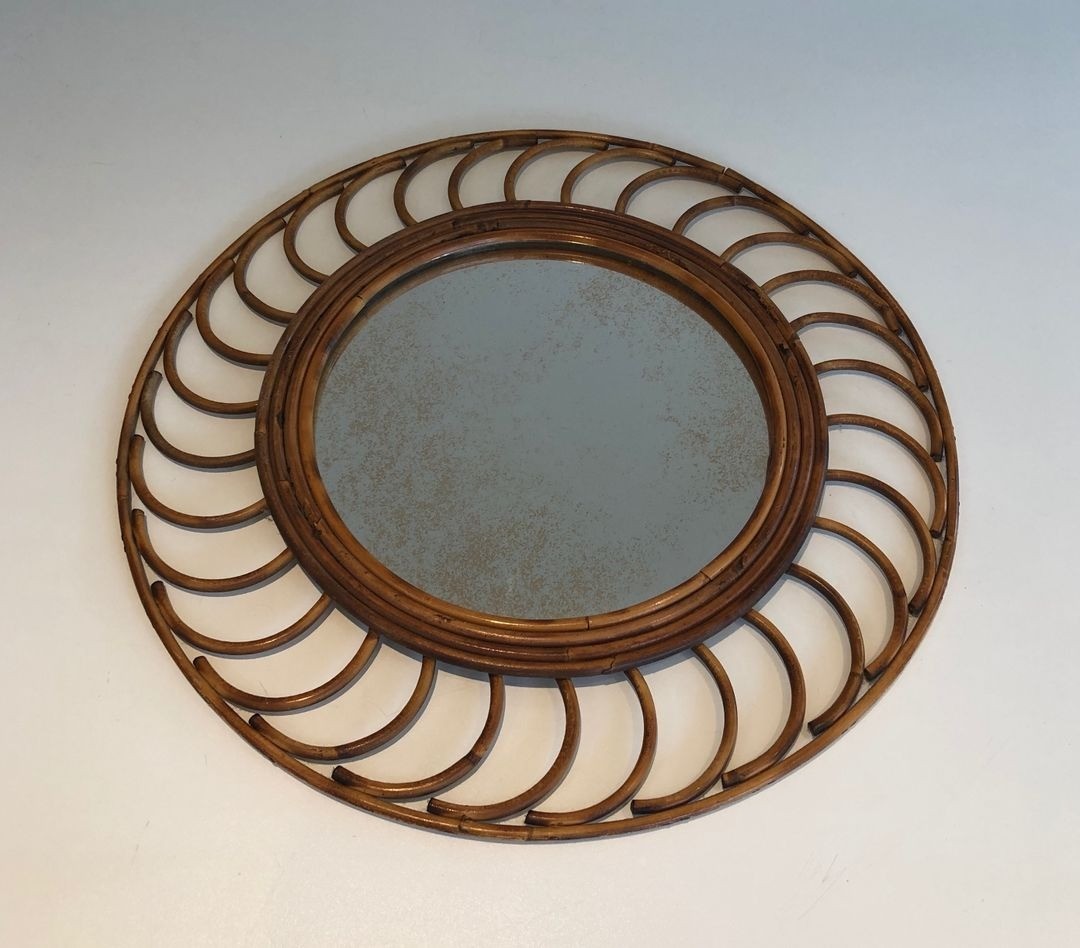
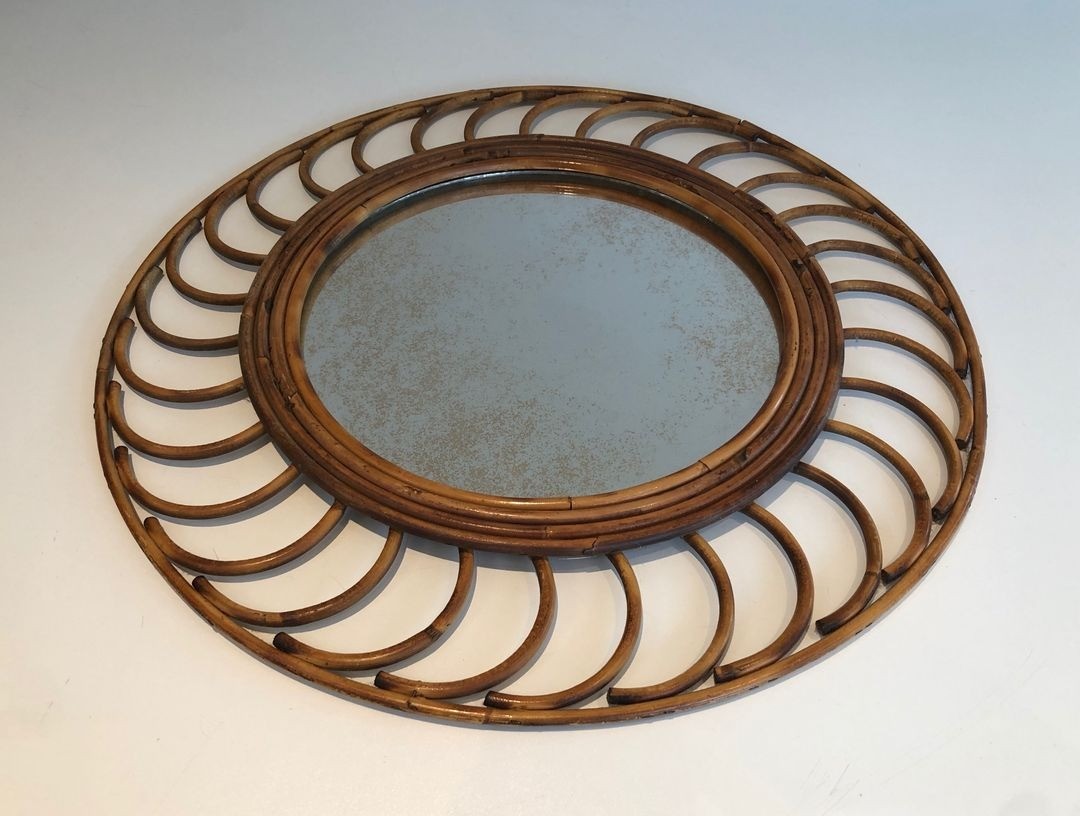
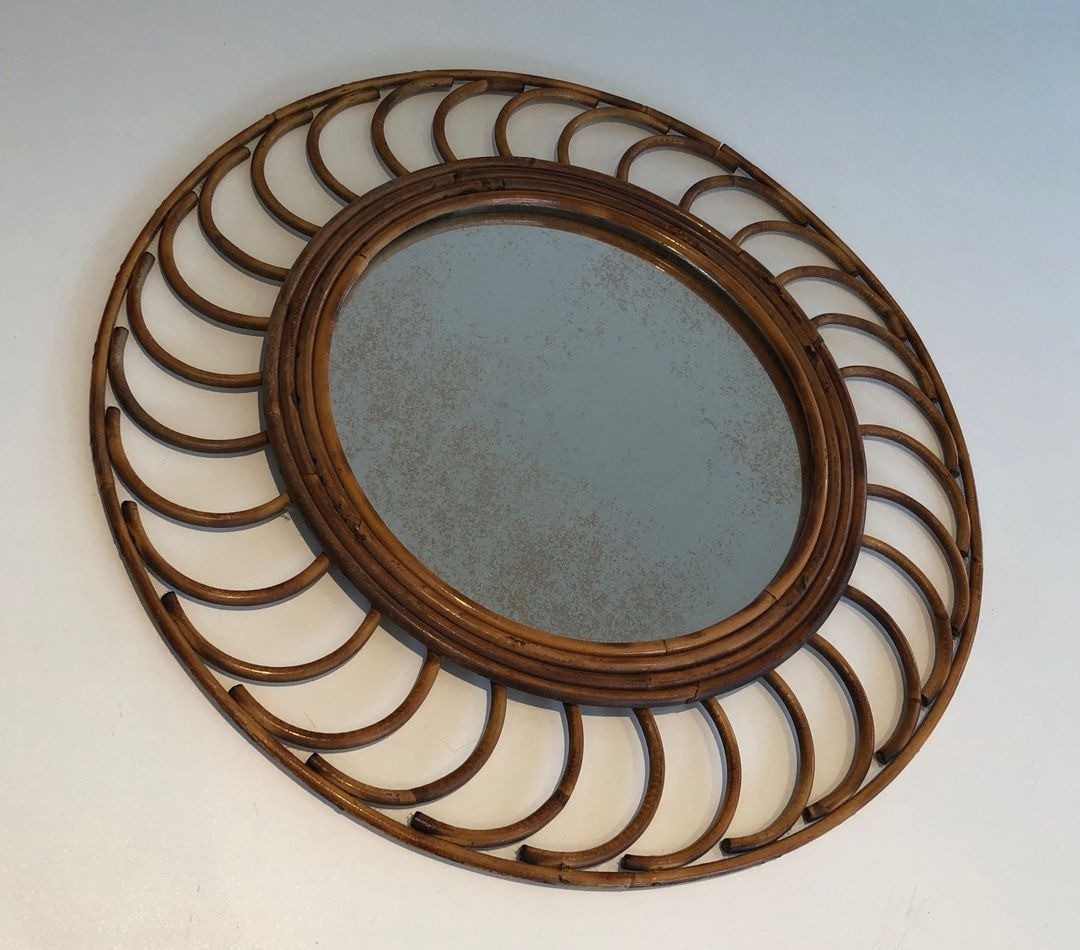
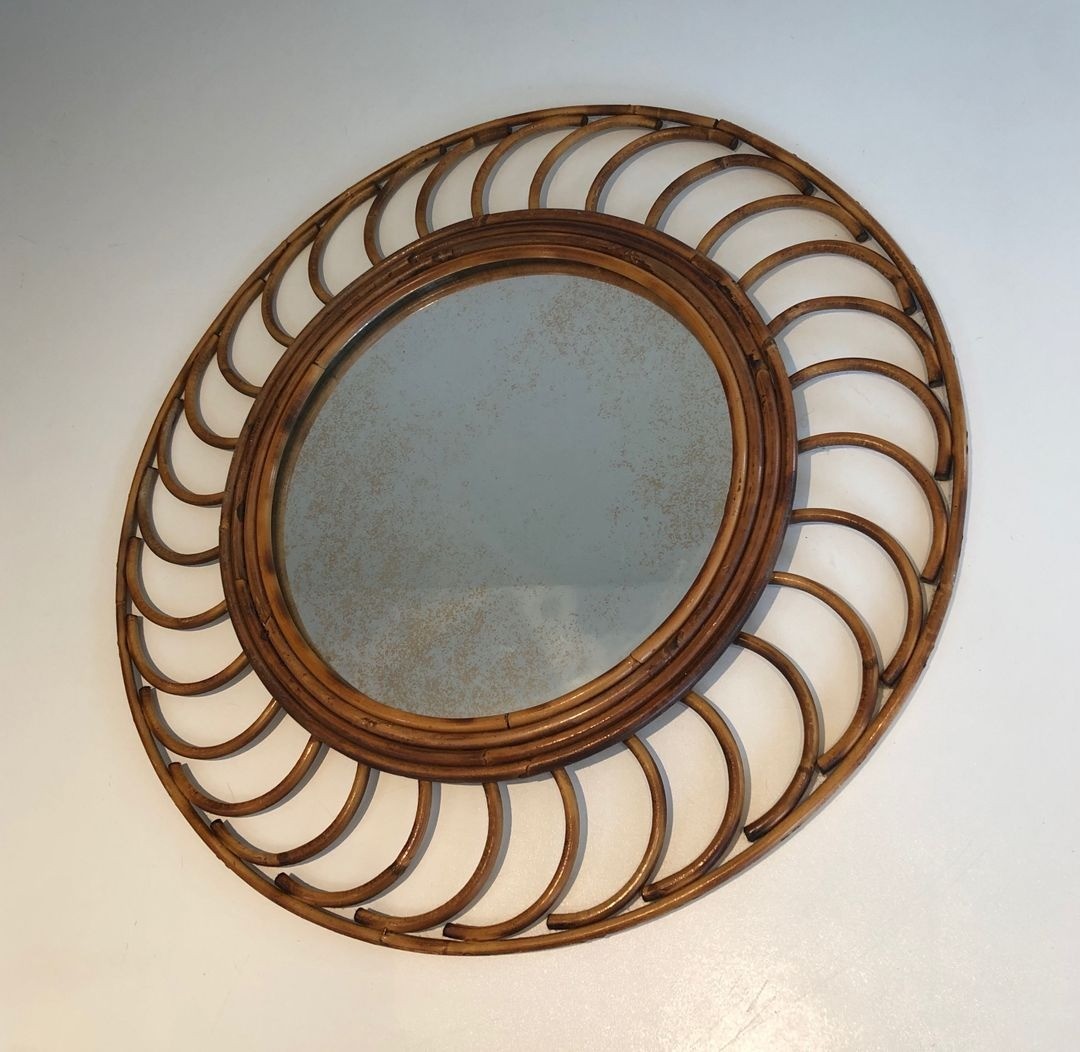
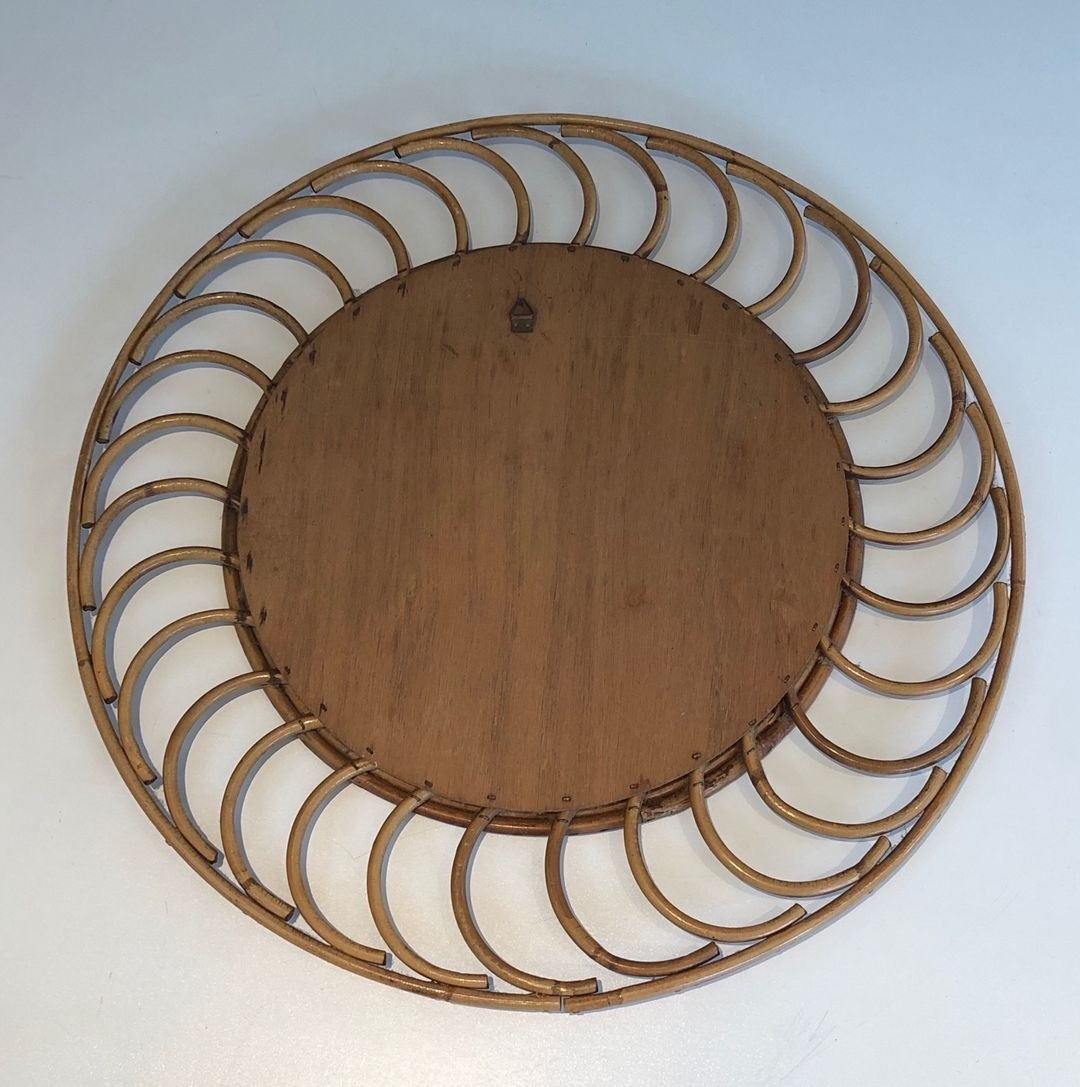
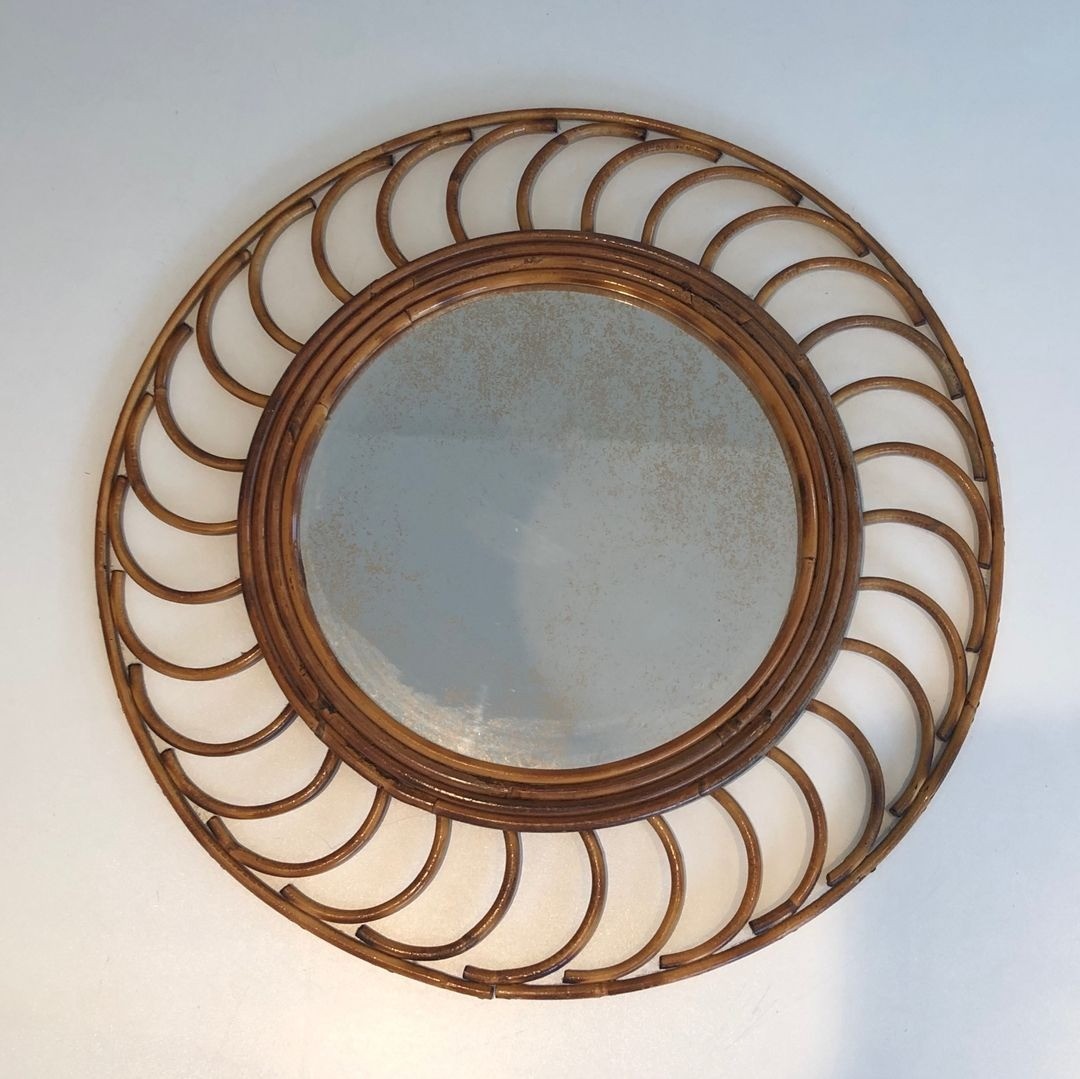
Circular mirror in a rattan frame composed of continuously arranged overlapping curved loops forming a flowing petal-ring surround. French work, circa 1970. Overall diameter: 52 cm; frame depth: 2 cm.
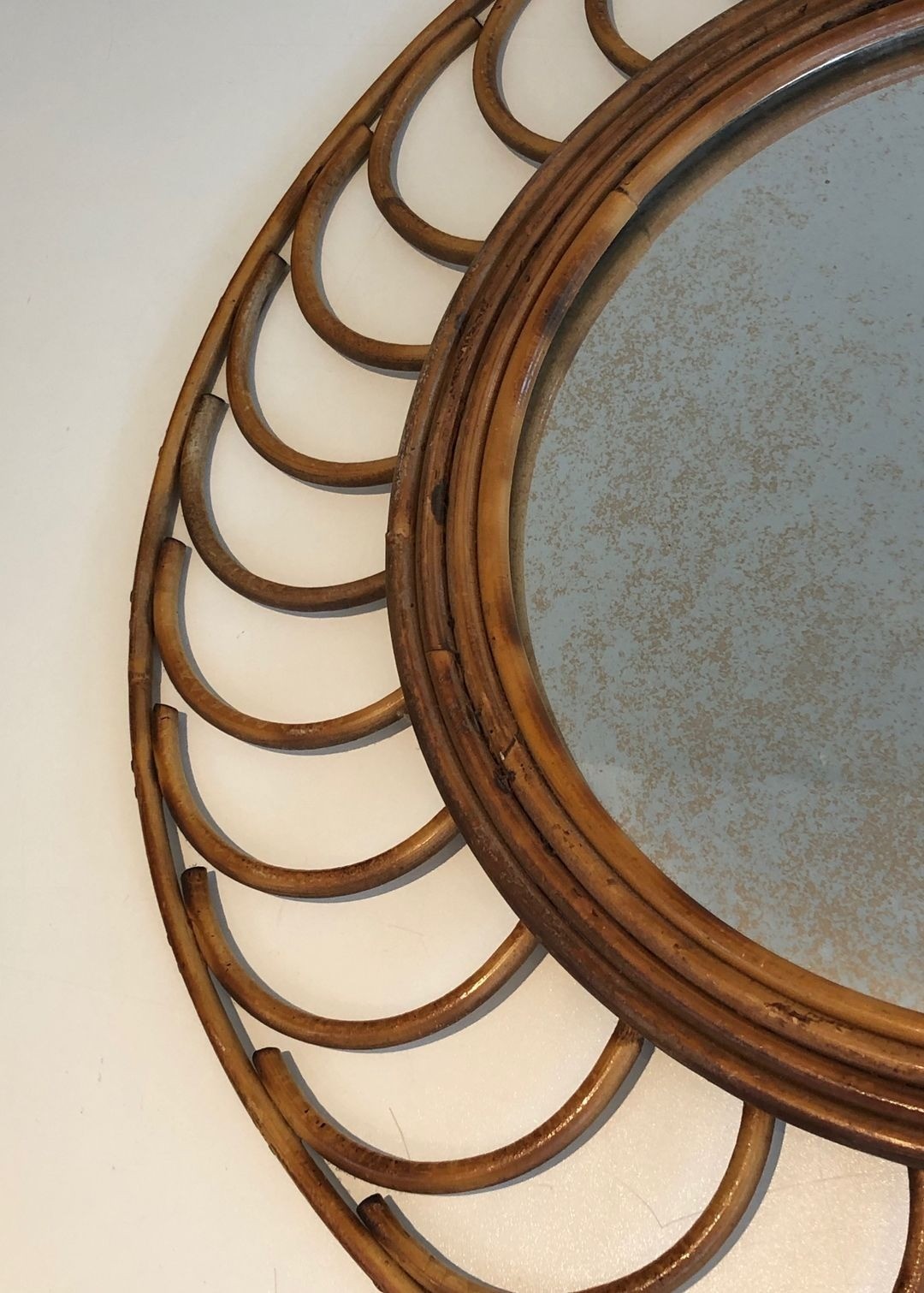
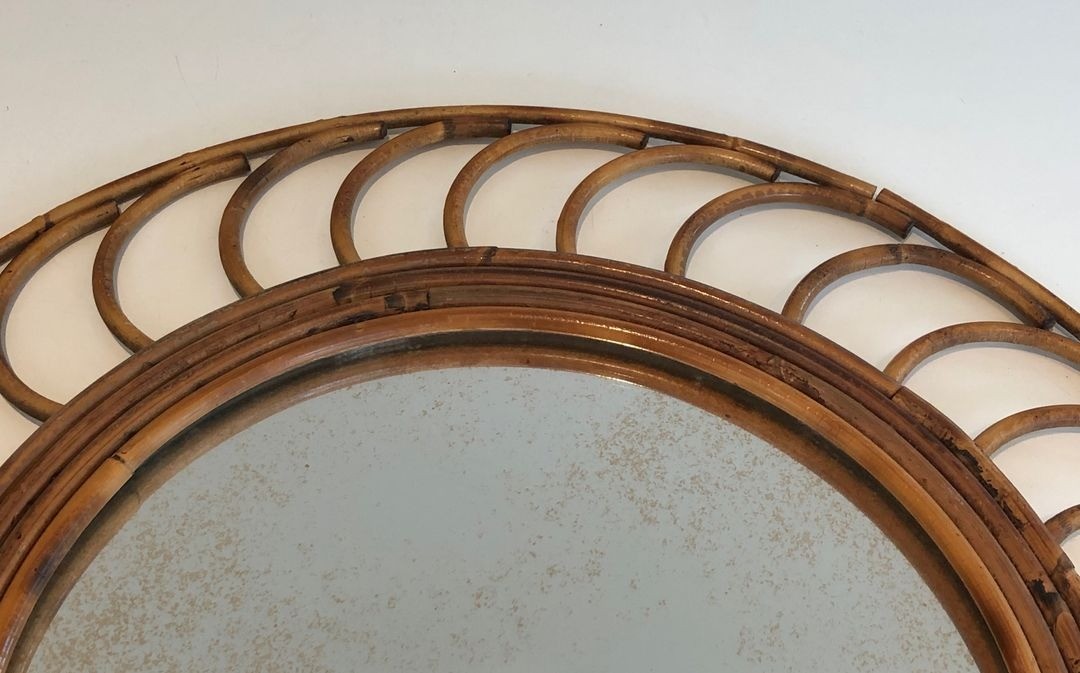
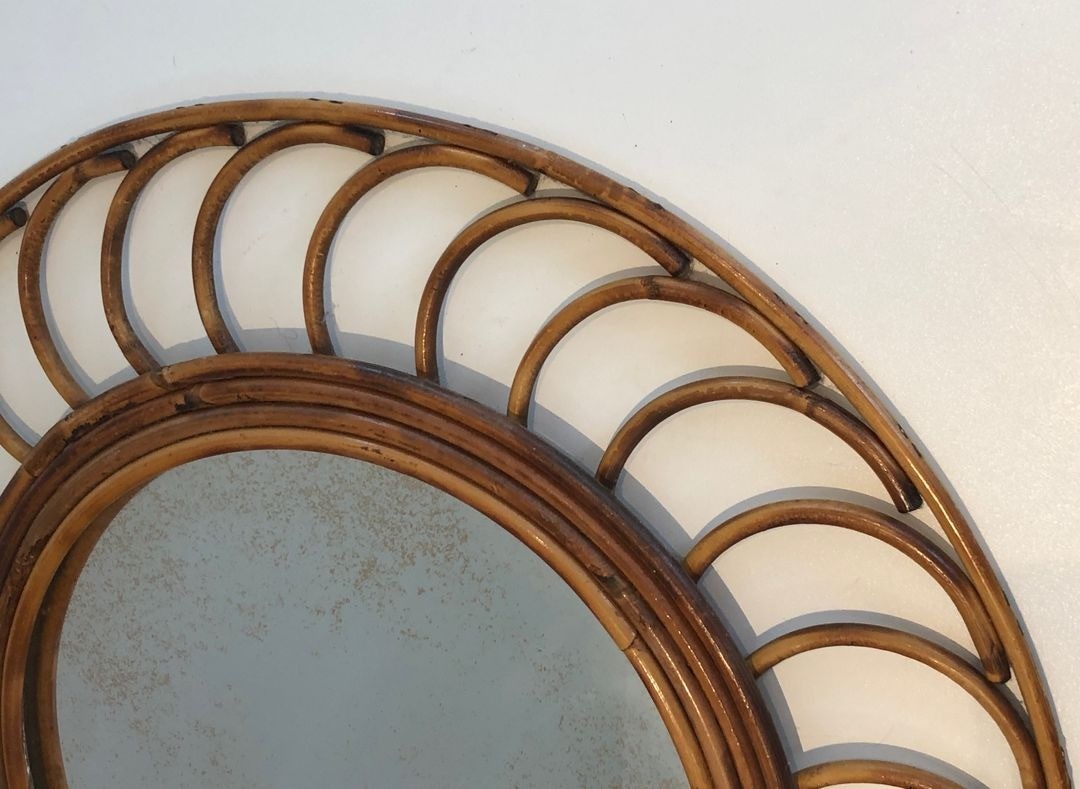
A circular rattan mirror in which the frame is constructed from a continuous sequence of curved rattan loops, each bent into a crescent arc and laid in overlapping succession around the full circumference of the piece. The resulting border has the quality of a daisy or petal ring — rhythmic, organic, and possessed of a tactile warmth that is the hallmark of the best rattan decorative work of the 1950s and 1960s. The warm brown tone of the natural rattan cane deepens beautifully with age, and the slight irregularities inherent in hand-bent construction give each element of the ring a lively individual quality.
This loop-frame construction is among the most characteristic and admired forms of French rattan mirror-making in the post-war period. Unlike the radial sunburst type — in which straight spokes emanate from a central disc — the loop-frame mirror works by enclosure rather than radiation, the curving canes drawing the eye inward toward the glass rather than outward into the room. The effect is more intimate and more feminine in register, and the closely worked rhythm of the overlapping arcs creates a satisfying visual density at the perimeter of the composition.
The circular mirror glass at the centre retains its original surface, with a gentle silvered patina consistent with age. The overall diameter is 52 cm, making this a compact but well-proportioned piece suited to a bathroom, bedroom, dressing room or narrow hallway where a smaller statement mirror is required.
In good condition with natural tonal variation in the rattan and minor signs of age throughout consistent with a vintage piece. A charming and characteristic example of French rattan decorative arts from the mid-twentieth century.