French Square Brass Mirror with Engraved Labyrinthine Frame
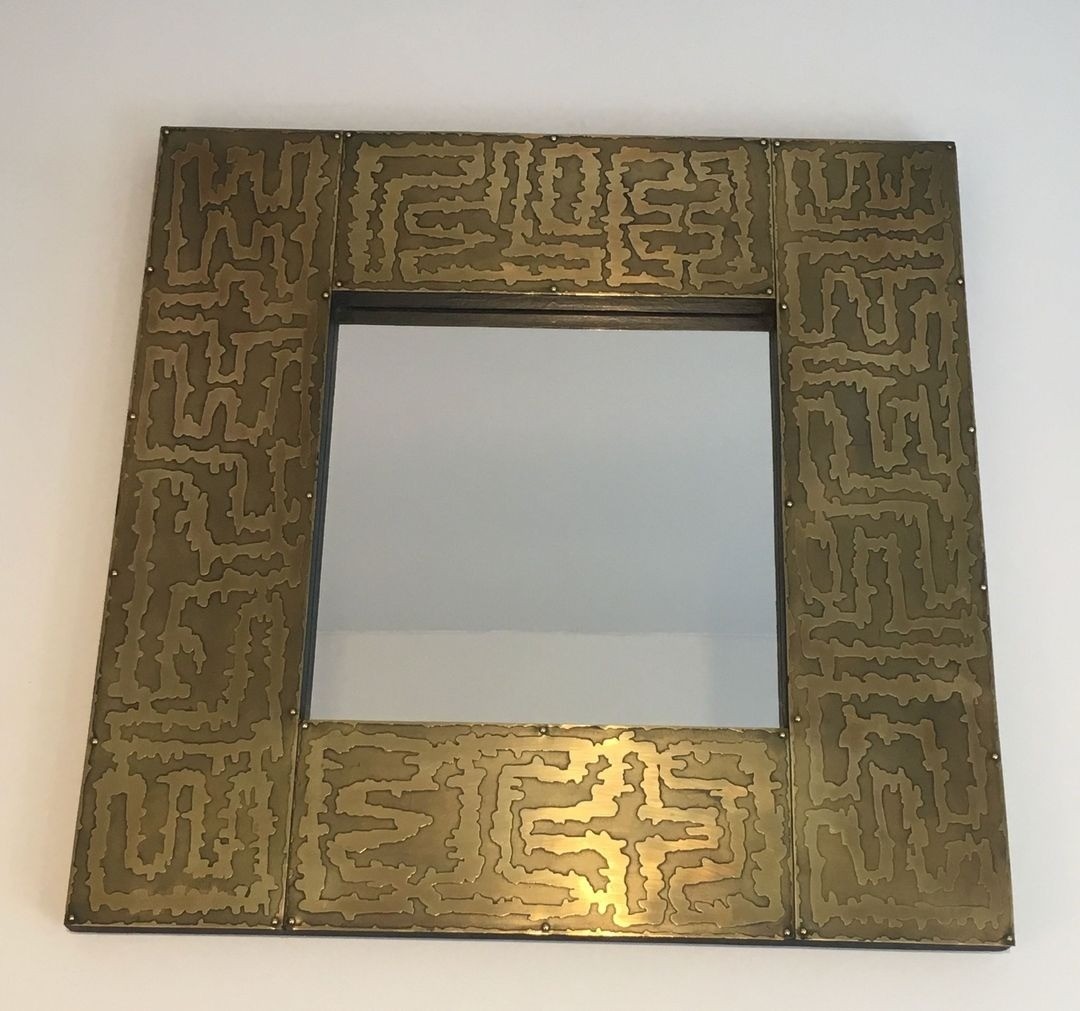
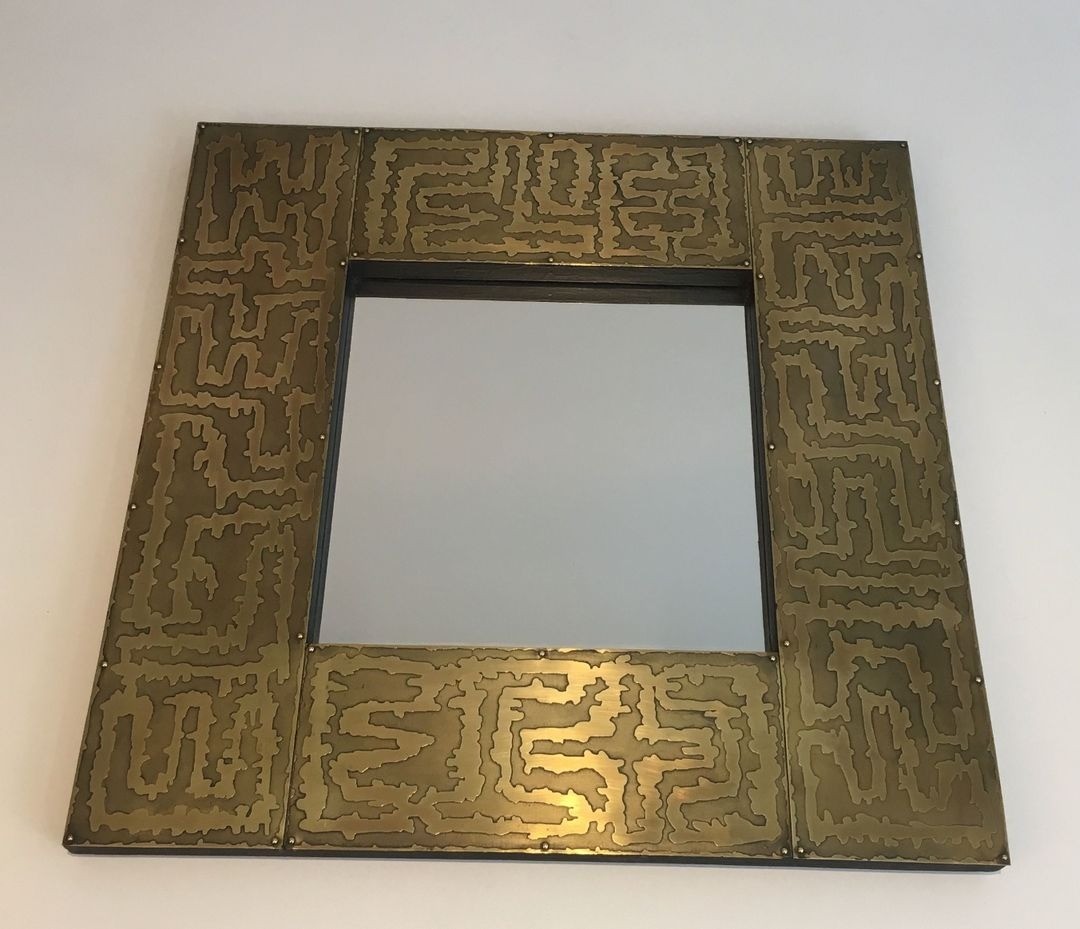
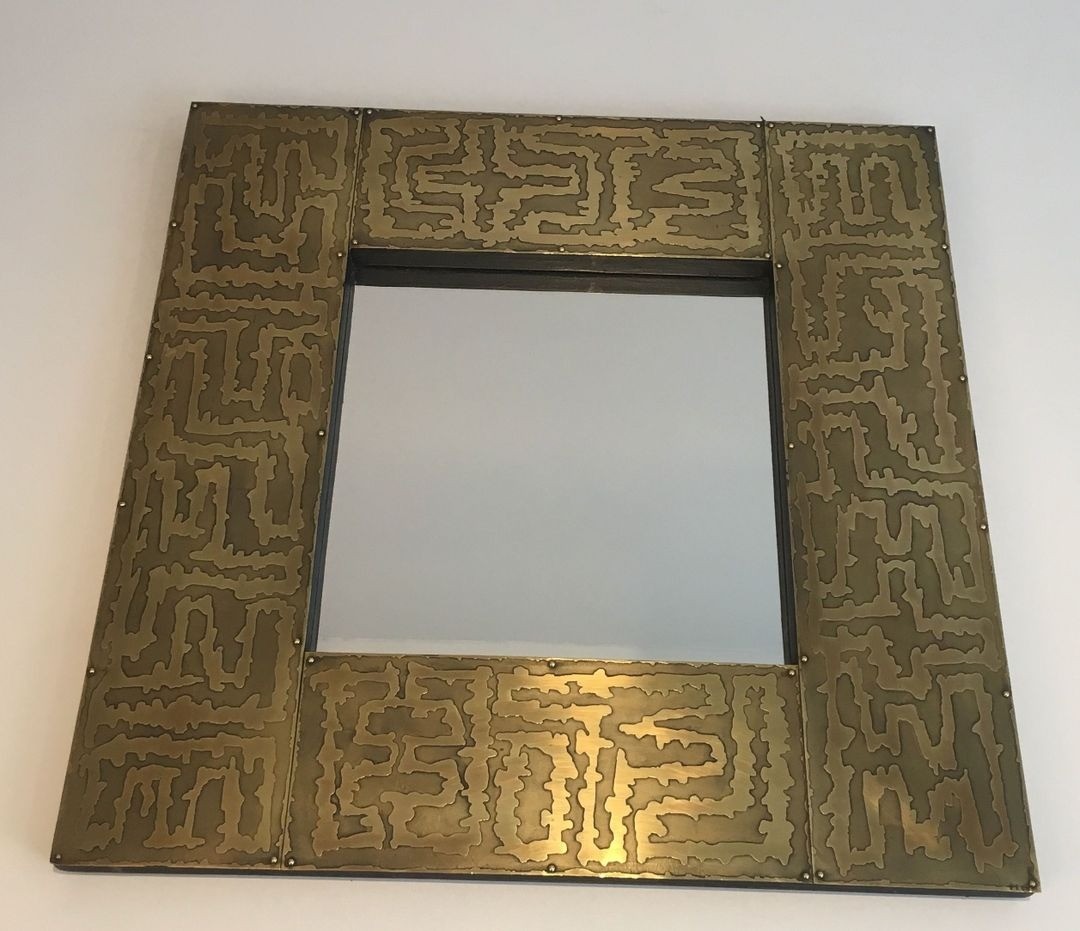
A square wall mirror with a wide, thick brass frame entirely covered in a densely engraved labyrinthine geometric pattern — interlocking lines forming a complex network across the entire surface. French, circa 1970. 50 cm wide × 2 cm deep × 50 cm tall.
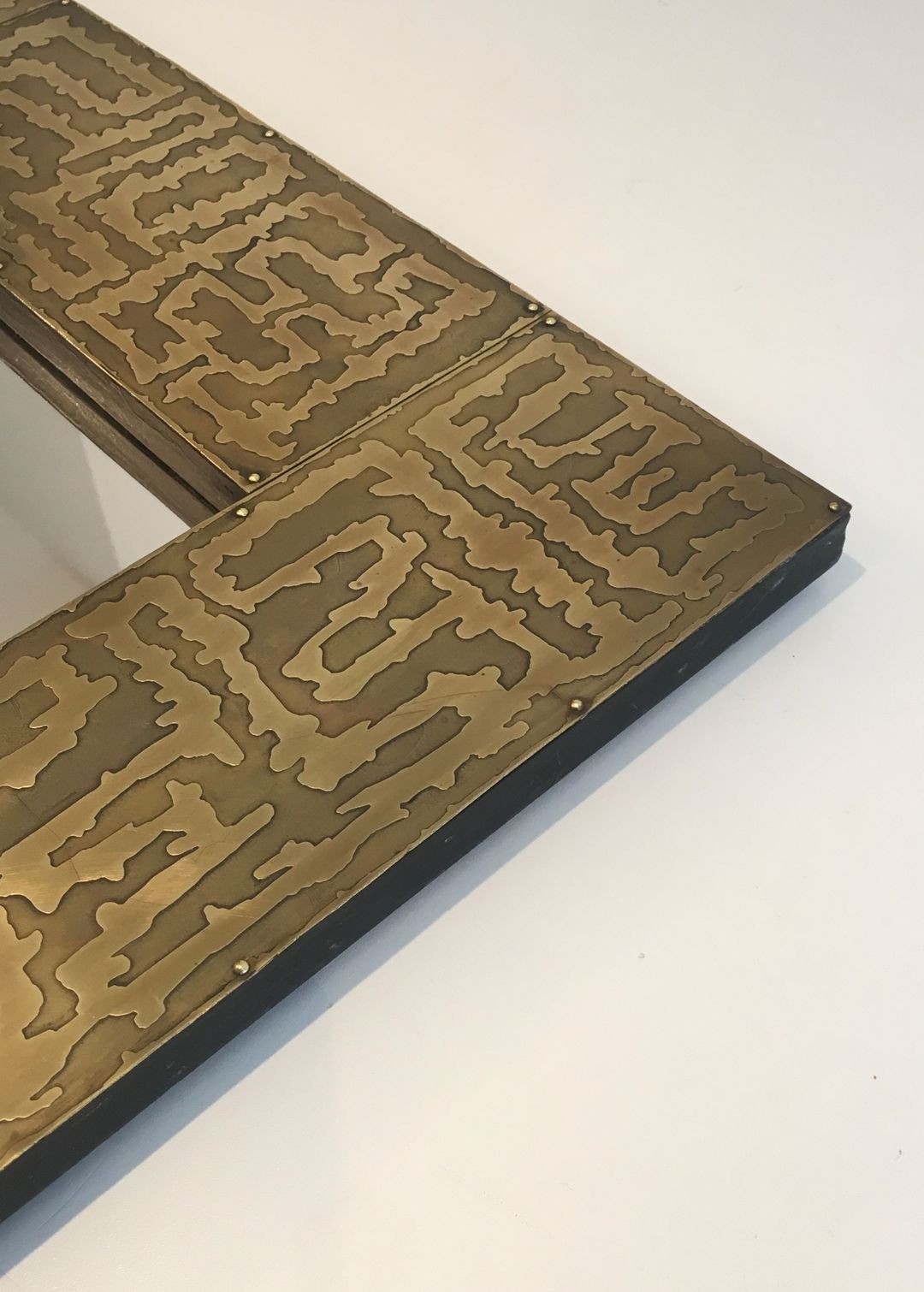
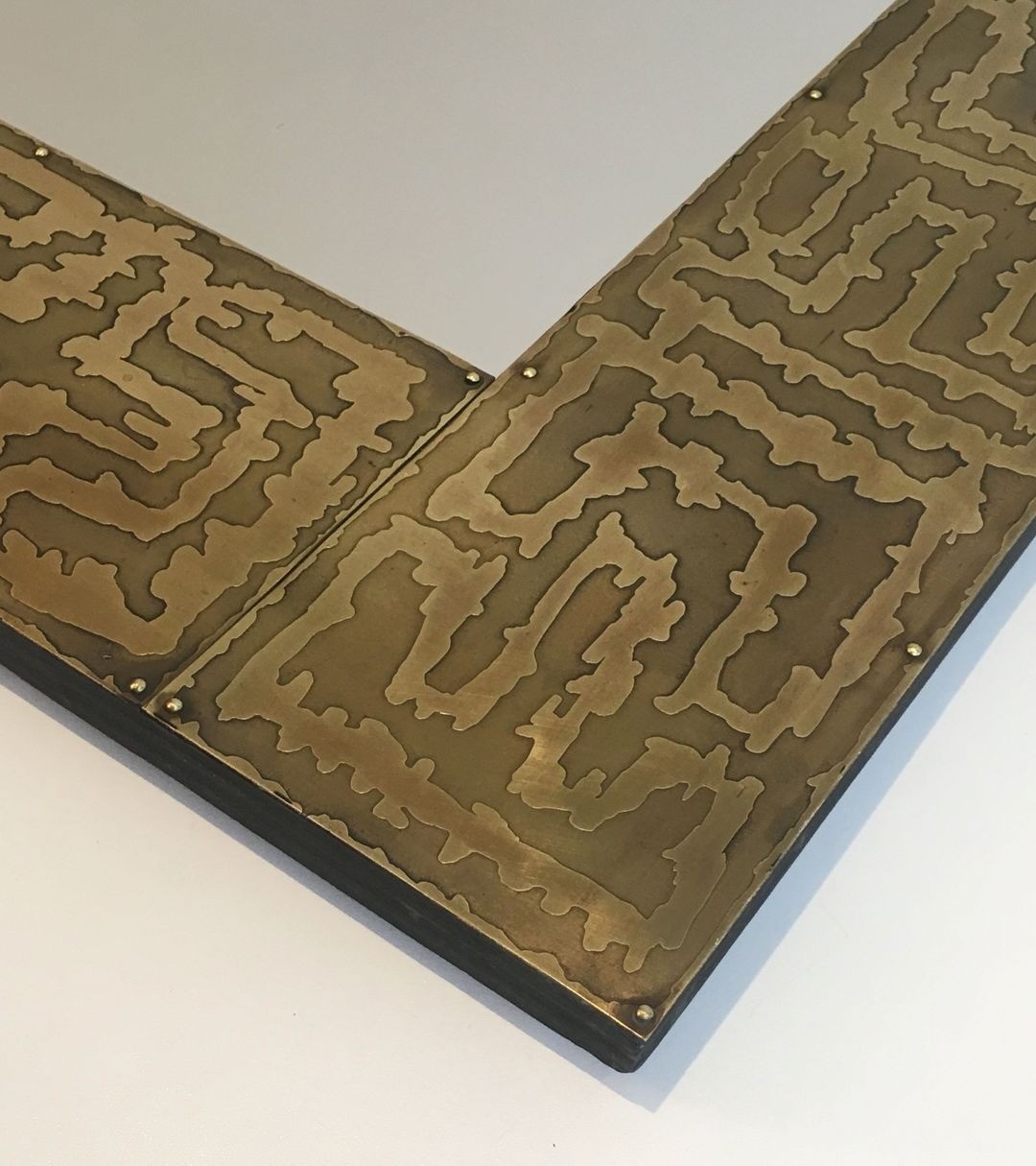
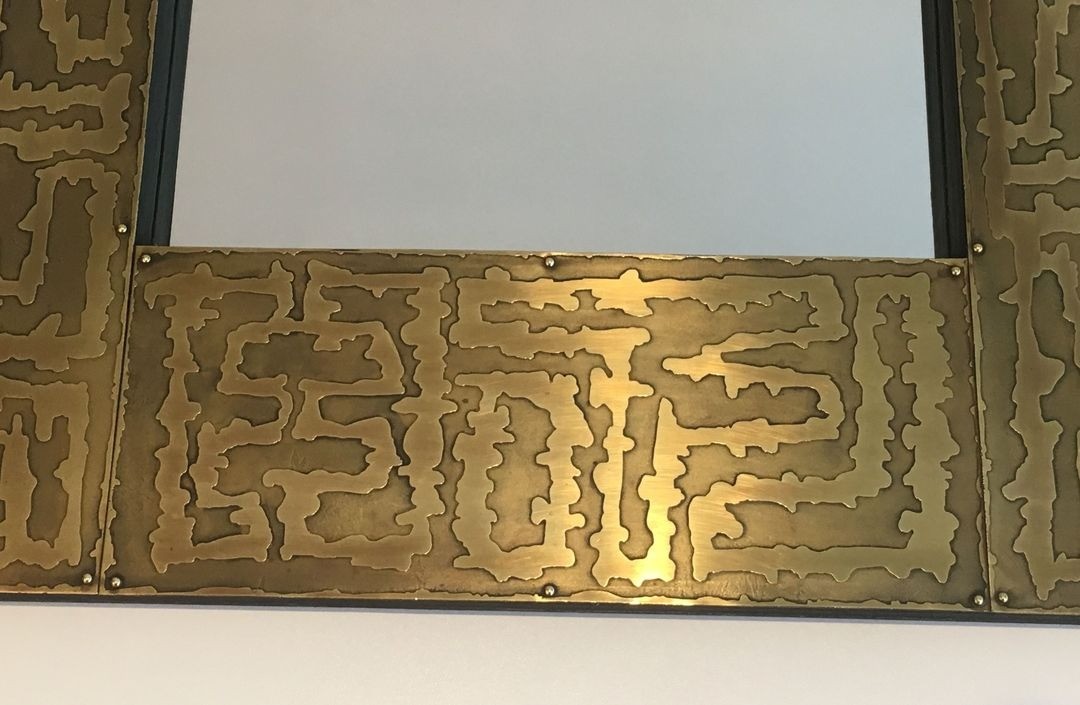
This square brass mirror is a singular object: its wide frame, nearly as prominent as the mirror plate it encloses, is entirely worked with an engraved or cast labyrinthine pattern of extraordinary density and precision. From a distance, the surface reads as a rich, dark gold field animated by shifting tone and texture; close up, it resolves into a continuous network of interlocking geometric lines — channels, right angles, and junctions forming a maze-like lattice that covers every square centimetre of the frame without repetition. The effect is hypnotic, and the quality of the metalwork — the depth and regularity of the engraving, the weight of the brass — marks this as a piece of genuine craft ambition.
The pattern carries associations with several decorative traditions simultaneously. The labyrinthine line recalls the intricate geometric arabesque of Islamic architectural decoration — the carved plasterwork of the Alhambra, the zellij tilework of Moroccan madrasas — while also evoking the Mesoamerican step-fret motif and the abstract geometry of mid-century design. In the French decorative context of the early 1970s, such cross-cultural geometric abstraction was entirely in keeping with a moment when designers and craftspeople were drawing freely on global ornamental vocabularies. The antiqued or darkened brass surface further enriches the pattern, creating strong shadow contrast between the raised and recessed elements.
At 50 × 50 cm, the mirror is generously proportioned: the substantial frame, nearly 12 cm wide on each side, gives the piece an architectural solidity and weight that goes beyond the decorative. The square format, relatively uncommon for mirrors of this quality, adds to its distinctiveness. The frame’s depth of 2 cm, combined with the heavy brass, gives the object a satisfying physical presence that photographs only partially convey.
An unusual and highly accomplished piece, this mirror would function as a collector’s object as readily as it would serve its reflective purpose. It belongs in a setting that can accommodate its strong personality: a study, a library, an architecturally considered interior, or any space where an object of real visual and tactile distinction is wanted.