Louis XVI Style Carved Wood Painted Trumeau Mirror
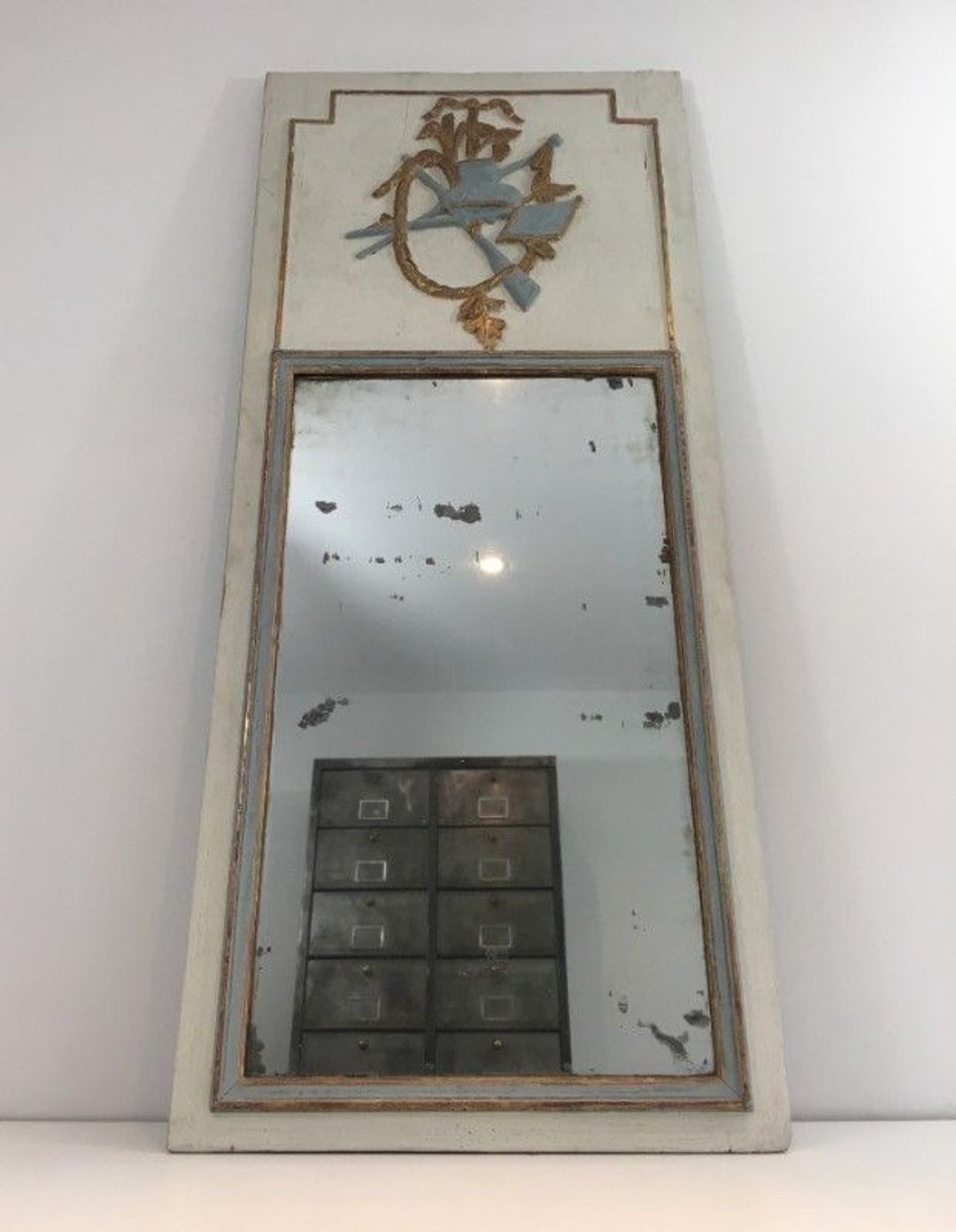
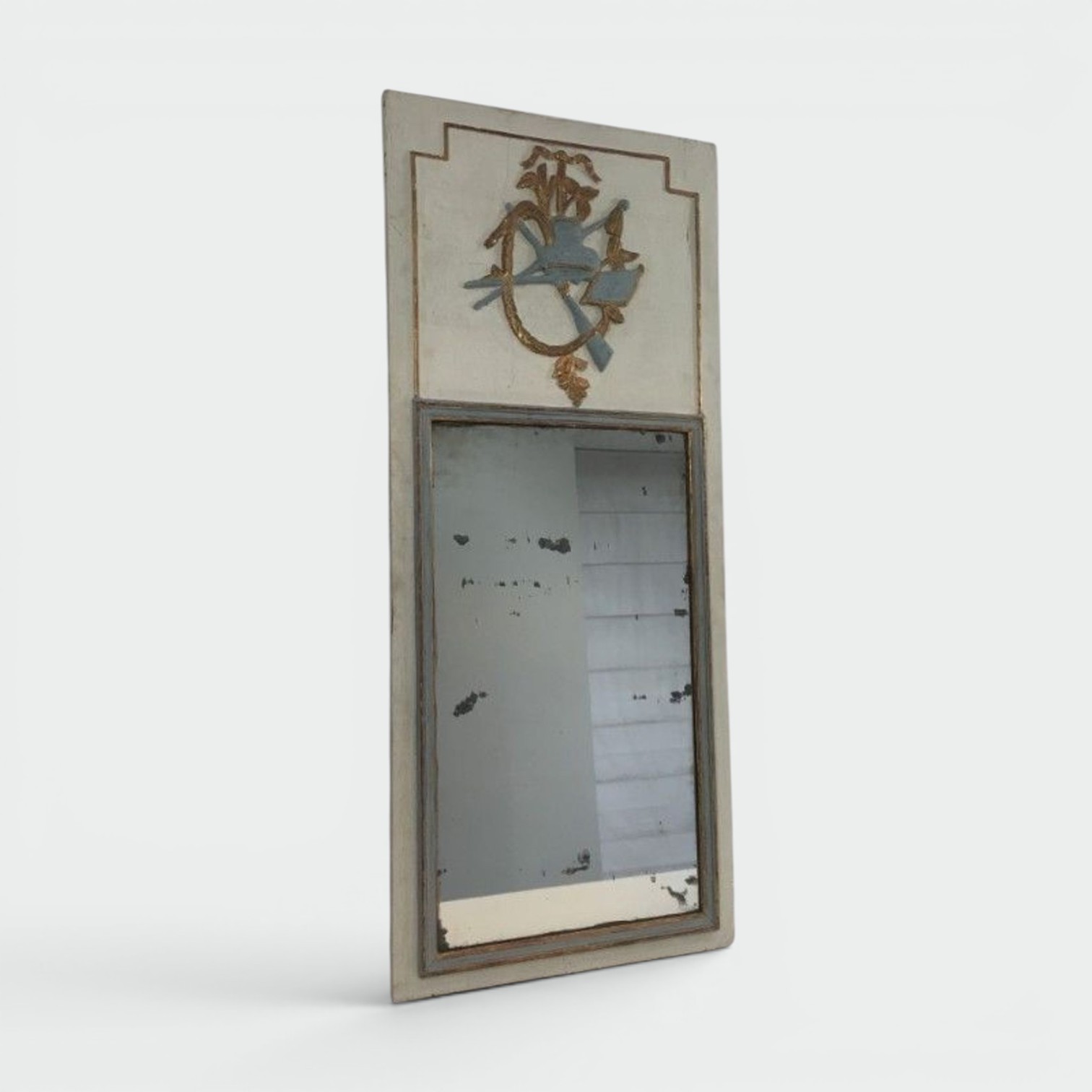
A French carved wood trumeau mirror in the Louis XVI style, circa 1780. At 148 cm in height, this commanding overmantel mirror combines a carved and painted upper panel with the principal mirror glass below, the whole enclosed in a neoclassical frame of refined sculptural quality. A piece of this period, format, and dimension is one of the defining objects of the French decorative arts tradition.
The trumeau — that tall, painted mirror panel designed to fill the wall above a fireplace or between the windows of a boiserie-panelled salon — is among the most distinctly French contributions to the architecture of the interior. Its origins lie in the great decorating campaigns of the seventeenth and early eighteenth centuries, when the spaces between windows and above chimneypieces required treatment at a scale that called for something between furniture and architecture: objects that were designed as part of the wall rather than placed against it. The trumeau answered this need perfectly, combining a reflective glass below — which multiplied light and created the illusion of depth — with a painted or carved panel above, completing the architectural register of the room. By the reign of Louis XVI, the form had reached a maturity of execution and a clarity of design that has never been surpassed.
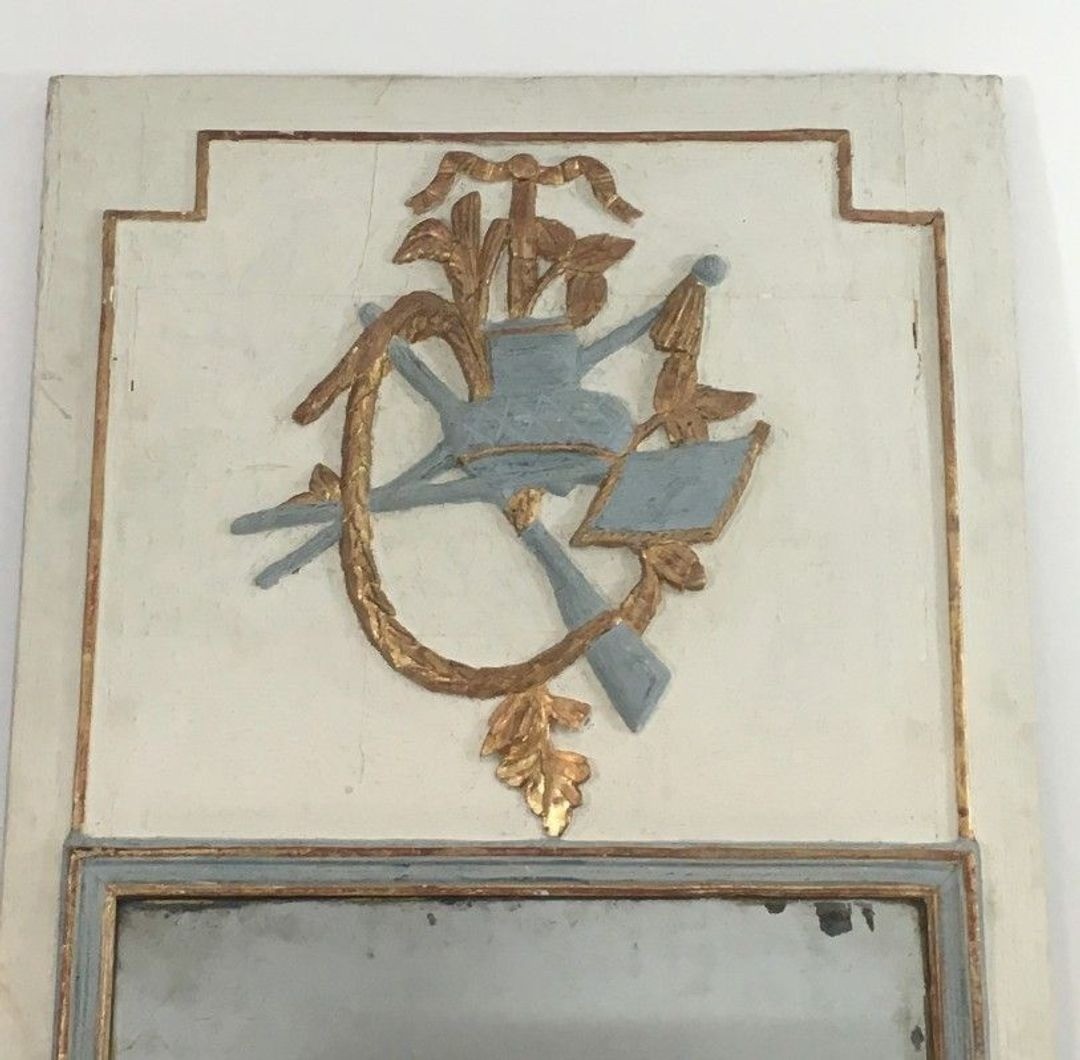
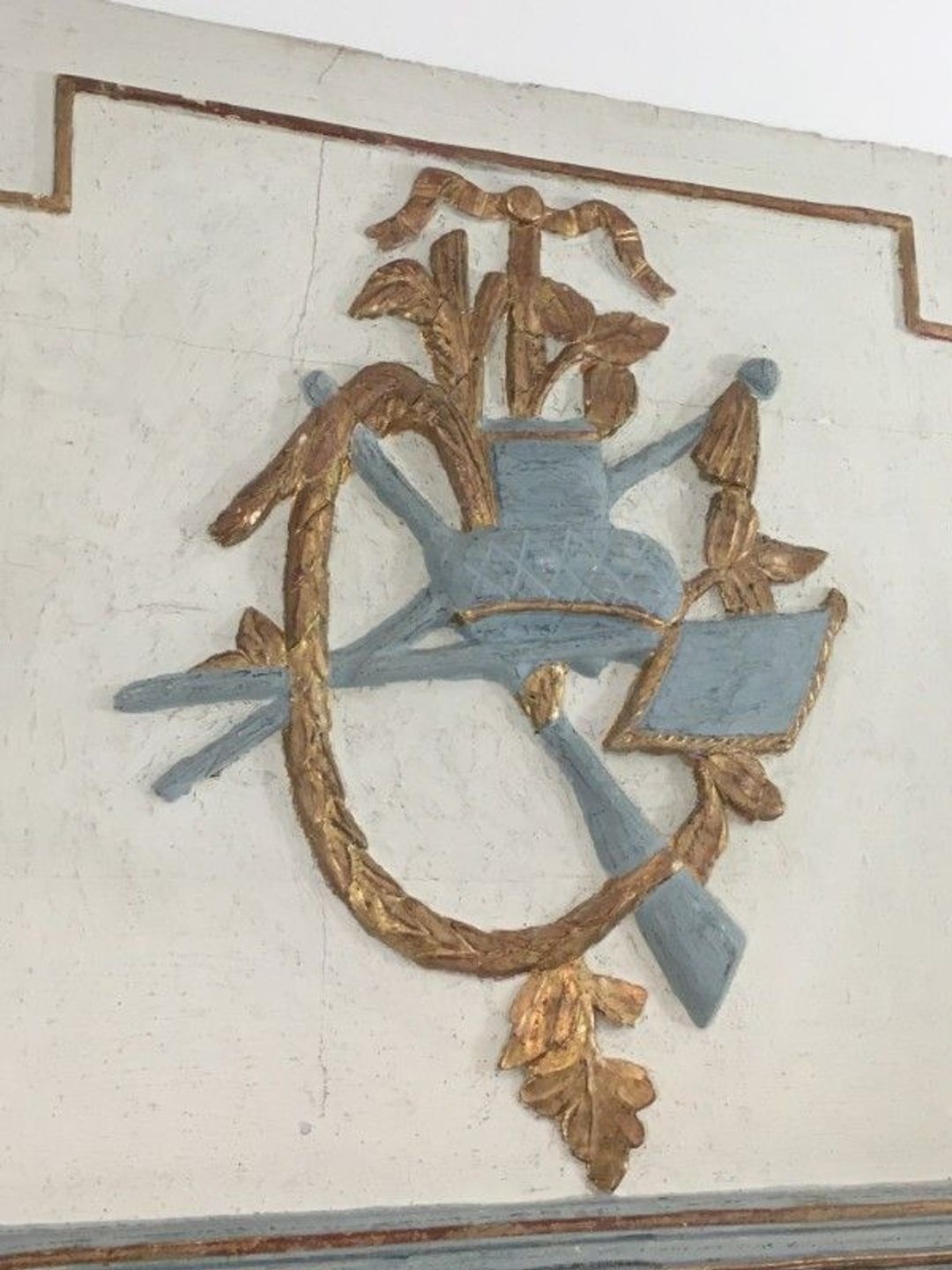
This trumeau, dateable to around 1780, belongs to the finest moment of the form’s development. The Louis XVI style — that severe, neoclassical reaction against the asymmetrical exuberance of the Louis XV rococo — brought to the trumeau a discipline of geometry and an economy of ornament that transformed the object from decoration into architecture. The characteristic vocabulary of the period — fluted pilasters, swags of husks and ribbons, laurel garlands, ribbon-tied bouquets, and the precise, symmetrical compositions derived from Classical antiquity — is applied here to the carved wooden frame with the assured hand of a craftsman working at the apogee of the tradition.
The format is imposing: 63 cm wide and 148 cm tall, with a frame depth of just 3.5 cm that keeps the surface reading as a flat element of the wall rather than a piece of furniture projecting from it. The upper painted panel — the tableau de trumeau — occupies the space above the principal mirror glass, its subject and palette chosen to harmonise with the surrounding panelling of an eighteenth-century interior. Together, the painted and mirrored elements create the vertical continuity that was the fundamental purpose of the trumeau: to carry the decorative programme of the room upward to the cornice, filling the space above the mantelshelf or between the windows without interrupting the wall’s architectural integrity.
A genuine Louis XVI trumeau of this scale and quality is an object of the first importance in the French decorative arts. It belongs against the wall of a room furnished with eighteenth-century ambition: a dining room, a grand salon, or a library where the proportions and the light will do justice to its presence. Properly hung, it becomes the axis of the room, the object around which all others are arranged. Dimensions: 63 × 3.5 × 148 cm.