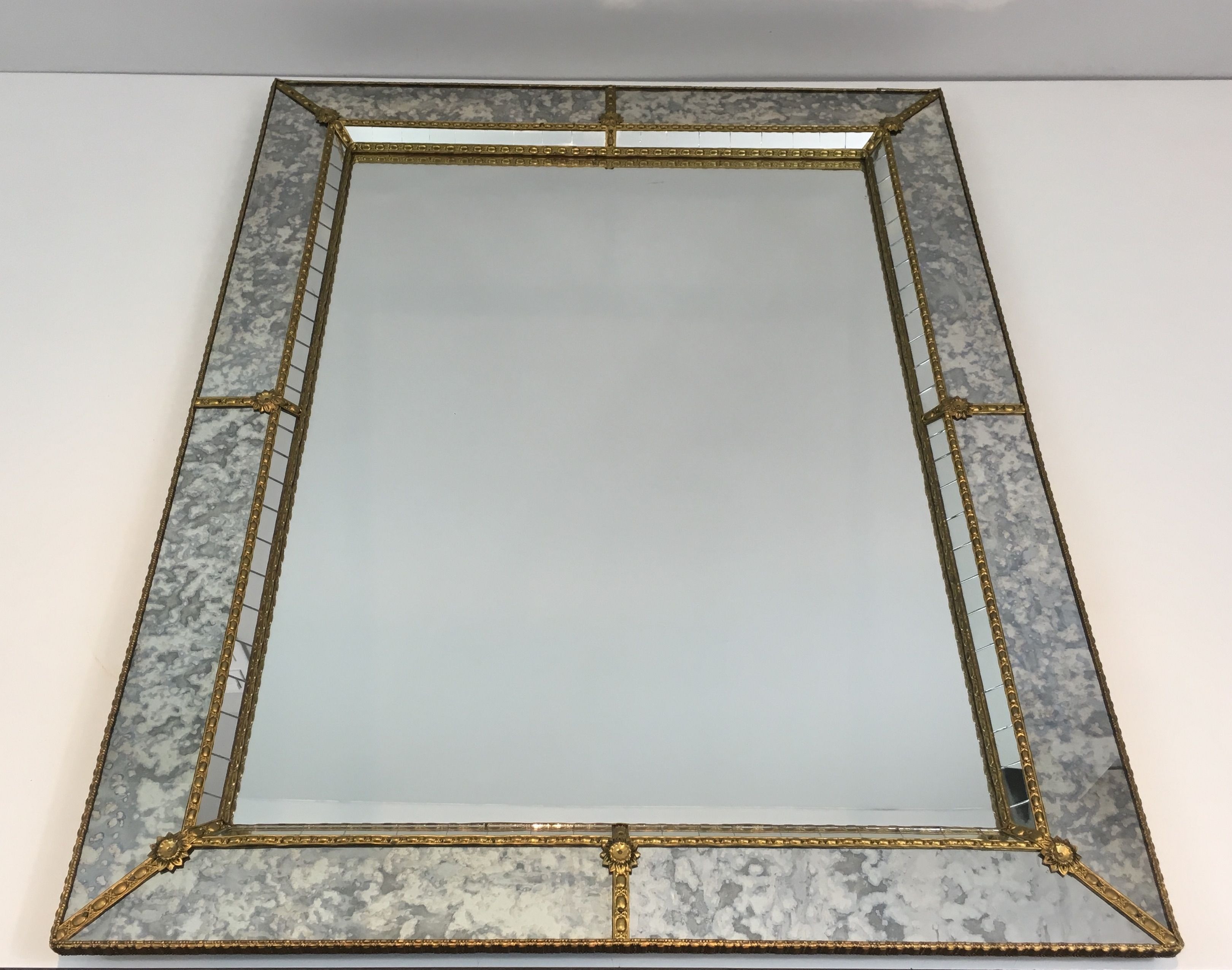
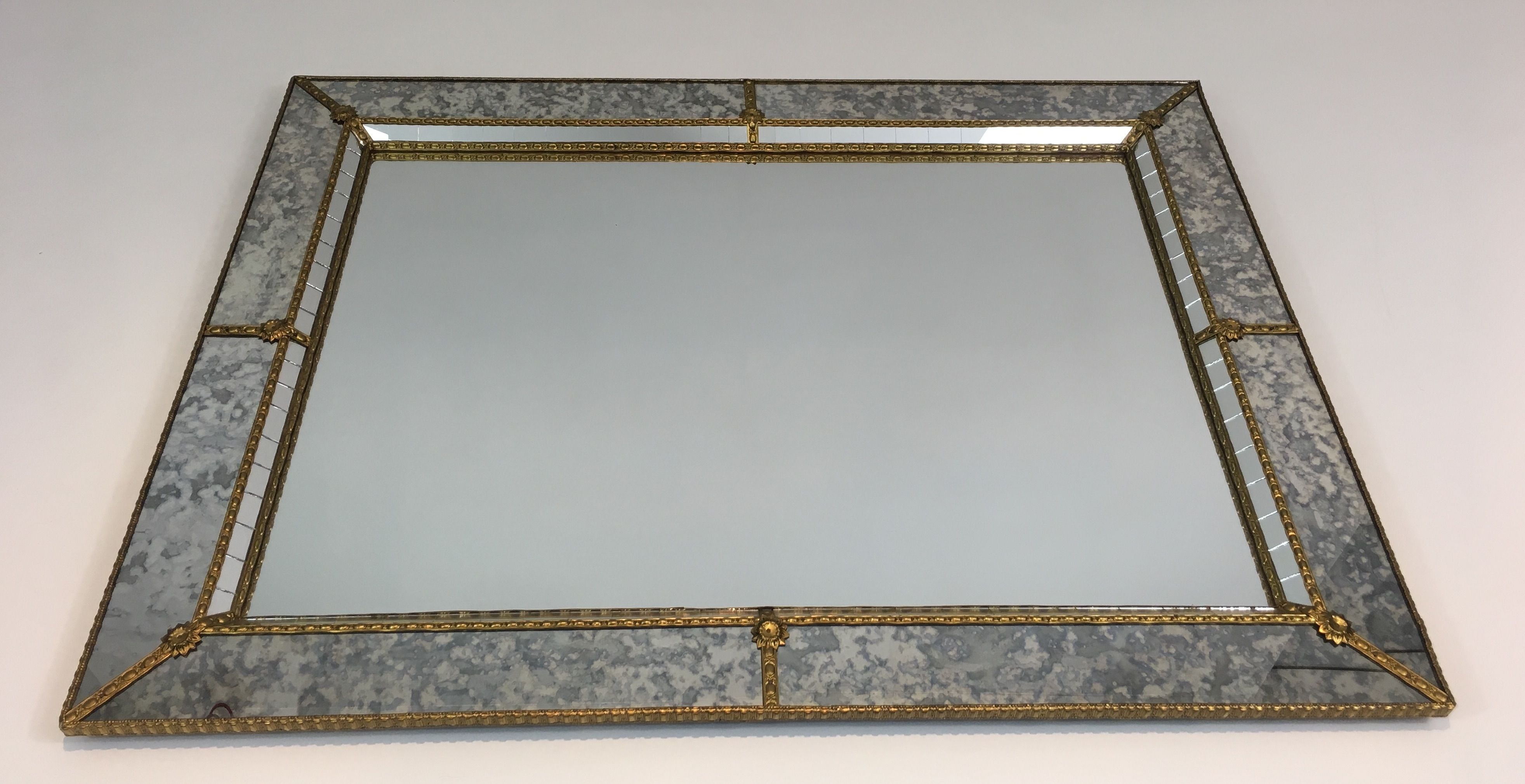
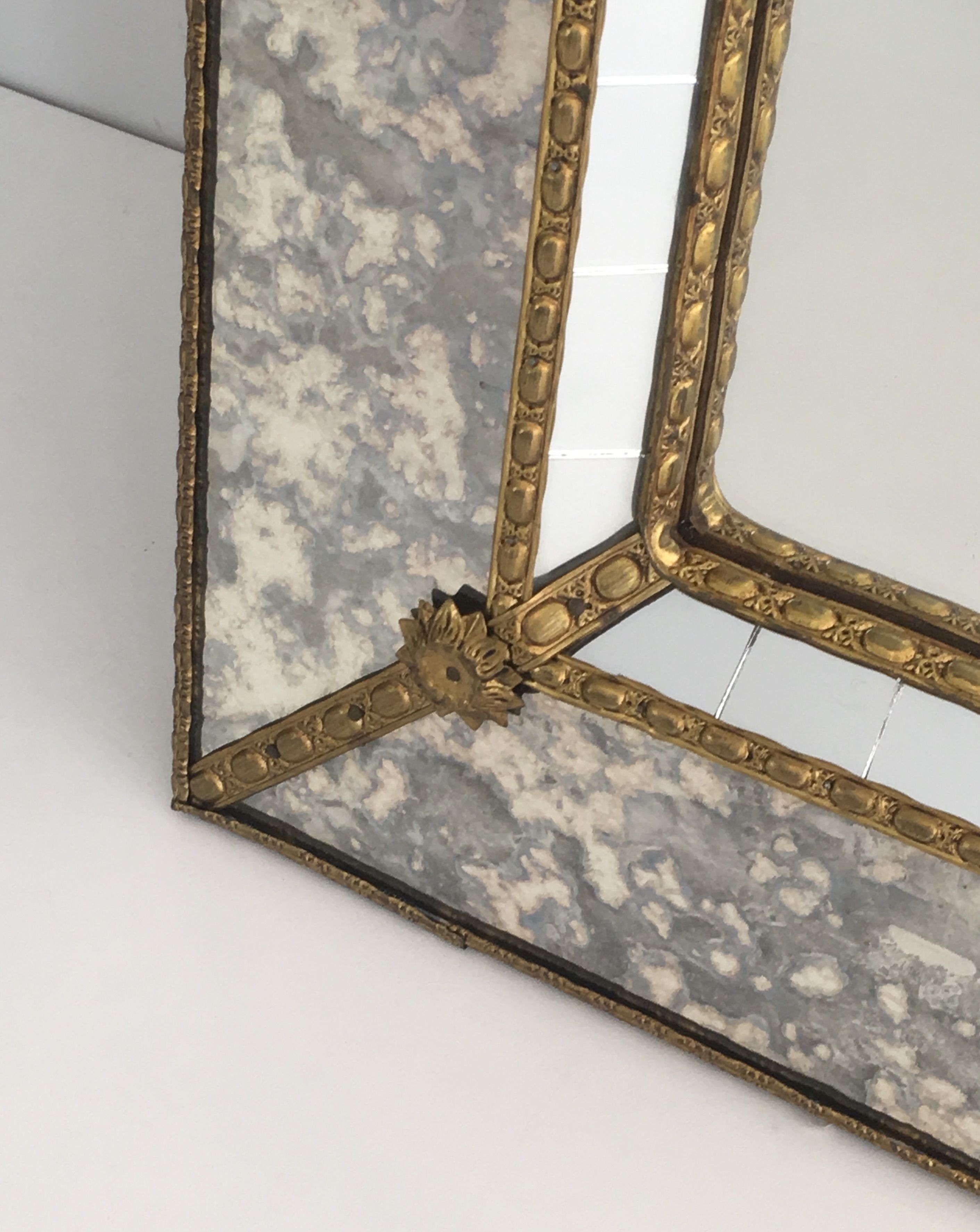
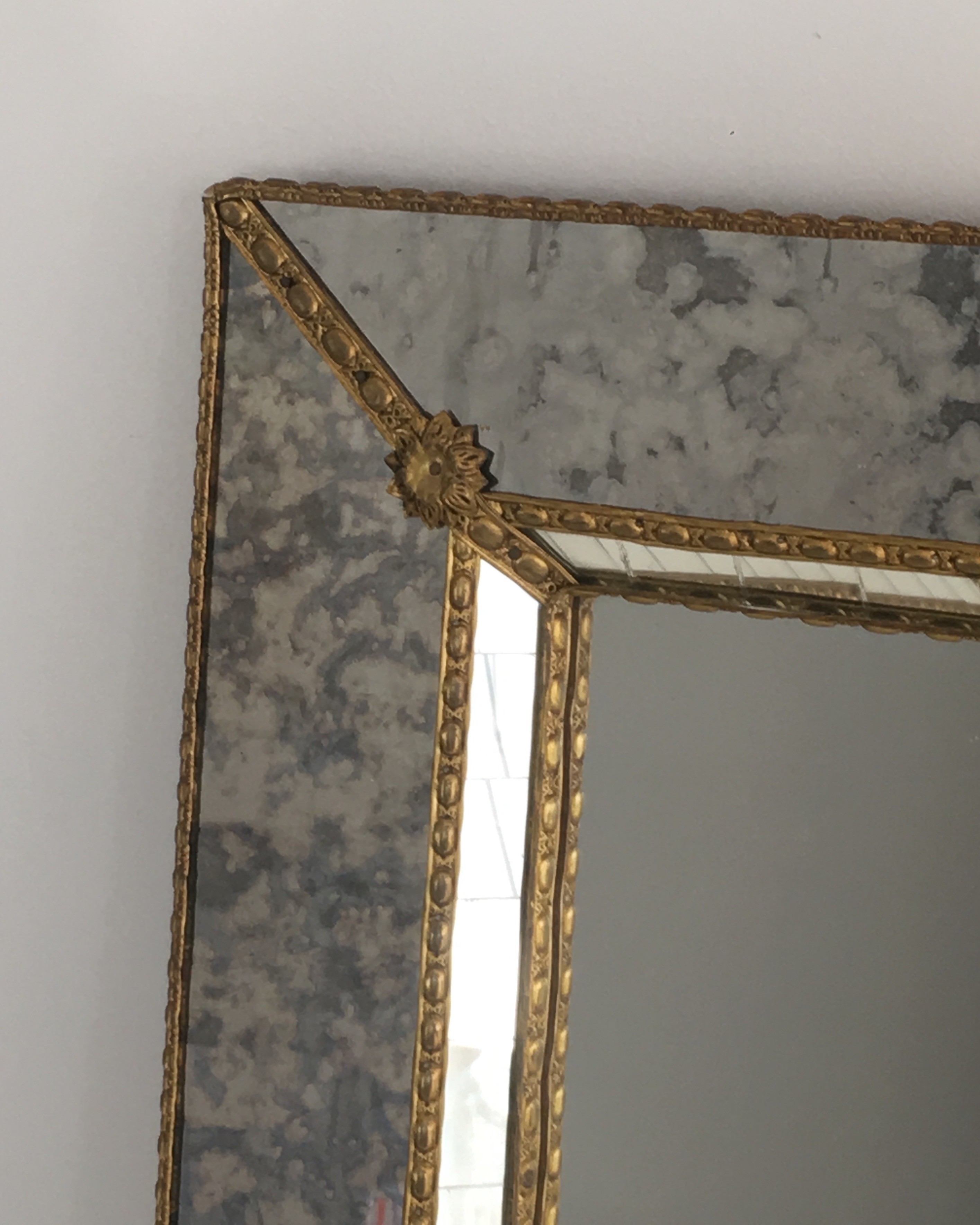
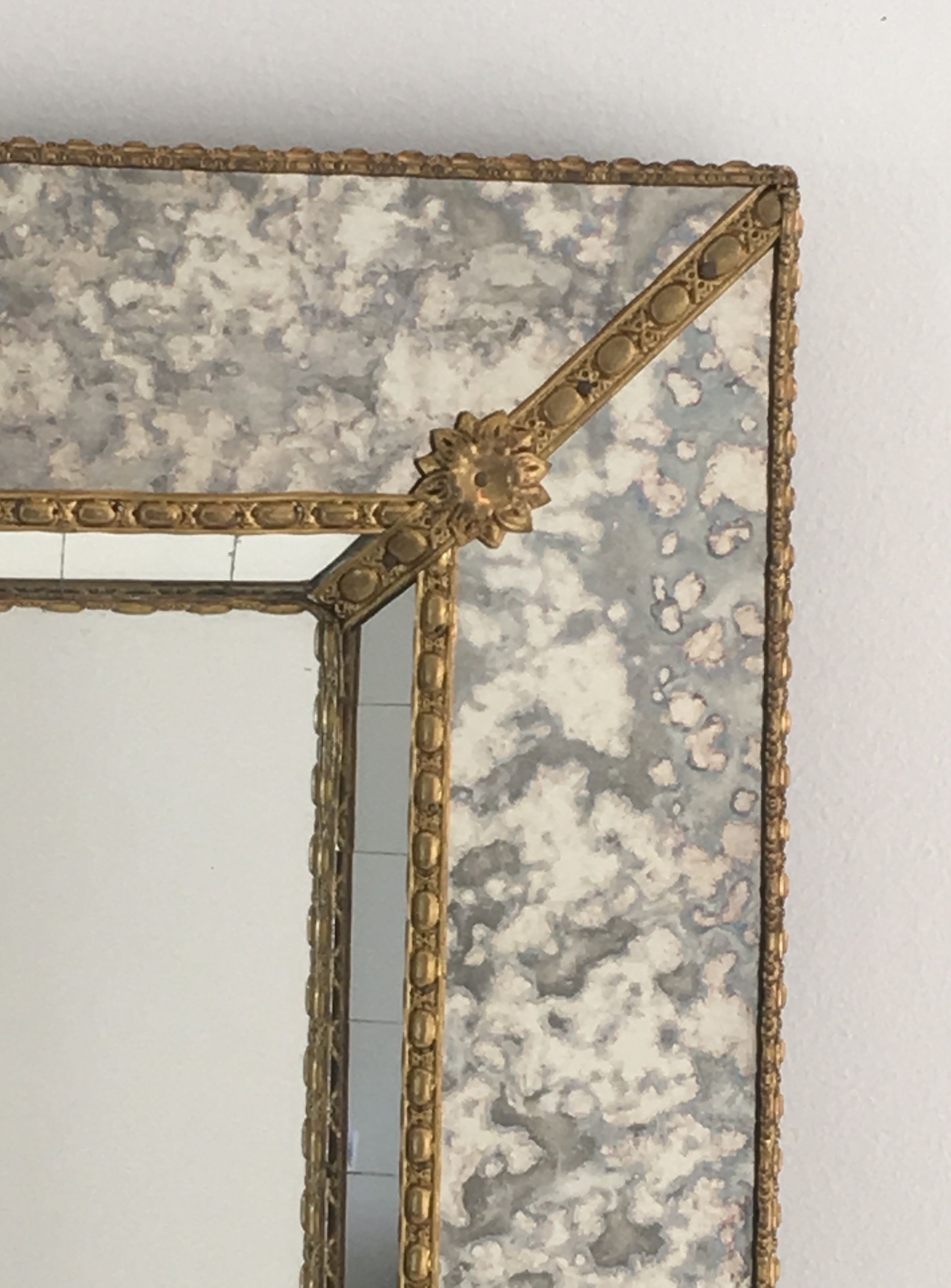
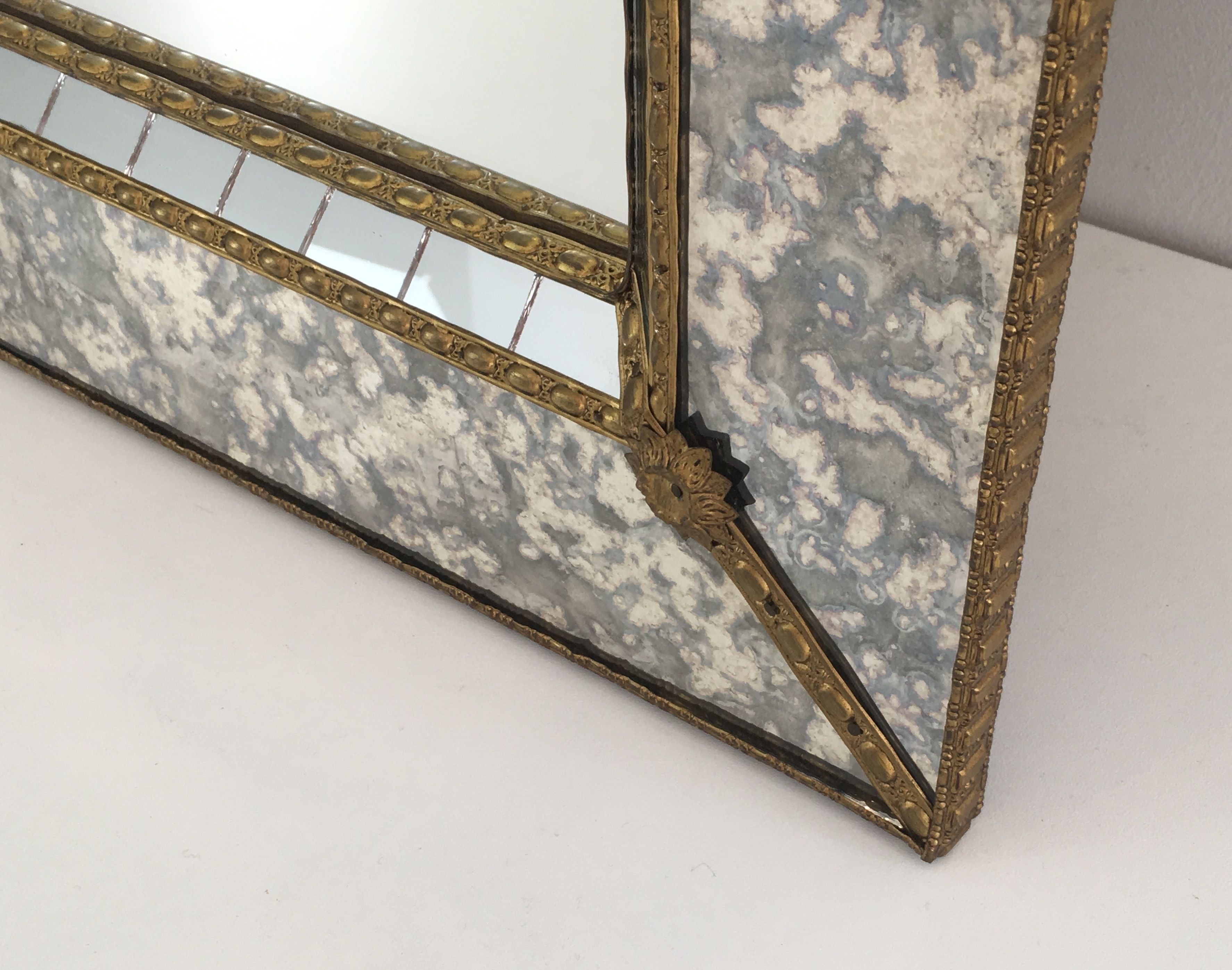
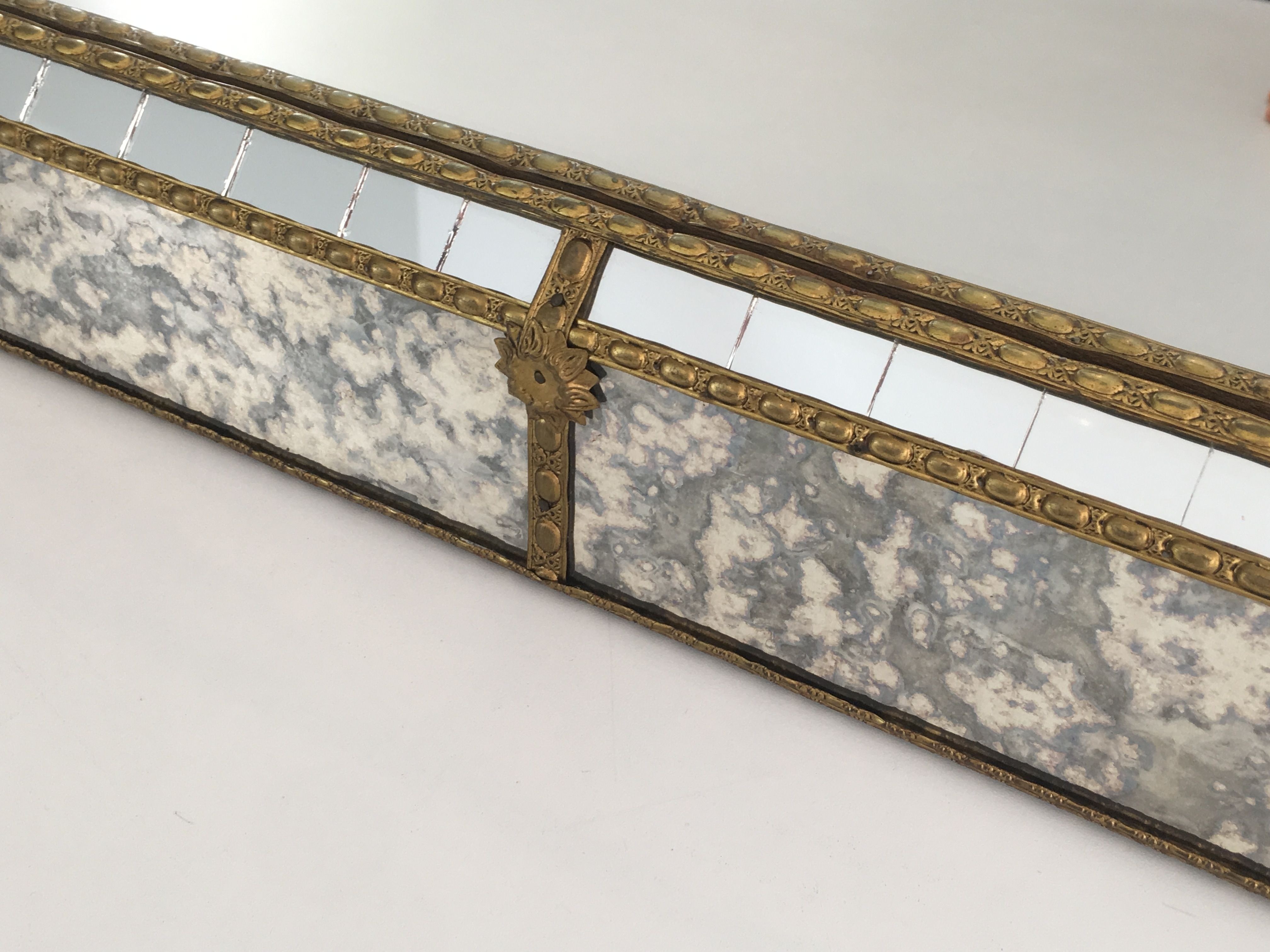
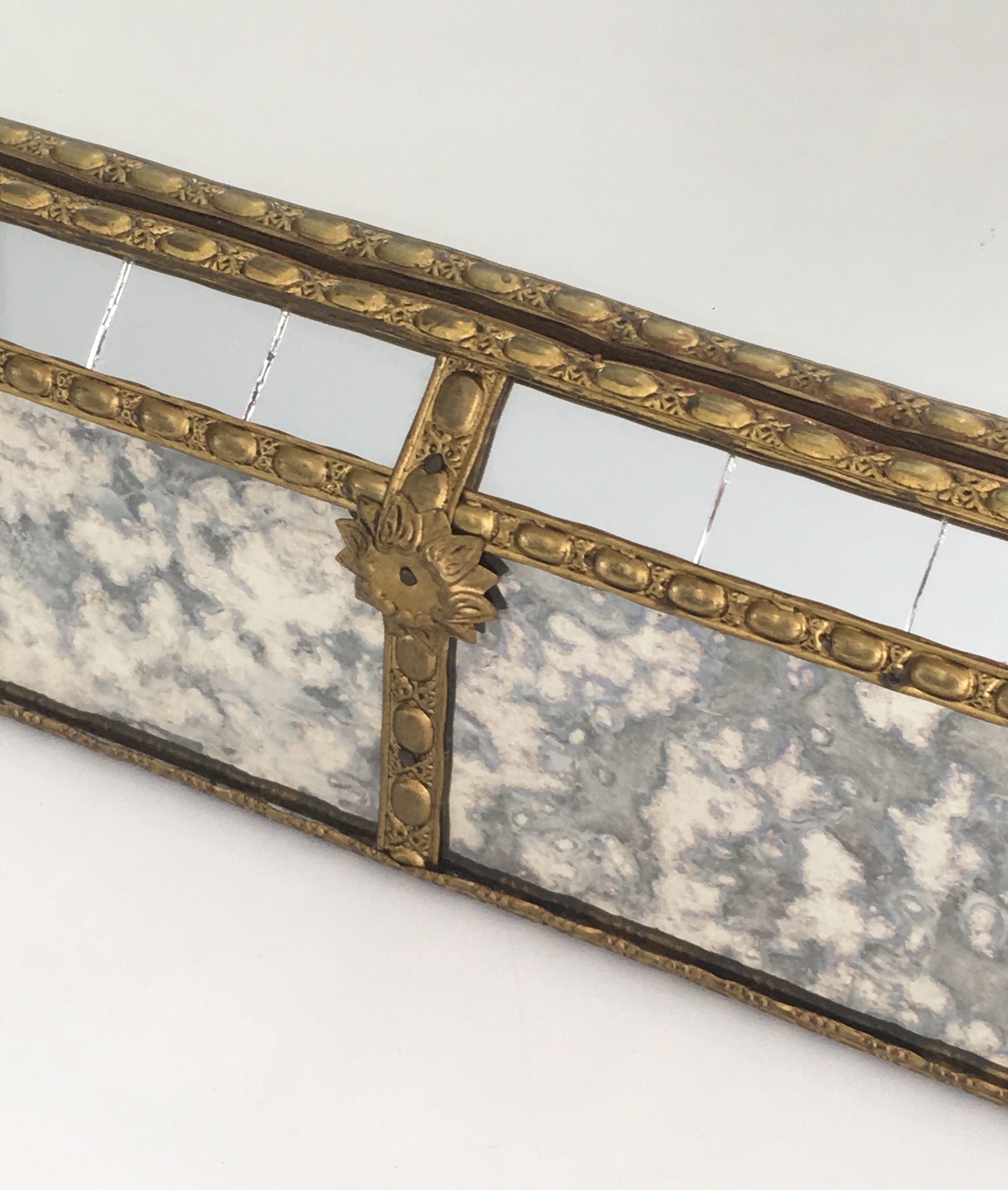
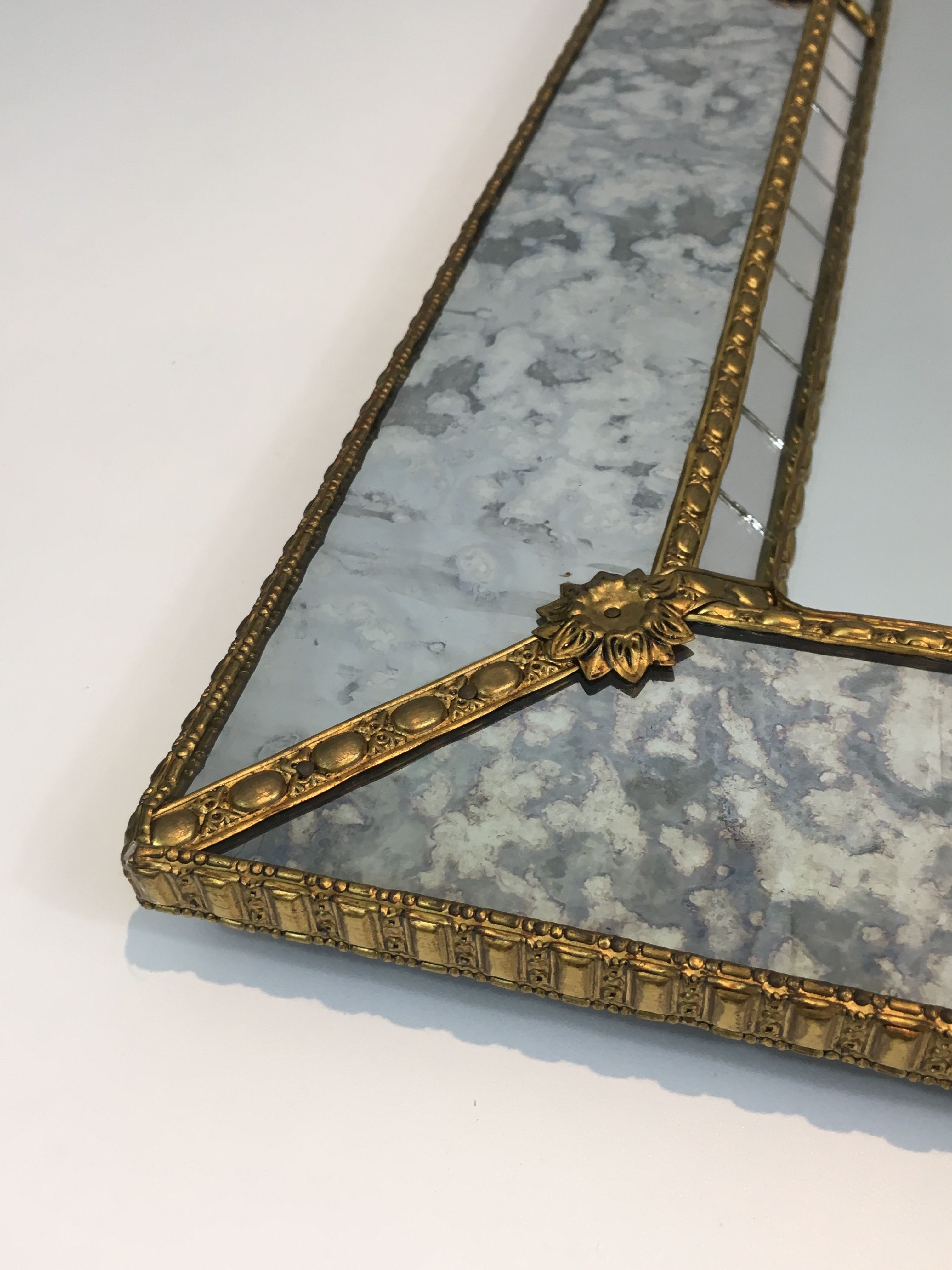
This striking wall mirror is composed of multiple faceted mirror tiles arranged to create a play of fragmented, kaleidoscopic reflections, unified and framed by decorative brass garland elements. The faceted mirror surface — each tile angled to reflect light at a slightly different angle — creates a shimmering, prismatic effect that animates the surrounding space with reflected light and movement. The brass garlands, with their warm golden lustre, provide a decorative framework that combines the ornamental vocabulary of classical antiquity with the bold visual language of 1970s French decorative arts.
The use of mirror in elaborate decorative configurations — from the great Galerie des Glaces at Versailles to the mirrored Art Deco interiors of the 1920s — has long been a defining characteristic of the French interior tradition. During the 1960s and 1970s, French designers and decorators embraced the decorative possibilities of faceted and multi-panel mirror arrangements with particular enthusiasm, creating wall mirrors and panels that used the play of light and reflection as their primary aesthetic medium. The combination of faceted mirror and brass ornament was characteristic of the period's taste for luxurious materials and bold decorative effects.
This mirror would make an immediate and dramatic statement in any interior — an entrance hall, dining room, salon or bedroom — where its kaleidoscopic reflections would enliven the space and amplify the sense of light and depth. The brass garlands add a note of classical elegance that invests the piece with a timeless decorative quality. A spectacular and versatile object that captures the exuberant spirit of French interior decoration in the 1970s at its most inventive.