The inter-war decades saw the French salle de bains undergo a transformation of remarkable ambition. What had been, in the nineteenth century, a purely functional annexe — cold, tiled, and strictly utilitarian — became in the 1920s and 1930s the object of the same design attention lavished on the salon and the dining room. The great decorators of the period — Ruhlmann, Leleu, Jansen — understood that the complete interior was one in which the bathroom was designed from floor to ceiling, its accessories as carefully considered as its tiles and mirrors. The towel rack, in this context, was not an afterthought but a furnishing in its own right.
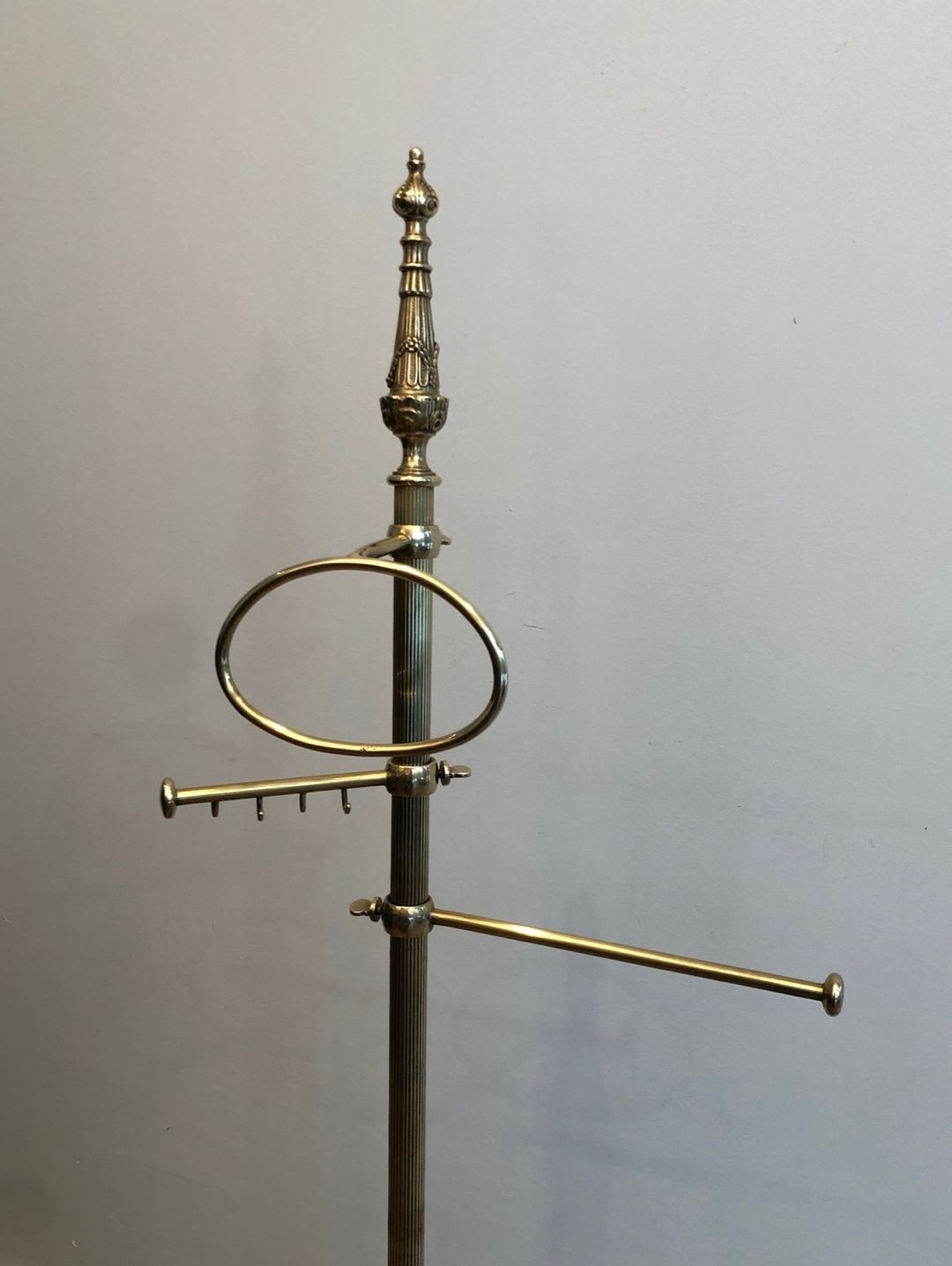
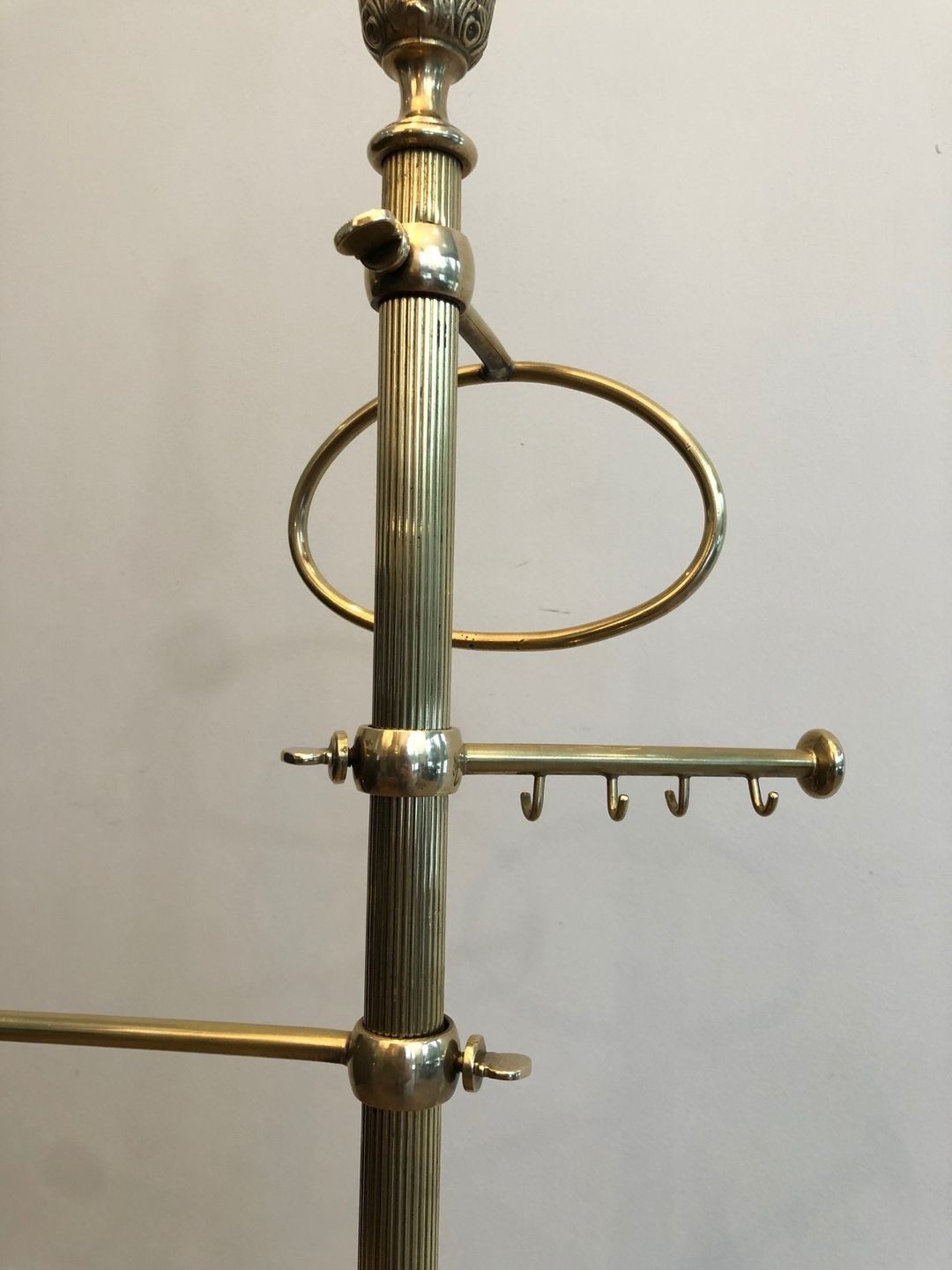
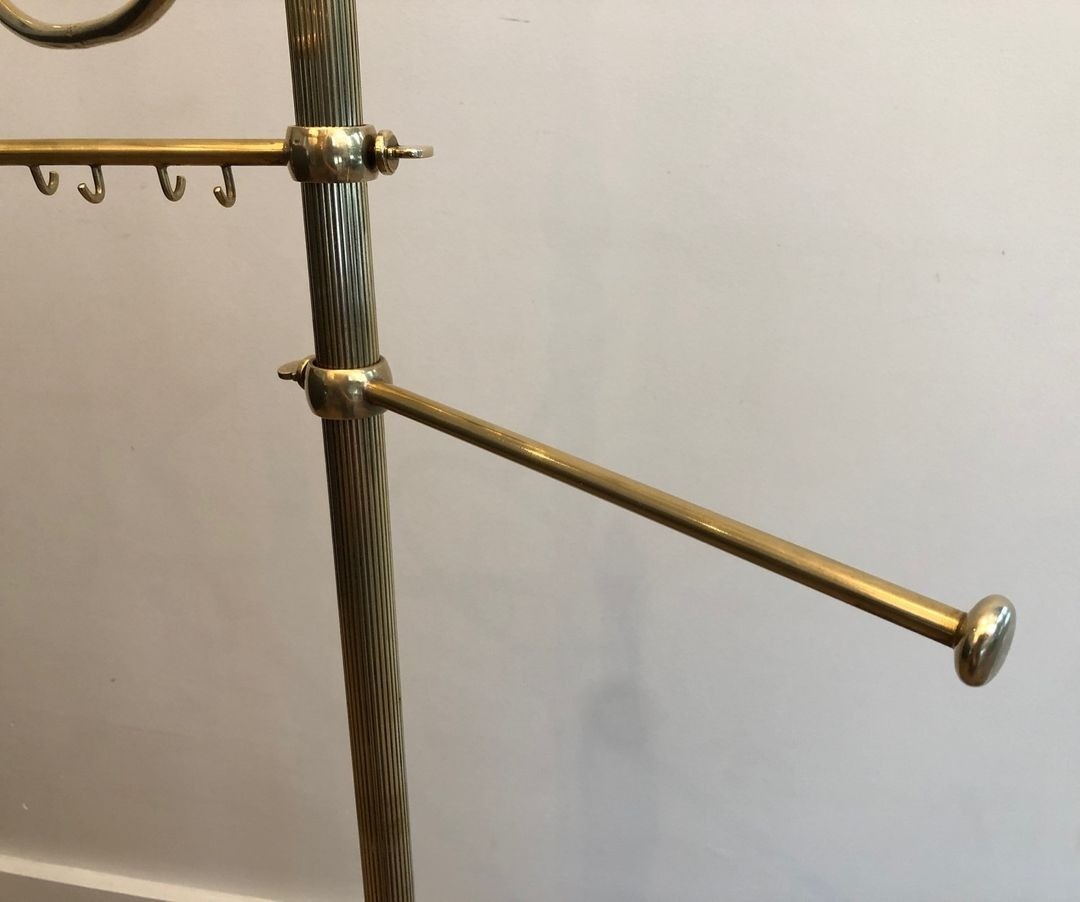
This freestanding towel rack in brass, neoclassical in style and made in France circa 1940, reflects that sensibility. Standing at 120 centimetres, it has the presence and proportions of a proper piece of furniture: not a bathroom fitting but a bathroom furnishing. The neoclassical vocabulary — fluted uprights, capital-like terminals, the restrained grammar of Louis XVI — is applied with the precision characteristic of the serious Parisian workshops of the 1930s. The result is an object that belongs simultaneously to the functional and the decorative, neither compromising the other.
Freestanding towel racks of this type, in brass and in neoclassical taste, are among the rarest survivors of the inter-war bathroom interior. Most were discarded during mid-century renovations that replaced the 1930s aesthetic with chrome and glass. That this example has survived in fine condition — its brass surfaces retaining their depth of warm patina, its structure wholly intact — is evidence both of the quality of the original manufacture and of the care with which it has been preserved. It represents an exceptional opportunity to acquire a documented element of the designed French bathroom interior of the pre-war period.