Decorative Gilded Bronze Sunflower Sculpture on Naturalistic Stem, French circa 1960
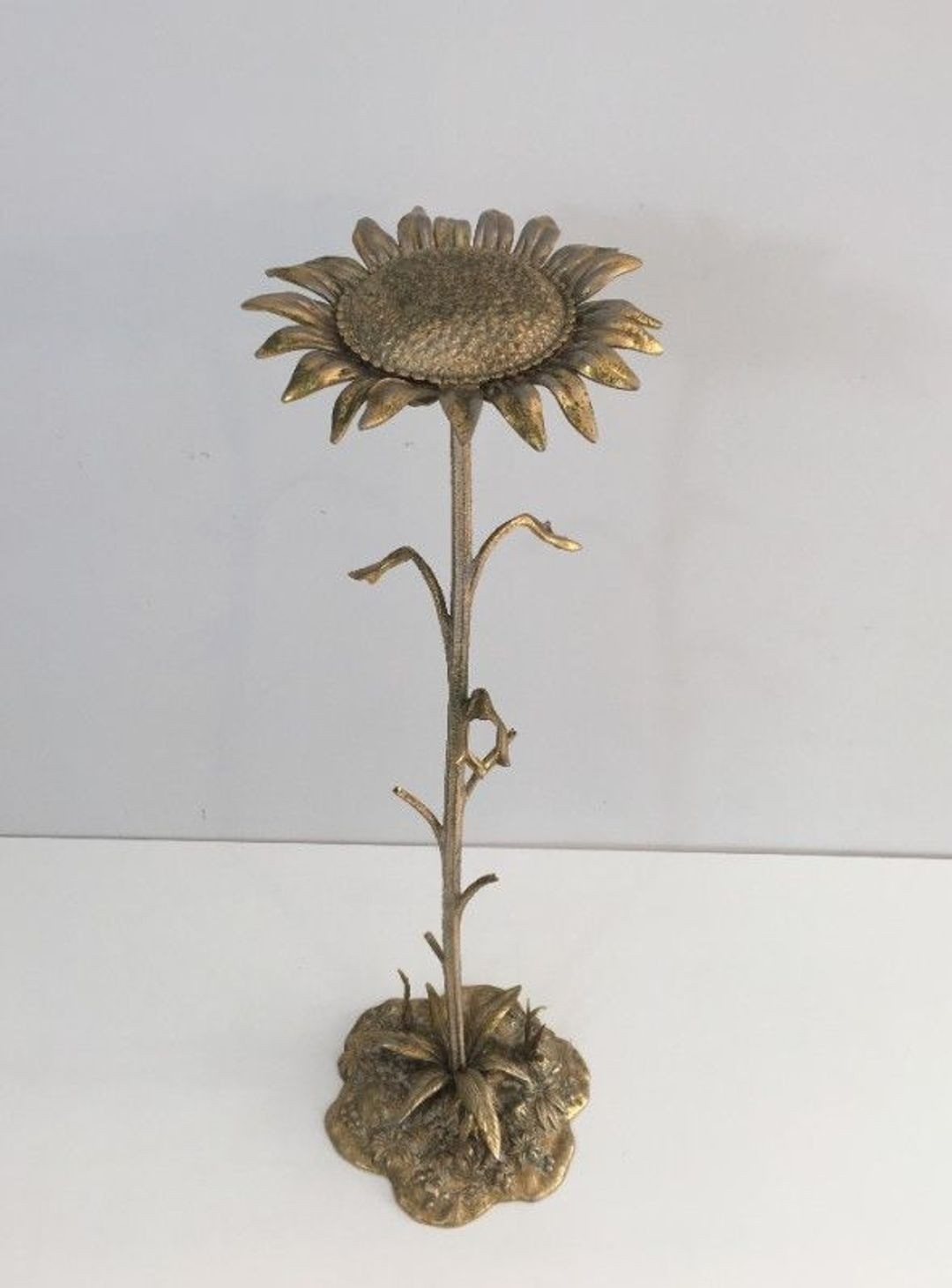
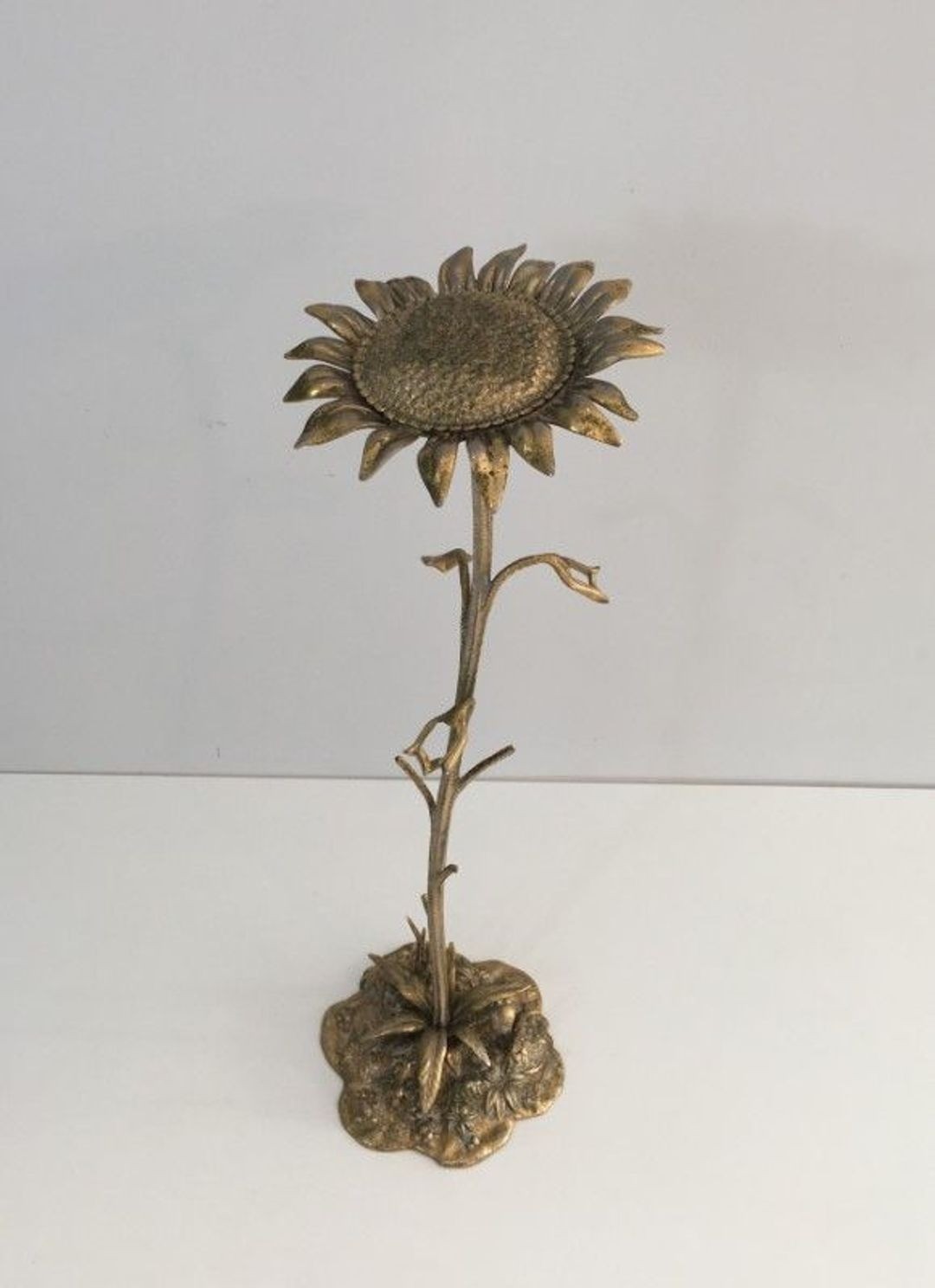
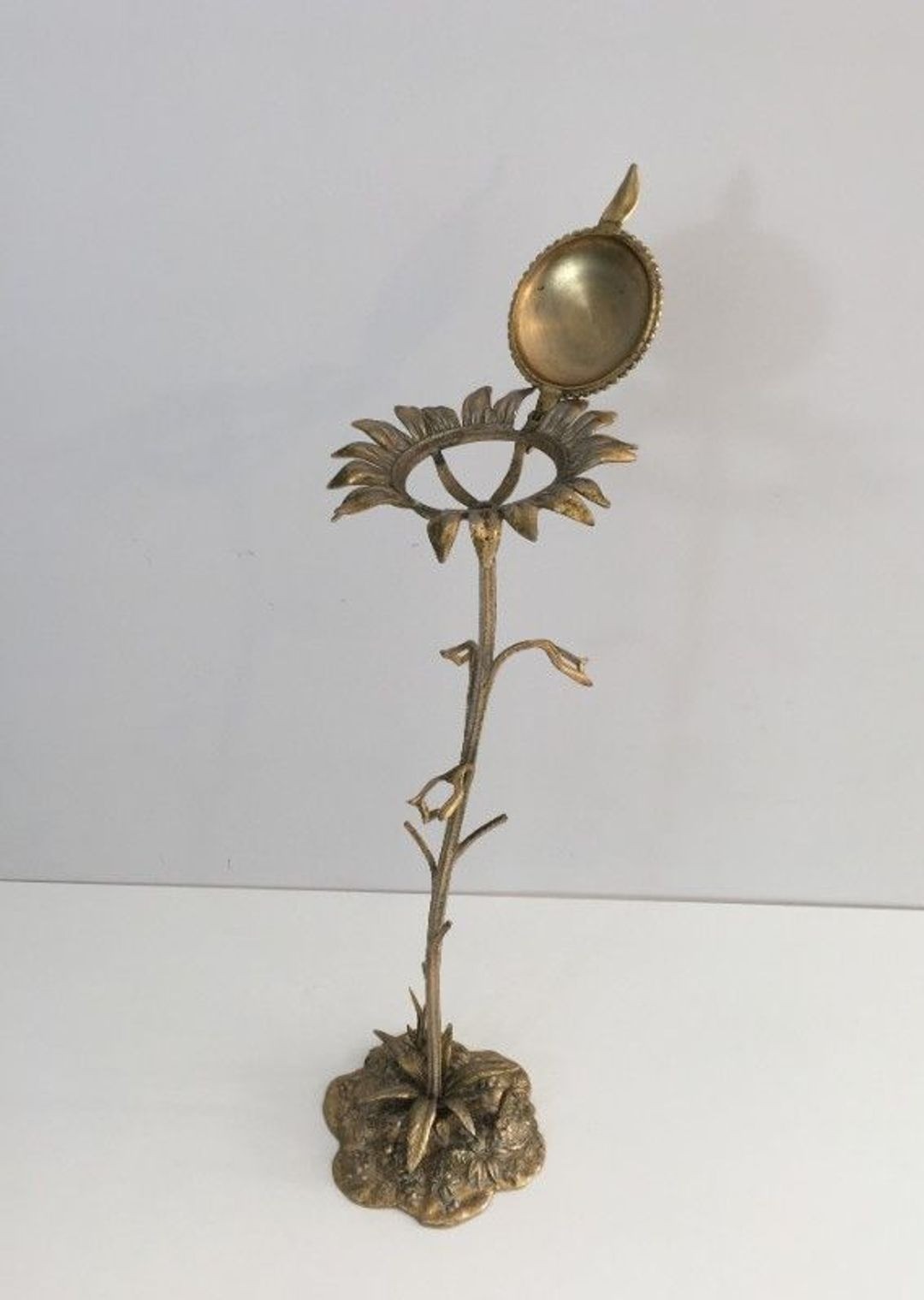
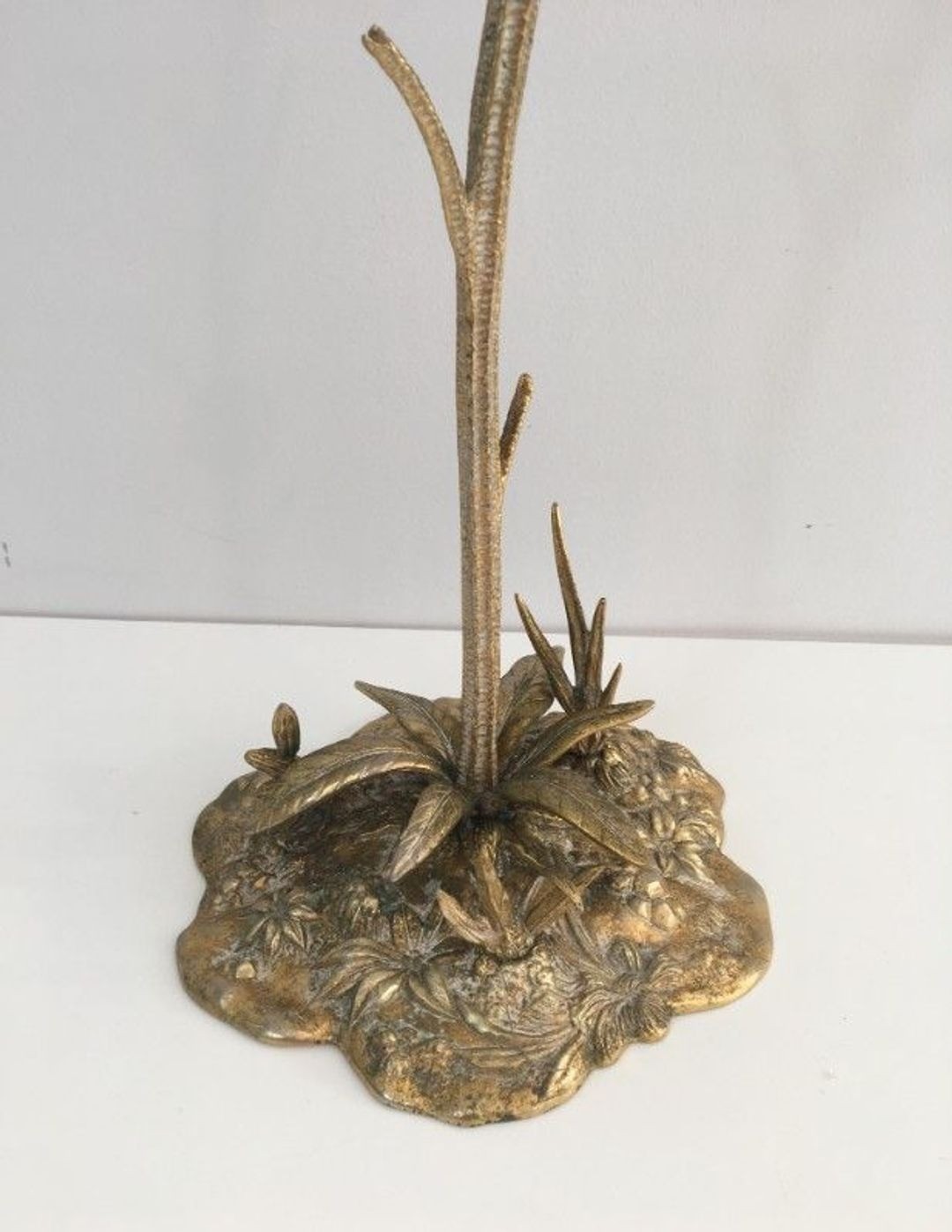
Decorative gilded bronze sunflower, the large flower head rendered in fine naturalistic detail with radiating petals and a richly textured central disc, rising on a slender curved stem with a single cast leaf. The ensemble is anchored to a naturalistically cast base suggesting earth and roots. A singular decorative sculpture of considerable presence and botanical precision. W. 20 × D. 20 × H. 59 cm. French, circa 1960.
A decorative gilded bronze sunflower of exceptional naturalistic quality, the large flower head cast with remarkable botanical precision: petals radiating outward in layered ranks, each one individually modelled with the slight curl and taper of a living bloom, framing a richly textured central disc whose seed pattern is rendered with the attentiveness of a botanical illustrator. The stem rises from a naturalistically cast base—earth, roots, and a suggestion of ground—in a gentle curve that conveys organic growth without sacrificing structural stability, a single cast leaf emerging at mid-height to complete the illusion of a flower encountered in the garden. At fifty-nine centimetres in height, the piece has a commanding physical presence: this is not a miniature or a motif, but a life-scale celebration of the sunflower in gilded bronze.
The tradition of naturalistic bronze botanical sculpture in France reaches back to the Renaissance garden bronzes and the seventeenth-century studies of flowers and fauna produced for royal collections. In the nineteenth century, sculptors such as Auguste Cain and the animaliers of the Salon developed a vocabulary of minutely observed natural subjects in bronze that found its ultimate expression in the Art Nouveau movement of the 1890s and 1900s, when plant forms became the primary vehicle of decorative imagination. The sunflower, in particular, was a motif of great symbolic weight in the later nineteenth century, associated through its solar connotations with Aesthetic Movement idealism and through its bold graphic form with the decorative ambitions of the period. A bronze sunflower of this quality carries the echo of that tradition.
By the mid-twentieth century, the naturalistically cast bronze flower or plant had settled into a well-established place in French decorative production, commissioned for grand interiors and important collections as a conversation piece combining sculptural quality with botanical legibility. This example, with its warm gilded finish and careful attention to petal and disc detail, is characteristic of the best French foundry work of the postwar decades. The gilded surface catches the light differently as the piece is moved or as the light source changes, animating the radiating petals with a warmth appropriate to its heliotropic subject.
In good condition, the gilded bronze retaining its warm finish with the gentle surface variations of genuine period casting. A rare and striking decorative sculpture—singular in character, assured in execution, and of a scale that allows it to hold its own in any interior.