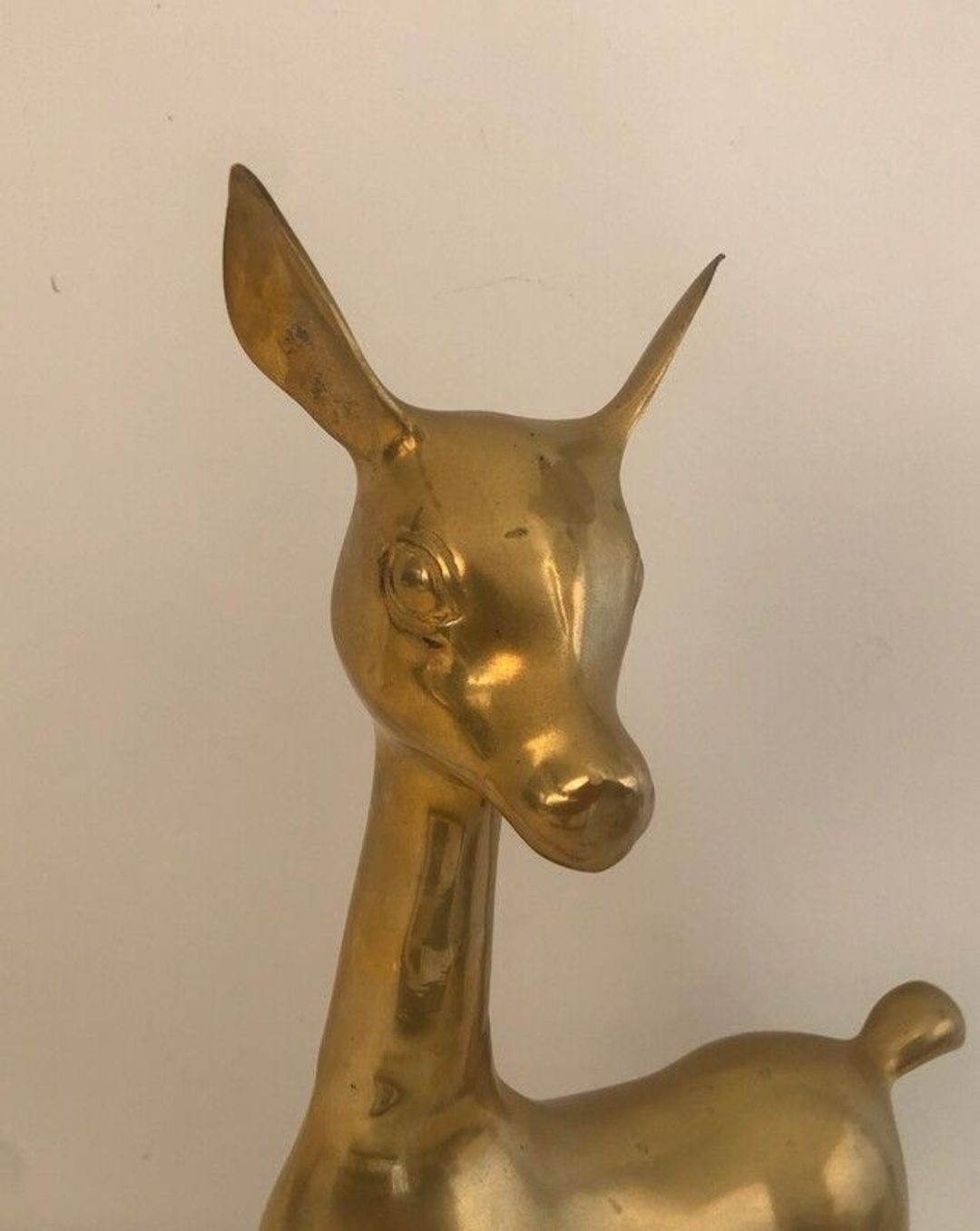
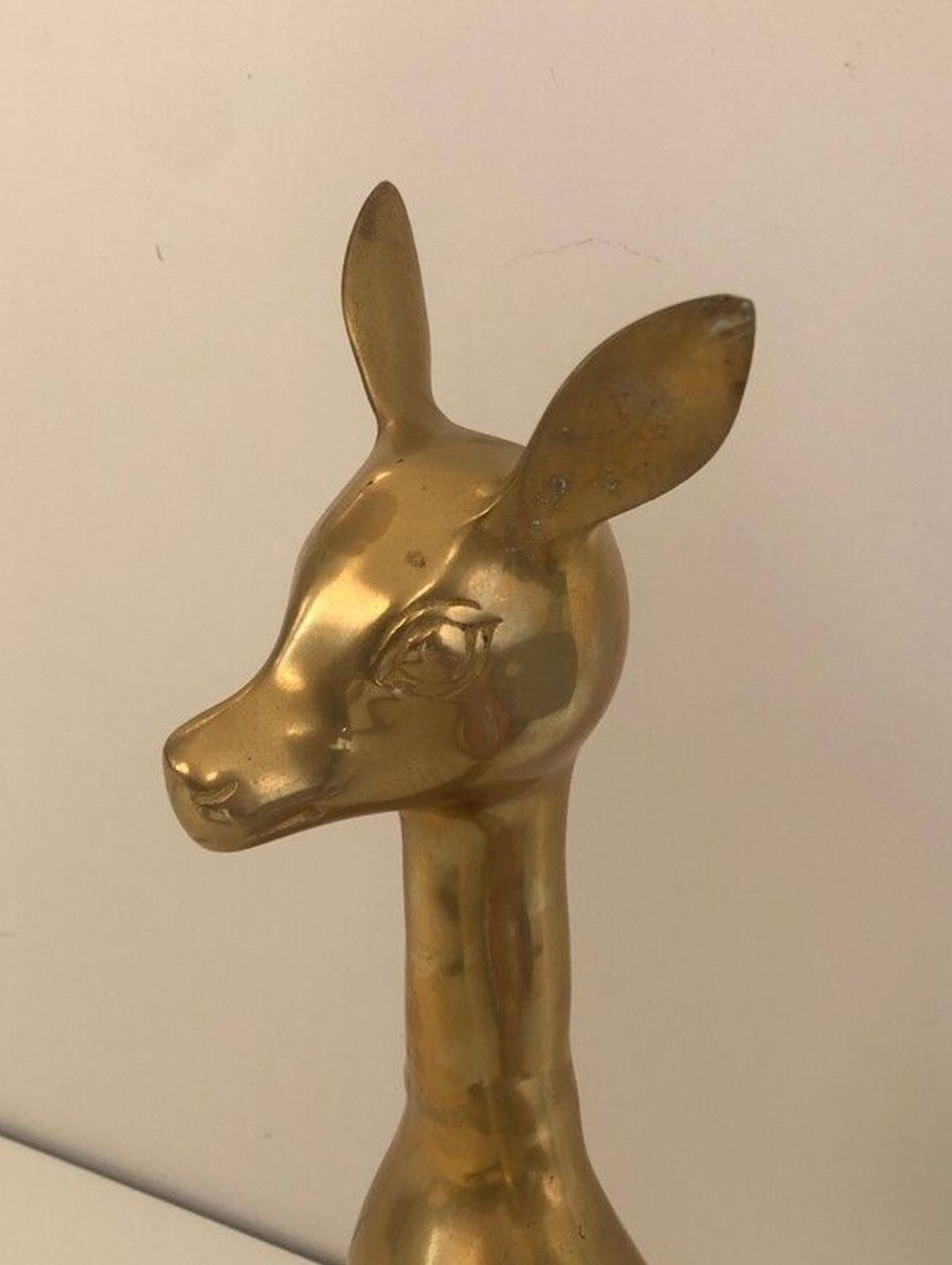
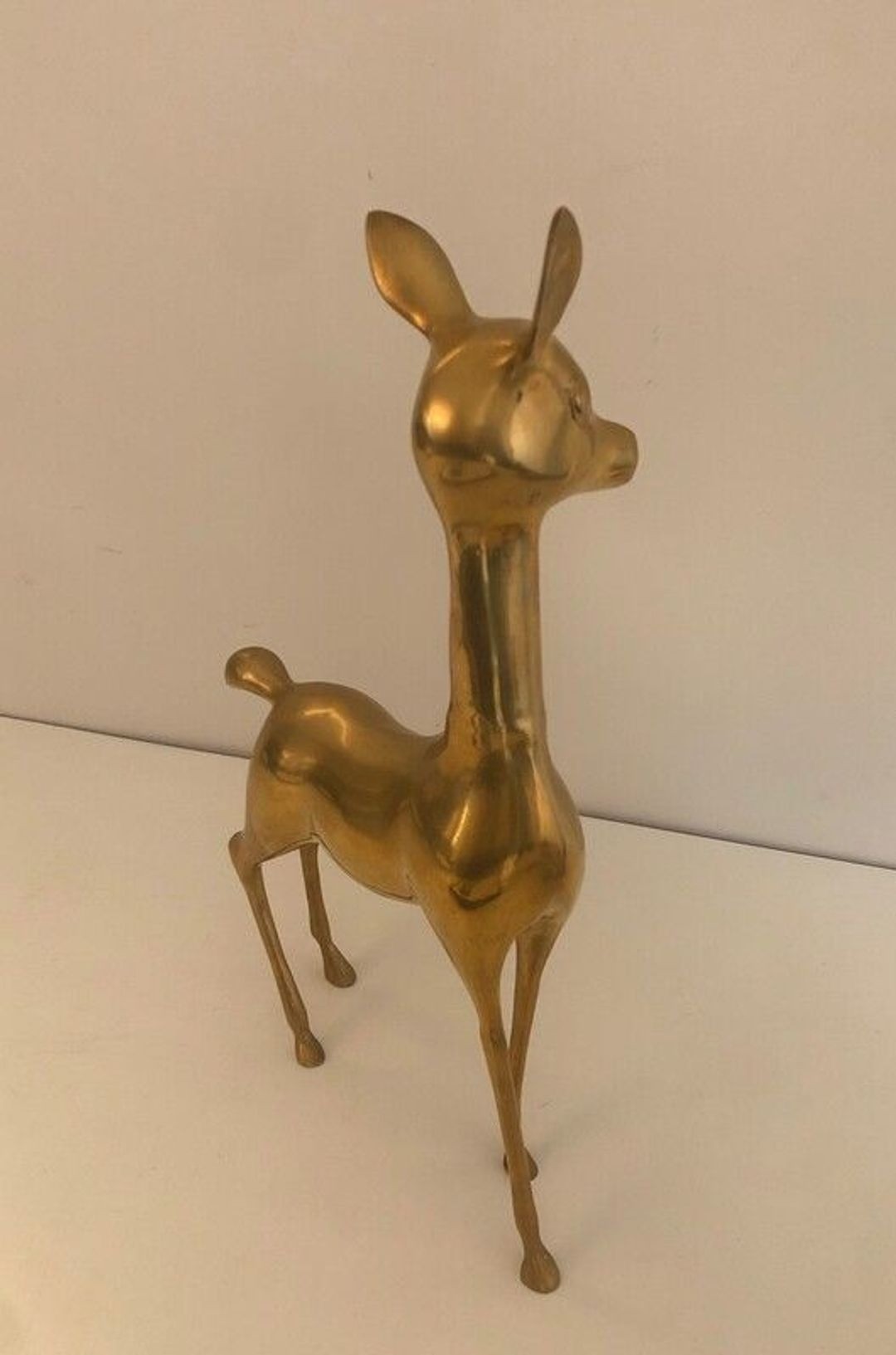
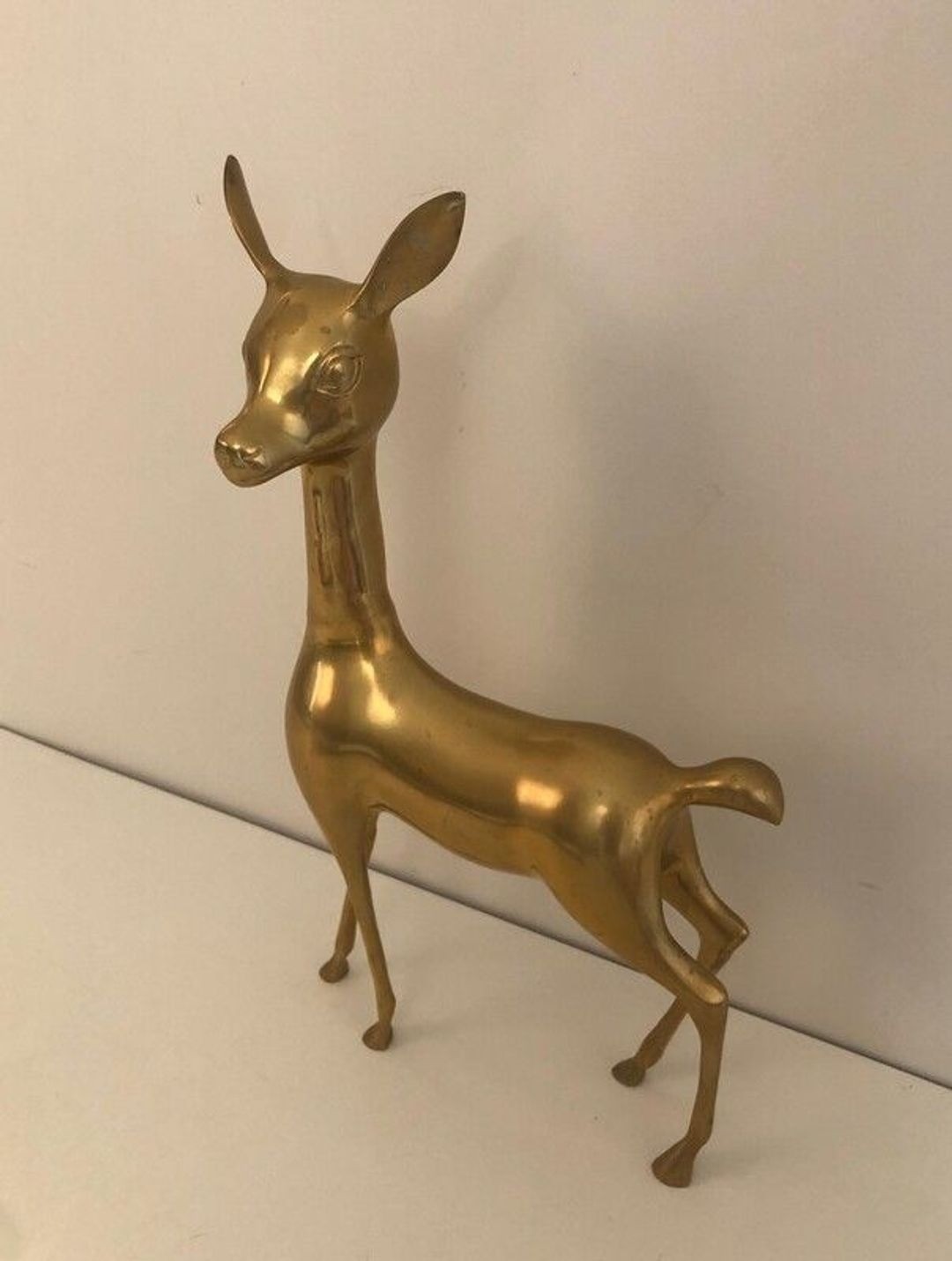
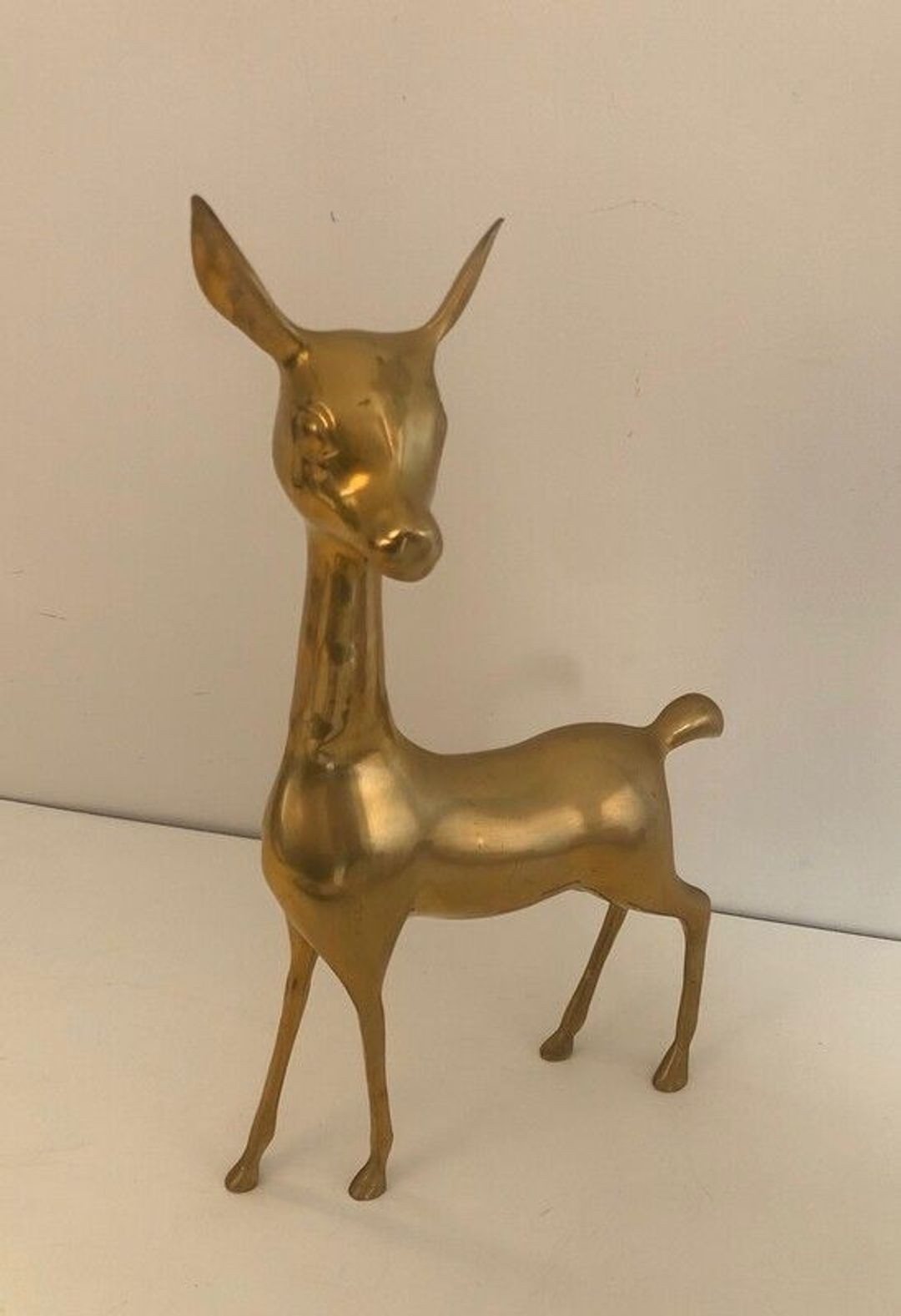
A decorative polished brass sculpture of a standing doe, the figure rendered with the confident economy of means that characterises mid-century French decorative animalier work at its best. The animal stands in an alert posture, its long, slender legs planted firmly, the neck arching upward and the head raised with the instinctive attentiveness of a deer at rest but watchful. The large, slightly forward-canted ears—one of the most expressive features of the roe or fallow doe—are carefully modelled and give the sculpture its characteristic air of gentle intelligence. Throughout, the modelling is schematic rather than anatomically exhaustive, the sculptor having chosen to suggest volume and living form through a minimum of surface detail, allowing the warm reflective surface of the polished brass to animate the figure with light.
The tradition of decorative bronze and brass animalier sculpture in France is one of the richest in the history of the applied arts. Beginning with the monumental animals of the Salon sculptors of the nineteenth century—Barye, Caïn, Fratin, Mene—and extending through the Art Nouveau and Art Déco movements into the mid-century period, French animal sculpture consistently combined naturalistic observation with a formal sensibility that distinguished the best French work from mere zoological illustration. By the 1960s and 1970s, the tradition of the decorative brass animal had settled into a well-established vocabulary for the domestic interior, with deer, horses, birds, and cats among the most popular subjects, produced in polished brass for placement on mantelpieces, shelves, and tables.
The doe or biche carries particular symbolic resonance in French culture, associated with the forests of France and the aristocratic hunting traditions that shaped the decorative vocabulary of the château and the grand maison de campagne. As a decorative motif she appears across French interiors from the tapestries of the Middle Ages through to the ceramic fawns of the Art Nouveau period and the polished brass sculptures of the mid-century. Her slender form and gentle demeanour make her an ideal subject for the kind of decorative sculpture that seeks to introduce a note of natural beauty into an interior without imposing an overtly assertive presence.
In good condition, the polished brass retaining its warm, reflective finish. A graceful and well-modelled decorative sculpture, suited to a shelf, mantelpiece, or side table in any interior that values the understated elegance of French mid-century decorative arts.