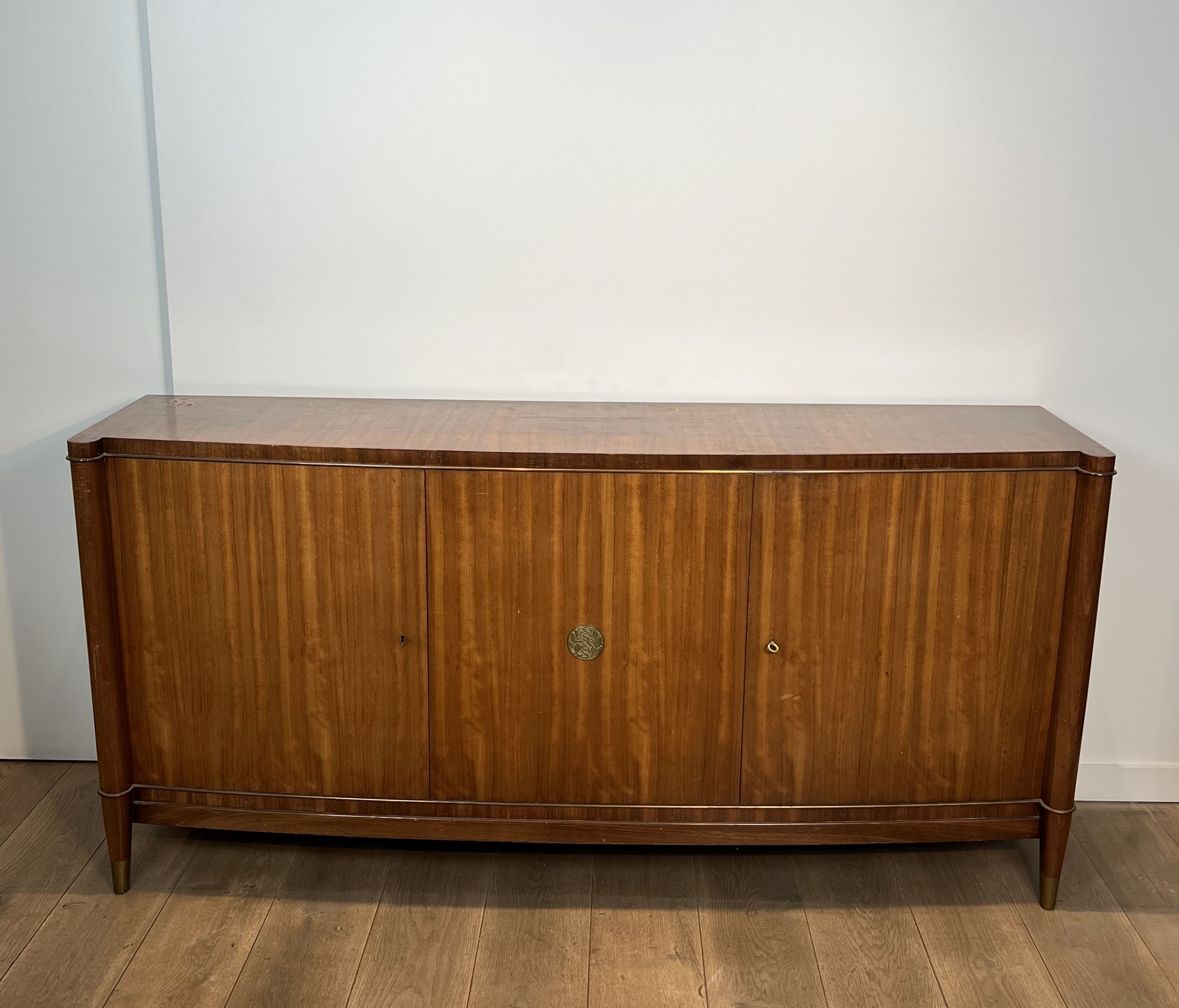
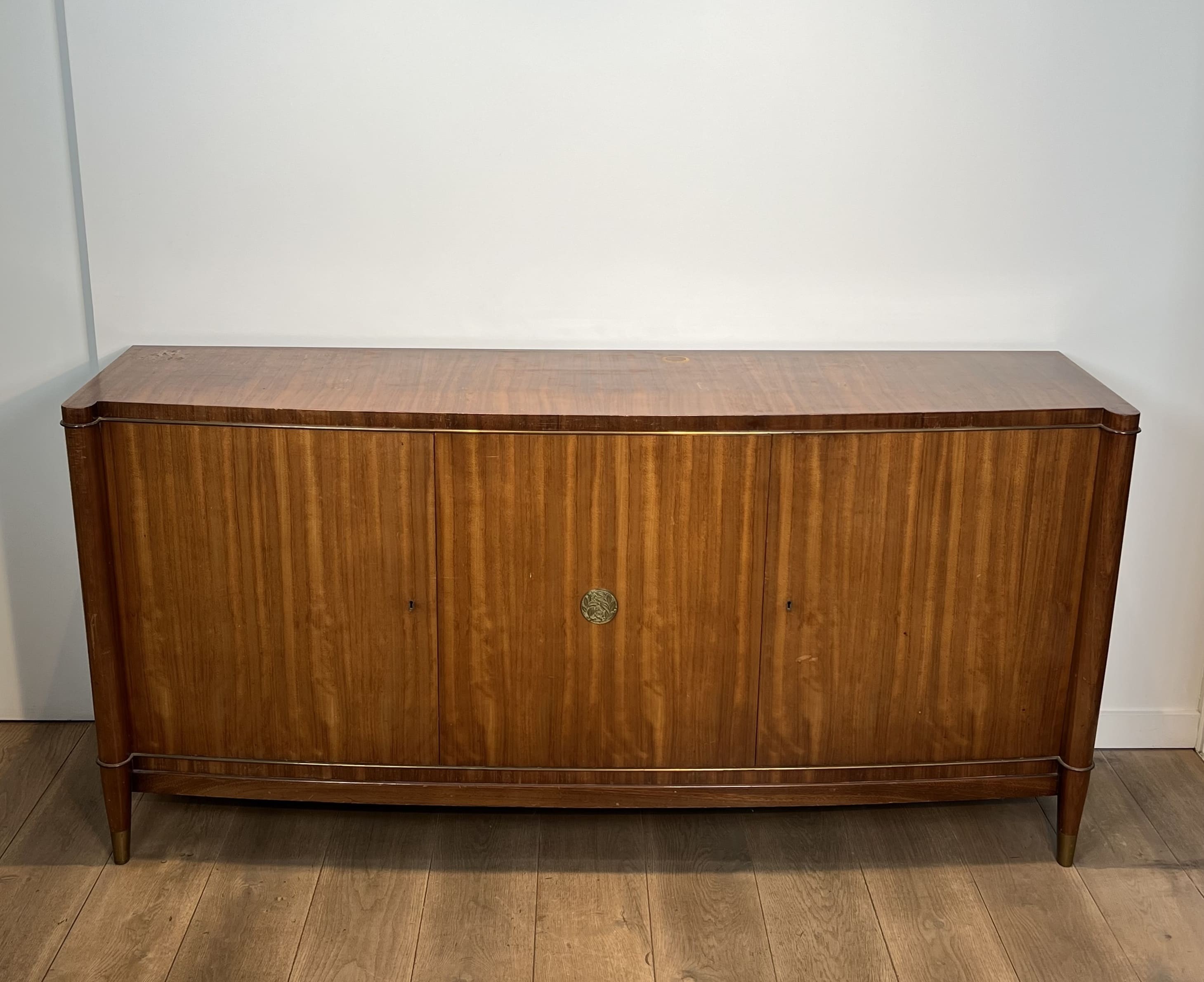
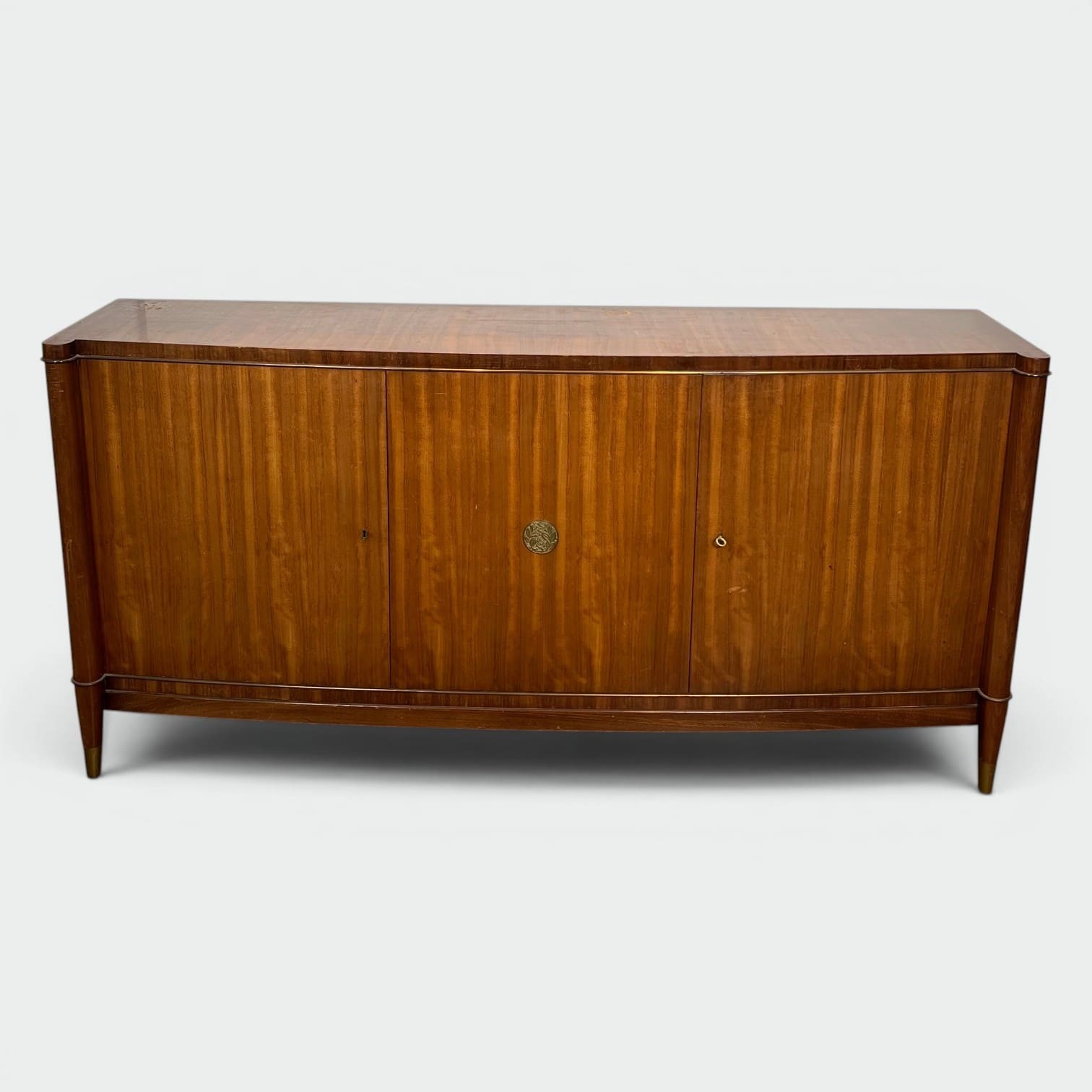
Large Art Deco Precious Wood and Bronze Enfilade, De Coene Frères, 1940s.
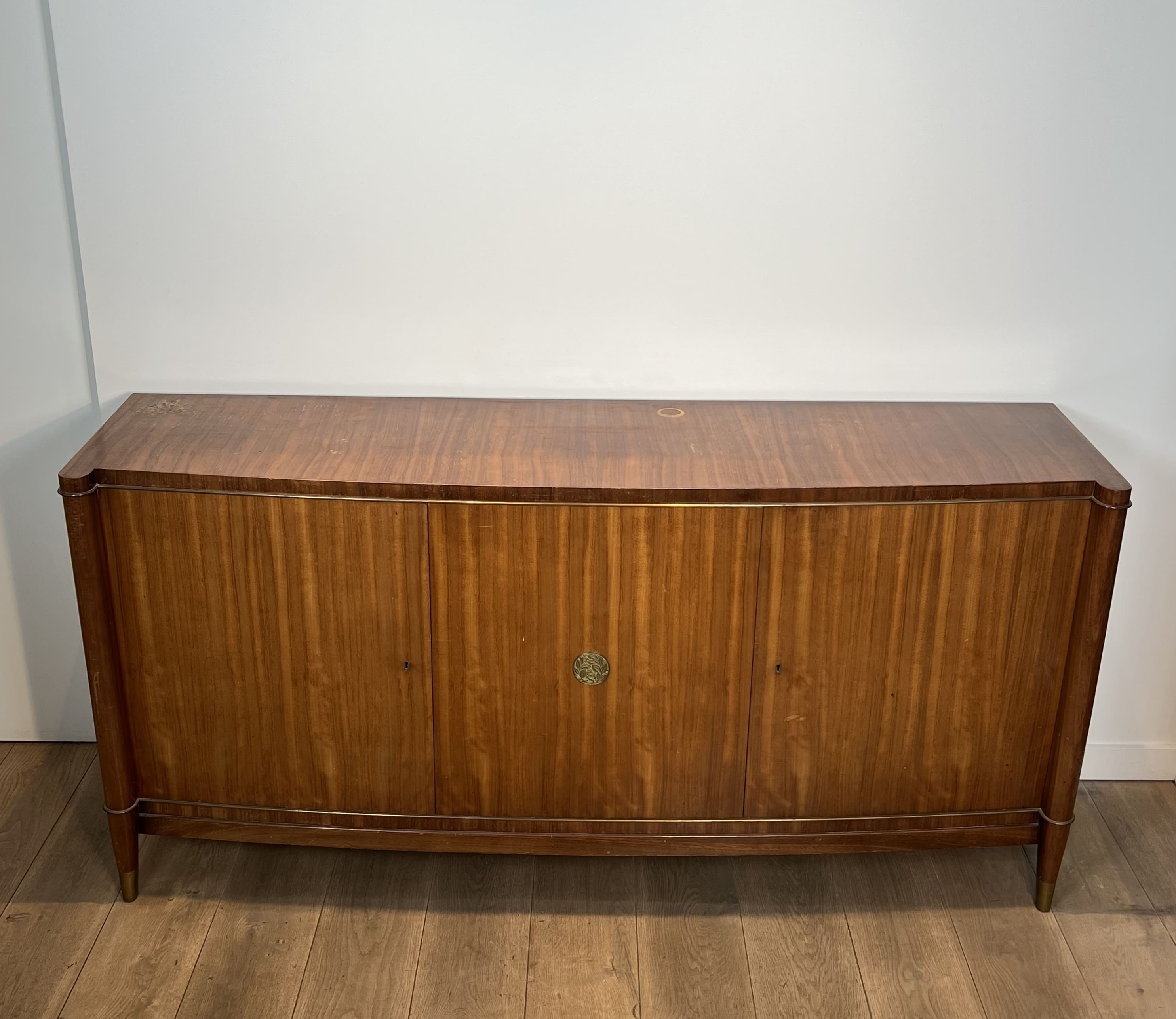
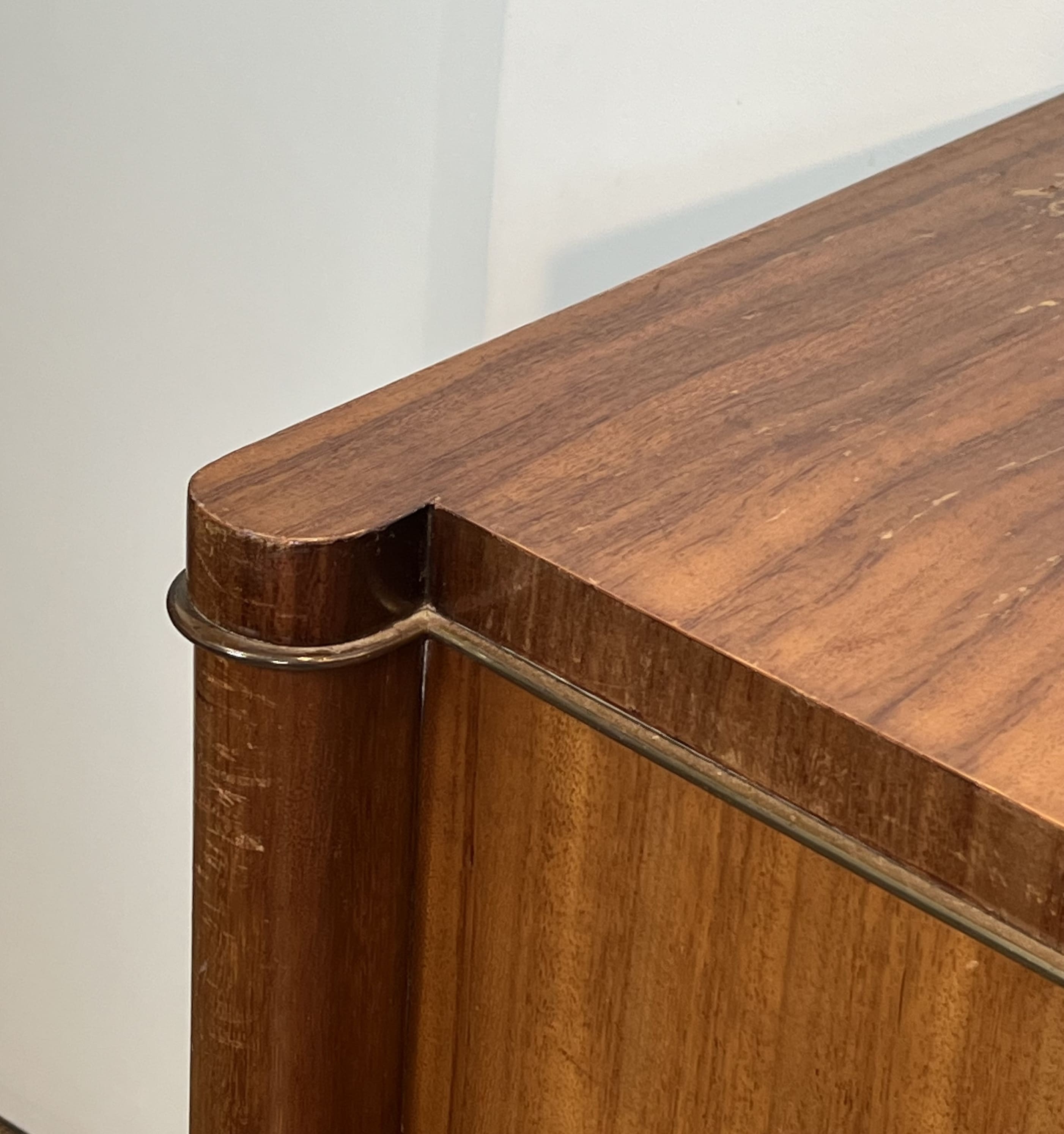
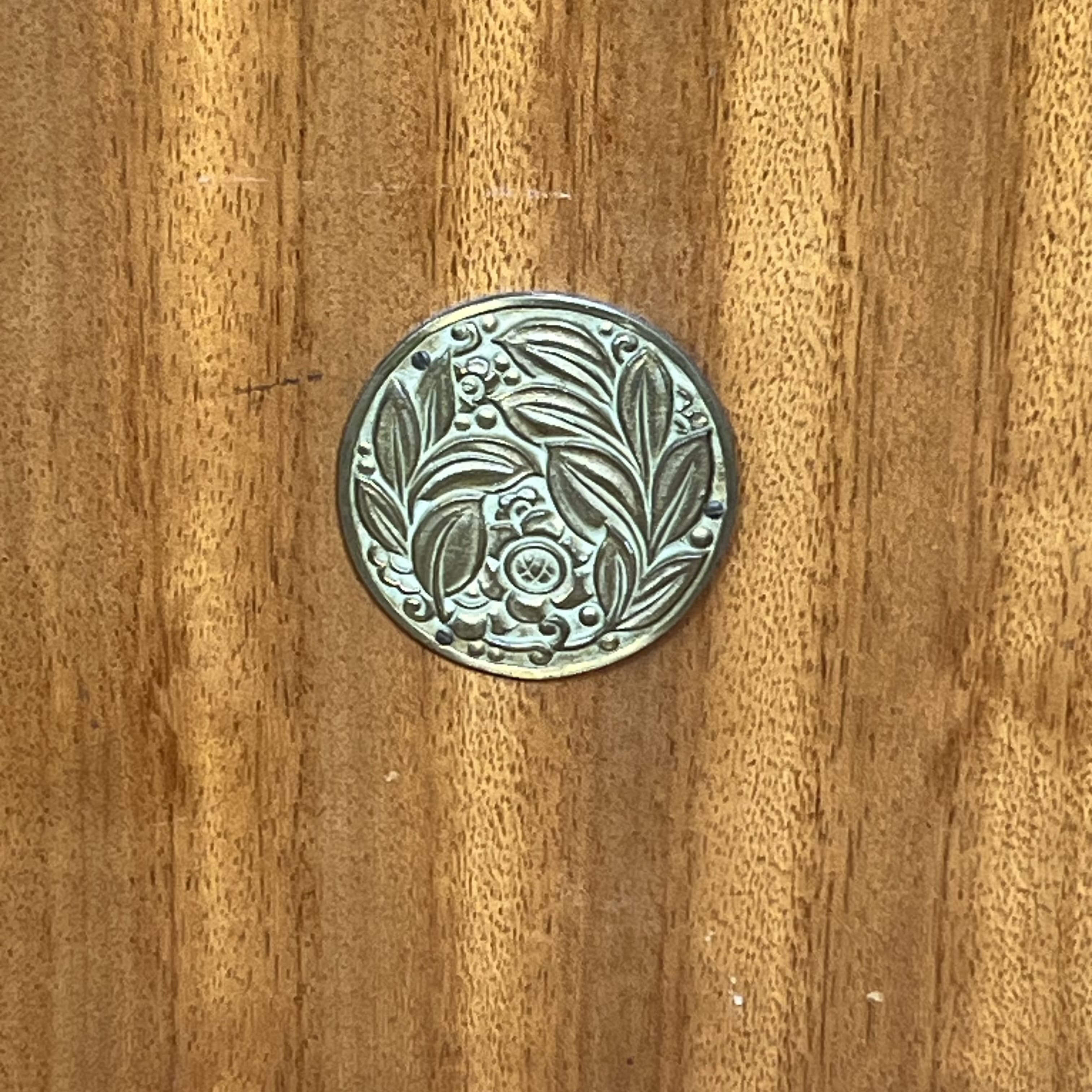
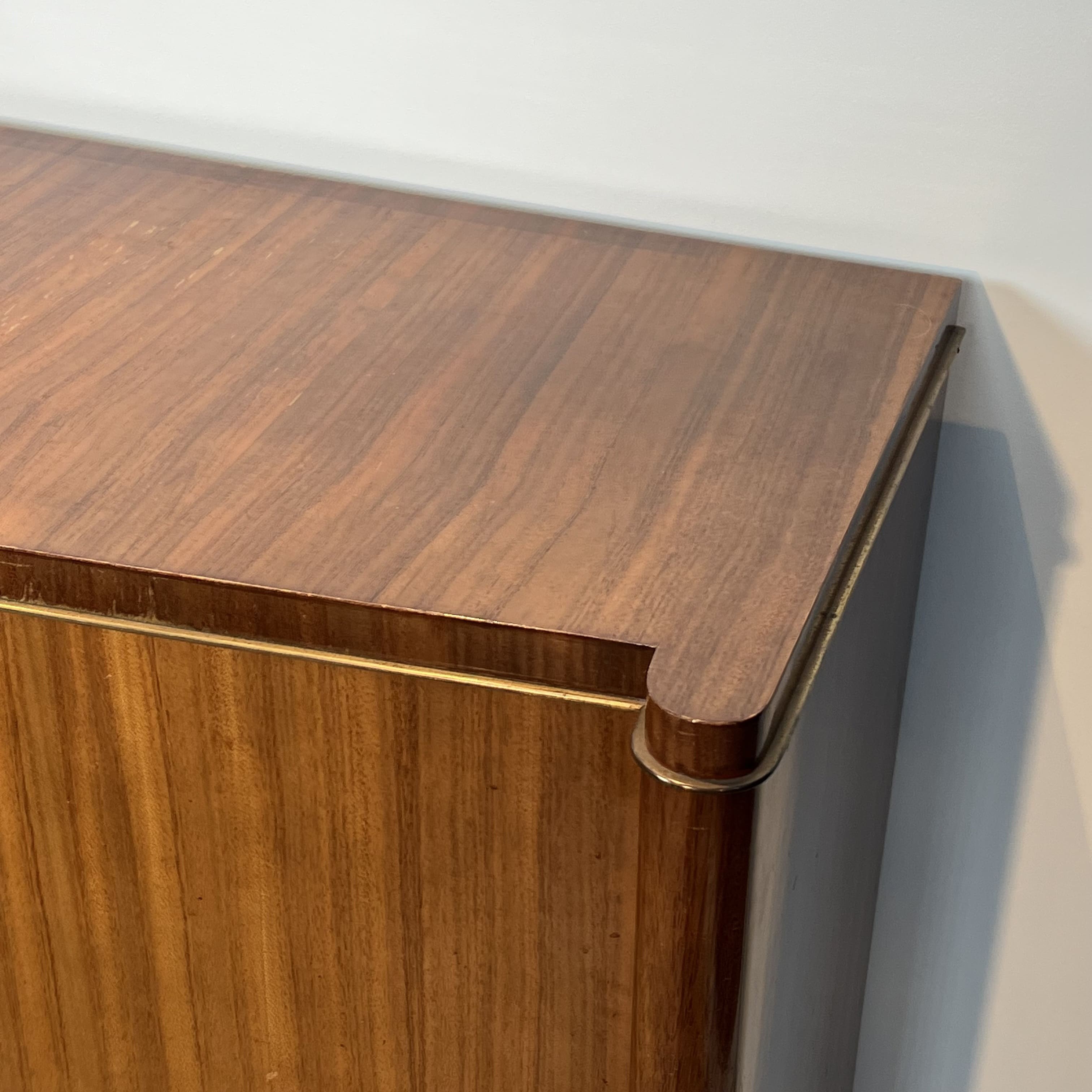
Large 2-meter-long three-door enfilade (sideboard/credenza). Structure in precious wood veneer with vertical grain. Facade featuring rounded side corners, highlighted by brass stringing and an imposing central chased bronze medallion. Crafted by the prestigious Belgian manufacturer De Coene. Dimensions: Width: 200 cm | Depth: 50 cm | Height: 100 cm.
Width: 78.74 in | Depth: 19.69 in | Height: 39.37 in
Style
Art Déco
Creator
De Coene Frères
Materials
Mahogany
Condition
Used condition
PRODUCT DESCRIPTION
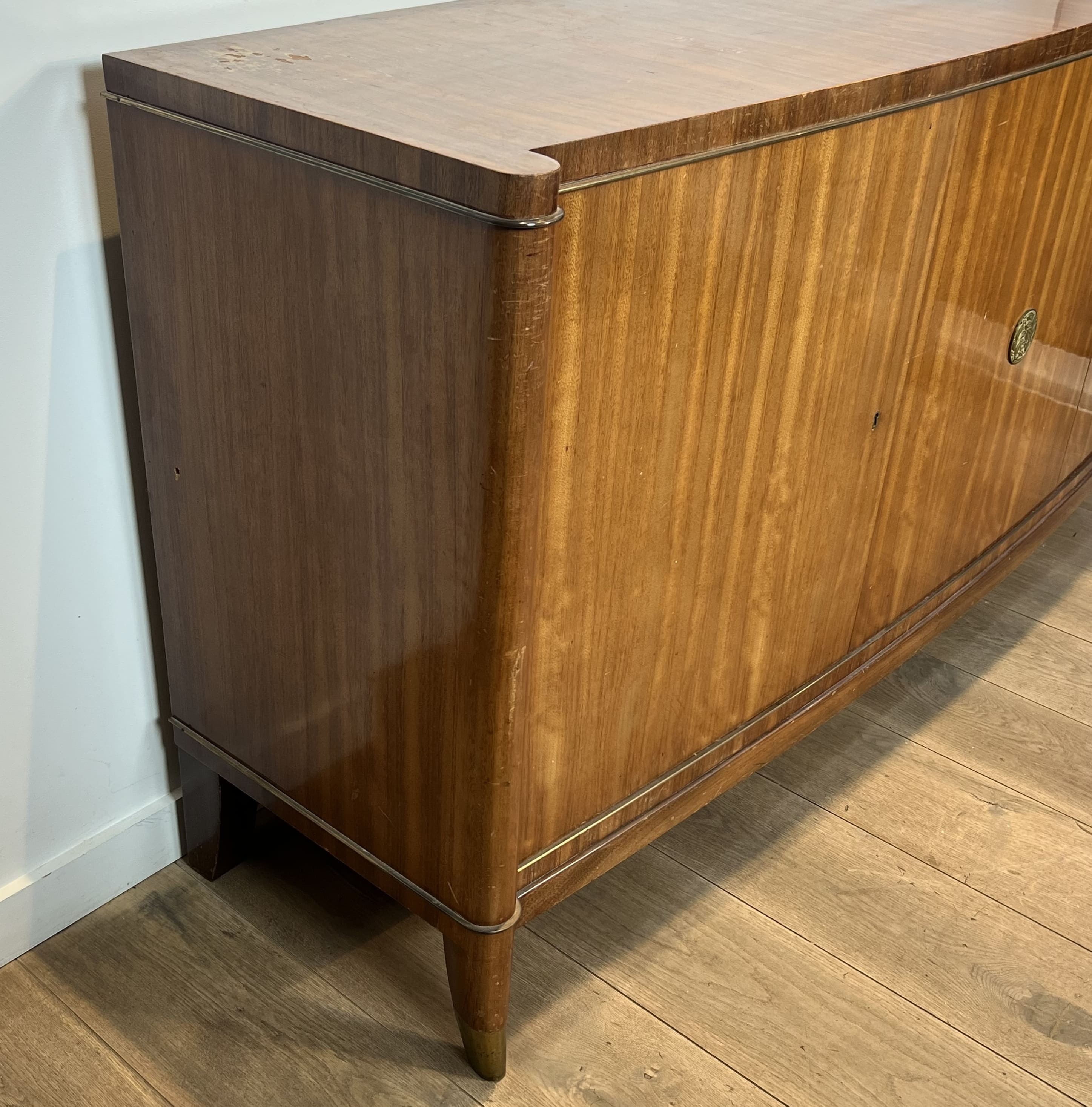
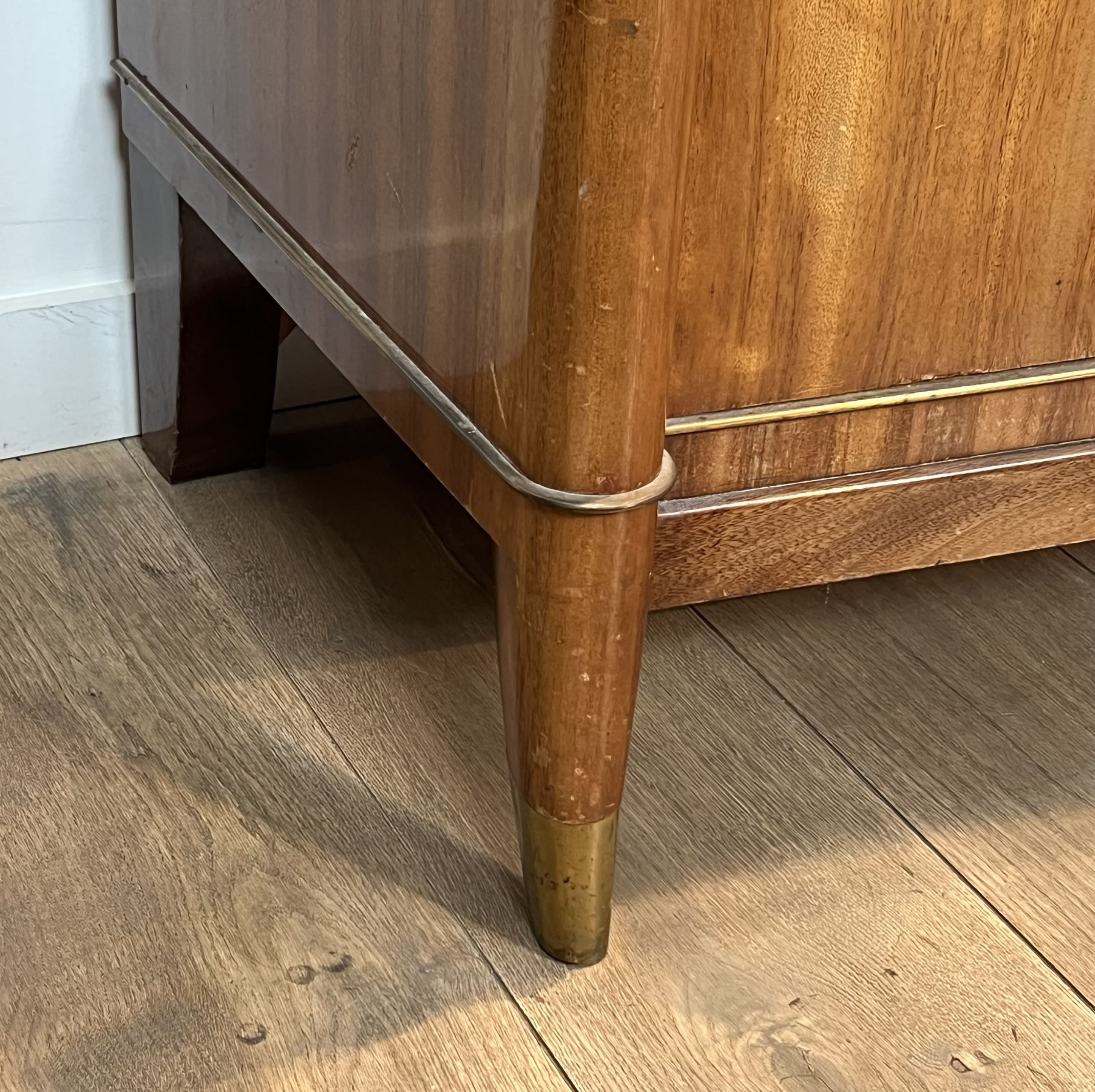
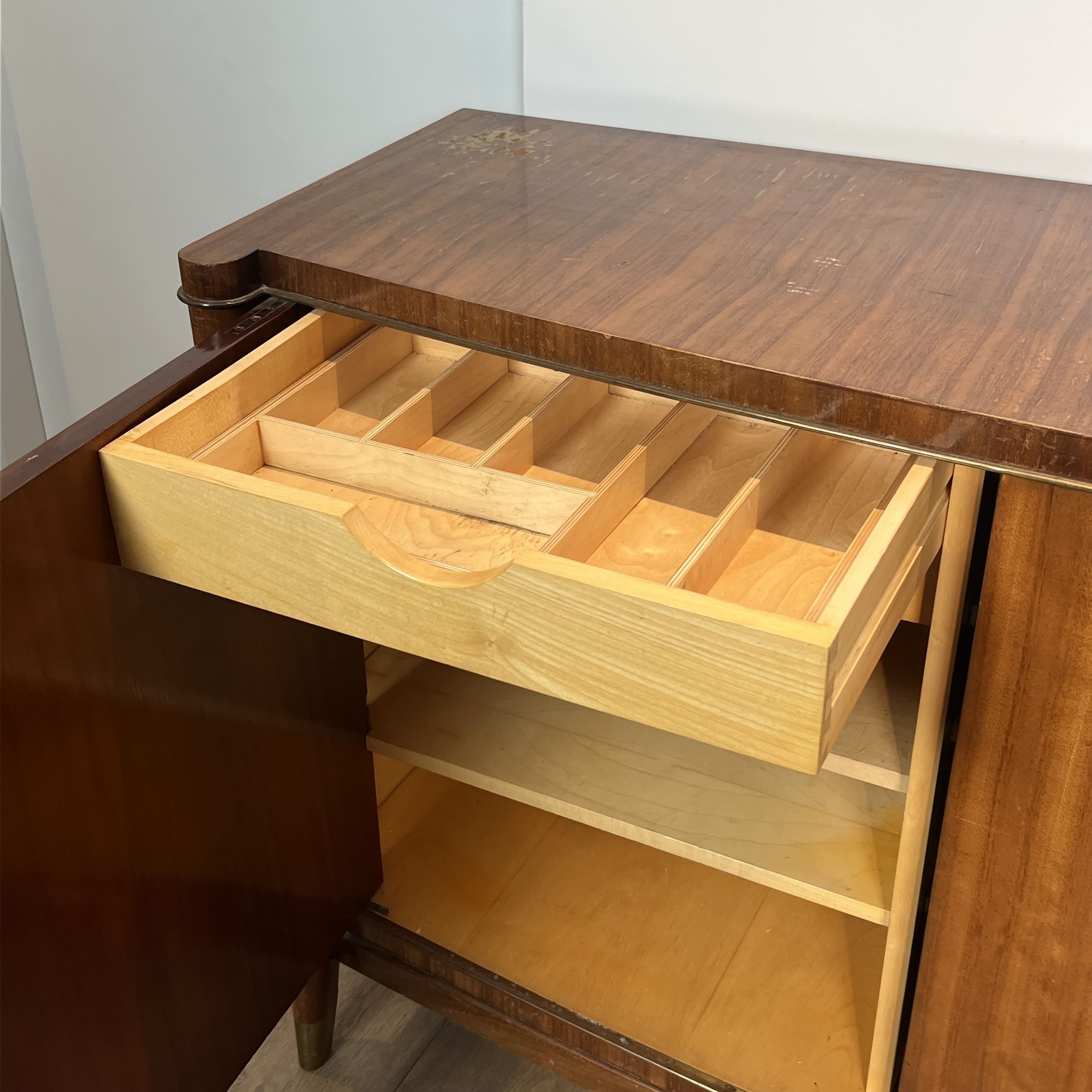
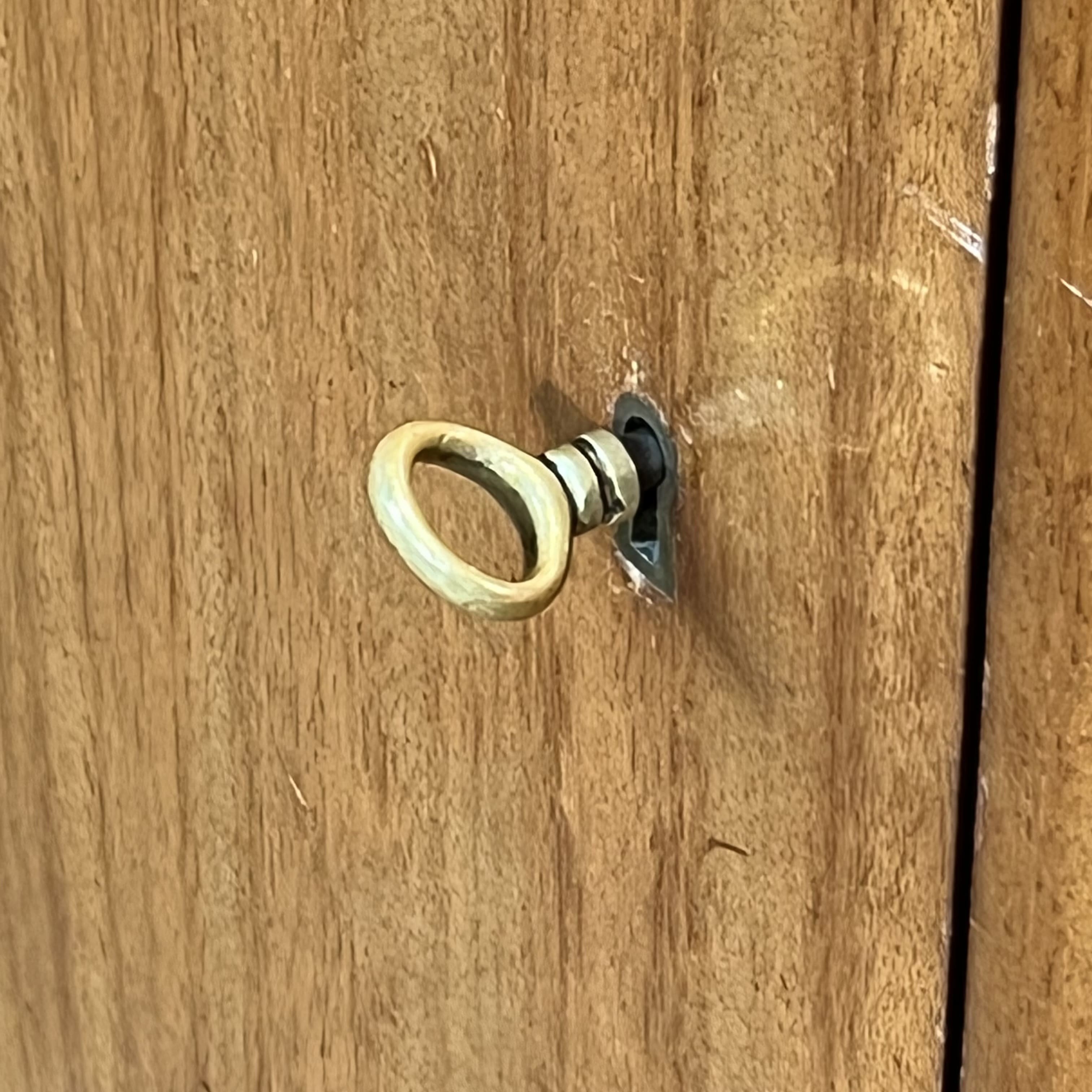
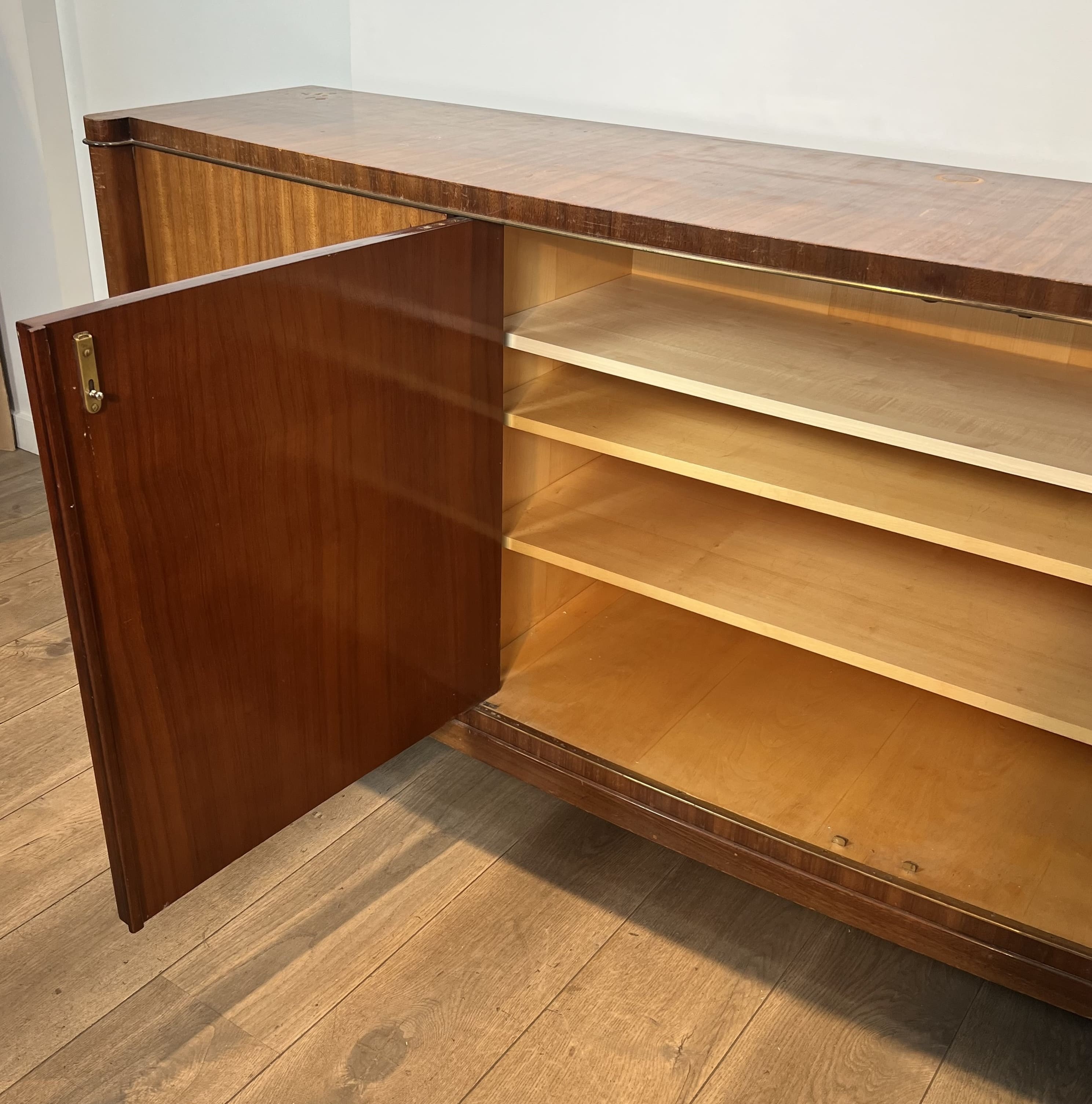
This large enfilade-type storage cabinet illustrates the excellence of Northern European cabinetmaking at the turn of the 1930s and 1940s. The architecture of the piece relies on a long, two-meter facade opening with three doors, framed by rounded corners that soften the geometric rigor of the furniture. The cabinetmaking work highlights a precious wood veneer whose vertically arranged grain gives rhythm to the front. The metal ornamentation is architectural: discreet brass stringing highlights the crossbars, the cabinet rests on four short tapered legs finished with solid brass sabots, and the central door is magnified by a large chased bronze medallion featuring a floral motif, serving as a keyhole.
The execution quality of the veneer, the sturdiness of the frame, and the specific bronze work allow this piece to be formally linked to the De Coene Frères Art Workshops (Kortrijk, Belgium). Founded at the end of the 19th century, this manufactory gained international fame at the 1925 Paris Exhibition of Decorative Arts. In the 1930s and 1940s, De Coene established itself as the undisputed master of Art Deco furniture in Belgium, perfecting the craft of noble woods, deep varnishes, and bronze fittings, producing highly luxurious furniture intended for the upper bourgeoisie.
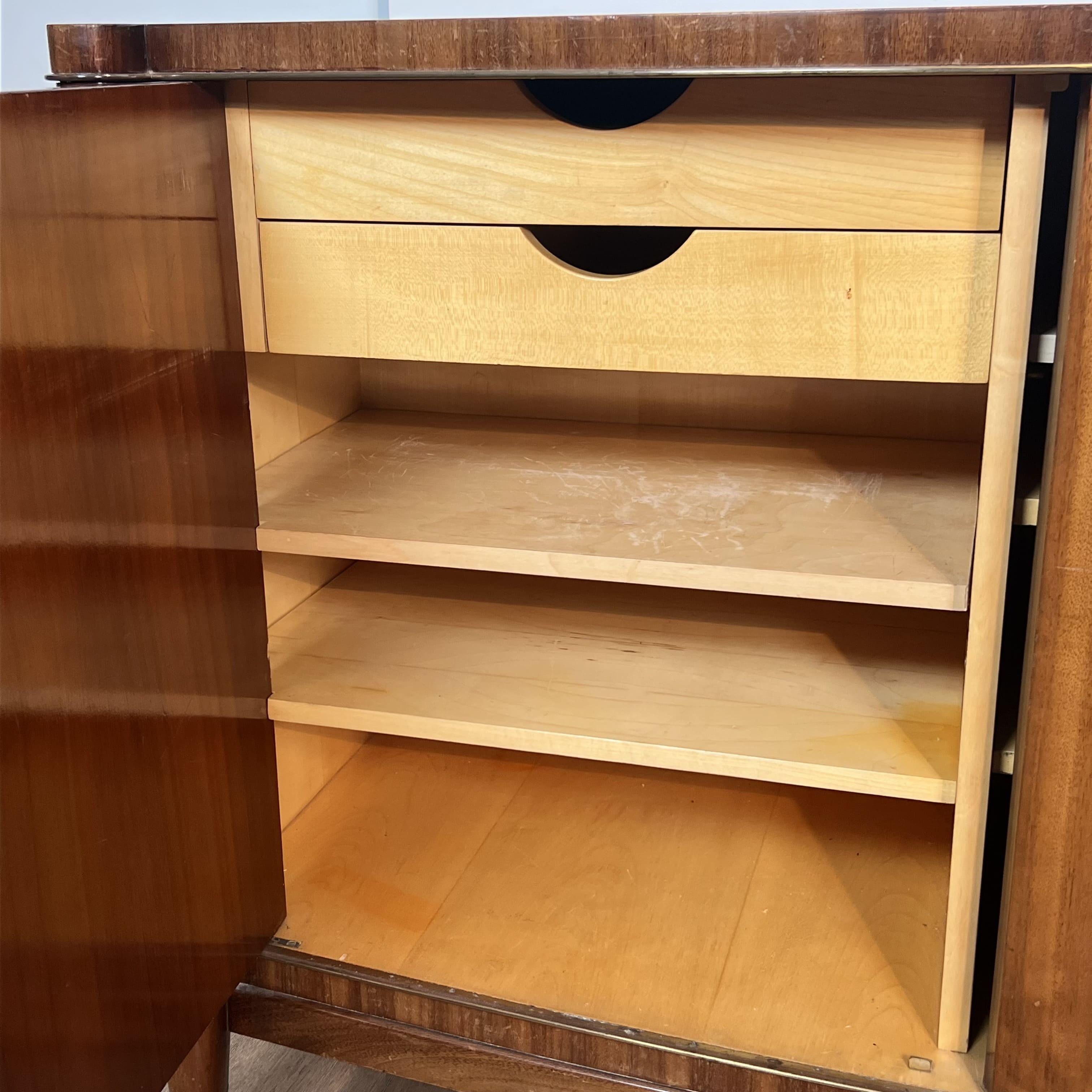
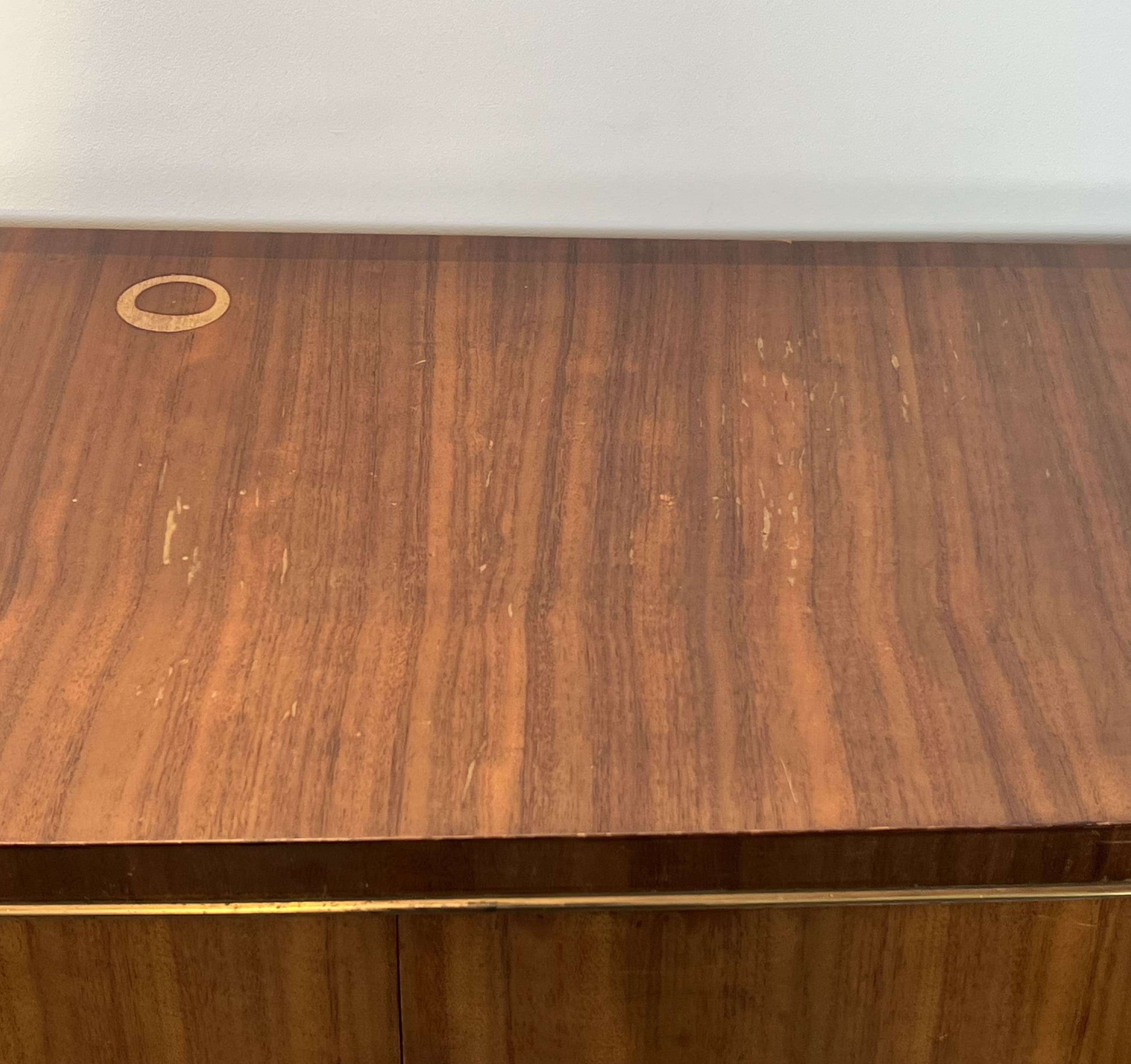
Condition report: Used condition. While the structure of the piece is heavy, sound, and stable, the varnish on the top surface shows visible alterations (stains, faded rings, scratches from use). Some slight rubbing and minor veneer losses can be noted on the edges and doors. This piece would ideally require surface restoration (revarnishing) to regain its original luster, or it can be kept in its current "as-found" condition for a more raw and authentic appearance.