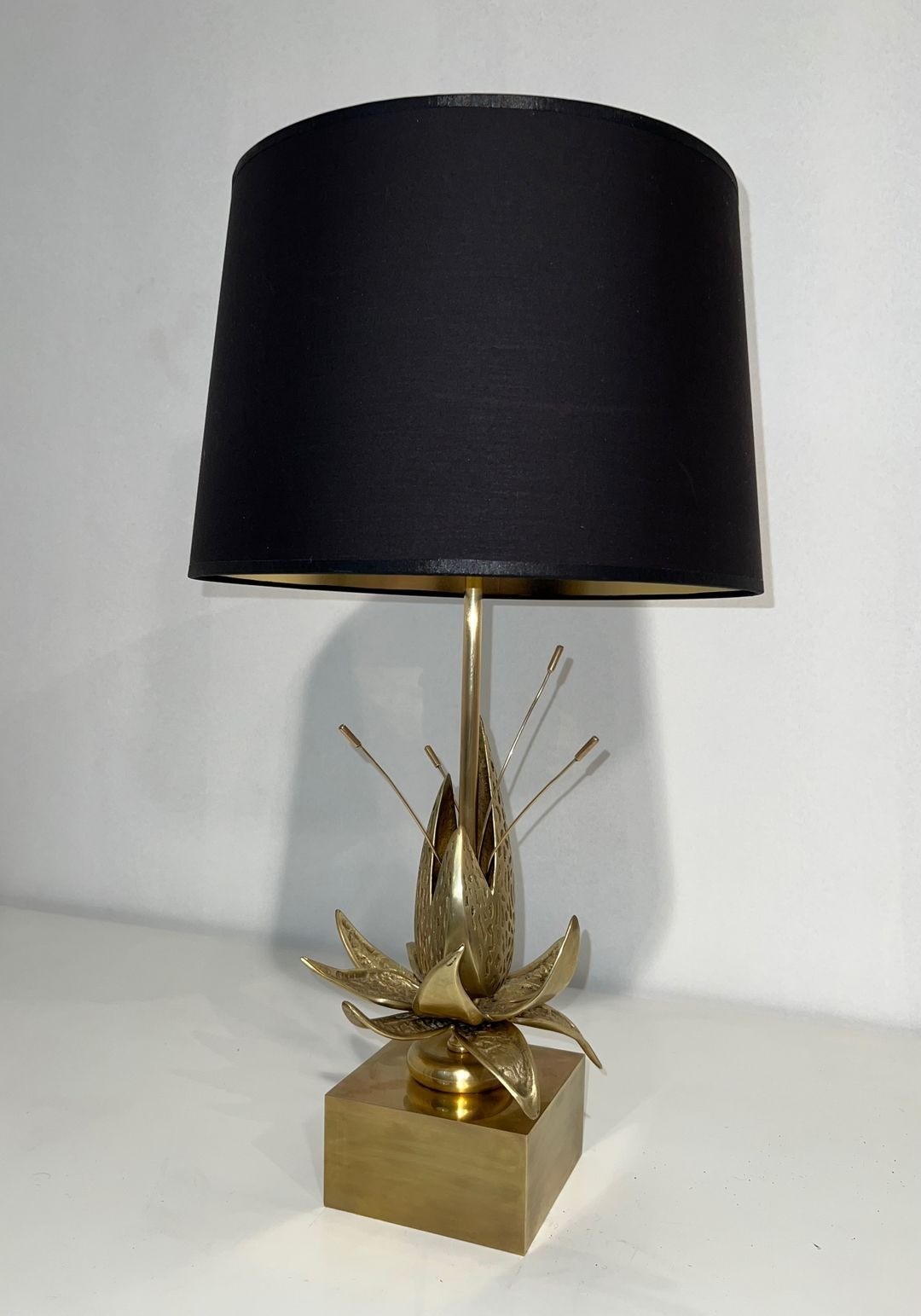
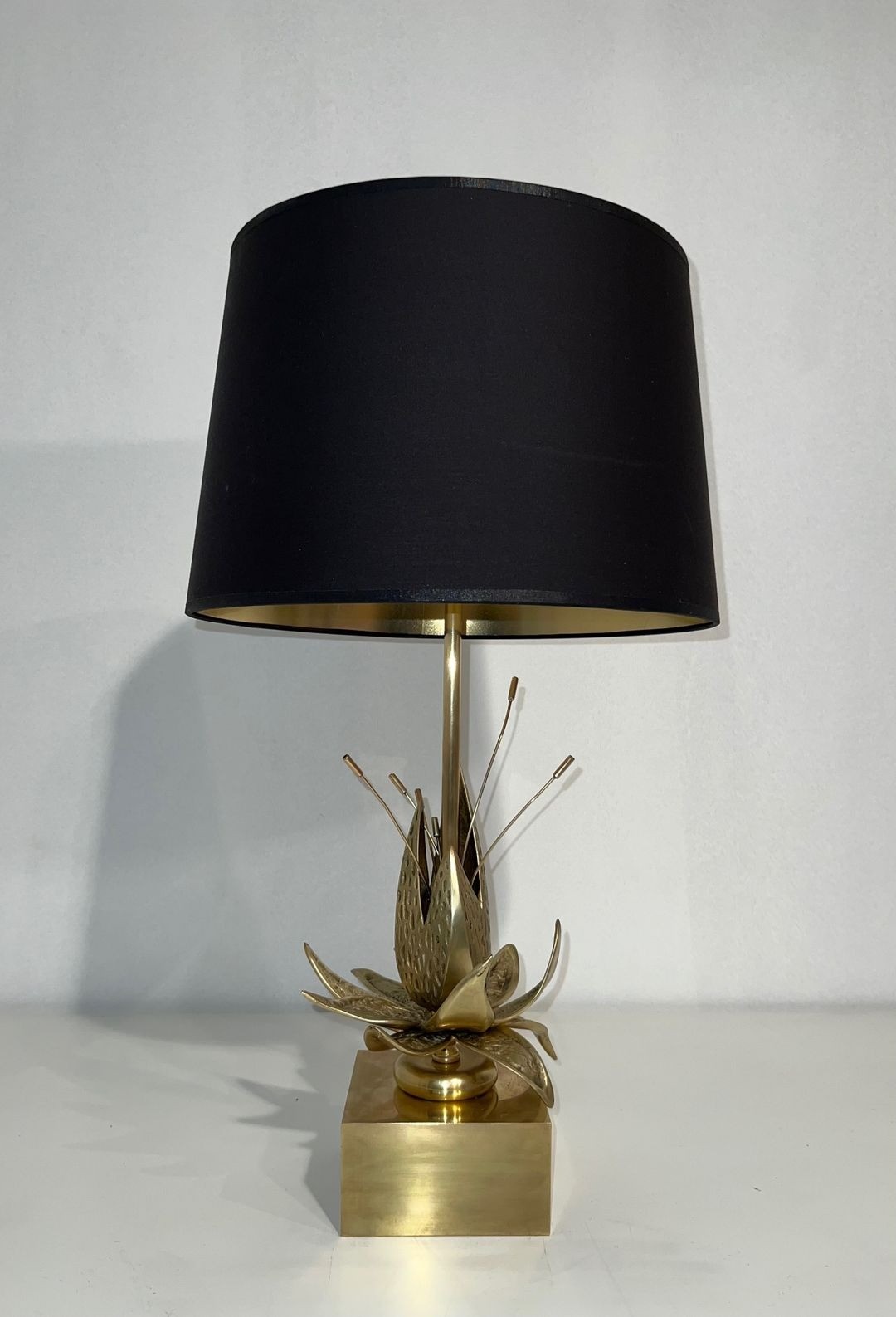
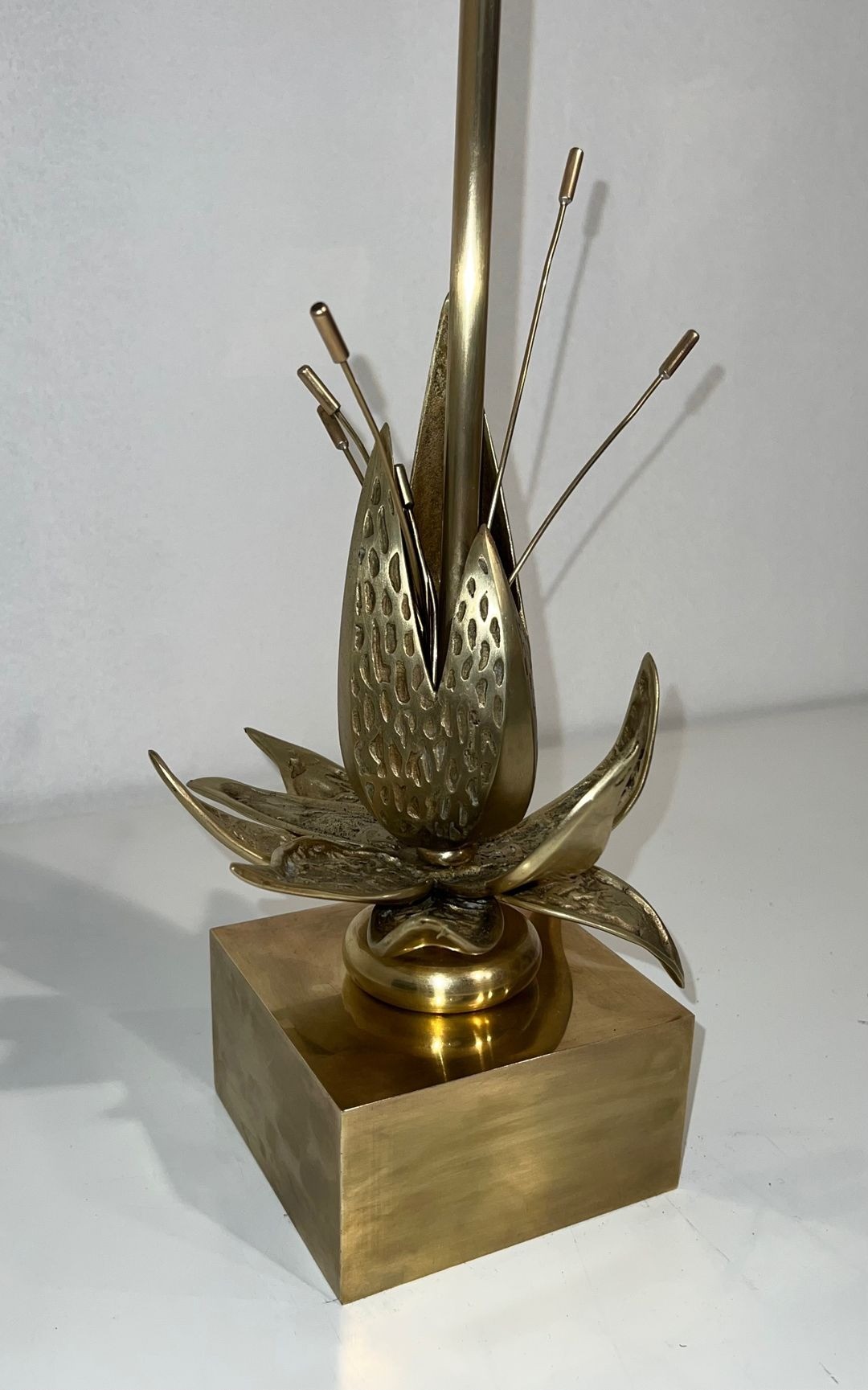
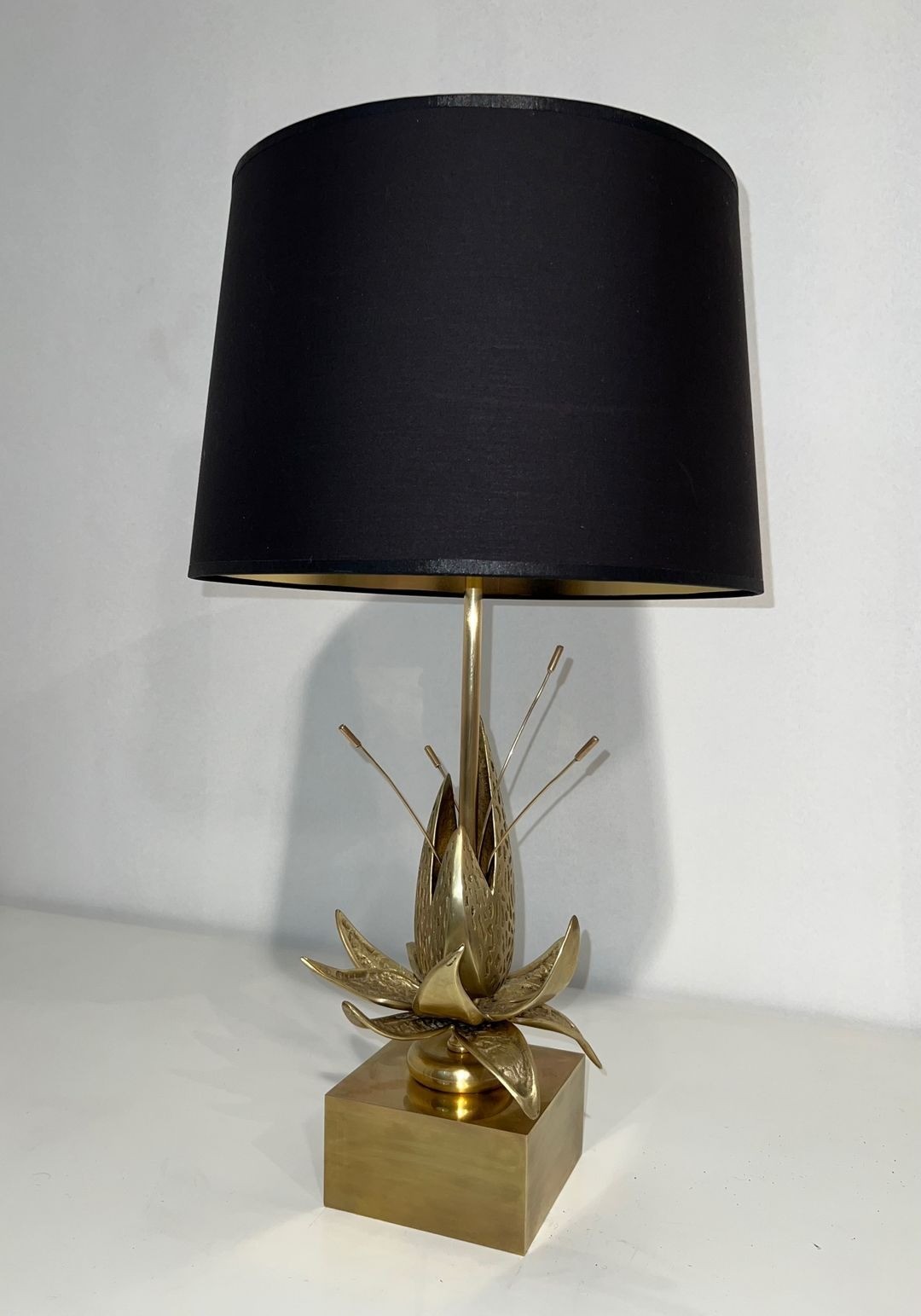
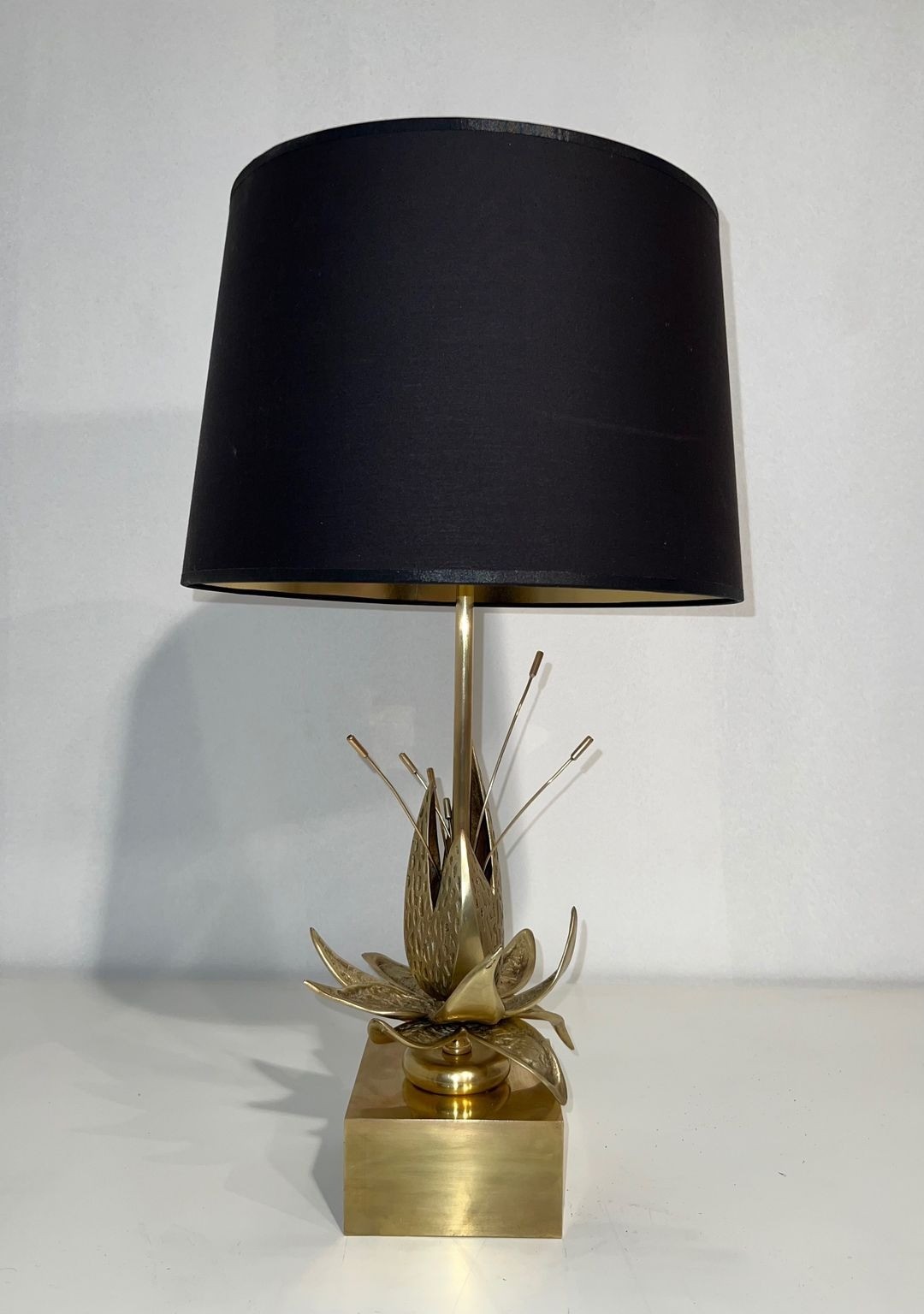
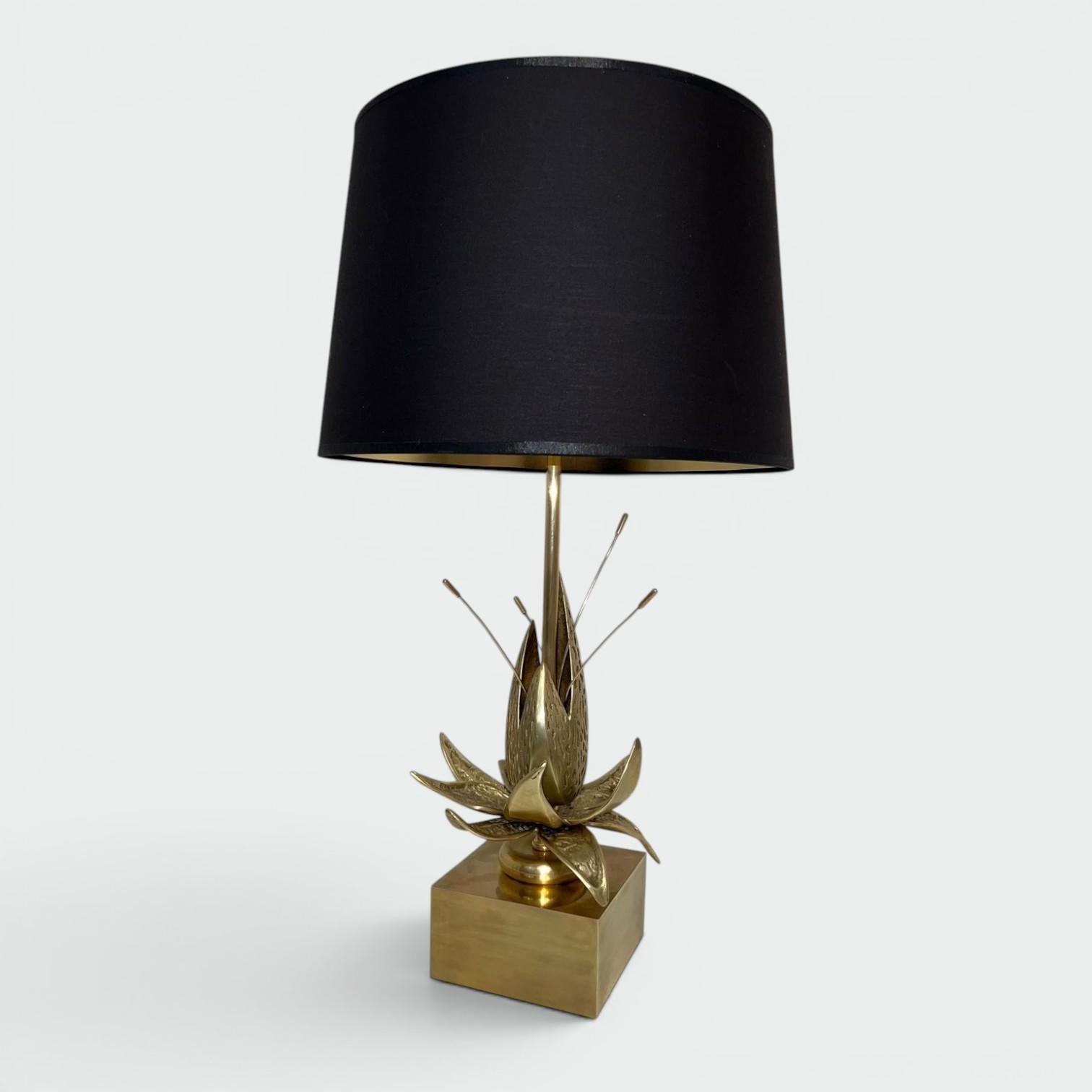
The nénuphar lamp stands as one of the most poetically conceived lighting objects of postwar French decorative arts — a form borrowed from nature and translated into cast metal with a fidelity that preserves both the lightness and the abundance of the water lily in full bloom. In this example attributed to Maison Charles, the bronze base unfolds in tiers of carefully modelled petals, achieving sixty-one centimetres with the precision of a botanist's rendering. The brass elements catch the light with a warm, honeyed glow that complements the deeper tonality of the patinated bronze beneath.
Maison Charles occupied a singular place in the landscape of postwar Parisian luxury. From their workshops and showrooms, the house supplied some of the grandest private residences in France and abroad — the apartments of industrialists and aristocrats, the suites of palace hotels, the salons of embassies. Albert Charles, who guided the maison through its most celebrated decades, understood that true luxury lay not in ostentation but in perfection of detail: the weight of a well-cast bronze, the crispness of a polished edge, the harmony between form and material. The nénuphar became for the house what the calla lily had been for Art Nouveau — an image of nature transformed into timeless ornament.
This lamp is equally at home in a book-lined library, at the corner of a writing desk, or beside a generously upholstered armchair. Its scale — thirty centimetres square, sixty-one centimetres tall — is precisely calibrated for intimate domestic use: large enough to command attention, contained enough to live gracefully beside other objects. For the collector assembling a body of French decorative bronzes, it represents a key example of a house that bridged the grand foundry tradition of the nineteenth century and the decorative ambitions of the mid-twentieth.