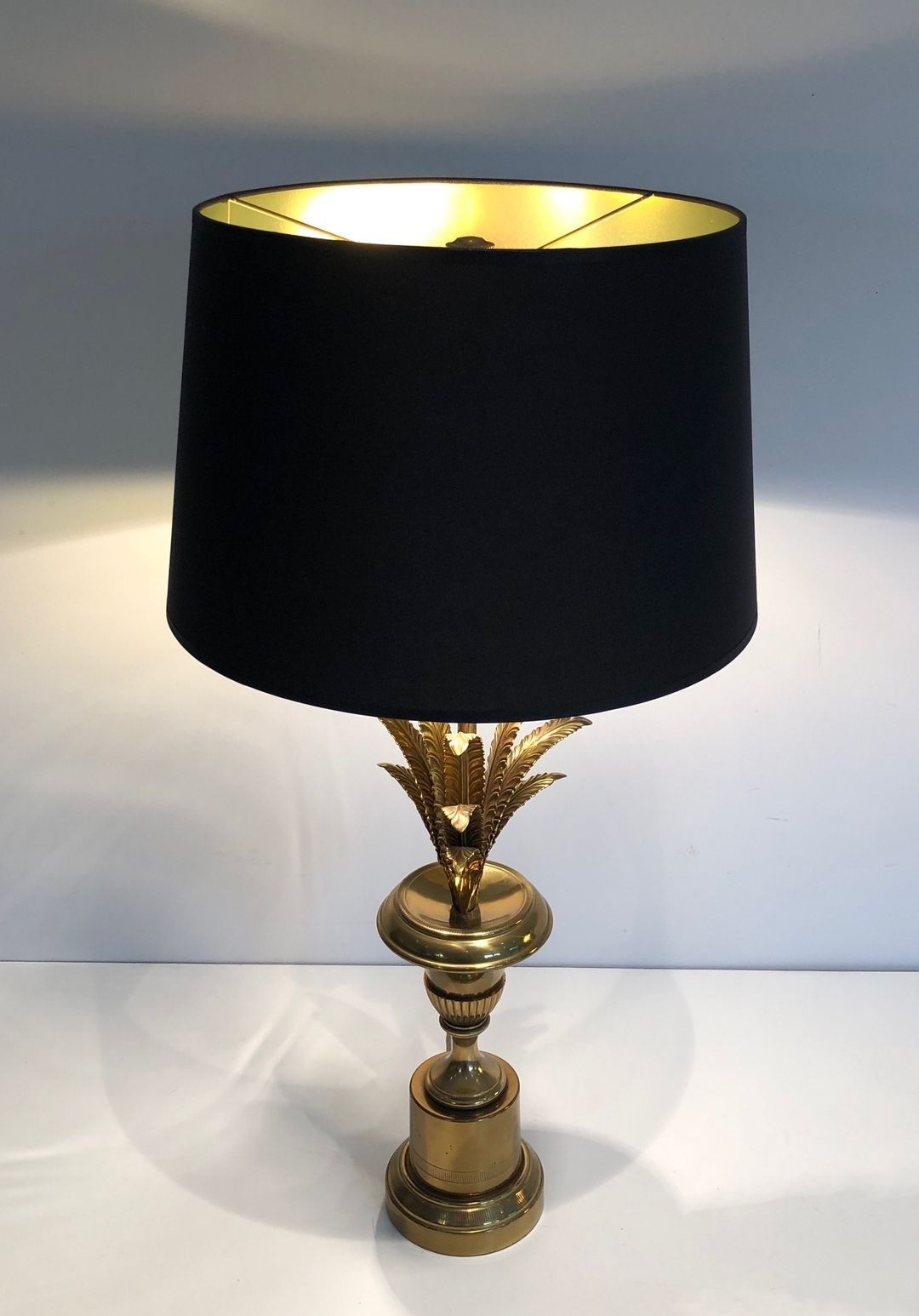
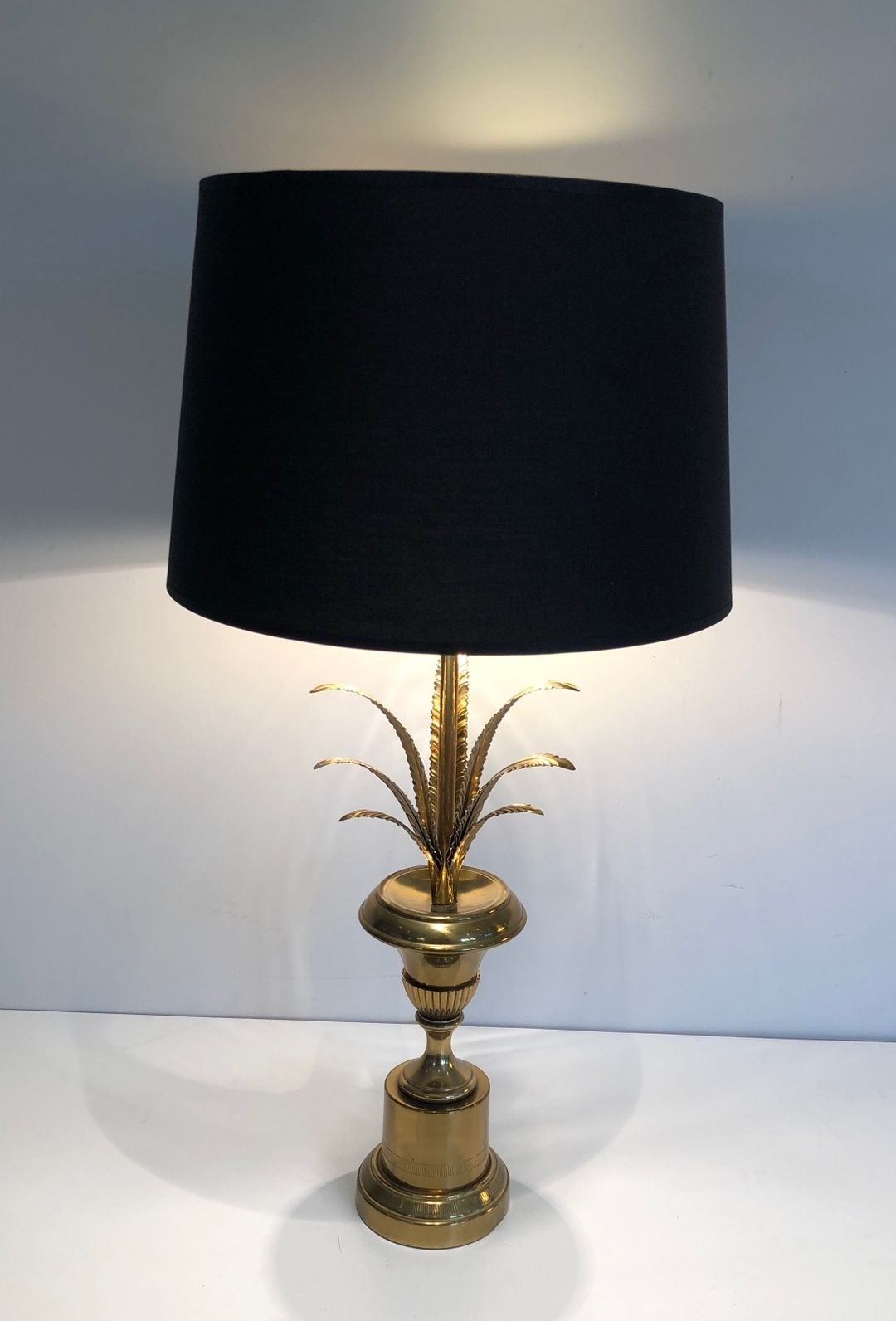
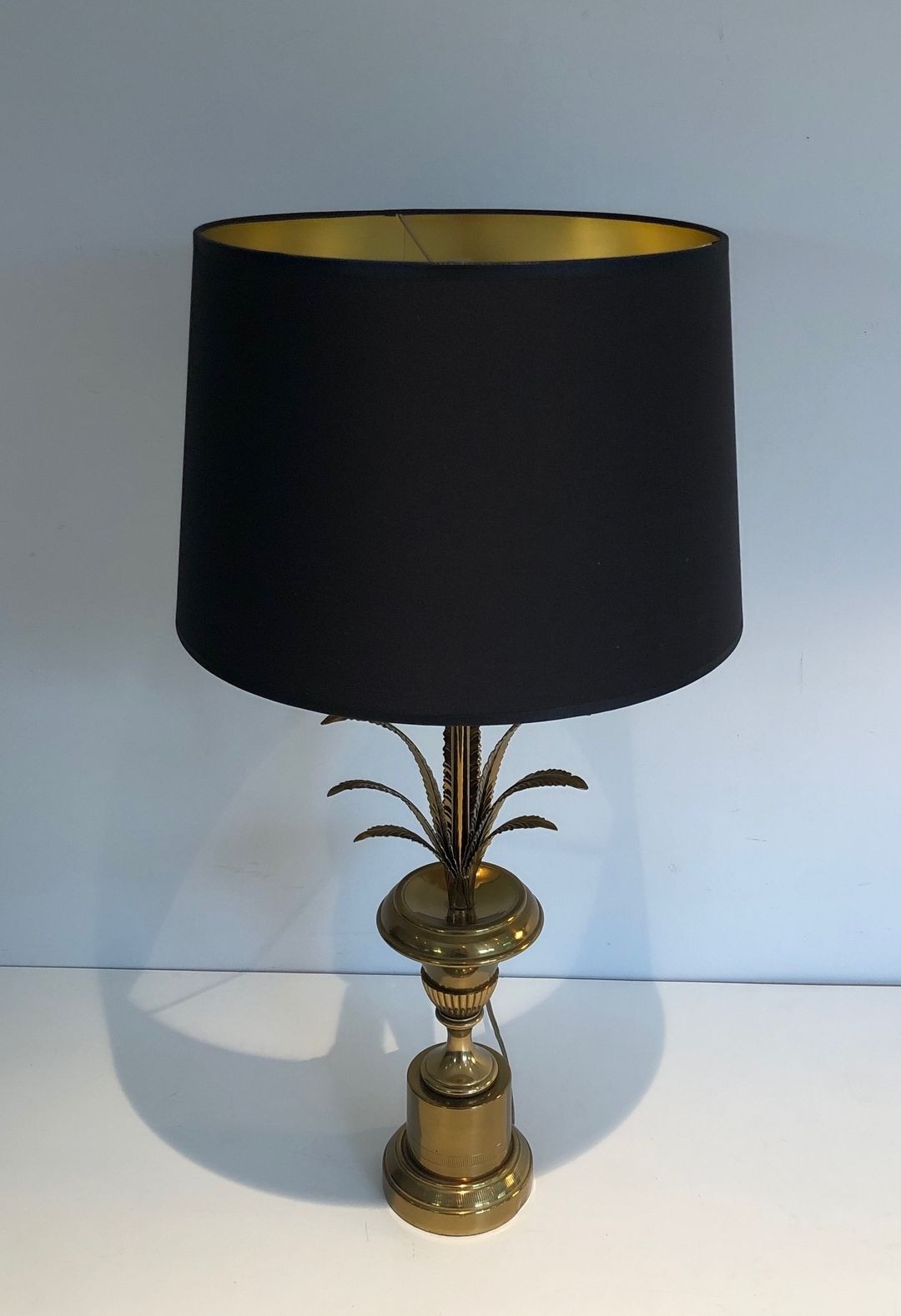
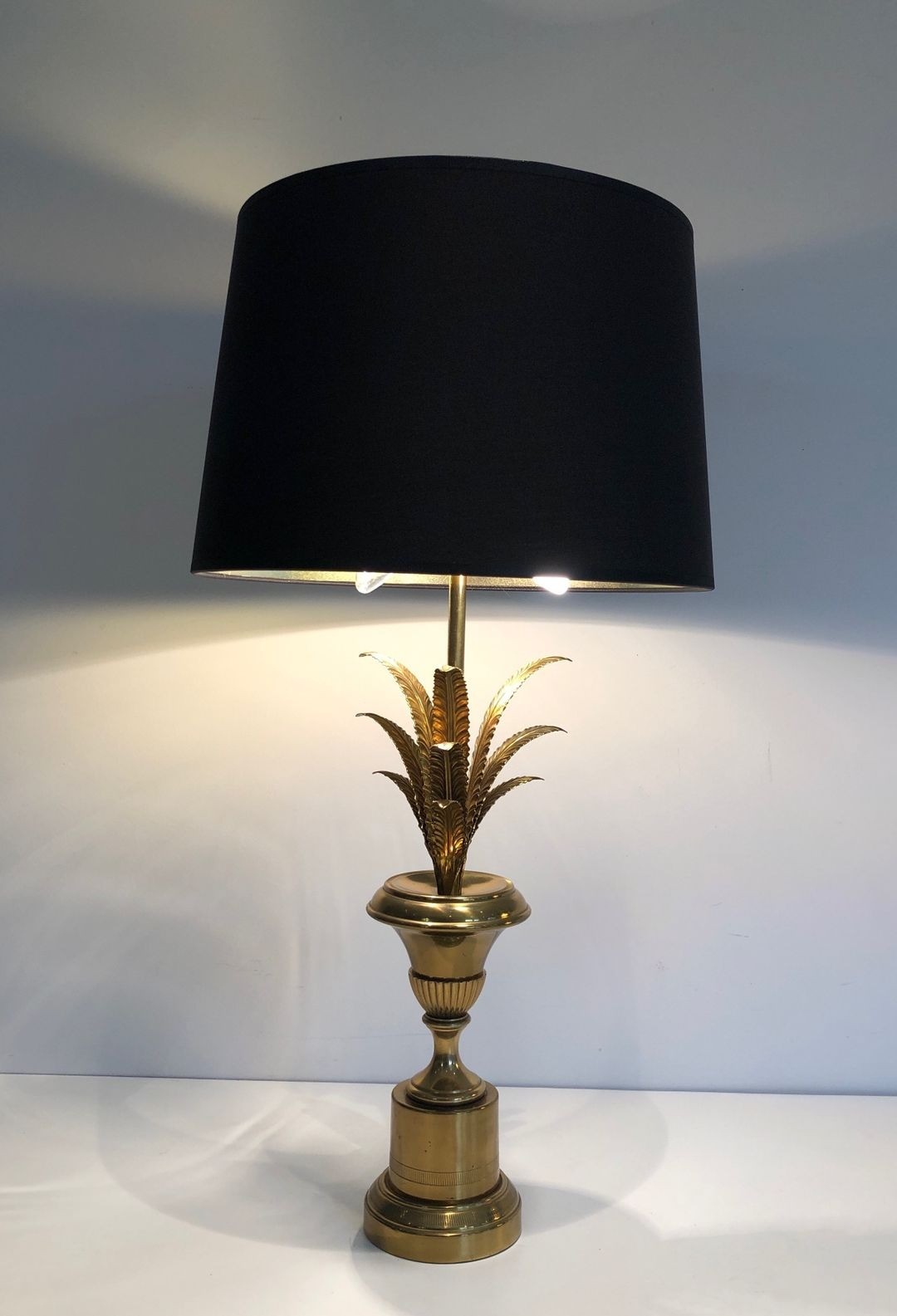
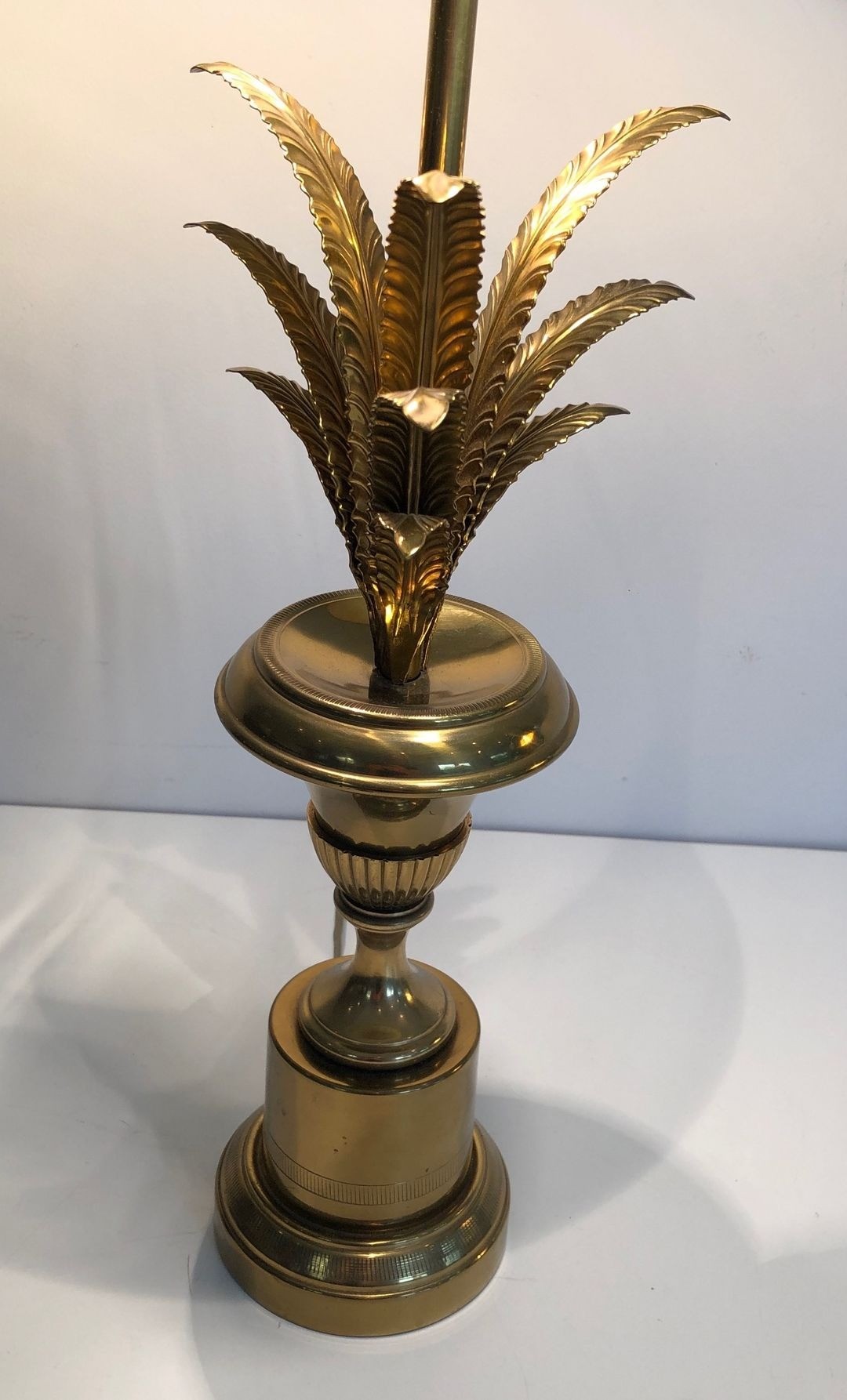
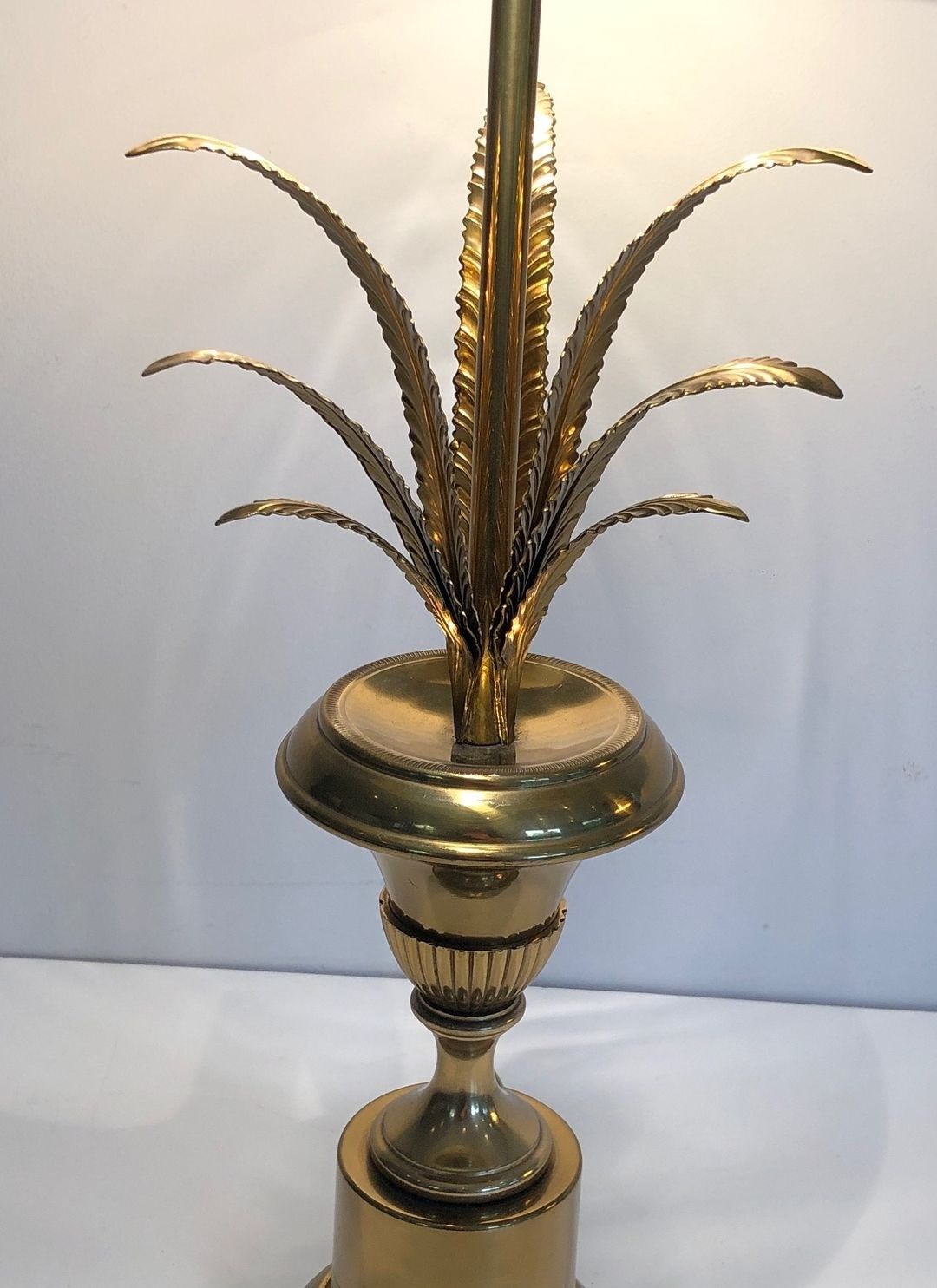
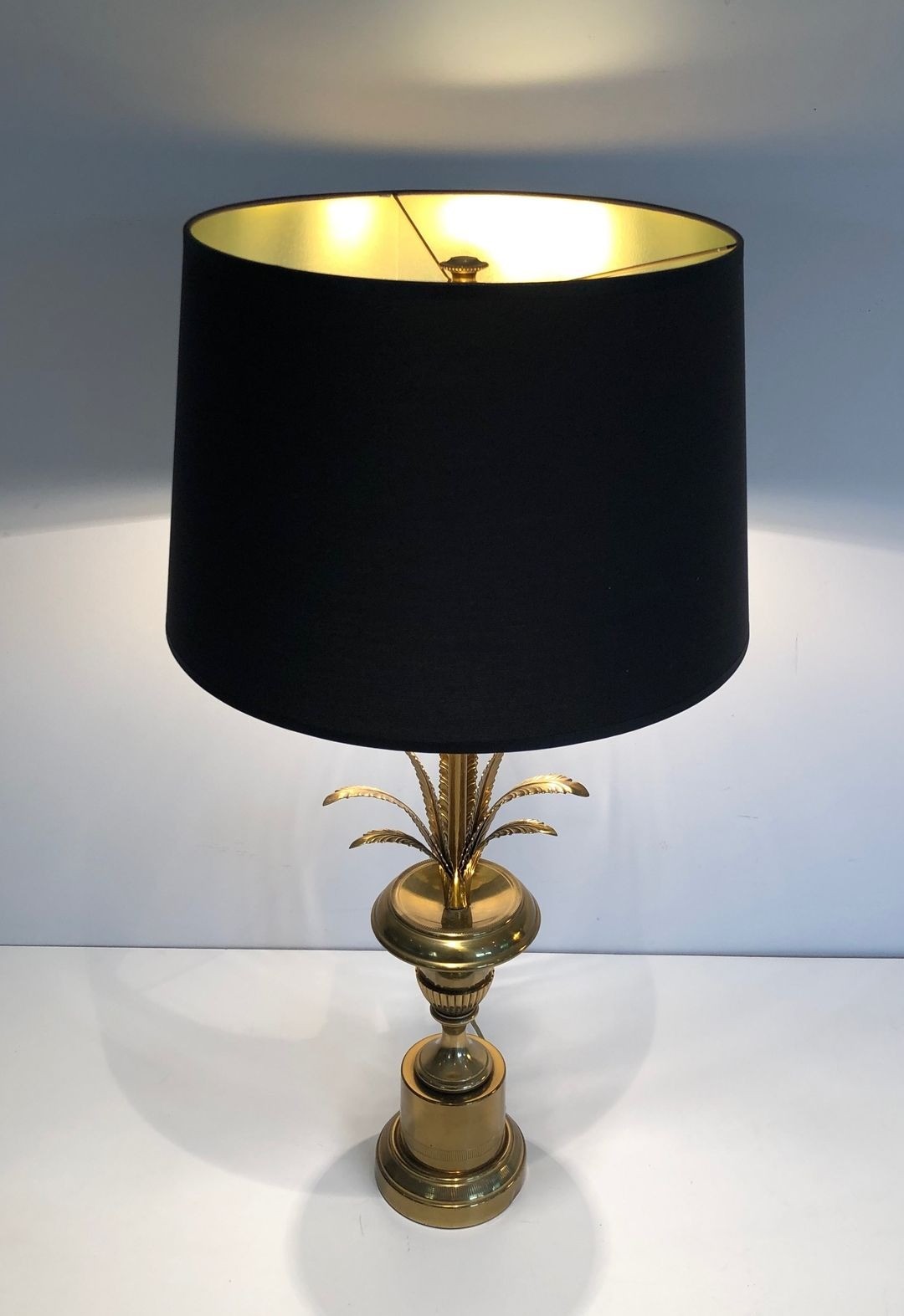
The palm tree lamp stands as one of the most enduring icons of French decorative arts — a form that unites the austere elegance of the Directoire with the exoticism that fired the imagination of European designers from the Egyptian campaigns of Napoleon onwards. This exceptional example in polished brass rises to nearly a metre in height, its fronds carefully worked to capture the natural grace of the palm in metal, achieving a balance of botanical exactitude and decorative stylisation that is the hallmark of the finest neoclassical work. At thirty-five centimetres wide, it commands its setting without dominating it, its warm metallic glow sufficient to anchor the most carefully composed room.
The palm tree as a decorative motif has a distinguished genealogy in French applied arts. First adopted in the Directoire and Empire periods as part of the broader passion for Égyptomanie that swept Europe following Bonaparte’s Egyptian campaign of 1798, the stylised palm colonised chimney pieces, ormolu mounts, console legs and candlestick bases throughout the early nineteenth century. The neoclassical revival of the 1960s and 1970s brought the motif back with renewed conviction, and it was Maison Charles — the great Parisian house founded by Charles Mathias in 1908 and celebrated for their mastery of sculptural brass and bronze lighting — who made the palm tree lamp an emblem of refined Parisian taste, producing versions for the leading interior decorators of the age that became collector’s objects in their own right.
Working within the spirit and vocabulary of Maison Charles, this lamp brings the same authority of craftsmanship and compositional elegance that the ateliers of the rue de Paradis made famous. The neoclassical restraint of the form — the clean vertical thrust of the trunk, the disciplined spread of the fronds — makes it equally at home in a period interior furnished with Empire or Directoire antiques and in the spare, curated spaces favoured by contemporary design. A piece that has lost none of its power to enchant after half a century, it remains one of the most civilised forms a lamp can take.