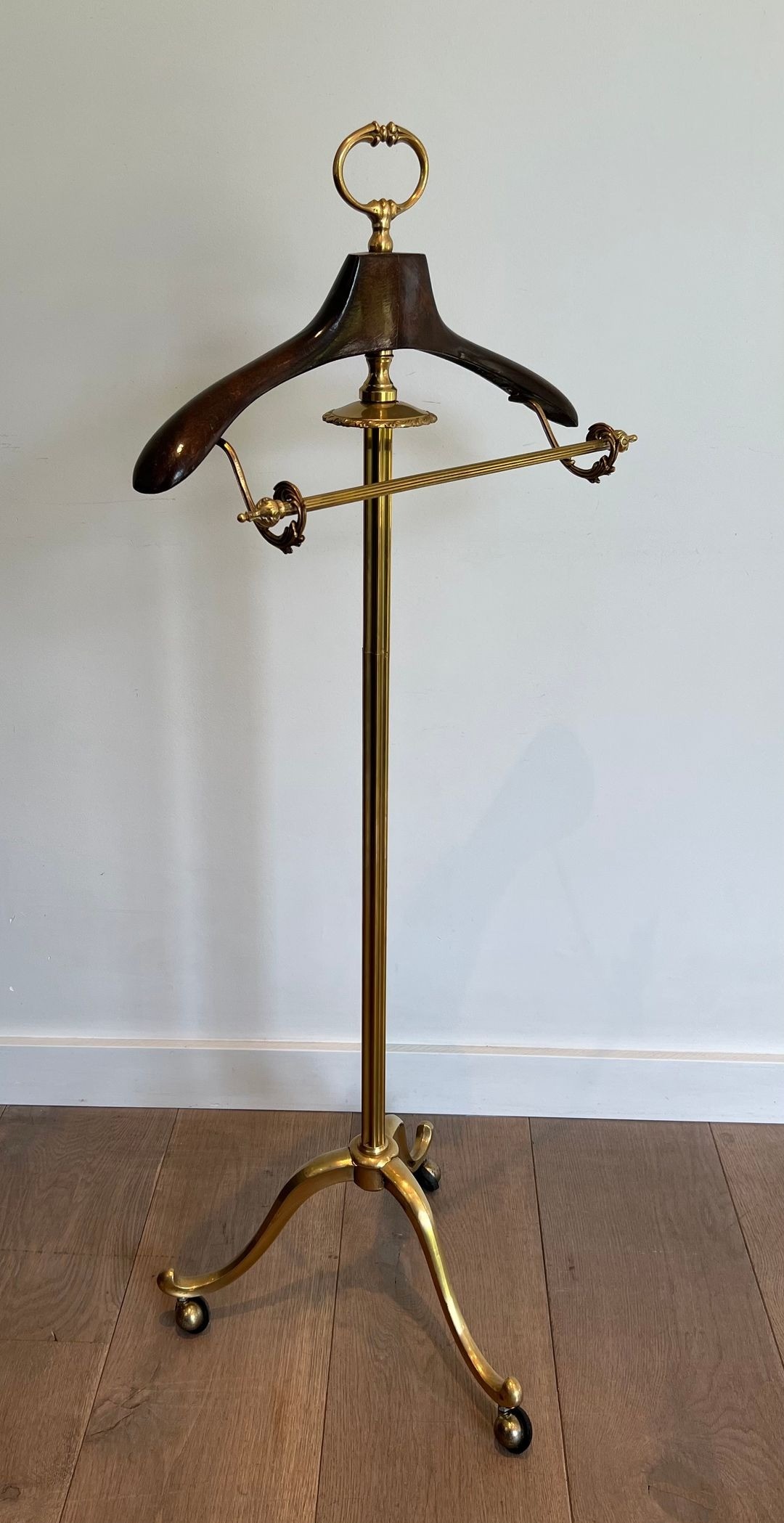
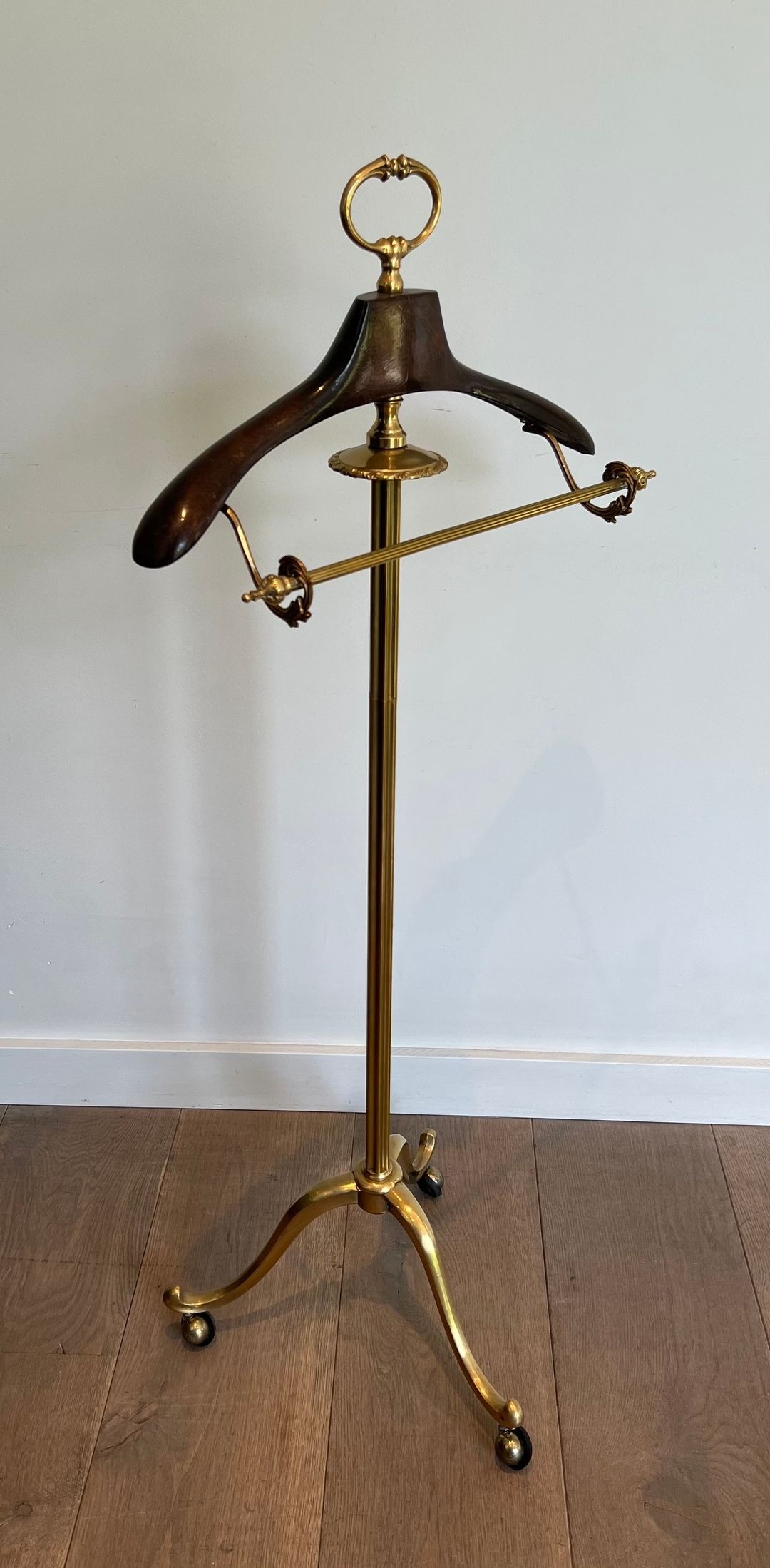
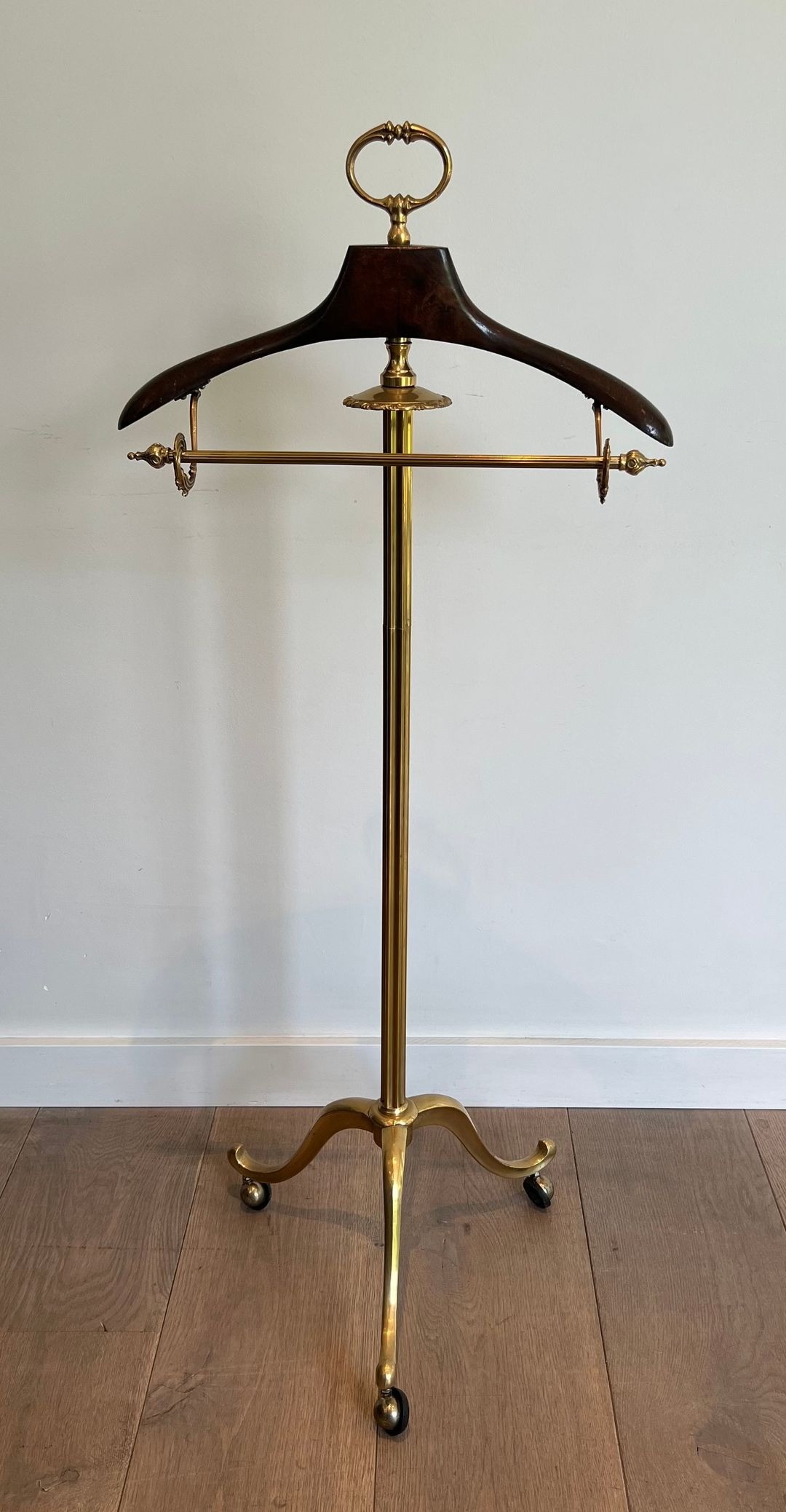
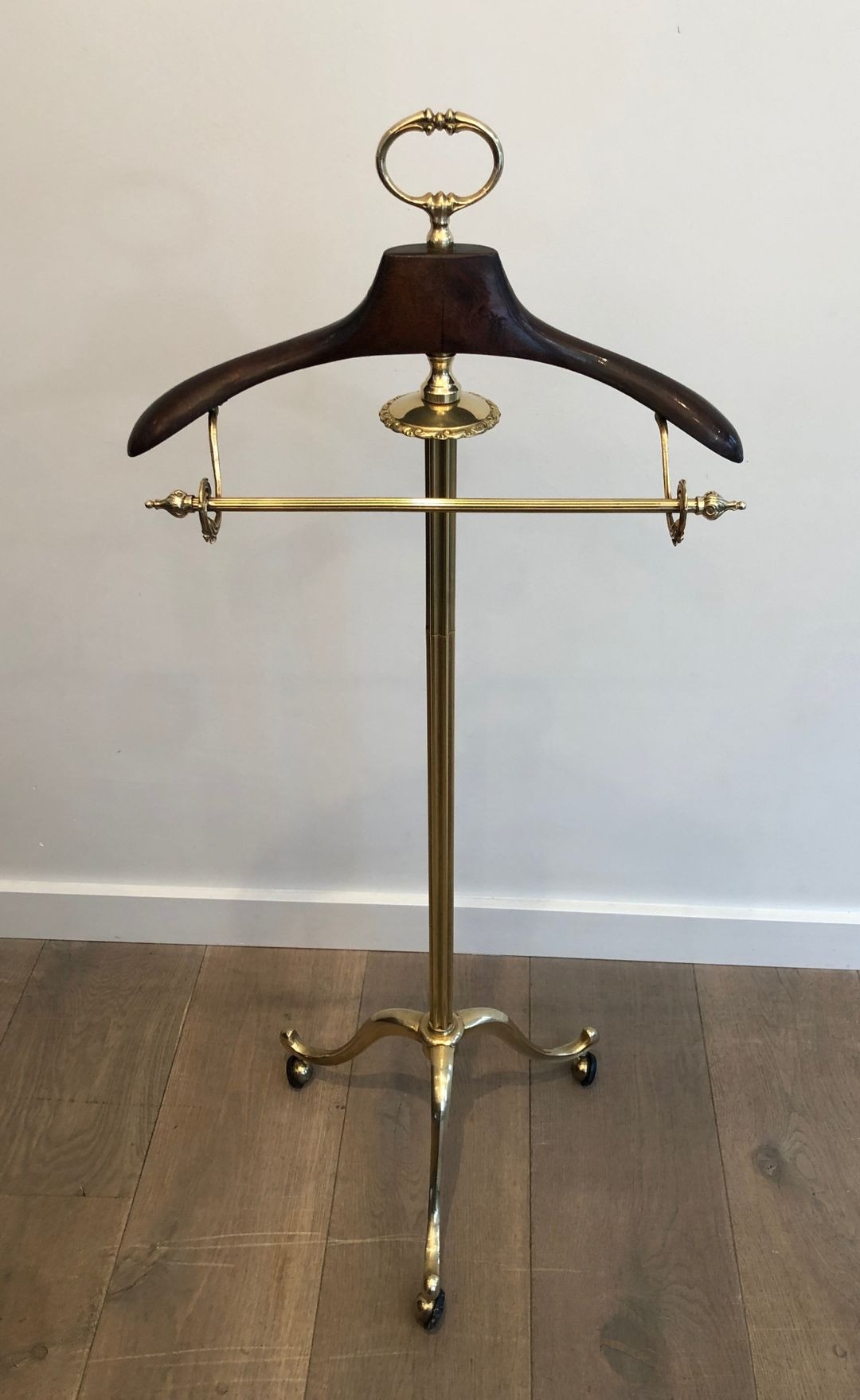
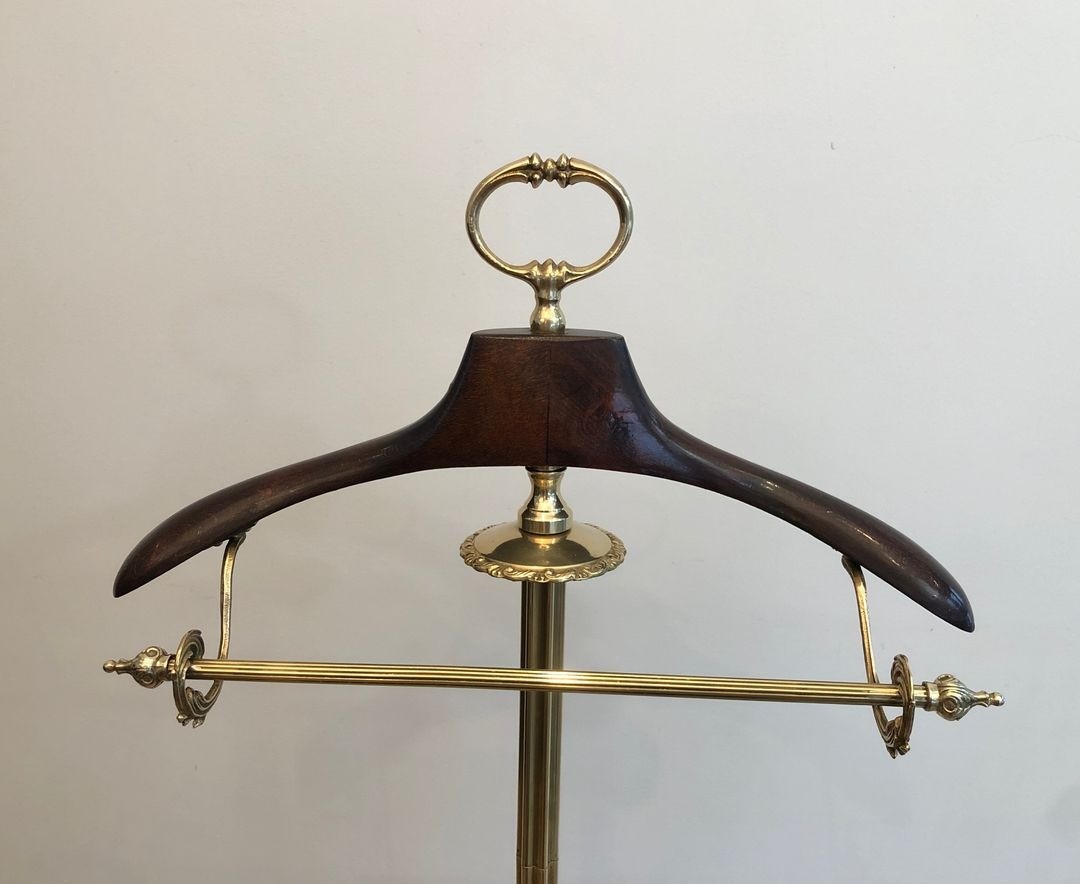
There are few modifications to a piece of furniture more consequential than the addition of casters. A fixed object becomes a mobile one; a sentinel becomes a companion; a position in space becomes a negotiable relationship. The neoclassical valet stand on casters occupies this interesting intermediate state : it retains all the ceremony of the classical form — the arms that receive the coat, the shelf or tray for small accessories, the vertical authority of a 111 cm height — but concedes to the practical needs of the modern bedroom the capacity to move. One places it where it is needed : near the wardrobe during the ritual of dressing, at the bedside during the night. This mobility does not diminish the dignity of the piece; it extends it into a more intimate and responsive domestic relationship.
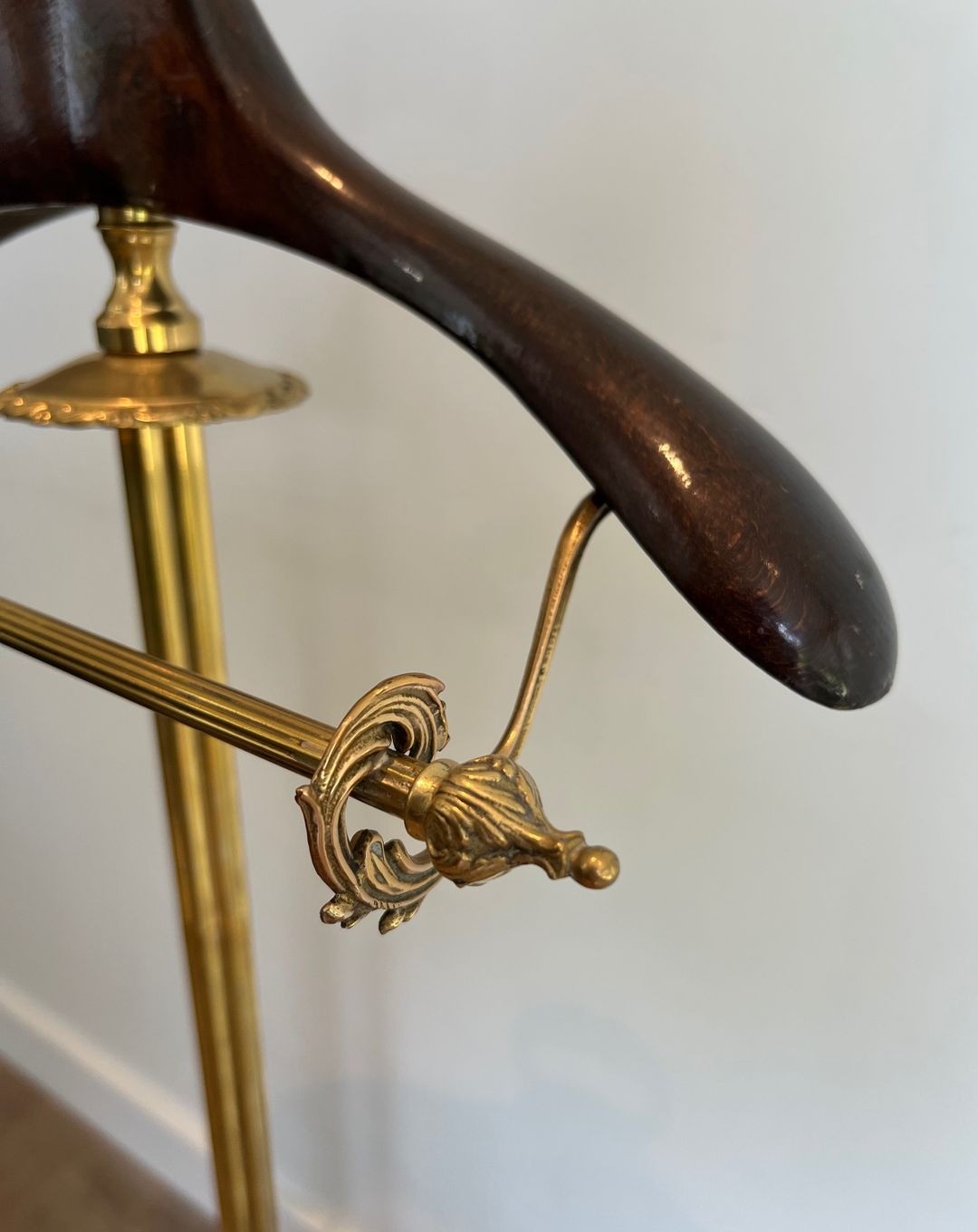
The tripod base, mounted on three casters, gives the piece its characteristic silhouette and its practical stability : three points of contact are never less than fully grounded, regardless of the floor surface, and the spreading legs create a broad visual base that balances the vertical height with lightness and elegance. The construction in brass and wood — the combination of warm metal and warm timber — speaks to the neoclassical atelier’s preference for materials that convey both authority and domesticity. The brass detailing of the structural joinings and finishing elements marks the piece as an object of considered workmanship, measuring 45.5 cm in width and 35.5 cm in depth at its base.
Neoclassical valet stands in brass and wood represent the French interwar continuation of a form with origins in the eighteenth-century gentleman’s dressing room. By the 1930s the form was already archaic in origin but still actively produced for the luxury domestic market — a market that valued the ceremonial quality of the dressing ritual and was willing to commission pieces of genuine craftsmanship to support it. The addition of casters marks this particular example as intended for a bedroom of generous proportions, where mobility was a practical advantage rather than a spatial necessity. A piece of considerable presence and genuine historical interest, belonging to the long tradition of objects that treat the morning preparation as an act of cultural significance.