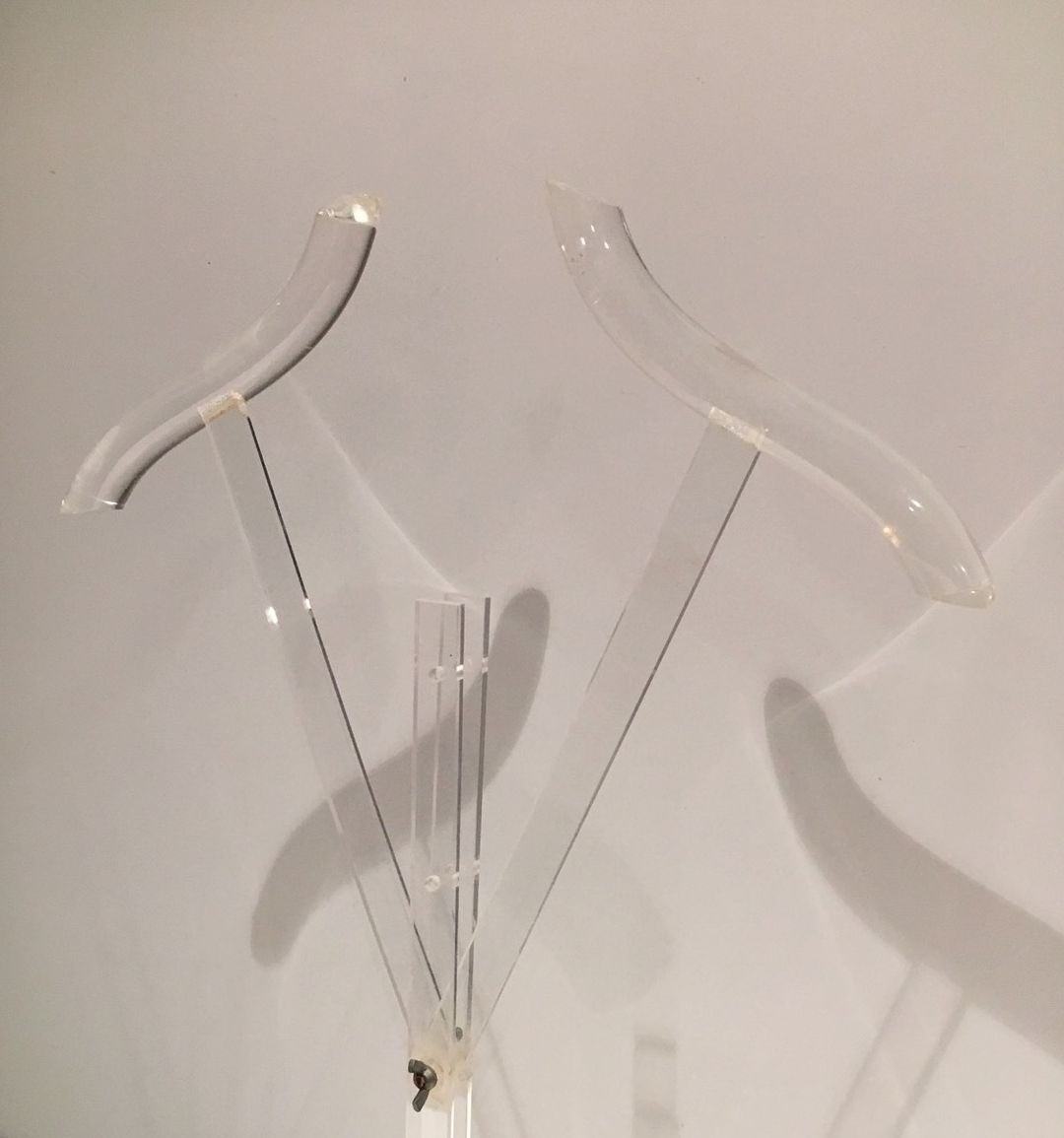
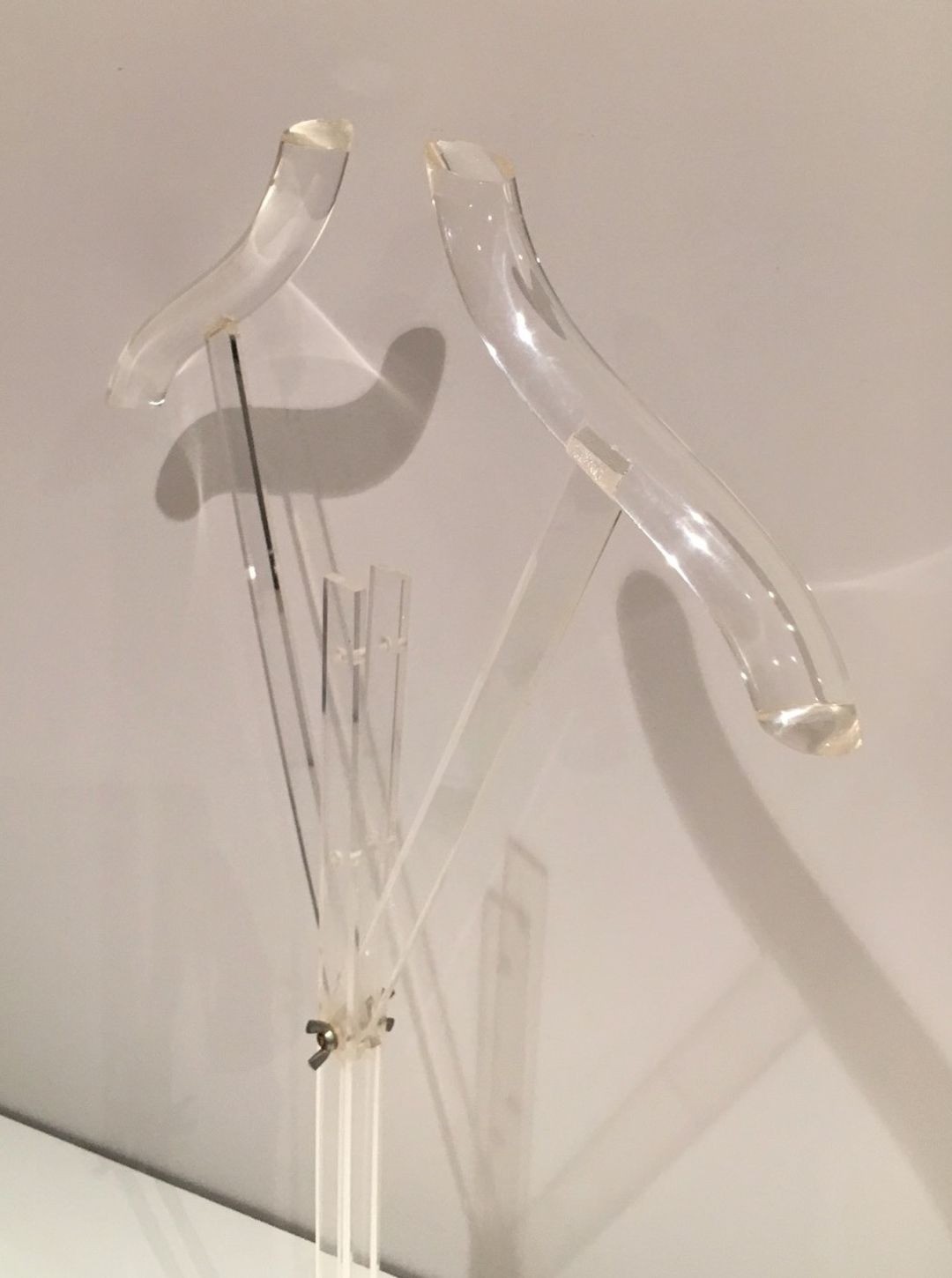
Plexiglass — the trade name given to polymethyl methacrylate, developed in the 1930s and made widely available to furniture designers in the 1960s — became the signature material of the Space Age design moment. It allowed designers to create objects that seemed to hover, to deny their own physical presence, to occupy space without occluding it. Applied to every domestic category, from seating (Laverne, Kartell) to lighting to accessory objects, synthetic transparency became one of the defining idioms of the post-war interior at its most forward-looking.
The valet stand is among the most anthropomorphically charged objects in the domestic interior: its traditional function is to stand in for the human body during the night hours, holding the suit, the shirt, and the tie in the exact configuration of the dressed figure, so that the morning’s dressing is fluent and pre-ordained. A valet in transparent plexiglass literalises the ghost at the centre of this arrangement — the object accomplishes its service while erasing all evidence of its own material existence. The clothes float against the room, unsupported by anything the eye can quite fix on. The absent body is more present than ever.
The proportions (W. 50 × D. 19.9 × H. 81 cm) reproduce the traditional standing figure at approximately half the height of a dressed adult. The plexiglass captures and refracts ambient light throughout the day, so that the object’s visual presence is never static — at certain angles nearly invisible, at others alive with internal reflections that make it appear, briefly, to be made of light itself.