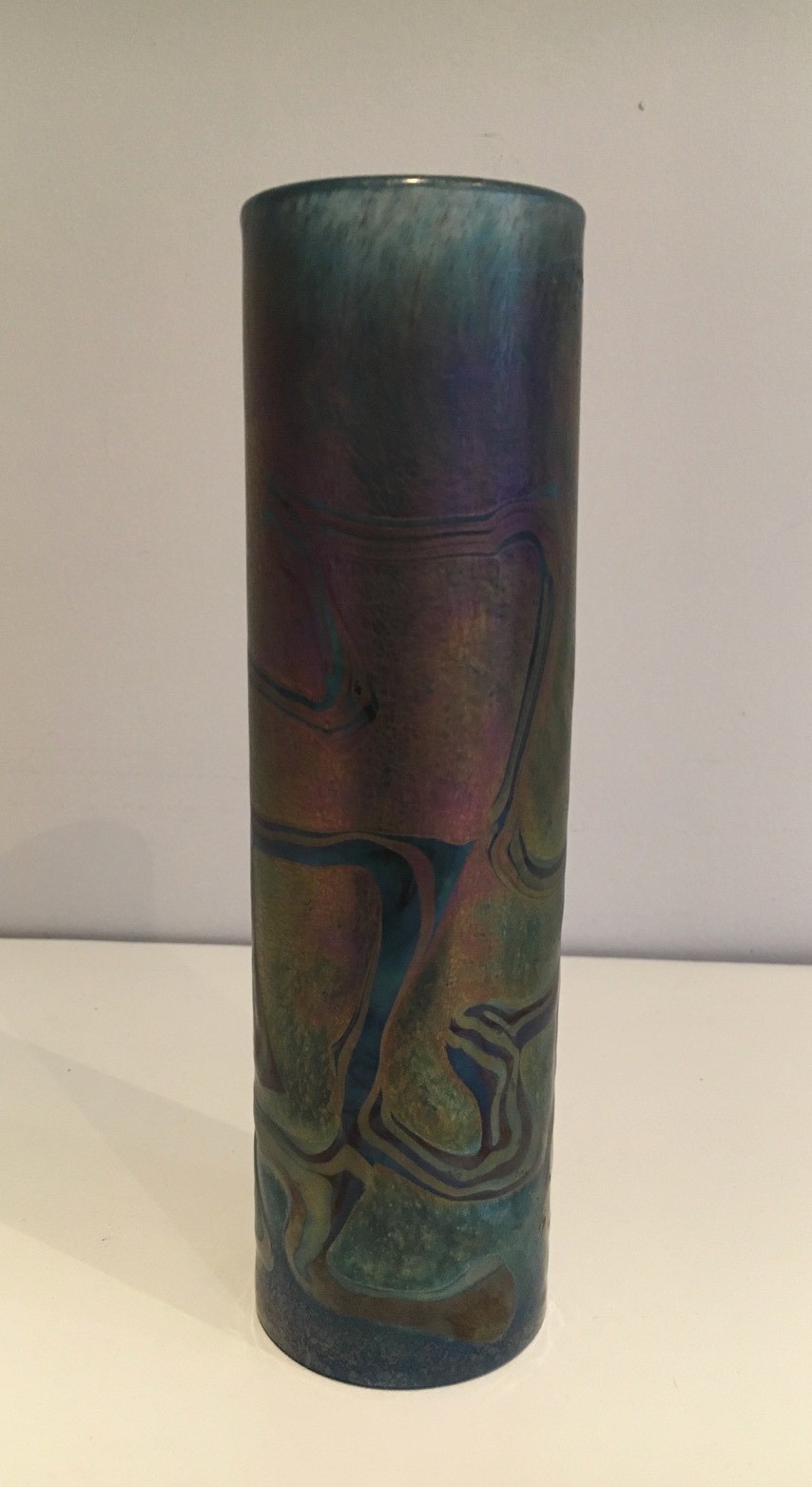
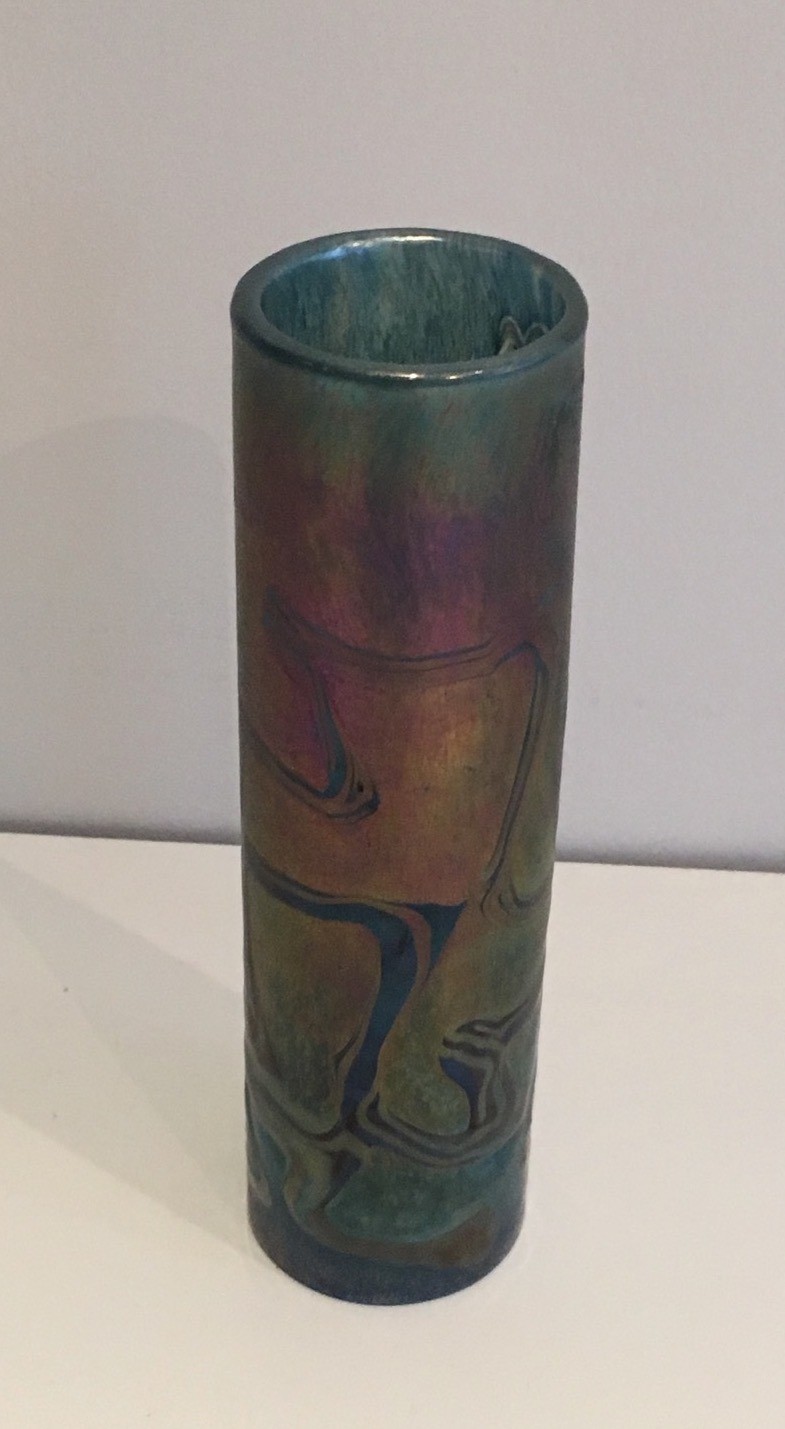
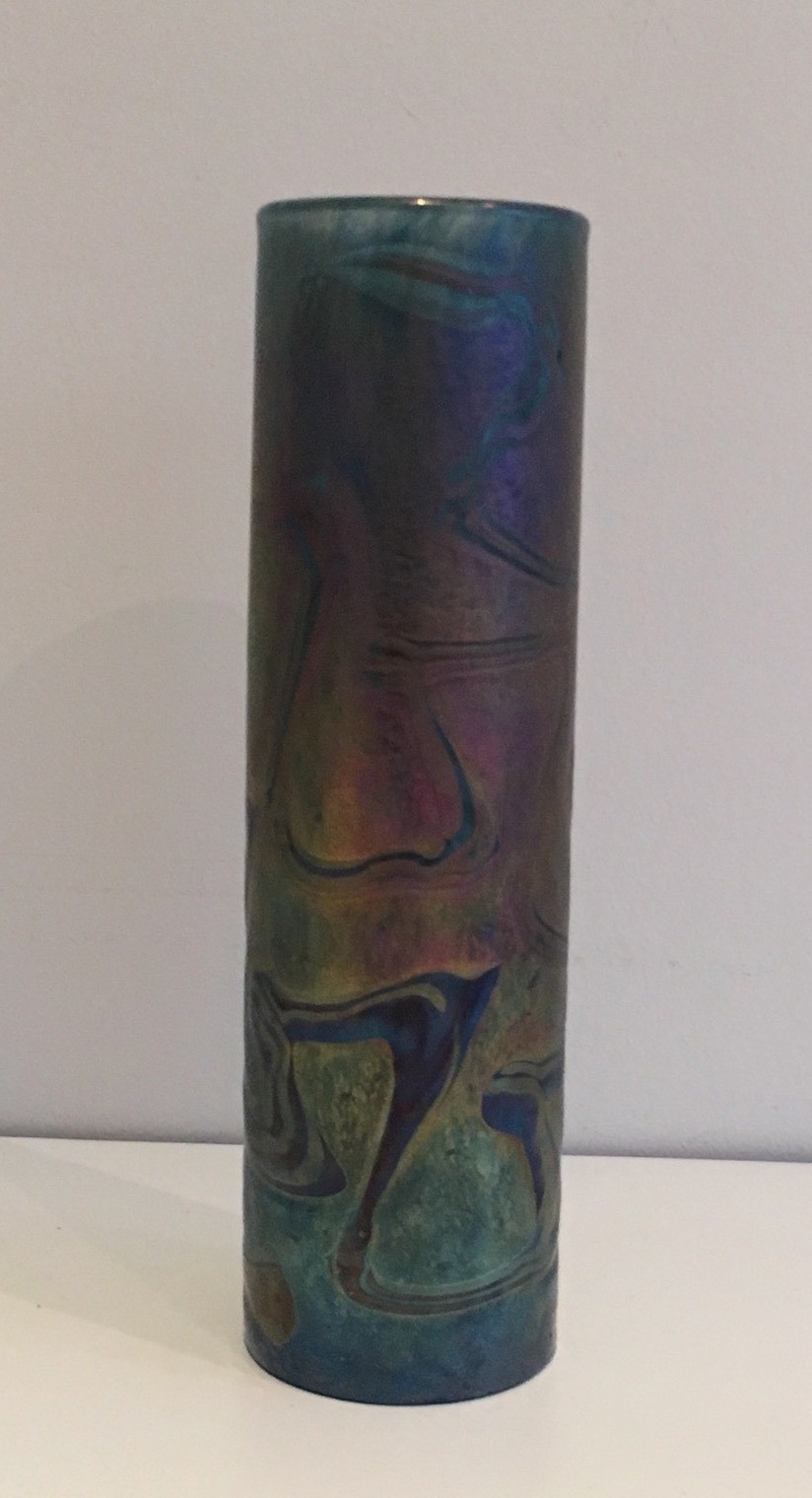
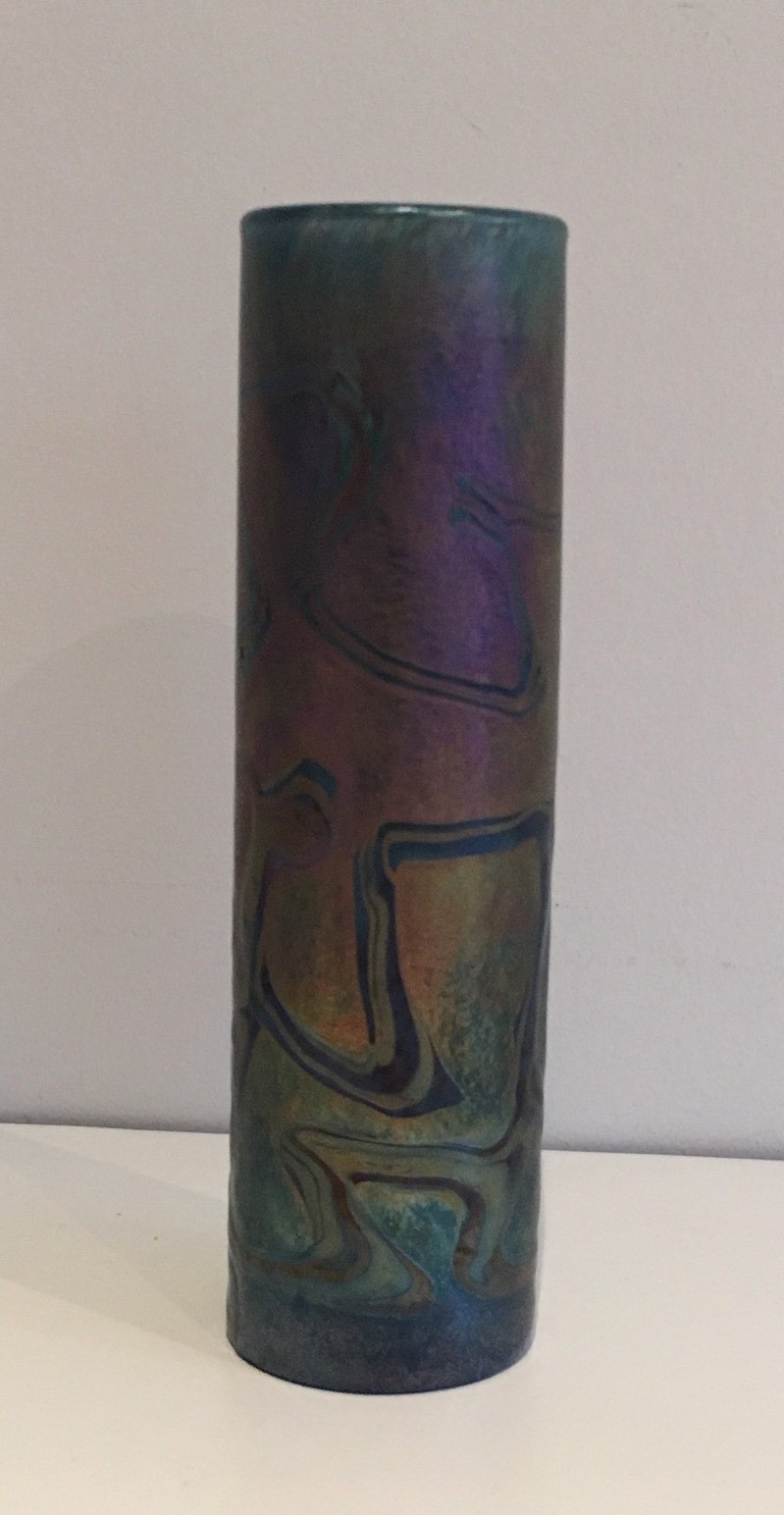
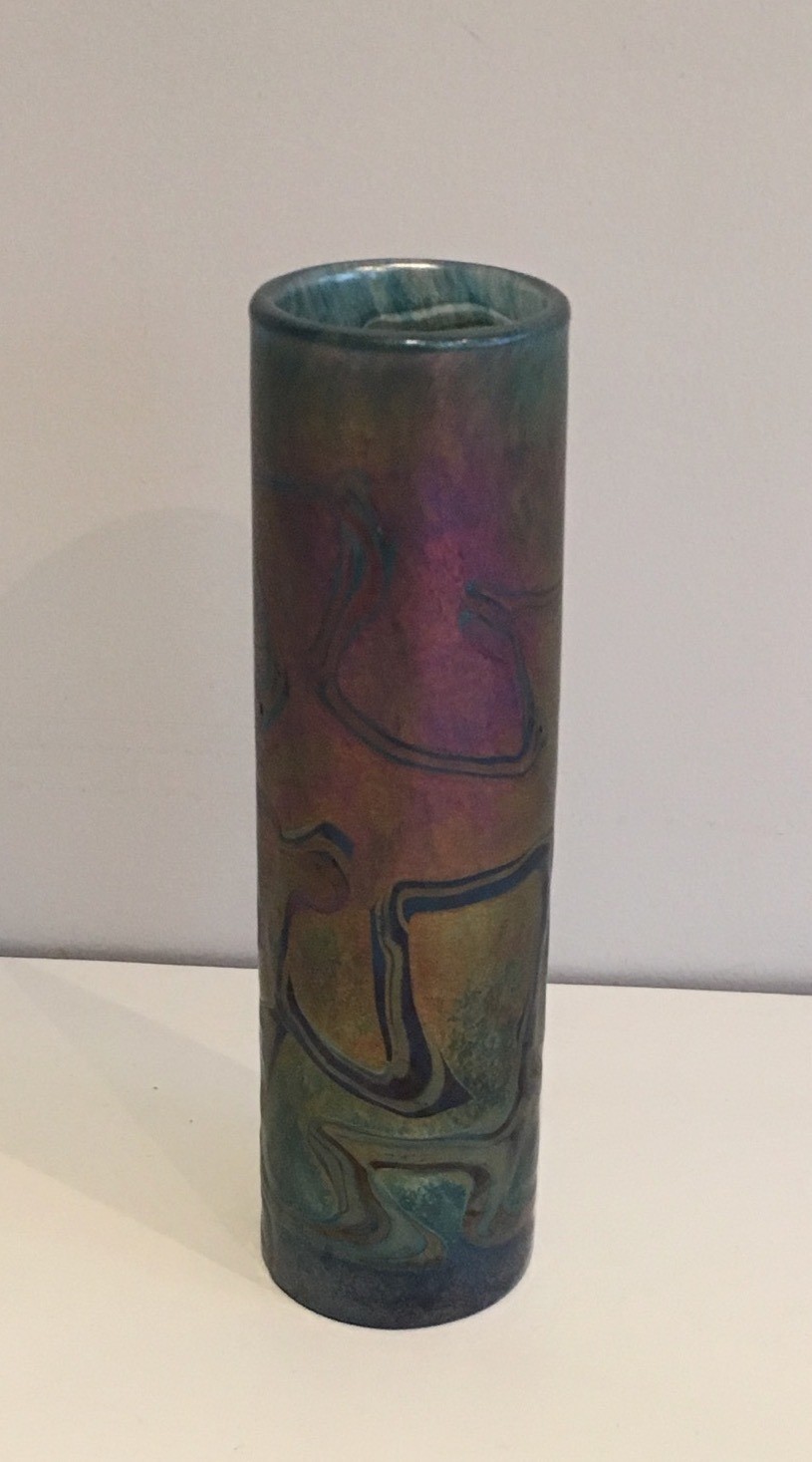
A roller vase of compelling beauty, produced in iridescent glass with the characteristic shifting shimmer — traversing golds, bronzes, purples, and greens depending on the angle of light — that is the hallmark of the finest Austrian art glass tradition. The cylindrical roller form, clean and architecturally precise, provides an ideal vehicle for the iridescent surface treatment, which covers the glass in a continuous film of optical complexity, transforming the simplest light into a spectacle of shifting colour. The weight, purity of form, and luminous surface of this vase speak to the exceptional quality of its fabrication.
This vase is the work of Loetz (Johann Loetz Witwe), the celebrated Bohemian glasshouse founded in Klostermühle in 1836 and established by the late nineteenth century as one of the foremost producers of art glass in the world. Loetz achieved international renown above all for its mastery of iridescent glass — a technique inspired by ancient Roman buried glass and the natural iridescence of certain minerals, perfected into a signature surface treatment of extraordinary beauty. At the Paris Exposition Universelle of 1900, Loetz's iridescent glass caused a sensation, winning the Grand Prix and cementing the house's reputation as the pre-eminent glass artist of the Art Nouveau era.
A Loetz iridescent roller vase is one of the most desirable and immediately recognisable objects in the market for European art glass. Its perfectly proportioned form and endlessly shifting iridescent surface make it an ideal display object — on a mantelpiece, a console, or as a jewel in a vitrine — where it can be admired in different lights and at different times of day. A timeless beauty and a statement piece for any serious collection of European decorative arts and art glass.