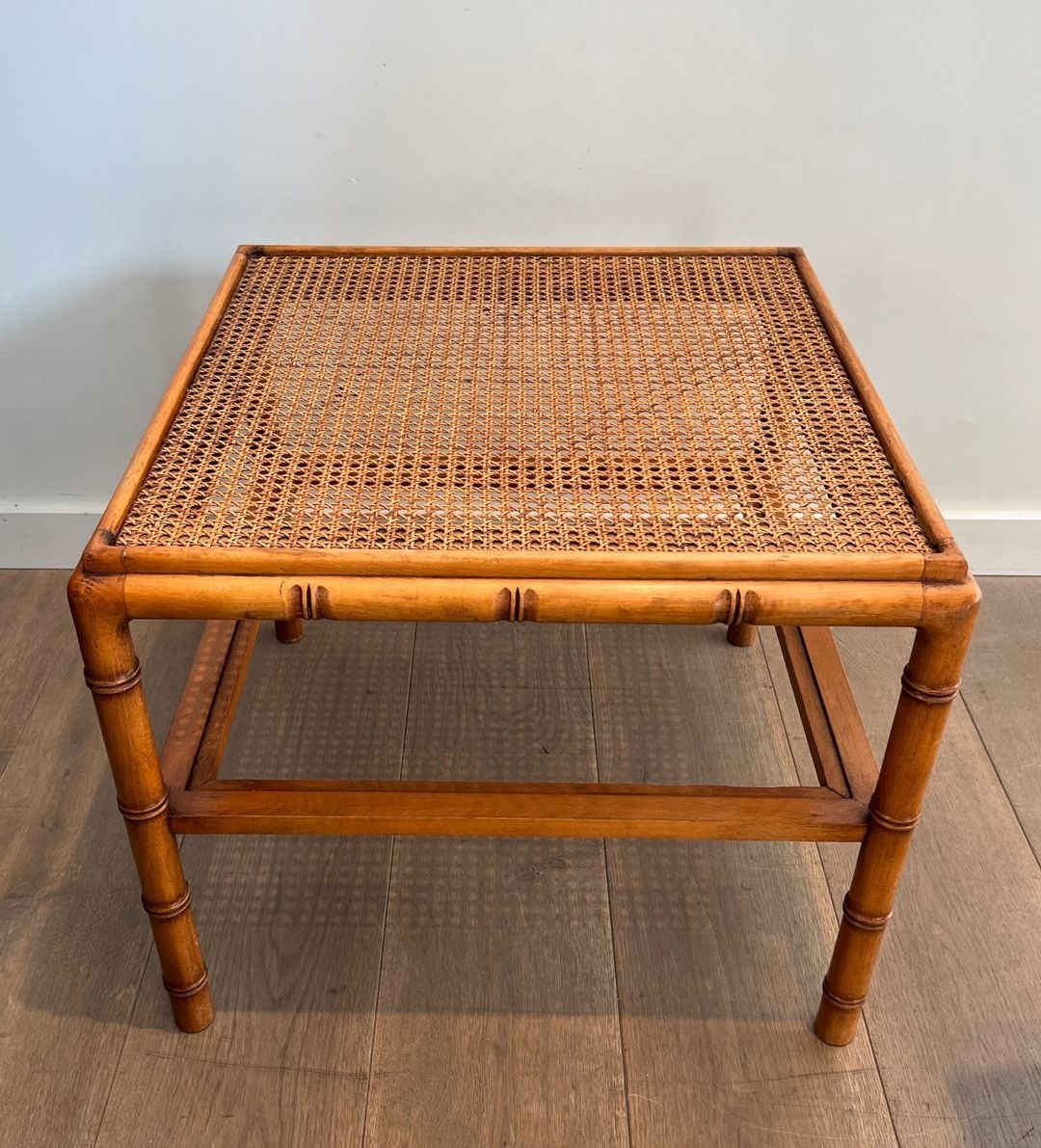
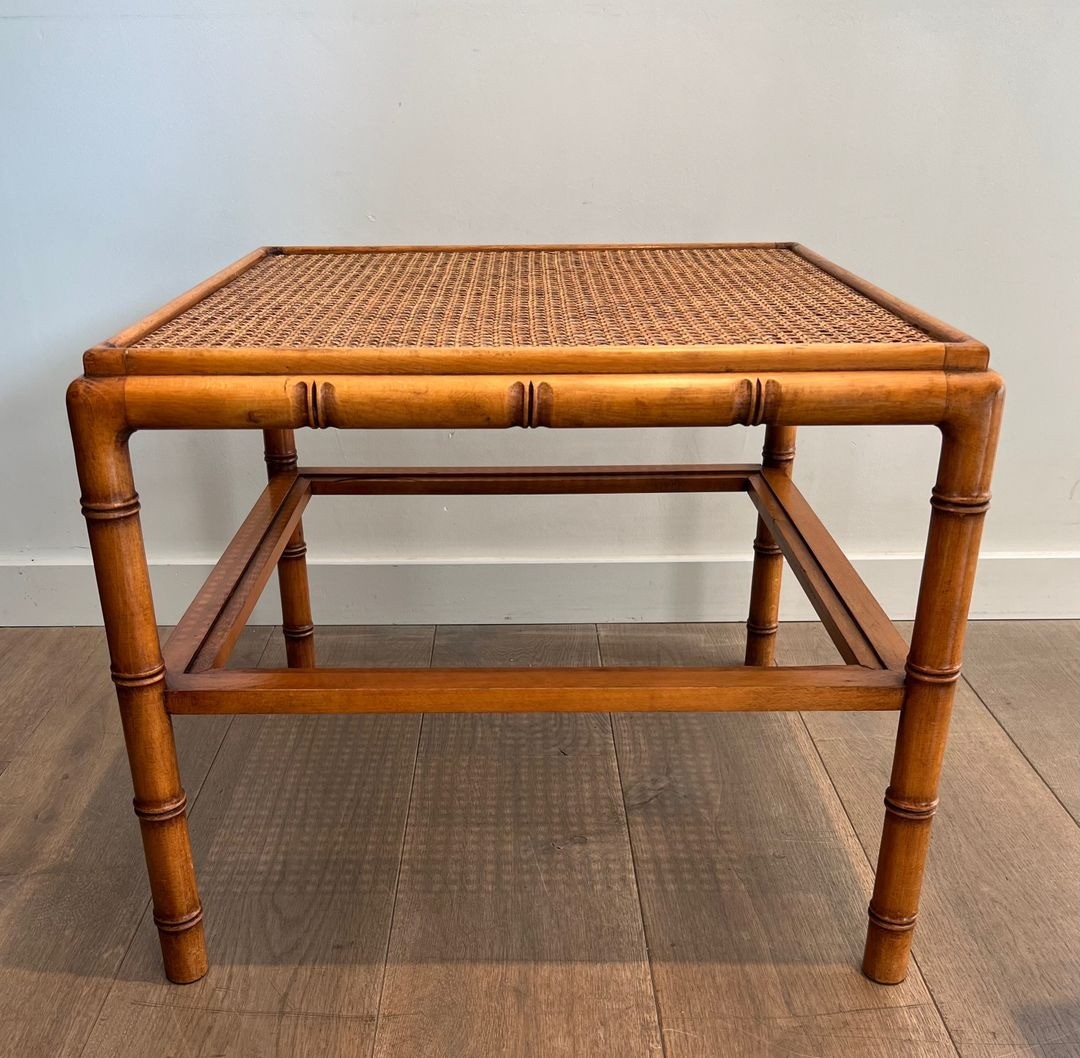
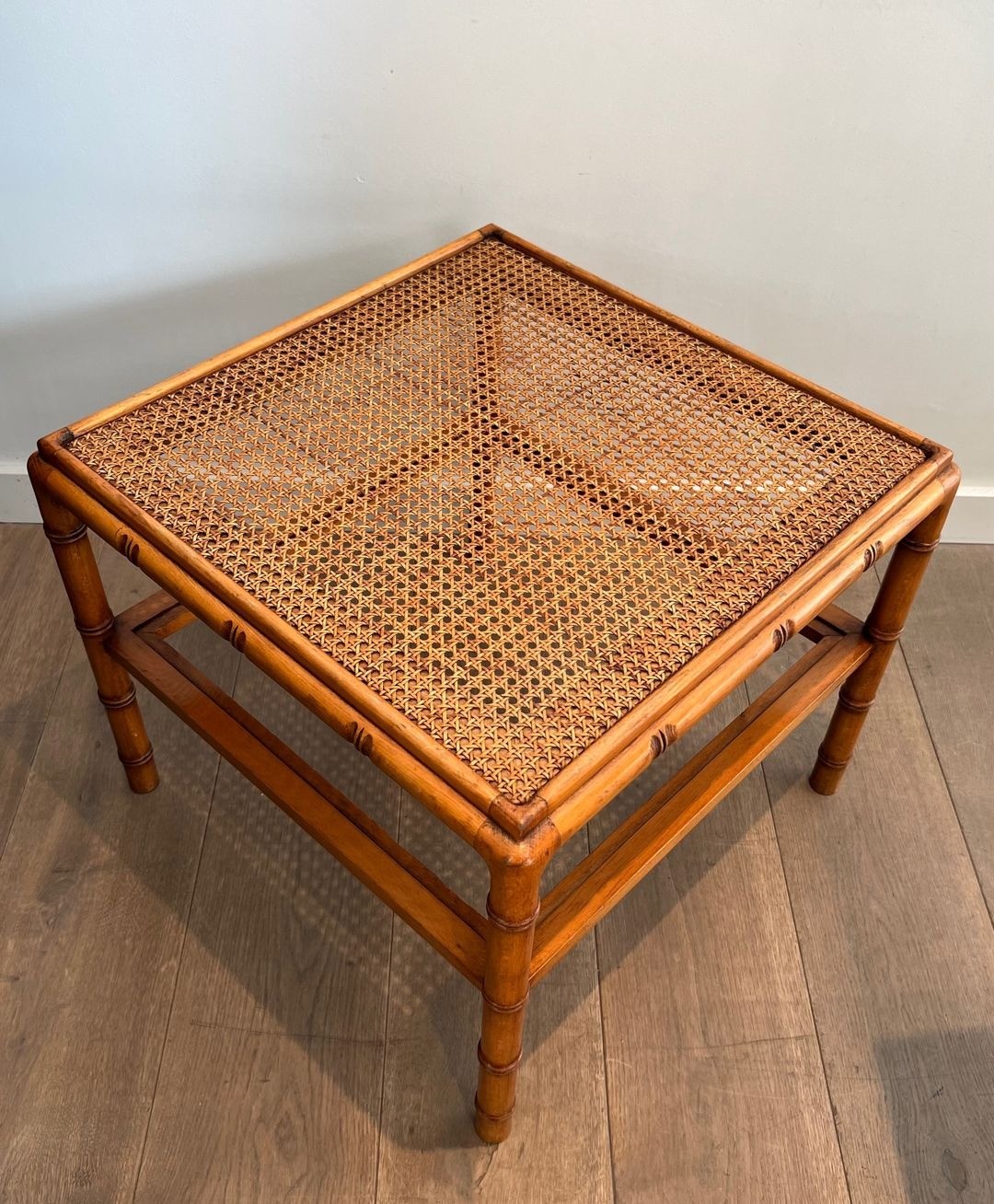
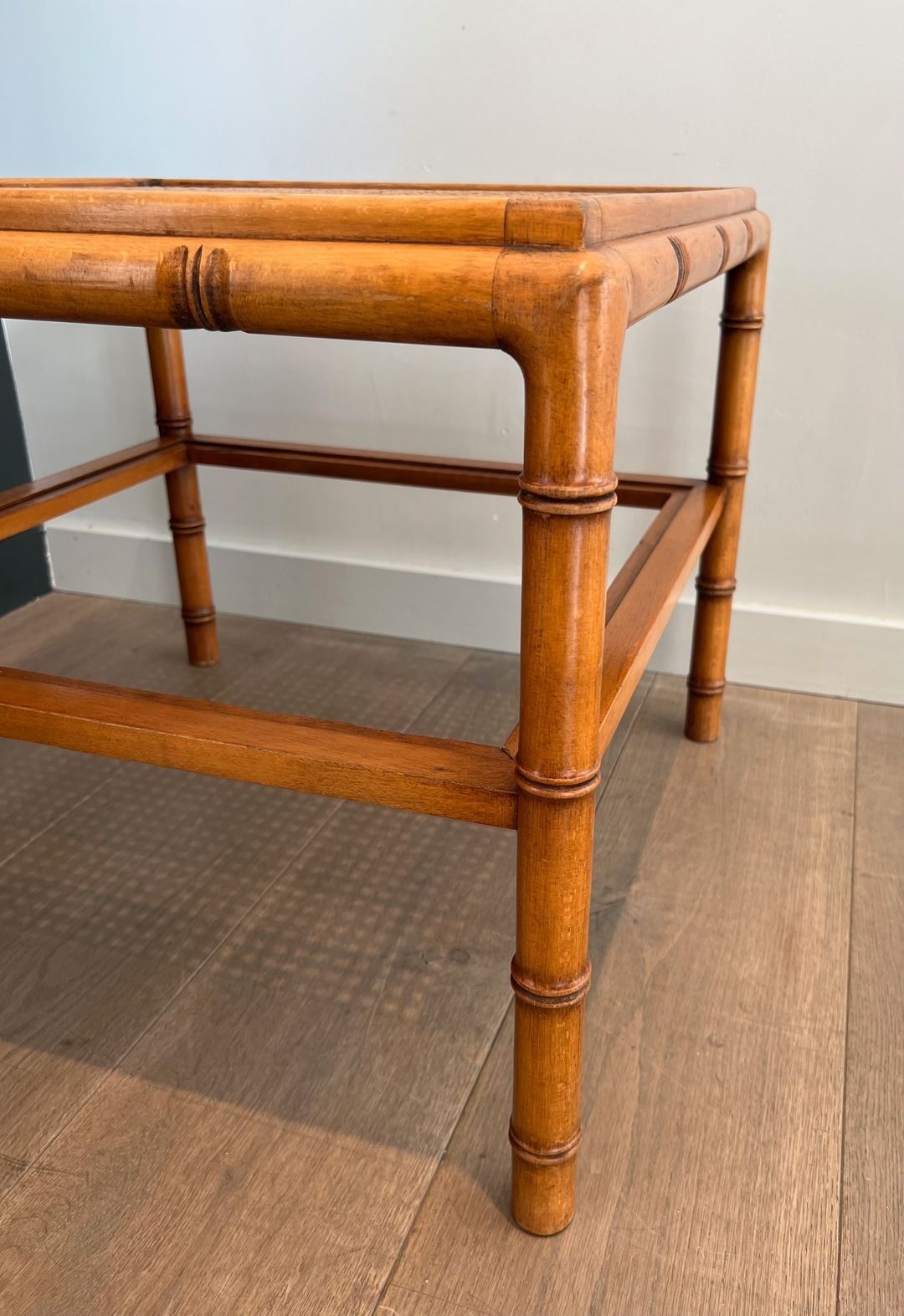
This handsome pair of side tables represents a celebrated current in French interior design of the early 1970s, when the faux-bamboo aesthetic — long a staple of the great Parisian ateliers — was reinterpreted through the lighter, more organic materials of the decade. Each table is constructed entirely in wood turned to simulate the characteristic segmented and knotted profile of natural bamboo, its warm amber tonality lending the pieces an informal warmth that was highly prized in the decorating vocabulary of the period.
The square tops are covered in a tightly woven cane mat — the traditional cannage technique, familiar from the seats and backs of fine French chairs since the seventeenth century, here employed as a table surface. The caning is worked in a regular open-diamond pattern that allows light to pass through while providing a tactile, textured surface with considerable decorative presence. A frame of turned faux-bamboo wood, echoing the leg profiles, surrounds the caned surface and gives the top a finished, architectural edge.
The four legs of each table are fashioned in the same turned faux-bamboo manner, connected at the base by a simple rectangular stretcher in matching wood, which adds structural rigidity and a pleasing horizontal element to the composition. The overall silhouette is squared, open and light — the table appearing almost to float above the floor thanks to the slender stretcher and the relative transparency of the caned top. Measuring 60 by 60 centimetres with a height of 50 centimetres, each table is substantial without being overbearing.
Offered as a matching pair, these tables are equally suited to placement beside a sofa or armchair, as bedside tables in a rattan-appointed bedroom, or grouped as accent tables in a relaxed living room. Their generous surface area and natural materials make them as practical as they are beautiful, combining harmoniously with lacquer, brass, rattan and other materials typical of the 1970s interior.