
Georges Jouve
1910-1964
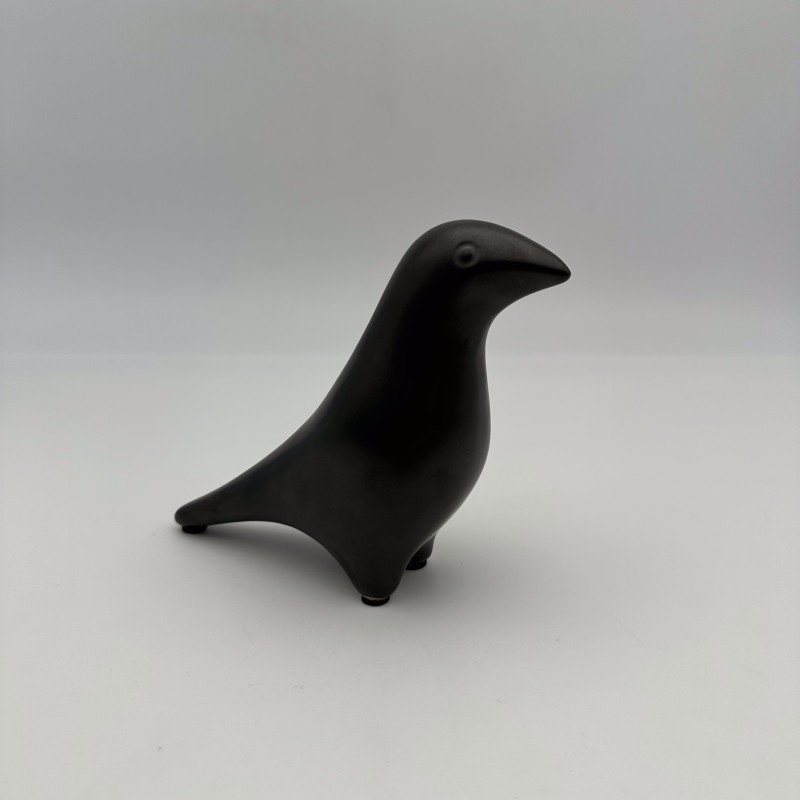
Ceramics as Sculpture
A major figure of post-war French ceramics, Georges Jouve raised clay to the level of sculpture. Based in Paris and then in the South of France, he developed a demanding body of work in which the purity of volumes takes precedence over ornament. His pieces, sought after by the greatest decorators of his time, have become icons.
The Aesthetic: Volume and Black Glaze
Jouve worked with bold, organic forms — pebbles, cylinders, biomorphic volumes — which he enhanced with his glazes, and in particular his famous deep, matte black. Each piece is unique, on the border between art and object.
Materials: Glazed earthenware, faience, black, white and coloured glazes.
Icons: The ‘noir’ (black) lamps and vases, the ‘galet’ (pebble) and ‘pomme’ (apple) forms, the wall plaques.
The Ceramicist of Decorators
Jansen, Royère and Adnet incorporated his creations into their most prestigious interiors. Having died prematurely, Georges Jouve left a rare and coherent body of work, today among the most prized in 20th-century ceramics.