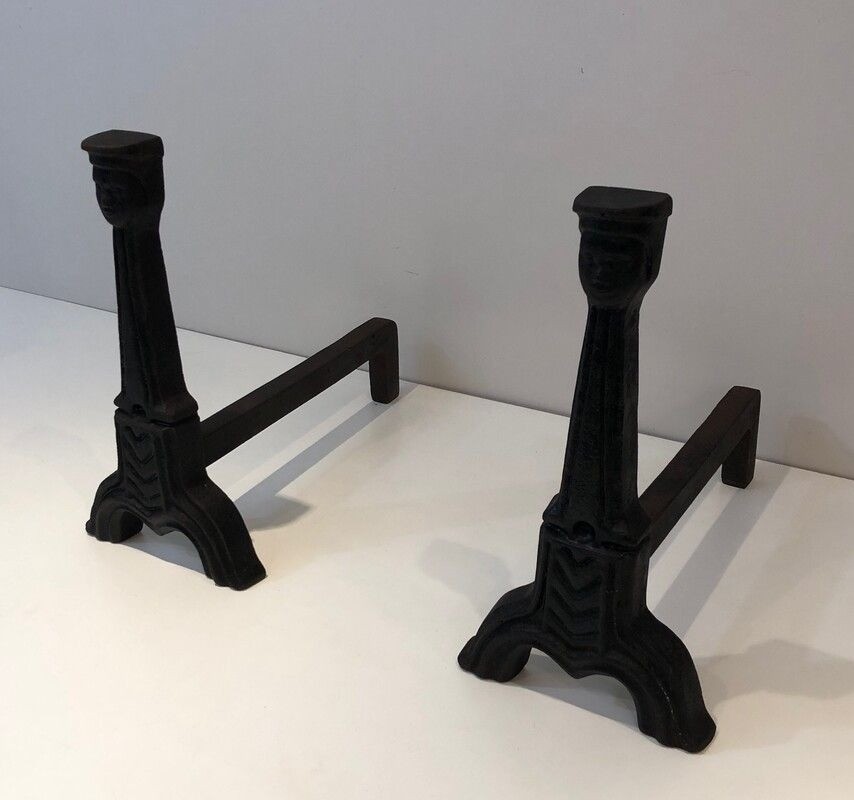
Pair of Neo-Gothic Cast Iron Andirons, French Work, circa 1950
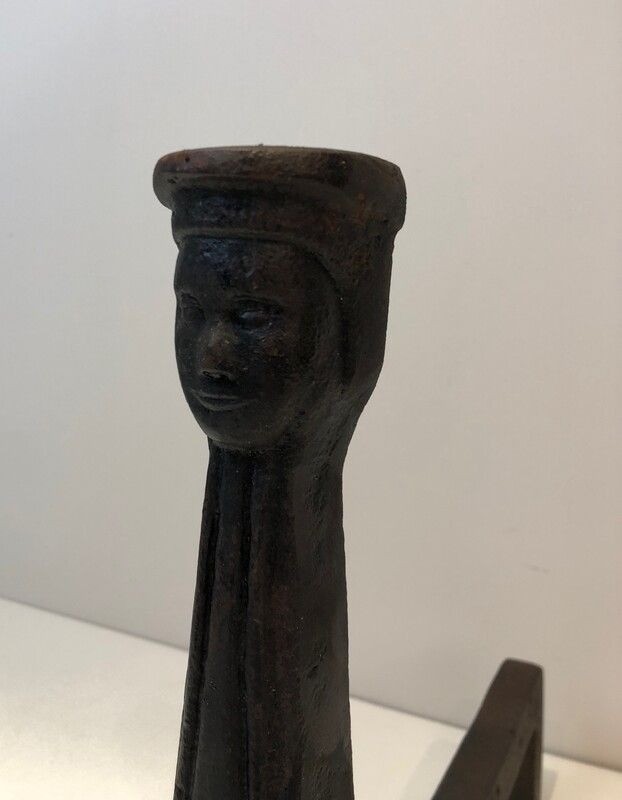
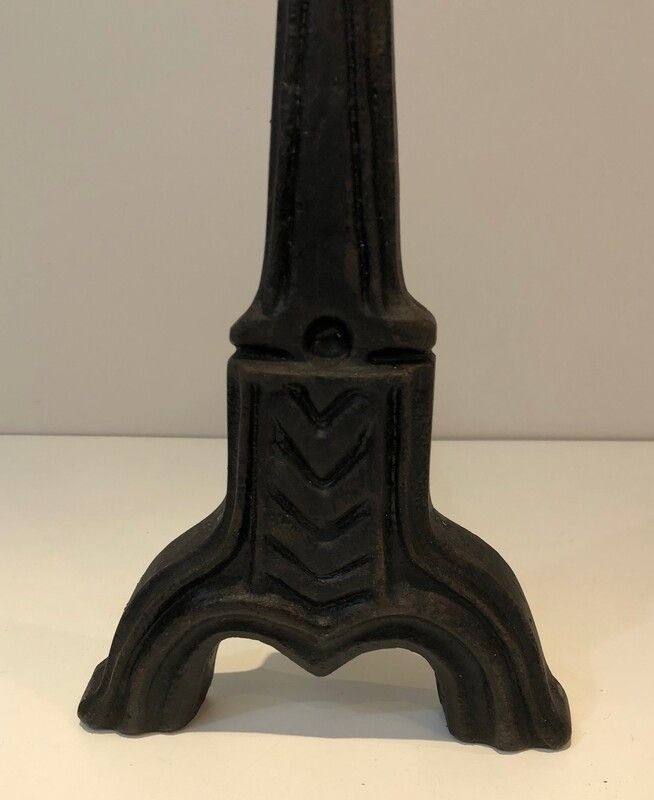
A pair of cast iron andirons in the Gothic Revival manner, their uprights worked with pointed arch and tracery motifs characteristic of the troubadour taste. French work, circa 1950. Dimensions : 20 × 43 × 39 cm.
These cast iron andirons draw their formal vocabulary from the Gothic tradition, their uprights composing a vertical programme of pointed arches, tracery, and architectural ornament that recalls the great mediaeval churches and châteaux of France. The material — cast iron, dense and sombre — is particularly well suited to this idiom: it was the medium in which the Gothic Revival expressed itself most naturally in the domestic sphere, its weight and darkness echoing the stone and wrought iron of the originals. The long bars extending behind are solidly made, functional and proportioned to hold logs of substantial size above the grate.
The Gothic Revival in France carries a distinct identity shaped by the country’s own extraordinary legacy of medieval architecture. From the restorations of Eugène Viollet-le-Duc at Carcassonne, Pierrefonds, and Notre-Dame to the playful troubadour style of the early nineteenth century, French designers and craftsmen developed an intimate familiarity with the Gothic formal vocabulary that allowed them to deploy it with genuine authority rather than mere borrowing. By the mid-twentieth century the Neo-Gothic had become less a revival than a continuous living tradition in certain regions and certain types of house — the country château, the presbytery, the hunting lodge in the Sologne — where the presence of Gothic ironwork at the hearth was entirely natural.
Cast iron and the Gothic interior are historically inseparable. Long before the industrial revolution, mediaeval foundries produced iron reinforcements, crampons, and decorative grilles for the great cathedrals; the iron tie-rods visible in so many Gothic churches are among the earliest examples of structural metalwork in European architecture. In the nineteenth century, the coincidence of the Gothic Revival with the mass production of decorative cast iron produced a vast repertoire of furniture and accessories in which pointed arches, crockets, and quatrefoils appeared as naturally in a fireplace surround as in a church porch. These andirons stand in that tradition.
In good condition with a warm, slightly rustic patina characteristic of well-aged cast iron. A distinguished choice for a house with Gothic architectural character, a library or study where the mediaeval idiom imparts gravity and atmosphere, or any interior where the warmth of the fire and the weight of history are to be felt in equal measure. Height: 20 cm. Length of bar: 43 cm. Depth: 39 cm.