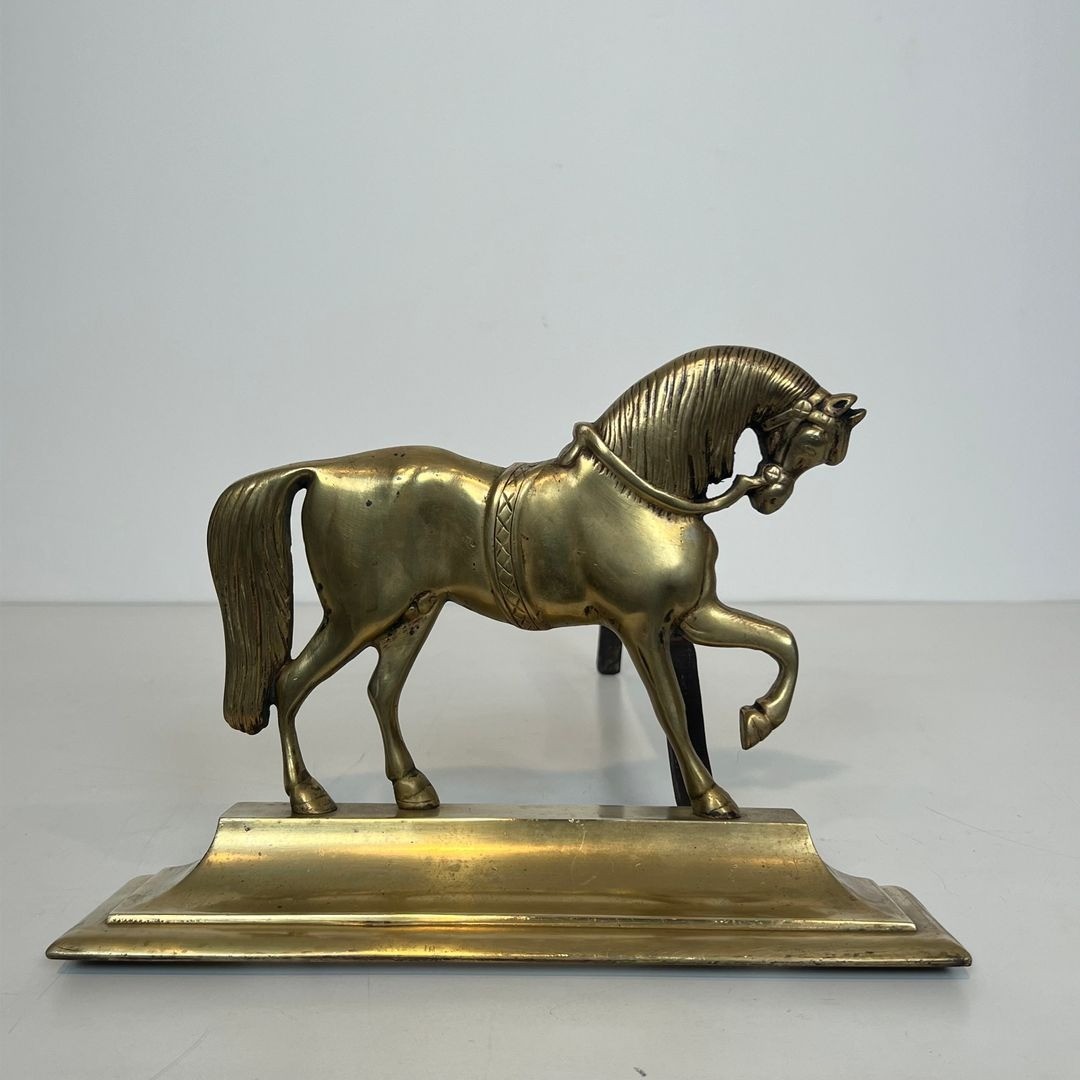
Pair of Bronze Full-Figure Horse Andirons on Flat Plinths, French circa 1920
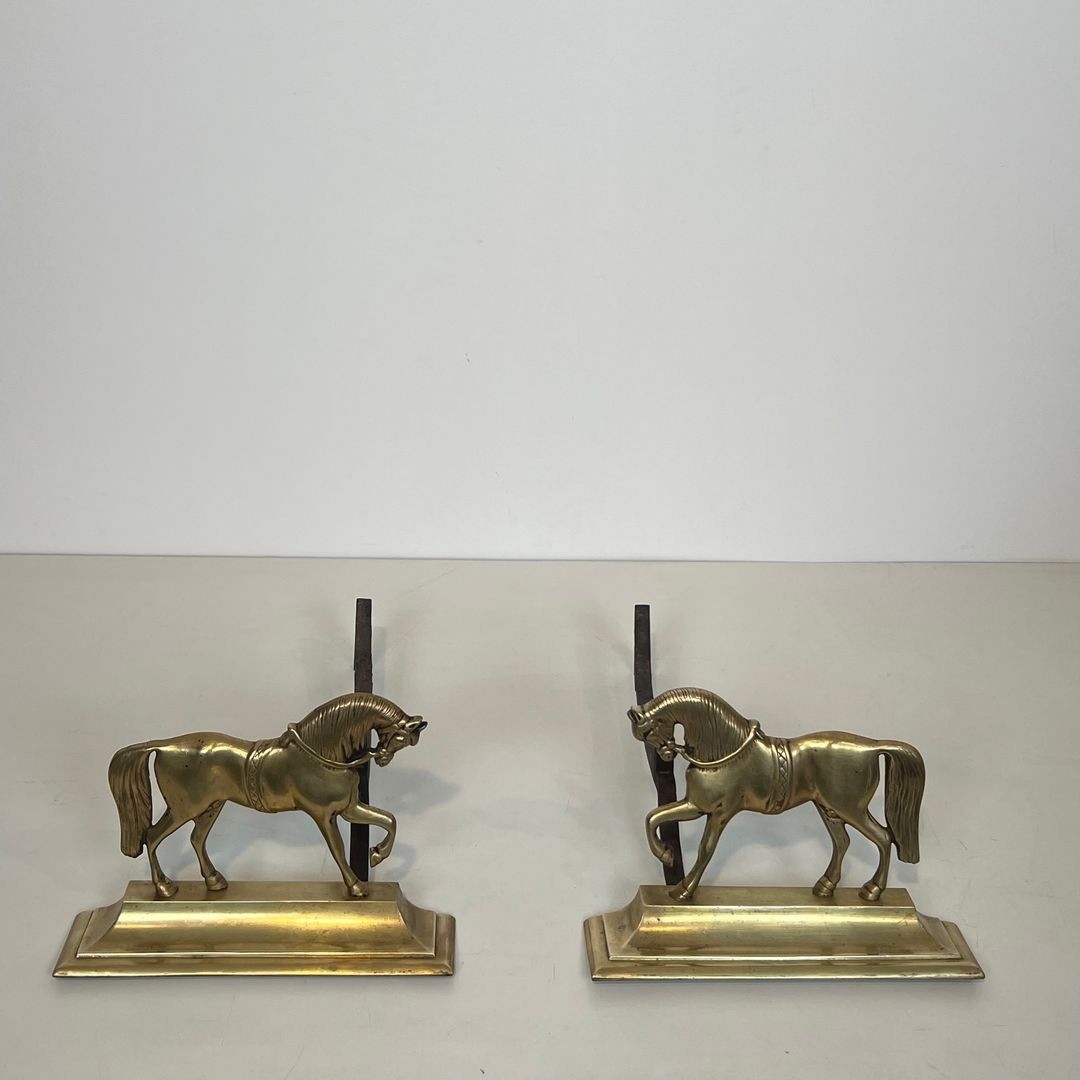
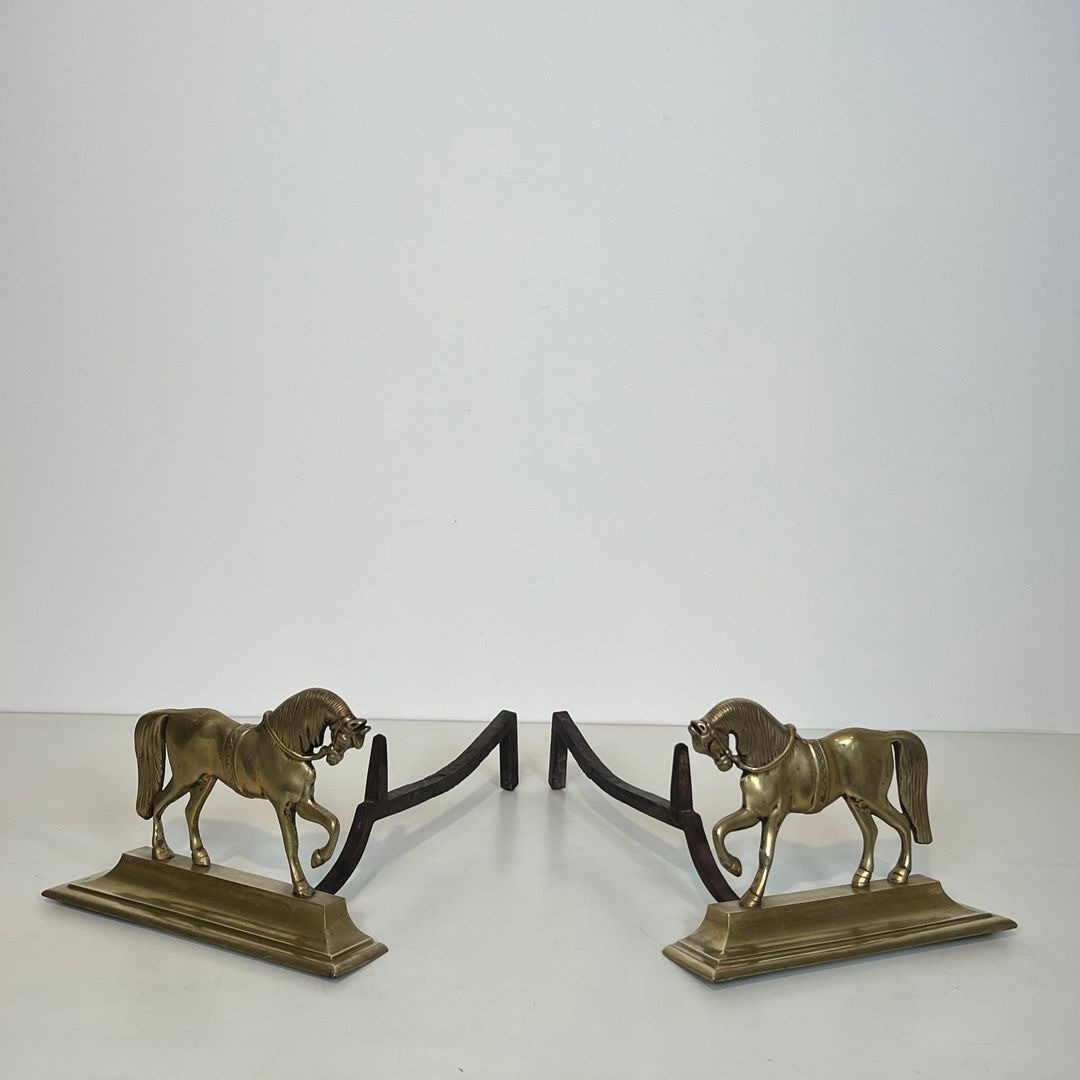
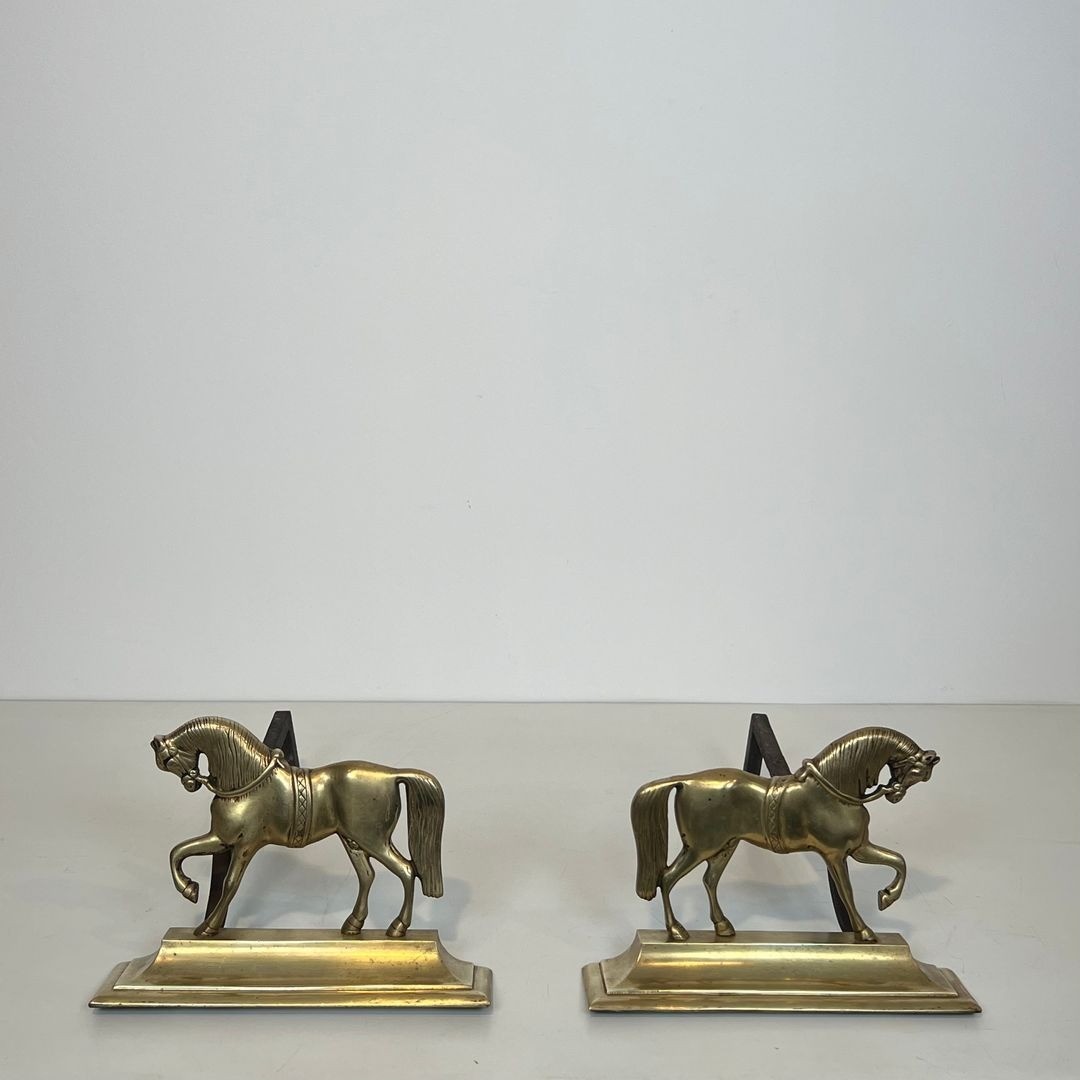
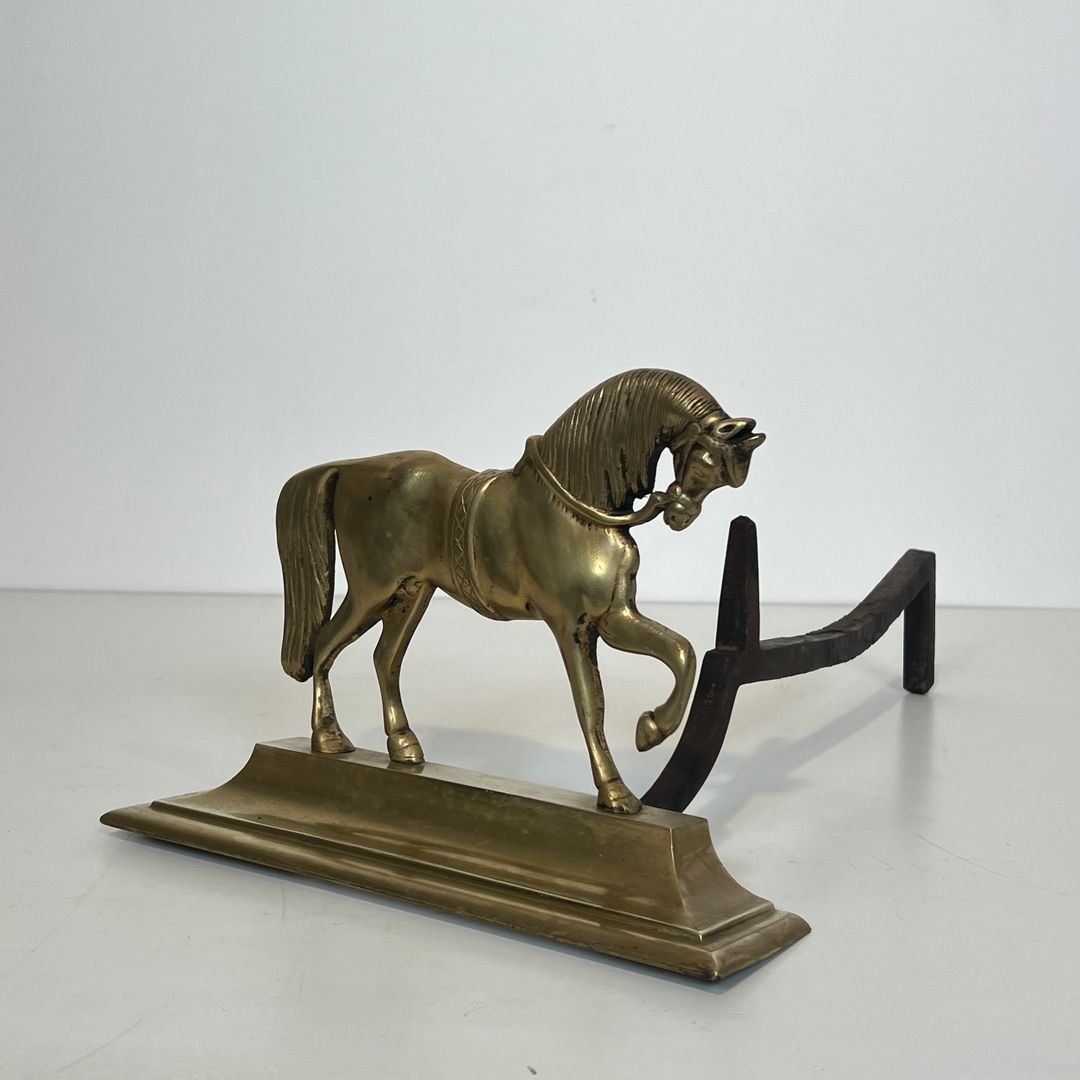
Pair of bronze horse andirons, each featuring a fully cast three-dimensional horse figure in a standing pose, mounted on a flat rectangular plinth with projecting log bar.
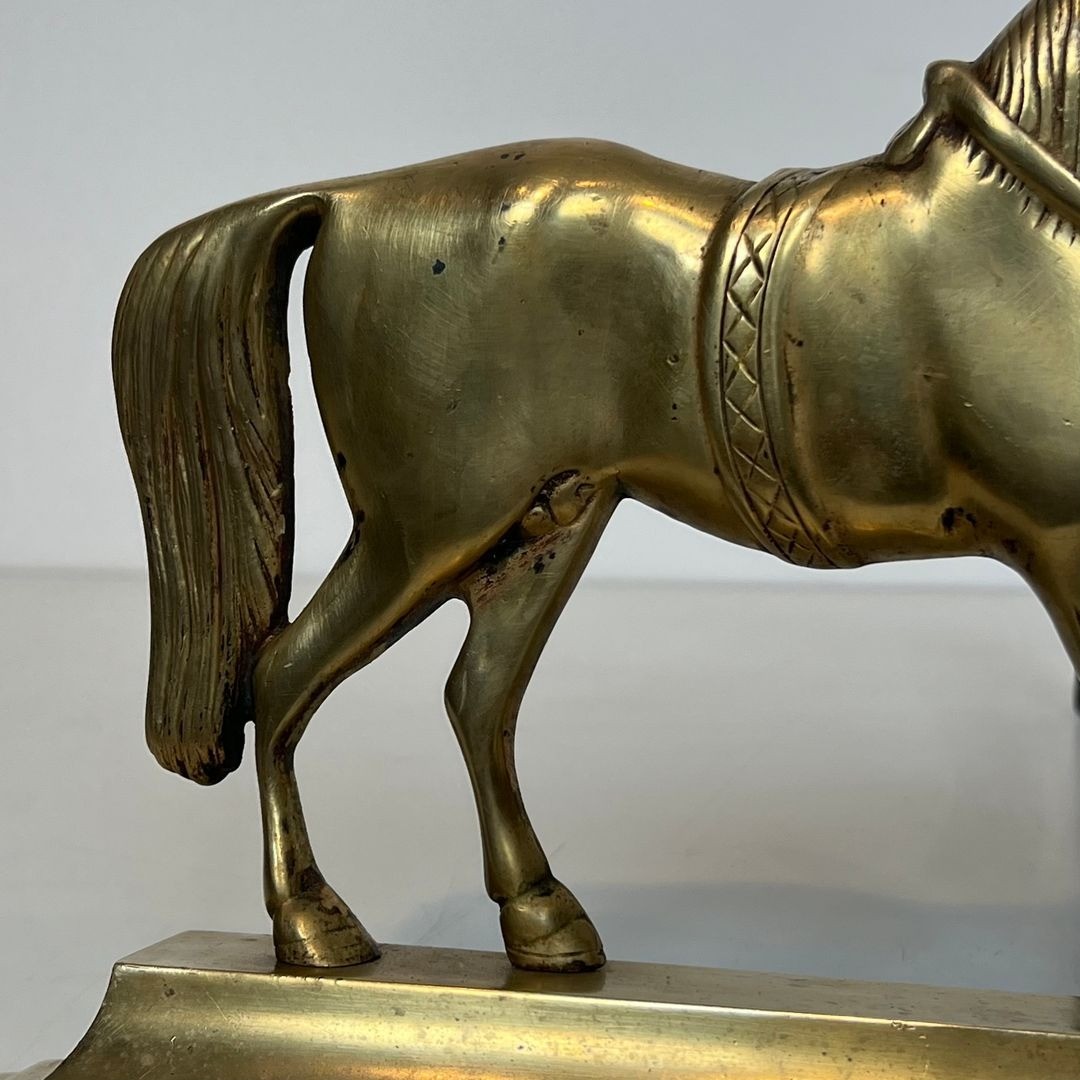
Among the most ambitious expressions of the French art foundry tradition, the horse-figure andiron transforms a domestic functional object into a miniature sculpture. These andirons — French, circa 1920 — present fully cast three-dimensional horse figures in a standing pose, each animal mounted on a flat rectangular plinth. The modelling is accomplished: the horse’s musculature is articulated with anatomical care, the mane and tail rendered with the confidence of a practised foundry model, the overall stance combining stillness with latent energy.
The warm patina of the bronze responds beautifully to firelight, shifting from golden highlights on the raised surfaces to deep amber in the recesses of the mane and legs. The format — full-figure animal on a flat plinth with a projecting log bar at the rear — was a standard of the French luxury andiron from the Belle Époque onward, with horse, lion, deer, and dog models appearing across the catalogues of the leading Parisian foundries and interior furnishers. At 31.5 cm wide and 21.5 cm tall, with a log bar depth of 50.5 cm, these are proportioned for a fireplace of substantial width.
The circa 1920 dating places these andirons in the productive transitional moment between the Belle Époque tradition of elaborate animalier bronzes and the streamlined aesthetic of emerging Art Deco, before the figurative became subordinated to the geometric. The horse figure at this date retains the full sculptural vocabulary of the nineteenth-century animalier tradition — the school of Barye, Fratin, and Mêne — applied to the domestic object with great skill. The quality of casting and refinement of patina suggest a Parisian foundry of the first rank.
An exceptional pair, of the kind that is increasingly rare to find intact and well-preserved. The horse-figure andiron of this quality and date represents the apex of French domestic bronze casting in the first quarter of the twentieth century.