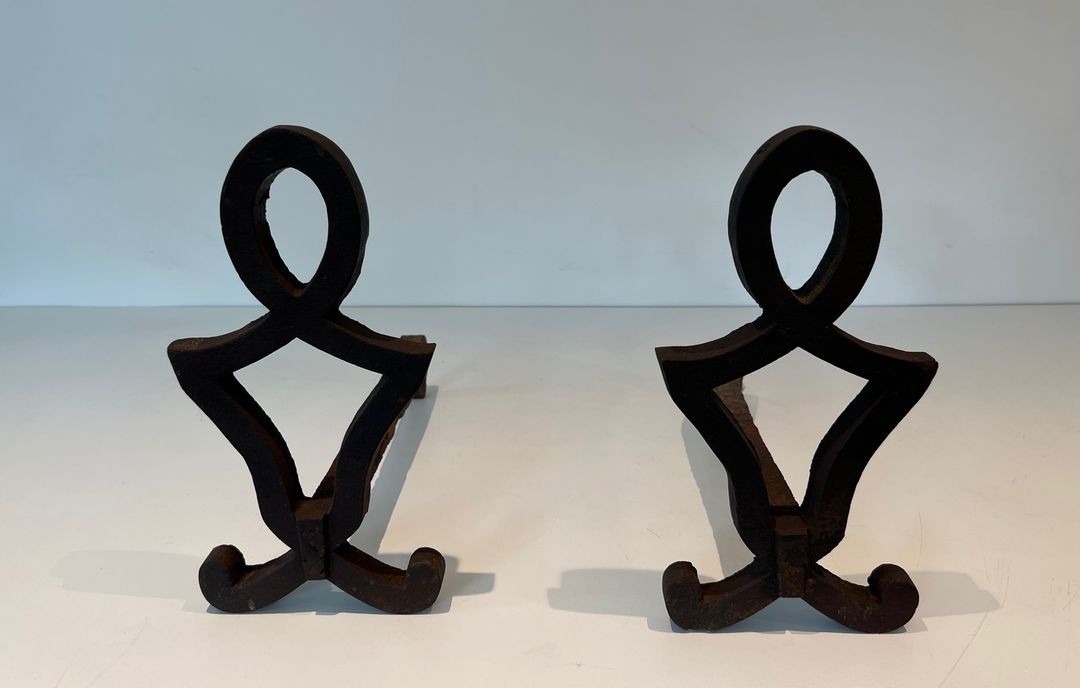
Pair of Modernist Cast Iron Andirons with Stylised Figural Uprights, by Raymond Subes. France. Circa 1940.
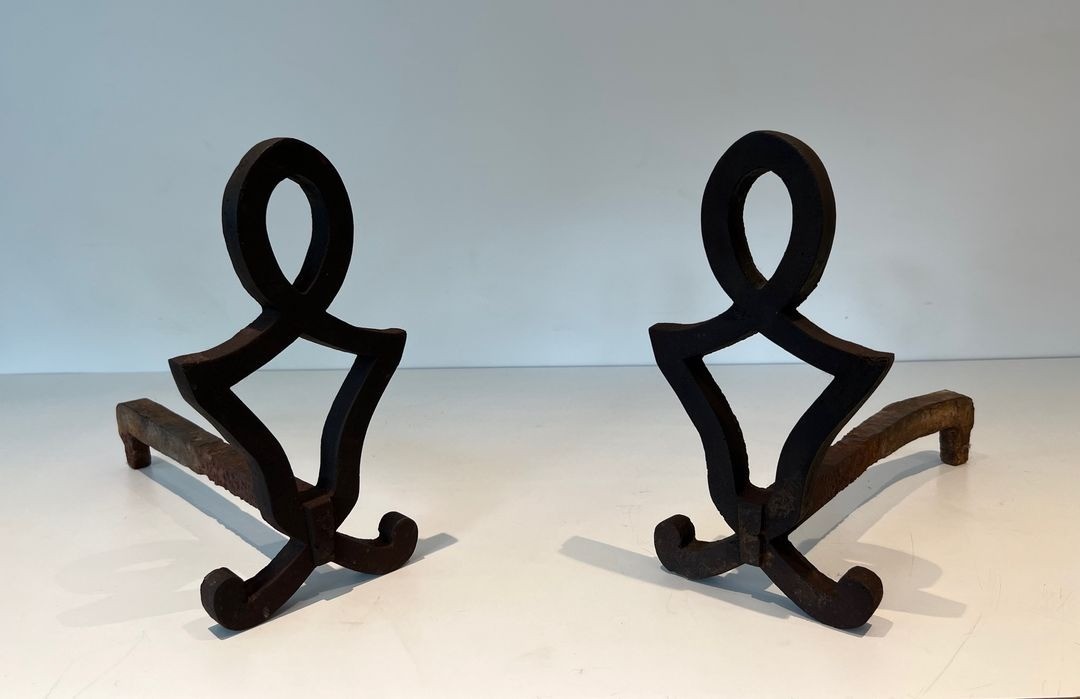
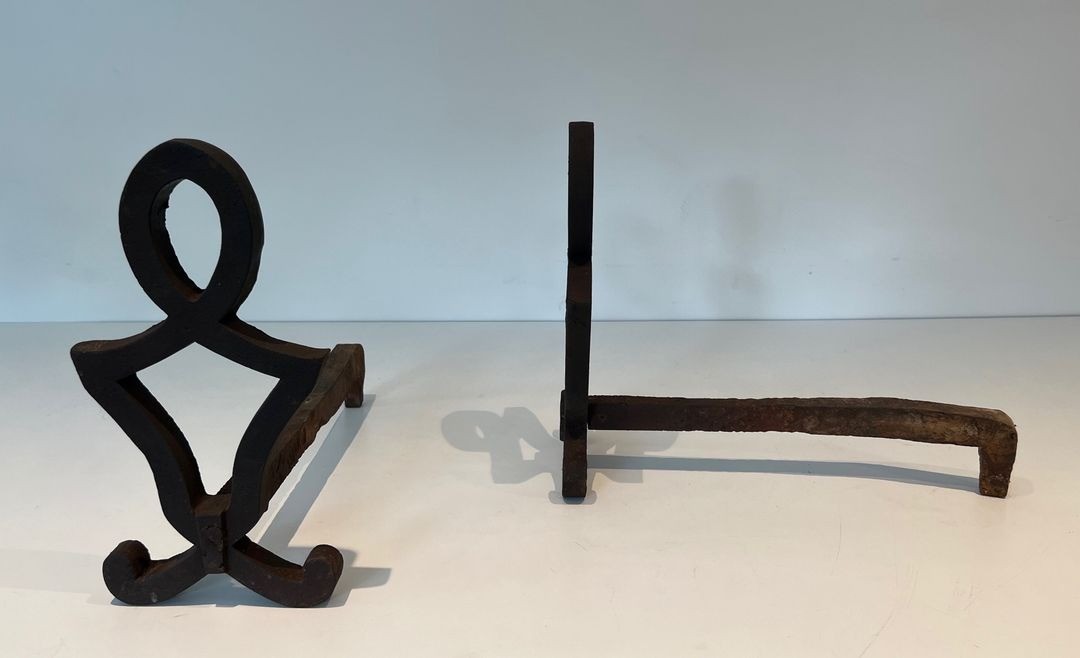
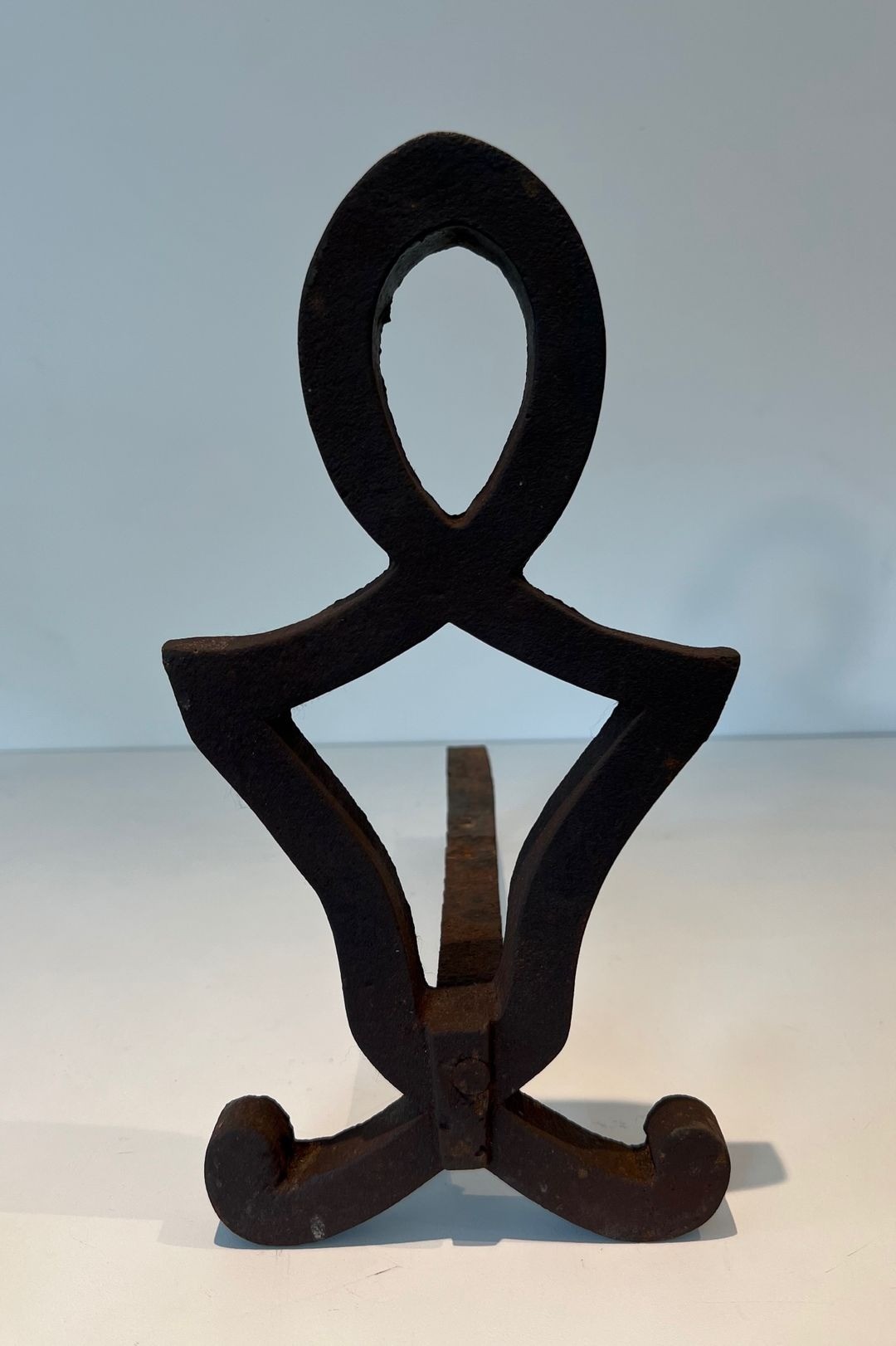
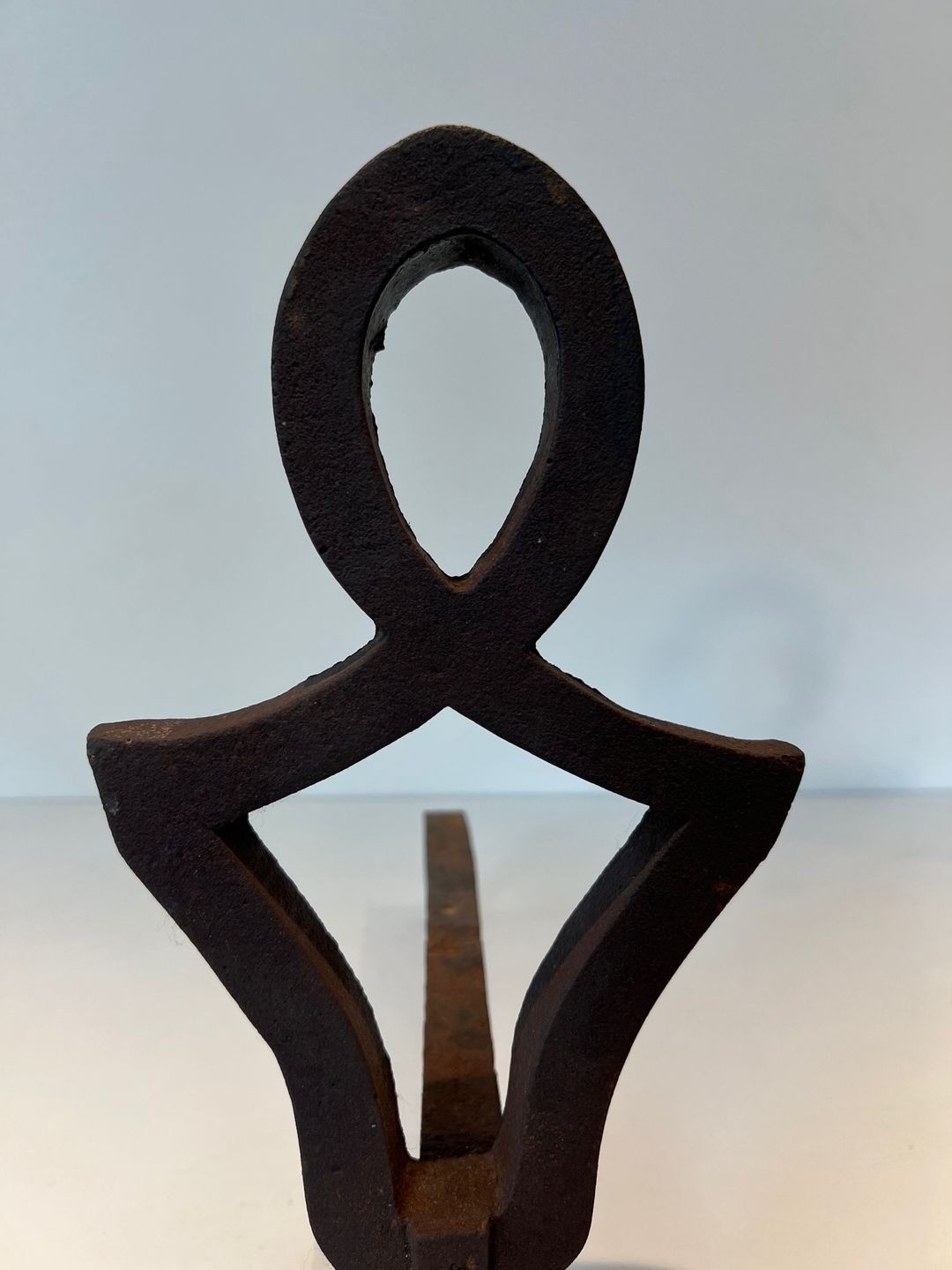
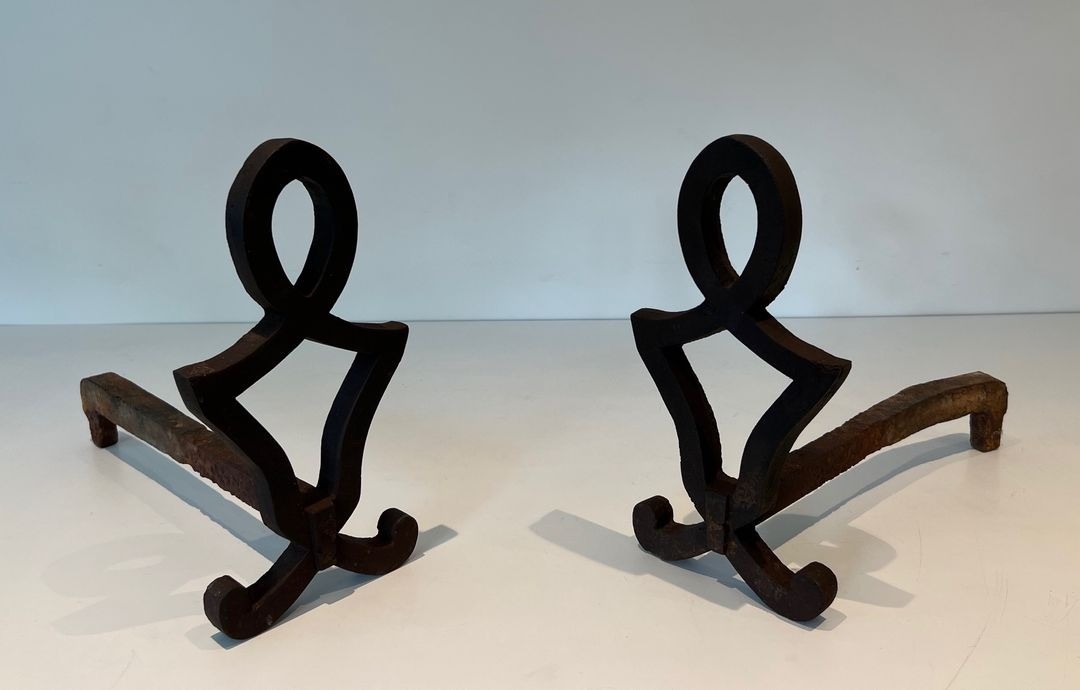
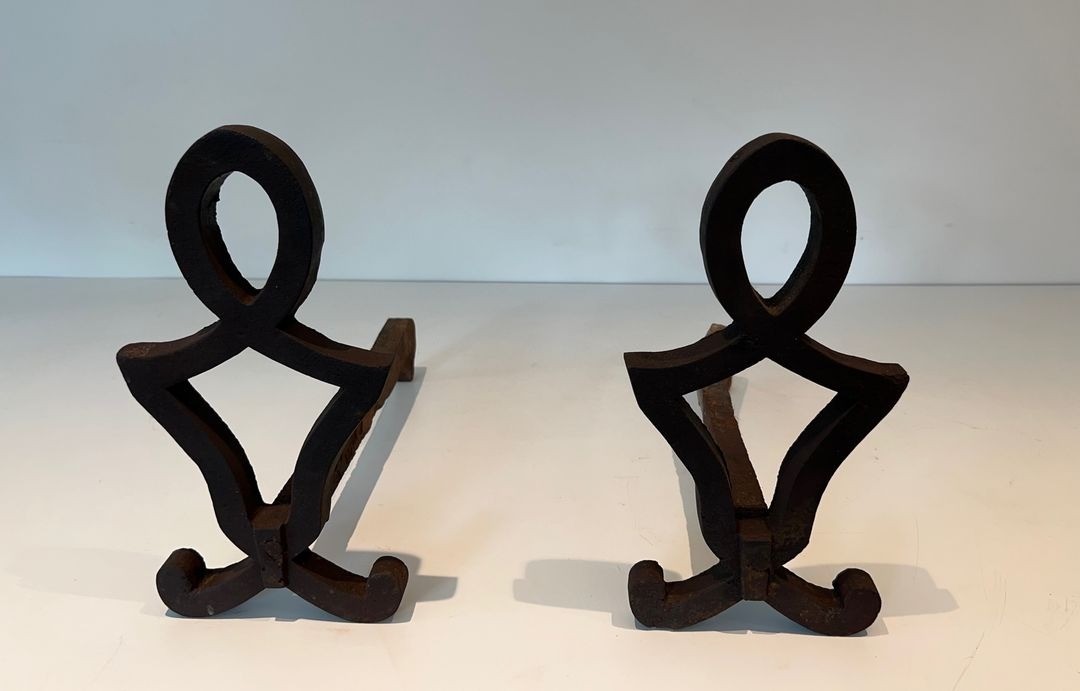
Pair of modernist cast iron andirons attributed to Raymond Subes. Each upright is cut from a flat plate of cast iron to form a bold abstract silhouette — a closed oval loop at the crown, a narrow waist with lateral projections and a broadening lower body on small scrolled feet — evoking a stylised human figure with striking graphic power. Horizontal wrought iron log rest. Blackened matte finish. France. Circa 1940. W. 18 × D. 41.6 × H. 36 cm.
This pair of modernist cast iron andirons, attributed to the celebrated French ironsmith Raymond Subes (1891–1970), stands as a remarkable example of the master’s ability to distil the human form into its most elemental geometric silhouette. Each upright is cut from a single flat plate of cast iron, the profile resolved into a sequence of bold abstract shapes: a closed oval loop at the crown — suggestive of a head or an ankh — narrows to a slender neck before expanding into two symmetrical lateral projections, then contracts once more at the waist before broadening into a lower body of rhomboidal form, terminating in two small scrolled feet. The result is a powerfully graphic silhouette that oscillates between the hieroglyphic and the figural.
The back rest, in square-section wrought iron, extends horizontally to support logs at the correct height above the grate, its simple rectilinear geometry providing a considered counterpoint to the organic complexity of the cast upright. The combination of cast and wrought iron — two distinct processes with different material qualities — reflects Subes’ mastery of the full range of traditional iron craft.
Raymond Subes was among the foremost French decorative metal artists of the twentieth century. Trained at the École Boulle and later a protégé of Émile Robert, he rose to become artistic director of the Borderel & Robert atelier, for which he created some of the most celebrated ironwork commissions of the Art Déco period. His output ranged from monumental architectural grilles to intimate domestic objects, always demonstrating a confident command of abstraction within the iron-working tradition.
Dating to circa 1940, these andirons represent Subes at the height of his modernist period, when his work achieved a purity of form that anticipated the sculptural abstraction of the post-war decades. The blackened matte finish is consistent with his preferred treatment for interior ironwork of this period.