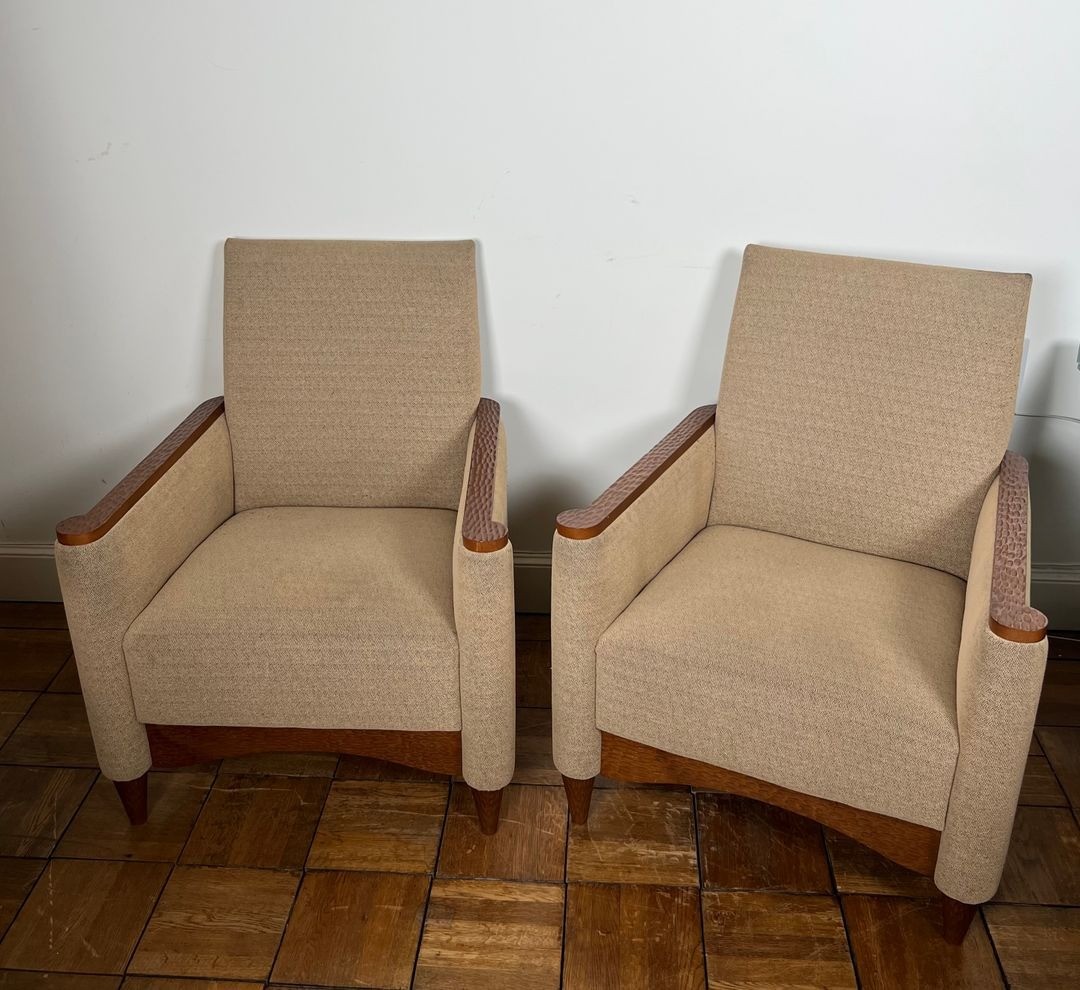
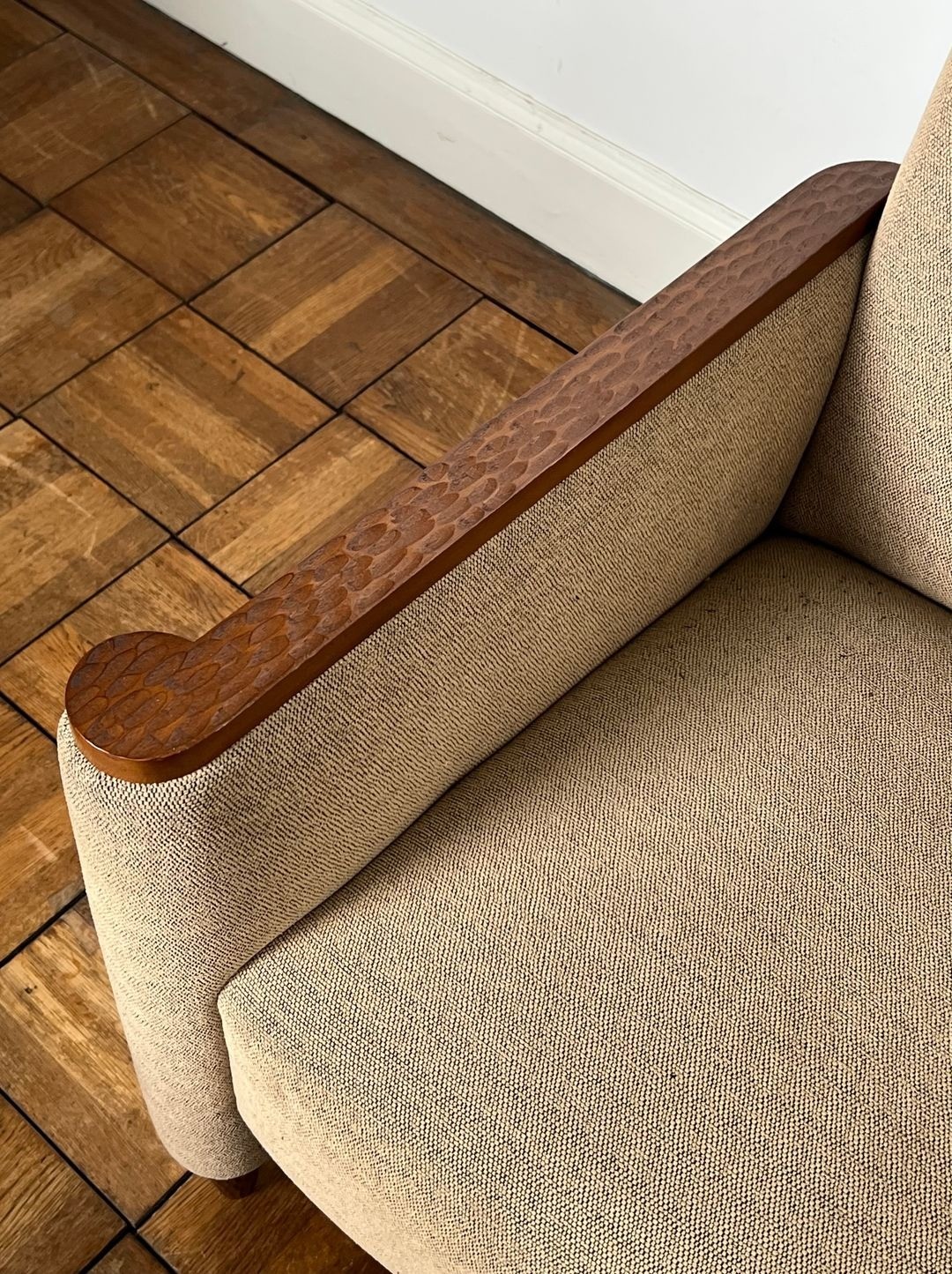
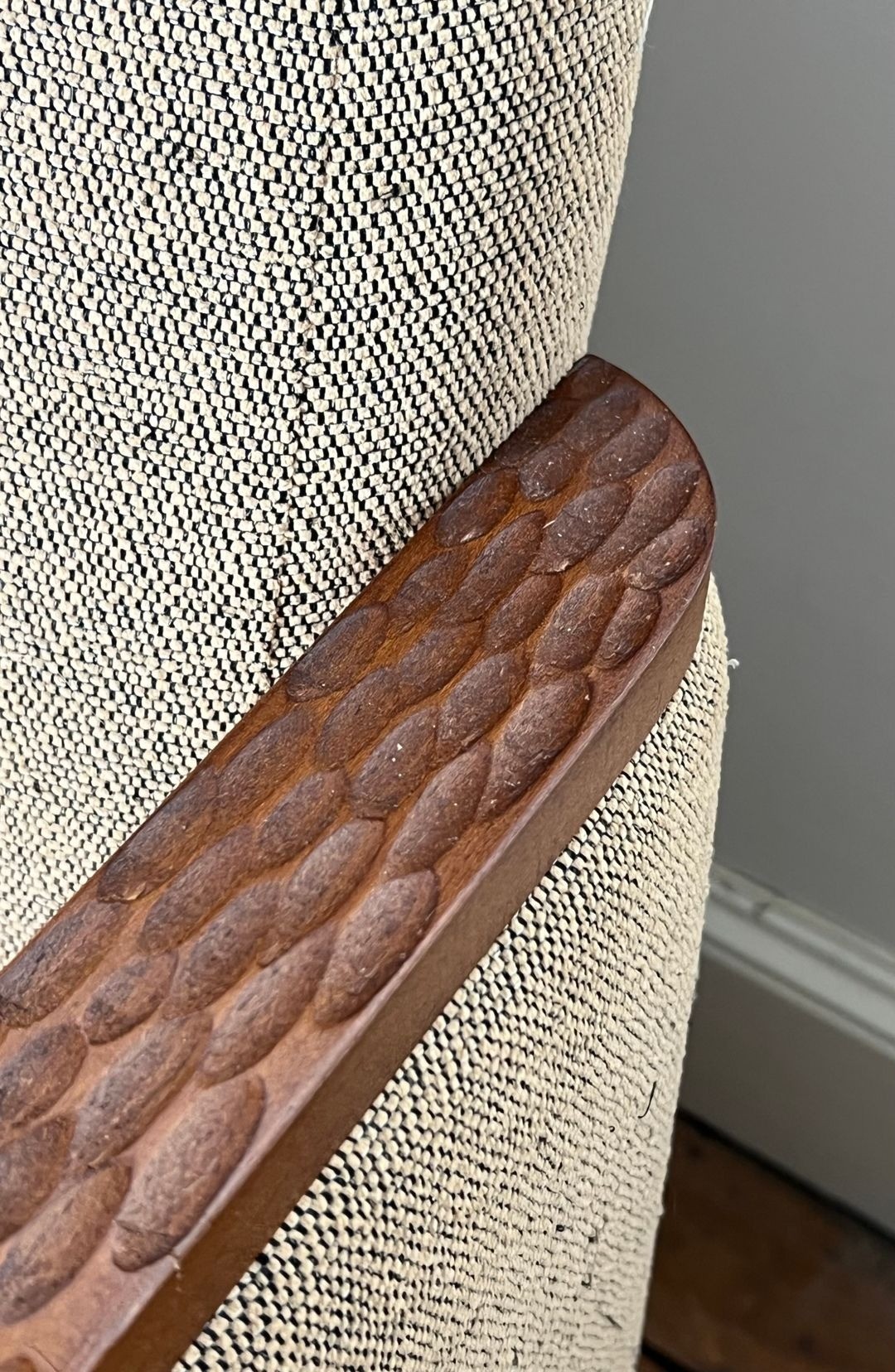
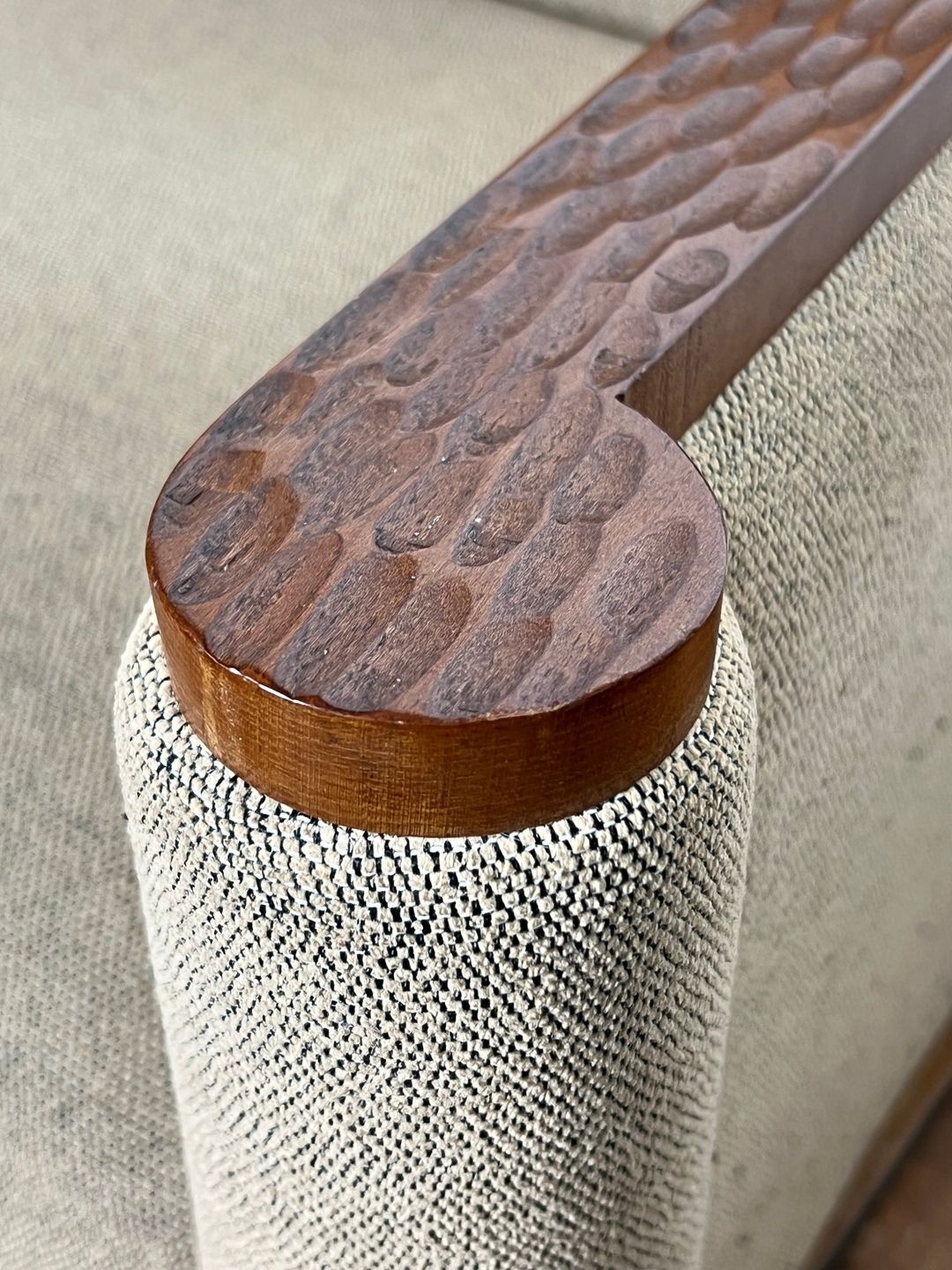
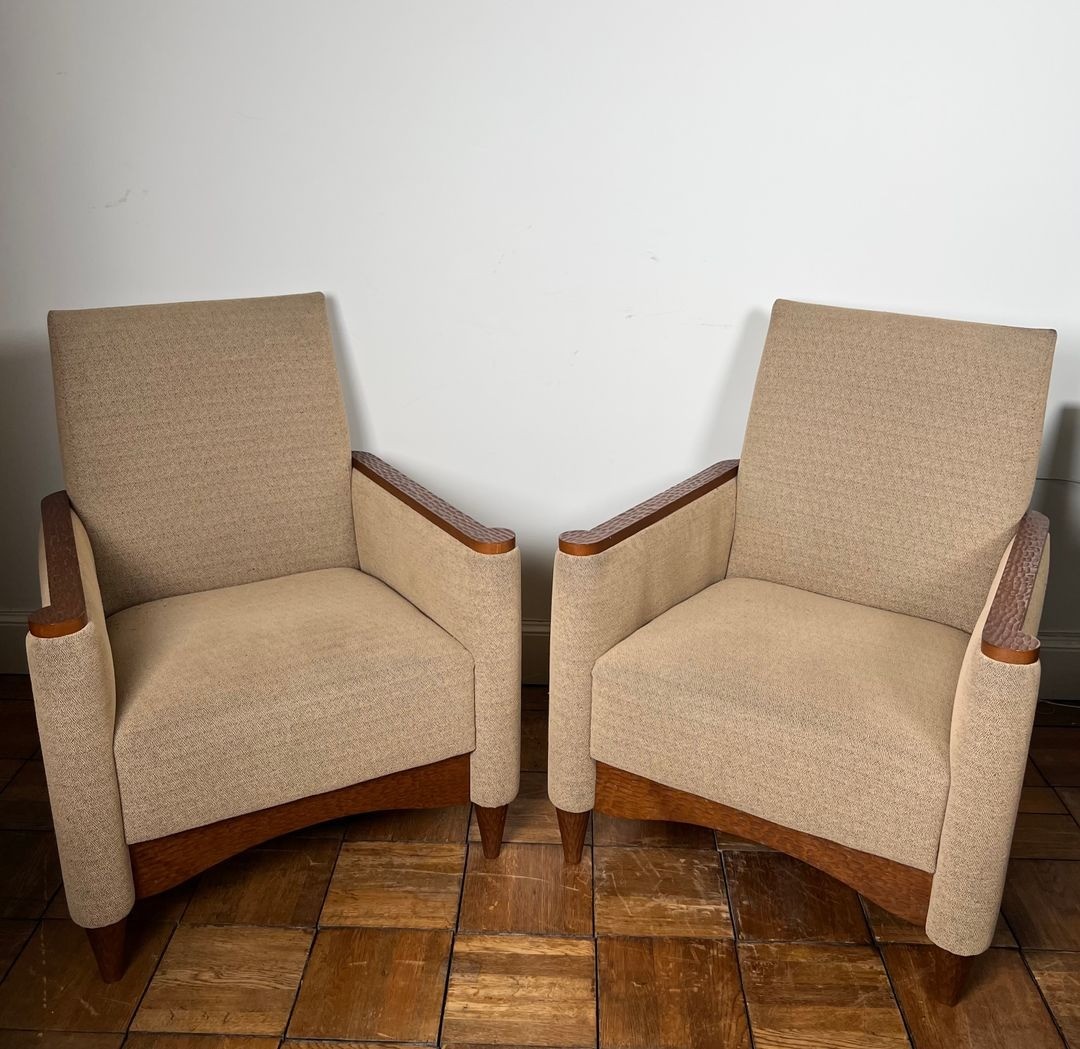
These two armchairs demand attention before they invite repose. The solid wood frames have been worked with the gouge—the craftsman’s hand leaving a rhythmic sequence of chisel marks across the surfaces—a technique that transforms each seat into an explicit record of its own making. At 73 centimetres wide, 70 deep, and 89 tall, the proportions are generous, the mass substantial: these are chairs that occupy space with authority. The mottled chiné fabric of the seats and backs provides a counterpoint of softness that heightens rather than diminishes the overall sculptural presence.
The designation “Brutalist” in the decorative arts of the 1980s drew on a broader aesthetic vocabulary that had been gathering force since the postwar period. Where architectural Brutalism celebrated the raw, unfinished surface—exposed concrete, visible structure, the refusal of cosmetic concealment—its translation into the decorative arts meant embracing the marks of craft: the plane, the chisel, the gouge. The decision to leave these marks unsmoothed was a deliberate aesthetic choice, a declaration that the process of making was not something to be hidden but to be exhibited. This sensibility connected to a parallel revival of artisanal craft in the 1980s French decorative arts, as designers and ébénistes reacted against the impersonal perfection of industrial production.
The pair amplifies this energy: two chairs worked by the same hand, bearing the same gouged grammar, create a coherent domestic environment in which material honesty and formal rigour operate together. The chiné fabric introduces a warm tonal register into the composition, its irregular distribution of tones echoing the irregular rhythm of the carved wood. Whether placed in a study, a salon, or a reception room, these armchairs assert themselves as objects with a point of view—furniture that makes a statement about the value of the handmade and the beauty of the imperfect.