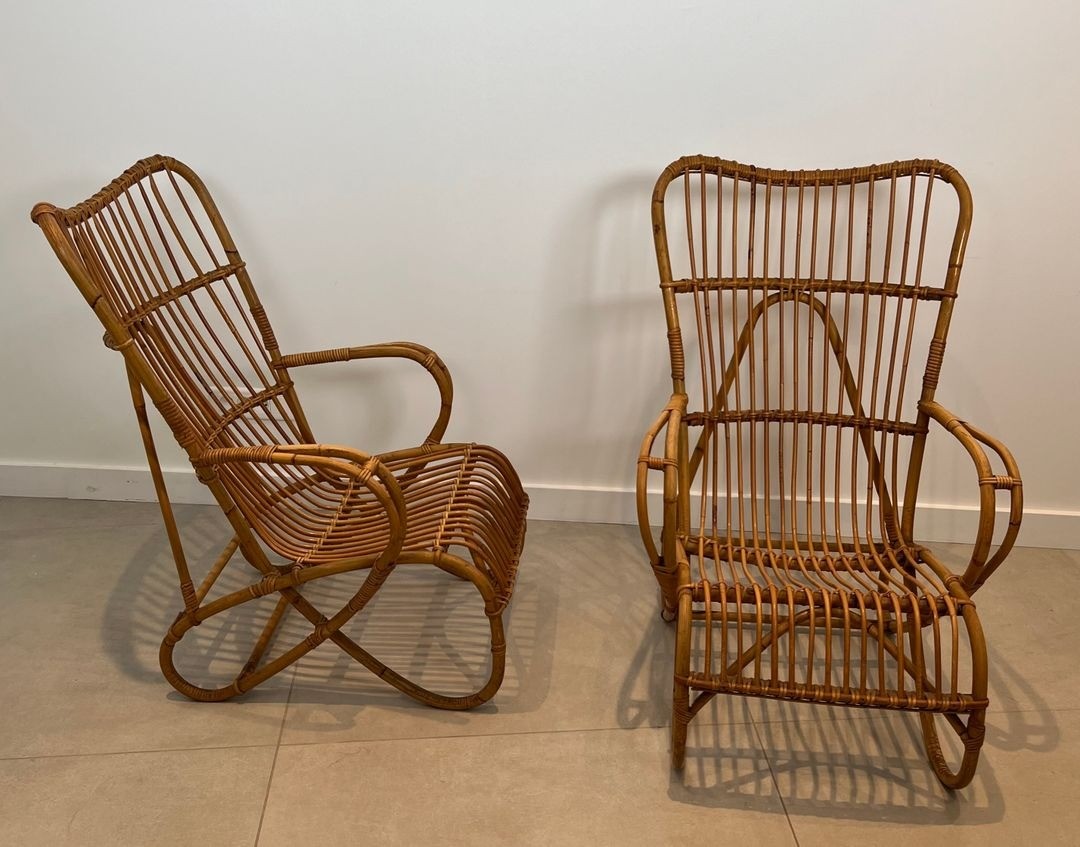
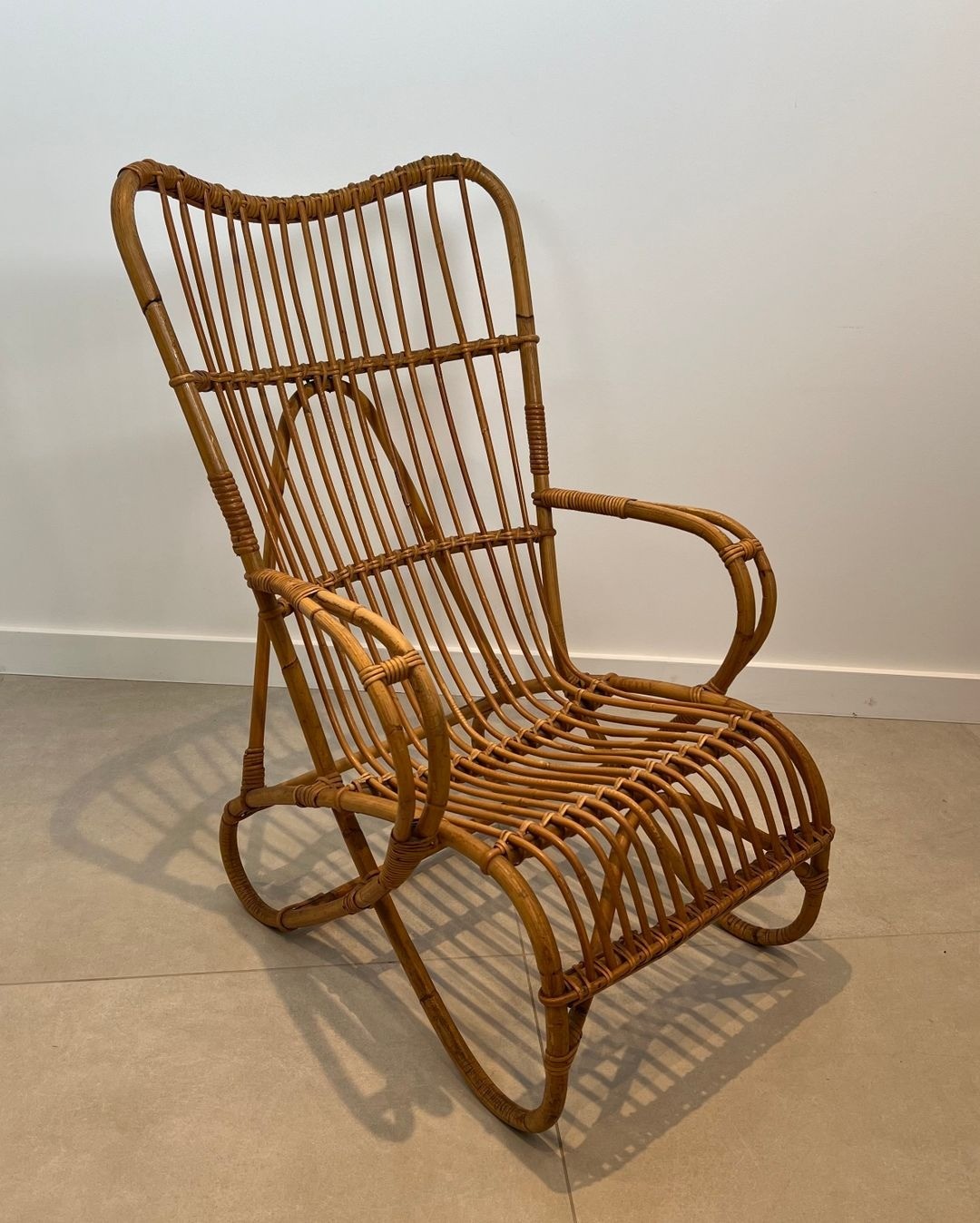
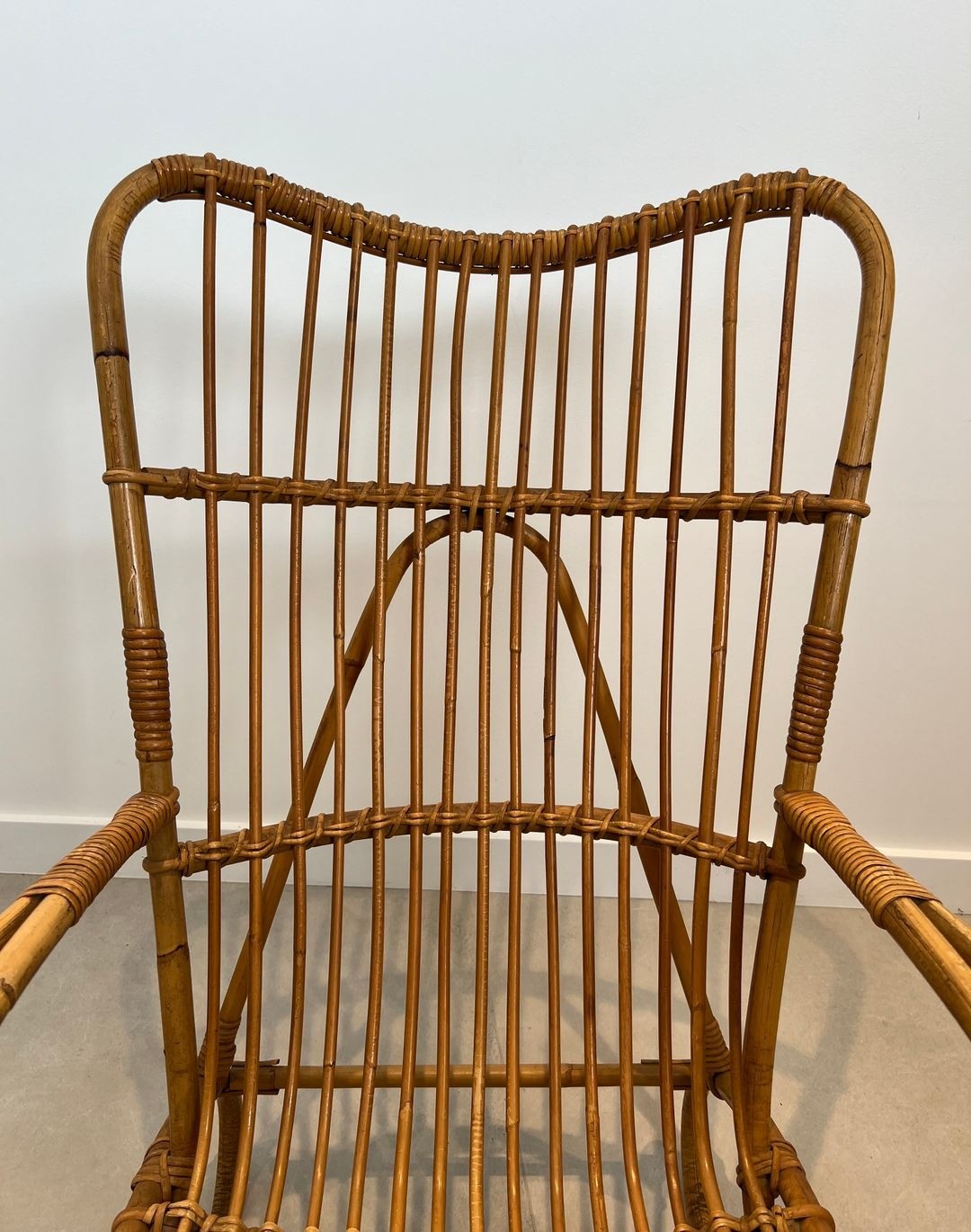
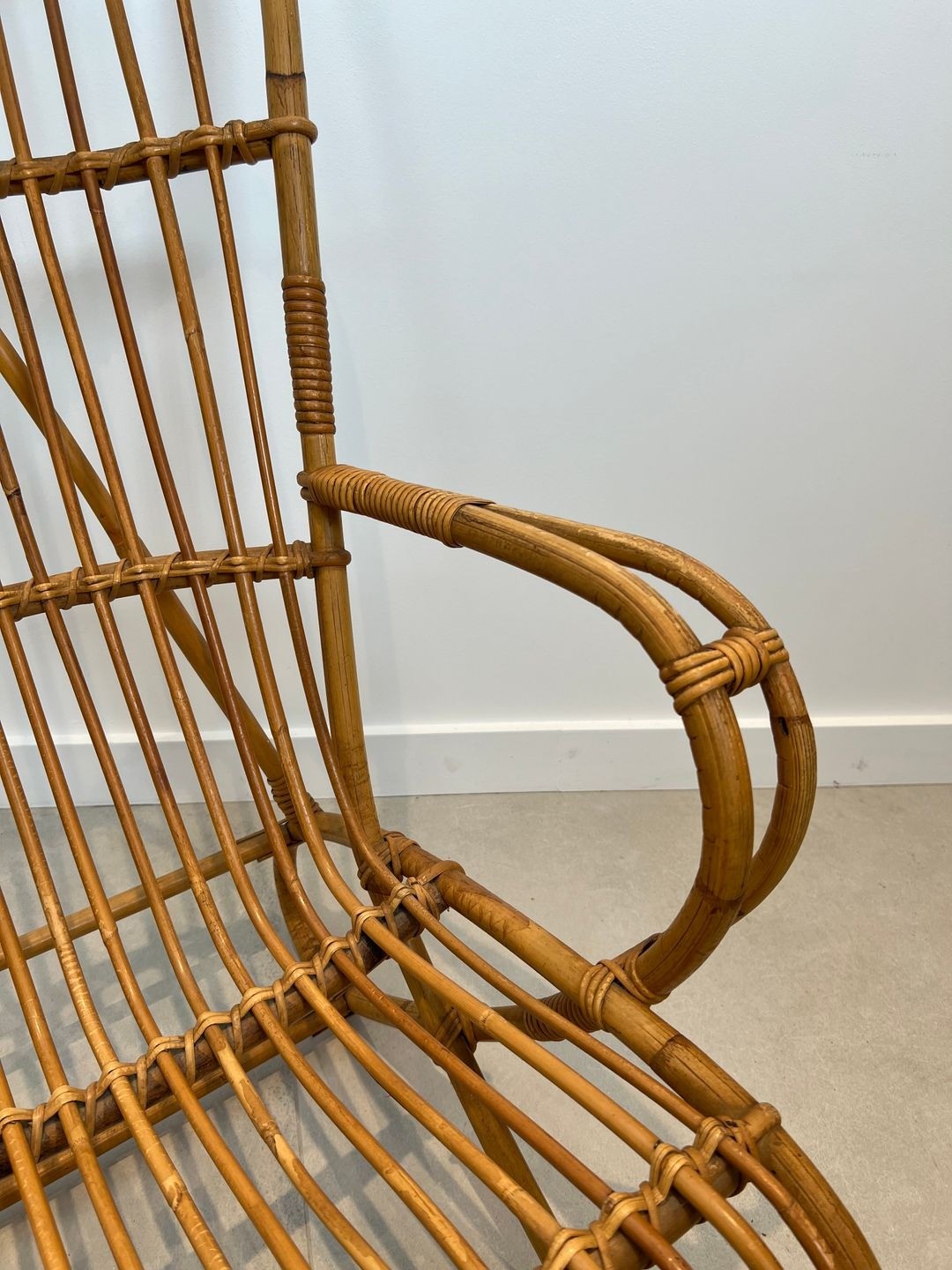
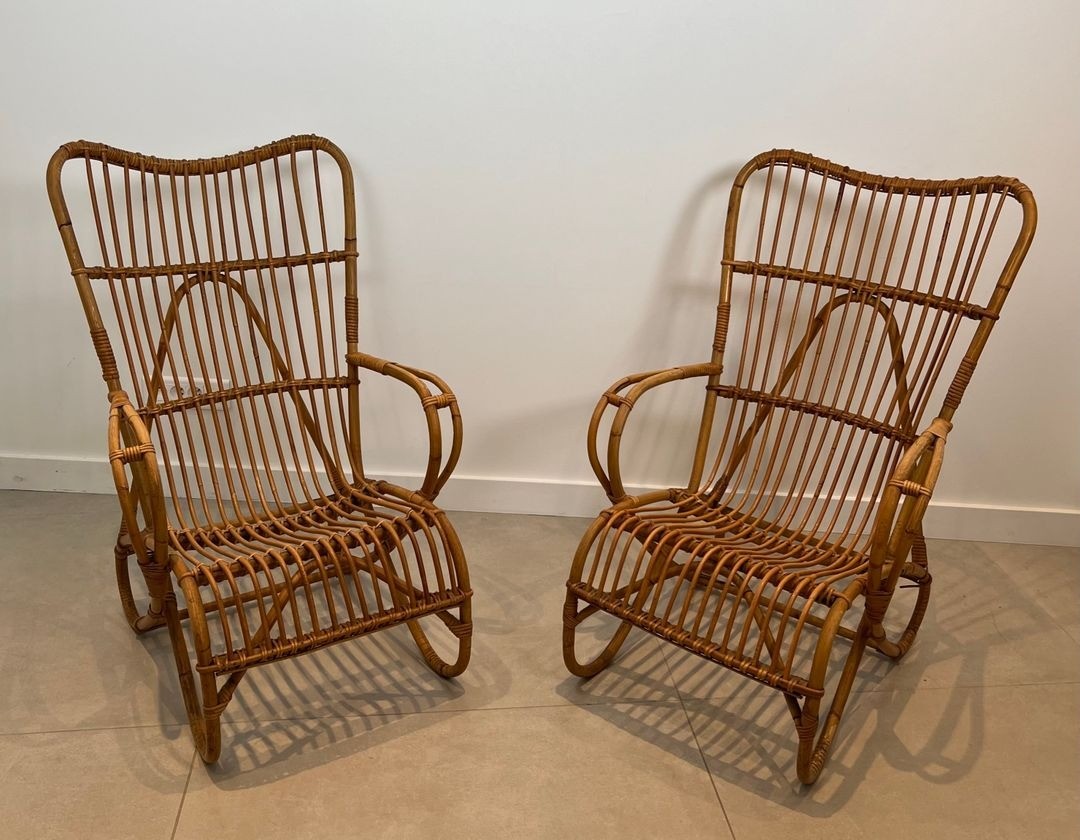
In the postwar decade, rattan ceased to be merely an expedient and became an argument. Where earlier generations had woven it into colonial furniture—heavy, imposing, built to signal permanence in tropical heat—the designers of the 1950s in France discovered something else in the material: its absolute refusal of pomposity. This pair of armchairs belongs to that moment of inversion, when form preceded material rather than the other way around. The silhouette is uncompromisingly modern—curved backrest flowing into the armrests without interruption, a continuous arc that declares sculptural intent—and rattan simply happens to be the medium through which that intent is realized. The result is an object that carries no institutional memory: no monarchical references, no imperial associations, no bourgeois upholstery to signal status.
The proportions reward attention. At 97.5 cm in height the chairs are not towering—they do not perform authority—but the depth of 85 cm is the true signature of the design. This is not a chair built for formality, for the upright spine of the attentive guest; it is built for repose, for the body settling backward into the woven structure. The depth says, unambiguously: sit here, stay here. The natural texture of rattan adds a haptic dimension that upholstered furniture cannot replicate—the slight give of the weave, the warmth of organic fibre against skin, a responsiveness that synthetic materials simulate but never achieve.
Offered as a matched pair, the two chairs carry the additional value of relational coherence—they create a conversation rather than a monologue, a spatial proposition rather than a singular accent. Their condition after more than seven decades is a testament to the durability of rattan when properly cured and constructed. For a contemporary interior—whether a terrace conceived as a room, a study of considered informality, or a living space in dialogue with mid-century design—this pair represents something rare: the comfortable and the beautiful arrived at simultaneously, without compromise to either.