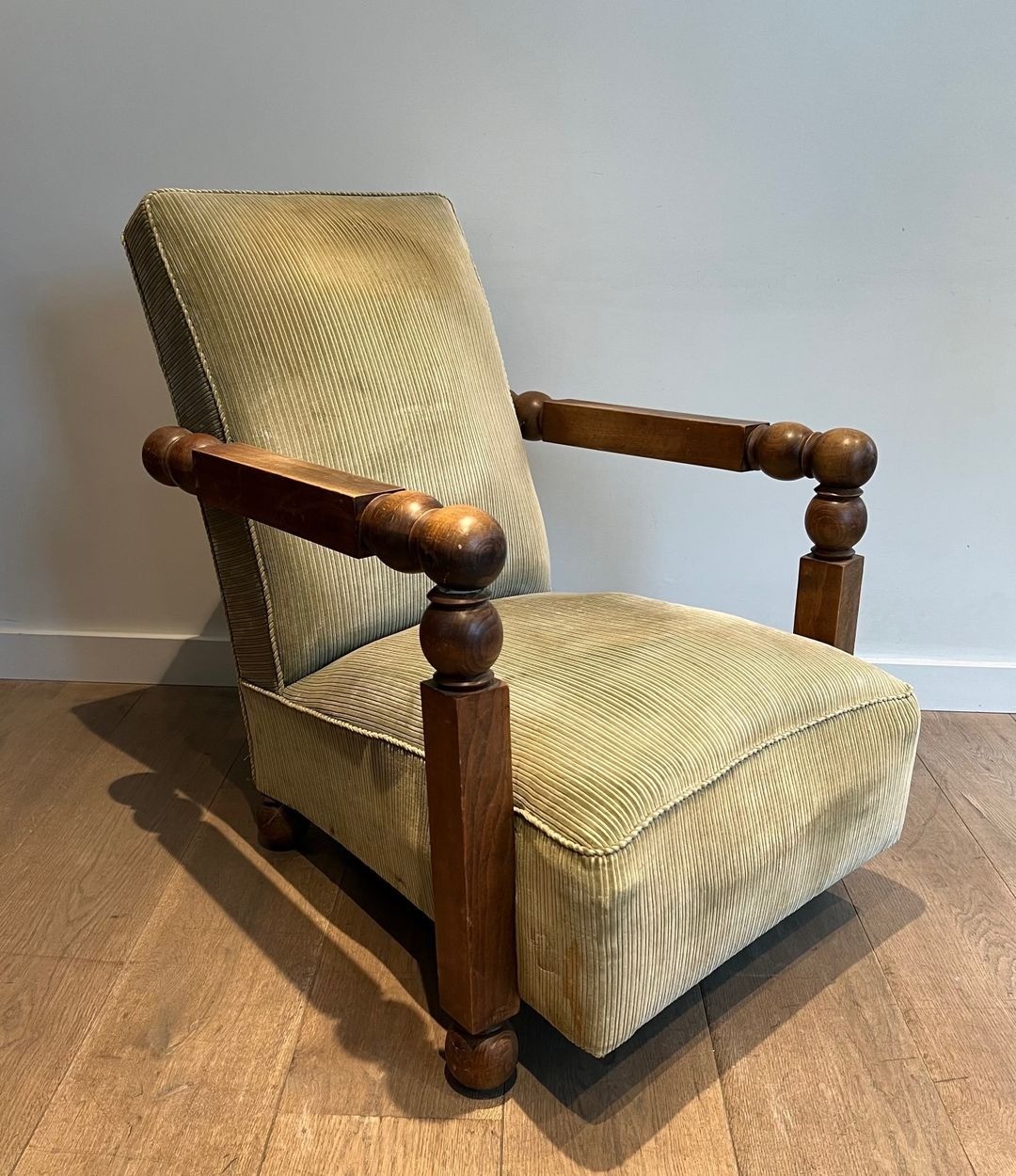
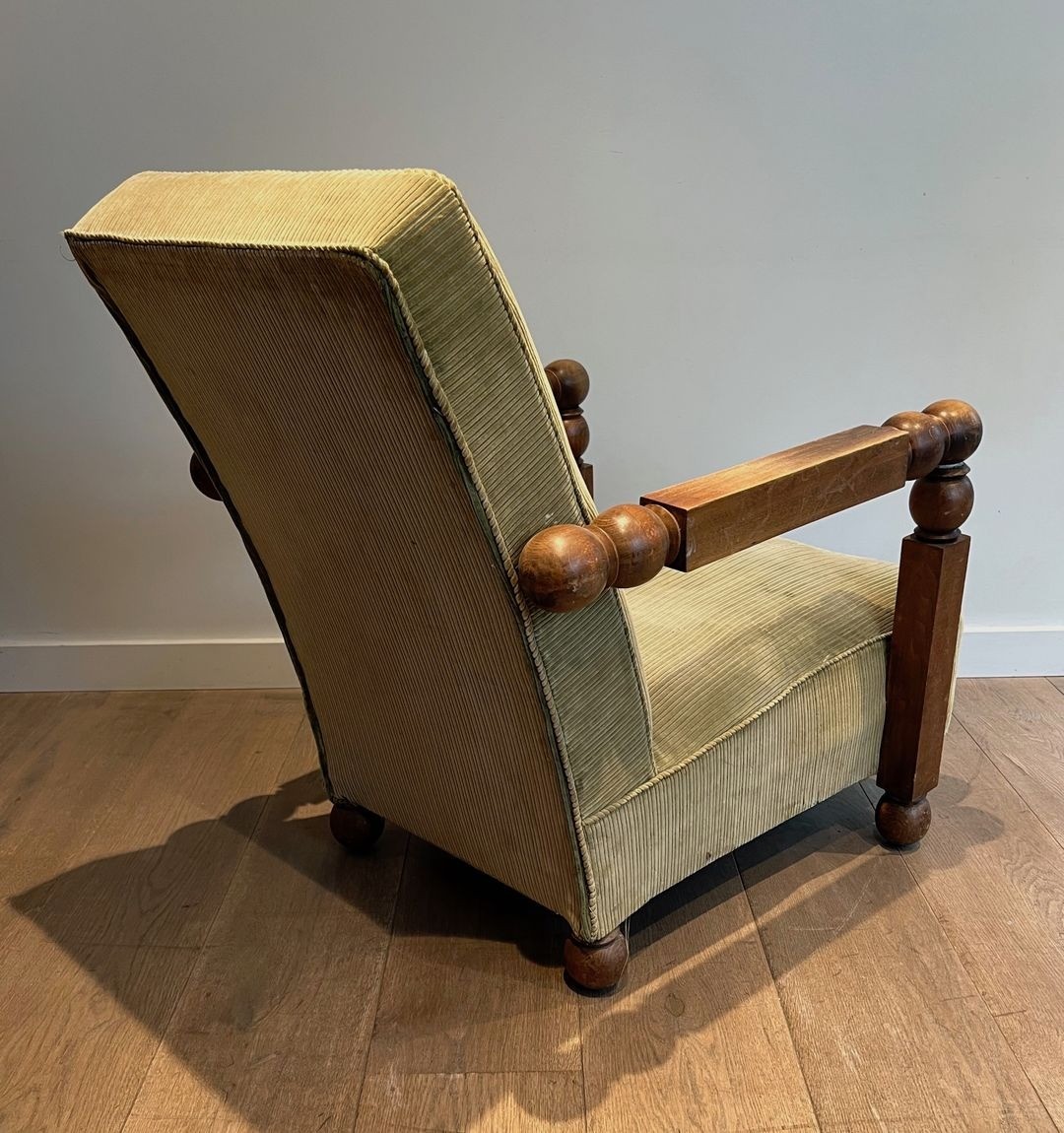
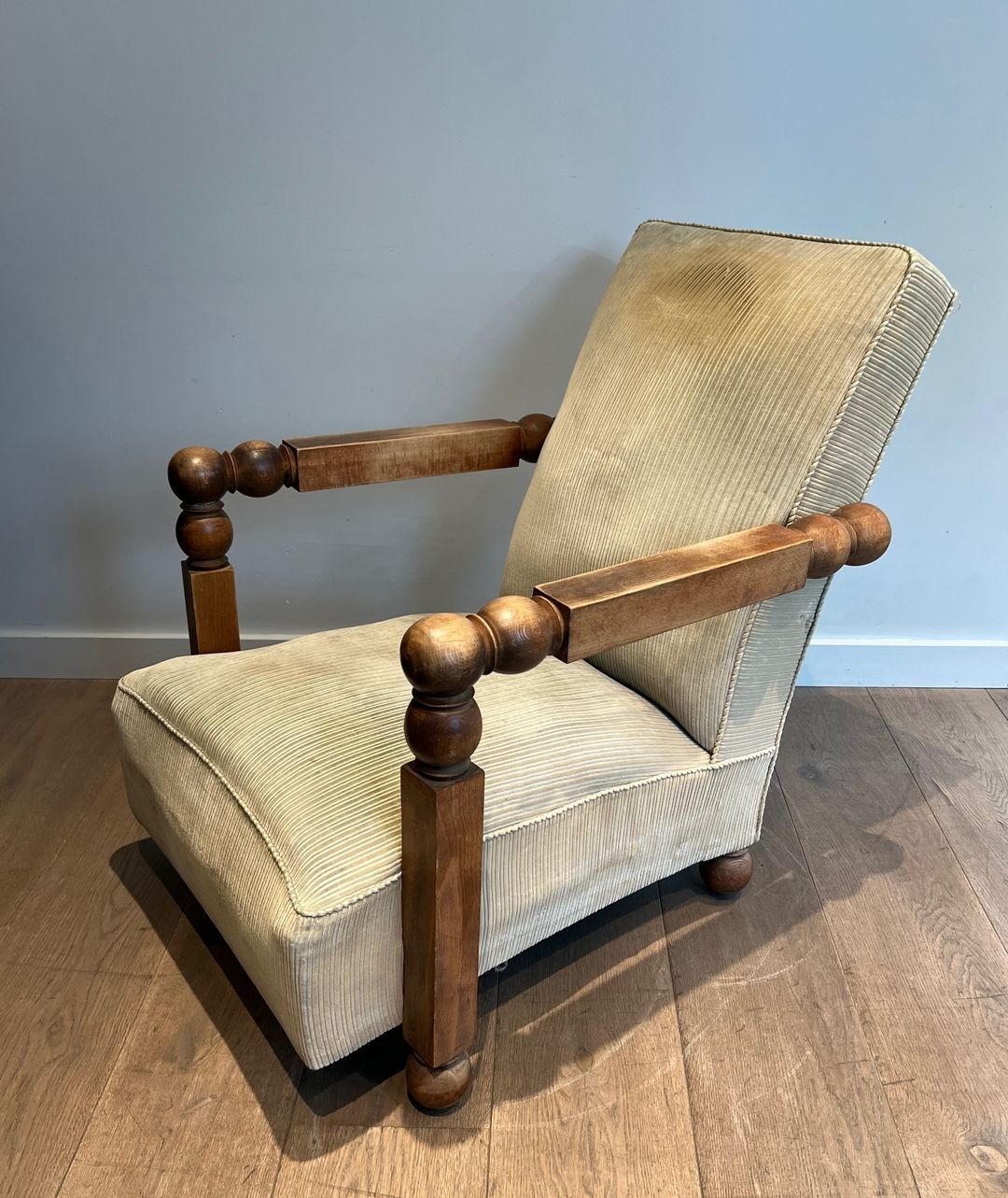
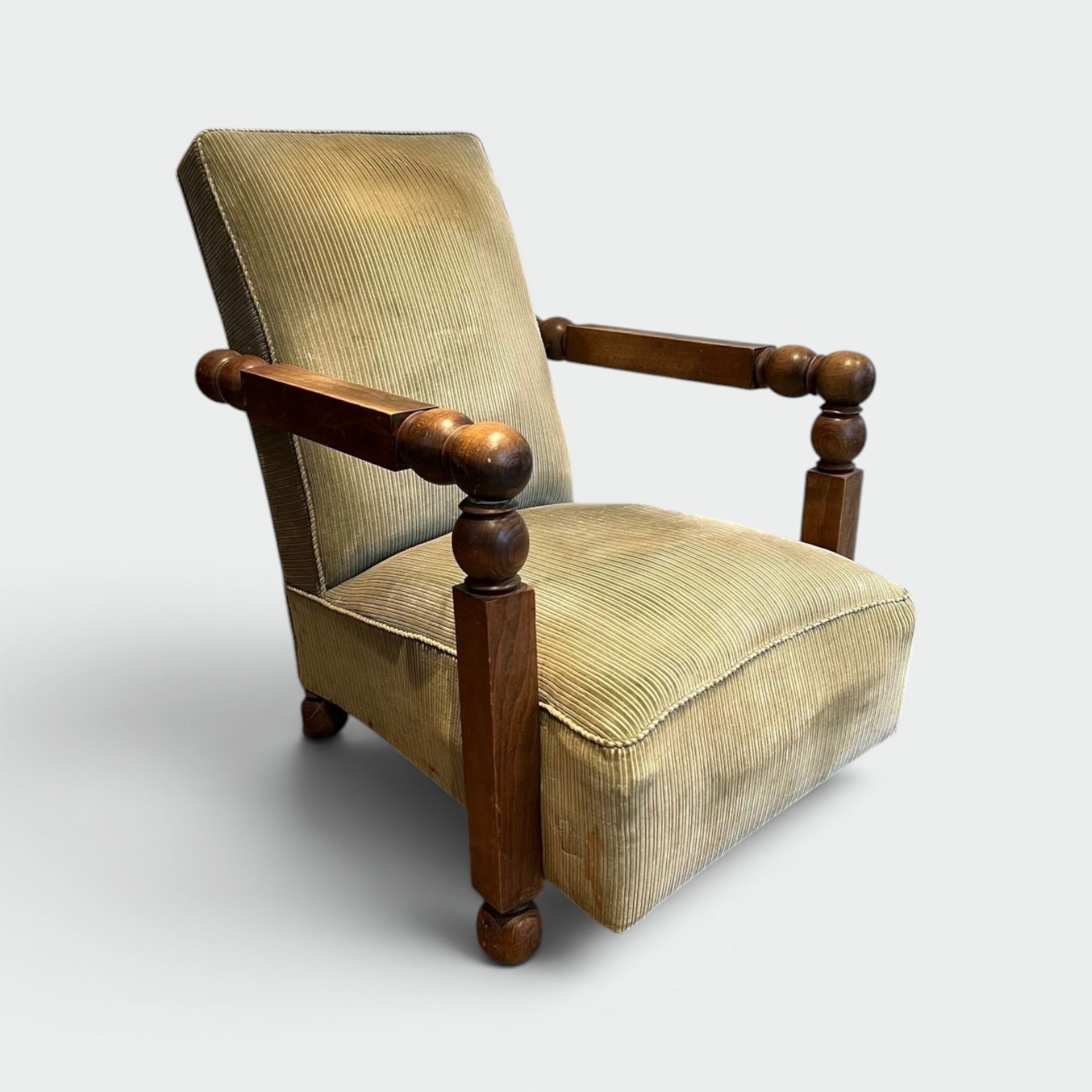
Important Brutalist Armchair in the Manner of Charles Dudouyt, French, circa 1945
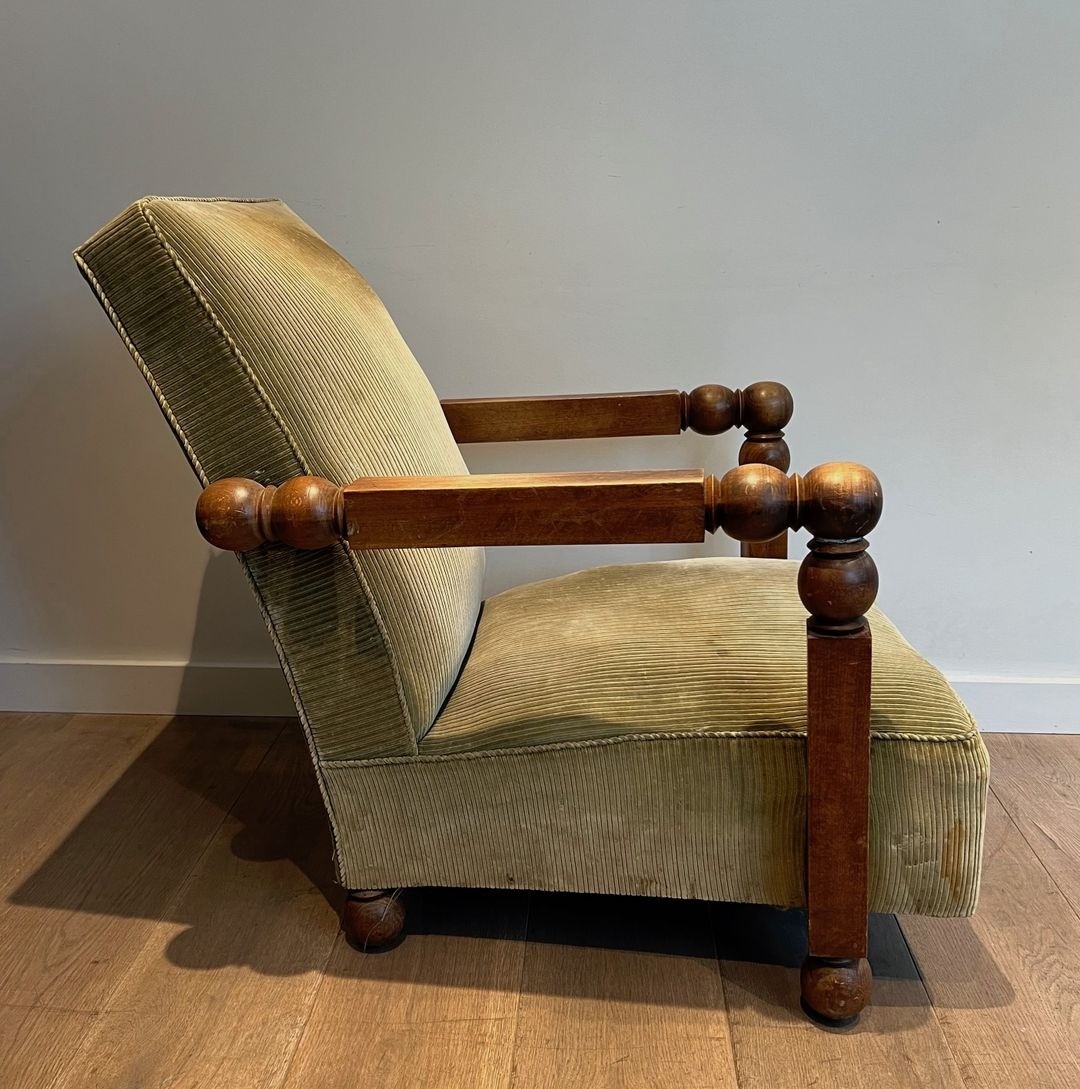
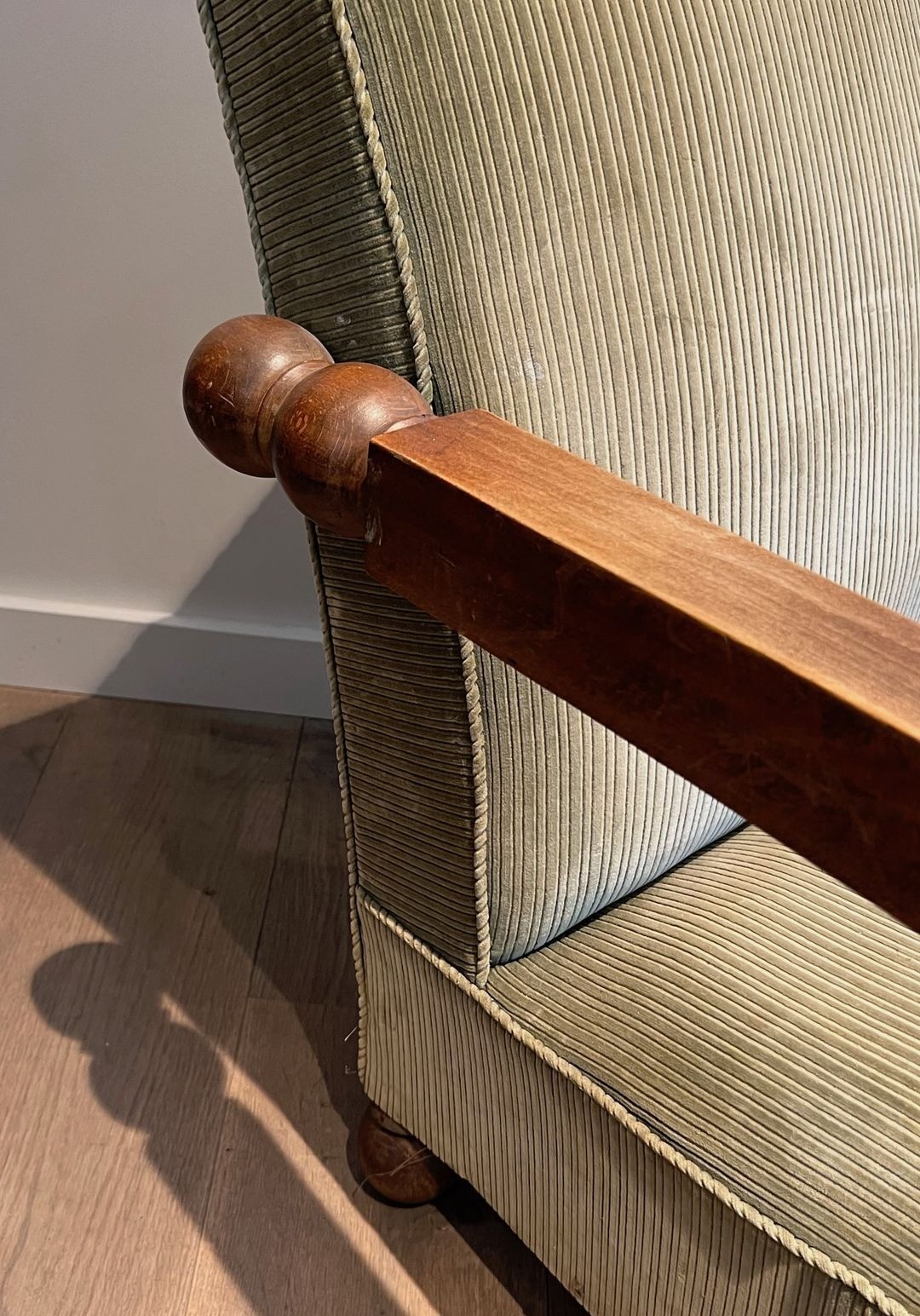
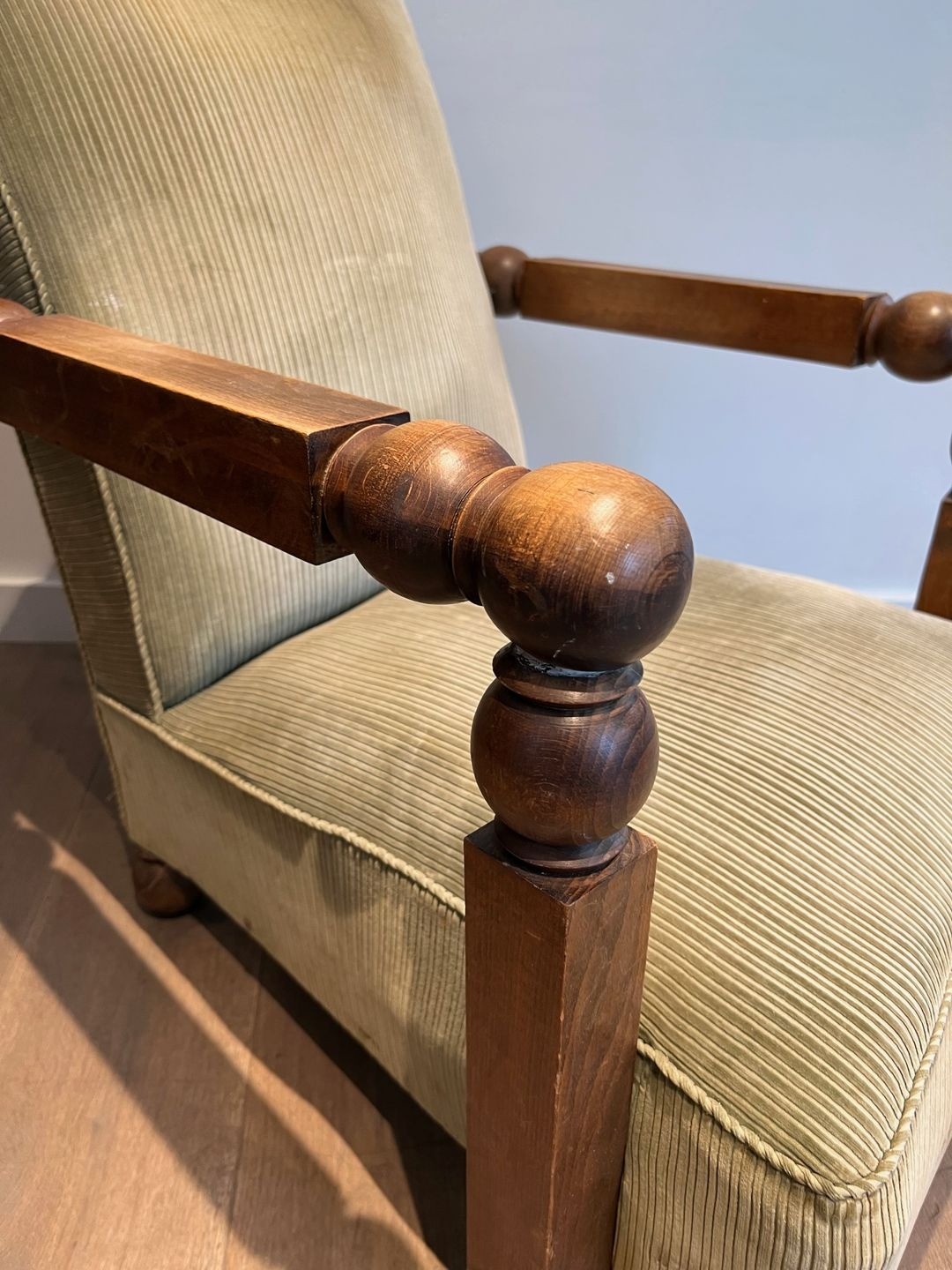
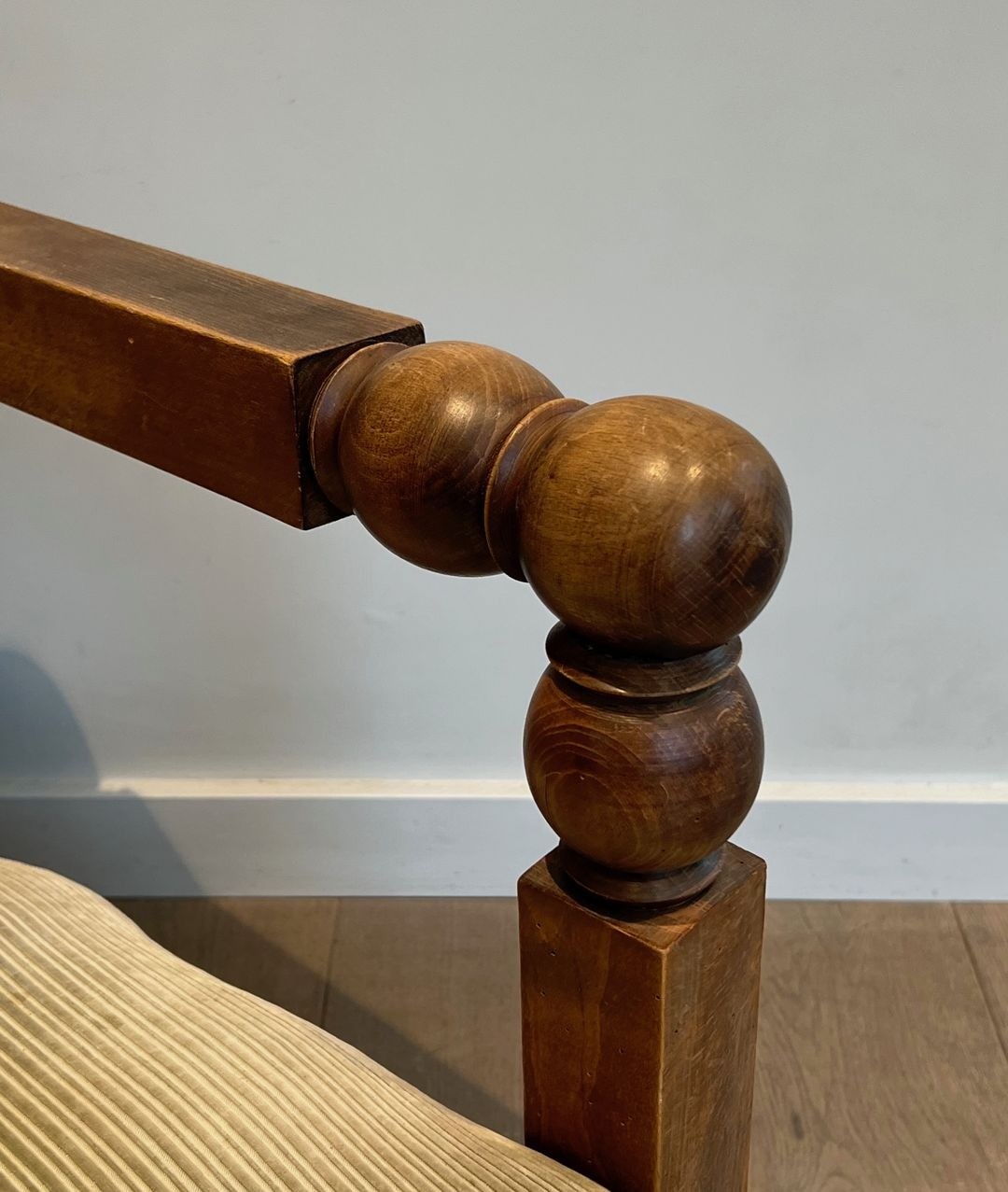
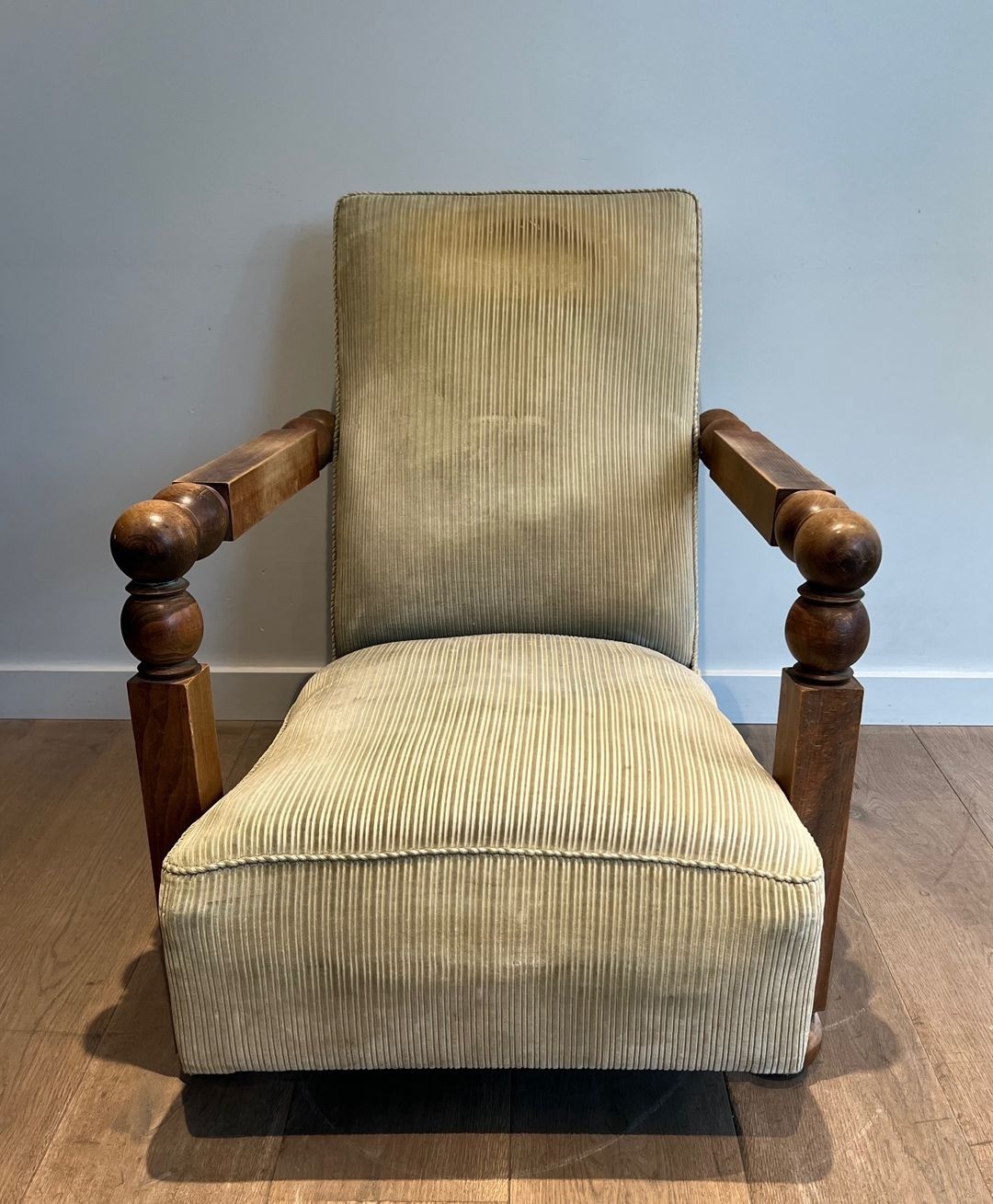
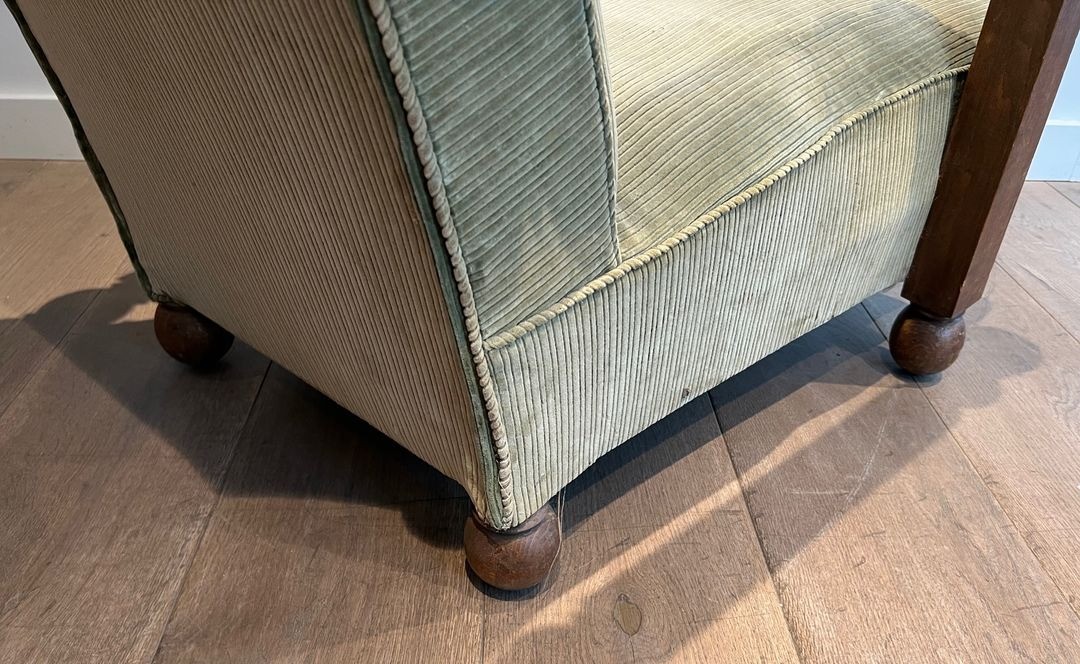
Important brutalist armchair in solid wood, in the manner of Charles Dudouyt, French work, circa 1945. Dimensions: W. 67 cm × D. 89.8 cm × H. 84 cm. Material: solid wood.
The word “important,” in the vocabulary of the auction house and the antique dealer, is a technical designation: it signals an object of significant scale, presence, or historical weight — one that does not merely occupy a room but commands it. This armchair earns that designation on every count. At 67 cm wide, 89.8 cm deep, and 84 cm high, executed in solid wood of evident mass and density, it is the kind of furniture that organizes space around itself. The depth of nearly 90 cm — almost equal to the height — is not an accident of proportion but a deliberate statement: this is a chair for sustained occupation, not polite perching.
The attribution “in the manner of Charles Dudouyt” (1885–1946) is itself historically significant. Dudouyt never established a large workshop or ran an official school; he worked with a small circle of craftsmen and sold through a handful of Paris galleries. Yet his vocabulary — primitivist carving derived from African tribal art, medieval joinery, and Basque folk tradition — was so forceful and so immediately recognizable that it replicated itself across anonymous French ateliers without institutional transmission. A style becomes a “manner” when its grammar has escaped its originator: when craftsmen who never met Dudouyt, never studied with him, produced chairs that unmistakably speak his language. This chair is evidence of that rare phenomenon.
The period 1940–1950 places this chair at the fulcrum of French history. Dudouyt himself died in 1946; a chair made in his manner during this decade might have been crafted during the Occupation, when French artisans continued in traditional modes while Parisian high design was frozen by circumstance — or in the Liberation years, when the Dudouyt aesthetic carried the additional charge of representing a specifically French craft tradition: rooted in the forest, the soil, the village workshop, entirely alien to the style of the occupier. Either way, the chair arrives in the present bearing not just form but weight, in both senses of the word.