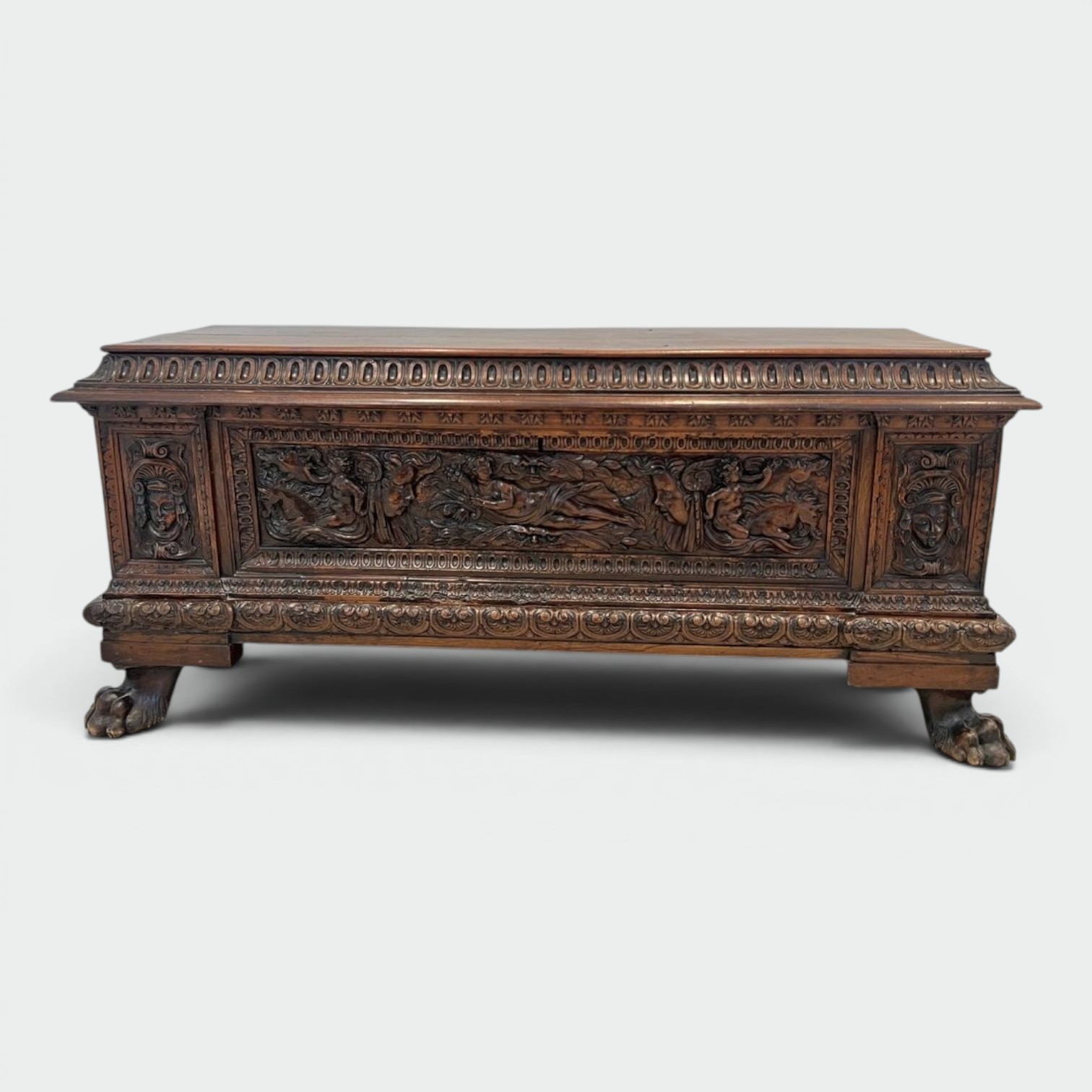
The cassone — the great chest of the Italian Renaissance — was far more than a receptacle for household linens. From the fourteenth century onward, these monumental pieces of furniture served as the centerpiece of matrimonial ceremony: filled with a bride’s trousseau and carried in procession through the streets of Florence, Siena, or Venice, they were public declarations of family wealth and dynastic alliance. By the seventeenth century, the tradition had evolved from the gilded and painted panels of the quattrocento into deeply carved architectural forms, their surfaces animated by scrollwork, grotesques, and figural reliefs drawn from the antique vocabulary codified by Raphael and his school.
This magnificent example, carved from solid walnut — the preferred timber of the northern Italian workshops — displays the exuberant hand of a master craftsman working at the confluence of late Renaissance and early Baroque sensibility. The carving is executed in deep intaglio relief across all four faces: foliated scrolls, palmettes, and cartouches cascade across the front panels in a composition of restless energy disciplined by rigorous symmetry. The claw feet — leonine in character, each paw deeply undercut to stand free of the plinth — are a mark of prestige associated with the grandest commissions, and their survival intact across four centuries is testimony to the exceptional quality of the original execution.
Such cassoni are among the rarest survivals of Italian decorative arts: of the hundreds of thousands produced between the fifteenth and seventeenth centuries, only a small fraction remain with their structure, carving, and fittings complete. This example, retaining its original iron lock plate and hinged lid in fully functional condition, represents a museum-quality document of the Italian woodworking tradition at its zenith — an object of scholarship as much as of beauty.