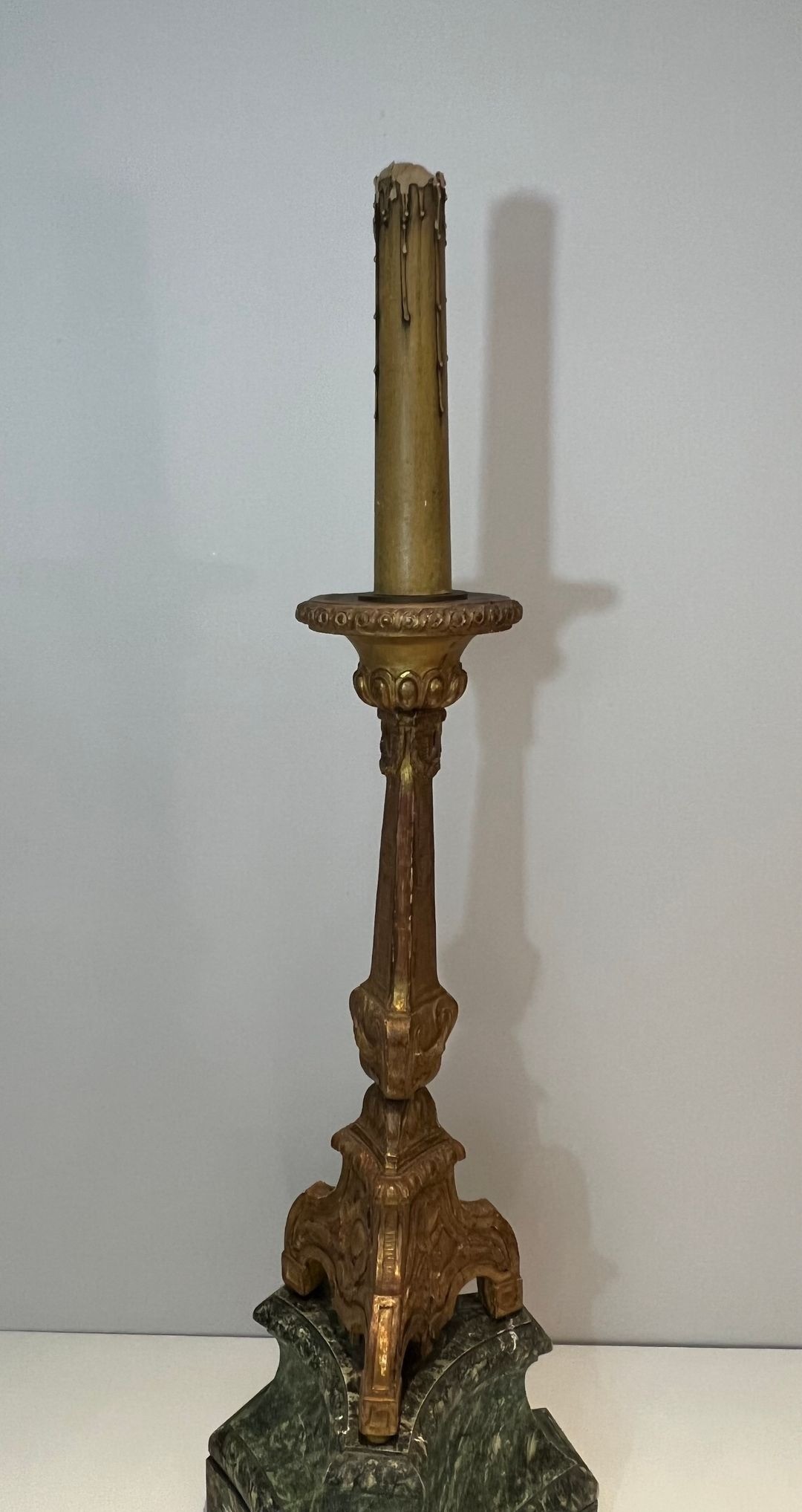
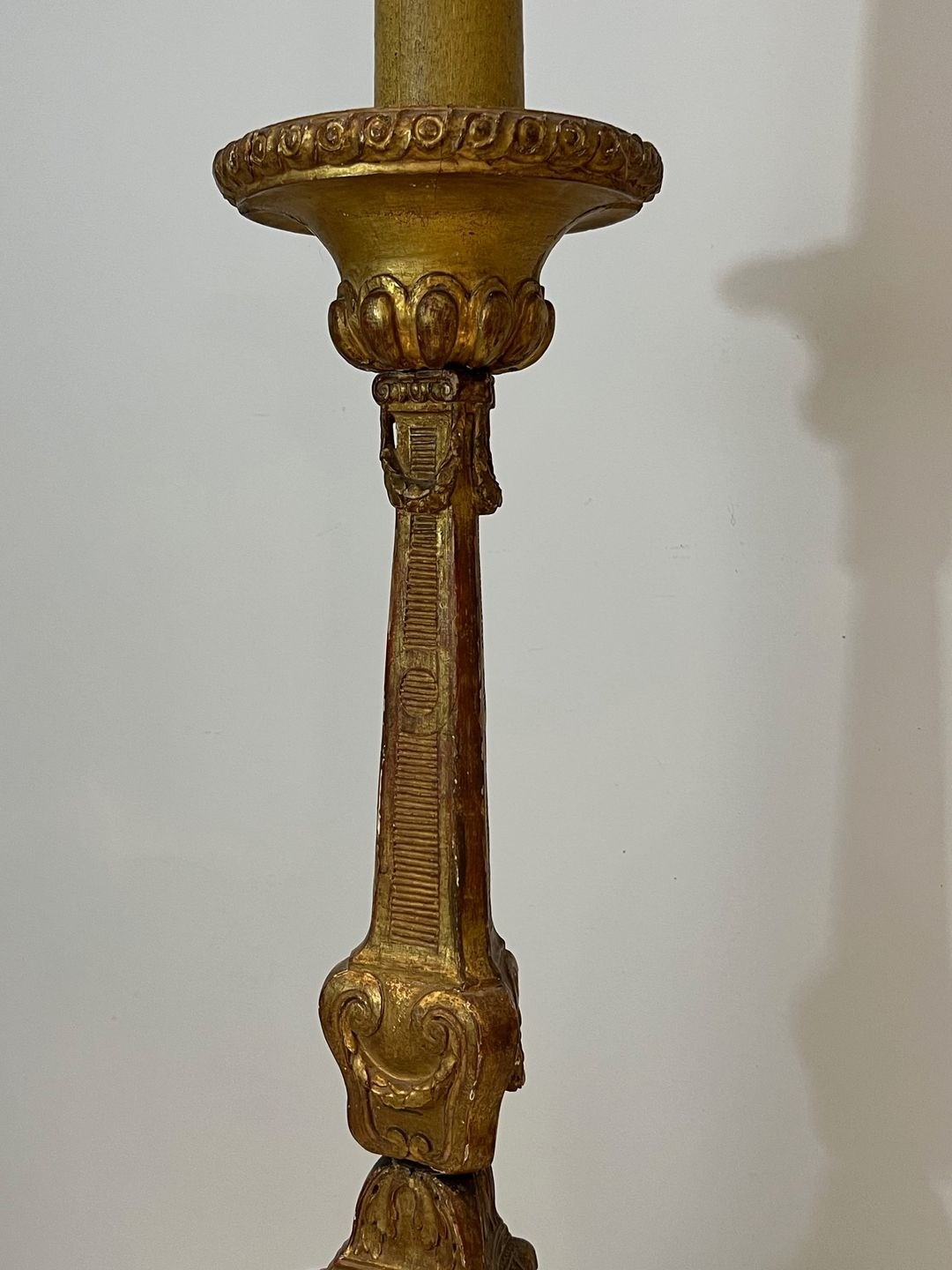
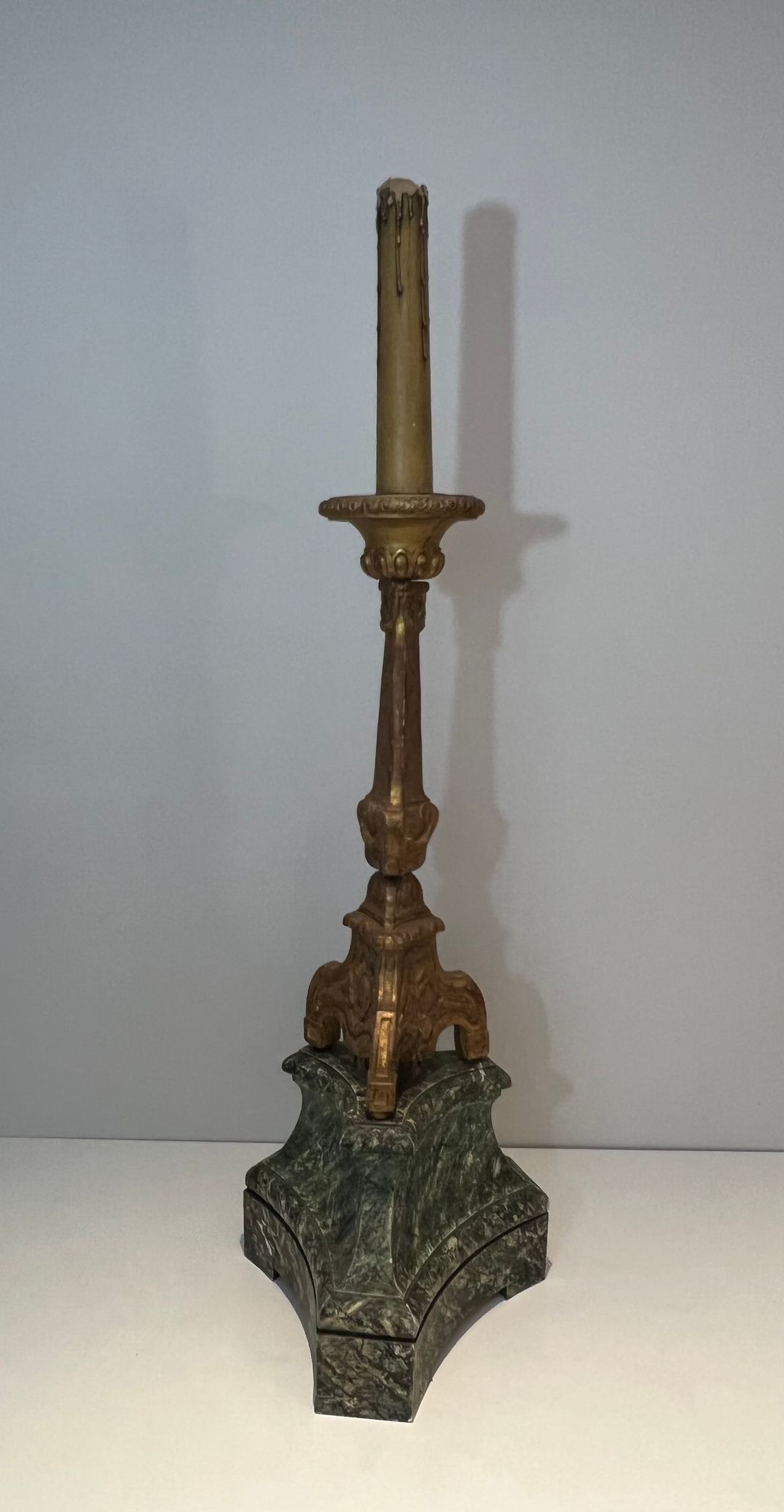
At 125 centimetres tall, this gilded carved wood candelabra commands the room with the authority of an object conceived for architectural spaces: a Belle Époque salon, a grand corridor, a chapel, or the entrance hall of an hôtel particulier. The body, carved in solid wood and gilded to a warm, slightly matte finish, rises from a patinated base whose darker, cooler tone provides a counterpoint to the brilliance above — a classic pairing that ensures the candelabra reads as a single, harmonious composition from any distance. The carving, a repertoire of classical acanthus, gadrooning, and foliate scrolls, situates the piece within the Beaux-Arts tradition of French ornamental wood sculpture.
The tall floor candelabra — torchère when it carries a single flame, candelabra when it bears multiple branches — has its origins in the grand interiors of the Baroque and Classical periods, where it served to supplement the uneven light of chandeliers and provide illumination at the level of the human face. By the end of the nineteenth century, as the French interior entered its great era of eclecticism, the tall candelabra had become an indispensable element of the furnished salon: it punctuated the corners of a room, flanked chimney breasts and doorways, and provided a vertical counterpoint to the horizontal emphases of mantelpieces, dados, and furniture. Carved and gilded examples such as this one were produced in the workshops of the great Parisian faubourgs — Saint-Antoine, Saint-Honoré — as well as in the regional centres of Lyon and Bordeaux.
In the contemporary interior, a candelabra of 125 centimetres presents an immediate solution to the problem of vertical scale: set in a corner, flanking a tall painting or mirror, or placed at either side of an architectural element, it resolves the relationship between ceiling and floor with a single gesture. Its gilded wood surface will age beautifully without maintenance, developing the nuanced tones that distinguish genuine Belle Époque gilding from later imitations. Fitted with candles or an electric fitting, it remains a dramatic presence in any interior that takes scale and historical depth seriously.