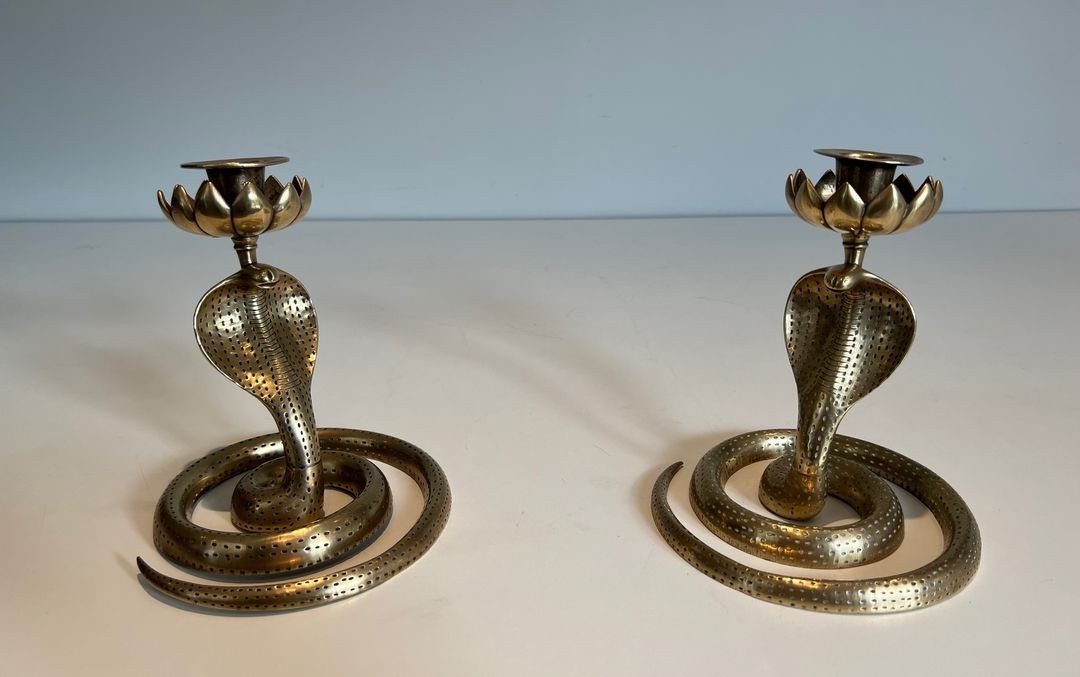
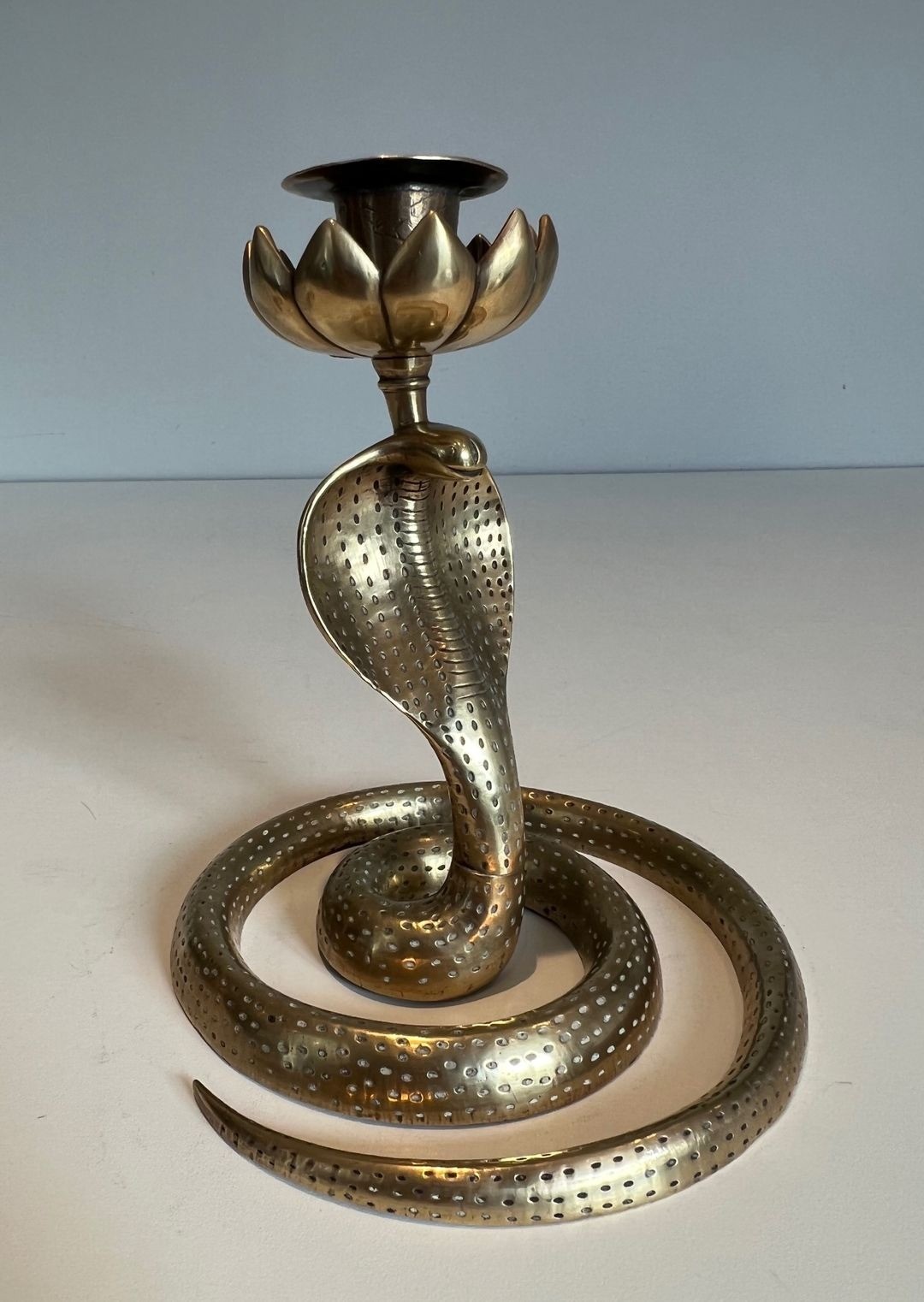
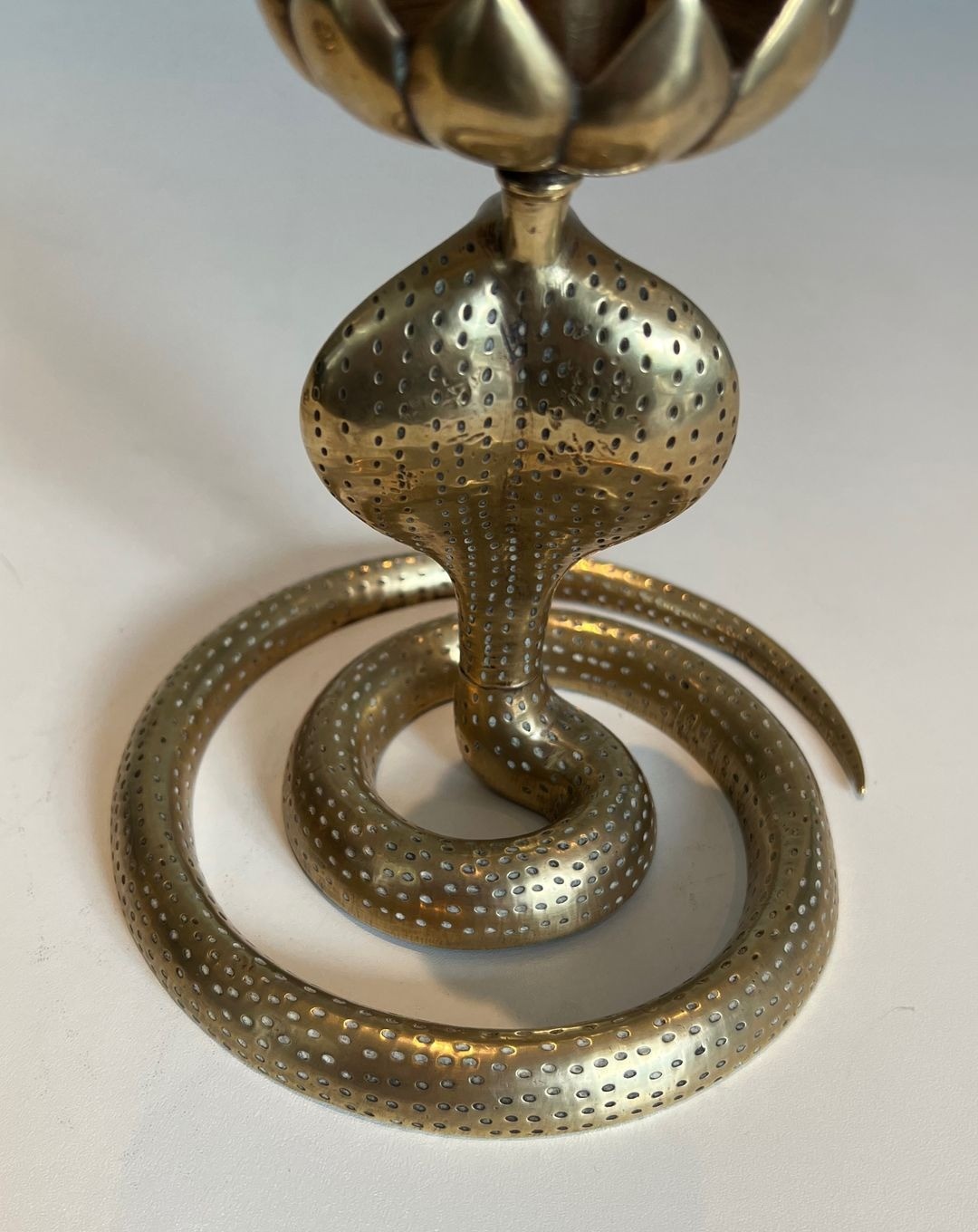
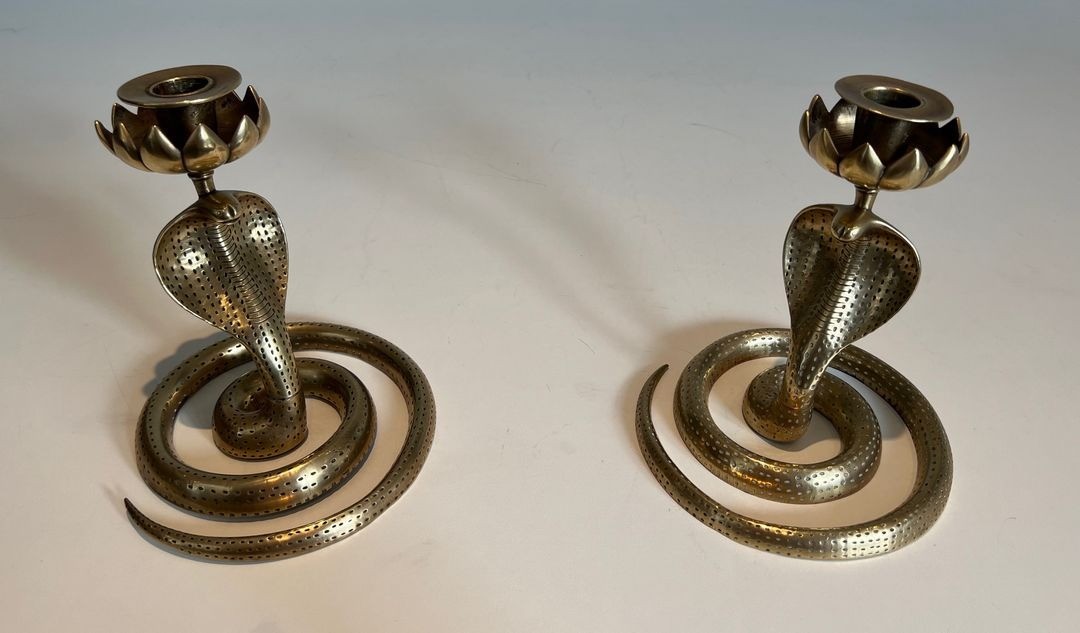
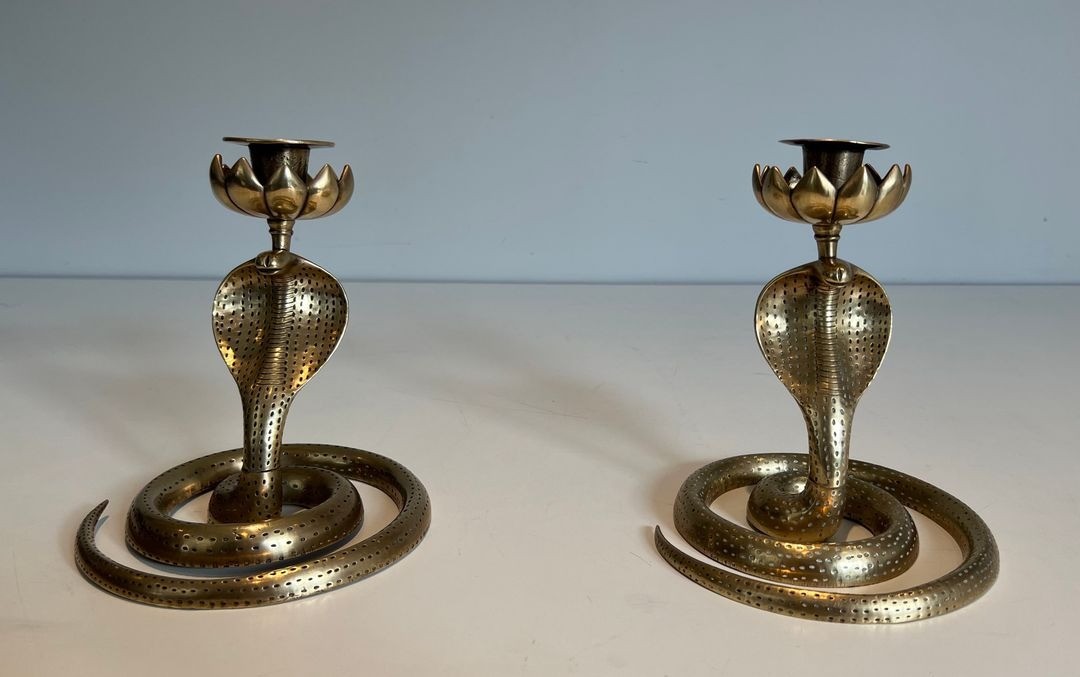
The cobra rears from a compact base, its hood spread and scales rendered with the precision of the finest chiselling — each scale defined, the musculature of the coiled body taut and anatomically observed. Standing nineteen centimetres tall, these candlesticks are objects of concentrated power, the serpent transformed from creature of menace into an instrument of domestic light, its upturned head forming the candle cup with an ease that seems effortless yet must have demanded considerable skill. The dark patina of the bronze — rich, deep and warm — heightens the drama of the form and flatters the reptilian texture of the chiselling.
The cobra is among the most potent symbols in Art Déco’s rich vocabulary of exotic imagery. The movement’s fascination with Egypt was dramatically ignited by Howard Carter’s opening of Tutankhamun’s tomb in November 1922 — an event whose cultural aftershock reverberated through fashion, architecture, jewellery and the decorative arts for the following two decades. The uræus serpent, royal emblem of the pharaohs, became one of the defining motifs of Art Déco’s Egyptianising strand, appearing on furniture mounts, desk objects and jewellery by the finest Parisian makers. But the cobra also drew on the broader Orientalist tradition — the snake charmer, the Indian basketwork cobra — that gave Art Déco its exhilarating range of exotic reference, from Marrakech to Angkor Vat.
As a pair, these candlesticks deliver something beyond what a single example could offer — the bilateral symmetry of two serpents facing one another across a chimney piece or sideboard creates a theatrical tension wholly appropriate to the serpent’s role as a symbol of power. They are exceptional objects in any setting: at nineteen centimetres, small enough for an intimate desk or dressing table, yet possessed of a presence that commands rather than merely occupies their space. Collectors of Art Déco bronzes will recognise immediately the quality of the chiselling and the authority of the patina — marks of the finest Paris ateliers at the height of the movement.