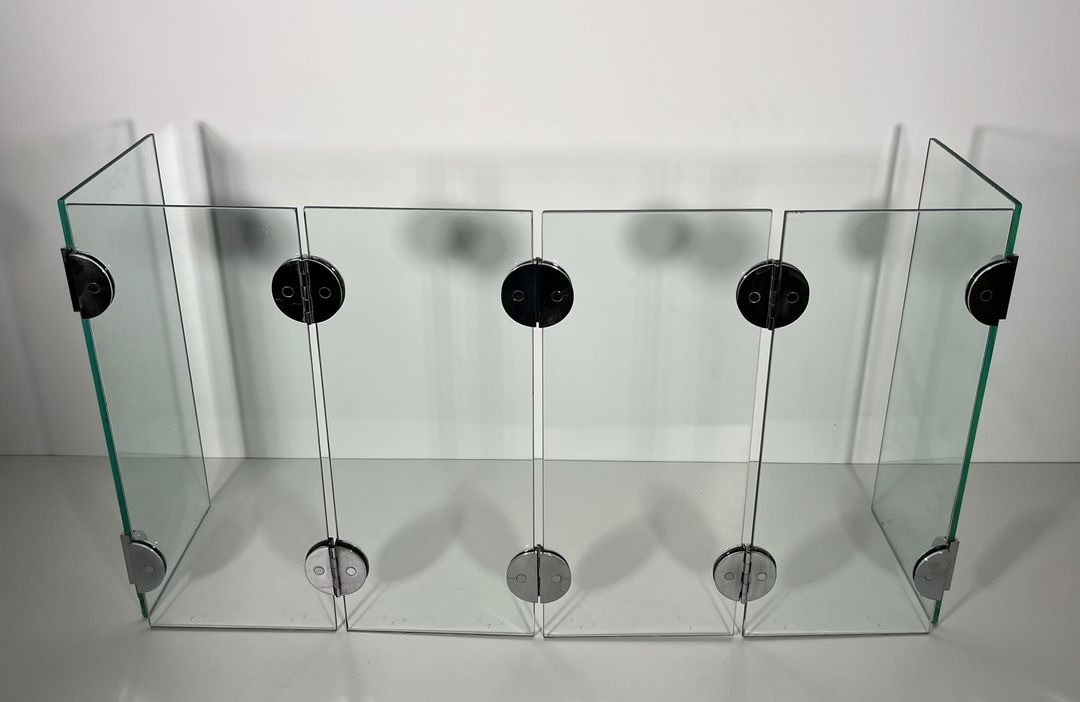
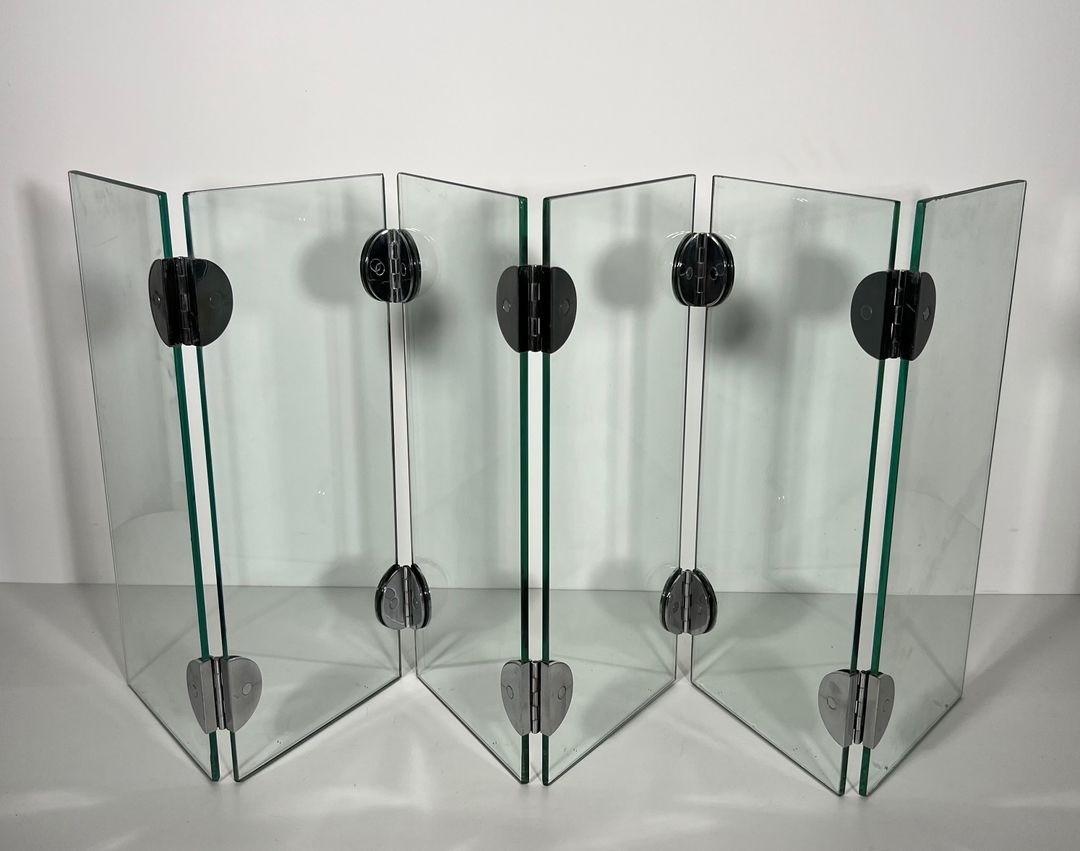
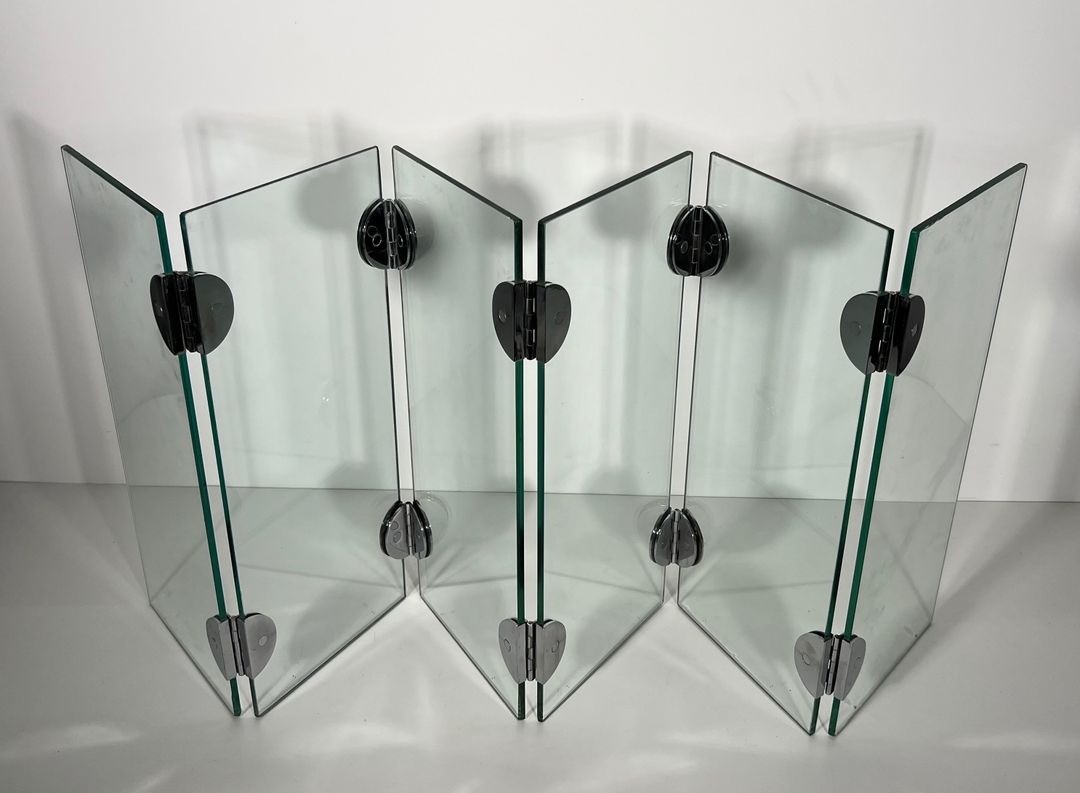
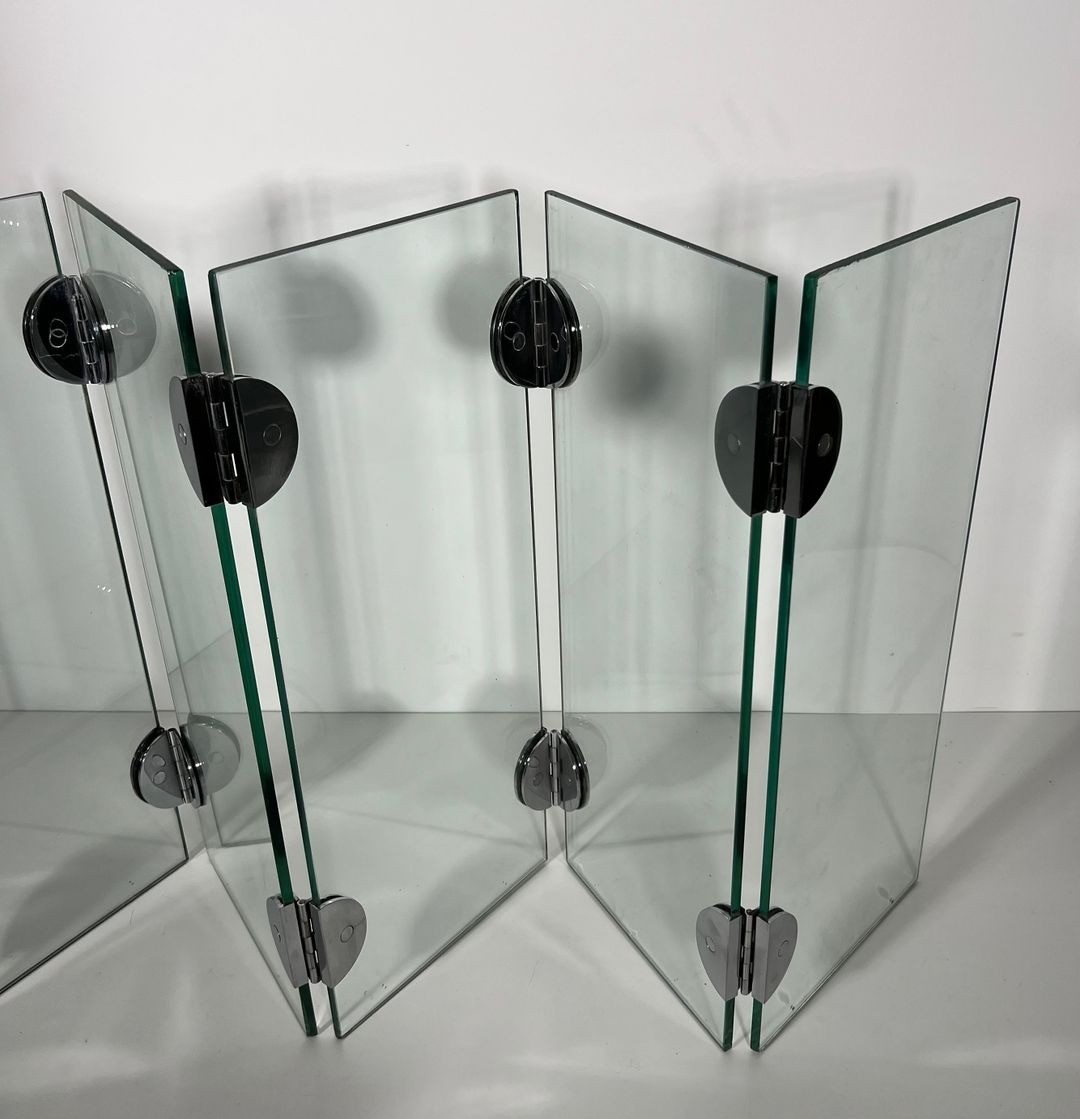
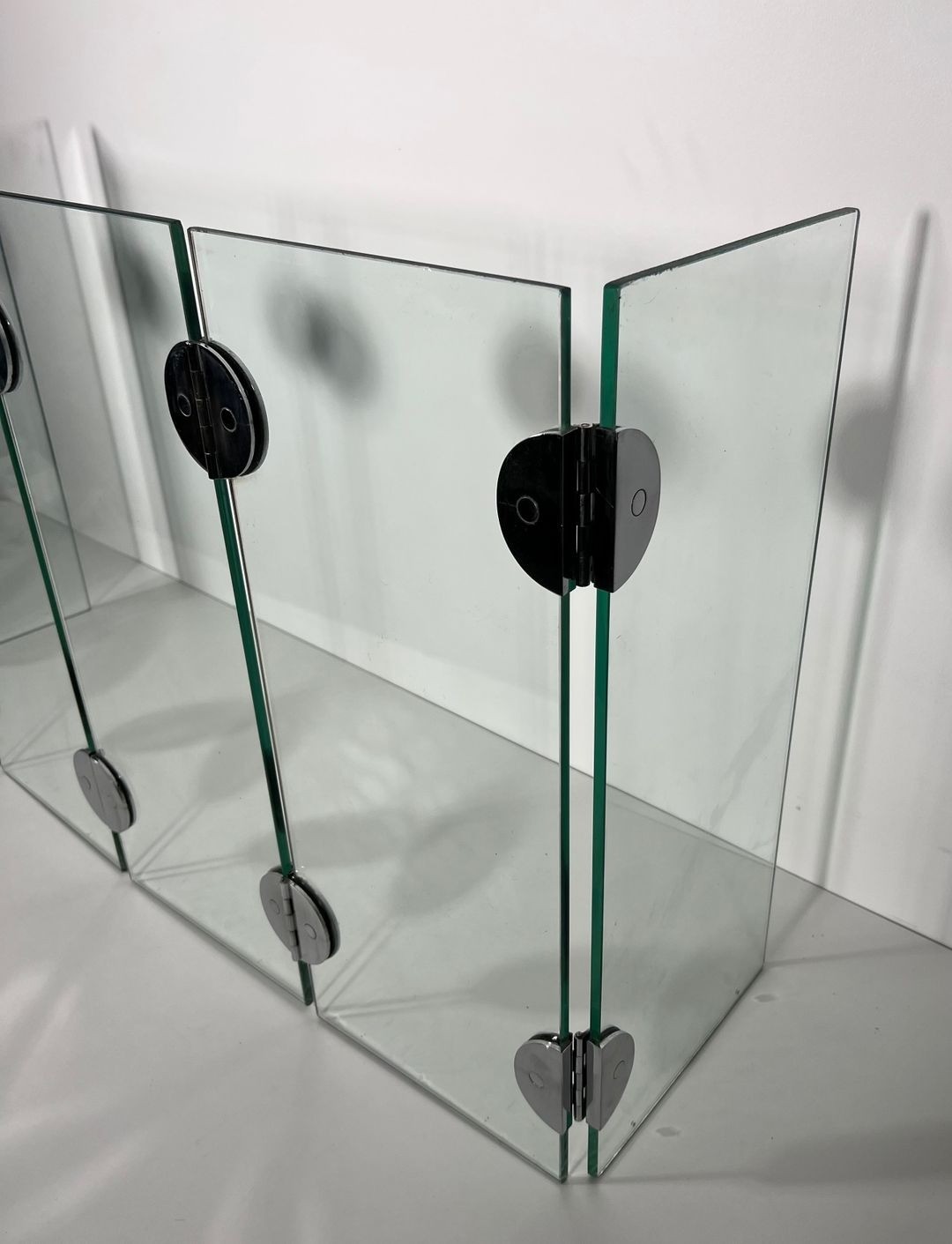
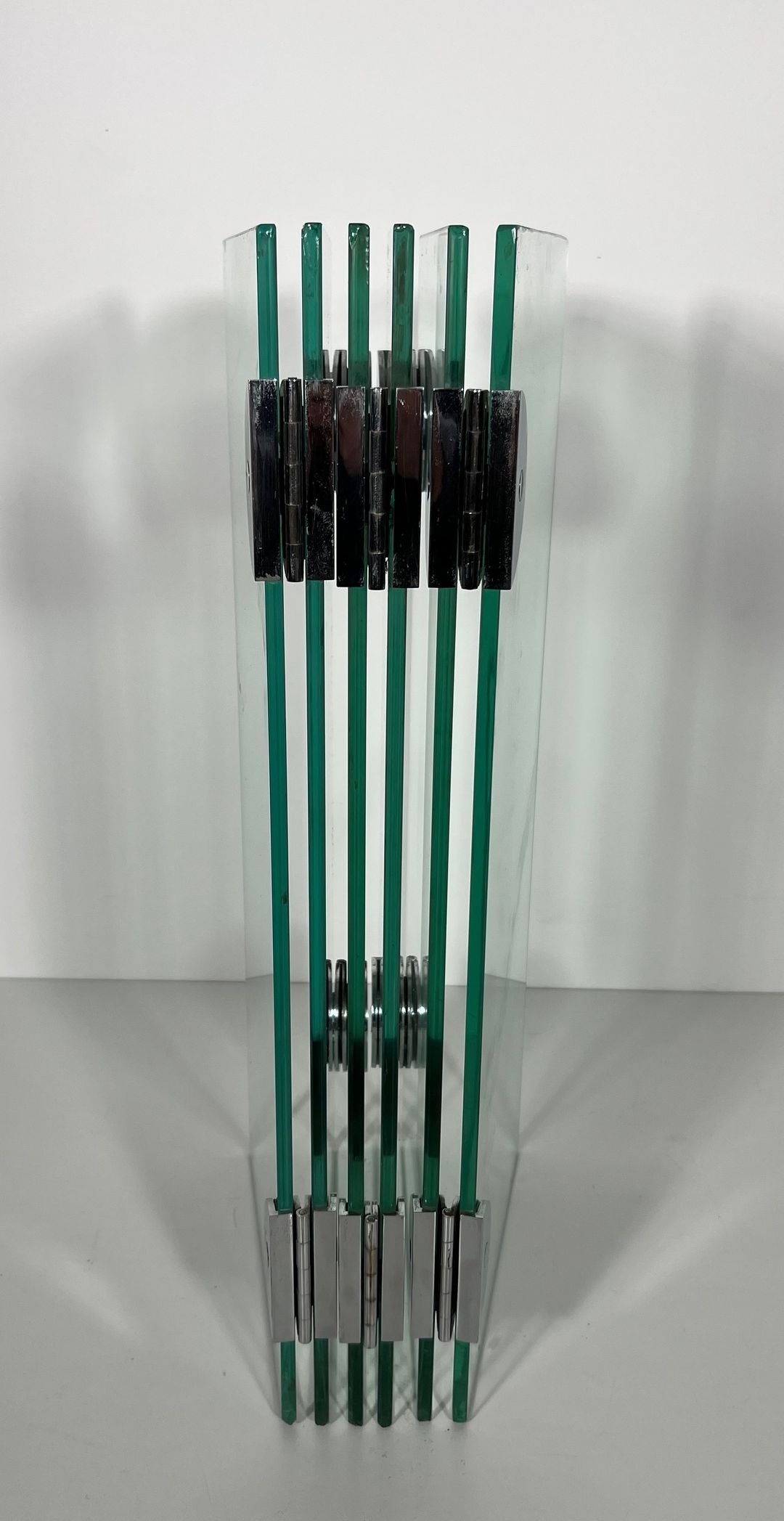
This exceptional fireplace screen, consisting of six articulated clear glass panels connected by chrome ball hinges, stands as one of the most architecturally ambitious fire accessories to appear on the market. Created in the taste of Robert Mallet-Stevens (1886–1945) — the great French Modernist architect and designer who championed the use of industrial materials, geometric purity, and structural transparency in his buildings and interiors — the screen translates the principles of the avant-garde directly into the domestic hearth.
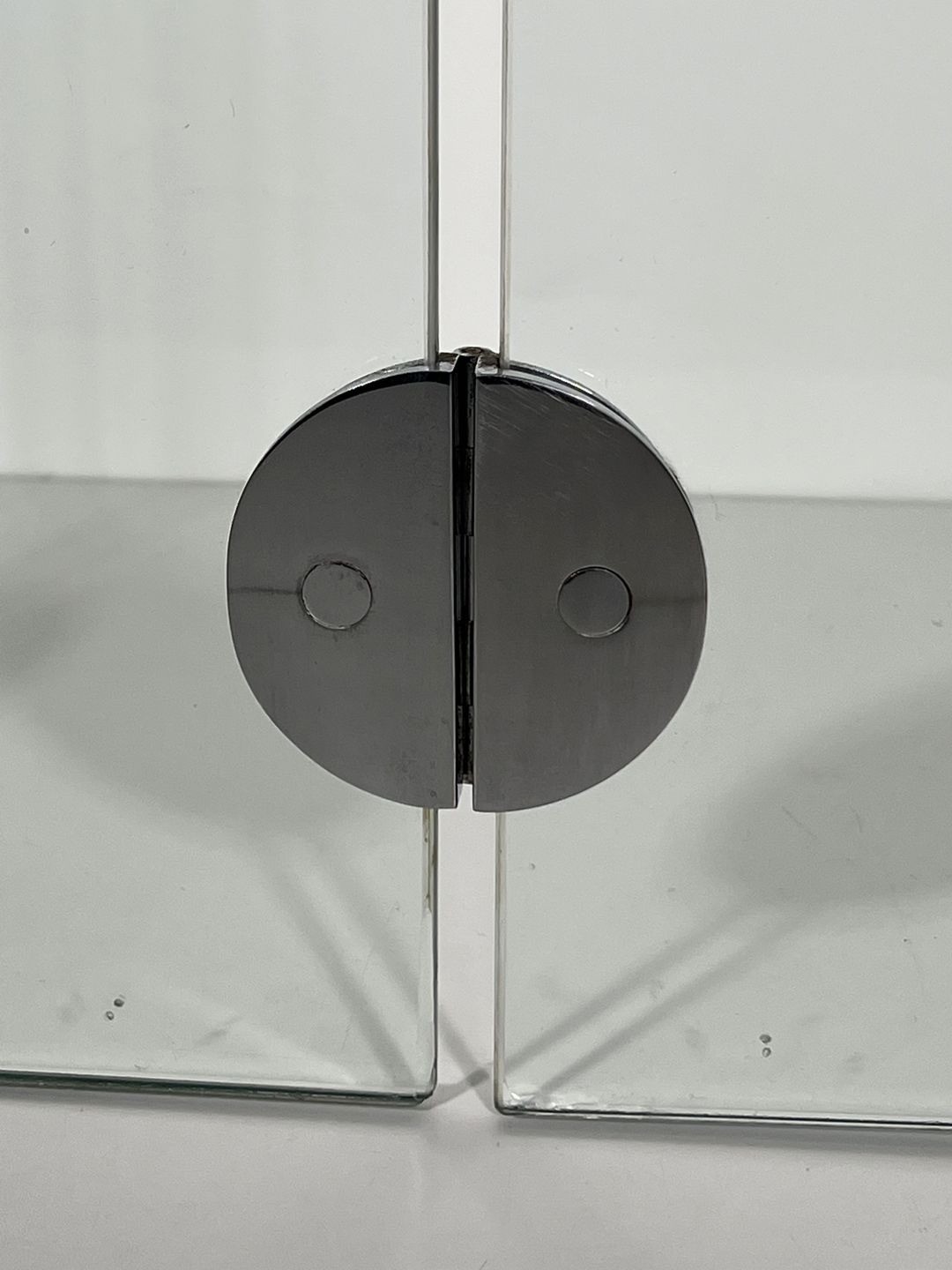
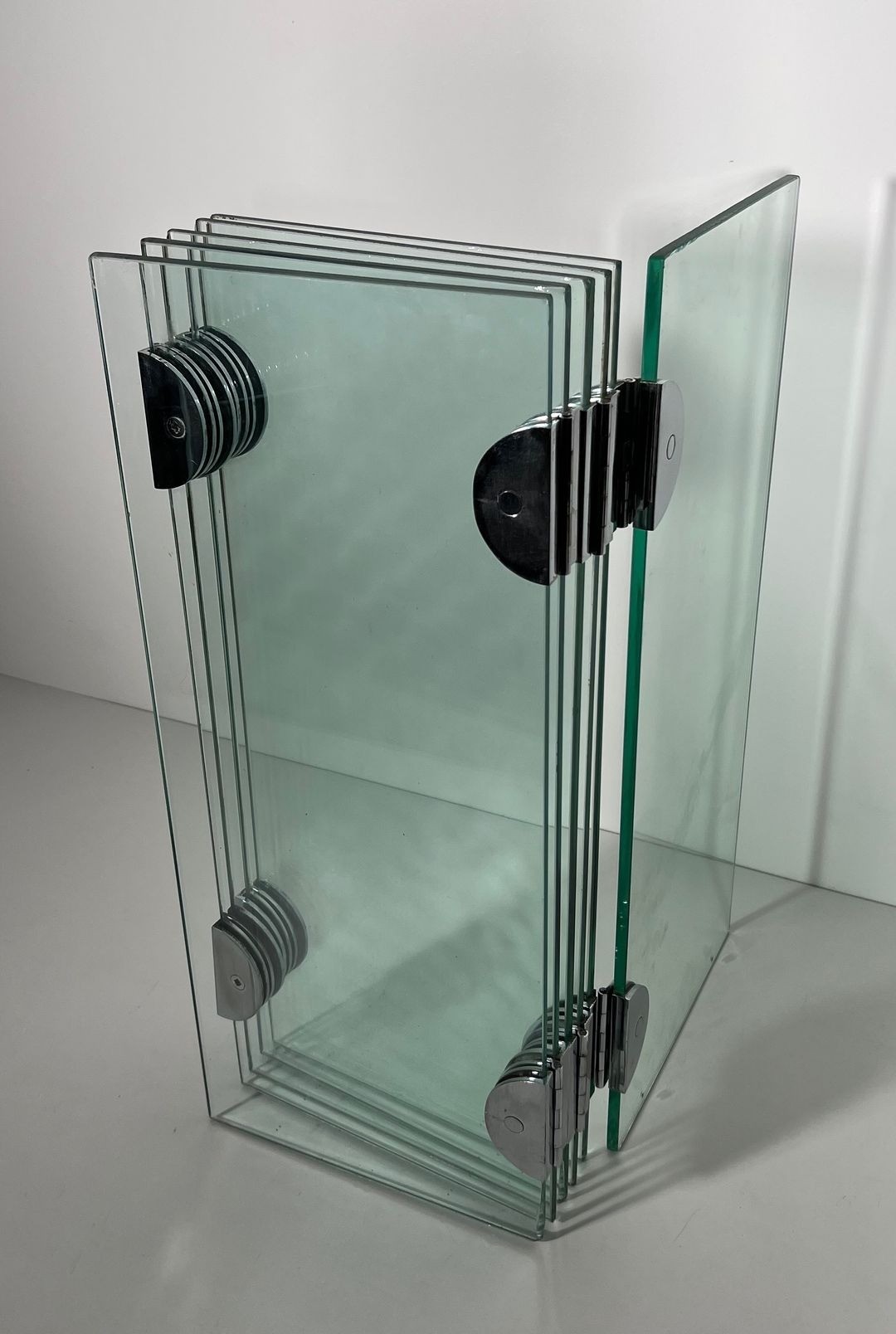
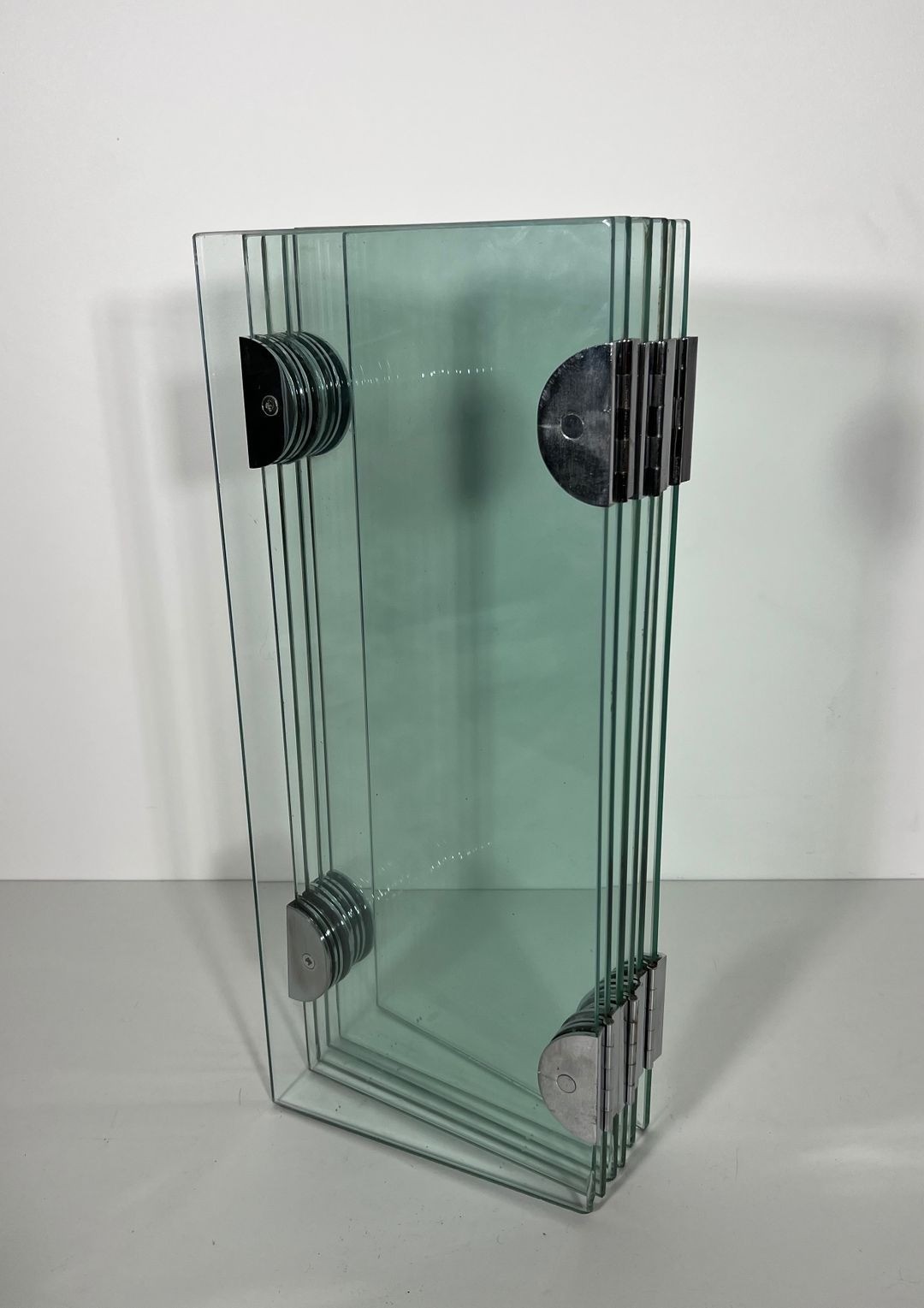
The six panels are composed entirely of clear glass, each joined at its lateral edges by the chrome ball hinges that allow the screen to articulate and fold in a concertina configuration. This radical transparency is the central gesture of the design: where a conventional fire screen conceals and protects, this one reveals and illuminates, allowing the fire to be seen from all angles while still providing a protective barrier. The chrome hardware — spherical and precisely machined — functions simultaneously as a mechanical element and as a repeated decorative motif, creating a rhythmic punctuation along the upper and lower edges that is entirely in keeping with the machine aesthetic Mallet-Stevens defined.
When fully extended at 107.5 centimetres in width, the screen presents a sustained horizontal composition of glass and chrome that fills the fireplace opening with architectural confidence. The six panels can be adjusted to any angle, allowing the screen to adapt to fireplace openings of varying widths and to be configured in different formal arrangements — straight, angled, or in a gentle curve. This flexibility of deployment is itself a design virtue, reflecting the modernist ideal of the object as an adaptable system rather than a fixed form.
Screens of this quality and formal ambition are among the most sought-after pieces in the field of twentieth-century French decorative arts. The combination of industrial materials, radical transparency, and the Mallet-Stevens stylistic heritage makes this an exceptional acquisition for any collector of French Modernist or International Style design.