Neoclassical Style Three-Panel Folding Fireplace Screen in Wire Mesh with Brass Frame
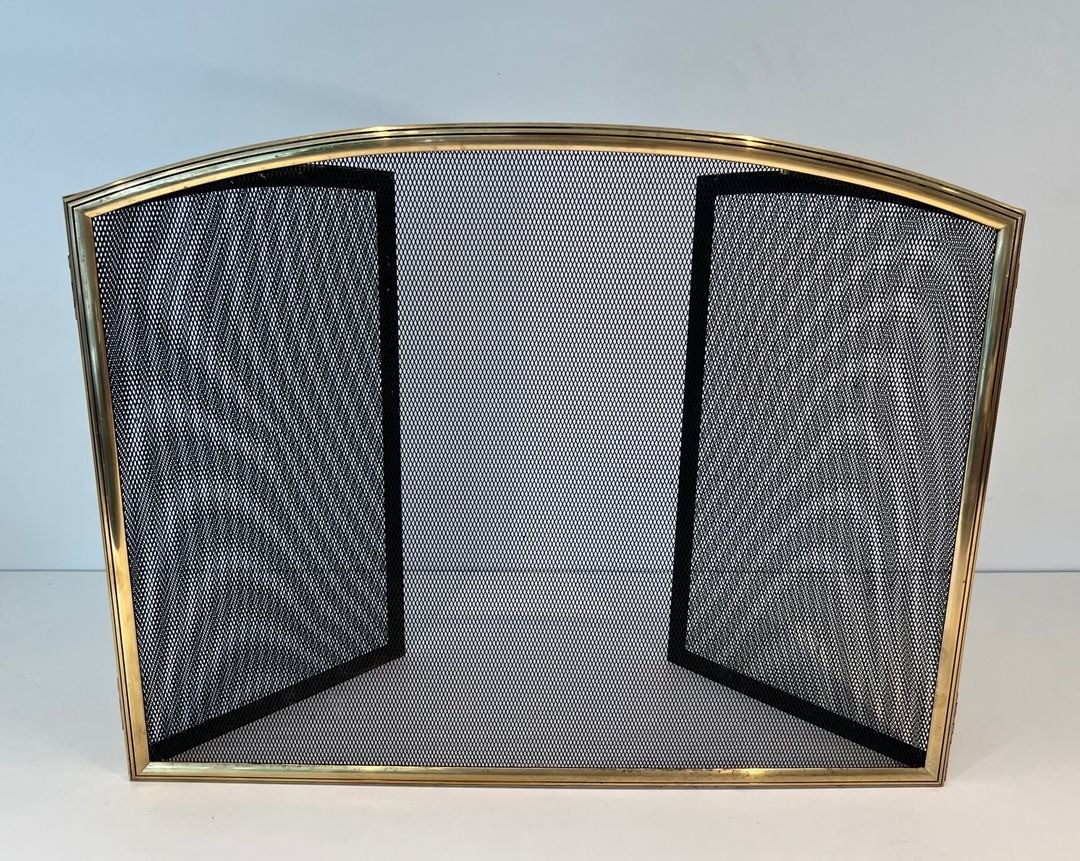
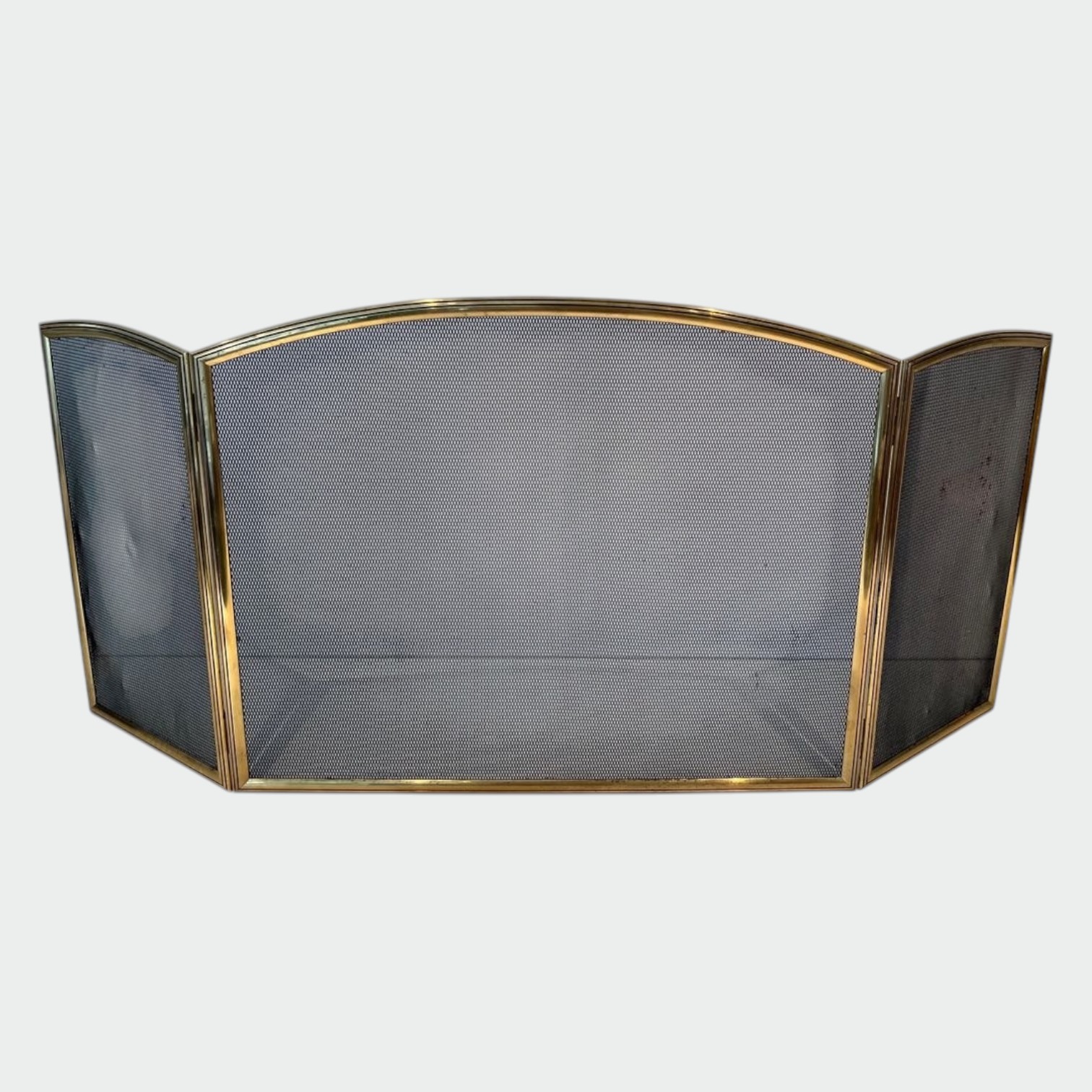
Three-panel folding fireplace screen in the Neoclassical style, with an arched central panel in fine black wire mesh framed in polished brass with a beaded border, and two rectangular side panels. France. Circa 1970. W. 73.5 × D. 30.5 × H. 58.5 cm
This three-panel folding fireplace screen is a distinguished example of the Neoclassical taste that shaped French interior decoration from the late 18th century and its many 20th-century revivals. The central panel is defined by a graceful semicircular arch at its crown — an unmistakably Neoclassical form — while the two flanking rectangular panels fold forward on hinges to enclose the hearth. The entire structure is framed in polished brass finished with a beaded border profile, a decorative detail drawn directly from the Directoire and Empire vocabulary.
The infill of each panel is a fine black steel wire mesh of the type long associated with traditional French parefeux — functional in its capacity to arrest sparks and embers, yet fine enough to allow the warmth and spectacle of the fire to pass through. When light plays across the overlapping wire panels, a subtle moiré of shifting patterns is produced — an optical quality of particular richness in the context of a lit hearth.
Manufactured in France circa 1970, this screen belongs to the tradition of high-quality fireside furniture that flourished in French workshops throughout the mid-20th century, serving a clientele that sought Neoclassical forms for apartments and maisons de maître. The beaded brass border and the quality of the mesh are consistent with sound French workshop production of the period.
A handsome and practical piece, this screen sits easily with period Neoclassical furniture or in any interior that draws upon the French Directoire and Empire aesthetic.